wyndham resorts wallethub hotel rewards best

Wyndham Rewards is the best hospitality benefits club, according to WalletHub’s 2018 Hotel Rewards Program report. This marks the fourth year in a row that the hotel chain’s loyalty program has come in first, with up to $14.30 in rewards value per $100 spent.

The results come from 21 key metrics, ranging from percentage of hotels with award night availability to short-notice reservations to ease of achieving top membership status.

MoreThe Ultimate Hotel Brand Guide

Wyndham maxed out—or came close to maxing out—many of the 21 metrics, including blackout dates, how far in advance reservations can be made and short-notice reservations. It earned 74.07 out of 100 for the total heavy traveler, 73.07 for the moderate traveler and 73.07 for the light traveler.

Wyndham also stole the show in many of the awards categories. Apart from winning best overall hotel rewards program, with its average WalletHub score of 73.40, it also snagged first place for its rewards value and redemption options.

Best Western Rewards came in second place, with a score of 72.11 for the heavy traveler, 68.89 for the moderate, and 67.59 for the light. It earned maximum points in the blackout dates and valuable membership level perks for heavy, moderate and light travelers. It is the only major hotel chain that imposes no expiration date on points, despite inactivity; unsurprisingly, it won best for points that won’t expire.

MoreUnified Rewards for Marriott Brands to Begin

Rounding out the top five, Radisson Rewards came in third, with an average score of 68.89; it also earned the reward for fewest earning limitations. Marriott Rewards came in fourth, averaging 62.31 and Choice Privileges in fifth, with an average score of 59.74.

Winning in other categories were Radisson Rewards, ranked best for fewest earning limitations, while Marriott Rewards is ranked best for international travel. Hilton Honors won bragging rights of best for transfer partners.

WalletHub also reports that the merger of Marriott, SPG and Ritz-Carlton yield $10.85 per $100 spent—a larger amount than guests would have earned with each company on its own previous to the merger.

Event Maturity and Data

As massive, optimized systems such as Amazon and Netflix play an increasing role in our lives, the basic expectations of everything, including meetings and events, is rising. Due to the ever-greater need for customization, responsiveness and excellence, planners need to be on top of their game more than ever before, said Mike Dietrich, senior director of platform marketing at Cvent.

In a recent Smart Meetings webinar, “The 4 Stages of Event Program Maturity,” he had plenty of tips to help planners and organizations get there.

“You’ve always been a planner, but more and more what we’re hearing is ‘I need to do all that, and I need to be a marketer—I need to be a digital marketer, I need to be a technologist, I need to be a financial analyst and more.’” And because of those expanding responsibilities, he said, “It’s tough to know what ‘good’ looks like anymore.”

To help, Dietrich outlined how Cvent has broken down meetings and events into specific categories, each with its own measurable levels of success and what he calls “maturity.”

 1. Event Strategy

The first step to improving an organization’s events requires analyzing the foundation behind them. Everything from performance indicators the team is using to the way potential events are selected, budgeted and approved provides the backbone of the events it produces.

“How do you put this Rubik’s cube of possible events together for your organization?” Dietrich asked. The more data application and forethought that goes into the strategy behind an event, the more productive and valuable it is going to be.

2. Event Execution

Whether it is the people staffing an event or the technology used to run it, there is always room for improvement. “We still see a lot of event programs that are being planned and executed with sticky notes, Excel and Google Docs,” Dietrich said.

The range includes everything from companies that can start onboarding a registration tool or lead scanning tool at an event to customers who have adopted a full event planning platform. Updating this process and staffing the event with dedicated workers produces a progressively smoother event.

3. Attendee Experience

“After somebody has spent three days and $3,000 to come to your event; left their home, their family and friends for a few days; and stood in a TSA line to get on a plane to get to your event, don’t underestimate the power of being able to get them through your check-in line quickly,” Dietrich said. “Don’t underestimate the power of a frictionless experience.”

Event-wide, the easier it is for attendees to engage and network, the happier they will be. And if they can do that without feeling as if there is an intrusive hand gathering their data for leads, all the better. Whether through new advances in technology such as RFID tracking in badges or simply a more optimized layout, every planner can find something to streamline the attendee experience that much better.

4. Measurement and Optimization

When an event is over, far too many organizations and planners don’t know the return on investment. The more sophisticated you can get when measuring it, the more mature your event program is, Dietrich says. Even then, not all currency that is valuable from an event is financial, he said. Data measuring attendee satisfaction, engagement and even behavior after attending an event is all useful in one way or another, whether discussing an event’s success with an organization or planning the next one.

Knowing Your Team’s Maturity

Within each category of performance, and taking them as a whole, Cvent has built a model for how events programs relate to each other, Dietrich explained. They can fall into four levels—emergent, elevated, evolved and expert programs.

Emergent programs lack a real structure and have a poor sense of their own impact. Elevated programs make use of professional resources and specialized technology. Evolved programs utilize technology even more dynamically by beginning to collect and make use of data. And expert programs manage to optimize practices across an entire range of events at once.

Dietrich says that individual planners can’t change any of these areas by themselves. But by understanding where improvements can happen and by being an advocate for them, change will take place. The key is to put it in language organizations will understand. He provided an example.

“Here’s how I am going to be able to prove the impact of our events program, and increase the impact of our events program,” he said. “It becomes a very quantifiable exercise.”

It’s the holidays, and we all know what that means: it’s cold, it’s stressful and illness is in the air. Whether you’re traveling, filling out reports in the office or working hard at an event, it’s easy to catch something if you’re not being careful. Flu shots can’t protect you from the annoyance of a lingering common cold. So, if you’re working hard this winter, you might want to take extra precautions. Here are some tips on how to survive the season with your health intact.

Wash Your Hands

It can’t be said enough—wash those hands! Shaking hands at meetings, turning doorknobs covered in germs, touching objects hundreds of others have also touched and then eating or rubbing your face is a recipe for disaster. Before you think of eating that hors d’oeuvre or itching your nose, find a sink and scrub for twenty seconds. Make sure to get under your fingernails, too. If you can’t locate a sink, carry hand sanitizer at all times.

Related: Getting Sick While Traveling No Longer Has to Be a Nightmare

Carry Your Medical History in an App

If you’re allergic to something, require treatment, have had past procedures or need access to a list of prescriptions, consider downloading Backpack Health. You can store all of your information in one convenient location for instant access—perfect if you experience symptoms while traveling. Just write them in the app and bring them up at your next appointment.

Avoid Airborne Illnesses

MoreAvoid Airborne Ailments

You might look paranoid, but those seats aren’t washed. Bring some wipes along and, at the very least, wipe down the seatbelt, tray table, arms and TVs—all things people touch repeatedly throughout the flight. If you can, snag a window seat—this way, sick passengers aren’t touching your seat as they walk by—and wipe the window, too. Avoid accepting a blanket that isn’t held in plastic wrap, because those are most likely being reused from the past flight—if not multiple flights.

If Possible, Encourage Employees to Work From Home

Deadlines can lead sick employees to feel as though they can’t take a day away from the office. If possible, allow them to work from home. The last thing you need is half of your staff getting sick because one colleague came in with what was “only” a cough. If working remotely isn’t an option, make sure you emphasize that taking sick days is important, especially when the rest of the office is trying to stay healthy.

ibtm world abu dhabi barcelona

One of the biggest global meetings industry events of the year will be even bigger in 2019 as IBTM World will partner with The Department of Culture and Tourism—Abu Dhabi (DCT) for the gathering in Barcelona next November. This marks the first time in its 31 years of existence, IBTM will work with a premier partner.

IBTM World Portfolio Director Shane Hannam expressed his excitement about the partnership this way: “We have an excellent relationship with the team at the Department of Culture & Tourism—Abu Dhabi, having worked very closely together for several years now producing IBTM Arabia and I’m delighted that we have now extended that partnership to IBTM World.”

MoreIBTM World 2018 Puts New Tech Center Stage

HE Sultan Al Mutawa Al Dhaheri, executive director of tourism for DCT Abu Dhabi positioned the partnership as a way to share updates about the benefits of bringing an event to his destination with meeting professionals. This includes incentives and local support. “The partnership aligns well with wider initiatives, including our Abu Dhabi Convention Bureau’s Advantage Abu Dhabi, which provides a unique opportunity to event organizers to gain destination-driven value by providing bespoke destination support across a number of key market sectors,” he said.

This announcement came just a day after tech companies Zenus, Fielddrive and Kubify were revealed as the event’s Tech Watch Award winners.

IBTM 2019 will take place on November 26-28, 2019 at Fira Gran Via Barcelona.

When far from home, traveling through airports, and trying to get to meetings with as little fuss as possible, convenience takes on an all-powerful meaning for attendees. And few options are more convenient than business hotels a skip and jump from the airport. Here are four hotels that await with modern and renovated touches, within easy reach of the runways.

More: New & Renovated: Water Lapping at Your Toes

More Than 504,000 Reasons to Get Excited About Opening of Moscone Expansion in SF

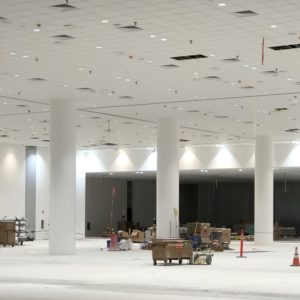
After four years of tiptoeing around ongoing event business to expand and update the circa 1981 Moscone Center in the heart of the financial and arts districts, San Francisco Tourism Improvement District Management Corporation will tear down the temporary walls on January 3 to welcome 157,000 sq. ft. of new “front of house” space.

The renovation is about more than added elbow room, however.

“We surveyed planners and heard consistently that what they wanted was open space and flexibility,” said Lynn Farzaroli, senior director of the Moscone Expansion. That is why the highlight of the $551 million project is 504,914 sq. ft. of contiguous space. Before expansion, the largest uninterrupted area was 260,000 sq. ft. To put that number into perspective, the exhibition area can now accommodate 2,300 10-foot square booths and still serve other events in separate parts of the event campus.

“We are already booking big events for next year that could not have fit in the old space,” Farzaroli said. San Francisco Travel Association President and CEO Joe D’Alessandro is expecting a record year for visitors to the city—1.2 million room nights are already booked.

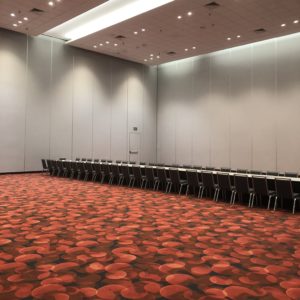
To fulfill the request for flexibility, designers incorporated multiple tracks for airwalls that will allow any group to feel cozy, plus 82 separate meeting rooms. Twenty loading docks in three separate areas with drive-on access to the exhibit halls ease moves in and out.

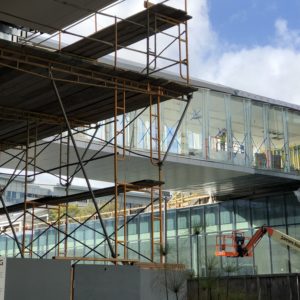
Smart Meetings took a hard hat tour as final touches were being added and came back with a list of features that make the space transformative.

RelatedProgress Report: Global Convention Center Outlook

View Central

The improvements are visible from the moment attendees enter the space. A soaring prefunction lobby is sheathed in windows for dramatic views of the city and surrounding Yerba Buena Gardens. Another 25,000 sq. ft. of elevated outdoor terraces show off the stunning location.

Inside, decor subtly draws from the “International Orange” of Golden Gate Bridge in the otherwise neutral carpet and walls.

Wired

Two massive LED screens wrap around the interior wall. Obscura Digital, the company behind the immersive experiences at nearby Salesforce headquarters, installed the nearly 75-foot displays and will manage the visual storytelling technology for groups.

Plus, a robust wireless system allows Moscone to support as many as 60,000 devices at once so attendees can download, stream and selfie at will.

Public Face

Moscone Center construction

Much of the art planned for the site will be outside the building so both attendees and passers-by can enjoy the investment. Returning to Moscone from a stay at M.H. de Young Museum is a colorful Keith Harring painted aluminum piece. A series of new sculptures by New York City designer Sarah Sze called Double Horizon will join a mural by California surreal painter Brendan Monroe.

Moscone will also now be home to San Francisco Visitor Information Center. A new, glass-walled space will welcome tourists and feature information about only-in-SF experiences.

MoreSmart Dispatch: Opening My Heart to San Francisco

Earth Friendly

The project is on track to earn the highest LEED certification, Platinum, based on its ambitious resource-efficiency features. When complete, it will host the largest solar panel array in the city and the largest publicly owned solar power system in the country. The water recycling system will recover 15 million gallons a year for reuse in landscaping and street cleaning.

An in-house recycling system will reduce the impact of events and streamline the process for planners. Even the hand soap in the restrooms is environmentally friendly. Plus, its central location near 20,000 hotel rooms and major attractions means less fuel and logistical energy burned because no one will have to be bused to the off-site venue.

Smartphones have technically been in existence since 1992, but in the last decade they have become an indispensable part of the planner’s on-the-go life. That is why optimizing use of all the helpful apps popping up every week is essential for event professionals today. Speaker and productivity expert Audrey Thomas, CSP, recently shared tips with attendees at FICP for making the most out of those powerful pocket computers. Here are her top tips for getting phone smart.

Related: Smartphone Etiquette 101

Phone Features

1. Create a folder to minimize screen clutter by holding your finger on an app until it wiggles then dragging it over to another app that you want to group it with in a folder. Possible categories include travel, fitness, social media and games. This—and deleting ones you don’t use anymore—will eliminate having to flip through pages of applications to reach a desired app.

2. Capture a screenshot of important images that will need later viewing by holding down the power and home buttons at the same time. The screenshot feature can be an enormous help and save time if you need to access an important image quickly but are facing a spotty connection.

3. Use your mobile hotspot to limit the possibility of losing connection when you’re taking an important call or working remotely. Hotels and coffee shops often have large volumes of people on a single connection, resulting in poor reception. Your mobile hotspot is your own personal Wi-Fi connection, so it is both faster and more secure.

4. Put your phone in airplane mode on more occasions than just traveling. Telling your phone to go offline during meetings minimizes the chances of checking your phone during a professional gathering and significantly conserves battery.

Related: Putting your Audiences’ Phones to Use

Phone Applications

How do you pick which apps to adopt from the overwhelming number of cool tools out there? Thomas recommends:

1. Dark Sky, a weather application you can count on. Yes, your phone probably already has one of these, but Dark Sky is a lot more precise than your preinstalled weather app. With minute-by-minute forecasts, it will inform you the exact moment rain begins and ends.

2. Zello is a push-to-talk application, much like a walkie talkie. Unlike your traditional walkie talkie, the number of channels and users per channel is limitless. Since most people are already carrying mobile devices, logging on can eliminate one more thing planners need to carry.

3. Text Later allows you to set up text messages at any time or date that you choose. Never forget to send out that important text message again. Note: Text Later is only available on Android. Apple users can use AutoSender.

4. Trello, the project organization and management app, is an easy way to stay organized. It allows planners to add details, comments and checklists for the entire team.

3 New Ways to Plan a Holiday Meeting in Wine Country
Las Alcobas

Once a year you gather the entire company for a celebration of what makes your business special. Why not hold it somewhere memorable—say, the rolling hills of California’s Wine Country? The Napa Valley now offers three new ways to meet vineside.

Gourmet Meetings

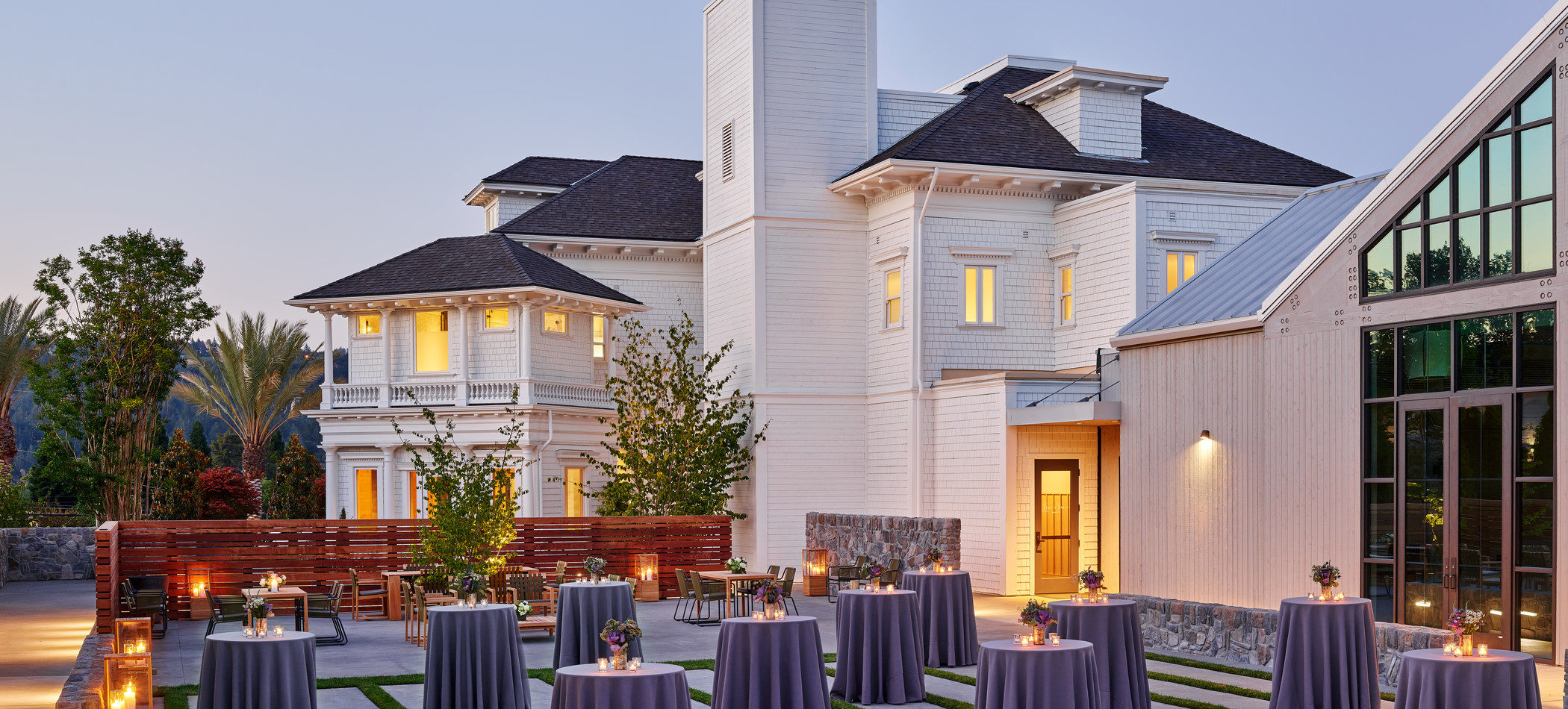
The town of St. Helena welcomed a new boutique luxury property in May that is getting national attention. The 68 guest rooms at Las Alcobas (the alcoves) are nestled around a beautifully restored 1907 Georgian mansion that houses Acacia House restaurant, the brainchild of celebrity chef Chris Cosentino. The same attention to detail he gives to the caviar dressing in the Iberico Pork Schnitzel is evident in the modern suites, many of which feature views of Beringer Vineyards and balcony firepits.

MoreWine Country: Beyond the Bottle

Some 4,500 sq. ft. of meeting space includes a refined boardroom just steps from the restaurant, vaulted Acacia Barn for up to 120 people and outdoor event space that opens the gathering up to the vineyard views. “The vineyard is the star year-round,” says General Manager Alain Negueloua. Even the storied Atrio spa experience can be tailored to the group to provide custom-blended aromatherapy for treatments on-site or as a parting gift.

Note to planners: Guests don’t even have to go to the lobby to check in. After a personal welcome when they drop their car with the valet, room concierges accompany them to their rooms to explain the features of the oversized marble bathrooms and remote-controlled blinds.

Estate Events

The big reveal of The Estate at Yountville transformation occurred in November when Hotel Villagio threw open the doors on 112 cozy guest rooms as part of a larger property makeover of the former Groezinger Winery that includes 80 guest rooms at Vintage House. Elizabeth Grillos, area director of sales and marketing, describes the new addition as Vintage House’s naughty sister—with its faux fur throws, dark wood, in-room fireplaces and terraces and polished lobby bar. Around the corner, The Villa at the Estate is a five-bedroom mansion with a private pool and gaming area that can be rented out as a luxurious private retreat.

california wine country
Hotel Villagio

In all, the property’s 23 acres cover almost half the town of Yountville, with Thomas Keller’s famed The French Laundry gardens acting as the northern border. All three properties offer easy access to The Estate’s V Marketplace, home to another celebrity chef creation, Michael Chiarello’s Bottega Napa Valley and acclaimed The Spa at the Estate.

The cherry on top of this decadent meeting destination is the new The Social at The Estate, a free-standing barn-style venue with 15,608 sq. ft., including a garden area to soak in vineyard views that is currently booking memorable events for 2019.

Elevated Housing

Vista Collina
Vista Collina

The Meritage Resort and Spa in Napa has long been a favored destination for event professionals because of its vineyard location and abundant meeting space (not to mention a bowling alley and executive spa). In August, Vista Collina Resort, a sister property, opened across the street, bringing the total indoor and outdoor meeting space to 80,000 sq. ft. with 467 guest rooms.

The Vintner’s Room offers a soaring, exposed-brick and rugged-wood space with levered glass sides that open up on Village Lawn. Plus, a rooftop terrace can serve up wine and views to 120 people. The addition is also home to nine tasting rooms and a professional cooking school. An underground estate cave on the Meritage side of the property hosts intimate corporate wine dinners.

One of the most daring and complex high-wire acts is organizing a citywide event. Spanning multiple hotels, thousands of rooms and millions of square feet of event space, a citywide requires a planner to manage a long list of responsibilities to make it successful. According to recent Smart Meetings webinar hosts Elaine Williams and Sallee Pavlovich, however, the answers are right at planners’ fingertips.

Williams is director of sales at New Orleans Ernest N. Morial Convention Center, while Pavlovich is director of corporate and trade show sales at New Orleans & Company; together, they have more than 60 years of industry experience. In their webinar, “Secrets to Planning a Foolproof Citywide,” they detailed the simple—yet often overlooked—advantages of working with your destination’s convention and visitors bureau, and the importance of planning ahead.

Communicate Often

It’s particularly important to use local CVB and convention center personnel as advocates, Williams says. “Whoever has the best information, make sure that you involve them as much as possible,” she says. “Make sure you are communicating.”

Many of the biggest problems, from conflicting events to shuttle shortages, can all be worked out by involving the local CVB in each step of the process. Open and honest communication sets up reasonable expectations. A detailed history of an event’s annual performance gives planners a major asset to share with a city while preparing. Be clear about an event’s requirements and limitations, to access the appropriate resources.

In addition to avoiding problems, CVBs and local teams can create new opportunities. “People are not looking to go to a meeting anymore,” Williams says. “They are looking for an experience.”

By reaching out to people who know the destination and the activities around the city, planners can use other events, such as festivals and parades, to build a stand-out, local experience for their attendees. Planners can also pull the destination into their own events by featuring cooking classes with local cuisine, team-building voluntourism, performances from local artists and more.

“People aren’t looking just to come here, learn something and leave,” Williams says. “The destination is now part of why people choose to come to a meeting.”

Start Early

Above all, Williams and Pavlovich recommend planning as early as possible. “The most important thing that a customer can do is book as early as they can right now,” Pavlovich says. “There have been years where it’s not that critical, but in this state [Louisiana], time and place, booking ahead is to your benefit.”

Due to the cycle of the market, business conditions for hotels are currently favorable, leading to tougher negotiations and competition for planners in the next few years. As a result, booking rooms, as well as establishing inspection days, as early as possible will be a major help to everyone involved.

For the rest of Williams and Pavlovich’s tips, including help with contracts, marketing and food management, check out their full webinar here.

marriott san francisco strike ends

After nearly two months, striking hotel workers at seven San Francisco hotels operated by Marriott International have settled on a new labor contract. If ratified by the membership of Unite Here Local 2 today, the nearly 2,500 workers involved could return to work by Wednesday, Dec. 5, ending the city’s largest hotel strike in decades.

The San Francisco walkout was the last of eight Marriott labor disputes in the United States to end in recent weeks. The others were in three more California cities—Oakland, San Jose and San Diego—as well as Boston, Detroit and two Hawaii islands, Maui and Oahu.

MoreHow Can We Protect Ourselves After the Marriott Data Breach?

Specifics of the agreement between Marriott and its union-represented employees were not immediately divulged, but the strike centered on demands for higher pay and several workplace issues. “We think it meets all of our goals and expectations,” Anand Singh, president of Local 2, told San Francisco Chronicle. “This immediately sets the standard for hotel workers in the city.”

“We look forward to welcoming our associates back to work,” a Marriott spokesperson said.

Putting weeks of strikes involving more than 7,600 workers behind it came as welcome news to Marriott only days after it announced a security breach of guest data that could impact up to 500 million guests of Starwood properties that the company acquired in 2016.