Meeting Professional Magazine

Meeting Professionals International (MPI) is joining forces with the educational offerings of International Association of Exhibitions and Events (IAEE) in a partnership that will come to fruition on the pages of The Meeting Professional magazine.

“We are excited to be partnering with MPI and are confident our membership will find The Meeting Professional very informative and engaging,” said IAEE president and CEO David DuBois. “We are looking forward to bringing additional perspective to the magazine and building new relationships with MPI members in the process.”

The two associations have formed an agreement to increase awareness of both organizations through MPI’s magazine, which circulates each month to MPI members. Starting in January, a digital version of the meetings publication will also be offered to IAEE members in a mobile-friendly format. IAEE will also work closely to develop new magazine content for meeting and event planners.

“The partnership with IAEE is an opportunity for our associations to address the growing need for collaboration between the meeting, tradeshow and event principles,” said Paul Van Deventer, president and CEO of MPI. “Our memberships rely heavily on each other to be successful and we are honored to be able to offer The Meeting Professional as a channel to help bring our business communities together.”

It has been a busy year of for MPI. The global meeting and event industry association recently acquired Plan Your Meetings, an Atlanta-based company that produces a digital resources and tools for event planners. Earlier this year, MPI also purchased the Healthcare Meeting Compliance Certificate program from International Medical Meeting Professionals Association (IMMPA).

MPI and IAEE are two of the largest exhibition and event industry associations in the world. MPI provides education and networking opportunities and business exchanges for its 18,500 members that belong to more than 80 chapters and clubs in 22 countries. IAEE organizes more than 20,000 exhibitions and buyer-seller events around the world, and promotes face-to-face events for business development and growth.

event-design-principlesebookIf there’s one thing the events industry doesn’t get enough of, it’s event design training. Event project management courses are abundant, and blog posts on event marketing can be easily found, but for whatever reason it isn’t easy to find high-quality resources on design principles for event planners.

When you think about it, that’s too bad, since the design of things like an event website, or the event registration experience, or even the banners displayed at an event, are the sort of things that define an event’s visual identity. In turn, that identity helps to shape how the event is perceived by attendees, speakers, sponsors and other key stakeholders.

In short, event design is far more important than planners might realize, so this article will introduce readers to three basic that can be used to make sound event design decisions.

Balance

One of the most fundamental principles of design is balance, this design principle is something that many can understand visually, thought it can be difficult to articulate since many different variables comprise a balanced design.

Essentially, a balanced design has the ability to impart a feeling of order. Since things feel as though they are “in place” and organized, the viewer tends to think that what’s happening behind the scenes is well organized. (Whether or not that’s true is another story).

Take a look at the image below, even though the objects are spaced symmetrically, the entire design feels out of balance because one side is colored differently.

event-design-principles-1

Image Source DigitalTutors.com

The right side of the image above appears to be more dominant because of the bold shading. In contrast to this unbalanced design, take a look at the image below, this balanced design uses symmetrical shading, repetition and spacing to create a feeling of order.

event-design-priniciples-2

For event organizers who are organizing professional events, balance is a design concept they’ll want to master. It balanced design imparts a sense of order, and as a result, viewers feel as though the event is well run and professional.

Asymmetrical designs are not valueless, they make an excellent choice for event organizers who want to convey a sense of energy and creativity.

Color Psychology

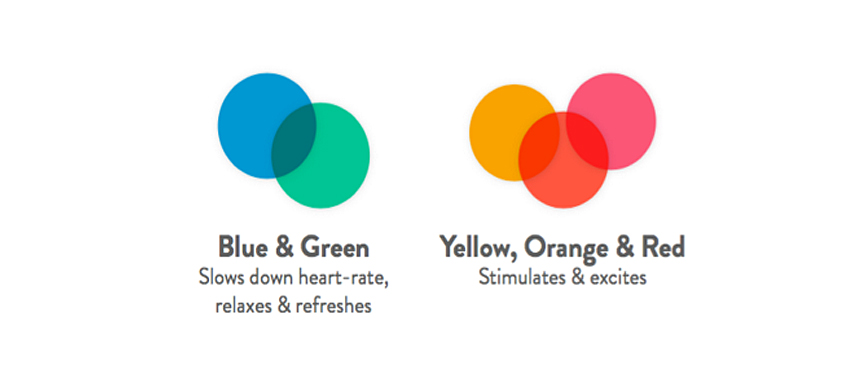
Clearly there is a psychological relationship between mood and color. There’s a reason that sayings like “seeing red,” or “feeling blue” have real staying power in our vernacular.

Intuitively we associate certain colors with certain feelings, event planners devising a design theme for their events should be aware of the psychological impact color can have on audience members.
bizzabo-event-design

Image Source Bizzabo’s Event Design eBook

In the guide above, you can see that colors in the blue and green family tend to slow viewers’ heart rate, causing people to feel relaxed. In contrast, colors in the red, yellow and orange family stimulate and excite viewers.

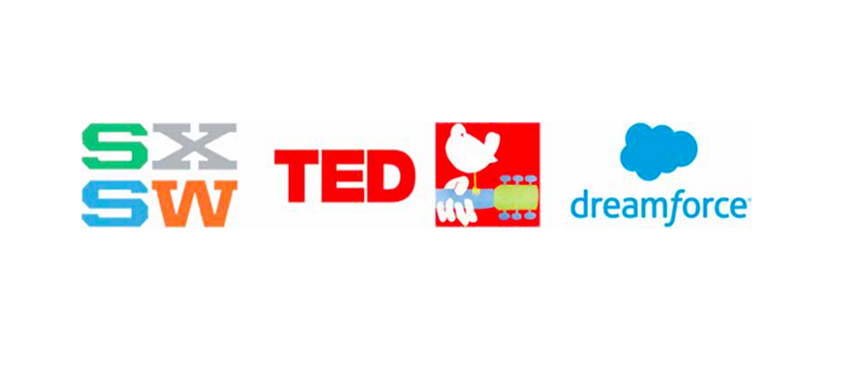
Below, are a few examples of event logos that successfully make use of various color combinations, in addition to using the principles of balance and asymmetry to clearly convey the ethos of the event.
event-principles

Image Source Bizzabo’s Event Design eBook

South By Southwest (left) uses a mix of refreshing and energizing colors to communicate the idea that the event is about exciting and refreshing new ideas.

TED (middle left) uses a bright red color to symbolize the energy behind innovation, and salesforce (right) uses a light blue color to communicate a sense of professional steadiness.

The 1969 Woodstock logo (middle right) uses Asymmetry to convey a sense of newness, and red to impart a feeling of vitality.

Typography

When you think about it, typography is a design element that we interact with quite a bit. From the type on an event website, to the promotional material shared on social media, to email materials, event apps and more, typography plays a pivotal if subtle role in shaping an event’s brand identity.

Merriam Webster defines typography as “: the style, arrangement, or appearance of printed letters on a page,” and event organizers have plenty of options when it comes to choosing a typographical theme.

Similar to choosing a set of colors for your event, organizers should choose typefaces the elicit the emotional feeling they are trying to convey to attendees.

Innovative events might want to stick with san serif typefaces as they typically look sleeker. Conversely, organizers planning more traditional events should stick with serif typefaces as they tend to feel more classical.

Above all else, event organizers must use typefaces consistently, it won’t do to have some serif and san serif typefaces haphazardly displayed on various digital and print materials.

Consistency is the key to using typography successfully.

Conclusion: Implementing An Event Design Strategy

Event design has the power to turn an average event into something that feels special, that is if it’s done well. By focusing on the basics, like creating balance or asymmetry (depending on the event), or selecting a series of colors that fits with your event mission, organizers can instill in attendees a deeper understanding of the event or conference.

Typography is also a key element to creating an event design that feels professional and consistent.

Event organizers should also know that these design principles impact things like the design of their event website, event space, and even event swag. Unfortunately design best practices for these assets is for another day, but readers can grab a comprehensive eBook on event design at the link in the meantime.


bizzabo-event-designDavid Epstein is the Content Marketing Manager at Bizzabo. Launched in July 2012, Bizzabo is the world’s first event success platform. It helps organizers create successful events by empowering them to build amazing websites, sell tickets, grow communities, go mobile and maximize event experiences – using a beautiful, user-friendly platform.


Greatest Strategies for Meeting Planners

This year, meetings and events were elevated to a whole new level. Thanks to the latest technologies, streamlined event management practices and increased attendee engagement, meetings are connecting more people than ever before. Take a look at 2015’s greatest strategies for meeting planners, from measuring and calculating ROI to innovative design elements and event marketing tools.

event-design-principlesebook

1. Event Design Principles to Create Stunning Meeting Experiences

Event design is far more important than planners might realize, so this article will introduce readers to three basic principles that can be used to make sound event design decisions.

8 Ways Conferences Are Evolving

2. 8 Ways Conferences Are Evolving

Event professionals who plan conferences are observing that the traditional old model is rapidly becoming extinct. Here are 8 ways conferences are evolving to become more inclusive and interactive.

Meeting Outcomes

3. 5 Mindsets That Impact Meeting Outcomes

In a blog post entitled “Attitudes That Separate Growing, Healthy Conferences From Declining Ones,” Jeff Hurt discusses the major factors that he believes make the difference between a robust or a lackadaisical meeting.

6 Tips for Last Minute Events

4. 6 Tips for Last-Minute Events

Dan McCarthy, event manager at VenueSeeker, suggests 6 tips for coming up with an organized plan for last-minute events.

reasons-to-meet-in-person

5. 5 Compelling Reasons to Meet In Person

Even though a recent Meeting Professional International survey shows that virtual attendance is projected to grow at twice the rate of live attendance, there are five solid reasons why live, person-to-person meetings are more conducive for business.

get-the-most-out-of-meetings

6. 5 Strategies to Get the Most Out Of Meetings

Many employees probably groan and grumble when they see that the boss has scheduled yet another meeting. But Cameron Herold, a business development expert and author, insists it doesn’t need to be that way.

innovate-meeting-design

7. 6 Quick Tips to Innovate Meeting Design

Simply put, design can make or break a meeting. Innovative, thoughtful meeting design can significantly enhance attendee engagement and productivity.

Periscope to Promote Events

8. 6 Tips for Using Periscope to Promote Events

Although live video is nothing new, live-streaming platforms are having a major moment, especially in the meetings sphere. Using video apps is becoming a viable method of connecting with attendees in a more personal way.

multisensory-events

9. Wow Attendees with Multisensory Events

According to a survey of more than 600 meeting and event planners, only 27 percent of respondents believe all five senses─sight, sound, taste, smell and touch─are being used effectively throughout the industry.

hybrid-meetings-and-events

10. Hybrid Meetings: Big Effort, Big Reward

The potential value of meetings has gone up significantly due to the ability to conduct them in a hybrid manner. But what exactly does hybrid mean? In short, a hybrid meeting involves an in-person audience, as well as a remote audience connected via video and audio technology.

Take Event Management Online

11. Techno Files: Take Event Management Online

Event management tech streamlines event processes and allows planners to manage everything in one place, among other benefits, and there are many ways to put it to effective use.

new meeting trends

12. 5 New Meeting Trends to be Aware of

Technology is changing the face of meetings today. Blue Jeans Network, a global cloud-based video conferencing service provider, recently released its third-annual State of the Modern Meeting Report, which illustrates 5 new meeting trends.

Low Cost Tech Tools

13. 14 Great Low-Cost Tech Tools for Planners

Do you want to know which low-cost tech tool can transform company data into a quality infographic, or what free app can help schedule a virtual meeting time convenient for workers scattered across the globe? Planners need look no further.

marketing-your-event

14. 16 Best Practices for Marketing Your Event

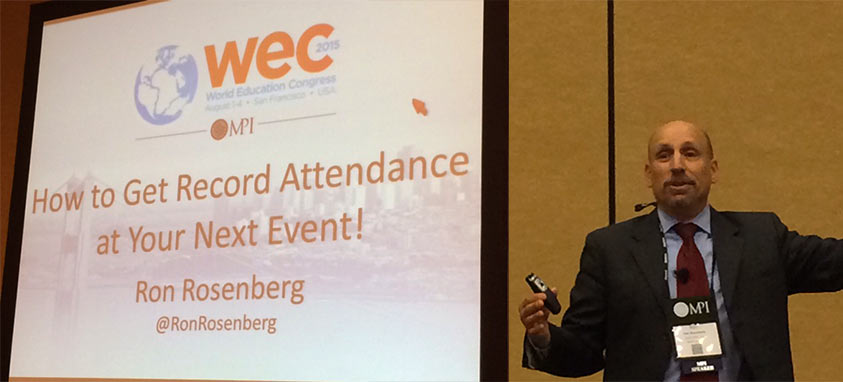
A big dilemma for meeting professionals is how to attract attendees to events. Marketing expert Ron Rosenberg gave a high-energy presentation at the 2015 Meeting Professional International’s World Education Congress that included several tips.

in the event of a crisis

15. 9 Tips In the Event of a Crisis

Most meeting planners are well-aware of how unpredictable weather, last-minute venue changes and eleventh hour cancellations can wreak havoc if there is no back-up plan in place. The key is to make sure your team is ultra-prepared for the absolute worst.

meeting-professionals-become-mentally-tougherIn order to be successful, meeting professionals must be smart, efficient, resilient and mentally tough. In her book 13 Things Mentally Strong People Don’t Do, psychotherapist Amy Morin states that genetics, personality and life experience all contribute to one’s mental strength. A posting on Business Insider details Morin’s philosophy.
Meeting professionals can grow their grit and get mentally tougher with these 10 tips:

1. Become aware of your emotions. It’s not about suppressing or controlling them—it’s about monitoring them and learning how they influence your thoughts and behaviors. Sometimes you may have to behave in a manner contrary to your feelings.

2. Don’t berate yourself for making mistakes. Stand up to your inner critic, and practice self-compassion.

3. When a mistake occurs, take responsibility and learn from it. Seek solutions so the situation does not repeat itself.

4. Practice realistic optimism. The mentally tough understand that being overly optimistic can lead to disappointment; negativity can be counterproductive. Try for somewhere in the middle.

5. Don’t give away your power. Establish physical and emotional boundaries. Don’t allow others to dictate how you should think, feel or behave.

6. Focus on problem solving and productive fixes, instead of complaining about what went wrong.

7. Keep your eye on the big picture, remembering that today’s choices influence tomorrow’s reality.

8. Recognize that there is always room for improvement. Each day presents a new opportunity to become mentally tougher.

9. Don’t take it personally. The world is not out to get you. The mentally tough separate themselves from the things that happen to them.

10. Let it go. Don’t get hung up on what is unimportant or irrelevant. Worrying or obsessing about a problem does not solve it.

Event Professionals to Handle Tough Q&As

When making presentations, many event professionals freeze when it comes to the Q&As. Unsure of what to expect, they worry about fielding tough questions from the audience. Experts point out that this is perfectly natural. Opening the floor to questions after a presentation opens the door to the unknown. Although you may be perceived as an expert, the audience could pose a question you don’t know the answer to, challenging your knowledge or credibility.

In a blog posting on HubSpot, Carly Stec offers 5 ways for event professionals to handle tough Q&As:

1. Don’t dodge or make up random answers to difficult questions. Your audience will see right through that. The wiser approach is to admit that you don’t know the answer, but are happy to investigate it. Then be sure to follow up. They will appreciate your honesty.

2. Take your time when answering a tough question. Summarize your understanding of what was asked, and ask for clarification so you don’t draw premature conclusions. Give yourself time to think before formulating a response. Pausing is not a sign of uncertainty.

3. Remain polite if an audience member becomes aggressive or stages a personal attack. Don’t raise your tone or become defensive. Defer his or her question, suggesting that you discuss it privately after the presentation. During that encounter, keep the focus on the question, rather than letting it become personal.

4. Don’t blindly respond to a difficult question by saying, “That’s a good question.” Such a response may cause other audience members to feel that their other questions were inadequate. Instead, say, “I’m glad you asked that.”

5. In general, embrace rather than avoid questions…they indicate audience interest and engagement. Encourage interaction by asking audience members to expand upon their own experiences with the topic.

meeting-package-trendsConvention centers are striving to satisfy planners’ requests by offering innovative, customized meeting packages focusing on team-building, high-bandwidth Wi-Fi, local cultural trips and more, according to a new study.


These are among the highlights in the International Association of Conference Centre (IACC)  report, Top Meeting Package Trends for 2016, which is based on responses of 378 of the association’s worldwide members. Meeting packages provide planners with required components in a per-person bundle. An IACC-certified meetings package includes food and beverage, meeting room hire and basic audiovisual items.

The IACC identified seven main trends in its report.

Ninety-five percent of venues have offered nontraditional meeting packages for more than five years: IACC members have developed flexible, creative packages to meet the specific needs and requirements of planners and attendees.

Two-thirds of attendee packages were created and developed by leaders at IACC-member venues: The leaders have used their specialized knowledge in selling meeting space in an inclusive, cooperative manner. One-third reported that their planner clients directly assisted in creative a package that met their group’s needs.

Fifty-five percent of those surveyed reported that meeting planners want to tailor a package to meet their specific needs: Inclusive delegate packages provide some options for groups, but tailoring a package for individual clients is another step. The survey shows that 56 percent of the packages that include guest room accommodations and meals are becoming more customized.

Sixty-five percent of planners are starting to request new inclusions: These requests extend beyond the typical meeting room, F&B and tech. The leading additional requests are for team building, local cultural trips, coaching and facilitation. Other popular requests are for high bandwidth Wi-Fi to support the use of collaborative technologies.

F&B tops the list of components included in customized packages: Seventy-six percent of those surveyed reported that they tailored packages with nonstandard F&B items. Indoor team building and meeting room configurations tied for second at 76 percent, followed by outdoor team building.

Attendee packages make good sense of third parties, as well: Thirty-five percent of those responding reported that third-party booking agents could consider all components of the attendee package as part of their commercial agreement with the venue.

Flexible meeting packages are here to stay: Although they’ve become widespread among IACC venue only since the economic downturn, everyone surveyed agreed that the packages are here for the long term and that this shows that they are true partners with their clients and understand their needs.

Meetings Business

Convention Industry Council (CIC), Social Tables, and Meetings Mean Business Coalition (MMBC), announced Fuse 2016, a joint educational roadshow that will bring planners and properties together to reinvent the way meetings business is done before their events begin.

CIC, Social Tables, and MMBC are organizing Fuse to facilitate a discussion about how meeting planners and properties can work together to make meetings better, long before the first attendee arrives. Fuse is not only an educational roadshow for planners and properties; it’s an opportunity for innovation and industry growth.

Each organization involved brings different strengths to the table. Convention Industry Council represents certified meeting professionals (CMPs) and the planner community. Meetings Mean Business Coalition represents industry leaders and the economic impact of meetings. Social Tables represents a platform to bring planners and properties together. Together, they have the unique ability to stimulate conversations between their constituencies.

“The definition of the word ‘Fuse’ is ‘to join or blend to form a single entity,’ which is what collaboration in the hospitality industry yields: a joint partnership by planners and properties that achieve shared business objectives,” says Karen Kotowski, chief executive officer for Convention Industry Council.

“The two common themes in industry education right now are attendee experiences and what occurs during events or meetings,” says Social Tables CEO Dan Berger. “There’s no discussion about how properties and planners can support each other in the planning process. How do they achieve business objectives together? Fuse will provide a foundation for how this process can be improved.”

The five-city roadshow, sponsored by Loews Hotels, PSAV and American Furniture Rentals (AFR) will kick off in Washington, DC, and then travel to Los Angeles, Orlando, Dallas and Chicago. Each stop will feature a separate “Road to CMP Breakfast Club” for those interested in the program, followed by a robust breakout schedule and a debate-style keynote. Loews Hotels, widely recognized for its innovation and leadership in the travel industry, is the headlining hotel sponsor.

“We are excited to support the launch of this important series,” says Alisha White, global sales executive director for Loews Hotels. “Loews Hotels is committed to creating an authentic experience for our guests. We’re eager to support Convention Industry Council and its partners in exploring opportunities to heighten the attendee experience before a conference begins.”

Every aspect of the schedule has been carefully curated to be CEU-eligible for the CMP program, including breakouts on delivering business cases for meetings, research-backed insight on achieving effective site inspections, creating an appealing and functional learning environment and how to overcome connectivity barriers.

“Our industry is all about creating personal connections, driving positive business results and building strong communities. Fuse will do just that within the meetings industry by bringing planners and property owners face-to-face to foster personal connections that yield positive business objectives and build a stronger hospitality community,” says Nan Marchand Beauvois, manager of Meetings Mean Business Coalition.

This roadshow is open to all planners and property professionals. Certified meeting professionals will receive a discount for attending.

ease-meeting-planners-stressMeeting planners have all experienced the gratifying, joyous feeling of coordinating a successful conference or event, but they face many obstacles along the way.
Some challenges can feel overwhelming, but can be met by adopting new or different approaches. The following strategies, adapted from Event MB, can help to turn potential failures into successes.

Dealing with difficult people: Planners can be dragged down by whiny and demanding people, such as vendors who insist on always coming first when arranging a meeting and attendees who ask a million questions over and over. Many of these situations can be avoided by establishing clear, constructive relationships with everyone from the very beginning and by providing thoughtful, practical answers to their questions. Some people still might be annoying, and in those cases take a deep breath, relax and maintain a positive attitude.

Handling slowness: Last-minute RSVPs, late responses to inquires about entertainment and other instances of tardiness can present major problems for planners. It’s best to set up a firm due date for all attendees, speakers and vendors from the beginning. Also, make sure that your team members are prompt and pick up the slack when needed before, during and after the meeting.

Remaining patient: Planners have a definite set of expectations, including timetables that need to be met, but often, things don’t occur as expected. Attendees or caterers might arrive late, or audiovisual equipment might malfunction. In such cases, it’s normal to feel frustration, but it’s important to remain calm and not point fingers at anyone. You might later find that the attendees or caterers were caught in unusually heavy traffic, or that the malfunction was unavoidable. And even if someone is directly responsible, remain composed and help to find a positive solution.

Managing No-Shows: One of planners’ main headaches is speakers and registered participants who fail to show up. Everyone who commits to the event should be informed in no uncertain terms that absences are permitted only in unusual circumstances, such as family emergencies. Also, it’s essential to have backup speakers ready and alternative plans if participants fail to appear.

Backing Away: Some planners have a habit of taking on too much work. To avoid unnecessary stress and exhaustion, they need to rely on and trust their staffs to sometimes take the lead. Backing away a bit is a strength, not a weakness: Strong planners have very capable teams that allow them to get some rest and remain healthy.

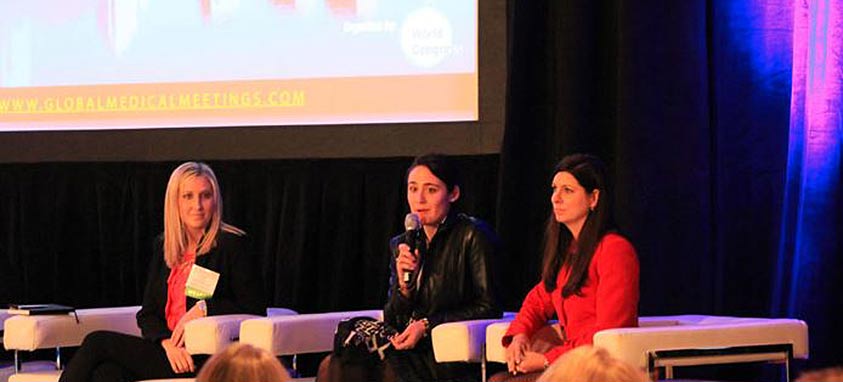
medical-meetings-summit-panelThe fourth annual Global Pharmaceutical and Medical Meetings Summit will take place Feb. 10-12 at the Philadelphia Marriott Downtown, featuring the latest updates on record reporting, crisis management, partnerships and operational tips.

The summit kicks off on Feb. 10 with four workshops and a session that will allow attendees to earn the Meeting Professionals International (MPI) Healthcare Meeting Compliance Certificate.  The certificate program provides health care meeting compliance stakeholders with the knowledge and experience they need to successfully navigate the increasingly complex pharmaceutical, biotech and medical device regulatory environment.

On opening night, Philadelphia Convention and Visitors Bureau will host the kick-off party. Greater Philadelphia Life Sciences Congress (PHLLife), a division of Philadelphia CVB, is title sponsor for the compliance certificate.

To register for this important medical meetings event, click here.

Also on Feb. 10, Michael Lyons, who plays Speaker of the U.S. House of Representatives in the hit Netflix series House of Cards, will join Agnes Canonica, CMP, CMM, HMCC, to co-lead a seminar, “Enhancing and Positioning Your Personal Brand.” Lyons is a former hospitality and meetings executive who has emerged as a keynote speaker in the industry.

“I enjoy speaking to groups because I feel a need to share and pass on some of the insight and wisdom I have gained throughout my life,” Lyons says. “As the meetings industry looks for the next generation of talented thought leaders, helping those knowledgeable professionals rise to the next level in their careers requires a focus on managing and developing their personal brand.”

The workshop will walk participants through a road map of how to build and sustain their personal brand. Participants will learn how to clear a path for recognition, establish trust and rise to the top. Some of the takeaways will include how to create a distinct value proposition; develop accurate and effective self-appraisal skills; discover the abilities required to transform good ideas into an actionable game plan for success; and implement public speaking tips and tricks.

On Feb. 11, there will be a panel discussion on meeting department promotion, structures and organization. The panelists will be Isabelle Gordon from Bayer Healthcare, Michael Mahoney from Genentech and Joe Bierowski from Maritz Travel.medical-meetings-summit

Questions Successful Meeting Planners Ask

If you’ve ever wondered if all meeting planners share the same needs of constant self-questioning, curiosity, and a relentless need to improve, the answer is no. Not all of them. But the good ones certainly do.

Event ticketing company Eventbrite claims that asking yourself all of these questions is actually a good thing, because it pushes you to learn new things every day.

Here are seven questions successful meeting planners ask themselves every day:

1. Why?  A funny thing happens when we don’t ask why. We keep processes in place that may be inefficient, monotonous and dated instead of finding a newer and better alternative. The old saying “If it ain’t broke, don’t fix it” is not a motto for event planners to live by. So ask why. If the answer is “that’s how we’ve always done it,” then ask yourself a follow-up question: Is there a better way?

2. Why not?  An equally important question. When an idea you truly believe in is turned down, remember that it’s not necessarily the end. You’ve got to fight for it. When you ask why not, you force others to conceptualize your vision and if they have a legitimate answer, your great idea may just need some minor tweaking to work.

3. Is it realistic? Being creative is vital, but planners have to remember that what they create must be actionable. Consider your team size, your resources and, most importantly, your event’s goals.

4. What will the attendees think? A great planner can put him or herself in the attendees’ shoes when it comes to everything from location to content and even the little details. Event planners must understand who the attendees are and what they hope to get out of the event first before other factors come into play.

5. Am I getting the best deal? If there’s one thing a planner understands, it’s a budget. How to create it, how to keep it and what they can get for it. Contract negotiation is an art for event planners.

6. What can go wrong? A successful professional in any role knows it pays to play devil’s advocate. Look for the flaws in your plan. For example, what did you overlook? This will force a good planner to create a contingency plan.

7. What can be improved upon? Something doesn’t have to go wrong to need improvement. Whether it’s a different content strategy, a venue upgrade, or even a personal trait you feel the need to work on, something can always be better for next time. Finding this out isn’t a one-man job. Successful event planners listen to their attendees and staff and encourage feedback. They then turn that feedback into actionable items.