Voters undoubtedly had a lot on their minds as they headed to the polls Nov. 6, beyond whether candidates’ values and views on issues aligned with their own.

There was the spate of politically tinged violence that dominated headlines, the flood of negative ads on both sides aimed at swaying the still-undecided, and maybe for many, a feeling of despair that we are too polarized politically, that bipartisanship and politics as a means of solving problems have fallen to the wayside.

Elections can be very disaffecting for many of us. They can cause us to lose faith that we have a say in the outcomes, or even question generally why any of it matters. And without question, there are people in the world who do not want to see harmonious dialogue, who want to prey on fears and anxiety to sow unrest or feed their own ego.

But that’s not what our democracy is about, and not a trend we will tolerate as American institutions. With the election over, associations can help set the tone for discourse in the months and years ahead. Starting in January, we will have a divided government, but associations can be brokers for conversation and for compromise.

Associations serve as important refuges and communities for people who want to come together for a common purpose and achieve results that are positive for our nation and the world. This is the fundamental purpose of associations, to allow different voices to be heard, to accept that there are many ways of attacking a problem, and ultimately, to make our industries, our professions and our society stronger.

RelatedNew AWE Team Advocates for Gender Equality

Regardless of how we feel about the election results and the current political climate, association meetings can continue to be havens where we seek common ground, engage in productive conversations and respect our differences. The role of associations as information brokers and incubators for good ideas is more important than ever.

Associations can also continue to advocate for solutions to our nation’s problems. Associations amplify the voice of the industries and people they represent, and they lend expertise and real-world experience to policymakers who choose to listen and who want to achieve results for their constituencies.

Associations have a huge responsibility to the world. We understand that our stakeholders extend beyond just the members and volunteers we represent, to the communities in which we live and work and the far regions of the world where some innovation or standard we perpetuate helps improve someone’s quality of life. The election is over, but associations remain very much hard at work.

John Graham is the president and CEO of ASAE, Washington, D.C.
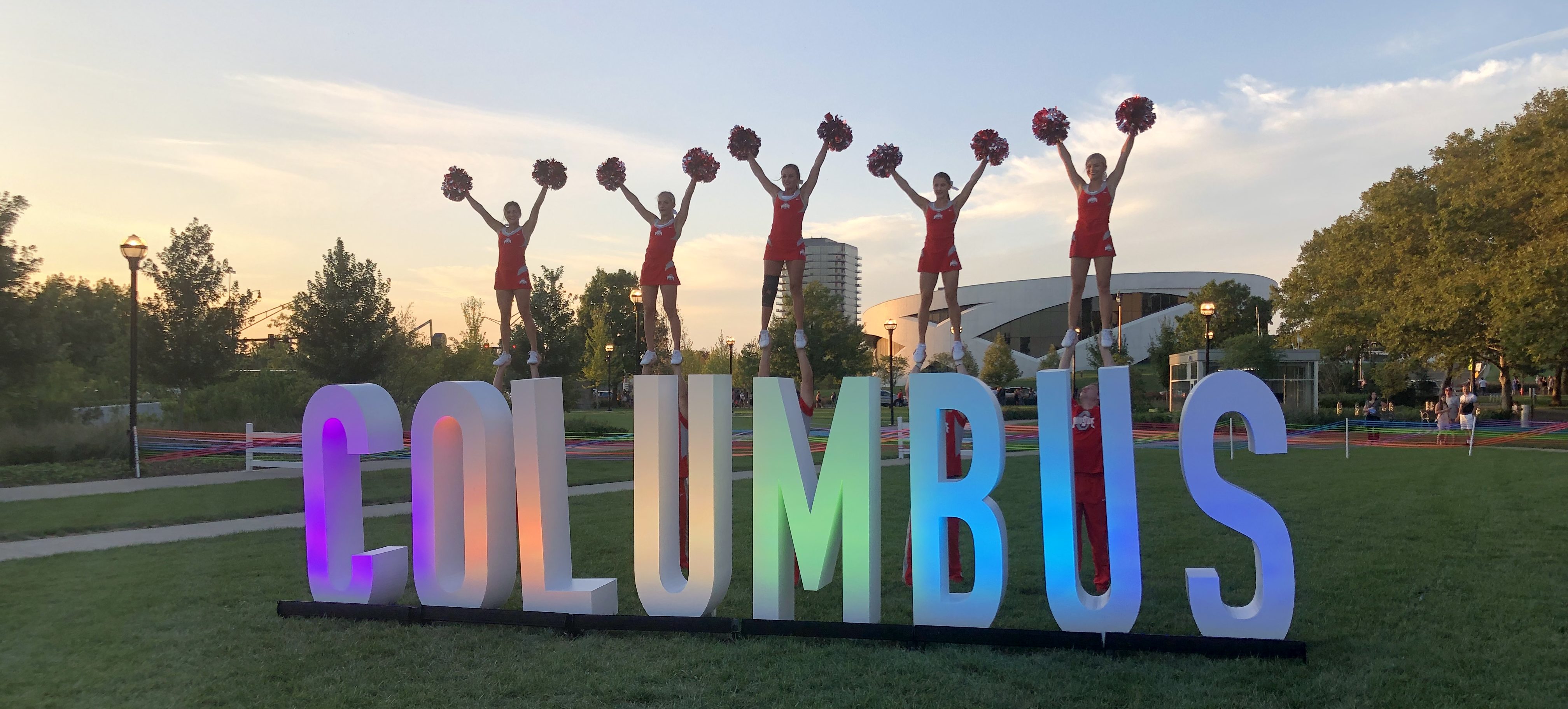
Play more, work better, influence wisely. That was the message on the opening Sunday of the Center for Association Leadership (ASAE)’s Annual Meeting and Exposition in Columbus, Ohio.

Citing research that shows people are as much as 20 percent more productive if they incorporate at least 15 minutes of play in a day—and the wisdom of children on the playground—the conference started on an energetic note with a call to have fun and innovate while doing the important work of running associations.

Interim ASAE CEO Susan Robertson and board chair Sal Martino took to the stage to pledge that while longtime leader John Graham is battling cancer, the group will continue to fight legislation that targets minorities and model civil discourse. “Under John’s leadership, ASAE has become a beacon for diversity and inclusion. Its community has made the differences between people as a source of strength and joy. It has united to protect the rights of people, no matter who they are…or where they come from,” Martino said.
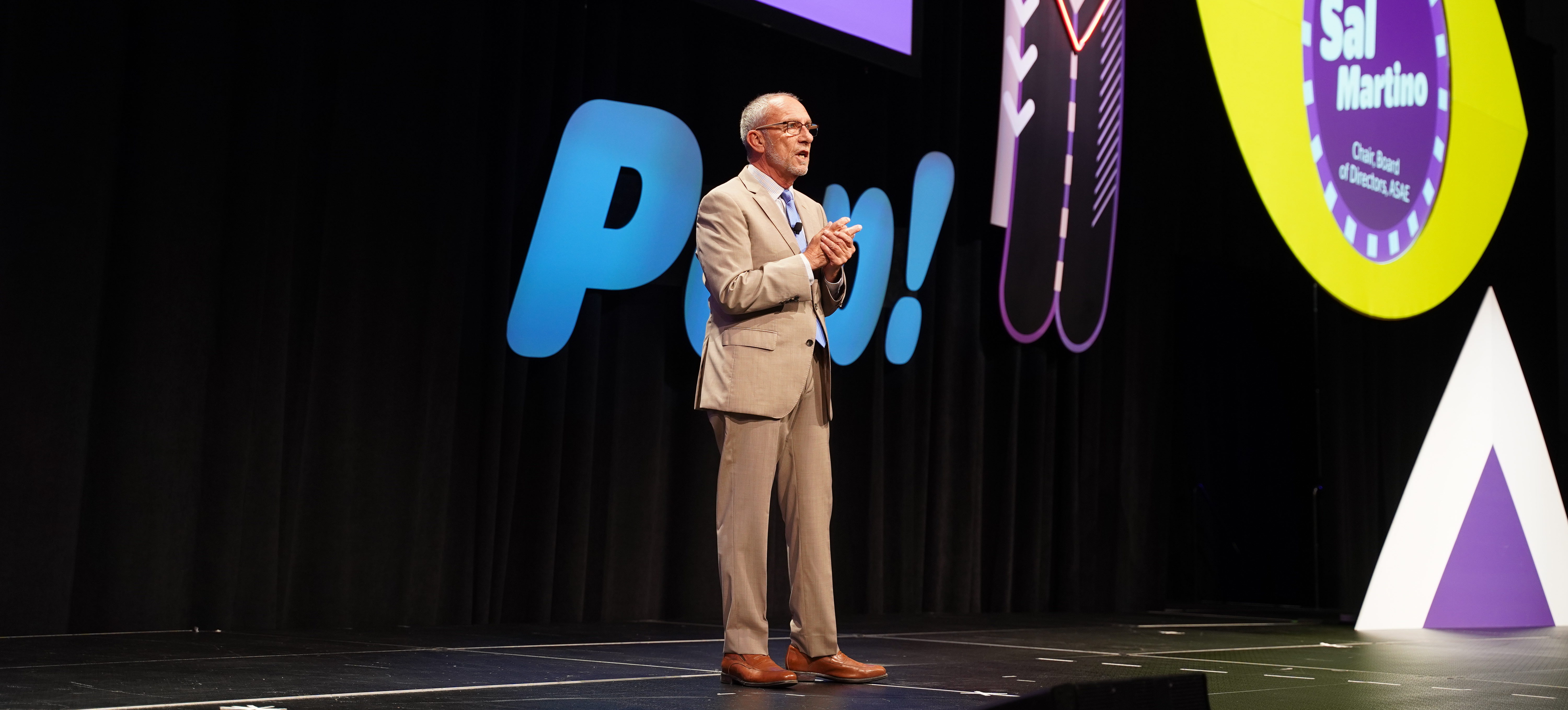
The group has advocated to expand civil right bills to include discrimination for sexual orientation and to fight for rights for those with disabilities. “Innovation and making the world better requires many points of view and debate done with transparency and civility,” said, Martino, who promoted the idea that the association community can lead the way and become a role model for civil discourse. 

Power for Good

Influencing the national debate requires smart deployment of the powerful resources associations command. Jeremy Heimans and Henry Timms, authors of New Power: How Power Works in Our Hyperconnected World—and How to Make it Work for You, shared tips for strategically leveraging old, concentrated ways of leading and new, more influence-driven methods of inciting change.

First, they defined the way groups are having outsized influences—for good and bad—in the Twitter years. “New power is current, made by many and shared rather than commanded; it is peer-driven and open,” Timms said. “The new power mindset expects collaboration, crowd wisdom, informal governance, a do-it-yourself ethic and radical transparency.”

In the new model, leaders can’t use a request for public input as window dressing. If you are asking for people to pay attention, you must be prepared to value their input (see controversy over naming a new Autosub Long-Rancho autonomous underwater vehicle Boaty McBoatface). You also must have legitimacy with the people you are talking to. They are going to be honest, so you have to be authentic, as well.

The keynote speakers suggested blending the two leadership styles by giving power within parameters and creating clear structure for participation, then committing to the process while iterating and improving the platform over time.

In its ideal form, new power will be used to help the least powerful, something associations excel at doing.

All-inclusive properties may seem like the holy grail of venues to meeting planners, and while they can make the planners job a lot easier, they don’t automatically guarantee a high-quality event. That is up to the planner.

In Smart Meetings’ latest webinar, Erin Wendell, senior director of event management at Maritz Travel, shared her tips and tricks when working with all-inclusive properties for incentive programs. Here is a wrap-up of what we learned.

Why All-Inclusive?

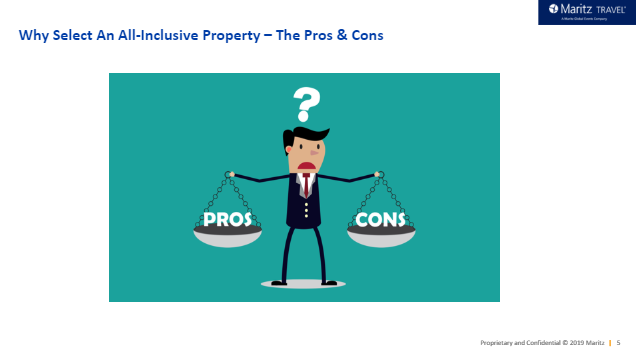
Wendell suggests using all-inclusives for incentive programs, noting the value they provide. Maritz Travel works with a handful of the many companies that offer all-inclusives in Mexico, the Caribbean, and Central and South America. Wendell, who has more than 10 years of experience, outlined the pros and cons she has found in using all-inclusives.

The pros center around cost. The cost is normally cheaper for the company and as guests don’t have to buy their own food and drinks, there are fewer out-of-pocket costs for them. Another pro is the safety that is heightened by gated properties.

Cons include limitations on F&B options, prices and dinner reservation availability; a tendency toward poor communication, as CSMs are often dealing with heavy workloads; issues that arise with unlimited free booze; and the sense that your guests may get “lost in the crowd,” as there are often many different groups staying at the same property.

More: Rewarding Trends in Incentive Travel

How to Work with an All-Inclusive Property

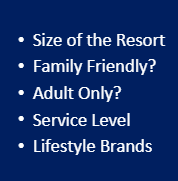
When selecting a property look at the property size, your budget, whether it is adults-only or family friendly, the service level and the brand. (Does your client want foam-pool parties or relaxing morning yoga sessions?)


When doing a (precontract) site inspection, make sure to explore room types, F&B options (meet the chef and dine in as many places as possible), audiovisual needs (even if you are not hosting meetings, ambience is important), spa offers and pick-up or departure points for activities—and see what the property can do to make the event special.

During your two- or three-night site inspection and prior to signing a contract, Wendell’s smart tip is “negotiate, negotiate, negotiate. I can’t say this enough; this is why our host companies hire us.”

During these negotiations, make sure you clearly state your expectations, including an agreed upon response time from your CSM.

A local DMC partner is often best for addressing transportation needs, to ensure quality, insurance and expert knowledge of the area and the entertainment it has to offer. It can also help with any decor and international shipping needs you may have.

Smart Tricks to Elevate Your Next Incentive Program

  • Look into offering F&B options that are not on the a la-carte menu. Talk to the chef ahead of time about this to ensure your guests are well fed.
  • Ask the venue if there is anything special it is willing to do for your guests (remember to negotiate). A welcome gift or drink upon arrival is always very appreciated.
  • Bring clients on the site inspection so they are confident in the property and excited about the event.
  • Encourage creativity in your property. Just because it hasn’t been done before doesn’t mean it can’t be done!
  • Listen to the full webinar here before planning your next all-inclusive.

More: Just Press Go: How All-Inclusives Can Exclude Worry for Planners

Many event planners worry about Q&A sessions: Will attendees have enough questions for the speaker? Will the questions be relevant? Will the speaker be able to answer the questions? On blog.sli.do, Juraj Holub offers five tips to make sure that potentially unpredictable Q&A sessions run smoothly:

1. Prepare the moderator

The moderator is the conductor driving your event, and it is his or her job to steer the conversation between presenter(s) and the audience. Make sure the moderator is properly briefed prior to the event. Discuss how the long the Q&A session will last, and how audience questions will be collected. It may be wise to brainstorm some questions in advance. Have a few provocative ones up your sleeve to jumpstart the Q&A and motivate the audience to join in.

2. Coordinate with the speaker(s)

Many speakers find the post-presentation Q&A session more stressful than the speech itself. Help them feel more confident by sharing expectations of how many questions they might expect, and the general nature of the questions. If time permits, the moderator could feed the speaker(s) some sample questions so they could practice in advance of the actual event.

3. Give presenters tips for handling questions

Planners must be sensitive when helping speakers prepare for the Q&A—you don’t want to make them feel incompetent! Ask them how they prefer to take questions, brainstorm potential subjects and rehearse together in a safe environment. If the speakers are amenable, send out a pre-event survey to determine what questions the audience might have in mind.

4. Don’t shortchange Q&A

Make sure to allot enough time for Q&A. The best thing that could happen is for attendees to become engaged in a lively discussion! The goal is to turn presentations into conversations. Aim for 40 minutes of talk, followed by 20 minutes of Q&A.

5. Collect questions from the audience

There are three ways to collect questions. Having audience members raise their hands is probably the oldest form of interaction. Unfortunately, very few audience members dare to ask questions this way, as no one wants to break the ice. Generally, this method works best in small groups. A growing number of people have embraced Twitter for live-tweeting and providing real-time feedback. Event planners can use their event hashtag for collecting questions, however be careful that the questions don’t get lost in the stream of other tweets. Finally, attendees can be encouraged to submit questions via their smartphones, and planners can crowd-source the best questions from the audience. As participants vote on the submitted questions, the truly interesting ones will rise to the top, making for a lively discussion. When choosing this solution, make sure the technology is sophisticated enough, and that the Wi-Fi is stable.

It happens more often than you’d like: You’re tasked with pulling off a conference or event just a few days beforehand. It’s a stressful situation, no doubt about it, but the job needs to be done, and done well. Besides, if there’s one thing meeting planners are good at, it’s multitasking, right?

The trick, says Dan McCarthy, event manager at VenueSeeker, is to come up with an organized plan. In a blog post on Bizzabo, he also suggests 6 tips for last-minute events. Our condensed version:

1. Focus on Quality, not Quantity

Zero in on prospective guests who really want to be at your event, rather than a mass mailing to every Tom, Dick and Harry who will turn out for the food and drinks. Take the time to send loyal followers a personal invitation by email, text or social media post. Or consider paid online advertisements through Google Adwords, Facebook or Twitter.

2. Involve Key Participants

If you have event speakers, emcees and affiliates, have them spread the word through their own contacts. You can encourage participation with incentives, such as a free subscription or a product of their choosing for members who sell X number of tickets.

You can also think of a sales reward tier level, especially for event partners, such as:

-5 tickets sold: $20 gift card
-10 tickets sold: free 6-month subscription of your service

3. Repeated Social Media Promotion

Mention your upcoming event multiple times a day on every social media channel you have to convince people to register. Tweets should include a  designated event hashtag. Posts should also have images, such as a photo of a speaker, the venue or a brief video.

Don’t forget LinkedIn or group forums on the site related to your niche where you can spread the message.

Create an event website and link it to your company page and any social media profiles. Have staff members do the same for their own social media accounts.

Consider a referral program or contest to increase your social media reach. The program can offer incentives for those who get a friend or colleague to attend the event.

4. Email Subscribers

Once you’ve taken care of top prospective attendees, reach out to your general audience. In your initial newsletter, mention the event in detail with a call-to-action and a link to the events page. Let subscribers know that space is limited and only 50 spots, for example, are available. Subsequent newsletters should say that only 40 spots remain, then 30, etc.

To ensure that your mass mailing doesn’t end up in recipients’ spam folders:

-Have your server “drip feed” the messages rather than sending all the emails as a single batch.
-“Purge” your email list of bad accounts. Email providers penalize domains with a higher spam score if you repeatedly send email to bad accounts, which increases the likelihood of future email being considered spam.
-Offer a clear “unsubscribe” link; followers are more likely to mark you as spam if they no longer want to follow you. Being consistently listed as spam adds to your spam score.
-Encourage followers to add you to their contact list so your emails don’t go straight to spam.

Tuesdays, Wednesdays, and Thursdays at around noon-ish have been shown to generate the highest email open rates.

5. Use Discussion Forums

If you are  active on a discussion forum, or community like on LinkedIn or Google+, start a thread promoting your event. Make sure your message is a friendly notification and not a sales pitch. Look for community boards related to your industry and do the same.

Contact bloggers within your business niche and make a deal to write a post that their readers will find interesting in exchange for including a backlink to the events page with a single call-to-action in the closing sentence.

6. The Press Release

Write a press release announcing the event and submit it to press outlets like Business Wire and PR Newswire. Paid press release submission sites usually come with useful tools for optimizing your release and are worth considering given the short time frame .

Be sure to include all the necessary information in the opening paragraph, stats to back up your company and the upcoming event and your contact information.


Just as it’s usually a good idea to leave religion and politics out of all discussions, these hot-button topics should probably be avoided to ensure happy meetings. (SMERF meetings excluded, of course.)

This week, Catholic News Service released Pope Francis’ top 10 tips for a happier life. Upon further review, Smart Meetings has adapted the pope’s list with a few tweaks to present 10 tips for happy meetings.

  1. Live and let live.

    Remember that you’re not going to make everyone happy. That grumpy person in the corner came to your event with a bad attitude; it has nothing to do with running out sliders and coconut shrimp during appetizer hour.

  2. Be giving of yourself to others.

    This is a given for meeting professionals. When someone needs a cab you better have the number on speed dial. Also make sure you know the Wi-Fi password because this question is going to come up often. And if the room is too cold be prepared to give up your jacket.

  3. Proceed calmly in life.

    When the fire alarm goes off, you must lead attendees to the exits, not cuss because your keynote speaker is only two minutes into her speech. When you are asked for the 50th time to adjust the temperature in the General Session, calmly walk toward the hotel engineer you have stationed at the thermostat.

  4. A healthy sense of leisure.

    Take advantage of the latest trend that features exercise breaks between sessions. Golfing and boating are also great for groups even if the word leisure is not in your event vocabulary.

  5. Sundays should be holidays.

    OK─so many events begin on Sundays, which means planners should always serve wine and champagne at opening functions since wine is considered holy water and champagne is the holiday beverage of choice.

  6. Find innovative ways to create dignified jobs for young people.

    The millennials are making their presence felt big time. Put someone young and cute at the entrance to welcome attendees in hopes of making everyone believe that they won’t run into the same old people as last year.

  7. Respect and take care of nature.

    For those who need a little more information on sustainability, consider signing up for Smart Meetings’ webinar on July 14. The topic is “Effective Tips to Strategize and Organize a Green Meeting.” Always do your part by recycling the wine bottles from your hotel room every morning before heading to the General Session.

  8. Stop being negative.

    No coffee, no problem. Bring out Bloody Marys and Screwdrivers during breakfast and no one will remember that they had to drink decaf for their third cup of coffee.

  9. Don’t proselytize; respect others’ beliefs.

    If someone doesn’t want to participate in the CSR project leave them alone. Honestly, they will ruin everyone else’s enthusiasm to give back.

  10. Work for peace.

    Every planner strives for a civil meeting, but remember that peace is always proactive and dynamic. You want people to get along, but you don’t want things to be boring.

Peace out! Hope all your meetings are happy meetings.


Like this content? Click here to get it Delivered FREE to your Inbox or your Mailbox


Event professionals who plan conferences are observing that the traditional old model is rapidly becoming extinct. Here are 8 ways conferences are evolving to become more inclusive and interactive.

1. More networking. There are basically two main reasons people attend conferences: to learn new information and create new connections. In the past, the majority of time was devoted to delivering information. Today, networking has taken on greater significance.

2. Emphasis on interaction. Presentations used to be one-way broadcasts with limited interactivity. Speakers delivered their material to attendees and received little feedback. Instead of long-winded monologues, event professionals are urged to lay the groundwork that allows participants to create conversations.

3. Rethinking of content. The Internet abounds with videos of experts in every field, discussing every imaginable subject. As a result, content alone is no longer a driving force to attend conferences. Juraj Holub of sli.do points out that conference goers today want to learn through interaction, collaboration and sharing. Many event professionals are finding that small discussion groups or campfire sessions facilitate better communication and are more popular among attendees.

4. Shorter keynotes. In the past, the structure for conferences was long presentations, interspersed with a few networking breaks. Presentations today are shorter. Rather than let a speaker stretch a 20-minute presentation into an hour long speech in order to fill a time slot, planners are encouraging them to deliver their messages succinctly, and use the remainder of the time for interactive Q&As.

5. Less PowerPoints. A growing number of attendees find static PowerPoint presentations boring. Use the stage for more dynamic video presentations, interactive panel discussions or interviews. Information from PowerPoint slides can be made available to attendees to download later at their leisure.

6. More empowered audiences. Many of today’s event goers (especially millennials) are eager to express their opinions and want to actively participate in the event they are attending. This type of sharing engages and empowers audiences, and contributes to making the event more dynamic.

7. Improved technology. The proliferation of smartphones and social media tools means that everyone can take part in the proceedings. A myriad of event apps permit audiences to react to presentations in real time, transforming the entire experience.

8. More casual seating arrangements. Many meeting planners are eschewing the traditional auditorium-style room set up, with rows upon rows of folding chairs. Instead, they are opting for more casual seating arrangements that encourage interaction.

Too often we fail to acknowledge all of the blessings in our lives. Whether it’s a challenging work week, unsolvable problem or hostile encounter, many things can provoke a negative spiral.  It can be challenging for those in the meeting planning profession, but looking on the bright side really does pay off. Optimism has been shown to have a wealth of advantages for both physical and psychological well-being. A study conducted by Harvard School of Public Health found that having an optimistic attitude was the biggest predictor of improved heart health, leading to fewer heart problems such as cardiovascular disease. So rather than concentrating on the hurdles involved in event planning, let’s focus on the wonderful perks of this unique profession.

1. Embarking on travel adventures

Event planners are no strangers to airport terminals and hotel check-ins. Most of their time on the road will be spent in hotel rooms, airports and attending to business-related obligations. However, these travel experiences still have substantial value. Traveling to interesting places will inevitably lead to fascinating cultural exposure. Plus, bleisure travelers know that stays can always be extended, either before or after meetings and events.

2. Maintaining a sharp mind

Since event planners are always tasked with managing a million moving parts, their brains are definitely getting a workout. Tasks such as budgeting, risk management  and working with a variety of shareholders can certainly pose productive challenges.

3. Mastering stress management

A heavy dose of stress and pressure are and unavoidable aspect of being a planner. After all, event coordinator consistently ranks in the top five of Forbes’ annual Most Stressful Jobs list. While it takes some people a lifetime to learn stress management, successful event planners have mastered the arts of maintaining work-life balance and other healthy habits.

4. Never getting bored

In general, event planners don’t do the nine-to-five, five days a week desk structure. Instead of repeating the same tasks each day, planners work in an environment that’s always changing. They might be in the office one day and off on a site inspection the next. Not to mention, there’s little room for repetition in a meeting professional’s work–there are always new projects to complete, people to meet, trends to follow and technology to learn about.

5. Getting opportunities to be creative

Although meeting planners often work in a corporate environment, creativity is still one of their most prized skills. From unique problem-solving strategies to artful event execution, planners are never short on opportunities to enact their creative minds.

6. Cultivating great people skills

This is both a prerequisite and a consequence of being an event planner. New meeting professionals learn quickly when they are forced to deal with angry attendees, act sociable even when exhausted, network at every turn, deftly negotiate contracts and more. After a few years in this job, every planner likely has extremely good people skills.

7. Measuring success in happiness

At the end of the day, event planners are responsible for organizing an enjoyable experience. In one of our quizzes, responses revealed that 44 percent of planners believe that everyone leaving happy is what makes an event memorable. Having such a gratifying measure of success is definitely something that’s worth appreciating.

It’s time again to celebrate the birth of America with barbecues, road trips, and colorful explosions in the sky (and maybe an adult beverage or two). According to AAA, 41.9 million Americans will be making a trip of some kind for the holiday weekend, and the U.S. Travel Association says they’ll spend a combined $15.8 billion doing so. The estimated amount of travelers is the highest since 2007, and they’re projected to inject 1.7 percent more cash into the economy than last year’s total.

With fourth of July falling on a Saturday, more people are getting out on getaways or having backyard barbecues with friends and family, so local and freeway traffic is expected to be extremely high. Here are some smartphone apps that can help you survive the drive and enjoy the festivities even more when you reach your destination. (All apps are free and available at the iTunes Store and Google Play store unless otherwise noted.)

Find Your Way

Waze AppWaze is the de facto standard among community-based navigation apps. Traffic information is crowdsourced from Waze users (called Wazers), and the app uses it to give you time- and money-saving route suggestions so you can bypass the holiday logjam on the freeway or find a way around an accident that’s causing delays. Waze also gives you a heads-up if there’s a speed trap ahead or a hazard on the road. Plus, find the cheapest (or closest) gas station while you’re traveling for the holiday.


Clean Bathrooms

Sit or SquatRoad trips often involve bathroom stops, and Sit or Squat by Charmin can save your senses. The app searches public restrooms near your location that have been rated by users. A “sit” rating means it’s a bathroom clean enough to feel comfortable siting down in. A “squat” rating means it could use a good cleaning, so you might want to try another spot.


Light up the Grill

Light Up Your GrillFor those hosting or heading to a backyard barbecue, make your meat sing with Weber’s On the Grill. The $4.99 app includes more than 300 recipes for meats on the grill—and additional recipes for rubs, marinades and BBQ sauces.


Go Boom

Musical FireworksNeed a pre-dusk fireworks fix to set the mood or kill time in the car on the way to the celebration? Create your own fireworks show—set to music on your iPhone—with Musical Fireworks 2 for iOS. Just play a song and tap to the beat. Every tap creates a colorful explosion, so you can synch your fireworks to the music or tap everywhere and fill your screen with as many fireworks as possible. In-app purchases allow you to render the fireworks show in 3D and record your show.
 

Trivia Buff

fourth of julyLearn a bit about the history behind July 4th with a fun trivia game centering on the history, people, events and more surrounding Independence Day. July 4th Fun, Facts & Trivia for iOS covers everything from the first July 4th celebrations to modern-day facts. This can be a great way to kill time in traffic (as long as the driver isn’t the one handling the phone).

However you’re celebrating, have a fun, safe holiday!

And for more Apps and Technology, check out our Technology Section.

Like this content? Click here to get it Delivered FREE to your Inbox or your Mailbox