Even before we started taking the necessary steps of social distancing by fully telecommuting, work was trending virtual. Zoom meetings were commonplace and webinars occurred regularly, but the current state of things has resulted in an even fuller reliance on digital methods of communication.

The in-person meetings we used to depend on to build connections are simply not an option. For now, learning, networking and socializing can primarily only happen online. How do we recreate those personal connections inherent to live experiences?

The challenges associated with producing a successful virtual event haven’t changed, but they’ve been amplified. As we continue to connect through screens, it will take something special to make participants absorb and engage with longer-form events. I’d like to share a few ideas I’ve picked up from association members and colleagues as you plan your next meetings in virtual settings.

1. Tell a Story

Even after a long day in front of a computer, many of us settle in for a night of movies or television. Why? Because this type of entertainment actively engages our attention using narrative.

MoreWhy You Should Hire Storytellers for Your Next Conference

“Virtual events are a really interesting hybrid of making movies or TV shows and in-person interactions,” says Sarah Shewey CEO and founder of virtual events producer Happily. “Anyone who’s trying to do virtual events now needs to understand that storytelling is the most important place to start.”

During in-person meetings, audience members are more likely to stay focused due a sense of politeness. We’ve all noticed ourselves losing attention in the virtual world. It takes something special to keep your audience engaged, so embrace all of the options the internet provides when creating a virtual event.

Some of the most engaging meetings play with the standard format and encouraged us to think creatively. Shewey advises to begin planning by writing a script to establish your narrative. Then take it to a more captivating level— maybe go nonlinear like an independent filmmaker might, surprising your audience with a finale in the middle of the presentation. Use the power of memes to grab attention. Remember, Shewey says, “You’re stepping into the wild world of the internet, so you’re going to be rewarded when you do things a little bit off kilter.”

2. Set the Scene

Once your meeting “script” is written, consult with your team to discuss which platform will help you deliver that particular narrative. Different virtual event offerings will have special features that will enable your ideas. But don’t get hung up on the technical aspects of the platform, advises Will Curran, founder of Endless Events.

The platform is the virtual equivalent of a venue in real life, so think about it more in terms of the atmosphere it can create. Try to avoid simply creating a virtual representation of what the event would have looked like in real life. Instead, consider the ultimate goals of your meeting.

3. Define the Result

“Get strategic,” Curran says, “and ask what you really want to do with your event. Why do you need it?” Then ask the tougher questions: “Is this content even worth showing? Are people going to sit through this like before?”

By keeping the end goal of meetings in mind and thinking creatively, we can find new ways to facilitate the digital interactions that will undoubtedly play an increasing role in this evolving virtual event landscape.

Joe Lloyd is senior director of communications at AVIXA, the Audiovisual and Integrated Experience Association. AVIXA represents the $247 billion global commercial audiovisual and live events industries and produces InfoComm trade shows around the world. For more information, visit avixa.org. Technology writer Kirsten Nelson contributed to this article.
Despite the overwhelming desire to get back to normal life, most meeting planners know events will never be quite the same again. Once in-person mass gatherings were restricted, virtual conferences and meetings immediately became the only viable option. That experience won’t just go away. Those responsible for events need to evolve to meet that new reality. The future is hybrid.

More3 Innovative Ways Industry Groups are Going Virtual

In an informal survey held during Global Meeting Industry Day in April, 62 percent of event planners said their events will be a hybrid-style moving forward, while 18 percent said there will be a greater demand for virtual-only events. That’s an 80 percent uptick in the prevalence of virtual events.

Making that shift successfully will require asking the right questions.

What are the KPIs?

Not unlike our pre-coronavirus world, planners must determine the purpose and goals of their event before they start sending out RFPs. You are simply flying blind if you start looking for venues and vendors without understanding the event’s needs and objectives. But now there are added elements to consider. The planner needs to consider exactly how a virtual component ties in with live event production.

In that first phase of determining why you’re having the event, include a discussion about the virtual side. What role does it play and how does it support the purpose and objectives of the live event? It can no longer be pushed out to be part of the AV planning or as a last-minute add-on to help with the revenue stream or to address accessibility issues.

Who Will Manage the Virtual Component?

Within a live event there are numerous roles. The meeting planner/event producer plays the role of the project manager. This person assembles the necessary team to address any and all issues connected to the event: venue, F&B, content, speakers, entertainment, AV, registration, marketing, sponsorship and exhibiting, just to name a few.

The virtual component of an event is no different. Someone needs to take the lead and assemble the necessary team required to ensure the virtual component goes off without a hitch. They work in parallel with the event producer. To expect the event producer to take on full responsibility of both the live and virtual sides is likely to result in one person being spread too thin and, inevitably, some element of the event will suffer.

The following roles are key to the success of a virtual event. Note: a single individual could take on more than one role.

Overall Producer: Coordinates with all the players on the team. Sets expectations. They are the driving force behind the virtual conference production.

Virtual Conference Platform Specialist: Manages the tool used to create on-demand sessions and live events. The provider may also have a technical services person that works the platform and runs the tech rehearsals along with the day of event. They troubleshoot for technical issues for both speakers and attendees. They often work with the audio-visual production company to provide necessary equipment for the virtual conference.

Marketing: This person creates all the communication content used to promote the event. Tasks include producing outreach calendar and scheduling frequency, working with web designer on the look and feel of website, setting up networking channels and the rules governing these channels and collecting feedback on the event. It’s not unusual for this person to also take care of these tasks with the live event.

Web and Creative Producer: Brings the theme and “why” of the virtual conference to life. They update all session information and incorporate the virtual platform technology into the website. They create backdrops and materials for the presenters.  Tasks include adding pages for on-demand sessions, setting up virtual conference sessions on the virtual platform and communicating information to the registration specialist.

Moderators and Monitors

Network moderators are responsible for moderating networking channels and enforcing rules. They assist the marketing person in setting up channels and helping with sponsor and exhibitor rooms.

Session moderators act as the emcee for the session and provide information about Q&A and how the session will run. This person tests the visual and audio component of the session and works with platform specialist and speakers if there are issues.

Attendee monitors ensure those attending the session are registered (important for paid events). They also troubleshoot technical issues and works with virtual platform on fixing issues. This person may be your registration specialist.

Speaker Manager: Provides the logistical information to the speakers on tech rehearsals and day of event.  They coordinate tech rehearsals with the virtual platform, speakers and session monitors. They ensure all speakers are in place for tech rehearsal and day of event and communicate any adjustments with schedules.

Registration Specialist: Creates registration system and the different registration types, ensures attendees are registered correctly and handles any refunds or changes. They send out attendee updates and information and handle registration integration with virtual conference platform.

Sponsor Manager: Strategizes on ways to offer sponsorship and value and creates sponsorship packages in addition to promoting sponsorship offerings and finalizing contracts.

What Are the Physical Requirements?

Don’t ignore the virtual component when putting together an RFP for venues. Plan for additional tech rehearsal time, which means additional setup time. Ask about the internet configuration of the property (shared versus dedicated and actual bandwidth available)? Check out the backdrop of the stage area. Is more space needed for equipment such as lighting and cameras and people to produce the virtual component? Be sure to review clauses from venues on allowing third party vendors.

The future could very well produce preferred vendor relationships between hotels, AV companies and virtual conference platforms. Even if a venue is able to offer an all-in-one solution, you still need to assign roles in order to communicate with your audience, venue and vendors.

What are Next Steps?

Anything new can feel overwhelming. Here are some suggestions for getting started.

  • Keep the virtual component at the forefront when thinking about the purpose and goals of the event you are creating.
  • Create your own templates that include definitions and tasks for each role.
  • Review your existing RFP templates. Modify it so you’re considering the virtual component.

You’ll be doing yourself (and your event) an injustice if you think you can do it all. A good planner is a multi-tasker. An excellent planner knows when they need to delegate and expand their team to ensure success.

Since 1991 Lauren Cramer has been involved in both social and corporate planning. She is a graduate of Cornell University’s School of Hotel Administration and chief event planner at Turn-Key Events.

When precautionary measures stemming from the COVID-19 pandemic made large conferences “impracticable” (as they say in force majeure clauses), some industry leaders got creative. The Center for Association Leadership (ASAE), Destinations International and IMEX Group are pioneering new ways to ensure that guests remain connected and are still able to hear from speakers and industry partners in real time. Meeting professionals can learn new tricks for their future hybrid meetings while reconnecting with industry friends from the comfort of their home offices.

Virtual ASAE

On May 12, ASAE announced, in collaboration with MGM Resorts International, that their in-person Annual Meeting and Exposition scheduled for Aug. 8-11 at Mandalay Bay Resort & Casino in Las Vegas will be staged as a virtual event the week of Aug. 10 with a virtual Board of Directors meeting Aug. 7. More information about what the virtual event will look like will be available the first week of June, but ASAE Chief Learning and Meetings Officer Amy Ledoux stated in a press release that “virtual attendees can expect the same great content that we were primed to deliver in Las Vegas. We’re going to structure this reimagined experience to fit every member’s schedule and budget and there are going to be multiple options for engagement.” In giving members options for when and where they can participate, virtual events might actually be able to accommodate more people than live ones while becoming more accessible both financially and logistically.

Destinations International

Meanwhile, over at the association for CVBs, Destinations International’s Virtual 2020 Annual Convention is scheduled for July 14-15. President and CEO Don Welsh announced May 6 that the virtual convention will include over 20 education sessions, industry roundtables, a virtual town hall, shirtsleeve sessions, networking opportunities, a Marketplace of Ideas and gamification opportunities. The Marketplace of Ideas will feature virtual exhibits, resource downloads and one-on-one chats to simulate a live marketplace setting. Including things like virtual exhibits in a simulation is an example of ways to create life-like experiences virtually to keep guests engaged.

PlanetIMEX

After cancelling IMEX Frankfurt, IMEX Group CEO Carina Bauer announced PlanetIMEX. The video game-style simulated world features workshops and platforms for staying connected in a fun, interactive online experience. The website allows users to navigate ‘islands’ of education, networking and community to find key resources, online events and stay up-to-date on news during this turbulent time.

Virtual events have graduated lately from a minor topic to being at the center of all discussion. Meeting planners are now trying to meet the new challenges that come with navigating the digital landscape, such as holding participant attention and promoting engagement. But if there’s one thing meeting planners love, it’s new challenges.

In the latest Smart Meetings Accelerator, “Expert Tips for Producing Virtual Experiences that Resonate on Any Budget,” three virtual-event experts, David Kenyon, senior vice president of production for Leo Events; Chad Hines, vice president of sale and live events for Bluewater; and Shelley Hodgkinson, senior director of event solutions for Walmart, weighed in on the elements of successful virtual experiences and how to create ones that resonate.

5 Elements of Virtual Conferences

  • General Sessions

At the top of the virtual-event ladder is the general session. These are run no differently than if you were hosting it live in a ballroom or auditorium. “It’s operated by the same staff: video directors, backstage managers, show callers. It is done at true broadcast level,” Kenyon says.

“One of the biggest challenges we’re going to face on this new platform is how to keep attendees connected, and how to make sure they’re logged in and  participating,” Hines says.

There are multiple plugins you can integrate into your virtual event to ensure attendees are staying engaged, such as live polling, gamification, virtual prizes and trivia.

  • Breakouts

Virtual breakout sessions are similar to general sessions, but there is less interaction between the presenter and audience, as it is intended for one-way or panel communication. Attendees will usually only see those who are speaking, but having the moderator onscreen is also an option. The breakout landscape is designed to be more casual than the general session and is best for Q&A sessions.

“[Breakouts are] a little bit more casual and a little bit more free-flowing, but highly adaptable and can deliver all the content you need,” Kenyon says.

  • Workshops

Workshops are the mid-tier of virtual meetings. It’s what most workplaces—Smart Meetings included—use to communicate with one another.

“This is the type of meeting where anybody can talk whenever anybody wants to,” Hines says. Unlike breakouts and general sessions, everyone’s window is visible at all times, with the option to maximize the window of the speaker. From there, you can break into smaller workshops or to one-on-one chats.

  • Trade Shows

Virtual trade shows are a fun way for attendees to meet exhibitors, through either a live stream or prerecorded video at the virtual booth.

“Virtual booths have the ability to be built in any way [an exhibitor] wants,” Hines says. “[The attendee then] has the ability to connect with that booth and put an appointment time on [its] schedule. [Attendees] can choose who [they] want to talk to or just click on ‘let’s chat now,’ which would open you up to a sales associate working from home.”

Hines also honed in on the importance of gamification. “When I click on something, I get points here and there, or if I go to this booth and a virtual spin-to-win pops up a prize, that goes into my digital marketplace cart. All those pieces tie in together to keep the attendees going from booth to booth,” he says.

  • Digital Venue

The different aspects of the virtual conference come together into what Kenyon likes to call the “digital venue.”

“We need a hub to bring it all together. Where an event app may take you through a live event, an event happening in a virtual environment is even more important because you don’t have signage, you don’t have an environment to walk through,” Kenyon says.

“It’s a curated experience that can be truly individualized in the virtual world. All the different elements we’re talking about exist on a myriad of different platforms, and finding the right platform that works for your needs can be part of the biggest challenge,” he says.

Kenyon cautioned listeners that, although virtual conferences save on several expenses, such as travel, food and meeting space, that does not mean it will be dirt cheap. “I think a lot of us are under the false impression that we can do a full-blown virtual conference for the $249.99 price tag, and it’s just not the case. If we’re trying to maintain the same level as our live events, we’re going to need the staff and the correct platform and the team that executes that,” Kenyon says.

Treat Virtual Like the Real Thing

For Hodgkinson, adapting her agenda from live to virtual and knowing how long to hold segments in order to keep attendees’ attention are the challenges.

“Are they 20-minute segments? Are they 10-minute segments? We’ve got people running stores and clubs. If we’re planning on having them attend a virtual meeting while they’re in those environments, they’re going to get distracted, so we’ve got to keep them engaged,” she says. “The key thing is [keeping the] same standard as you would when you’re doing live: Don’t cut any corners whatsoever.”

Another thing that is often done in live events is rehearsal, something the presenters say is just as important—if not more so—when you’re hosting a virtual event.

“Even if it’s just a Zoom meeting, we rehearse; if we do something as simple as a town hall, we make sure that we rehearse with our presenters. The executives will do a very quick run-through, in the same way that you would if it was live. Make sure you’ve got somebody moderating, the very simple day-to-day stuff that you would do in your events world,” Hodgkinson says.

Kenyon agrees. “That part is no different than when we do live, in-person events. We go to our brand’s home office and rehearse with the executives there. We tweak the teleprompter and graphics [before we get onto the stage] with our execs. We [test the] tech without presenters on the stage. We get all the technical cues and pieces and parts done. Then we put our executives on the stage, and we rehearse,” he says.

With experience reopening its casino resort in Macau already under its belt, MGM Resorts International has released its plan for new health and safety protocols for its U.S. properties and resorts. The “Seven-Point Safety Plan” is a multilayered set of procedures designed in conjunction with medical and scientific experts.

Its aim is to deter the spread of the coronavirus to MGM customers and employees and rapidly respond to potential new cases.

“Our properties will not look the way they used to for a while, and that’s not only okay, it’s critically important,” said MGM Resorts Acting CEO and President Bill Hornbuckle in announcing the program. “We will continue working with experts and following guidance from the World Health Organization, Centers for Disease Control and Prevention and government officials and regulators as we evolve these protocols based on the latest information.”

Other major hospitality companies, such as Marriott and Hilton, announced their own plans last month. Asked why MGM waited until now, Stephanie Glanzer, chief sales officer and senior vice president at MGM, replied, “We wanted to make sure we are doing it the right way. And I think as you compare us with some of the others, ours is a little more robust in detail.”

MGM’s seven-part plan encompasses the following.

Screening, temperature checks and employee training: Employee screening will assess signs of infection and whether the employee resides with or cares for someone who has recently been diagnosed with the virus. Employees are currently having their temperatures checked before entering properties. Guests will be asked to abide by a self-screening protocol before and during their stay.

Mandatory masks and personal protective equipment: All MGM Resorts employees will be required to wear an approved mask at work. Gloves will continue to be worn by employees such as food handlers and those who clean public areas. MGM will also “strongly encourage” guests to wear masks in public areas and will offer masks free. Guests will be asked not to eat on the casino floor and to minimize the time masks are removed when drinking.

Physical distancing: Six-foot physical distancing will be done, with floor guides as reminders. Where distancing is difficult, plexiglass barriers or eye protection will be provided to employees.

Handwashing and enhanced sanitization: Prior to property closures in March, MGM Resorts enhanced routine cleaning, based on CDC guidelines, especially on high-touch surfaces in common areas. It will continue to follow EPA guidelines for cleaning products to combat coronaviruses, bacteria and other infectious pathogens. Electrostatic sprayers will be used in large areas.

In addition, custom-built handwashing stations and hand-sanitizing stations will be placed in high-traffic areas. Signage will guide and remind employees and guests of their importance.

Heating, ventilation and air-conditioning (HVAC) controls and air quality: MGM says it has reviewed resort HVAC systems to identify opportunities to enhance their effectiveness and has taken “rigorous measures in accordance with established guidelines to help mitigate the risk of virus transmission…fully recognizing the important role they have in keeping employees and guests healthy and safe.”

Incident response protocols: If a guest or employee tests positive for the virus, MGM “will activate incident-response protocols to ensure the infected individual has access to medical treatment, exposed areas are thoroughly sanitized and, when possible, notify those who may have come in close, prolonged contact with the infected individual.”

Digital innovations: To eliminate or reduce waiting in line, contactless check-in can be done on the MGM Resort mobile app, which then becomes a digital room key. Digital menus can be viewed on personal mobile devices via QR codes. Virtual queues will be used when immediate seating for dining guests is unavailable. Text messages will notify diners when table are ready.

Glanzer says the company’s experience in Macau was casino-specific. “Macau is not really a meeting destination,” she says. “There was an auto show in China that happened two weeks ago, the first mass trade-show event. We’re looking closely at that to see what they learned… We’re still looking at what the standards are. Will there be plexiglass between attendees and exhibits, and so forth. There is still a lot of confirmation to be done.”

She said her team is preparing for the return to meetings in other ways. “We have all the maximum capacities worked out, whether you’re talking an eight top, a four top or a crescent round, we already that those plans in place. We want to be very transparent.”

Glanzer also said she expects that MGM’s Stay Well guest rooms at its properties and Stay Well Meetings program at MGM Grand Las Vegas Hotel & Casino could be enhanced and become part of the company’s marketing as a safe, healthy choice for planners and meetings.

“We want to make sure we have the tools in place for what I call the ‘new temporary normal,’” she says.

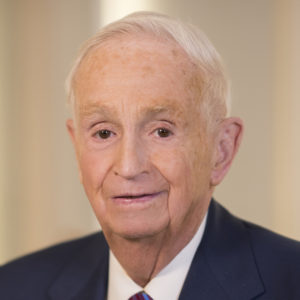
One of the largest hotel chains in the world will come out of the COVID-19 downtime poised to transition to new leadership at the board and executive level. Marriott International announced on an earnings call this week that J.W. “Bill” Marriott, Jr. will transition to the role of chairman emeritus in 2022. His son, David Marriott, who is currently president of U.S. operations for Managed by Marriott, will join the company’s board of directors in 2021 and is expected to eventually become chair.

J.W. Marriott Jr.

A spokesperson said the younger Marriott would step down from his role leading the team responsible for more than 320 full-service managed hotels when he takes the board seat. He started in the company washing dishes as a teenager and has built his career in regional operations and sales. Bill Marriott, who is 88, has navigated the company’s growth for more than four decades. He resigned as CEO in 2012.

“The changes we are making will help define a new era for our organization—one that will accelerate our global aspirations,” said Marriott president and CEO Arne Sorenson. 

Consolidating Lodging Operations Leadership

The company also announced a transition for long-time senior executive Dave Grissen. He will step down from his position as group president of the Americas at the end of 2020 and retire from Marriott in the first quarter of 2021, after 36 years with the company. Grissen oversees the Americas’ lodging business, which comprises more than 5,640 properties and a workforce of 160,000 employees.

The division generates over two-thirds of the company’s fee revenues. Under his leadership, it has grown from 2,928 hotels to 5,640 properties today, with another 1,800 hotels in the pipeline. Sorenson praised him for his strategic focus and championing of leadership training.

Once Grissen steps down, the company’s lodging operations will be consolidated under Liam Brown, as group president for North America; and Craig S. Smith, as group president for international properties. Both are long-time Marriott executives.

Brown is currently group president for Europe, Middle East and Africa (EMEA) and has been with the company for 30 years. He spent most of his career working in the U.S. Smith is currently group president of Asia Pacific and has been with the company for 32 years. His experience spans work on-property (he started in housekeeping), in operations and in staff roles with an international focus.

“We are lucky to have such a deep executive bench to draw from,” Sorenson said.

Not even a pandemic that resulted in the entire world sheltering in place for months at a time could stop meeting professionals from planning gatherings. A new survey of the event community released today by Smart Meetings found that a supermajority of readers (80 percent) said they were still planning for future meetings. “Smart Meetings’ Post-COVID-19 Meeting Industry Vision Survey” covered strategic, legal and logistical challenges around planning, cancelling and postponing meetings during this time. Readers and experts weighed in on best practices for hybrid meetings, physically distanced F&B strategies and work from home strategies.

Download the full Smart Meetings’ Post-COVID-19 Meeting Industry Vision Survey here for free.

While many were sheltering in place, some added the job of supervising children home from school and others were deemed essential workers and traveling to job sites. Multitasking planners picked multiple options and said they were also networking through video-conferencing platforms (69 percent) and helping others who are struggling (42 percent). Just under half said they were focusing on taking a deep breath.

Postpone is Favored Alternative

Moving meetings to a future date was the most common survey response, but individual planners utilized a combination of postponing, pausing and pivoting. While 56 percent said they had to cancel some meetings due to the complexity, size and risk profile, more than 69 percent said they would be postponing and almost 51 percent said they would pivot to virtual.

A telling statistic was that in many cases the same planner was employing multiple strategies rather than postponing all or canceling wholesale. A third (34 percent) said they would be both postponing and pivoting, and a quarter of respondents (23 percent) said they would be doing all three.

Return to Meeting Predictions

While some survey respondents thought meetings would come back with a vengeance, thanks to all the Q2 meetings pushed to the Q4 calendar, most said that group events would more likely come back tentatively, and with new security measures in place to keep people healthy. “There will be new normal in the industry to adhere to state and international guidelines for health and safety,” said Sandy Joyce, head of global event marketing with Discover Financial Services in Chicago.

While many agreed with the go-slow approach, regional meetings that don’t require airlift at a time when routes are still returning were considered a safer option. Long-term, the outlook was brighter. “People will want to get back some form of normalcy, but I believe it will come slowly and build back up. There will be more precautions and more reluctancy in the beginning, but we will bounce back and we will be stronger and more creative than ever before,” said Shirli Goodman, vice president of marketing and events at Nexxus Solutions Group.

Jeanette Paschal, president of Sound Meetings & Event Management in Raleigh, North Carolina may have been the more optimistic of all. “We will all be more gracious and kind to each other,” she predicted.

Editor’s Note: This is part of a series reporting on FICP Chats about the future of meetings. You can read previous reports here and here.

There are still more questions than answers about meetings and events scheduled for the second half of 2020, and meetings professionals anticipate that the rapid pace of change (regulatory, public health and economic) will require them to reassess circumstances for each event on a case-by-case basis for the foreseeable future. More than 400 participants in last week’s Financial & Insurance Professionals (FICP) Chats agreed this means that communication, flexibility and collaboration will remain the key to individuals, financial and insurance companies, and overall industry success.

In the third of FICP’s new virtual education series, focusing on the rest of the year, participants discussed what the “third-third” of 2020 will look like, including observations from hoteliers and feedback from meetings professionals’ stakeholders. Communities like those within FICP are regularly coming together to document and discuss their most pressing concerns, as well as those that cannot yet be solved, while agreeing to re-convene and continue to work through them in the coming weeks and months.

Obstacles to Collaboration

Participants noted that the uncertainty of current circumstances is creating a vicious circle for meetings professionals and their supplier partners. Meetings professionals are waiting to return to work, in a more traditional sense, to begin work in earnest on their meetings. Hospitality partners are attempting to understand when those meetings professionals will return to staff up and support meetings accordingly. In the interim, furloughs have created a barrier to proceeding with plans in some instances.

Planning for the Unknown

In addition to widely varying and/or unknown timelines for lifting shelter in place orders within and outside the U.S., uncertainty about guidelines for group meetings is creating significant challenges for meetings professionals who are planning Q3 and Q4 meetings and events. For example, will the six-foot distancing guidelines remain, how long should a hotel room or breakout room remain empty before re-use, and when will hotel staffs return and in what numbers? This information will greatly influence a meetings professionals’ ability to confidently plan a meeting, according to participants in the chat.

Capturing Attendee Intent

Participants recommended that meetings professionals proactively seek to understand how many of their qualifiers or colleagues are willing to attend an upcoming event prior to opening registration or sending similar event-related communications. This can be accomplished through a quick pulse-check survey that will not only aid in planning meetings to suit the likely attendance, but will demonstrate a greater empathy for those stakeholders and their individual needs and comfort levels.

Flexible Meeting Options

Recognizing that there will be varying comfort levels with attending in-person events in the coming months, participants discussed the need to host hybrid events to accommodate both those willing to come to the event and those who would prefer a virtual version of the experience. Hotel partners in the chat noted that they can assist with relationships with in-house AV companies, as some are establishing partnerships to facilitate hybrid meetings. Meetings professional participants indicated they would like to have options for increased AV spends considered as part of contracted minimums if lower attendance means lower F&B and room night spends.

Addressing Liability

To help keep those who do convene in person safe, participants noted that each attendee will have a role. They will need to agree to and participate in temperature checks and similar screenings as recommended by the Centers for Disease Control and Prevention, and agree not to attend should they present COVID-19 symptoms. Meetings professionals should be prepared to accommodate those who can’t attend an event due to concerns about their health. Communication about this needs to begin in advance of an event with registrants and be repeated onsite with signage. Similar to retail stores, that signage needs to instruct on how to distance and follow other protocols.

Anticipating Everyone’s Needs

While the focus is understandably first and foremost on health and safety, participants discussed that it is also important to remember diverse needs of event attendees in their planning for upcoming meetings. For example, those with hearing impairments may benefit from clear masks that allow for lip reading, and increased signage with critical instructions should be easily read.

Incentive Outlook for 2021

A consideration for 2021 meetings, according to participants, is the ability for qualifiers to achieve sales goals in the current environment. There may be smaller numbers of incentive program participants as a result. More data on anticipated 2021 and 2022 incentive program activity will be captured in the Incentive Travel Industry Index, powered by SITE Index, Incentive Research Foundation (IRF) and FICP. Results will be available in in late 2020.

Jennifer Squeglia, CMP, is a member of FICP Board of Directors. In the next FICP Chats, our community will focus on virtual meetings. Learn more about upcoming FICP Chats, part of FICP Anytime.

What should ballrooms look like when we are all back to meeting again? Meeting planners no longer have to worry about figuring that out. A new event-tech tool could smooth the return to meeting by making it easy to plan room layouts that take each region’s safety rules and recommendations into account.

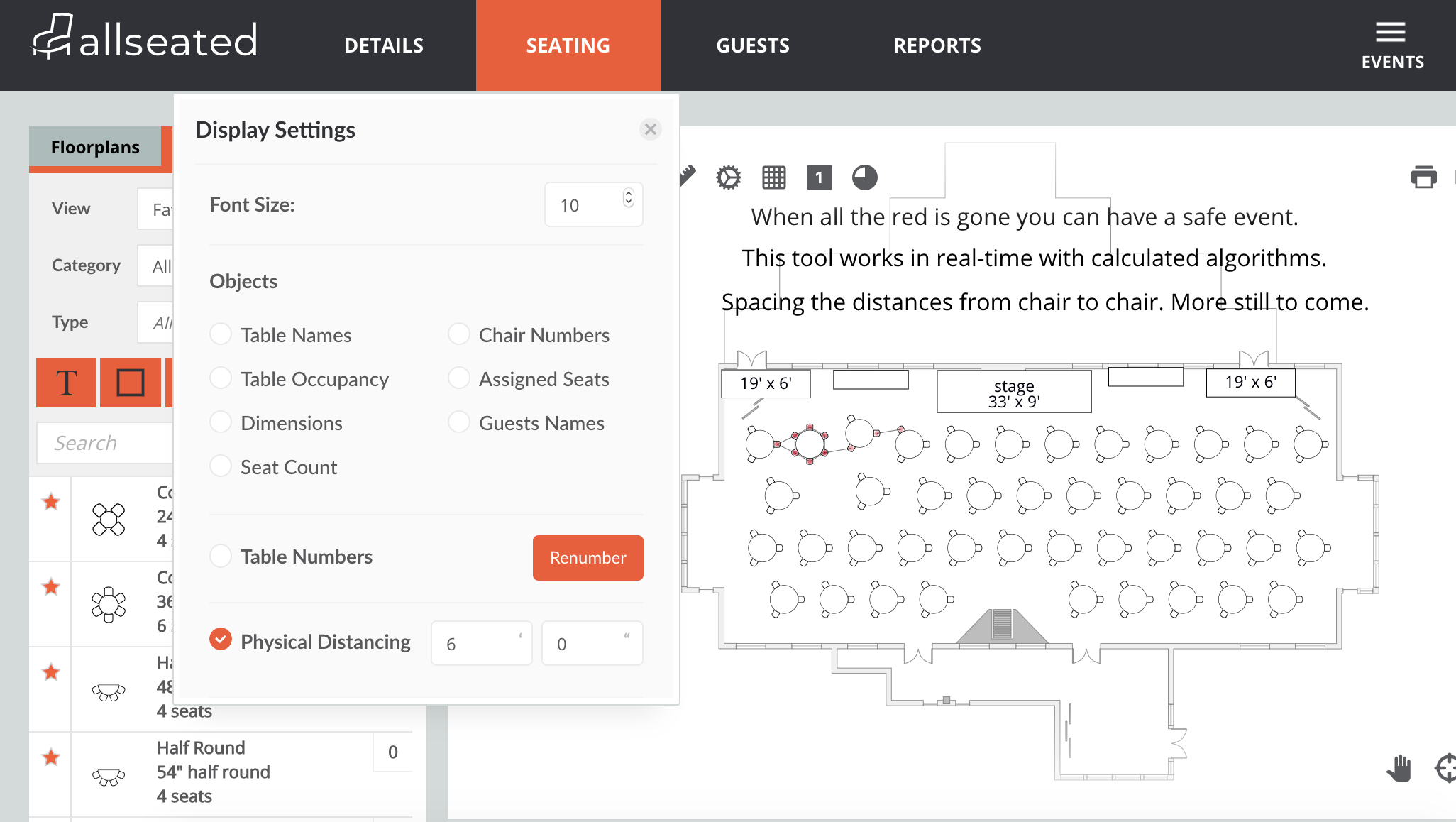
Event-planning platform Allseated announced its new Physical Distancing Tool today. Using algorithms based on local government restrictions, the mapping tool will allow meeting planners, with simple mouse clicks, to set parameters and see what a space will look like, how new rules will affect capacity, room entry and food service—all while putting the safety of guests and staff at the forefront.

Room to Experiment

Allseated was one of the first companies to digitize venues to make sourcing and site selection more collaborative and efficient. Its platform allows planners to access 80 percent of venue floorplans in the United States, and more can be added on a day’s notice.

Once a planner chooses a room, the new Allseated feature defaults to six feet between chairs. But planners can also reset the physical distance—Allseated shies away from the term “social distancing”—for the particular destination. A row of tables and chairs is generated onscreen. Planners can then play with the style of tables—squares, rounds, half-rounds—and the distance between rows and instantly know room capacity.

The modeling also shows clearance near doors to allow for entering and exiting safely. For an even better idea of what being in the room will feel like, a click from “bird’s eye” to “3-D first-person” brings the space to life. That visualization will allay a lot of planner and client concerns about how to safely resume meeting, promised Sandy Hammer, chief marketing officer and co-founder of Allseated.

Planning with Confidence

“It is about building confidence,” Hammer said. “We believe that events will return stronger than ever—but in a different format, at least at first. This will help deliver a safer experience.”

Hammer underscored the importance of getting this timely product in the hands of planners so they can safely get back to work. “As part of the events industry for the last seven years, it has been a privilege to build inspiring tools for our users. Partnering with Smart Meetings and Marin [Bright, Smart Meetings CEO] gives us a platform with the same aspirations.”

For those of us who can’t hug our loved ones this Mother’s Day weekend, we’ve compiled the best offerings inspired by the iconic, luxury hotels we’d love to be visiting right now. From DIY spa experiences and special products to chef-created recipes you can recreate at home, get inspiration on how to give the mothers in your life a socially responsible thank you during COVID-19.

Chef-created Recipes that Impress

Planning a breakfast in bed? Get by with a little help from the chefs at these culinary-forward hotels.

DIY Spa Day

Bring the luxury hotel spa experience home to momma with signature products from these top properties.