We’re all about progress. Since we independently own convention facilities, you can make more moves with less red tape, fewer hard costs, and more flexibility to deliver unique experiences at an incredible value. Plus, when booking qualified groups, you receive unbeatable rewards like 10% commission and a $5k signing bonus. Come check out Reno Tahoe for yourself with our Come See, Fly Free program. You can do more here.
The last two years served as a chance to learn the ins and outs of virtual events. So why have 64 percent of surveyed event marketers said they’re only “moderately” or “not effective at all” at creating virtual events that provide value? This is according to a recent study by CMO Council, in collaboration with Cvent, titled “NextGen Events: Optimized for Outcomes.”
This report, based on 150 global marketing leaders with executives from Equifax, GE Healthcare, HCL Software and GfK, delves into what the events landscape—virtual, in-person and hybrid—looks like after Covid, what lessons have been learned and how to best optimize event outcomes.
Fatigue or Value Mismanagement?
As one-on-one, face-to-face conversations come more naturally to humans, it makes sense that we’d approach virtual events the same way. Unfortunately, virtual interactions don’t work as well for us, and the numbers show it.
The NextGen Events study found that 36 percent of respondents were suffering from virtual event registration fatigue and a loss of customer connection. This could be genuine disinterest from attendees, or what the study calls “value mismanagement”—that is, attendees’ expectation that virtual events will deliver the same experience as in-person meetings.
“Virtual events are more about brand reach, in-person events are about nurturing customer relationships that result in higher conversion rates,” the study reads. Virtual events and in-person events won’t deliver the same outcomes because they aren’t supposed to; they play different roles.
Lessons Learned
Before the pandemic, meeting professionals and marketers worked in separate quarters with little contact; in fact, Forrester Research found that 66 percent of event managers planned events with no insight into their company’s marketing campaigns.
Today, things look a little different. CMO Council found that 57 percent of marketers are in organizations where events are owned and managed by their marketing department and are orchestrated across the company. Of those surveyed, 65 percent believe the future of event marketing will include all events—virtual, in-person, hybrid—to better align with marketing outcomes.
Hybrid is Hard
In the study, hybrid events were found to be the least effective event form. Only 36 percent of marketers rated their ability as “effective” or “very effective” out of the four event types: in-person, webinars, virtual and hybrid. Seventy-six percent of respondents reported in-person events as effective or very effective.
The ineffectiveness of hybrid events can be due to two major reasons: offering a hybrid option often discourages in-person attendance, and they are expensive.
“A hybrid event is double the cost, double the resources,” says Sonia Sahney, chief marketing officer, molecular scanning and CT scanners, for GE Healthcare. “Because you’re essentially doing what you did in 2019 and adding a virtual presence like you did in 2020,” “At least in my marketing budget for next year, I’ve allocated close to 1.8 times [the money] for hybrid events.”
What’s Next?
It’s not easy to pinpoint the best type of event for these challenging times; there’s no formula, yet. When asked how they’re preparing for future events, 71 percent of respondents said they’ll be experimenting with new event formats, agendas or designs.
A successful event depends on a multitude of factors, including event format, event type, content, and event activities. When applied correctly, these event formats—virtual, hybrid and in-person—can be mixed and matched to create an event that engages and provides value.
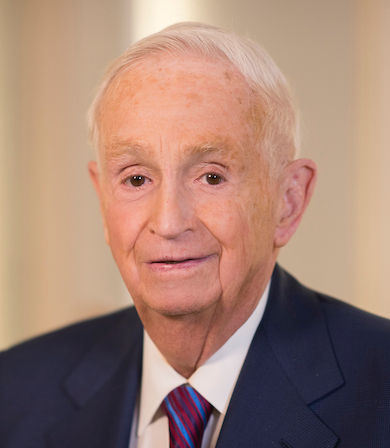
J.W. Marriott Jr. has announced that he will retire as executive chairman of Marriott International’s board of directors, effective in May, following the company’s annual meeting.
J.W. Marriott has held leading roles with the company for more than 60 years. His hospitality career began in his high school years. After college, in 1956, he became a full-time associate for Marriott, and shortly thereafter, he was managing his first Marriott property.
In 1964, he became president of the brand. In 1972, he served as CEO before he stepped down and was succeeded by Arne Sorenson in 2012.
Anthony Capuano, CEO of Marriott International, made a statement on J.W.’s upcoming retirement.
“On behalf of the board and the hundreds of thousands of people who wear a Marriott name badge around the world, I’d like to thank Mr. Marriott for his outstanding leadership throughout his tenure with the company. He is truly an industry icon.”
Marriott’s board has selected J.W.’s son, David S. Marriott, to succeed him. David has been with the company since 1999 and was most recently president of the U.S. full-service managed-by-Marriott division, which consists of more than 330 hotels under 14 brands in 34 states. Before that, he was chief operating officer of the Americas Eastern Region.
“I’d also like to congratulate David Marriott on being elected chairman of the board,” Capuano continued. “Not only does he have tremendous operational experience from his career at Marriott, but hospitality is in his DNA. I look forward to working alongside him for years to come.”
This week, Frontier and Spirit Airlines announced a proposed merger, which would make the new airline the fifth largest in the United States.
The merger is valued at $6.6 billion. On a call announcing the deal on Monday, Spirit’s CEO Ted Christie touted both airlines’ “commitment to affordable travel.”
John DiScala, travel influencer and owner of JohnnyJet.com, told Smart Meetings, “Whenever there is a merger, it’s almost never good for consumers. Less competition means higher fares. However, since Frontier has a strong West Coast presence and Spirit has one on the East Coast, there could be some positive.”
The merger is yet to be approved by federal regulators, a process which will most likely result in a green light, but may take time.
The two airlines have overlap on 520 of their over 2,800 routes. Frontier will have controlling interest in the deal.
In its own release on the merger, Frontier claimed that the merger would be good for consumers, stating that it would deliver $1 billion in annual consumer savings, increase access to low fares by adding new routes to underserved communities in the U.S., Latin America and the Caribbean, and deliver more reliable service through “operational efficiencies.”
The airline also claimed that it would “expand frequent flyer and membership offerings,” through the merger, but granular details were not included.
Our Take: Flyers will have to see whether one less airline to choose from will result in the boons touted by the airlines above or result in higher fares with consumers seeking new options on other existing carriers or on yet-to-debut new low-fare carriers. And there is a place for such an airline.
Airlines like Delta are increasingly skewing to higher fare travel as their mainstays, while JetBlue continues to struggle to regain its former crown as a consumer favorite after delays, on-board passenger unruliness and other issues had passengers rethinking long-held loyalties.
Masks Continue to Fall: New York State, Rhode Island Drop Mandates
New York State’s Governor, Kathy Hochul (D), said this Wednesday that she would not extend the state’s indoor mask mandate.
This means that “At this time, we say it is the right decision to lift this mandate for indoor business, and let counties, cities and businesses to make their own decisions on what they want to do with respect to masks or the vaccination requirement,” Hochul said in a press conference.
Rhode Island Gov. Dan McKee (D) announced on the same day that their statewide mask mandate for businesses and venues would end on Feb. 11.
In New York City, restaurants, gyms and theaters will still be allowed to ask customers to wear masks and/or show vaccination status.
While masks continue to drop, Centers for Disease Control and Prevention Director Dr. Rochelle Walensky told Reuters, “We have and continue to recommend masking in areas of high and substantial transmission—that is essentially everywhere in the country in public indoor settings.”
She told the news service that Covid-19 would become endemic when infections held to a steady state and when the virus was no longer disruptive to society.
Australia Opens
Australian Prime Minister Scott Morrison said in a news conference that the country would reopen to fully vaccinated travelers beginning Feb. 21. Morrison stressed that travelers must be double vaccinated to be allowed into the country. Quarantine requirements and capacity limits on total arrivals will continue.
New Zealand announced last week that it would gradually begin lifting restrictions on travel with July as a target date for U.S. travelers to enter the country after which they will be required to self-isolate.
Wouldn’t you rather forget where you are for a moment and feel like you’re there? Spinning slowly in a grandiose ballroom or stepping inside a hotel suite, the ocean view through the doors to the balcony—the next generation of virtual reality (VR) can deliver so much more than pretty worlds through clunky goggles.
For event planners, reality-shifting exhibitions are about experiencing a space, destination or concept, as the virtual exists as a thin film does, covering, challenging and contesting reality. The crux of merging VR media and technology with the event and hospitality industries is in their shared inclination and motivation to effect experiences.
Smart Meetings talked to Scott Schoeneberger, managing partner at Bluewater Technologies Group Inc., a multimedia design and tech company, to map out best practices for putting the technology to work in the conference center, and he shared experiences developed alongside event organizers who understood the possibilities.
Planners Step into Another Space
Among growing collectives of software engineers and artists, Bluewater, Parallel, Odyssey and Skullmapping are emerging virtual reality (VR) technology companies finding ways to generate and exhibit cost-effective, Covid-safe and immersive virtual realities for businesses. “VR is not just for entertainment,” said Schoeneberger excitedly. And it’s past the point of meaning a nauseating pair of goggles over your eyes, reanimating the world from your direct line of sight to your peripheral.
VR is about immersion, and software engineers are finding that it doesn’t take removing the space around us to alter realities. The evolving VR technology supports experiences that teach and connect people—a practice at the heart of event planning.
Parallel, a partner platform that works in tandem with Bluewater as one, unified support for entirely virtual events, says it isn’t about “[replacing] real-world events,” but extending them.
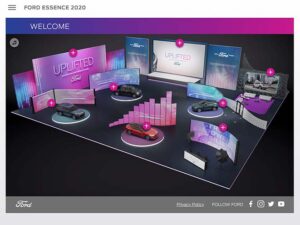
Ford at 2020 Essence Festival; Photo credit: Bluewater Tech
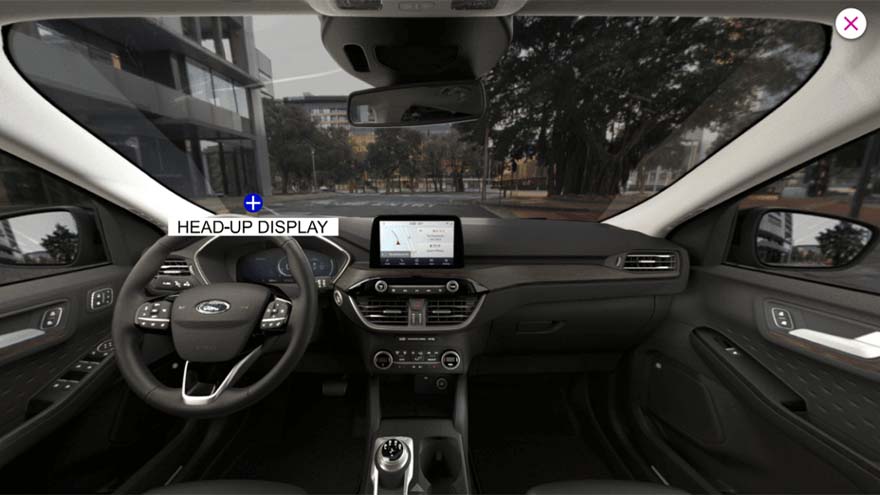
With Parallel, Bluewater is pivoting once major in-person events to successful virtual ones with undeterred audience engagement. The tech company developed and built an entirely new, fully virtual booth for Ford Motor Company to attend the 2020 Essence Festival. The VR programming gave participants the ability to virtually explore the interior and exterior of Ford’s vehicles and watch the on-demand virtual Ford stage for speakers and presentations. The result was a company able to deliver unique, fulfilling experiences. VR was a key in the hand of Ford’s event planners.
Ford at 2020 Essence Festival; Photo credit: Bluewater Tech
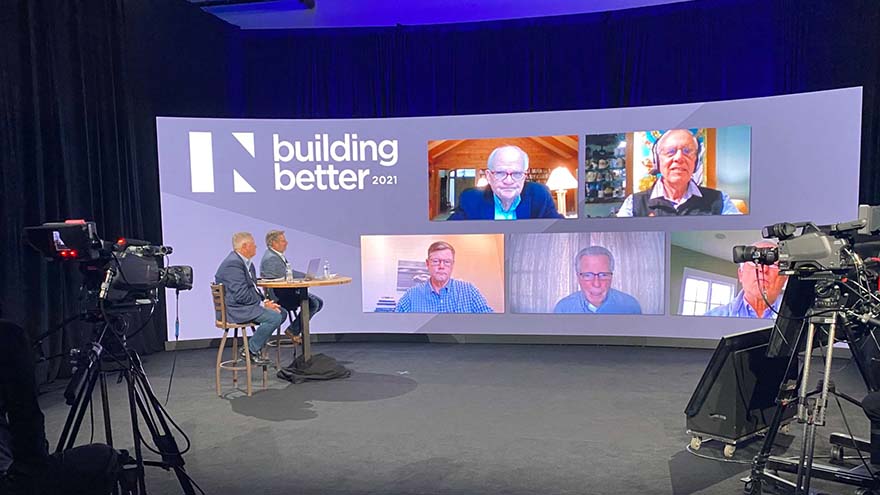
National Nail, the commercial and industrial construction company, needed a big space for a big virtual kickoff event. So, Bluewater hosted event organization personnel at its production studio in Grand Rapids, Michigan, where planners and presenters virtually hosted the event. The stage was set up with audio and visual recording equipment and glowed under an imposing stretch of backdrop covered in LED lights.
National Nail kickoff at Bluewater’s Grand Rapids studio
Bluewater also helped host a virtual event for The National Association for the Advancement of Colored People (NAACP) shortly after partnering with Parallel.
The opportunities for virtual and hybrid events are nearly endless with the right VR tech. Not only are leading virtual tech companies opening doors through software development—they’re creating brand new spaces around, with and for event organizers.
Odyssey, an expansive, in-world virtual meeting platform, is hosting large-scale, entirely virtual conferences within an entirely virtual reality. Attendees at conferences, events and meetings supported by Odyssey can walk around with an “in-game,” as Schoeneberger puts it, avatar to different individual, divided meeting spaces. Participants take their virtual seats next to their colleagues’ avatars and jump right into the conversation happening in that room. It can all happen at once, and it can all happen from behind the remote screens of meeting professionals, ready to engage.
An Accessible Tool: How to Start Small in a Pandemic-Stricken Event Climate
But VR, as we understand it now in an irrevocably altered, virtual world, is still young and still making friends in the industry. A couple of questions are bound to creep into mind for planners curious about the benefits of VR in events—how do I navigate the complexity of incorporating this novel tech? And what about the expense? Virtual events are clearly integral right now, and hybrid events are king as we return to meetings. But what does it take to access VR tech?
Nationwide, QR codes raised similar questions before restaurants started using them in place of menus and businesses began incorporating them into ads. Schoeneberger explained that QR went nowhere until a reliable means of accessing them emerged, until mobile phones in the U.S. had the software needed to utilize QR codes through the phone camera.
This is no-headset-needed VR. Whether arriving to the event through a virtual program such as Odyssey or visiting a site through virtual 3-D rendering at an in-person meeting or event, VR in meeting and event design is about creating collective immersive experiences.
The VR headsets were cumbersome, motion-sickness inducing and not nearly as accessible as our mobile and desktop devices. But while the novel software may have started out by gaining a bit of a bad rep, VR is changing and expanding fast. As the technology gets more accessible without the requirement of a headset, as more businesses and organizations use VR in their virtual and hybrid events, VR tech and services become more feasible in the minds of planners—and more affordable. To participate in an event hosted by Odyssey’s Sims-like, VR meeting platform, for instance, the cost is $6 per attendee.
Virtual Storytelling Gathers Communities in the Physical
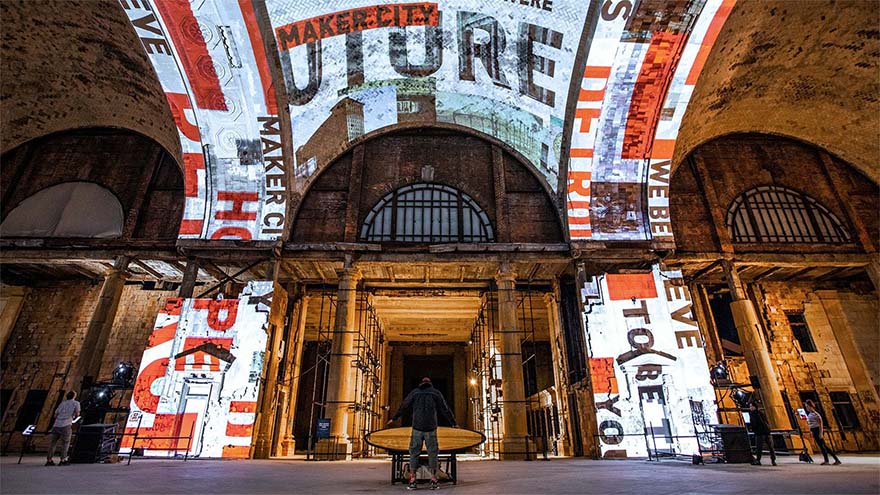
“For Detroit” at Michigan Central Station; Photo credit: Bluewater Tech
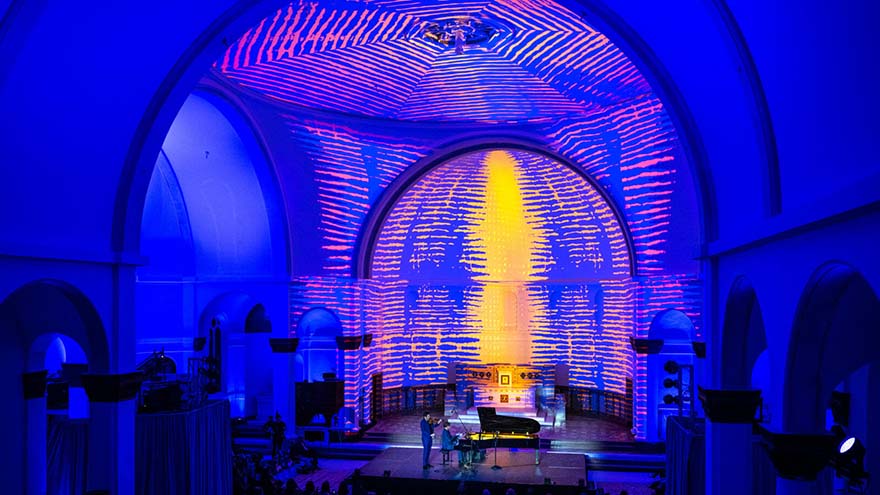
We’ve also been seeing the success of VR in artistic and cultural spaces, even amid the pandemic, such as Otherworld Immersive Art Experience in Columbus, Ford-sponsored “For Detroit” at Michigan Central Station and SPECTRE, a Detroit art and classical music installation—projects supported by Bluewater. These exhibitions have managed to fully incorporate immersive and interactive VR into their marketing and events—and it has enhanced their goals and their means to meet them.
Detroit Sessions and Library Street Collective at SPECTRE event; Photo credit: Bluewater Tech
Regarding projects like “For Detroit,” with its LED walls, projections of blown-up words and images plastering the ceiling and relics from history on display, the support of VR can help to establish and define an artistic or historical narrative. Other events, such as Columbus’ Otherworld, tower over those that visit, covering them in twinkling lights and morphing projections. Software programming and digital fabrication with large-scale sets build a curious, idea-evoking “alternate realm” around its audience.
Participants in these exhibitions follow a story led by a sort of string into another frame of mind, inciting quick learning and provoking critical thought.
VR has the immersive capacity to affect and engender not only event experiences, but narratives that inspire original, industry-progressive ideas.
Planning Immersive Experiences for Experiential Learning
As planners, we want to captivate audiences with our welcome. VR event design features can entertain reception guests while reinforcing topics covered during the event. It can bring properties and destinations for events-in-planning to the table with virtual 3-D rendering. A VR-supported presentation can transform your event, itself.
VR does several things that the simple, yet beloved PowerPoint presentation cannot. It adds a learning component, making VR presentations a “canvas for message delivery,” said Schoeneberger. Its back-learning quality is achieved by immersing attendees in the information and the message, effecting an environment built for experiential learning.
Depending on its production, VR can make events more flexible while offering event managers more control over the situation. The entertainment aspect “breaks up the monotony” of meetings, as each VR-involved presentation and performance is uniquely transportive.
Immersive events also attract media attention. After all, social media hinges on the hand-held self-creation of and participation in virtual realities. And planners know, social media attraction also means exposure, ticket sales and company growth.
Creating experiences and the desire to create engaging ones is written into events and hospitality’s DNA. VR in meetings and events urges us to reflect comparatively, to consider the space, concept or presented information through a comparative and critical lens. It helps establish a consistent narrative that drives the message home and activates attendees with a clear vision.
VR support in events lets our ideas wander through new spaces and lets us continue to share the heart of meeting planning through the immersive experiences we build.
VR in F&B
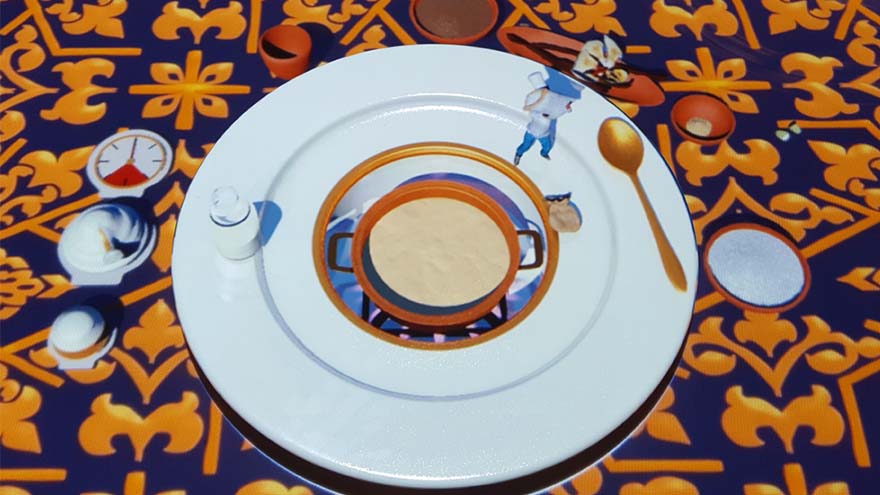
The international growth of Le Petit Chef 3-D Dining Experience is thanks to the artistic collective Skullmapping. The company has been redesigning the hospitality industry’s food and beverage scene for several years, and dinner’s the entertainment. Le Petit Chef, restaurants by The Culinary Institute of America (CIA) at Copia, opened its first location in April of 2015 and now has 27 locations around the world.
Le Petit Chef; Düsseldorf, Germany
Through programming and design by Belgian co-founders at Skullmapping, the fine-dining restaurant chain features 3-D animations, including a very small, pixelated chef projected onto guests’ plates. The pocket-sized virtual chef acts as a miniature six-course dinner guide. Co-founder Filip Sterckx’s work on projection mapping and animation with co-founder Antoon Verbeeck’s paintings and other visual art have allowed CIA to expand the restaurant far beyond its humble beginnings and transform dining into an adventure.
The little, virtual chef serves as a storyteller, weaving together experiences and why they matter.
Software company twine’s announcement today that it is acquiring the relationship-building technology company Glimpse is a sign of the evolution of virtual meetings and possibly the first step toward a more tangible virtual event world.
The acquisition’s resulting new product, twine for Zoom, will allow meeting organizers to build and manage dynamic interactions using a trusted platform with an interface reminiscent of gaming platforms.
The Players
First, the details.
These two early-stage companies were showered with VC money based in part on their tech cred. The founders of DoubleDutch event management software that was sold to Cvent in 2019 raised $4.3 million in seed funding to start twine, which they describe as “a remote-first company that facilitates serendipitous virtual meetings by facilitating strings of short meetings in virtual windows.”
Companies as large as Microsoft joined smaller groups taking advantage of the platform for employee engagement events, speed networking, new employee onboarding and community events. CEO and co-founder Lawrence Coburn called it a “virtual watercooler.”
San Francisco-based Glimpse was backed by the heavy hitting venture capital funds Y Combinator and Maven Ventures. With access to the Zoom Breakout Room platform, the team is building software to foster authentic relationships and have already connected millions of people since their launch in March 2020.
“Glimpse is a great example of a highly innovative company utilizing the Zoom App Marketplace to enhance the customer experience,” says Ross Mayfield, product lead for Zoom Apps and Integrations.
The Product
Glimpse CEO and co-founder Helena Merk described the synergy of the two companies as “shared mission and values.”
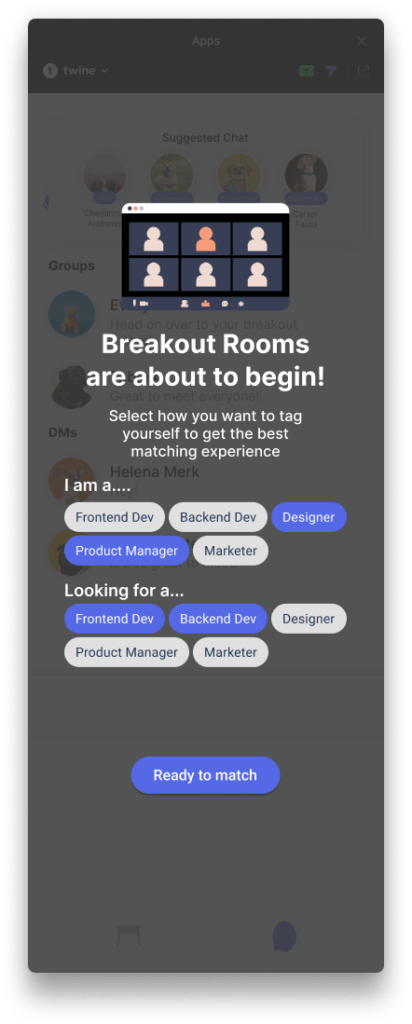
twine for Zoom’s Tag Choosing feature
What is now an add-on for Zoom to create networking—random meetings of pairs and small groups for set times with optional conversation prompts—will soon be available as an app that will add a spatial component, streamlined access and the flexibility to control or allow organic engagement.
Coburn describes the overwhelming number of virtual meetings now happening on Zoom as top-down content delivery. The twine for Zoom app will open a window that looks like a series of tables with pictures of attendees “sitting” at each one. The event planner can determine the number of seats, turn on matchmaking based on tags (e.g., name of team, job title, etc.), randomize table assignments, pre-select who sits where, or label the table and let people self-select.
The planner can also broadcast a message to all groups or call everyone back to the main Zoom room—all without leaving the Zoom platform. That way there is no awkward transition where people might get dropped based on what browser they’re using or a technical glitch.
The size is only limited by Zoom hard stops, currently 500 people. When rolled out to Zoom Webinars, it will work for much larger groups.
“It puts all the power in the hands of the planner,” says Coburn, who pointed out that the technology will also be popular for connecting remote teams.
Coburn’s vision is to bring back the natural networking that happens at in-person events, the little conversations that used to occur before and after a session. “Let’s get back to starting and ending with time to chat,” he says.
The Future
Near term, the combined company is focusing on delivering a consistent experience with unified reporting so the organizers know who met with whom and for how long. That could expand from Zoom to Microsoft Teams and Slack. “It will have portability integrated in a single platform,” Coburn says.
He sees the special technology evolving from simple virtual tables to more elaborate Minecraft-style gaming landscapes. A meeting designer could construct a sidebar of Zoom coffee shops and places where people can congregate with their customized avatar. It will all live on the power and stability of Zoom built in a digital store for third-party designers to add functionality—a Zoomiverse, if you will.
Now that Hawaii no longer requires fully vaccinated visitors to quarantine, a lot of the cultural festivals meeting professionals previously hitched their group travel to are back in play. 2022 on the island of Oahu in particular is looking to be a year replete with music, entertainment and—of course—food.
From half-marathons to local Spam showcases, Oahu’s list of what it has to offer is a long one. Take a look.
Do I Need to be Vaxxed?
Hawaii Safe Travels Program requires that unvaccinated domestic travelers from the United States and its territories observe a five-day mandatory , after which, travelers do not need to test, per the program’s website; travelers who have an up-to-date vaccination pass can bypass quarantine without a pre-travel test.
Hawaii is also in alignment with federal international requirements, which states that non-U.S. citizens traveling directly to Hawaii must present a vaccination record and a negative Covid-19 test (NAAT or antigen) within one day of boarding their flight. U.S. citizens flying to Hawaii have two options: if fully vaccinated, they must provide proof of vaccination and a negative test within one day of boarding; if not vaccinated, present a negative test within one day of boarding.
Those who arrive without a negative Covid test or vaccination record before departure will have to quarantine upon arrival. Masks are still required indoors, even for those fully vaccinated.
Hawaii Gov. David Ige announced Tuesday that boosters will no longer be required, citing declining Covid case numbers and hospitalizations.
He continued: “We looked at Hawaii’s robust vaccination rates and the continued push by businesses and organizations to get their employees vaccinated and boosted for the safety of their families and the community. At this time, we will also maintain the indoor mask mandate and other rules that have helped us manage this pandemic while reopening the economy.”
What’s Going On?
Held biannually in spring and fall, Hawaii International Film Festival showcases independent and short films dedicated to sharing Hawaiian, Asian, Pacific Islander and North American culture. Kawaii Kon, which takes place April 22-24, is a three-day convention that celebrates Japanese culture, Japanese anime and manga comics, is returning to Hawaii Convention Center.
Oahu’s We are Samoa Festival is Hawaii’s largest Samoan festival and celebration of the culture. Held May 4-11 at Polynesian Cultural Center, the festival’s main event is the World Fireknife Championship, created to pay tribute to the Samoan Warrior’s knife dance, ailao, attracting competitors from around the world. With a date yet to be announced, the Made in Hawaii Festival brings together more than 400 exhibitors from the world of Hawaii-made art, clothing, food, home decor, jewelry, toys, produce, plants and Hawaiian crafts.
The Island’s love for the meat product Spam runs deeper than you might have imagined, as evidenced by the Waikiki Spam Jam on April 23. On Kalakaua Avenue, local restaurants offer their specialty Spam dishes, complemented by entertainment and Hawaiian crafts makers.
For sports and fitness enthusiasts and spectators, there’s plenty of activities to go around. World Surf League’s second Hawaii stop on its annual tour, Hurley Pro Sunset Beach, will be held Feb. 11-23 from the Banzai Pipeline to Sunset Beach; the contest includes men’s, women’s and junior divisions. For the aerobically inclined, there’s the 38th annual Hawaii Pacific Health Virtual Great Aloha Run, joining runners and joggers virtually from around the world Feb. 18-21. Hawaii’s largest half-marathon, The Hapalua, takes marathoners through Honolulu and around its Diamond Head State Monument, Leahi, and ends at Kapiolani Park.
The Haleiwa Metric Century Ride—100 kilometers or 62 miles—takes cyclists on the scenic route through Haleiwa towards Kaena Point, and past Waimea Valley, Sunset Beach and Kahuku. Another option? Honolulu Triathlon hits the ground May 15 at Ala Moana Beach Park.
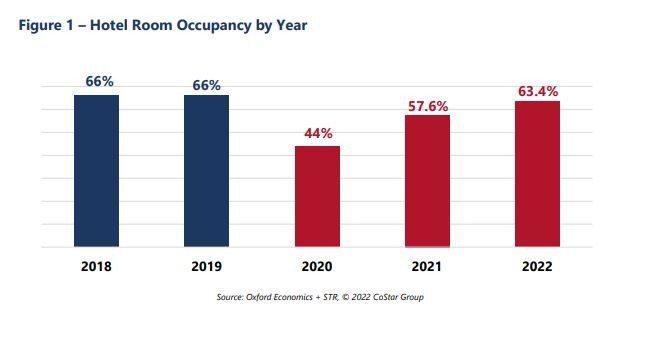
American Hotel & Lodging Association (AHLA)’s 2022 State of the Hotel Industry Report sees the hotel industry moving toward recovery “but the path will be uneven and potentially volatile, and full recovery is still several years away.” The report says that hotel occupancy rates and room revenue are projected to approach 2019 levels this year. However, the outlook for F&B and other ancillary revenue is not as optimistic.
Meeting planners will note that AHLA reports 58% of meetings and events are expected to return. Other findings include the fact that in a volatile and changing Covid-19 clime, business travelers are increasingly adding “bleisure” or business plus leisure time to their trips and meetings. Another strong trend reported is hotels adding new technology for hybrid meetings and other incentives for both business and leisure travelers.
Chip Rogers, president and CEO of AHLA told Smart Meetings: “While we expect leisure travel to rebound significantly this year, business travel has a much longer road to recovery. Although the full impact of Omicron remains to be seen, we already know that many businesses have scaled back travel or delayed returning employees to the office in response to the variant.
“We are cautiously optimistic that business-related hotel stays will increase further in 2022, but it will likely take several years for hotels to reach pre-pandemic levels of business travel, meetings and events revenue. That’s why AHLA will continue to stress the value of business travel and in-person meetings and events to business leaders, other stakeholders and the general public throughout 2022 and beyond.”
While the outlook for hotel health over 2022 may be challenging, growth is happening.
In New York, Motto by Hilton New York City Chelsea opened this January. The city’s first Hilton lifestyle hotel and Motto’s first new build debuted just as the city was celebrating “Hotel Week,” a booking initiative sponsored by Mastercard.
AHLA has also debuted a multi-year effort, “The Hotel Industry: A Place to Stay,” designed to help boost industry employment rates by offering over 200 career pathways and perks in the industry. Ads for the incentive will begin running in Columbus, Dallas, Denver, Miami, and Phoenix on Facebook, Google, and Youtube in both English and Spanish.
In one of the biggest travel stories of the week, Denver has announced that the city’s face covering order will expire on Thursday, Feb. 3, 2022. The order, requiring face coverings indoors or proof of vaccination in lieu of them will not be extended.
Rachel Benedick
Denver’s public health order expiration does not impact the federal requirement for face coverings on public transportation, including public transit networks, airplanes, buses, trains, taxis, Ubers and Lyfts. Emergency rooms, nursing homes and other facilities still require face covering.
The move is due to rapidly declining Covid-19 cases as well as stabilized hospital rates and increased access to vaccines.
“We are happy to report that our mask/vaccine mandate will indeed expire on February 3rd, and we think this is a great step forward for our groups and businesses,” Rachel Benedick, Visit Denver executive vice president of sales and services told Smart Meetings. “Our Covid-19 numbers have been steadily decreasing since January, and we feel this is an optimistic sign that the meetings industry is moving forward. We support any additional health and safety measures our clients implement at their meetings and we could not be happier to see that the decline in Covid rates is allowing restrictions to loosen so we can return to successfully hosting even more meetings in Denver.”
Some cities like New York City and Los Angeles have so far kept indoor mask mandates in place. The mask mandate in New York State was recently challenged in court but remains in place at press time.
No More Testing Requirements for Vaccinated Passengers Traveling to the US, Pleads Airline Industry
Airlines for America (A4A) and U.S. Travel Association have signed a letter to Washington Covid-19 administrators pleading for the removal of testing requirements for vaccinated passengers traveling to the United States. A4A and U.S. Travel (along with scores of other travel and aviation organizations) asked that “the Administration remove the requirement for pre-departure testing for vaccinated passengers traveling to the United States. Doing so is justified by the pervasiveness of Covid cases in all 50 states, increased immunity and higher vaccination rates as well as new treatments. Removing the requirement will greatly support the recovery of travel and aviation in the United States and globally without increasing the spread of Covid-19 and its variants,” read a statement.
The plea comes as countries like Great Britain and Ireland have dropped Covid-19 mandates and as New Zealand has announced a gradual end to travel restrictions there to culminate in an October end to all restrictions on international travel.
On a CNN appearance, Delta’s CEO Ed Bastian swatted away the idea of Covid testing for domestic flights as “a logistical nightmare” that would “set transportation—and not just transportation but the whole hospitality sector—back at least another year in the recovery.”
Travel Consumers Are Still Wary Says Survey
Deloitte’s Global State of the Consumer Tracker out this week shows data from its monthly survey finding a stall in business as well as leisure travel. Leisure travel fell from an average of $330 per survey respondent in September to $240 in December. Business travel saw a hit as well with 67% expecting to travel in the next three months down from 80% in September.
Checked Bags: The Final Frontier
Frontier Airlines has announced that the weight limit for checked bags will now be 40 rather than 50 pounds. Bag overage happens now at 41 pounds rather than 51.
The overweight bag fees, which are in addition to the fee to check the bag(s), will be $50 for bags between 41 pounds and 50 pounds and $100 for bags weighing 51 pounds to 100 pounds.
Trend of the Week: As Covid-19 Omicron variant rates continue to decline around the country and worldwide, mask mandates and other restrictions are starting to fall away. New York City remains vigilant (some say hypervigilant) in restrictions and mandates. However, as new Mayor Eric Adams said recently in an interview on NY1 News, it is important to realize that NYC is uniquely space-restricted and dense and the original Covid-19 pandemic began to take fire here when the pandemic began, leaving memories of the virus that linger.
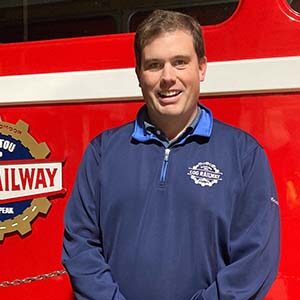
Ted Johnston
The Broadmoor Manitou and Pikes Peak Cog Railway promoted Johnston to general manager of the acclaimed high-altitude tourist railway in Manitou Springs, Colorado. Johnston has over a decade of railroad operations and hospitality management experience. Most recently, he was assistant general manager of Pikes Peak Cog Railway. Johnston has worked for Union Pacific Railroad in Arkansas, Oklahoma and Kansas and R.L. Banks & Associates Inc. in Washington, D.C.
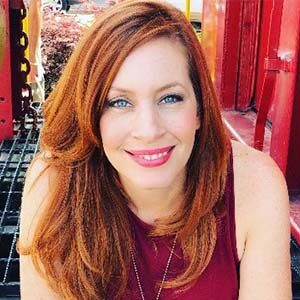
Erynn Torrenga
Torrenga is vice president of sales at Nuvola, the hotel service and guest engagement software company. A 20-year hospitality tech optimization and sales veteran, Torrenga was previously senior vice president of sales at INTELITY, a global guest experience and management platform in the greater Miami area. At the start of her career, Torrenga co-founded Metropolis Technologies Inc., a global company that provides emergency management and telemanagement for businesses. Torrenga has also held leadership sales, strategy and hospitality roles at EDT Enterprises and Cendyn hotel management.
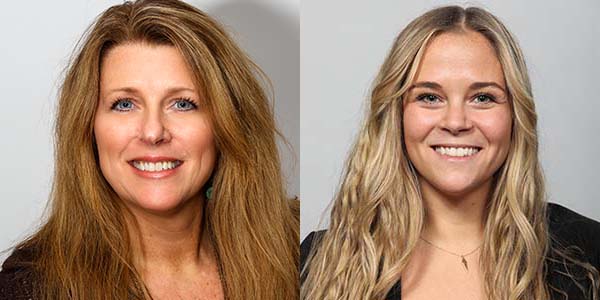
Charlene Hoffman and Angela “Fig” Wirkler, CMP
Boulder Convention and Visitors Bureau (Boulder CVB) promoted Hoffman to CEO of the organization and Wirkler to director of group sales.
Hoffman joined Boulder CVB in 2014 as operations and financial manager, her most recent position. Hoffman brings 28 years of experience in senior hospitality and business development sales, marketing, finance and operations to her new role. She was co-owner and senior vice president of a Chicago software company, vice president of sales and product marketing at Spatial Corp, a Dassault Systèmes company, CFO of Sports Garage Cycling and a Boulder retail shop, among additional roles.
Wirkler joined Boulder’s tourism bureau in 2014 as group sales manager and most recently was senior sales manager at the organization. Wirkler has extensive comprehensive experience in hospitality and events managements and operations. One of Smart Meetings’ 2020 Smart Women Rising Star award winners, Wirkler has spent over a decade in the industry. She has worked at St. Julien Hotel & Spa in Boulder, American Travel Planners as travel manager, Millennium Hotels and Resorts and more.
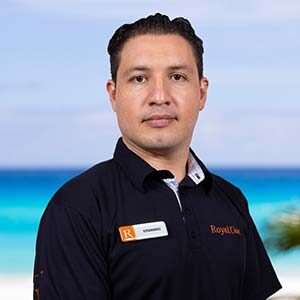
Eduardo García Ramírez
Ramírez is food and beverage manager at Royal Uno All Inclusive Resort & Spa, a new Cancún property by Royal Resorts to open in June of this year. Ramírez has 15 years of hospitality and food and beverage management experience at Mexican hotels and resorts. Most recently, he was director of food and beverage at an AMResorts property in the Dominican Republic. Ramírez started his career as sales coordinator for a small company in Mexico and after, held multiple food and beverage leadership positions for Mexico City hospitality company Posadas at three of its properties, including senior food and beverage manager at Live Aqua hotel in Playa del Carmen.
Teri Agosta
Signia by Hilton Atlanta appointed Agosta general manager of the hotel to open late 2023. Agosta brings three decades of hotel management experience to the Atlanta property, most recently having opened Hilton Cleveland Downtown, including its four food and beverage outlets. For 29 years before that, Agosta was general manager of Hilton Phoenix at the Peak, formerly known as Hilton Squaw Peak.
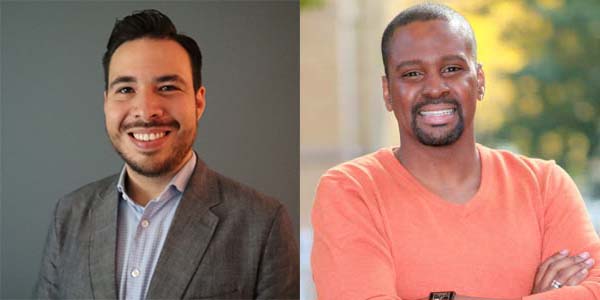
Isaac Gutierrez and Quincy Smith
Visit Anaheim named Gutierrez meeting sales manager of the Northwest region and Smith meeting sales manager of the Midwest region.
Gutierrez has over 10 years of hospitality sales and sales management experience. He was previously regional sales manager for Marriott’s W Hotels in Downtown San Francisco and worked in sales at Western Mountain Pacific Sales Office in San Francisco before that. Gutierrez was front desk supervisor for Anaheim Marriott for several years and has also held the role at Embassy Suites by Hilton Anaheim South.
Smith has extensive sales experience in the hospitality industry. He held the role of senior national account executive with San Mateo County/Silicon Valley Convention & Visitors Bureau and has experience selling convention and luxury hotels. Based in Chicago, Smith now drives Midwest meetings business to Anaheim and Orange County.
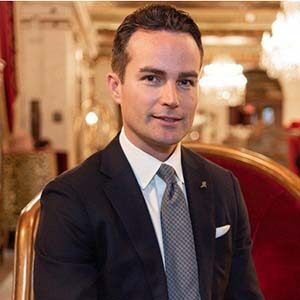
Winfred van Workum
Van Workum is market general manager at The St. Regis Bal Harbour Resort in Miami Beach, Florida. Previously, Van Workum was general manager of The St. Regis Washington, D.C. With 25 years of hospitality leadership experience in hotel and food and beverage management, Van Workum has been general manager of multiple East Coast Ritz-Carlton properties and was director of food and beverage at The Ritz-Carlton South Beach, JW Marriott Essex House New York and Sandy Lane Hotel in Barbados.
Shane Lewis
Event Tech Live (ETL), the London-based hybrid show for event technology, welcomed Lewis as global exhibition sales manager for the London show and ETL Vegas. Lewis has been in sales and business development for nearly 15 years, most recently the business development manager at VenuIQ, an event software company. Lewis has held the role of senior commercial executive at The Montgomery Group, senior sales executive at Reed Exhibitions, sales and promotions manager at Club Promotion Ltd. and Bouncing Ball Ltd. and similar additional roles.


 Meeting planners will note that AHLA reports 58% of