How to design events that leave a lasting impact

At MPI’s WEC 2023, Jacques Martiquet, known professionally as The Party Scientist, had a room full of meeting professionals dancing, laughing and opening their hearts to people who had been strangers when they entered the room. His session, “Use Social Neurochemistry to Create the SHARED Experiences Guests Rave About” proved to be an invigorating, interactive learning experience that upended the norms of what we tend to think of as a learning session at a conference, with a speaker and an audience.  

To Martiquet, fun is not an end goal, but a means to create more belonging and community in an event, and more creativity and empathy within the people there. 

Smart Meetings spoke with Martiquet to learn how he did it.  

Read More: Lessons Learned from MPI WEC in Mexico

“I feel like most people, when you ask them what they’re looking forward to, will share an event or an experience that they’re attending. I think it’s really key to well-being,” he says.  

Who is The Party Scientist?

The Party Scientist is an experience designer and group facilitator who has developed a practice for invoking human connection and joy among large groups of people. He has facilitated highly rated events with Global Professional Conferences, Fortune 500 companies, and at international festivals.  

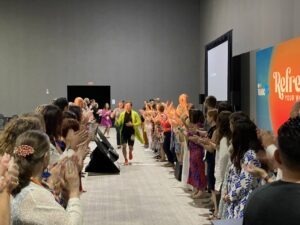
various people clapping as someone walks down runwayMartiquet was trained in conventional research, working in a social neurochemistry laboratory on tadpoles in college. From there, he experienced a growing interest in public health and worked under a mentor who studied party behaviors in college students—much of which typically has consequences on a person’s health, such as drinking alcohol and smoking. Martiquet began to grow increasingly interested in how human beings can healthily celebrate and socialize. He says, “I had this fire inside me to study the public health benefits of gatherings and human connection.” 

After earning his degree, Martiquet began to seek the answers to his questions. He traveled the world and led flash mobs in 12 countries. “I was alone, I had a big speaker with me, and I would just go into the streets. It was all about seeing if I could get 100 strangers to dance. And I usually succeeded.” 

He journaled about his experiences and documented what he would say and do to engage strangers. From there, he organized spreadsheets, developing tools and principles to build his philosophy: “How to create psychological safety, advance belonging and make people feel super alive…I really believe we can create that through the exchange of emotions.” 

That Sounds Great…But How Does It Work?

During his event at WEC, he explained that the activities he was leading would release dopamine and serotonin in participants’ brains. He explained that “the hidden predictor of all our behaviors, how much we connect with each other, how much we make people feel safe,” is none other than our physiology. “It will determine our experience at an event.” 

He incorporates mindfulness, gratitude, music and movement into his sessions. “The point of beginning a session with gratitude and regulating the body is to ensure that people are ready to connect and are less stressed when they do,” he says. Martiquet urges us to remember that we all have things to be grateful for, and bringing that lens of gratitude into the meeting space helps people associate a stronger positive feeling with the content. 

Read More: How to Cultivate Mindfulness

Music and movement create joy, Martiquet says. People certainly can be engaged when they are sitting and observing a speaker, demonstration or performance, but their heart rates are low. They may get tired, or struggle to stay focused. “If we put them into a more alert state, and get them to use their entire body, then learning is going to be more effective. And, well, it’s just more fun too.” 

Martiquet hopes to inspire event producers to incorporate more of these practices so their guests have a continual flow of stress-reducing hormones throughout the event. This makes an enormous impact on their experience: “They’re more engaged. They’re more focused on the content and they’re able to connect at a deeper level.” 

Wow! How Can I Do It?

Martiquet recognizes that meetings can be very intellectual, so he advises, “Give intellectuals the intellectual context of why we’re doing this, why positivity and joy are going to improve learning, improve networking, improve health.”  

What about people who feel resistant or shy? Martiquet suggests: Explain the science. Give them the ROI they will get from participation. Facilitate the moment with authority.  

Martiquet has found that people tend to be more willing to participate for others than for themselves, so he encourages facilitators to tell any reluctant participants, “You’re going to improve belonging for everyone around you if you’re more courageous, authentic and vulnerable.” 

According to Martiquet, the sooner into an event we implement his techniques, the better. “That fertile soil for deep connection is going to exist” from then through the rest of the event. 

He offers a step-by-step philosophy and a radical philosophy. The step-by-step method is to break up content with these practices. Have people move for 60 seconds between sessions to feel more energized and to reinforce positive feelings throughout the event. 

The radical philosophy is to totally break the paradigm of the audience and the celebrity speaker. “Create experiences where the speakers are talking, but they’re not the focus. The focus is the collaborative thinking and interaction in the audience, and the speaker is there to facilitate that.” 

Martiquet offers free consultations, and recommends speaking with him in his coaching sessions. He uses science-based methods to “help event producers adopt innovative methods to create belonging, joy, energy and psychological safety in their audience so that guests leave raving about the community, about the people, stay in touch with the people they’ve met and make long-lasting connections.” 

How to kick up the empathy and excitement-quotient at events

Smart Meetings Extraordinary Texas Event at Omni Barton Creek Resort & Spa in Austin brought leadership strategies, technology innovations, experiential gifting and fun F&B ideas from the award-winning magazine to life for three days and we are sharing the aha moments with you.

Lead with Understanding: Coach and speaker Vera Jones shared the secrets for empathetic leadership. Just as passing a ball isn’t successful if the person doesn’t catch it, telling a person something isn’t communicating unless the person can understand it. Whether you are giving instructions to a team member during the pre-con or sharing know-before-you-go updates with attendees, understanding their motivation and communication styles will help you be heard. “Empathy is our superpower,” she said. “Use it to love them and lead them.”

Be an AV Evangelist: Animatic Media founder Scott Frankel advised planners to “change your mindset and question how audio-visual is done.” Many meeting professionals see AV as something painful that has to get done, but by engaging and asking the production team questions with genuine curiosity, you can often find ways to create more impactful programs without spending a lot more money. “Lighting is still the fastest way to change up the look of a room quickly and cost-effectively,” he said. “Too many events look the same, why not turn the monitor literally on its side? Mix it up,” he encouraged. His list of trends that have increased in quality while decreasing in price include:

    • Holographic video (now trending for concerts and keynotes)
    • Video mapping to make a room come to life (a little creativity can transform a space)
    • Social media mosaics of selfies and/or chat on stage screens
    • Augmented reality for trade show booths to add engagement
    • Semi-transparent screens for projecting video (lightweight and reusable)
    • 3D projections
    • AI to help personalize, but the sky is the limit on that one.

Plan Sustainable Gifting Experiences: As anxious as we all are, no one needs another stress ball. That is why Smart Meetings introduced the Gifting Lounge last year to let attendees decide for themselves what calls to their hearts. Quality brands such as Citizen Watch America and Halo Branded Solutions merchandise partnered with Smart Meetings to invite guests into a shopping experience at registration that is more earth-friendly than a cookie-cutter swag bag.

Thank you to our fabulous sponsor-partners for bringing the wow. @OmniBartonCreek @VisitAustinTX @Accessdmc @EssBodyWear @joycoastdesigns #Meetsmart pic.twitter.com/O6qHJrc0eS

Nourish Your Partners: When you meet at four-star Omni Barton Creek Resort & Spa, meals are more than a commodity; they are an opportunity for surprise and delight moments. From delicate halibut with fennel slaw to a down-home cookout with barbecued brisket and corn salsa, food and beverage truly brings people together. Omni Barton Creek also happens to have an artist as a pastry chef so a chocolate shell that looks every bit like a lemon with a tart custard center or a creamy dessert that could act as a body double for a grilled peach slice is a treat for the eyes and taste buds.

Register for an upcoming Extraordinary Experience here.

Smart Meetings founder Marin Bright pioneered the hosted-buyer concept 13 years ago and is always looking for ways to raise the bar. “I knew that when I brought top meeting professionals together, magic would happen,” she said. Texas proved to be fertile ground for the concept once again.

Cvent has just published its list of Top Meeting Destinations and Top Meeting Hotels for 2023: Nashville and San Diego moving up to the second and third spots after Orlando. Compiled by analyzing more than $14 billion of group business value sourced through the Cvent Supplier Network in 2022, the rankings highlight hotels, venues, and destinations. This is the first time Cvent has generated the list since the pandemic halted events.

Cvent’s Top Destinations data shows:                      

  • Orlando remains the No. 1 ranked meeting destination in the U.S. after being named No. 1 in 2015, 2016, 2017, 2018 and 2019
  • Nashville was named No. 2, moving up from being named No. 6 in 2019
  • Similarly, San Diego was able to move to the No. 3 spot in 2023, after being No. 7 in the 2019 listing
  • Interestingly, Las Vegas slid to No. 7 after previously always placing in the top 3

Additionally, the Top Three Meeting Hotels in North America for 2023 are:

  • Grand Hyatt Nashville
  • Omni Nashville Hotel
  • Fairmont Austin

“The critical role the meetings and events industry plays in bolstering local economies worldwide was never more apparent than when that business disappeared overnight during the pandemic,” said Stacey Fontenot, senior vice president of marketing at Cvent in a statement released along with the data. “Fortunately, destinations and hotels alike have seen a dramatic comeback from pandemic lows as they benefitted from the pent-up demand for in-person experiences.”

Cvent Top Meeting Destinations | North America

As pandemic restrictions eased and travel returned, convention and visitors bureaus (CVBs) worked diligently to promote their cities and revive the industry as quickly as possible, and those efforts are paying off. While Orlando, Florida retained the number one spot in North America from 2019, both Nashville, Tennessee (No. 2) and San Diego, California (No. 3) progressed in the ranking, moving up from (No. 6) and (No. 7) in 2019, respectively. Newcomers to the Top 10 include Austin, Texas (No. 8), Phoenix/Scottsdale, Arizona (No. 9), and Denver, Colorado (No. 10).

Top 10 Meeting Destinations in North America

1. Orlando, Florida

2. Nashville, Tennessee

3. San Diego, California

4. Las Vegas, Nevada

5. Chicago, Illinois

6. Atlanta, Georgia

7. Dallas, Texas

8. Austin, Texas

9. Phoenix/Scottsdale, Arizona

10. Denver, Colorado

“We’re thrilled to be the number one city on this year’s Cvent Top Meeting Destinations list,” said Casandra Matej, president and CEO, Visit Orlando. “With a state-of-the-art convention center, an abundance of hotel rooms, ease of accessibility, award-winning dining and world-class entertainment, Orlando offers everything meeting planners need to create memorable experiences for their attendees,” she said. “We are honored Cvent has included Austin in their Top Meeting Destinations list,” said Alysia Roden, CMP, CEM, Visit Austin vice president of sales.

“Meetings and conventions are vital to our community, providing economic impact, supporting jobs, small businesses, restaurants, our music community, hotels and more. We are thankful we get the opportunity to introduce clients and convention attendees to our fun and amazing city. We invite meeting planners to build the agenda, and we’ll bring the excitement. Meet in Austin, you’re in for a show.”

Read MoreNew and Renovated: Austin Exploration and Sunny Shores

Cvent Top Meeting Hotels | North America

Many hoteliers leveraged the downtime in 2020 and 2021 to invest in upgrades and renovations to prepare their properties for the post-pandemic travel boom. For example, Grand Hyatt Nashville (No. 1) opened as a new property in late 2020 while other properties in the Top 10—Including Westin Charlotte (No. 4), ARIA Resort & Casino (No. 6), Bellagio Hotel & Casino (No. 7), The Westin Kierland Resort & Spa (No. 8) and Arizona Biltmore, A Waldorf Astoria Hotel (No. 10)—each unveiled significant renovations in the last two years.

Top 10 Meeting Hotels in North America

1. Grand Hyatt Nashville

2. Omni Nashville Hotel

3. Fairmont Austin

4. The Westin Charlotte

5. JW Marriott Austin

6. ARIA Resort & Casino

7. Bellagio Hotel & Casino

8. The Westin Kierland Resort & Spa

9. Renaissance Nashville Hotel

10. Arizona Biltmore, A Waldorf Astoria Resort

“We’re thrilled to be this year’s number one Cvent Top Meeting Hotel. This recognition reflects our continued dedication to delivering the experiences and amenities planners and attendees are looking for,” said Cherylanne Thomas, director of sales and marketing at Grand Hyatt Nashville. “Our unique indoor and outdoor event spaces facilitate engagement and inspiration, while our various outlets support relaxation outside the event environment. In addition, our use of the Cvent Supplier Network has been critical in our success. We offer virtual tours, event menus and meeting room layouts all in one place—Which helps us attract event professionals by giving them the ability to truly visualize their program here.”

“ARIA is home to some of Las Vegas’ premier resort amenities, and much of our business includes repeat groups that return year after year due to the deep, trusting relationships they’ve built with our team members,” said Tyler Stewart, ARIA vice president of sales. “Cvent technology continues to provide efficiencies across all of our business units and allows us to create a seamless, convenient customer journey for guests, planners and attendees. Through platforms such as Passkey, we are able to provide guests options to upgrade or purchase additional amenities during their stay. This not only generates incremental revenue, but more importantly creates a customized guest experience allowing attendees to enjoy Las Vegas in exactly the way they want.”

Read MoreLas Vegas Visitors Trending Younger: Highlights from LVCVA Board of Directors Meeting

Smart Meetings talked with Patrick Smith, senior vice president and chief marketing officer for Cvent, about what this data means:

1. What factors do you think led Las Vegas to slip to number four? (Las Vegas was No. 2 in the 2019 ranking)

This is the first time the “Top Destinations” list has been published since the onset of Covid-19. This year’s list is particularly exciting because we’re seeing how the meetings and events landscape is evolving in a post-pandemic environment.

Las Vegas can often be found within the Top 10 because it’s a city built for meetings and events. This year is no exception. In fact, the city recorded 38.8 million visitors in 2022 (which is only 8.7% off from the level seen in 2019) and continues to invest in the dramatic expansion of convention and meeting space, with new venues such as Allegiant Stadium, a $2-billion project.

During the pandemic-driven drought of meetings & events, Las Vegas doubled down on winning tourism which recovered faster, and certainly saw success there. That said, the city is still a hub for the meetings and events industry, and its change in position says more about enhanced activity in other states and cities than it does about Las Vegas falling behind.

2. What features do you believe put Orlando in the No. 1 spot?

Orlando has retained its #1 spot this year, after being named the “Top Destination” in 2015, 2016, 2017, 2018, 2019. With its world-class hotels and venues, Orlando continues to excite and attract visitors who are eager to travel post-pandemic. The World Travel & Tourism Council recently announced that Orlando was the largest U.S Travel and Tourism city destination in 2022 with an economic contribution of over $31 billion, surpassing 2019 levels (by $2.7 billion). This is important for meetings & events because we are seeing business travel increasingly paired with leisure travel—a trend referred to as bleisure travel—And this has made Orlando compelling for business events with a side of vacation, be it family, solo, or anywhere in between.

Orlando also stands out by embracing meeting planning tech to attract planners and groups during the sourcing process, which helps the city’s venues and hotels meet their business objectives. This includes using Cvent virtual tours to give meeting planners a chance to virtually teleport to over a thousand locations to get an intimate view of the venues Orlando has to offer.

When it comes to the meetings and events industry, specifically, the city’s exceptional sense of hospitality is often palpable, and attendees often enjoy exploring the city when they wrap up with meetings.

3. Why is this the first time the report is coming out post Covid? What changed in order to let you create the report now?

During the height of the pandemic, Cvent was focused on supporting event planners and hoteliers navigating the uncertainty that came with event cancellations and city closures. Meetings & events still happened during the pandemic, but almost entirely online as companies vacated offices and put travel restrictions in place that made meeting in person challenging, to say the least. Cvent paused the publication of these lists as the data would have been too skewed by pandemic anomalies.

But we realize that the Top Lists have become a go-to resource that is used both by event organizers to find great hotels and destinations and by hospitality professionals looking to set themselves apart to attract their share of group business. With travel (and events) roaring back particularly in-person and hybrid events, we’re excited to share the insights with the market again. It’s yet another indicator that our industry is not only evolving but is also incredibly resilient.

4. What features do you feel hotels and destinations have in common who are in the top spots?

 The top cities and hotels are those that have benefitted from the pent-up demand for in-person experiences and capitalized on renovations and upgrades they invested in during the pandemic. For example, many hoteliers and destinations leveraged the lull in business in 2020 and 2021 to invest in refreshing their offerings, renovating downtowns, properties and attractions, and preparing for the eventual return of meetings & events business.

Many of these efforts are paying off as meeting and event attendees are eager to travel and take time off around their business trips. In fact, a recent American Hotel & Lodging Association survey found that nearly nine in 10 (89%) participants wanted to include some vacation time to their next corporate trip – which some of the cities and hotels in the top spots have certainly benefited from.

Across the board, we’re seeing cities and companies invest in events because they are important drivers of economic activity. Local restaurants and bars, rideshare services and other local businesses benefit from events hosted in their cities. Cvent’s Top Destinations highlights those that have gone above and beyond and seen real results when it comes to supporting their local economies in this way.

5. Your report mentions renovations as a top reason for landing in top spots. What do properties that have made renovations and landed in the top spots have in common?

As I mentioned earlier, the pandemic lull gave cities and hotels the chance to review their offerings and invest in modernizing or expanding their venues to attract more groups and visitors and events once travel started up again. We’ve seen that cities and properties in the top spots have put a lot of effort into making sure they have interesting, unique venues for meetings and events. With business travelers participating in the bleisure trend, and hybrid/remote workers taking the chance to work out of town when they can, these cities and properties tend to be the first to fill when event planners start looking for venues.

Additionally, in today’s meetings and events landscape, planners are looking for technology-focused venues that empower them to build events that will provide incredible experiences for all attendees, regardless of whether that event is virtual, in-person, or hybrid which is a blend of both. A great example of this is W Barcelona, the #1 Meeting Hotel in Europe, which showcases its state-of-the-art meeting facilities and hybrid meeting capabilities online in a very detailed manner allowing planners to visualize how their event will fit into the space, and how attendees will experience it. Staying up to date on technological offerings is a critical component of helping venues and destinations promote what sets them apart and helps them achieve their ranking on the Cvent Supplier Network and Top Lists.
 

This week, flights across the United States were canceled or delayed for reasons reported as weather-related due to summer storms, computer-systems related and air traffic control staffing-related.

Flightaware.com reported that more than 1,000 flights were canceled and another 2,000 delayed.

woman crossing arms, wearing black suit
Janine Iannarelli

Smart Meetings spoke with 35-year industry veteran Janine Iannarelli, founder and president of Par Avion Ltd., an international aircraft brokerage firm in Houston, for an “insider” take on what business travelers can expect this summer.

How are the recent weather/FAA staffing pipeline delays and cancellations going to affect business travelers both on the 4th of July and beyond into the summer.

I am not convinced that weather is entirely the culprit with regards to the delays and cancellations leading up to the 4th of July Holiday weekend. Weather can be a contributing factor, but dealing with a passing thunderstorm over a major hub that initiates a ground stop is quite different than a blizzard that rages on for hours or days.

There are a number of factors at work here, including a shortage of skilled aviation professionals (pilots, engineers, cabin attendants) and as has been more recently highlighted in the news, air traffic controllers that manage both en route and ground operations at the nation’s airports.

Read MoreDrones: The New Fireworks Alternative This July 4th Holiday

While the airlines want to ramp up post-pandemic, there are limitations as to the ability to do so when there are not enough planes and manpower to do so. Consequently, with a shortage of the aforementioned, coupled with an unprecedented public desire to travel, planes are at capacity. It does not take much to cause a rift in the schedule when there is no surplus of airplanes or crew to turn to.

While I think there will be a reprieve to the current chaos stay tuned for Labor Day weekend! I don’t envision anything changing between now and then other than the passenger load may be a bit lighter as some regions of the country will see schools returning to session and thus vacation travel will start tapering off.

What work-arounds would you suggest to business travelers this summer to avoid or help stem the chaos?

My strategy for commercial airline travel is to try to schedule a flight as early as possible in the day, avoid Monday and Friday travel along with connecting flights.  Opt to drive the distance if the road time is under four hours by car as opposed to running the risk of connecting through a satellite airport.  Of course, if the company makes use of business aircraft, that is by far the soundest way to assure your flight will go as scheduled! And who knows, perhaps there will be a new focus on travel by train over longer distances.

Can we expect a lot more of this? 

Sadly, I believe so. The cuts were deep at the onset of the pandemic with crew furloughed or offered early retirement and aircraft taken out of service. There is not a great enticement for those released senior crew members to return to the workforce and while aviation transportation companies are trying to increase the pipeline of future pilots and mechanics, that is a long road to travel before the gap is filled. There is nothing that can replace experience and that requires time on the job.

Is the FAA planning to add more air traffic controllers soon?

I have no idea if the FAA will add more ATC staff any time soon, but the first question I have is where are they going to find them? The same issues exist here as it does with flight crew….there is a shortage and feeding the pipeline has become challenging. The military has typically been a great resource for funneling both pilots and air traffic controllers into the system, but that supply has lessened over the years.

Forgotten suitcases and repurposing, reclaiming and recycling the unknown items

Not only is Unclaimed Baggage one of Alabama’s main tourist attractions, it is a practical, logical and sustainable business dedicated to reclaiming, repurposing and recycling the items that have been abandoned by people as they exit their destination or home base airport without their luggage and do not take the steps to recover their belongings for more than 90 days.

Smart Meetings sat down with PR Manager for Unclaimed Baggage Store and Museum Sonni Hood to talk about the process, the purpose, and the exciting world of Unclaimed Baggage.

Q: How did you become involved with Unclaimed Baggage?

A: I was born and raised here. So I started working here when I was a junior in high school part-time on the sales floor. After I earned my degree, I moved back home to work at Unclaimed Baggage. It all just kind of aligned perfectly like it was meant to be.

Sonni Hood, PR for Unclaimed BaggageQ: What does the process look like for acquiring lost baggage and deciding what is recycled, reclaimed and/or repurposed?
A: The airline industry standard is a bag has to be lost for a minimum of 90 days before it’s deemed unclaimed. During this minimum of a three-month search, they’re conducting an extensive search for the original owner. They’re successful over 99.5% of the time. But a fraction of a percent adds up quickly when millions of people travel every day. So, if it is officially deemed unclaimed, then a claim process occurs.

Read More: The Unclaimed Baggage Center: Where to Find Unusual Missing Items

Q: What is the process behind pricing the items that are chosen to be resold in the store?

A: Fun fact – we actually have the largest laundry operation in the state of Alabama. If an item is deemed sellable, it is going to be laundered. We launder around 50,000 items a month, more than your average laundromat would in an entire year.

The pricing model is anywhere from 20% to 80% off the suggested rate and it is really determined by multiple factors. What’s the retail value? What’s the quality? What’s the brand? What’s the demand for the item? We definitely want to give someone a good bang for their buck.

Our store is full of things that people liked so much they packed with them on vacation, so usually nicer items. All high-end, luxury and designer items are going to be authenticated. We don’t sell anything fake.

Q: How does sustainability play a part at Unclaimed Baggage?

A: We have a team of bag openers who literally work Monday through Friday going through the contents of every bag to determine how we’re going to give a second life to each item that is left behind. You don’t want these things to go to a landfill.  

Q: What are some of the ways Unclaimed Baggage gives back to others?

A: We are the top provider of prescription eyeglasses through Lions Club International. We have partnered with them for over 25 years. And throughout that time, we’ve donated over 1.2 million pairs of prescription glasses. They take these glasses and go to less fortunate countries and are able to pair people with sight needs with eyeglasses.

We also partner with an organization called Wheels for the World. We’re not sure how someone gets off a plane with a wheelchair and left without one. But we get a surprising amount of wheelchairs, walkers, canes and crutches. Similar to the Lions Club, they have the kind of bandwidth to take the wheelchairs and (donate) them all throughout the world for people who don’t have access to resources.

Our in-house charity is called Love Luggage. We take hard-sided suitcases and will host love luggage painting events. The suitcases are painted with bright images or with uplifting quotes. The (suitcases) are then donated to children in foster care in our area. There are so many children in foster care that have to carry their items in black trash bags. So that’s how luggage came to be so that we can provide them with something with more dignity to carry their items in.

Q: I have to ask — what is the craziest thing you have ever found in unclaimed baggage?

A: We have gone through suitcases for 53 years. As you can imagine, people pack all sorts of things when they’re traveling. If you can think of it, we probably have encountered it over the years. One of the most shocking in my opinion was definitely a live rattlesnake in the pocket of a duffel bag.

Read More: Birmingham, Alabama: Brimming with Southern Hospitality

Q: What makes Unclaimed Baggage one of Alabama’s top tourist attractions?

A: We have exclusive contracts with all of the major airlines. That makes us one of the top tourist attractions in the state of Alabama. We welcome over a million guests every single year from all over the world. Each year, we have at least one person from each state and throughout our history we (have welcomed) over 14 different countries. So, people from all walks of life, people with different tastes and budgets come into the store. One of my favorite things about Unclaimed Baggage is that we truly have something for everyone. We want to make sure we are a worthy destination that people have traveled (to Alabama) for. That is the motivation behind Unclaimed Baggage.

Compression and demand loom for planners

Entering a new relationship can be nerve-racking. But entering a new relationship with a hotel usually comes with a detailed contract of agreements and stipulations.

Smart Meetings chatted with Cheryl M. Payne, CMP, CMM, strategic partner at INNOV8 Meetings + Events, to get her take on the current marketplace and its impact on meeting planners, and some helpful tips and tricks planners should be looking at when drafting up a contract with a hotel or venue.

State of the Market

Based on the current state of the market, Payne has seen a shift occur due to the events that transpired during Covid-19.

“All of the programs that were rebooked or canceled and rebooked during Covid over a 2.5-year period of time have shifted into the future years causing a significant demand and compression issue when contracting with hotels,” Payne said. “You’re still going to have difficulty when you’re trying to contract  hotels because they’re all booked up, especially over the peak seasons, which are generally quarter one and quarter three.”

Payne advised that planners should expect a lot of compression and demand.

Read MoreGen Z Meeting Planners Navigate Post-Covid Job Market

“It’s going to be difficult to contract with hotels or destinations that you want to be in for the foreseeable future. All the way out to at least 2025 right now, maybe even 2026, depending on your group size, or the destination, or the hotel that you want to be in.”

Organizations that are having issues booking hotels may want to consider all available options.

“Explore all possibilities and maybe explore destinations—second or third-tier cities that you never thought you would book. Because I can assure you that top tier cities, or top tier hotels even up and coming destinations are being booked,” Payne continued, “There are organizations that are snatching up those dates that are open in top tier hotels, or top tier cities. So, just be flexible and be willing to be flexible.”

Negotiate the Details

Prepare for pushback on all fronts, Payne advised.

“I am seeing more pushback than I’ve ever seen before,” said Payne. “Hotels want to make up for lost time, lost money. They want to maximize their revenue, whereas meeting planners and organizations want to maximize our savings and our value to our organizations.”

Payne referred to the average hotel profit margins to help planners to help them better negotiate their contracts.

The average hotel margins for sleeping rooms are 75%, F&B is 35%, hotel restaurant 25%, hotel spa and activities 15% and retail comes out to 15%. With this information, planners should:

  1. Use these averages when calculating damage in contracts for cost savings.
  2. Make sure you do your homework and ask the hotel what their profit margins are.
  3. Know your full spending in each of the categories when submitting your RFP.

One thing Payne is seeing hotels include within the agreements is internet for both the meeting space and the guest rooms. However, Payne recommends including internet requirements in your contract with the hotel.

Read MoreCreative Methods to Generate More Revenue for Your Next Conference

“This is an item that you should negotiate in advance of signing a contract. If you have specific requirements for internet. I would suggest putting that in your RFP,” Payne continued, “I would also suggest asking for a flat rate for your Internet fees so that you know exactly what is going to be paid and what internet usage you’re going to get.”

Payne also suggested including a performance clause for internet use so the internet connection doesn’t drop mid-session.

Don’t Forget the Fees

Fees stack up. Planners should ask the hotel for all possible fees and surcharges including:

  • Gratuities for housekeeping and bellman
  • Porterage
  • Resort or destination fees
  • Meeting room rental
  • Special meeting room set-up fees
  • Meeting room set-up fees
  • Use of meeting room electricity
  • Hotel audit fee
  • Payment fees (i.e. credit cards)
  • Early check-in fees

“Be sure to address all hotel fees and surcharges prior to signing a contract and address all of your hotel fees and surcharges in the contract so that everybody is on the same page,” said Payne.

F&B Cost-saving Tips

Payne offered some helpful F&B cost savings tips for planners including:

  • Sliding scale discount based on spend
  • Locally sustainable food options
  • Drinks charged at consumption
  • Reduced staff meal pricing
  • Compare pricing for plated vs. buffet and pray pass vs. station
  • Use free hotel water stations vs. bottled water
  • Look for sponsorship opportunities for your meals and breaks.

AV Cost-saving Tips

  • Minimum 10% discount
  • Negotiate use of your own screen/projector
  • Negotiate pricing upfront with hotel
  • Get AV bids from other companies
  • Negotiate basic and additional Wi-Fi
  • Find out if there are other groups in house for potential partnering and piggybacking on AV setups

Check Your Bill

At the end of the day, make sure your bill reflects what you agreed upon.

Make sure that you’re charged correctly. Get everything in writing. Have a very clear and concise master account clause in your contract that ensures that the hotel needs to follow, and make sure that your charges and fees are addressed clearly, and that there are approval methods in your master account clause in the contract.”

A noise-free, colorful, engaging performance

BBQ. Hot dogs. Fireworks. All are staples of the traditional American July 4th celebration as the U.S. collectively celebrates the freedom gained by our forefathers. While it is hard to re-invent classic 4th of July food, fireworks are a different story.

While some could make the case that fireworks are essential for Fourth of July festivities, there are other factors to consider. According to Psychology Today, 30% of combat veterans and first responders, along with 8% of civilians meet the standards for having post-traumatic stress disorder (PTSD).  The loud booms and colorful explosions can be triggers for war veterans and can inadvertently force them to relive past experiences.

Smart Meetings spoke with Eddie Fernandez, vice president of business development for Go Drone Shows, on offering an alternative to fireworks during the national holiday.

Drones > Fireworks

As drones have become more popular in recent years, they have also become an alternative to fireworks, especially during the 4th of July weekend festivities.

“The reason that drones have become so popular in lieu of fireworks are for a variety of reasons. More than anything, it is ecologically friendly,” said Fernandez, citing the issue of noise pollution.

Read MoreThe Return to Innovation Is On the Horizon

“People that are sensitive to that, whether it’s veterans or whether it’s animals like dogs who are constantly getting out and running,” he said. Animal shelters are often overburdened during the Fourth of July.

The most sound emitted during a standard performance of the drones is a hum.

Drones on the Go

No matter where you may be looking to host a drone show at your future event, Go Drone Shows is equipped to go the distance.

“We operate internationally. We’ve flown up to Costa Rica to do shows, we’ve done shows in our own backyard and everywhere in between. It’s really where the client asks us to be. We try to service anyplace that we possibly can, as far as what we do,” said Fernandez.

Drone Art

In terms of art, Fernandez equates one drone to one pixel of a digital image. “The more pixels you have, the more complex and larger the images and animations can become. It really does act like a hive mentality.”

The designers and engineers spend much of the time prior to the performance programming the show to the specifications of the clients.

Read MoreSetting the Stage for Success

“The drones are visible from up to five miles away. They are extremely, extremely bright. But as far as how many we fly, that’s on a case-by-case basis,” he said. “That really depends on what the client’s budget is and what the client is looking for as far as complexity of the designs and animations.”

Fly Time

Each drone is capable of lasting 12 minutes in the air. But the length of the show itself can vary based on several factors.

“There are multiple ways to extend flight time one is staggering sets,” Fernandez continued, “As one is launching and another one is taking its place, creating that seamless transition. Additionally, what we can do is by multiple shows by doing battery swaps, the batteries are the capacity that keeps it at that 12-minute limit.”

Of Go Drone Show’s clients, 70% book about 200 drones for their events, but Fernandez reaffirms that that is on a case-by-case basis.

Services In-Demand

For planners seeking these services, Go Drone Shows is booked out for the year 2023 but has some availability starting in 2024.

“We do have extra drones and availability to be flexible for servicing for other clients. Even though we are extremely busy, we always try to accommodate any new clients.”

As the tragic news of the implosion of the submersible craft Titan swept the web, many viral accusations hit the airways essentially faulting a culture that heralds billionaires going on dangerous and thrill-seeking trips.

Ever since incentives began there has also been a thrill-seeking, adventure-driven component to them. From extreme team building to incentive trips in far-flung destinations with adventure components, risk-taking incentive travelers are not an unknown commodity in the MICE industry.

Smart Meetings asked Dr. Arun Upneja,  Dean of the School of Hospitality Administration (SHA) at Boston University, if the push toward more extreme experiences is being felt in incentive travel, where the goal is to provide singular and high-end experiences for corporate stakeholders and sales staff.

Upneja said in general, ”Despite the tragic nature of the accident, there has been an increase in extreme experiences over the past few decades and the trend is accelerating. The rise of social media influencers and a dramatic increase in the wealth level of individuals are going to continue to increase interest in extreme tourism.”

However, this doesn’t mean the trend is influencing and changing the incentive market.

“I really doubt that extreme experiences are going to permeate the incentive travel for corporate stakeholders and sales staff. All firms are very cautious in exposing their employees to any kind of danger. The liability is just too much,” he said.

His advice to incentive planners faced with queries on extreme adventures: “Know your customers and their capabilities, work with well-known tour operators and go with well-established activities, know the regulatory requirements in both the origin and destination of the corporate group you are working with and finally, use common sense.”

Read More: Incentive Meeting Trends from SITE 2023

NYU Conference Finds “Human Touch” Balancing AI Innovation

Results presented at the 45th Annual NYU International Hospitality Industry Investment Conference on the current state of digital transformation and technology innovation in hospitality were released to the press and public today.

“All brands, owners, and operators have the same ultimate goal when embarking on digital transformation: satisfy investors while also meeting—ideally, exceeding—guest expectations,” said Vanja Bogicevic, clinical assistant professor and director of the HI Hub at the NYU SPS Jonathan M. Tisch Center of Hospitality, and a NYU SPS Tisch Center report contributor, in a release. “Hospitality stakeholders who we spoke with also agree that delivering the right technology at the right price and the right time will engender guest loyalty over the long term. And, now is an ideal time to make further strategic investments in human-powered, tech-enabled experiences.”

In interviews and focus groups with major hotel brand executives, operators and owners, as well as technology vendors, the NYU SPS Tisch Center research team found:

  • Automation across the hotel ecosystem is driving efficiency by minimizing routine data collection and entry, freeing up back-office employees to focus on real-time data analysis and reporting, insights generation and decision-making.
  • Standardized integration approaches and interoperability capabilities are helping the entire industry transform property management systems from the legacy client-server model to a cloud-enabled, API-powered (application program interface) architecture.
  • To unleash the power of data analytics, brands and owners need quality data, talent, and a data-driven culture emphasizing insight generation over data reporting. Leading data analytics opportunities include business intelligence (BI) and smart revenue management systems that ingest market data to aid decision-making.
  • Even as artificial intelligence (AI) and machine learning (ML) are helping democratize insights and innovation across hospitality, the industry is fundamentally about serving people, brands are combining the best of technology innovation with a human touch to create a personalized, seamless guest experience—one that fosters loyalty and deepens the human connection.
  • While technology investments have proven to boost profitability and deepen brand loyalty, recent brand and owner/operator partnerships have highlighted divergent investment goals. While brands prioritize technology upgrades that drive guest loyalty, owners and operators typically focus on investments that lead to revenue lift.

Source: NYU SPS Jonathan M. Tisch Center of Hospitality

United Launches App for Travel Disruptions

United App
United Airlines App

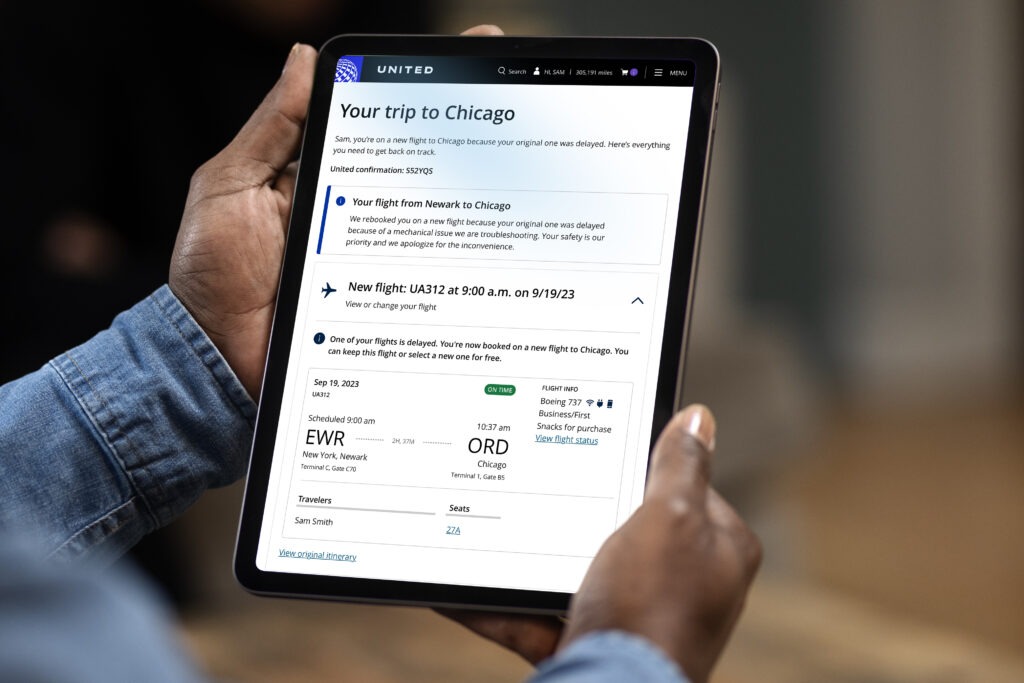
United Airlines has announced a new mobile app feature that may help customers save time and reduce stress if travel plans are disrupted. The airline’s new self-service tool automatically presents travelers personalized re-booking options, bag tracking information and meal and hotel vouchers when eligible if their flight is delayed or canceled.

United said it had the lowest mainline flight and seat cancellation rates of any airline in the country during the first three months of the year, but still has the most flights impacted by weather given the location of its major domestic hubs.

According to the airline, nearly 50% of its customers already turn to the app or united.com to self-serve during disruptions, so United began beta testing the new feature at the end of last year. United found that customers responded well to having alternate travel options automatically served to them in the app and that airport employees appreciated reducing the number of people physically waiting in line.

When a flight is delayed by more than 60 minutes or canceled, customers will automatically see options for delays and cancellations on the home screen of the United mobile app:

  • Get notified: Click the link in the automatic text notification or enter flight details in the mobile app or united.com to open the tool. For customers who have their reservation already loaded in the app, they’ll see a prompt right on the home screen.
  • Check flight and re-booking status: Confirm the status of your flight and see if you’ve been re-booked. Customers also have the option to look at other flight options and book based on their preference.
  • Track your bags: Follow the status of your checked luggage to see when it is checked-in, loaded on your flight and received at your final destination.
  • View eligible vouchers: Receive hotel, meal and/or rideshare vouchers if eligible.
  • Connect to a United customer service agent virtually: Call, text or video chat with one of hundreds of United agents who can offer the same assistance as the agents at the airport.

For those without the United mobile app, the self-service tool is accessible on a mobile device or computer at united.com, and customers still have the option to connect in-person with a customer service agent.

Jamaica Reports Boom in Tourism

In a release today, the Jamaica Tourism Board said that 3.3 million visitor arrivals in 2022 constituted a 117% increase over 2021 arrivals. Gross foreign exchange earnings for the year totaled over USD $3.6 billion, representing a 71.4% increase as compared to 2021 and on par with 2019 levels.

“The fact that Jamaica continues to outpace visitor arrivals and earnings projections is a testament to the resilience and unwavering appeal of the island’s tourism product as well as the excellent relationships we enjoy with our travel industry partners,” said the Hon. Edmund Bartlett, Jamaica’s minister of tourism, in the release. “Monthly stopover arrivals began to surpass 2019 figures as of June 2022 and it is expected that 2023 will show a full recovery in our annual figures, ahead of previous estimates that full recovery would occur in 2024.”

“Before even completing the first six months of this year, we have already received 2 million visitors from our stopover and cruise arrivals. This translates into record earnings of US $2 billion, a whopping 18% above the 2019 earnings for the same time period. It should be no surprise then that Jamaica is bracing for the best summer tourist season ever,” Bartlett added.

For the full year 2023, it is expected that Jamaica will show a full recovery in its annual figures with projections of 3.9 million visitors and foreign exchange earnings of USD $4.3 billion, ahead of previous estimates for full recovery in 2024.

Looking ahead to summer 2023, the agency said that bookings to Jamaica show a 33% increase over the same period in 2019 per ForwardKeys Air Ticket Data as of April 5, putting the destination on track for a “record-breaking summer season.” For the upcoming summer travel season, the U.S. represents 1.2 million of the 1.4 million airline seats that have been secured for the period, representing a 16% increase over the island’s previous best, recorded in 2019.

Source: Jamaica Tourism Board

How you look may be affecting how often you travel for business

The SAP Concur Global Business Travel Survey has published its fifth year of findings with an astonishing report that nearly two-thirds of global business travelers feel they haven’t had “equal opportunity to travel for business compared to their coworkers, and they attribute this primarily to their age, accent or gender.” Other disqualifiers included physical appearance, sexual identity and disability.

According to the global survey of 3,850 business travelers in 25 markets:

Nearly all global business travelers (94%) are willing to travel for business in the next 12 months, including 67% who are very willing. The SAP survey said that 92% say the future of their career is dependent on successful business travel in the next year because it’s important for maintaining client relationships (42%) and starting new ones (41%). More than a third (38%) say business travel is important for staying updated on the latest trends, technology and advancements.

But nearly two-thirds of global business travelers (62%) feel they haven’t had equal opportunity to travel for business compared to their coworkers. Even more U.S. business travelers (72%) feel they haven’t had equal opportunity. Global and U.S. business travelers attribute this to the following reasons:

  • Their age (global: 21%, U.S.:27%)
  • Their accent (17%, 23%)
  • Their gender (17%, 26%)
  • Their physical appearance (16%, 25%)
  • Their ethnicity or race (15%, 22%)
  • Being a parent or caretaker (13%, 18%)
  • Their sexual orientation (8%, 17%)
  • Their disability (7%, 14%)

Read MoreForever Remote: Event Central

The survey also reported that remote workers say business travel is critical for workplace relationships. But more remote workers feel they haven’t had equal opportunity to take business trips because of where they live or how often they come into the office.

The report found that more than three in 10 remote workers recognize that business travel is critical to forming meaningful connections with coworkers (38%) and building stronger relationships with managers (37%), compared to in-office workers (27% and 24%, respectively). However, half of remote workers (50%) say they’re traveling more than they’d like, compared to hybrid (37%) and in-office (29%) workers.

At the same time, more remote workers feel they haven’t had equal opportunity for business travel – 77%, compared to 61% of hybrid workers and 52% of in-office workers – because of where they live (20%, 13%, and 13%, respectively) and how often they come into the office (17%, 11%, and 8%, respectively). It is particularly challenging for remote workers who are parents or guardians: 16% say they haven’t had equal opportunity for business travel because of their status as a parent, compared to hybrid (12%) and in-office (11%) workers. Remote workers are also most likely to decline a business trip due to challenges finding childcare (19%, 14%, and 14%, respectively).

More remote workers say the uncertain economy is affecting their company’s business travel than in-office workers (91% vs. 80%), with noted changes including reducing overnight trips (36% vs. 27%), staying in lower quality accommodations (39% vs. 26%), requiring a minimal number of meetings per business trip (35% vs. 23%), and requiring more advance approvals (31% vs. 22%).

Finally, the survey saw that health and safety is the biggest threat to business travel: over inflation, budget cuts or travel freezes.

Safety (44%) and health (41%) are still the biggest reasons to decline a business trip, more so than feeling burnt out on travel (27%) and challenges finding childcare (15%).

Fifty-three percent of global business travelers have had to change their accommodations in the past 12 months because they felt unsafe, and more than a quarter (28%) have had to change more than once. It’s even higher in the U.S., where more than two-thirds of business travelers (70%) have had to change their accommodations because they felt unsafe, and nearly half (47%) have had to change more than once.

Taxi Fares Highest on East Coast

A recent study conducted by AirportParkingReservations.com has revealed the average cost of a taxi in the United States with the highest taxi fares for nine-mile journeys. The study highlights regional variations in transportation costs. According to the findings, Maine claims the top spot as the most expensive state for nine-mile taxi rides, with an average taxi cost of $35.92. Following closely behind is Rhode Island, with an average cost of $35.18.

AirportParkingReservations.com investigated the cost of a taxi for all 50 U.S. states. The study used Numbeo to determine the cost of a nine-mile (15 km) taxi ride by looking at the cost for 1km.

Read MoreNewport, Rhode Island: Small Meets on the East Coast

A nine-mile taxi in Maine is, on average, the most expensive nationwide.

The research reveals the East Coast state of Maine is the most expensive state for a nine-mile taxi ride, with an average cost of $35.93 – and this can be even higher in some cities. Out of all states, five out of the top 10 most expensive states are located on the East Coast, with Rhode Island ($25.18), New York ($33.67), Maryland ($32.64), and Pennsylvania ($31.62). Looking at Southern states, New Mexico ($35.11) and Georgia ($31.42) are the only southern states to make the top 10. When taking the cheapest fare into consideration, Wyoming ($21.57), Kentucky ($21.45), and Iowa ($20.86) wrap up the ranking.

Which states cost the most for an average nine-mile taxi?

Ranking States Average nine-mile taxi Costs
1 Maine $35.92
2 Rhode Island $35.18
3 New Mexico $35.11
4 New York $33.67
5 Hawaii $32.85
6 Maryland $32.64
7 Wisconsin $32.03
8 Nevada $31.93
9 Pennsylvania $31.62
10 Georgia $31.42
11 Alabama $31.25
12 Washington $31.25
13 Utah $31.12
14 California $30.65
15 New Hampshire $30.43
16 Massachusetts $29.97
17 Idaho $29.87
18 Montana $29.07
19 South Carolina $28.94
20 Vermont $28.87
21 South Dakota $28.65
22 Missouri $28.33
23 Illinois $28.29
24 Connecticut $28.23
25 Minnesota $27.80
26 New Jersey $27.59
27 North Carolina $27.54
28 Kansas $27.09
29 Alaska $27.05
30 Ohio $27.01
31 Oregon $27.00
32 Florida $26.82
33 Mississippi $26.62
34 Louisiana $26.28
35 Indiana $26.26
36 Michigan $26.18
37 North Dakota $25.79
38 Arizona $25.65
39 Tennessee $25.39
40 Arkansas $25.24
41 Virginia $24.57
42 Colorado $24.26
43 Delaware $24.23
44 West Virginia $24.09
45 Oklahoma $23.47
46 Texas $23.43
47 Nebraska $21.88
48 Wyoming $21.57
49 Kentucky $21.45
50 Iowa $20.86

Delta Loves Jamaica

Jamaica has been dubbed “the number one Caribbean destination” for Delta vacations in terms of growth. The vacation provider met with Jamaica’s Minister of Tourism, Hon. Edmund Bartlett along with executives of Delta Airlines at their Atlanta headquarters on Monday, June 12.

Bartlett said in a release that the destination’s growth “will allow for further discussions for additional seats and routes” on Delta Airlines.

Gino Marasco

man wearing light blue dress shirt

Marasco is managing director of hospitality sales for Timbers Company. He most recently worked as corporate director of sales and marketing at Wyndham Hotels & Resorts, leading the company’s lifestyle and upscale brands. He also held leading roles with The Walt Disney World Swan & Dolphin; The Ritz-Carlton, Amelia Island and The Cloister and The Lodge at Sea Island in Georgia.

Daniel Tiepelman

man wearing blue suite with white dress shirt

Tiepelman is vice president of operations and asset management for Cort Events. Based in the Greater Memphis area, Tiepelman has spent the last eight years as director and regional vice president of operations at Dufresne Spencer Group LLC, Ashley Furniture Homestore’s largest franchisee.

Aurore Braconnier

woman resting head on fist

Braconnier is general manager of Event Leaders Exchange in London. Braconnier has 15 years in the events industry, most recently worked as an event industry consultant with Freelance AB Consulting in the United Kingdom. She is currently a board member of Raccoon Events.

Roy Scardina

man wearing black short sleeve button up shirt

Scardina has been named chief operating officer for creative agency and production house Switch. Before this, he worked as vice president of operations for Audio Visual Management Solution in Seattle. He also worked as an executive consultant for multimedia and technology studio SenovvA.

Tom Evans

man wearing light grey suit and light blue dress shirt

Dreamscape Companies has named Evans chief marketing officer. Evans previously worked as chief marketing officer at The Cosmopolitan of Las Vegas for the last six years. The Nevada native has been a part of the opening of more than 10 hotels and casinos in the Las Vegas area, including Bellagio and Aria Resort & Casino.

Barbara Beckwith

woman wearing floral shirt and blue coat

Beckwith is general manager at Mills Falls at the Lake in Meredith, New Hampshire. She most recently worked with Mountain View Grand Resort & Spa in Whitefield, North Hampshire, as managing director. Additionally, Beckwith has worked as special meeting and events manager at DBA Excelebrations and catering sales manager for Fine Catering by Russell Morin, both in Newport, Rhode Island.

Erik Grazetti

man wearing grey suit, white dress shirt and blue bowtie

Grazetti is Viceroy Chicago’s director of sales and marketing. He comes from The Peninsula Chicago, where he led the hotel’s sales and marketing team. In his 30 years in the hospitality industry, he has been part of five opening hotel teams, including The Jefferson Washington DC, Loews Chicago Hotel and Sofitel Chicago Water Tower.

Luke Wynen

man weaing bright blue jacket

Blue Mountain Resort in Palmerton, Pennsylvania, has named Wynen director of sales. A former professional snowboarder, Wynen has plenty of experience on the sales and marketing side of the industry as well. Before this, he worked as director of sales training and marketing manager for Buckman’s Ski and Snowboard Shops, based in Pennsylvania. He has also worked as sales manager and general manager for Saucony Creek Brewing Company + Gastropub in Kutztown, Pennsylvania.

Jessica Dillree

woman wearing dark blue dress shirt

Dillree has been promoted to associate director of marketing for Louisville Tourism. Dillree has been with the organization since 2007 and has worked in numerous capacities, including as sales assistant, marketing communications coordinator, and most recently, digital marketing manager.

Mathew Ratner

man wearing light blue suit and white dress shirt

Ratner is director of sports and entertainment tourism for Greater Miami Convention & Visitors Bureau (GMCVB). For the last 10 years, Ratner worked as the organization’s associate director of sports and entertainment. Before joining GMCVB, he was assistant sports information director for Florida International University.

Robert Beckham, Reginald Charlot and Makiko Matsuda Healy

man on left wearing dark blue suit, man in middle wearing light blue suit, woman on right wearing yellow dress shirt
Robert Beckham (left), Reginald Charlot (middle), Makiko Matsuda Healy (right)

Beckham is senior vice president of tourism market development for Europe; Charlot is senior vice president of tourism market development for Australia, Canada, New Zealand, the United States, Luxury and LGBTQ+ markets; and Healy is senior vice president of tourism market development for the Asia, Latin America, Middle East and Africa markets for New York City Tourism + Conventions, formerly NYC & Company.

Read MoreMeeting Planners Travel Report: NYC & Company Rebrands

Beckham joined the team in 2002 and has worked on the membership development and services team since 2014. He has experience in sales and marketing for restaurants, attractions and destinations, including The Walt Disney Company, Gordon Ramsay Restaurants and Hard Rock International.

Charlot previously worked as managing director for tourism market development for the organization, leading efforts in Europe, Australia, Canada, New Zealand and the U.S. Before joining NYC Tourism + Conventions, Charlot worked at Thai Airways and Air France. He is a former chair member for the International Gay and Lesbian Travel Association Foundation, and a current member of The Virtuoso Black Diversity Advisory Board and NYC Tourism + Conventions DEI Advisory Board.

Healy previously worked as managing director for tourism market development and will continue working in the Asia, Latin America, Middle East and Africa markets.