As AI, immersive tools and personalization reshape events, intention becomes true innovation
For an industry built on bringing people together, meetings and events have never had more technology layered into them. AI-powered personalization, immersive environments, predictive data tools—the list of possibilities keeps growing. And yet, the most impactful events don’t necessarily feel more high-tech. They feel easier. More intuitive. More human.
“Event technology works best when it stays out of the way and strengthens human moments without competing with them,” said EJ Corporan of Ansera, an experiential agency that was formed in 2026 through the merger of High Output, L!VE and Sardis. “It can be as simple as a smooth registration check-in and content that feels tailored, or as elaborate as immersive environments that support storytelling in an impactful way.”
It’s a subtle but significant shift. As event tech evolves, the goal is no longer to impress attendees with what’s possible; it’s to create experiences so seamless they barely notice the technology at all.
When Tech Takes Over
For years, innovation in events has often been defined by spectacle: bigger screens, more immersive environments, flashier activations. And while those elements can still play a role, planners are starting to recognize a downside.
“We’ve seen planners fall into the trap of adopting the ‘next big thing’ in technology without clearly defining how that technology will impact the experience and cognitive load of their attendees,” Corporan said.
When technology becomes the focal point instead of the facilitator, it can actually work against the experience it’s meant to elevate. Complex platforms, overly layered activations or disconnected digital elements can pull attendees out of the moment instead of drawing them in.
Eileen Page, senior vice president of digital and innovation at InVision, sees a similar pattern. “Where it goes wrong is when tech becomes the main character. If attendees are focused on figuring out an app instead of connecting with each other, you’ve already lost the plot,” she said.
The takeaway for planners? More technology doesn’t automatically mean more engagement. In some cases, it can mean the opposite.
Designing for Emotion
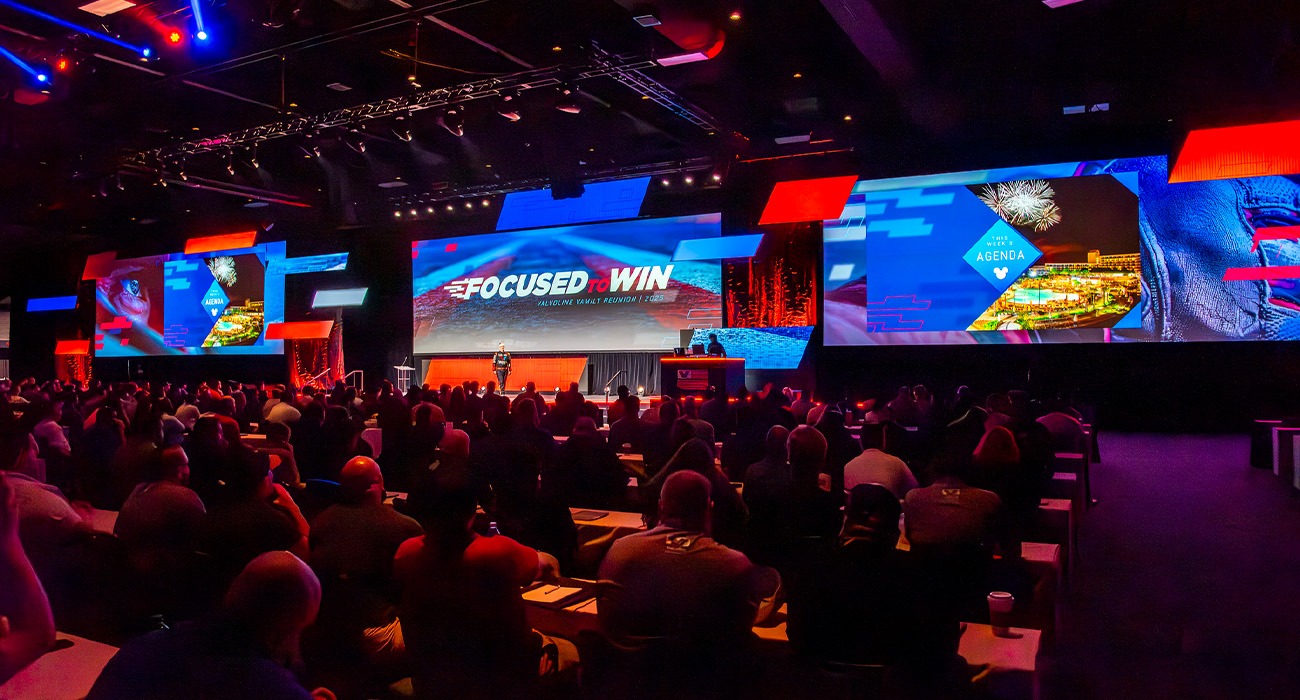
If technology isn’t the star, what is? Emotion.
“It’s easy to get caught up in schedules, logistics and content delivery,” Corporan said. “The experiences people remember are shaped by emotional arcs.”
That means thinking beyond what attendees are doing—and focusing on what they’re feeling at each stage of the experience. How does the event begin? Where do meaningful connections happen? What lingers after it ends?
This approach is increasingly tied to measurable business outcomes. According to InVision, brands that foster strong emotional connections significantly outperform competitors in revenue growth. And in a world where attendees are more selective about where they spend their time, that emotional connection is becoming a differentiator.
“There is nothing more important than how you are building trust with your audience on site,” said Evan Strange, senior strategy director at InVision. “Don’t get distracted by the newest tech or the most polished keynote. Focus first on how every moment builds authentic trust.”
For planners, that often means making room for dialogue, designing environments that feel welcoming and ensuring that every element from content to technology supports a cohesive story.
The Tools That Actually Work
That doesn’t mean technology is taking a backseat. It just means it’s being used differently.
The tools that are moving the needle right now share one thing in common: They make experiences feel more relevant and more effortless.
Personalization is a major driver. AI-powered recommendations, behavioral data platforms and dynamic agendas allow events to adapt in real time, helping attendees feel like the experience was designed specifically for them.
“We’re using AI to personalize attendee journeys in real time—everything from tailored content recommendations to dynamic agendas that adapt based on behavior,” Page said.
Immersive environments are also proving effective, when used with intention. Elements like spatial audio, projection mapping and interactive installations can heighten engagement and deepen memory—but only when they align with the story being told.
“The key is to always drive alignment with the story and the objectives you aim to achieve,” Corporan said.
Just as important are the less visible technologies, the ones that remove friction altogether. Seamless registration, intuitive networking tools and streamlined content delivery may not be flashy, but they shape how attendees experience an event from the moment they arrive.
“The best event technology disappears into the moment,” Page said. “It makes it easier for people to engage, connect and feel something real.”
Measuring What Matters
As experiential strategies evolve, so does the conversation around ROI. Traditional metrics (attendance, dwell time, session engagement) still have value, but they only tell part of the story. Increasingly, planners are being asked to measure something less tangible: emotional impact.
At Ansera, that shift is framed as Return on Emotion and Return on Memory.
“Are people still talking about the experience weeks later? Did it shift perception or motivate action?” Corporan said.
These are harder metrics to capture, but not impossible. Sentiment analysis, social sharing, post-event behavior and long-term brand affinity can all provide insight into how an experience resonates.
InVision takes a similarly structured approach, modeling measurement frameworks after brand health studies and emphasizing the importance of defining goals early.
“When you lead with measurement in your very first planning meeting, go deeper on your objectives and corresponding metrics, and have a repeatable plan in place, showing the true impact of your event becomes much easier,” Strange said.
The key is alignment—ensuring that what you measure reflects what you set out to achieve in the first place.
The Experience Ecosystem
Another major shift is how organizations think about events overall. Rather than standalone moments, events are increasingly part of a broader ecosystem connected to digital touchpoints before and after the live experience.
“There is a clear move away from events as one-off moments and toward events as part of a larger ecosystem,” Corporan said. This approach extends the life of an event, reinforcing messaging, deepening engagement and creating continuity across channels.
At the same time, scale is being reconsidered. Smaller, more curated gatherings are often delivering stronger results than larger, less focused events.
“Audiences are craving high-touch, personalized experiences where they can be part of a community and really interact with the brand,” Strange said.
In an era shaped by AI and digital overload, in-person events are increasingly valued as spaces for authentic connection: places where attendees can ask questions, engage directly and build trust.
The Power of Less
For planners, all of this points to a mindset shift. Innovation isn’t about adding more layers. It’s about making better choices.
“Design for how people feel, not just what they do,” Corporan said.
That principle has ripple effects across every decision, from technology and programming to layout and flow. It encourages planners to be more intentional, more selective and ultimately more effective.
Because in a landscape filled with new tools and endless possibilities, the most powerful experiences often come down to something simple: using technology not to take center stage, but to quietly make everything else work better.
This article appears in the May 2026 issue. You can subscribe to the magazine here.