Inspirations for adding America250 to your program
“It is never too late to change the future.”
― Heather Cox Richardson, historian
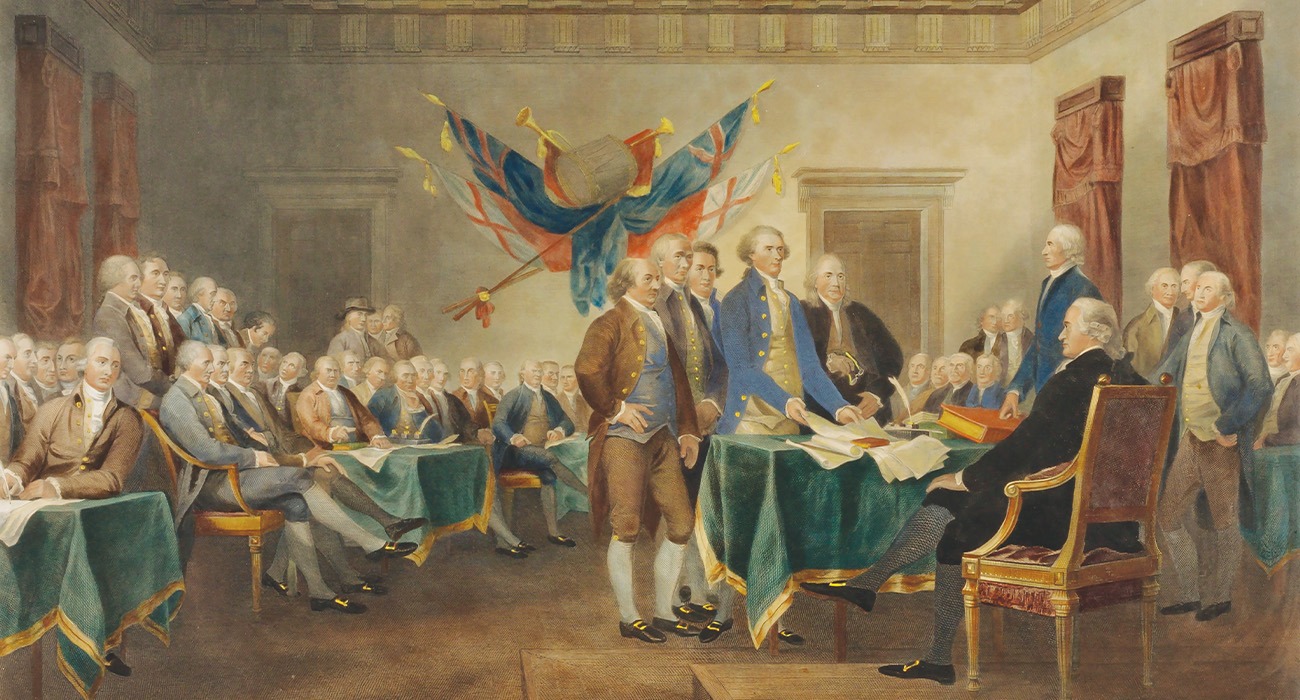
The American Experiment began with the coming together of disparate minds in search of a considered solution. The Bostonians and Virginians who gathered in Philadelphia for the Continental Congresses that led in 1776 to the signing of the Declaration of Independence might almost have been from different planets, never mind those Founding Fathers from the other 11 colonies.
Yet of their meeting were we born. And so, this nation, our nation, began with a meeting.
Those attendees met and argued and learned from each other, and together they forged a wholly unique view of how societies should be organized: that all men are created equal and are endowed with inalienable rights. That no king is better than any man. In human organization, this was itself a revolution.
Of course, our Founding Fathers marginalized segments of the population—women, people of color, the Indigenous—but that’s been the focus of many more meetings over the past 250 years. That considered solution we celebrate this year made the struggle to include us all a logical extension instead of a biological impossibility.
No matter where your groups meet over the course of 2026, you can join in the commemoration of those miraculous meetings and remind them through storytelling how meetings themselves are at the very heart of our nation’s origin story. Here are suggestions for where and how.
Go Big, Go Small
Alas, too many of us remember U.S. history as a bore. It has often been taught by rote in schools as dates and names and heroic stereotypes. It was, in reality, complex and nuanced. And in many ways, those fraught times mirrored the divisiveness of today’s America. How many of your attendees would know, to cite but one example, that Benjamin Franklin’s own son, William, was a diehard loyalist to the Crown who was imprisoned for two years before leading military units to fight against the colonists?
And so, the opportunities to spark interest and conversation around America250 are many, as are, with a bit of thought, ways to tie it to contemporary issues confronting your group. These activations can be formal or informal. During sessions or between them. In breakouts or workshops. Hands-on and experiential or “did you know” factoids gleaned on LED screens in prefunction areas. Panels or a keynote tapping into local historians can be paired with fun quizzes for prizes or team-building scavenger history hunts. If your setting had significance in the American Revolution, colonial re-enactors might be just the perfect ice breakers for an opening networking event.
States across the country have created their own commissions to host local events to mark our semiquincentennial, including new historical marker unveilings and educational tours. The official America250 website (america250.org) has a calendar that lists events by city and state. Local colleges and universities often have faculty specialized in their regions, and they can be tapped to bring revolutionary history alive.
Be at the Epicenter
Looking for maximum impact? Boston and Philadelphia offer the peak in historical revolutionary resonance for 2026, of course, and both cities have dedicated resources, specialized venues and “once-in-a-generation” programming that can be integrated into corporate meetings, galas and incentives. And Washington, D.C.—which was swampy lowland and tobacco plantations worked by slaves until George Washington chose it for our new nation’s capital after the Revolution—is mounting a full year of festivals, exhibitions and national ceremonies.
In all three cities many of the major happenings will take place this summer, especially in July, yet America250 is about more than a date; it’s also about setting. In Boston, for instance, a Freedom Trail experience will never be more poignant: This year-round, 2.5-mile route maintained by the National Park Service stretches from Boston Common to the USS Constitution in Charlestown and passes 16 historically important sites such as the Paul Revere House and Old North Church; a self-guided audio tour is free, and you can choose the segments you want.
After peak tourism slackens this fall, many community-based America250 programs continue, such as Philadelphia’s “52 Weeks of Firsts,” showcasing the city’s spirit of invention, activism and innovation. Planners can take advantage of these free public events to amp up their programming.
“There’s no better place to reconnect to our nation’s history than Philly,” says Maria Grasso, chief sales officer for Philadelphia Convention and Visitors Bureau. “The Museum of the American Revolution, for example, is celebrating the Declaration of Independence’s 250-year legacy and global influence on independence movements through The Declaration’s Journey, on display through 2027. Coupled with their one-of-a-kind event backdrop and versatile ballroom, this museum is the perfect pairing of 250th education and celebration.”
Who Planned the Continental Congress?
Meeting planning in the modern sense did not yet exist for the First Continental Congress (1774) and Second Continental Congress (1775-1781). They were organized by civic and political committees, local hosts in Philadelphia and a permanent secretary, Charles Thomson. Debates were secret and not publicized, but Thomson did take minutes, handled official correspondence and kept delegates updated as needed.
Logistics were relatively simple, since the delegates themselves arranged their travel by horseback to Philadelphia and were helped by local hosts to find lodging in taverns, boarding houses and private homes. Benjamin Franklin, who lived in a house on Market Street, could walk to the meetings. Thomas Jefferson rented two rooms above a tradesman’s home.
Meals were taken at the taverns, especially City Tavern. The midday “dinner” was the “Ordinary,” the fixed-price meal of the day, often served family-style at long tables to encourage continued debate and networking; a favorite was pepperpot stew, a spicy, tripe-based dish with roots in the Caribbean, as well as hearty preparations of mutton or venison, savory pot pies and even turtle soup, a delicacy of the era. Corn chowder and Sally Lund bread, a brioche-like bun, were plentiful. So was alcohol, which was safer than water in those days, and it flowed in favored forms such as Madeira fortified wine, rum punch, ale and cider. A team-building ritual of “13 patriotic toasts” (one for each colony) was repeated often.
Monday through Saturday, John Hancock called the delegates to order around 9 o’clock. Debates began in late morning and could run long, but typically, after breakouts and late afternoon time for small strategy sessions or private writing and journaling, delegates returned again to the tavern, now lit by firelight and beeswax candles, air thick with tobacco smoke and the thunk of pewter tankards hitting wooden tables, piercing animated conversations.
Go to the Revolutionary Edges, Far and Wide
You’d be forgiven for thinking that without meeting in Philadelphia or Boston, or visiting Monticello or Mount Vernon, there’s little you can do to get a contact high from the energy of America250. But you’d be mistaken. If your groups happen to be, or you plan for them to travel to, a lesser-known location that played even a minor role in the American Revolution, join the observance there.
Among many possibilities, here are a few.
Maryland: Both Baltimore and Annapolis were temporary seats of the revolutionary government when the British threatened to overrun Philadelphia. And Annapolis became the first peacetime capital in 1784 after the newly victorious Americans ratified the Treaty of Paris there, formally ending the war. Among planned events across Maryland is a Tavern Lecture Series that reimagines tavern life in 1776, often highlighting Annapolis’ historic inns.
New Jersey: The Battles of Trenton (December 1776) and Princeton (January 1777) saved the American Revolution from collapse. Following a series of devastating losses, General Washington’s surprise Christmas crossing of the icy Delaware led to winter victories in New Jersey that restored broken morale, bolstered recruitment and proved that the Continental Army could defeat the British in open battle. America250 events include Battle of Princeton reenactments, Patriots Week in Trenton and special programs at Washington Crossing State Park.
Michigan: Under British control, Fort Detroit in that then-distant Western territory was a primary goal for capture by George Washington, but logical challenges proved too much. It played a nefarious role, nonetheless. The fort’s British commander, Henry Hamilton, earned the nickname “the hair buyer” because he was said to have offered bounties to Native American warriors for the scalps of American settlers. He also housed several hundred American prisoners of war, including famous frontiersman Daniel Boone. America250 highlights include exhibits at the Henry Ford Museum in Dearborn and the Michigan Capitol in Lansing.
Louisiana: New Orleans, then under Spanish rule, secretly shipped arms, gunpowder and supplies up the Mississippi River to the Continental Army, and it raised a rainbow militia—including Blacks, Acadian exiles and Indigenous men—to fight alongside American and Spanish forces when the Spanish governor of Louisiana attacked British forts in Baton Rouge, Mobile and Pensacola to divert British resources away from the Colonies. The state will focus on its unique Spanish colonial history and role in the American Revolution with events such as a special exhibition at the Historic New Orleans Collection in the French Quarter.
Missouri: St. Louis was a Spanish-governed fur-trading village that blocked British control of the Mississippi River after the Battle of Fort San Carlos in May 1780, when a Spanish-led force repelled a British-aligned attack. Missouri has planned extensive America250 celebrations for 2026, coordinated by the Show-Me 250 Commission.
Canada: Yes, even Canada. Most Americans forget that we captured Montréal without a fight in late 1775 when the British retreated to Quebec City, and Benjamin Franklin led a diplomatic delegation there in an attempt to persuade Canadians to join the colonies. In December of 1775, the Americans launched a disastrous assault on Quebec City during a raging blizzard. The infamous Benedict Arnold, then one of the American commanders, was wounded; the other, Richard Montgomery, was killed. The British repelled the Continental Army from Canada in 1776, and Quebec City became the staging ground for a counter-offensive into New York. Chateau Ramezay, Historic Site and Museum of Montréal, has mounted an exhibition on Canada’s role in the American Revolution.
U.S. Travel’s Geoff Freeman on America250’s Challenge for Meeting Profs
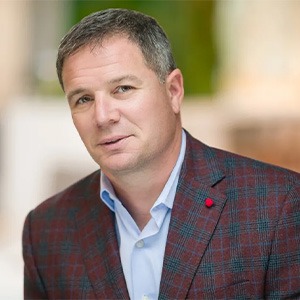
As president and CEO of U.S. Travel Association, Geoff Freeman is the leading advocate for the $1.3 trillion U.S. travel and hospitality industry. Smart Meetings asked him to frame our semiquincentennial as an opportunity for meeting professionals to advance their industry and the work they do. His replies have been lightly edited for clarity and brevity.
How and why should the events and hospitality industry courageously position itself for a thriving future through advocacy and collective action?
This is a great year for us to celebrate. Our industry is always looking for ways to come together, and America 250 is a great way to do that. Yet we’ve seen that too many in government are willing to allow our industry to suffer. The shutdown of this spring and last fall didn’t help us. But it did demonstrate the importance of advocating, of advancing support for our industry. We have to be greater champions of our industry, of the value we provide, or else we will continue to be exploited by policymakers who feel no responsibility for those who bring us together.
What specific issues top your list as the biggest potential “wins” for the events industry?
The opportunities for domestic and international inbound travel. Our focus needs to turn to preventing the aviation workforce from being leveraged in future government actions. What our elected leaders did is unconscionable. Members of Congress were getting paid, while TSA was not. If I tell my kids we’re going to Disney World, but we have to stand in line for hours at security, we’re still going. But that’s not what the business traveler says: They will pull back, shut down or cancel altogether. Leveraging the aviation issue is incredibly important to make the traveling process less difficult for the business traveler.
Last year, the Department of Homeland Security eliminated having to take shoes off. What else can we do? How can we use AI, for example, to make the travel process more streamlined? On International inbound, Congress last year passed the so-called “visa integrity fee,” so it now costs an additional $250 per person for leisure and business travelers from many countries, and that’s in addition to existing visa fees. Now we have proposals for travelers to provide access to their social media, provide DNA and more. All of this is a massive turnoff for travelers. On the other hand, one of the best things we’ve seen is the World Cup fast track. You can get an expedited visa if you have tickets to the World Cup. How can we use this same model for the Consumer Electronics Show, for other major expos and events?
How can meeting and hospitality professionals ensure that their livelihoods are recognized as essential enablers of positive change, fresh ideas, human connection and the foundational ideals of the American Experiment?
There’s a reason that Amazon, Pfizer and other major companies all participate in major meetings. What we need to do is get better at documenting the ROI of coming together—the value of face-to-face to do things we cannot do otherwise. It’s not as widely understood as it needs to be. We need to look at ROI not through the rearview mirror but as we’re planning. What do we want the headline to be 60 days after this event is over? Documenting ROI will make us a lot better down the road.
Hail the Often-overlooked Patriots
Every American schoolchild learns the names Jefferson, Hancock and Washington, but your groups may be fascinated to learn of other, less famous patriots. Especially those excluded by the language of the Declaration of Independence.
Crispus Attucks is believed to be the very first casualty of the American Revolution. He was of African and Indigenous heritage. On a snowy night in Boston in March 1770, Attucks was at the head of a group of sailors hurling snowballs and insults at British soldiers, who opened fire. Two musket balls pierced Attucks’ chest. Five colonists were killed in all, and six were wounded. The incident became known as the Boston Massacre. John Adams famously defended the British soldiers in court in the face of local outrage at the killings. March 5 in Boston is still observed as Crispus Attucks Day.
Sybil Ludington has been called the “female Paul Revere.” In 1777, this plucky 16-year-old is said to have ridden 40 miles to warn of a British attack on a supply depot in Danbury, Connecticut, rallying a defense against the advancing Redcoats. Although her story was not documented until the 19th century, her ride would have been more than twice as long as Revere’s, and she is honored with a statue in Carmel, New York.
Francis Marion, better known as The Swamp Fox, is one of the fathers of modern guerrilla warfare—which he learned from America’s Indigenous warriors. An officer in the Continental Army and South Carolina militia, he kept the American cause alive in the South after the British captured Charleston and defeated the Continental forces in the region. Leading a ragtag force that included Black volunteers, freedmen and slaves, he used hit-and-run attacks to harass the British before vanishing again into the inhospitable swamps he knew well. His moniker came from a British officer who chased him for 26 miles without success, only to declare, “As for this damned old fox, the Devil himself could not catch him.”
Henry Knox, a 25-year-old former bookseller, was ordered by George Washington to transfer 59 captured British cannons weighing up to 5,000 pounds each on a 300-mile journey in the dead of winter in 1775-1776, from Fort Ticonderoga, New York, to Boston. Using sleds and oxen and cutting a path across the Berkshire Mountains, frozen rivers and Lake George, Knox’s men accomplished this near-impossible task in 56 days. When the British occupying Boston awoke to realize the artillery was trained down on them and their ships in the harbor, they hurriedly fled, ending a standoff with the Continental Army.
Planning for America250: Strategy, Storytelling and Scale

Tips for taking the dynamism of a national anniversary and turning it into a powerful event went far beyond red, white and blue bunting on a recent episode of What One Thing, the Smart Meetings podcast.
Melinda Curley, vice president of customer experience at Hargrove, began by noting, “Space will be at a premium. Hotels, convention centers and event venues will be in high demand. Understanding your footprint, permitting requirements and fabrication needs early is critical. Our industry relies on a lot of resources to produce great events, so planning early is essential.” Johanna Welsh, vice president of event production at Encore, agreed, adding, “These events overlap with already busy schedules. Crowd sizes will be large, and the country will also host the FIFA World Cup during peak celebration months.”
Welsh continued: “These events will extend beyond traditional venues. You need to think about permitting, transportation, wayfinding and coordination with parks and transportation departments. Will streets need to close? Are you near other festivals? Understanding local requirements and working across agencies is key.”
Curley reminded meeting professionals to tap into relationships with local officials. “Check their websites and learn what they are planning. When you build a large event outside a traditional venue, you are essentially building a city. You must handle everything a convention center normally provides. That includes trash collection, Wi-Fi, restrooms and more. The checklist is long.”
What narratives can add depth to 2026 events? “There is no single right answer,” Curley said. “Some will focus on history. Others will focus on culture. Both are valid. Be authentic and identify the voice that fits your client. That clarity helps the story unfold. Another angle is looking ahead. Instead of only celebrating the past 250 years, think about what comes next. That future focus may resonate with corporate audiences.”
“Local stories are powerful,” Welsh said. “We will see celebrations across the country, so highlighting regional identity will matter. Use this moment to bring people together in ways that feel meaningful and lasting.”
“Help people feel this is our history, our moment and our future,” Curley said. “This is an opportunity to be bold, experiment and celebrate at scale. Help attendees feel the pride and energy of the moment.”
[Insert “Full episodes of Smart Start Radio are available on all major platforms” language that is also at the bottom of the Smart Start Radio column.]
Celebrate the Complexities
Perhaps the greatest lesson of our origin story is a reminder of how a diverse, divided people became one—that the United States of America was born as both a miracle and a misnomer. Before it became open rebellion against the British, it was a civil war for the hearts and minds of the colonists, many of whom remained loyal to the Crown, with some fleeing to Canada and elsewhere in the British Empire.
Of course, slavery was central to the story. All 13 colonies allowed slaves, with the first enslaved Africans arriving in Jamestown in 1619. In 1776, Black people made up about 20% of the population in the mainland colonies. And at least 41 of the 56 signers of the Declaration of Independence that declared all men equal were or had been enslavers.
During the war, the British promised freedom to slaves who fled their plantations to fight for the Redcoats, and thousands did. Thousands more fought for the Continental Army. Native Americans fought on both sides—though most sided with the British, hoping to halt the expansion of American settlers onto their land. King George III, for his own political reasons, had forbidden colonists to invest in western Indian lands, another grievance against him held by rich colonists like Washington and Franklin.
And yet, out of these complexities of colonial sensibilities came an inspiration for the world—and for any group seeking to unite despite differences. Since 1776, according to the website for Jefferson’s Monticello, some 120 declarations of independence have been issued by other nations and peoples, many of which mirror our document’s structure and language.
As historian Sean Monahan argues, however divided we seem at times, celebrating our 250th anniversary is all the more essential because the ideals of the Revolution are what turn a diverse population into “one people.” That those ideals were forged by meeting is yet another reminder of why bringing people together—what you do—is, and always has been, so important.
This article appears in the May 2026 issue. You can subscribe to the magazine here.