In a survey of more than 60 respondents, it was found that planners who create events around sporting events and not have similar concerns: budget instability and the decline of in-person attendance.
Working with sports venues and hotels is changing
Sports and sporting events are ubiquitous. Smart Meetings conducted a survey to learn about the pain points that decision makers and planners are most concerned about in the years ahead when creating events that center on sports.
From more than 60 respondents, we found that no matter what type of events meeting professionals plan or what sporting events they plan around, out of the various elements that shape when and how a planner creates their event, most have the same concerns—budget instability and the decline of in-person attendance.
The Digitization of Sports Venue Planning
In the survey, a supermajority—86%—said they move around when booking events. With this being the case, planners are making new connections and reaching out to new venues and accommodations. Making the process as streamlined as possible, with venue planning and accommodations on the same team, is ideal.
“Historically, venue planning and accommodations were treated as parallel tracks,” says Tim Flors, chief customer officer for online hotel booking solution Groups360, “but today’s sport events are more distributed, more data-driven and often involve catering to multiple stakeholder groups such as teams, officials, sponsors, media and fans, each with different lodging needs. That complexity makes accommodations less of an afterthought and more of a strategic layer that is required to ensure the success of a sport event itself.”
Cost pressure is not new, but what feels different now is the number of variables that planners are having to manage at once.”
– Tim Flors, Groups360
Flors credits advanced technology, including group accommodation booking tools, for giving planners access to better data about total event cost, attendee experience and booking behavior.
“Digital sourcing platforms have also introduced more transparency around the search process and what each location offers,” he says. “As a result, lodging logistics can now be more fully leveraged at an early stage in the planning cycle, not just for room rates, but for walkability, amenities, transportation options and more. These abilities ensure the meeting of expectations which increasingly consider the totality of a sport event and stay experience to decide if enjoyable.”
The Decision Makers

Depending on the planner, the term “decision maker” takes on various forms. For some, it’s the polled attendees; for others, the planner has the final say; and for many, a client or stakeholder determines where the event will be. These are shaped by multiple factors: for 18 of the 67 surveyed, price was the deciding factor when deciding where to host; the next two were location/proximity/lift (16) and available dates (13).
As for pricing, one respondent named a necessary item used at events: chairs. “Chairs that were included now are $15,000,” they said, adding, “and ever-changing venue policies that cause delays for you and the client. New penalty fees for final updates or counts 90-120 days out.”
Another respondent, Dara Hall, executive vice president for Event Source Professionals, said rapidly rising costs make it nearly impossible to forecast events.
Others have accepted the need to budget as a reality in 2026, saying they aim to get creative and do their best to meet their attendees’ needs.
Amid reported fears and news centered on job loss due to AI, only two respondents mentioned AI as a concern, with one respondent, Jenin Humber, events and community outreach program analyst at AARP Massachusetts, saying, “Most of the Administrative work will go to AI. There is already a great deal of AI in spaces that one would not expect. It has made my job easier, but the future, to me, is cloudy.”
“Cost pressure is not new, but what feels different now is the number of variables that planners are having to manage at once,” Flors says. “Venue rental, food and beverage minimums, labor costs, transportation and lodging rates are each increasing or fluctuating in their own ways, making it harder to predict the total event budget early on. The most effective way planners can navigate that complexity is through earlier coordination and greater transparency between venues and lodging partners.”
Flors recommends sourcing accommodations in tandem with the venue rather than sequentially. “Planners gain leverage,” he says. “Using technology such as instant accommodations booking tools, planners can analyze the total cost of selecting a sports venue by gaining real-time access to the live rates of nearby hotels and resorts. This level of transparency offers a much broader overview of total costs, allowing planners to plan according to budgets without spending hours examining isolated line items.”
Flors says this also provides planners with the opportunity to analyze their options, such as adjusting room block size, changing arrival and departure dates or selecting venues with integrated lodging options-all before commitments are locked in. “Ultimately,” he adds, “using tools that enhance collaboration and instant data access reduces the risk of unexpected multiplying costs.”
Streamlining the Event Experience
Event planners are looking for a booking experience that’s easy. One respondent, who was sourcing local sports arenas and stadiums as venue options for their largest employee experience to date, says, “This decision is impacted by the ease of coordinating when we work with established venues.”
“Traditionally, sport event-related accommodations have often been managed through manual processes, including separate contracts, third-party housing providers, spreadsheets tracking rooming lists and multiple communication threads between teams, attendees, hotels and organizers,” Flors says. “That model worked when events were smaller and timelines were longer. But as sports events have scaled and audiences have become more experience-focused, the operational strain has become more visible.”
Sports organizations are recognizing the important role lodging plays in the brand experience. “For athletes and officials, it impacts performance and logistics,” Flors says. “For sponsors and fans, it shapes the overall perception of the event. The future for this space is therefore focused on centralized, digital sourcing and booking environments where venues and accommodations can be evaluated within a single workflow, ensuring clearer cost control and a more cohesive event experience overall.”
Sports Venues to Gather, Play and Spectate
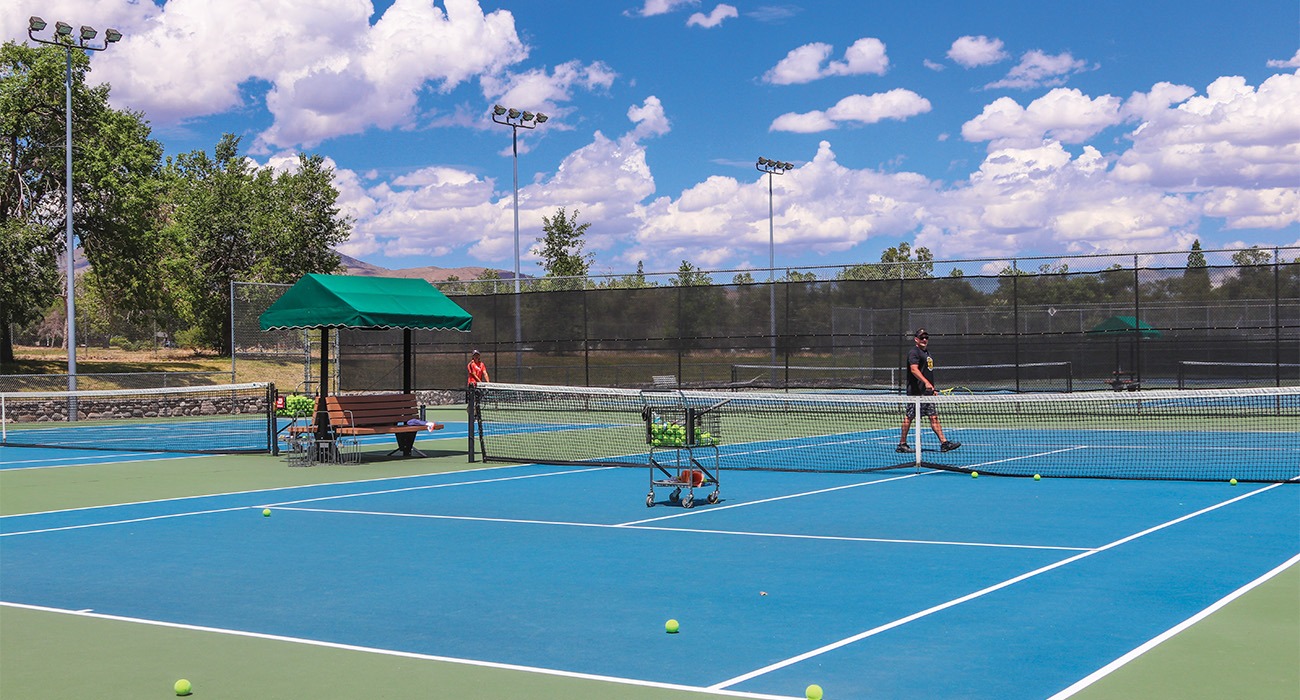
The decision of which sports venue to gather in isn’t an easy one, as there are so many options on the ground floor. Stuart Phillips, an IT employee who plans tennis events, says, “It’s a shared decision, not only mine.” As a group, he and his team look at their previous locations, compare them to the new one and decide from there.
Idlewild Park in northern Nevada is home to the largest public tennis facility in the region. With 22 outdoor courts and lighted courts for evening play, the park has several rentable spaces: the 100-person Rose Garden, 200-person Snowflake and 200-person Terrace. Unlike Idlewild Park, Reno Tennis Center is built for tennis and pickleball. Here, attendees will have access to 10 tennis courts, 24 pickleball courts and three tennis ball machines.
Event professionals can host private events at Reno Tennis Center, where there are certified coaching staff who can lead drills, games and competitions. The venue also features inhouse catering, rentals, audiovisual and lounge areas.
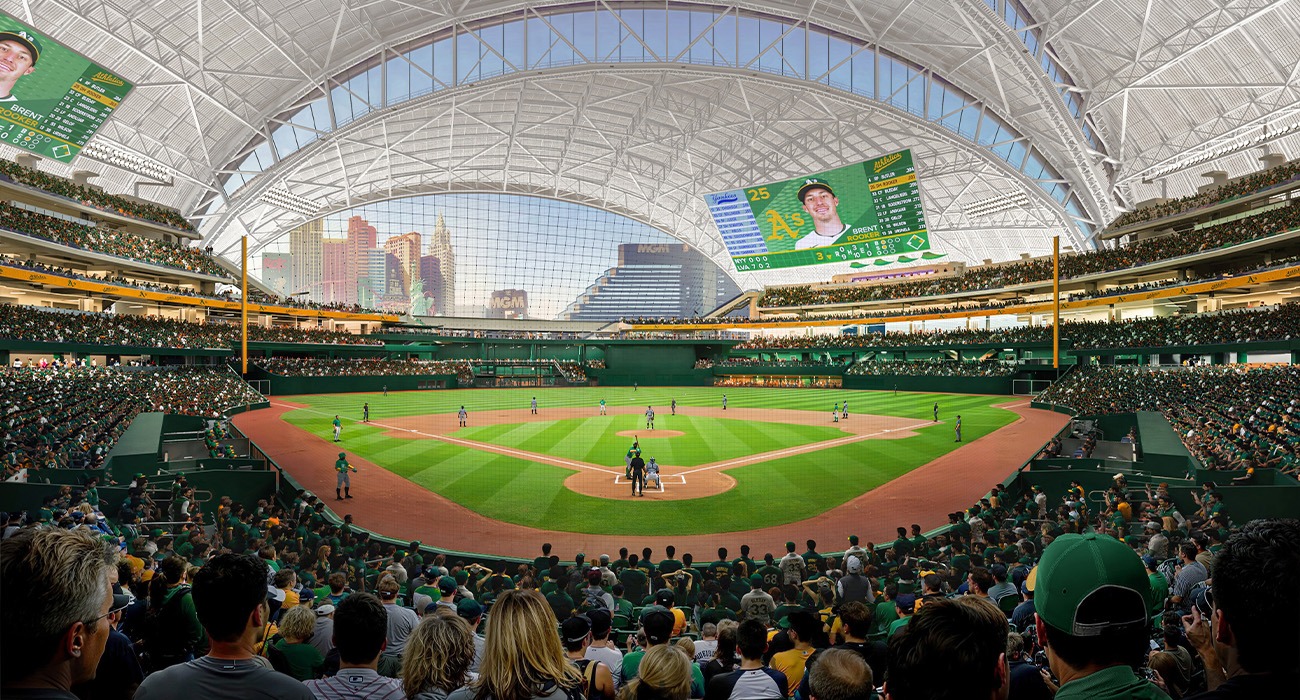
Other planners, such as Abe Korn, MICE planner for Worldwide Meeting & Event Services, plan baseball, football, soccer and other sporting incentive trips for corporations and organizations. Venues, such as the upcoming Athletics Ballpark in Las Vegas, will make lodging easier by having two hotels on property, totaling 3,000 rooms when it opens in 2028. The 35 acres on which the 33,000-capacity stadium sits will also feature a 2,500-seat theater and 500,000 sq. ft. of retail, dining and entertainment.
Southern and Northern Nevada have tight sports-related ties. Lake Tahoe’s new professional ice hockey team, Tahoe Knight Monsters, plays at Tahoe Blue Event Center in Stateline, Nevada, and are affiliates of the NHL Vegas Golden Knights. Tahoe Blue Center is a proper location to catch a sporting event or to rent out for events, whether the nearly 27,000-square-foot arena floor or the more than 50,000 sq. ft. of meeting and convention space.
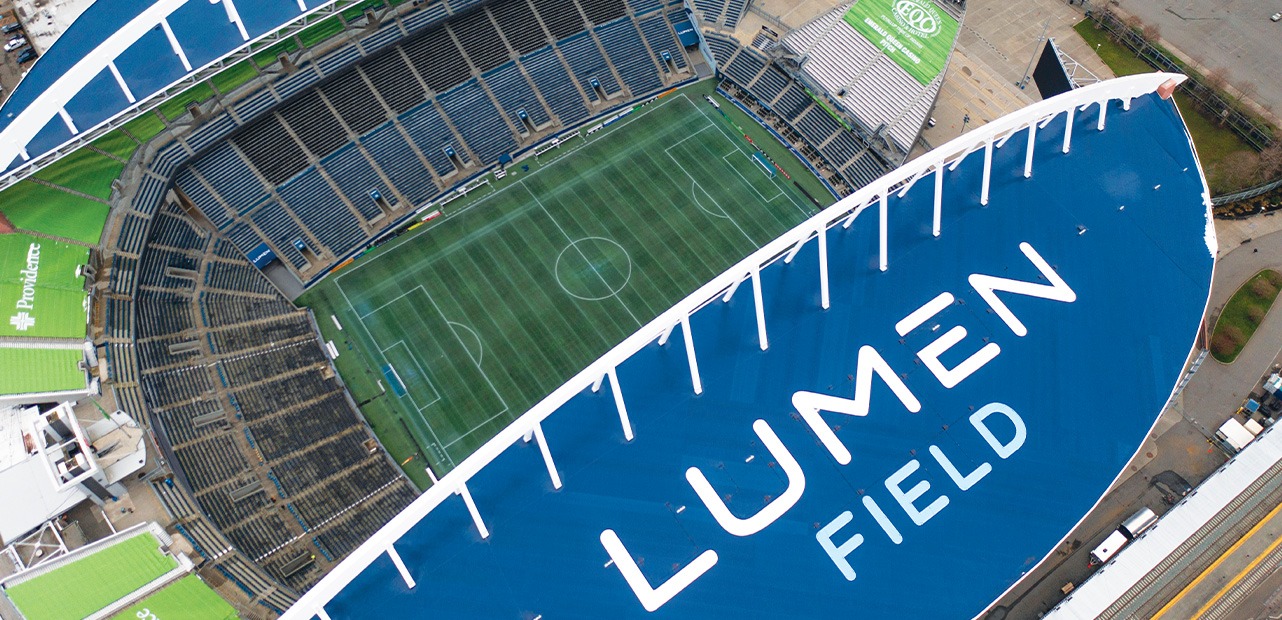
In Seattle, Lumen Field, which will host six matches this summer, also hosts plenty of home soccer games as it’s the home base of the MLS Seattle Sounders FC. The stadium has the largest contiguous space in Seattle, with the ability to accommodate up to 70,000, across its 100,000-squarefoot field, 130,000-square-foot Wamu Theater and 7,700-square-foot Olympic Club.
Brought To You By

This article appears in the March/April 2026 issue. You can subscribe to the magazine here.