How embracing the unknown fuels innovation and fresh thinking
What if the smartest person in the room is the one asking the most questions?
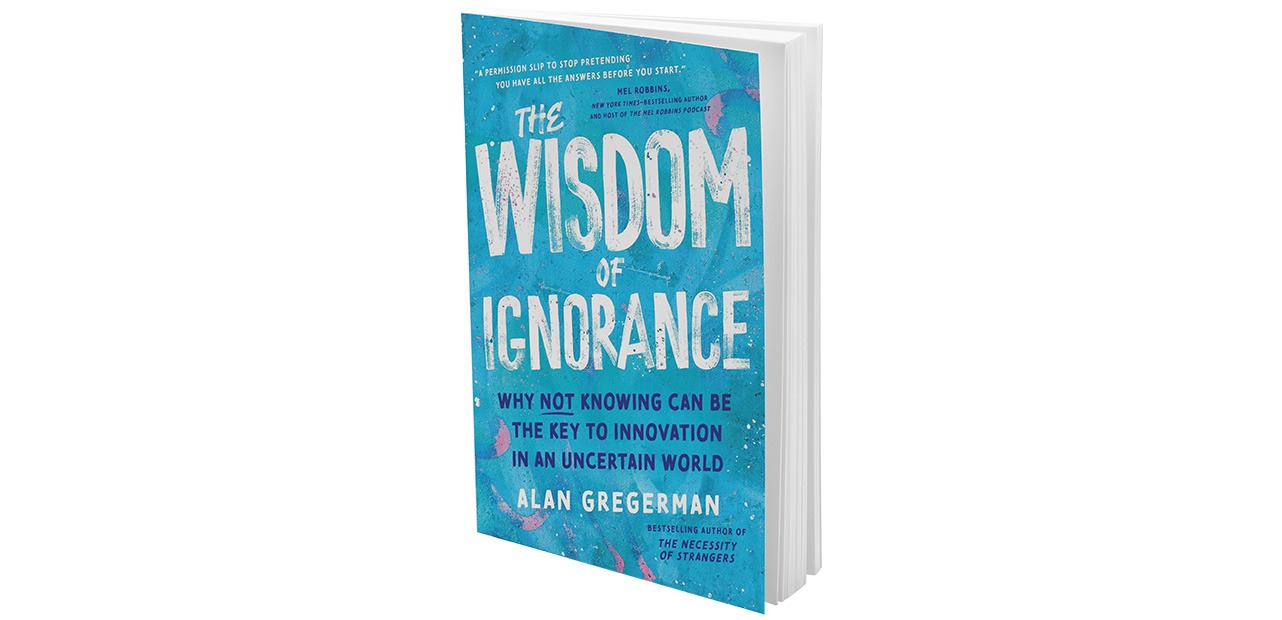
In The Wisdom of Ignorance, Alan Gregerman makes a compelling case for something that might feel counterintuitive in a results-driven industry: Not knowing can be your greatest advantage. At a time when meeting professionals are expected to deliver fresh ideas, meaningful engagement and measurable impact, Gregerman’s perspective reframes curiosity as a strategic skill—not a gap to fill, but a mindset to embrace.
Excerpt
What I want all of us to think about in The Wisdom of Ignorance is the simple power of “not knowing” stuff, instead of being wedded to the stuff we already know, as the real key to innovation and growth in a fast-changing and uncertain world.
Not only does not knowing stuff level the playing field for all of us, it makes us appreciate the need to be consistently curious, ask lots of questions, imagine new possibilities, find the right new stuff to know quickly and embrace our own ignorance in an “enlightened” way.
Read More: Lessons Learned from 5 Years of Planning Meetings for Meeting Planners
It turns out that not knowing stuff and being open-minded is the quickest and best path to success and creating real breakthroughs. It is not the only way. But my work and research suggest that in most things, being willing to take a fresh look at the start is the key to unlocking our own genius, the genius of others and the genius of the companies and organizations for whom we work. People who know a lot about something tend to make incremental changes.
In other words, they have a knack for making things “better.” While people who do not know very much about the challenge or opportunity at hand tend to create real change by starting with a relatively clean slate and few preconceived notions. This idea has tremendous implications for what we (and our companies and organizations) do, what we choose to learn and how we choose to learn it. It has even greater implications for how each of us will succeed in the years to come in guiding our careers, helping our companies and organizations remain relevant and grow, and creating breakthroughs in the things that matter most.
It is, as far as I can tell, the essential ingredient for prospering and making a difference in the fast-changing world we share. And it begins by simply committing to get started and figuring the right stuff out along the way.
Don’t get me wrong, expertise is important in many disciplines.
None of us would pick a heart surgeon who had never successfully performed the surgery we needed. Or take a flight piloted by someone who had never flown a plane. Or have a baby without a skilled and compassionate labor and delivery nurse at our side. Or replace the wiring in our house without consulting an electrician. Or have an inexperienced attorney advising us on drafting a contract or a will. Or vote for a politician who didn’t understand and respond to the needs and aspirations of their constituents. And there is no shortage of other examples.
But we would also want to be sure these experts were continually improving their crafts. Medicine changes. Airplanes change. Having a baby changes. Even the law and the needs and hopes of citizens change. No matter how much we know, we all need to keep up.

More importantly, new ideas happen when we leave what we know behind and use our imaginations, rather than our expertise, to envision a different future or a different solution to a familiar problem. It is how the new ideas we rely on happen. Because we begin to think about the world, our world, with fresh eyes and a sense that anything is possible.
“New ideas happen when we leave what we know behind and use our imaginations, rather than our expertise, to envision a different future or a different solution to a familiar problem.”
©2025 Alan Gregerman. All rights reserved. No part of this publication may be reproduced, stored in a retrieval system or transmitted in any form by any means electronic, mechanical, or photocopying, recording or otherwise without the permission of the author.
This article appears in the May/June 2026 issue. You can subscribe to the magazine here.