In hospitality, food is at the center of everything we do. It brings people together for celebrations, conferences, weddings and milestone moments.
Yet behind the scenes of large-scale events, every chef knows the reality that even with meticulous planning and forecasting, high-quality food inevitably remains untouched. For me, the focus has always been on what happens to that food next, and how it can continue to serve a purpose. We believe it should never go to waste.
That belief led us to partner with OSL Serves, a nonprofit based in the Seattle-Tacoma area that prepares and distributes nutritionally dense, culturally relevant meals to people in need. For more than three decades, the organization has supported the community, delivering millions of meals across the region.
Turning Banquet Excess Into Community Support
Large hotels regularly host events serving hundreds of guests. Those events range from casual gatherings to highly customized themed banquets and beyond. One day the menu might feature burgers and casual party fare; another day it could highlight beautifully prepared salmon or premium beef entrées.
After each event, our culinary and stewarding teams identify any untouched food that can be safely recovered. Items are immediately blast-chilled or frozen to preserve quality and meet strict food-safety standards.
Read More: Accidental Planner: Master the BEO
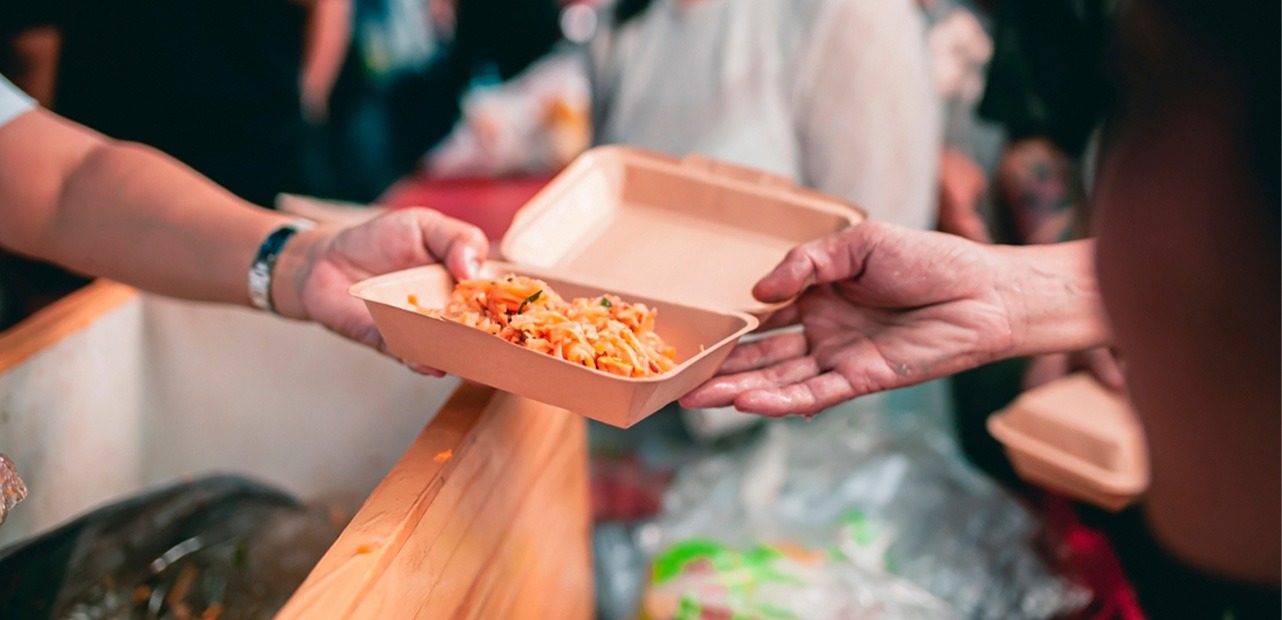
Once stored and labeled, the food is set aside for pickup. Each Saturday, the OSL Serves team collects the donations and brings them to their culinary facility, where they are redistributed to food banks, homeless shelters, and even programs supporting newly arrived immigrants throughout the Seattle-Tacoma area.
What might otherwise be discarded becomes an invaluable resource that helps nourish our community.
Precision Behind the Process
Food rescue requires more than good intentions. It requires structure and discipline.
Our culinary and stewarding teams are carefully trained in post-event food-handling procedures to ensure that anything designated for recovery meets strict safety guidelines. Items are dated, clearly labeled, and marked with the required dietary information.
This attention to detail is essential because OSL Serves distributes meals to diverse communities with varying dietary needs, including groups where pork is not allowed. Proper labeling ensures the food can be shared safely, respectfully, and appropriately. While plated meals are typically pre-counted and leave little excess, buffet-style events often provide the greatest opportunity for recovery due to their variety and volume.
Sustainability Beyond the Kitchen
Food recovery is just one part of our broader sustainability efforts. At Hyatt Regency Lake Washington, we continuously look for ways to reduce our environmental impact through responsible sourcing, waste-minimization practices, and ongoing staff education.
For us, sustainability is not a trend. It is a responsibility that guides how we operate every day. Food rescue programs bridge two critical gaps: reducing environmental waste and addressing food insecurity.
Read More: Food Rescue and Donating to Those in Need: The Law Is On Your Side
As chefs, we see firsthand the care that goes into every ingredient, from the work of farmers and producers to the craftsmanship of culinary teams who prepare each and every dish. Allowing that food to end up in a landfill undermines the value of that entire process.
Food rescue transforms surplus into nourishment. It gives purpose to the food we prepare beyond the plate. For me, that makes it more than a sustainability initiative. It is a moral responsibility.
A Collective Effort
None of this work happens alone. I am deeply grateful for the people and partnerships that make these efforts possible. Our collaboration with OSL Serves took time to develop. After the pandemic, it became increasingly difficult to find food-bank partners that aligned with our sustainability goals and commitment to reducing our carbon footprint.
Through continued research and outreach within the industry, I eventually connected with the OSL Serves team. Their mission and operational capabilities made them an ideal partner to complement our efforts.
Every meal we rescue, every pound of waste we prevent, and every family we help, reminds me why this work matters. A quote from the Ruler of Dubai, His Highness Sheikh Mohammed bin Rashid Al Maktoum, has always inspired me:“We do not wait for things to happen; rather, we make them happen.”
That mindset guides how we approach sustainability and community impact. When hospitality works together with purpose, even surplus food can become something powerful.
—
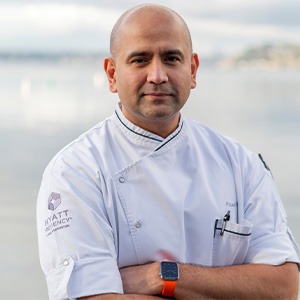 Azad Rawat is the executive chef at Hyatt Regency Lake Washington in Renton, Washington, where he oversees the hotel’s culinary operations, including restaurants, catering, and large-scale banquet programs and events.
Rawat has built a global culinary career working in kitchens across Asia, the Middle East, and the United States, with experience in Singapore, Hong Kong, Bangkok, Dubai and the Pacific Northwest. Known for combining international techniques with seasonal regional ingredients, he is also a strong advocate for sustainability initiatives such as food rescue and responsible sourcin