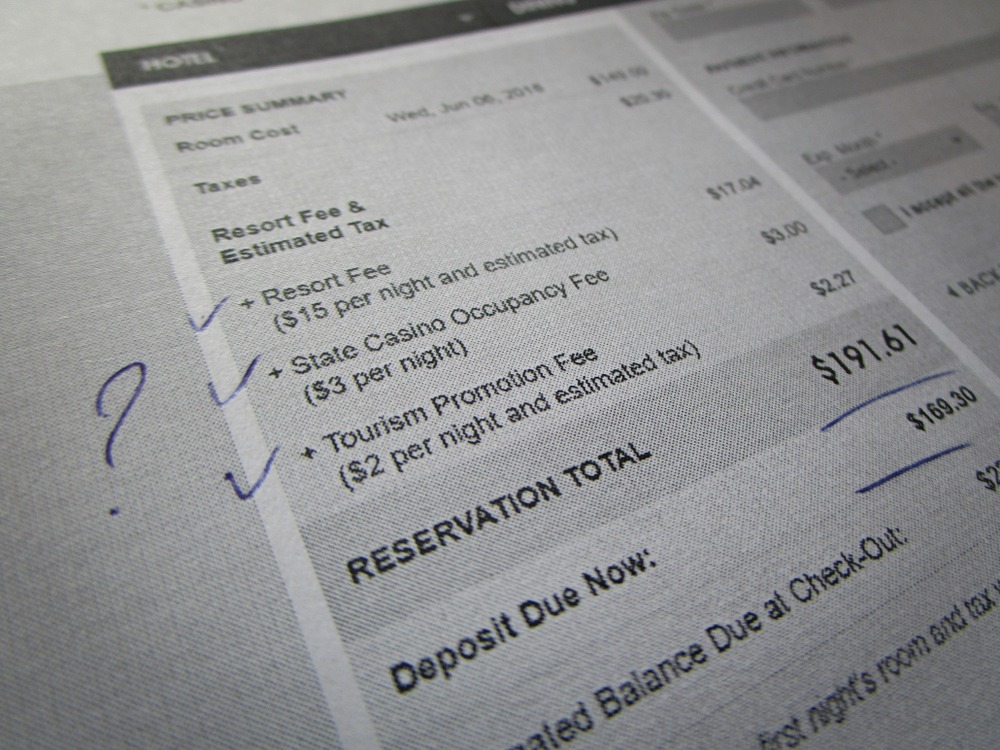
Has this happened to you? You are trying to plan an event and more and more fees are popping up and busting your budget. Has it become out of control? I think yes.
Long gone are the days when the price on the contract was the actual price. Now there are so many random fees being created and added to events throughout the planning process. Detective work is critical on the front end to uncover these budget busters and to put a stop to additional ones being added during mid-stream planning.
Traditional resort fees have found their way to city properties labeled as destination fees, urban fees and the like. Typically they encompass beneficial perks for transient travelers but for group guests, they quite often go unused. Group guests are typically onsite for meetings or events that occupy their time and prevent them from maximizing amenities. These can be negotiated out of your contract totally or made optional. This then places the option with the individual guest to decide if they want to pay the fee and utilize the amenities.
Read More: 5 Tips for Flexible Event Budgeting, No Matter the Format or Economic State
Truly bizarre fees are also popping up, like an additional 5% taxable planning fee assessed on all actual food and beverage totals, which covers pre-planning services, menu tasting (if applicable), on-site coordination, and post-convention sessions, including final bill review. Is this not covered by the salary the hotel pays the on-site convention planning contact? Why would a group pay the salary of a hotel employee?
Another eye-opening fee recently stumbled upon was a 3.5% healthcare fee added to all guestroom rates and food and beverage in the hotel restaurants and outlets. This is being charged by a hotel that wants to boast they are paying 100% healthcare for all their employees, but in fact they are paying the standard percent and passing the remainder directly to the hotel guests. This is for all guests, transient and group.
Then let’s talk banquet service charges. The hotel service charges that we knew years ago, the 15-20% gratuity, were collected and paid out to the banquet team. This percent has skyrocketed in the past years and now encompasses two parts—the traditional piece, gratuity to the banquet service staff, and now a second piece, a fee that goes directly to the hotel profit margin. This has taken the service charge total to anywhere from 24% to 32% being added to food and beverage.
Some hotels are no longer tipping out their servers at all. Their service staff is now on a favorable hourly wage, so the fees are relabeled for those properties as “administrative fees” or similar. Most hotels charge this service charge to AV as well. What stands out here is that AV teams are not tipped positions, nor does the service charge go to the AV company. This piece is fully going to the hotel profit line.
So what’s up with this portion that goes to the hotel profit line? They may advise that it may go to general upkeep, but the bottom line is that it is simply another money stream for the hotel. This piece is increasing at a fast pace. Your contract may read that the hotel can increase the fee at any time, which is a red flag. I have had several clients that have decided to change hotels mid-contracting phase due to uncertainty of possible fee increases. Smart move!
Read More: AV Fine Print: Avoiding the Contract Traps That Cost Planners Big
When we then pool these increasing fees with the still low staffing in hotels and the service levels still not returned post-Covid, it creates a potion of problems for a meeting planner. Frustration abounds as these basic services we used to enjoy, such as daily housekeeping, nightly turndown service, full staffing in outlets, having an on-site restaurant open for each meal period, room service and properly staffed banquet functions are just faded memories.
So what do you do to combat these ever-increasing pain points and fee gouging? Add an advocate to your team to fight for you and your budget. You want a professional meeting broker in the ring for you. Having an advocate that is experienced and has a proven track record of negotiating with hotels is a game changer. While some planners like to take this on themselves and pride themselves in having a relationship with hotel sales representatives, they need to understand times have changed drastically. Gone are the days we could sit in the bar and knock out a contract over a cocktail with our hotel sales representative. The sales representatives no longer have the ability to negotiate pricing or fees.
Control has shifted to the revenue managers and revenue teams whose sole responsibility is to maximize hotel revenue streams. For someone that does not truly understand contract language and live in that space daily, the ever-changing word or phrase here and there can greatly impact the foundation, financial obligation, and outcome of your event.
Don’t get me wrong, relationships matter, but it is imperative to understand when that relationship can help you and when you need an advocate. During the negotiation piece, your hotel sales contact is not going to go to battle for you like a professional meeting broker will. Put the power in your court. You are the contract signer, you are writing the check. Stop the never-ending barrage of fees, add a meeting broker on your team and take control of your meeting budget.
—
 Shannon Frank is the vice president of global accounts at HPN Global and president and founder of Elevating the Event Experience.
With over 35 years of distinguished experience in the hospitality industry, her career began with the Walt Disney Company, where she honed her expertise in guest services and operations. She is a Smart Women in Meetings Industry Leader Award winner.