The All In toolkit is a resource for progress in the meetings and events industry

“Honest and authentic engagement around difference ultimately drives inclusion.”

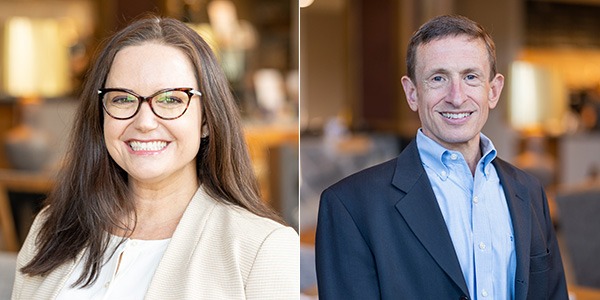
– Cameron Smith, assistant director, Workplace Program at Tanenbaum Center for Interreligious Understanding

Google has teamed up with ADCOLOR, Disability:IN, GLAAD, and the Tanenbaum Center for Interreligious Understanding to create an All In marketing toolkit to enhance Diversity, Equity and Inclusion (DEI) awareness in the meetings and events industry.

The All In toolkit by Google provides meeting professionals and event producers with information on how they can be progressive supporters of DEI from building their team, their approach to their procedural strategy and their final event presentation. Key elements highlighted in the toolkit include physical accessibility, inclusive event registration practices, accommodations for neurodiverse attendees, a diverse speaker roster, providing spaces for lactation and/or nursing and a safe space at the event that any attendee can use for prayer or meditation regardless of religious or spiritual alignment.

With a passion for inclusive and accessible event content starting from the very beginning of an event team’s strategy and operations, the All In toolkit from Google and its partners can push the goal of DEI while spreading education and awareness. Smart Meetings has rounded up some of Google’s partners to explain more about why DEI is so important and what their particular organizations contribute to the cause.

Read More: Hispanic Heritage Month: Celebrating DEI in the Industry

ADCOLOR

With a clientele of leaders in the creative industry, ADCOLOR focuses on how the leaders of the creative side of meetings and events can continue to propel DEI forward to the next generation of talented professionals who have their own diverse and individual perspectives and ideas that should be nurtured and appreciated. Partnering with Google has empowered ADCOLOR to reach more organizations in the marketing and events industry and raise awareness about the importance of DEI. With a motto of “Rise up, reach back” and the partnership with Google, ADCOLOR is dedicated to ensuring inclusivity is an integral part of the strategies mapped by meeting professionals while planning an event.

“We’re proud to continue partnering with Google, as we have a shared mission of improving inclusivity and representation in marketing,” says Ana Leen, vice president, partnerships, ADCOLOR. “We are further striving for event leaders and companies to recognize, respect and celebrate accessibility for everyone.”

ADCOLOR conference 2023

Disability:IN

With a team of experts providing education to meeting and event professionals and customizing solutions for events with needs of all kinds. Onsite consultants from its program Inclusion Works who specialize in disability inclusion can guide meeting and event professionals to ensure every attendee has the same access, comfort and inclusion when participating. Leslie Wilson, executive vice president, global workplace initiatives, Disability:IN, emphasizes the difference a toolkit like Google’s All In can impact the industry in regards to accessibility and inclusion.

“Assuring that individuals with disabilities can fully participate in events is one of the first steps to inclusion and belong,” says Wilson. “We thank Google for sharing the Inclusive Event Guidelines with Disability:IN and its nearly 500 multinational Corporate Partners.”

Read More: Power of Partnership Stewardship Summit (POPS)

GLAAD

As the world’s leading LGBTQ media advocacy organization, GLAAD acknowledges the possibility of discomfort the LGBTQ community may feel when they attend meetings, conferences and events. Ross Murray, vice president of GLAAD Media Institute, expands on the matter.

“LGBTQ can easily feel ‘othered’ at conferences, gatherings and virtual events,” says Murray. In GLAAD’s partnership with Google, meeting professionals can be better informed on how to ensure everyone can be their authentic selves and bring their unique contribution to the table with confidence and acceptance.

LGBTQ pride

“The practice of welcome is one that should be carried out for every gathering,” says Murray. “Then LGBTQ people can bring their authentic selves to the gathering and participate in the discussion, networking and edification. That inclusion results in better collaboration, creativity and community.”

Tanenbaum Center for Interreligious Understanding

It is important to accommodate groups of all faiths when scheduling downtime or wellness options at an event or conference. The Tanenbaum Center is a secular nonprofit organization focused on training event and meeting leaders as well as working with them to brainstorm about strategies to increase widespread respect for religious and nonreligious beliefs. The goal is to host meetings and events that will make attendees of any faith feel comfortable, included and appreciated.

Tanenbaum Center for Interreligious Understanding

 Cameron Smith, assistant director, Workplace Program at Tanenbaum explains why the Google All In toolkit is important for meeting professionals and event planners.

“It’s important to make sure events are accessible and that people can fully, meaningfully and respectfully participate once in attendance,” says Smith. “We hope that more inclusive events will impart attendees with the necessary knowledge and skills to meaningfully respect difference, practice inclusive behaviors beyond such events and learn about lived experiences outside of their own.”

“Honest and authentic engagement around difference ultimately drives inclusion.”
It didn’t always go by the name Leaders Conference.

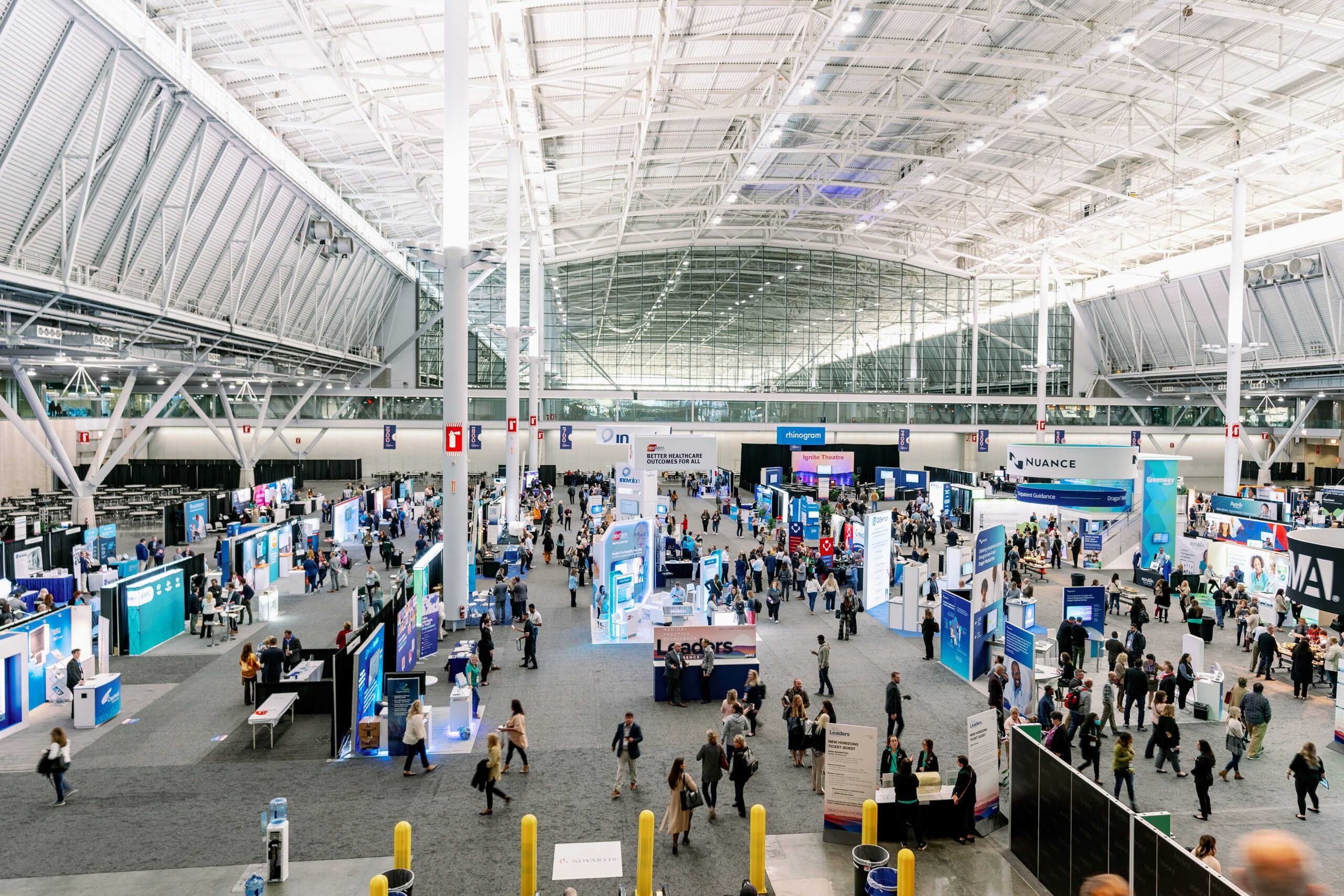
Medical Group Management Association (MGMA) is hosting its annual 2023 conference at Nashville’s Music City Center with a change in how it approaches the in-person event. The association recently called for a rebrand of what was once called Medical Practice Excellence Conference: Leaders Conference, dropping the first half of the name in an effort to attract the first element of the conference, namely, the leaders in medical practices.

“It can be anyone from a CEO all the way down to a frontline manager,” says Andrew Swanson, senior vice president of project strategy and sales at MGMA. “We know they have differences in how they need to connect and what they need to connect about. So, putting line staff in medical practices next to leaders created a dissonance with our attendees, and in the content and discussions we were fostering resonated with some but not with others, and vice versa.

“What we said is we just need to be a little bit more homogeneous about the attendee who comes, make them all leaders and then we can all be talking about similar things, and everybody will be on the same playing field. So that’s kind of where we started the conversation, and then everything about the meeting spun off of that.”

What about that line staff who are no longer in the Leaders Conference? Swanson says it was heard around the medical practice business that employers were no longer funding line staff to go to face-to-face conferences. With this knowledge, MGMA decided to shift its digital event space to give more attention to those who are no longer attending in-person events.

“If I’m a computer programmer, outside of the healthcare space, then I need to go learn about the best and brightest things going on in programming, right? Not necessarily leadership development,” Swanson says. What the team agreed on is they can use the digital space to deliver this expertise.

For those C-suite positions, this presents a bit more flexibility and options regarding what said chief—financial, operations, executive—officer has regarding event choice. The CEO can attend the Leaders Conference, the digital event or both. “What do you want to get out of either event?” he asks. “If you want to talk to chief financial officers, or other leaders, about being a leader inside of a medical practice, come to the Leaders Conference. If you want to get deep about financial subject matter, and you want to learn about the ins and outs, the ones and zeros of running a balance sheet for your medical practice, go to the digital event.”

This is part of a larger growth plan of in-person events MGMA is working towards, with a financial event in spring 2024, as well as an operations conference, this way everyone has an opportunity to network, Swanson says.

From Exclusion to Inclusion

aerial view of exhibit hall full of people

MGMA’s annual conference has taken a couple of different forms. MGMA used to hold an annual conference that Swanson says was really just a meeting of the members, which, not intentionally, excluded people outside of the MGMA community. “I wouldn’t go so far as to call it a country club. But essentially, it was our membership talking to our membership about being members. It was very insular and not very open to the entire ecosystem,” he says.

This change from a members-only club to a gathering more open to the industry is what became Medical Practice Excellence, created with the goal of making a better healthcare system. The transformation of that to the Leaders Conference is a more refined iteration of that same goal. “The evolution from that to this is simply just kind of a little bit more of an intentionality about how to facilitate or envision or actually actualize that excellence,” Swanson says.

Read MoreHow to Plan Better Medical Meetings by the Numbers

Swanson says the conference used to bring professionals of all types, like medical billers or coders, to the conference. “We used to track them by saying, ‘For this low price of X you can come sit in these 10 sessions.’ Okay, I guess there’s value being created, you need to get professional certification, this is a reasonably cost-effective way to do that. You will be with a variety of people, but in the end, are you really moving the needle on making things better and different?”

And while improving the professional development of one or a few people in the healthcare ecosystem is a good thing, Swanson believes they can do better, and that’s what he and MGMA want to do for leaders in the healthcare industry. “We think that that can be part of a bigger conversation about how to change the system, and how to make it better,” he says. “Each person, each medical group that employs them, those groups and how they operate and serve their communities and then collectively, how do we do that across the country? And how do we make this somewhat broken health system work better?”

Driving Discussion

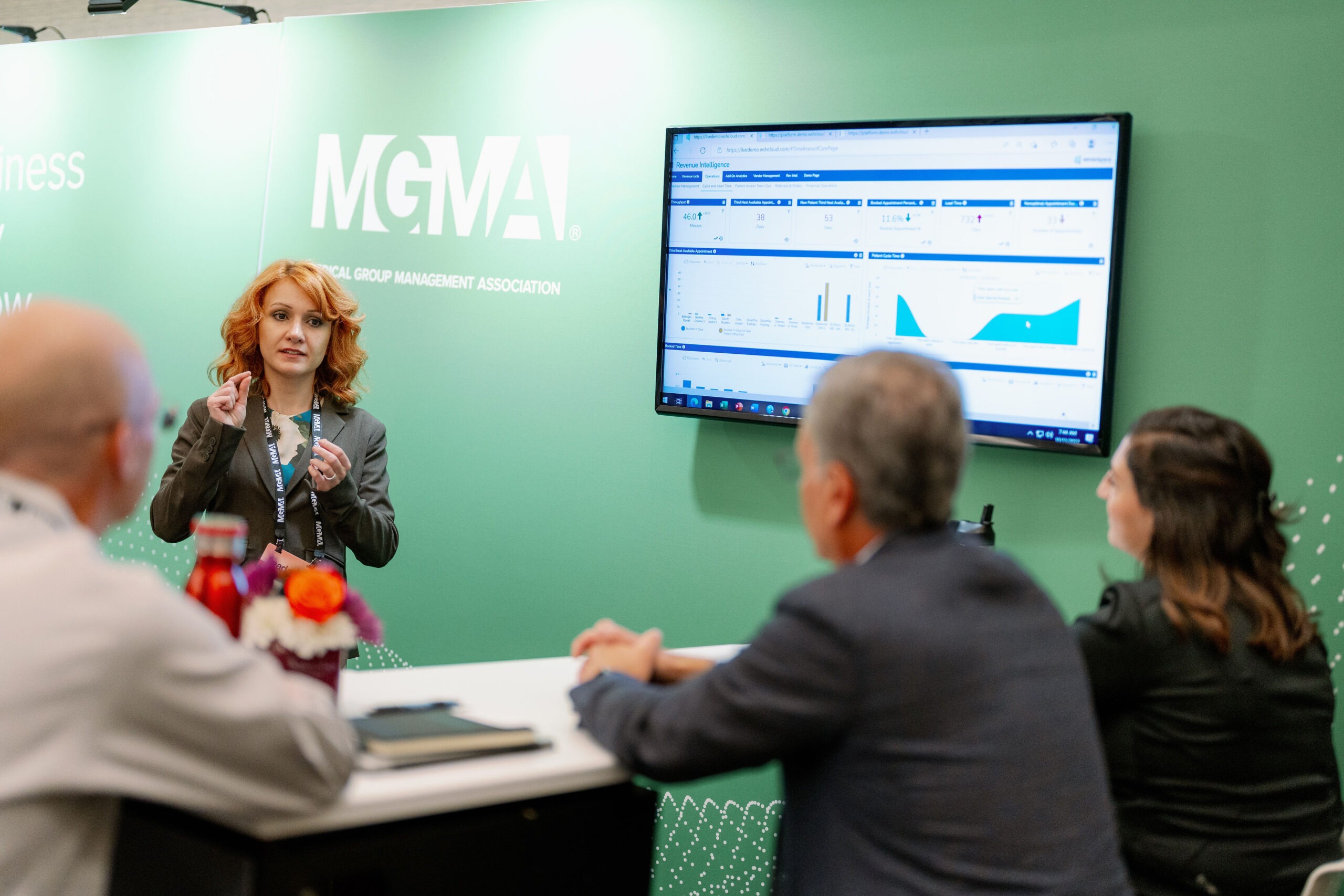
woman talking to three people

Swanson says about one-third of the content at the Leaders Conference is going to be entirely discussion-driven. “When you walk into this room, there won’t be a speaker delivering their wisdom,” he says. The conversation will be led by someone, but their role is simply to facilitate conversation, posing questions to foster more communication.

Of the three stages in MGMA’s solution centers in Music City Center’s exhibit hall, one of them will be dedicated to Community Lives, the association’s year-round online community, which will be brought to life at its Leaders Conference. “We’ll collect these groups, we call them resource groups, together and say, ‘Hey, for the office managers who are here, this topic was just posted last week, let’s talk about it.’ It’s more of a facilitated dialogue between members and attendees of the show, as opposed to the lecture.”

That isn’t to say the lecture is going anywhere, MGMA will have that too, as well as a couple of panels and more traditional content delivery. “The idea is to create these engaging environments where people can share their own wisdom with one another in a more facilitated sort of way, in addition to all the networking events that people would typically engage in, the one-on-ones with vendors and lunches and happy-hour events and parties, all those things, but reshaping the conversation around education to make it a far more interactive conversation.”

Read More: How Meeting Profs Can Improve Event Engagement

Another aspect of the Leaders Conference will be segmenting out groups for small periods of time to cater to their exact needs and, later, re-engage them in the larger conference. For example, there’s the CEO Forum, where Swanson says they’ll collect 75 CEOs in medical practices big and small, put them in a room over the course of two days and let them discuss what needs discussing.”

MGMA has also created a hosted buyer experience, which, Swanson acknowledges, isn’t new, it’s new to this association. “We’ll have 60 or 70 people who are new to MGMA learn more about us by talking to some of our solution providers for eight short meetings. It’s a different thing than MGMA has done. [It’s] obviously done in other spheres and other industries, in particular in healthcare, but new for MGMA and new for our attendees as well. [It’s] a good way to kind of learn about MGMA through our partners, and then attend the rest of the event.”

Beating Expectations

The post-Covid lag seems to be still affecting the healthcare conference industry. Swanson says health conferences have been slower to bounce back than many other industries. While this is the case, MGMA is budgeting about 60% of what they did pre-Covid and he says they’re already beating expectations. With about 2,100 registered, and about 300 or 400 more attendees expected, the event’s attendance will be about 75% of its pre-Covid attendance.

Swanson poses a couple of questions to determine the success of MGMA’s new approach:

  • Is the marketed product interesting, exciting and different enough to make the commitment to attend?
  • When people come, is MGMA delivering on its value proposition?

In addition to post-event surveys, Swanson says they’ll be reaching out in more focus-group ways to determine if they hit the mark. “We’ll be talking one-on-one, in small groups, to different groups of attendees who experienced different things, to see if what they experienced met their expectations and the value that they signed up for.

“Then we’ll iterate and change based on the kind of feedback as we would in any given year,” he says. “But I think this year, there’s a little bit more to test, a little bit more to ask about, a little bit more to validate—or invalidate, if it doesn’t hit the mark—and then change and move forward.”

Greater Miami is a top-notch destination for sustainable meetings

Miami is known for its glittering beaches, dynamic culture and number of luxurious resorts. But did you also know that Miami is leading the way in sustainability?

Miami-Dade County’s Climate Action Strategy aims to cut the county’s greenhouse gas emissions by 50% from 2019 levels by 2030 and achieve net zero by 2050. This will be achieved through seven approaches: benchmark, retune and retrofit existing buildings; expand on-site and off-site renewable energy; build ultra-low energy buildings; reduce transportation-related fuel consumption; expand and protect green and blue spaces; convert waste to energy; and reduce waste and water use. Emissions have already dropped; in 2019, the agency recorded 37 million metric tons of CO2 emitted. Four years later in 2023, they recorded 34 million metric tons of CO2 emitted.

Resilient 305 is a three-way collaboration between the City of Miami, the City of Miami Beach and Miami-Dade County. Their living document strategy enables Greater Miami and The Beaches (GM&B) to address urbanization, globalization and climate change. Recently, they embarked on an effort to preserve Biscayne Bay, adopting ordinances to restrict fertilizer use and prevent nutrient pollution that harms the bay’s wildlife.

Sustainability at GMCVB

Headshot of Marianne Schmidhofer
Marianne Schmidhofer, Director of Meeting and Convention Services, GMCVB

Greater Miami Convention and Visitors Bureau (GMCVB) Director of Meeting and Convention Services Marianne Schmidhofer, a former independent planner, assembled a cross-departmental sustainability task force to help meeting professionals looking for a way to start addressing sustainability in planning events.

The task force takes a two-pronged approach: they are looking internally to see where GMCVB can be more sustainable, and they are looking outwards to determine how they can lead their partners to be more sustainable.

GMCVB’s website is full of resources for planners to organize the most sustainable Miami meeting or event possible. It even prioritizes digital visitor guides via a QR code to save on paper.

From August 21-24 forums asked partners, “What do you think we are doing right? Where do we see room for improvement? How can we be a leader in these efforts?”

Many of the goals established come from the United NationsSustainable Development Goals (SDGs). Schmidhofer says, “It’s not just about the environment…they have initiatives like fair wages, accessibility, reducing inequality, responsible consumption. It’s really very vast, and I think this is a great way for organizations to identify where they align themselves.”

They are building tools and sharing what their municipalities are doing for sustainability. “Our number one goal is to tell the stories of all the wonderful things that are already happening, and to be a resource where any of our partners can come to us and get to where they need to be,” she says.

Green Miami Hotels and Venues 

Greater Miami boasts a number of LEED-certified healthy, efficient and cost-saving hotels.

1 Hotel South Beach featuring green Miami hotel design
1 Hotel South Beach

1 Hotel South Beach achieved LEED Silver certification under the LEED for New Construction rating system. They recently launched Certified Sustainable Gatherings, an initiative to limit events’ environmental impact in six categories: waste reduction, low-emissions menus, vetted vendors, eco-conscious décor, elimination of single-use plastics and communications about conscious gatherings. Their free option offers guidelines, a sustainable gatherings program guide and a preferred vendors list. Two more options offer further support, resources and certifications.

The Palms Hotel in Miami Beach is another eco-conscious hotel recognized by the Florida Green Lodging Program. Their in-house “green team” oversees recycling programs and beach cleanups. Some rooms even include eco-friendly sinks and toilets.

The Miami Beach Convention Center also earned LEED Silver certification after a $620 million redesign. The renovation incorporated eco-conscious features in accordance with the City of Miami Beach’s building codes that require LEED Silver certification for all new public projects. Along the way, they recycled over 90% of the construction waste. The renovated venue sees “fins” along the perimeter of the building to keep the interior cool and reduce energy consumption. They also installed high-efficiency LED lighting with sensors that shut off lights when rooms are unoccupied.

Read More: Sustainable Hotel Certification, Explained

Schmidhofer says, at this point, it’s critical for hotels and venues to make sustainable changes rather than wait for clients to ask for those changes. “We’re seeing more and more of our clients putting [sustainability] in their RFPs and looking for measurements,” she says. “[Planners] want their meetings and events sustainable. Many of them just don’t know where to start. They don’t have the time or resources, so they’re looking to the vendor to do it for them. We’ve moved out of why you should be sustainable to how to be sustainable.”

Treat Your Team to Sustainable Activities

So, you’ve found your perfect eco-conscious hotel or venue; now, what do you do once you’re there?

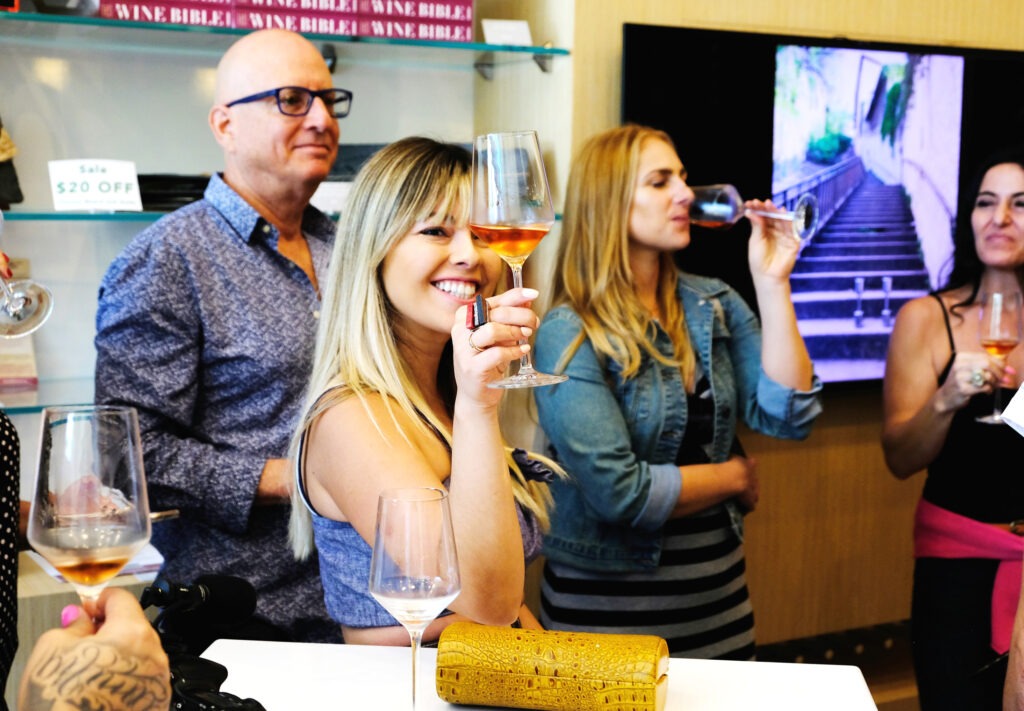
Wine tasting at a green Miami culinary tour
Wine tasting at a Miami Culinary Tour

Popular right now are culinary tours in Little Havana and Wynwood Art District. Anything on the water remains a classic. Catamaran or canoe tours and paddleboarding are just a few of the incredible experiences available.

Miami also offers an entire agricultural area. “A lot of people think of Miami as a big city and the beach. But less than 20 miles away is our South Dade cultural center, the Redlands. There are all types of activities and it’s become very popular for groups looking to be sustainable,” says Schmidhofer.

Don’t forget about their breathtaking national parks, either. The Everglades National Park is the largest subtropical wilderness in the United States. It’s also a World Heritage Site, an International Biosphere Reserve, a Wetland of International Importance and a specially protected area under the Cartagena Treaty. Across the park’s 2,400 square miles, groups can hike, canoe, kayak, bike, fish and camp.

Read More: Hot Tips for Visiting Miami

Giving Back

When you take your event to Greater Miami, Schmidhofer says, “We feel that it’s very important, not only for our destination, but no matter where you go, to give back to the community.”

For this reason, GMCVB created a guide for visiting organizations to give back. The CVB will identify which of six pillars a visiting organization aligns with—children, animals, the elderly, food insecurity, culture and the environment—and help them customize a program. “It elevates their experience, because it’s something that’s been designed for them and it’s something they feel is their core,” says Schmidhofer.

She shared, “Our industry is unfortunately very wasteful; but this means that we are in an incredibly powerful position to make an enormous difference, all through small changes in our habits. We can do things we have always done in a different way to treat our earth better.”

Through GMCVB’s sustainability task force, conscientious hotels and venues and a host of other initiatives, Miami is setting the tone for a host of positive changes to make the intersecting industries of meeting planning, tourism and hospitality all more sustainable.

Read More: Sustainable Meetings Through Renewable Concepts

Milton Segarra

Headshot of Milton Segarra
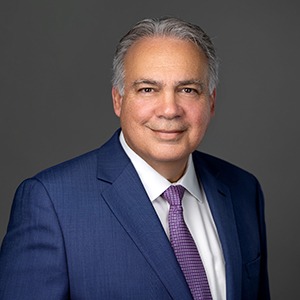
Milton Segarra

Discover the Palm Beaches has announced Segarra will serve as their new president and CEO following Jorge Pesquera’s retirement. Segarra joined the destination in 2022 as chief marketing officer and since then accelerated the organization’s widest range of promotional efforts in their history, resulting in record visitation rates and a $10 billion economic impact in the local tourism markets.

Regina Pruitt and Merrick Dresnin

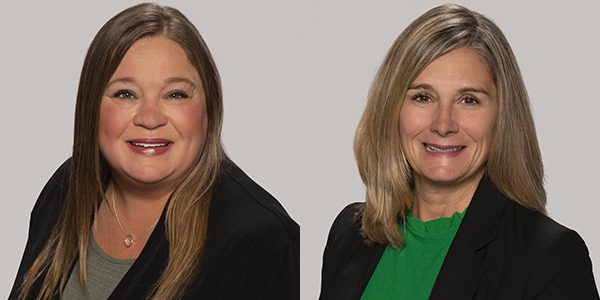
Headshots of Regina Pruitt (left) and Merrick Dresnin (right)
Regina Pruitt (left) and Merrick Dresnin (right)

Pruitt takes on the role of chief financial officer (CFO) at Cote Family Destinations. She brings over 15 years of experience working with resorts, golf clubs and branded hotels. She has managed hotels, on-boarded and opened new properties and developed outstanding hotel finance teams. With a specialization in system and process implementation and making hotel finance acceptable and practical, she will be instrumental in the hospitality group’s growth.

Cote Family Destinations appoints Dresnin as chief people services officer. He will oversee all functional areas of people management with a focus on retaining the group’s exceptional talent and acquiring new talent. Over his two decades of experience, he has successfully opened properties and restructured human resources teams to be as productive as possible.

Maura Geertsma

Headshot of Maura Geertsma
Maura Geertsma

CIBT Global appoints Geertsma as senior vice president for client relationship management. She has held executive positions at travel and technology companies throughout Europe and the Asia Pacific region and remains active as regional director to Asia/Pacific (APAC) for the Global Business Travel Association (GBTA). She most recently served as vice president, global head of retention and excellence at CWT and held two board positions in the Netherlands and Germany.

Andrew Clark

Smart Moves Headshot of Andrew Clark
Andrew Clark

Atlanta Convention and Visitors Bureau (ACVB) appoints Clark as digital marketing manager. In this role, he will evaluate ACVB’s content strategy and execute initiatives across digital platforms, create written and visual content to drive engagement and keep business and leisure travelers interested in Atlanta as a leading destination. He previously served as general manager at Hite Digital Atlanta, where he oversaw marketing campaigns for clients.

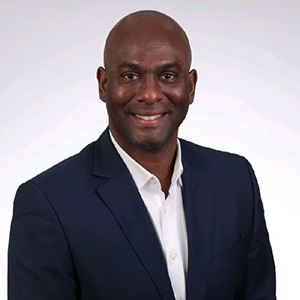
Jermaine Grant

Headshot of Jermaine Grant
Jermaine Grant

Grant joins World Travel Protection (WTP) at executive vice president of operations, North America. He will oversee WTP’s growing North American operations, including a dedicated Toronto-based command center. This will provide travelers with 24-hour access to specialized services in travel safety and assistance and health and emergency medical services, including evacuation and repatriation. He has held leadership positions in assistance operations for over a decade.

Christina Henshall and Misty Sparks

Headshots of Christina Henshall (left) and Misty Sparks (right)
Christina Henshall (left) and Misty Sparks (right)

Reno-Sparks Convention and Visitors Authority (RSCVA) appoints Henshall as regional director of convention sales for the Northwest. During her career of over 25 years in the hospitality industry, Henshall has worked with global leaders including Marriott, Hilton and Caesar’s Entertainment. In this role, she will oversee the areas of Northern California, Northern Nevada, Oregon, Washington state and western Canada.

Reno-Sparks Convention and Visitors Authority (RSCVA) appoints Sparks as regional director of convention sales for the Midwest. She will draw on her over 20 years of experience with Caesar’s Entertainment and Hyatt to book business in the areas of Idaho, Illinois, Indiana, Iowa, Kentucky, Michigan, Minnesota, Montana, North Dakota, South Dakota, Wisconsin and Wyoming.

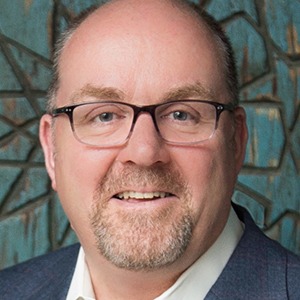
Sven Wiedenhaupt

Smart Moves Headshot of Sven Wiedenhaupt
Sven Widenhaupt

Wiedenhaupt joins InterContinental Los Angeles Downtown as general manager. He brings over 40 years of experience in team development, employee engagement, financial performance, sales and revenue strategies. He has held leadership roles both internationally and domestically at a variety of esteemed hospitality groups, most recently working as general manager of the Indian Wells Golf Resort, Troon.

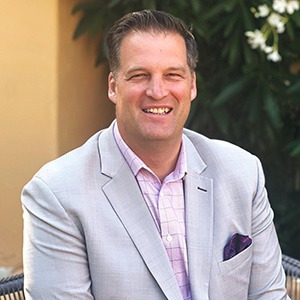
Scott Steffek

Headshot of Scott Steffek
Scott Steffek

The Westin Riverfront Resort & Spa Avon, Vali Valley, appoints Steffek in a brand-new role, director of vibe. He will work to elevate guest connections and create memorable stays. This position was created to offer guests exceptional experiences, develop new activations and events and provide personalized customer service. Steffek most recently worked as the front office manager at The Farnam Hotel, Autograph Collection, in Omaha, Nebraska.

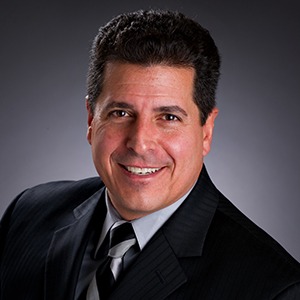
Michael Valentino

Headshot of Michael Valentino
Michael Valentino

Valentino has been appointed director of sales and marketing at ADERO Scottsdale Resort. He will draw on over 16 years of senior hospitality leadership experience to lead the resort’s sales and marketing division and develop strategies to put forward ADERO’s very best. Born and raised in Arizona, Valentino has held numerous leadership positions with highly regarded hospitality companies in the surrounding area.

Hartmut Ott

Smart Moves Headshot of Hartmut Ott
Hartmut Ott

As the general manager at Bernardus Lodge & Spa, Ott will lead the award-winning Forbes 12-star property in all aspects of daily operations, including the Lucia Restaurant & Bar, the 5,200 sq. ft. spa and 73 guest rooms. Over his 20 years in the industry, he has worked extensively with Marriott and has held executive level positions in the rooms division, housekeeping and front office at The Ritz-Carlton, Park Hyatt and Radisson Blue Hotel.

Read More: Smart Moves in Houston, Chicago and More

Desireé Dolecki, CMP, has always been an artist. To her, being an event professional is much in the same vein. “You need creative vision, planning and organization, budget management, marketing, promotion, collaboration, adaptability, time management and, of course, the ability to create a memorable experience,” she says.

When she was young, she knew art wouldn’t necessarily offer her a lucrative career. By junior college, she began studying graphic design. She earned a bachelor’s degree in advertising and design. As she prepared to graduate, she took on a role as a marketing coordinator at a major healthcare company. There, she began working closely with the event planner. “As she began to trust me with more of her work, I realized how much I enjoyed it,” says Dolecki. “It was my first practical experience in the field. I had the opportunity to work on a large national sales meeting, which gave me on-site exposure.”

Where She Is Now

Dolecki now serves as senior director, conferences and events for The Association for Manufacturing Excellence (AME). It is a non-profit that organizes practitioner-based events and workshops and brings together companies to explore enterprise improvement methods, exchange best practices and network. She lives in Crystal Lake, Illinois, just 50 miles north of where she grew up in West Town Chicago.

She leads successful events with the help of the AttendeeHub app. In the app, participants build their schedules, check in to sessions, complete surveys and connect with speakers, sponsors and one another. To manage the team communication necessary to execute a great event, Dolecki develops a staff playbook. She provides all event leaders—venues, suppliers, speakers, sponsors, exhibitors, board members and stakeholders—with detailed communication outlining their roles, expectations, a checklist of to-dos and due dates. Of course, all with the help of all-caps “COFFEE!”

This preparation falls in line with her favorite quote, by Chicago architect Daniel Burnham: “Make no little plans. They have no magic to stir men’s blood.”

Dolecki says, “Burnham’s quote…captures the essence of ambitious and strategic event planning. It encourages me to reach high, inspire others and create exceptional event experiences that leave a mark on participants’ hearts and minds.”

Preparing for the Exam

Not only does Dolecki aim high for her events; she aimed high to achieve her CMP designation. She first learned of the designation in 1999 while looking for ways to learn more about the industry she was so interested in. The professional credibility it would provide, as an internationally recognized standard of excellence, inspired her. “The process of preparing for continuous education involves gaining in-depth knowledge of various aspects of meeting and event planning, from tactics to strategy,” she says. “The knowledge I need to maintain makes me more effective in my role and helps me deliver better results for my company.”

Before even looking into the exam, Dolecki advises future applicants to set up an account in the MPI portal to keep track of their CEs. Volunteer to gain experience. Focus on growing areas of your skillset you don’t feel as adept in.

When it came time to prepare for the exam itself, she began early utilizing a study group, the CMP Pocket Prep app, the CMP handbook and EIC’s industry glossary—available online for free. As her exam date drew closer, she found enrolling in a boot camp course indispensable. It covered key concepts, the exam format and the types of questions test-takers would face

“Build your knowledge over time and start the process when you know you will be ready,” she says. “Make a plan and stay committed to your plan!”

Thanks to her CMP designation, Dolecki says, “I am seen as a trusted advisor, consultant and credible resource for the association I work for. This commitment to staying current in the field can help me stay at the forefront of industry trends and best practices.”

Looking Forward

She says that the future of the events industry, especially post-Covid, is bright. “The pandemic accelerated the adoption of hybrid and virtual events [which] allow a global reach and greater accessibility and inclusivity.” Technology such as AV, VR and mixed reality connects people and helps them to foster meaningful relationships. Advances in personalization and data analytics help planners tailor experiences and deliver meaningful content like never before. For these reasons, event design only grows more imaginative and experiential.

Talk around sustainability is rising as well, she says. “This will continue to be an important issue as it relates not only to the protection of our environment but the way it resonates with socially conscious event participants,” she says. “The industry is committed to diversity and inclusion, embracing a wider range of voices and perspectives to help enhance and appeal to a broader audience.” Like many leading planners, she is committed to producing events that collaborate with local businesses, artists and communities to create unity with the destination and boost the local economy.

We can’t forget about wellness either. People have widely begun to prioritize their mental and physical health and incorporate wellness into events. She shared examples of yoga sessions, mindful workshops and quiet spaces, all of which help attendees destress and recharge. When attendees have more time in-between sessions, she says, they can better digest information and enjoy an event that feels meaningful and purposeful.

The CMP Today

When Dolecki first looked into applying for the CMP designation, she remembers, she organized a manila folder with all her paperwork and supporting documents. “The digital transformation—from the application to the test itself—helped make the process a lot less daunting.” Today, applicants can track their continuing education process through EIC’s online portal. On EIC’s website, they can access numerous resources and FAQs.

Change is inevitable,” she says. “The one constant concerning the CMP certification that I have seen over the last 20+ years is that it is still widely recognized throughout the world as the premier industry certification that distinguishes holders as career professionals who have demonstrated a high level of experience, skill and knowledge.”

Read More: Get to Know Constance Samuels, CMP

Smart Meetings Extraordinary Experience focused on setting and reaching event goals

When some of the most productive meeting professionals in the world meet in majestic The Westin La Paloma Resort & Spa in Tucson for three days of education, inspiration and networking, the experience has to be over the top. “We are going to have fun and get work done,” Smart Meetings founder and CEO Marin Bright promised in her kick-off this week and she delivered. From an ‘80s party complete with an in-character DJ and a dude ranch that included a lasso-swinging cowboy and line dancing lessons to a pinata-making CSR project and both fireworks and a drone show, the wow-factor was on display.

Read More: Register for a future Smart Meetings Extraordinary Experience

Best to Better

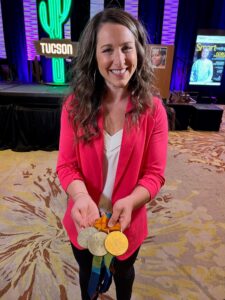
woman with pink coat showing three medals
Carly Patterson

First, Olympic gymnastics champion Carly Patterson shared her quest, triumph and struggle to come to terms with normal life after reaching the pinnacle of her sport at age 16 and retiring after an injury to finish school and find a second act.

“The trick is to embrace the spark,” she said. “When you feel a tug on your attention, listen to your curiosity because that could spark passion and lead to so much more.” She followed with a singing career that didn’t immediately reach the sky-high goals she was used to achieving. “Take chances; step into the uncertain,” she encouraged. “It’s going to be difficult, scary and challenging but that makes it more worth it,” she said. “A podium is a just step and there will always be competition. Let that drive you to be better.”

Read More: Smart Chat: Michelle Roark, The Resilience of an Olympian

Even gold medal winners have disappointments and distractions. “Save the setback for later,” she said. “You have the choice about how you deal with it and whether you can do the hard work to reach your goals.”

Patterson learned when she was grappling with starting a family that there are some things we can’t control. She decided just to focus on the things she could manage and embrace the lessons in disappointments. “Going through the journey made me the person I am today,” she shared. “Setbacks can be the greatest setups for future success,” she said after showing a picture of her family today.

Contract Lessons

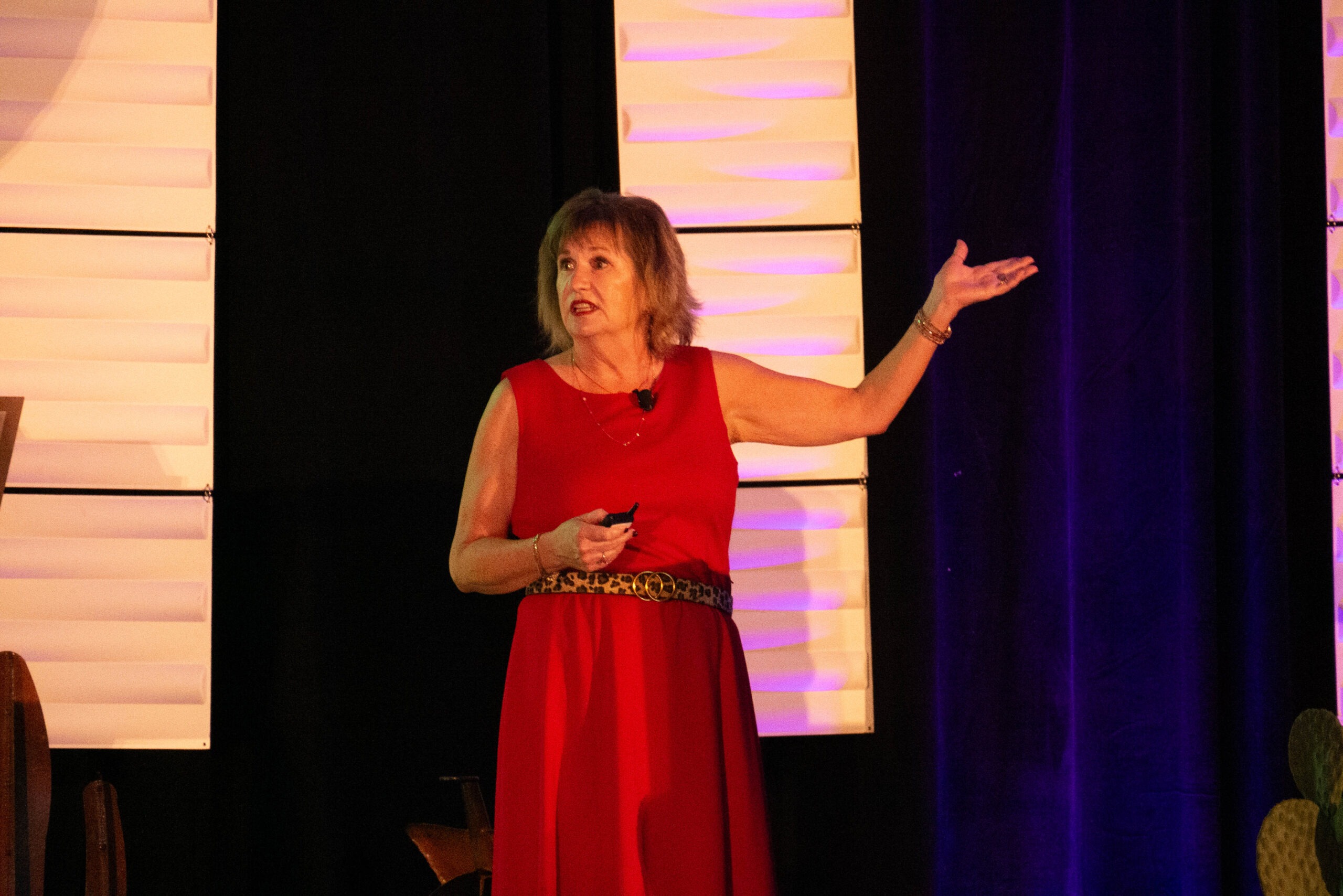
woman in red dress on stage talking to crowd
Lisa Sommer Devlin

When the focus of the event is finding new places to bring events, kicking off with a lesson in what to include—and leave out—of contract clauses is always a good idea. Phoenix-based hospitality attorney Lisa Sommer Devlin offered some straight talk.

“Start with your must-haves upfront,” she said. “Don’t wait until the end and suggest an addendum. Instead negotiate everything at once with the clauses that fit your needs rather than using general, boilerplate language that could just end up in litigation.”

Some of the clauses she sees causing the most angst right now:

Data Policy: Everyone has to follow the laws and all hotels have their own data privacy policies. Don’t layer yours on top because the hotel will just default to their own. Plus, personally identifiable information is covered by civil liability laws and guest expectations. What you do need to understand is that the planner will need to get permission from attendees to share information with the hotel so you can compare rooming lists for room block verification.

Confidentiality: Whether the group is talking about potato chips or nuclear launch codes, the hotel doesn’t want to and can’t be liable for anything that could possibly leak. Instead of a general, sweeping clause, negotiate what steps will be taken to keep information secure, such as locking the door, hiring security guards, keeping attendants out of the meeting, providing shredders for documentation and education of attendees about how they treat the information shared.

Political: Putting into a contract that if a state passes a law the group doesn’t agree with, they can cancel, puts the burden of your politics on the hotel. Instead, have conversations with the hotel and attendees to talk about what you can and can’t do and how to mitigate.

Read More: Weaponization of Travel: Navigating Cultural Obstacle Courses

Lowest Rate: Every contract is a futures agreement. You are making a deal based on an entire package, including concessions. If you throw in a “lowest rate available at the time” clause for rooms a year in advance, that could change the equation on the rest of the agreement. And most planners wouldn’t agree to a “highest rate available at the time” clause in case prices go up.

Thou Shalt Not: This could apply to stipulating that the hotel can’t “walk” guests, change the space or cancel if something happens and rooms aren’t available because of something unexpected that makes the original rooms unavailable. If there is a fire, the hotel may have to do some or all of those things. Instead, negotiate a walk clause so you are involved in deciding who is moved to another hotel and what the concession will be.

Guarantee of Service: This is difficult to define and enforce. Instead, have a conversation about what is important, having rooms ready, daily housekeeping, late hours on the lobby bar. That will help the hotel prioritize.

Force Majeure: This still applies only to circumstances that make the meeting illegal, impossible or commercially impracticable. It has to be a “can’t” vs. a “I don’t want to.” Instead, talk to the hotel about managing attrition if possible and come to an agreement.


In a recent Smart Meetings Accelerator webinar, “Incorporate Unique Coffee Traditions Into Your Next Event & Wow Your Attendees,” Toni Zoblotsky, director of B2B marketing and creator of Meet With Purpose at Hilton, shared various discoveries she’s made in the coffee world, as well as ways planners can incorporate inventive activations in their next meeting.

“We want [our events] to be very Instagrammable,” says Zoblotsky. “We want people to leave feeling really good that they participated, but beyond all of that, our meetings do the best service when we really foster a culture of meaningful connections.”

More: Show Your Attendees Some Health Love

The Turkish Story

When Conrad Hilton built his first European hotel post-WWII in Turkey, the builders insisted he have a cup of coffee with them. In Turkey, having coffee is of utmost importance, it’s said to secure you for 30 years of friendship.

Zoblotksy recalled an Airbnb experience she had in New York with a Turkish coffee brewer who combined brewing and fortune-telling using the residual mud from the very strong brew for a unique experience.

After all the fun, Zoblotsky urged planners to not forget the meaning of the ritual. “The tradition is a symbol of hospitality, friendship, refinement and entertainment and it permeates all walks of life within the Turkish culture.”

The Swedish Story

In Sweden, there is a concept called “fika,” which is the country’s daily social break. Accompanied with pastries, sandwiches and coffee, “fika” occurs in the workplace, schools and at home. Zoblotsky calls it “an intentional unplugged old-fashioned togetherness over sweets and coffee.”

Typically, offices in Sweden have designated fika time, around 10 a.m. and 3 p.m. where employees congregate for 20 to 30 minutes. Fika is about connecting and conversing with those around you.

Zoblotsky admitted it may be tough, but she encourages attendees to put away their phones for 20 minutes followed by a 10-minute regular break, where phones and bathroom breaks are okay.

The Ethiopian Story

Ethiopia is the marriage of modern agriculture and an ancient civilization and it is here that coffee beans are thought to have been discovered by a goat herder in the ninth century. An Ethiopian coffee ceremony called “buna” is an important cultural ritual that honors the birth of the coffee plant and celebrates Ethiopia as its homeland.

The ceremony starts with spreading fresh aromatic grasses and flowers across the floor and burning incense. The host then takes green coffee beans and roasts them in a skillet over a hot plate until they turn dark and are ready to be ground with a mortar and pestle. Zoblotsky suggests performing an activation like this in an Ethiopian restaurant for the full effect.

 The American Story

The United States is a young country with an old soul, but we to love our coffee,” Zoblotsky said.  “Coffee in this country is as diverse as our citizens are.”

As an example of fun activations that could be done with a coffee theme, Zoblotksy mentioned an activation Hilton did where they mocked up the Central Perk coffee shop from the television show Friends. “A Friends coffee break activation would speak to a wide range of ages and without doubt really surprise and delight your attendees. It creates a nostalgia for the present and a well-executed experience will inspire appreciation and elevate awareness for something that is already very familiar and much-loved,” she said of the décor that could be sourced as close as the local thrift shop.

From flamingo yoga and CBD massages to IV therapies, spas offer more than a rub down

Incorporating wellness into your programs may be as easy as leaning on the resources at your hotel partner’s spa. Many include innovative treatments and relaxing options that will help everyone breathe and focus. We asked the experts at three properties to share trends in wellness activations they are seeing in 2023.

The Experts

  • Dawn Holder (DH), general manager of ESPA at Baha Mar in The Bahamas, where guests can book a treatment at the Caribbean’s first and only flagship ESPA spa, a 30,000-square-foot luxury spa that brings resort guests an experience rooted in the unique beauty of The Bahamas’ natural surroundings.
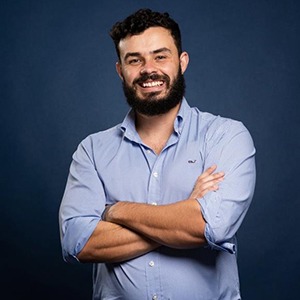
  • man wearing blue suitBeny Koe (BK), area spa director with Noble House Hotels & Resorts, a boutique hotel brand featuring 25 experience-driven destinations across North America with spas that are inspired by their distinct locales, featuring natural elements and indigenous influences, reflecting the area’s culture and history.
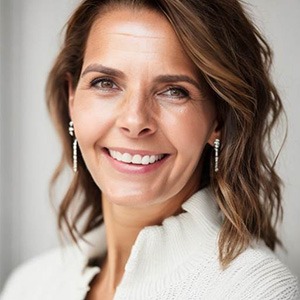
  • woman wearing striped black and white long sleeve shirt smilingCindi Moreno (CM), director of spa at Westin Hilton Head Island Resort & Spa, which offers travelers a true Lowcountry oasis with private access to pristine beaches  and the signature Heavenly Spa by Westin for a vitalizing retreat in an unmatched beachfront setting overlooking the Atlantic Ocean.
Q: Have you noticed an uptick in bookings for certain spa/wellness treatments?

    • DH: Mindfulness is the most popular theme we have seen. Massage continues to be strong, but mindfulness treatments that address mental health are very popular. These treatments feature rose quartz and balance chakras to help to alleviate anxiety, panic attacks and sleep issues.
    • BK: A lot of guests are more concerned with skincare, and are choosing result oriented treatments like hydrafacials using VioraMed devices to reduce redness, brightness, and target specific issues.
    • CM: Our most popular treatments feature CBD, including our CBD Wellness Massage with CBD oil and our popular CBD Pain Relief Cream, which can be added to any massage to help treat inflammation and pain.

Q: What new types of wellness programming has your property implemented? 

    • DH: Flamingo Yoga is so popular and makes up 60-80% of our fitness revenue. Guests can immerse themselves in nature and appreciate the classes being outside. During Flamingo Yoga, guests can get to know The Bahamas’ iconic bird during a rejuvenating and unforgettable experience with the flock. The flamingos love the feel and texture of yoga mats and are curious to join in. The 55-minute small, intimate class includes a team member who works with and cares for the flamingos, making it a fun and lighthearted yoga adventure for all, and a memorable addition to any vacation.
    • BK: In 2023, we’ve seen more group requests for yoga, as well as more interest in body treatments, massages, facials.

“Flamingos love the feel and texture of yoga mats and are curious to join in.”

Q: Are there any emerging wellness trends that are on the rise in 2023?

    • DH: IV therapy continues to be a strong trend. At Baha Mar we offer Infuz with 5 IV options and 4 booster shots that can be given as a shot or added to an IV as a booster. IV Therapies give 100% of vitamin absorption and have been specially formulated to give heightened mental and physical vitality, providing guests body with the nutrients, vitamins and antioxidants they need to feel energized and refreshed. Additional industry trends we are seeing include cold-pressed juices, gut health is very popular, as well as CBD oil and sound therapy being incorporated into treatments.

Read MoreWhy Meeting Planners Should Put Wellness First

    • BK: At Spa Terre, at Teton Mountain Lodge in Jackson Hole, Wyoming, we offer a Salt Stone Experience with Infrared Sauna and HALO Therapy. Over at Chill Spa at Hotel Terra (also in Jackson Hole) we offer a Biohacking Facial, similar to a hydrafacial, with MediSpa by Medicreations which includes light therapy, microcurrents, oxygen infusion, hot and cold moments and more for sculpting.
    • CM: The fitness aspect at Westin Hilton Head is important, especially for male guests who golf, with massage for back and shoulders enhanced with CBD. For the salon, we are moving away from traditional mani/pedis and creating CBD foot and leg services, including a soak with CBD lavender salts and massage. Other trends on the rise in the industry are IV and vitamin therapy, touchless services, color therapy and sensory therapy.


A near unanimous number of members from the Culinary Workers Union Local 226, the largest labor union in Nevada, and the Bartenders Union Local 165 have voted to authorize a strike on the Las Vegas Strip, following tens of thousands of hospitality workers casting their votes at Thomas and Mack Center on the University of Nevada’s campus.

Following a 95% vote in favor of strike authorization, the two-unions negotiating committee is now authorized to call a strike at 22 casino resorts along The Strip, divided between its largest employers: MGM Resorts, Caesars Entertainment and Wynn/Encore Resorts. A strike deadline has not yet been set as negotiations continue among all parties involved.

This comes just a couple of weeks before the annual IMEX America, where more than 7,000 buyers and exhibitors are expected to be in attendance at Mandalay Bay.

“We’re aware of the situation and are in regular contact with the team at MGM,” says Carina Bauer, CEO of the IMEX Group. “They continue to have productive meetings with the union and believe both parties are committed to negotiating a contract that is good for all.  It’s important to understand the Culinary Union has not set a strike deadline and that negotiations are ongoing. We’re continuing to monitor the situation and will share updates as appropriate.”

Of the 60,000 Nevada-based hospitality workers the Culinary and Bartenders unions represent, 53,000 are based in Las Vegas and in negotiations with the three employers for a new five-year contract.

Read MoreLA Hotel Strike Impacts Political Science Annual Meeting

Forty thousand are currently working under an expired contract at 22 casino resorts divided among the three hotel brands. Earlier in September, the unions sent a letter to eight MGM properties, each Caesars property and Wynn/Encore to begin a seven-day notice to end the contract extensions that were in place, resulting in the contract expiration. The Culinary and Bartenders unions are also negotiating a new five-year contract with 24 properties along The Strip and in downtown Las Vegas that are still under a contract extension.

“Wynn Las Vegas has historically had a positive and cordial working relationship with labor unions and has always reached satisfactory agreements with each. Our employees are the heart and soul of Wynn, and we will continue to work with Local 226 and Local 165 to reach an agreement that provides our employees with competitive wages and benefits, in a work environment that matches our high standards,” Wynn said in a statement.

According to a press release, the unions have proposed new five-year contract language created to provide increased security for workers with designs to achieve the following:

  • Winning the largest wage increases ever negotiated in the history of the Culinary Union.
  • Reducing workload and steep housekeeping room quotas, mandating daily room cleaning, and establishing the right for guest room attendants to securely work in set areas.
  • Providing the best on-the-job safety protections for all classifications, including safety committees, expanding the use of safety buttons to more workers, penalties if safety buttons don’t work, enforcing mandatory room checks for employee and public safety, and tracking sexual harassment, assault and criminal behavior by customers.
  • Strengthening existing technology protections to guarantee advanced notification when new technology is introduced which would impact jobs, require training for new jobs created by technology, health care and severance pay for workers who are laid off because of new technology, the right to privacy from tracking technology introduced by companies, consent in third-party data sharing workers have generated through their work, right to bargain over technology that tracks location of employees or messaging between workers.
  • Extending recall rights so that workers have more job security and have the right to return to their jobs in the event of another pandemic or economic crisis.
  • Making clear that the no-strike clause does not prevent the Culinary Union from taking action, including strikes, against non-union restaurants on the casino property, and gives casino workers the right to respect picket lines.

Terms and conditions of the expired agreement, such as wages, benefits and job security protections remain in effect but, with no-strike provisions no longer in effect, hospitality workers could go on strike at any moment.

In addition to IMEX America, the Las Vegas Strip expects even more major conventions later this year and at the beginning of 2024, including TwitchCon in October, Formula 1 Las Vegas in November, Consumer Electronics Show in January and Superbowl LVIII in February. If there is a labor dispute, the Culinary Union asks locals, political officials and candidates, and tourists to not stay at these hotels and casinos.

Reasons for Striking

In the Culinary Union’s press release, several union members stated their reason for voting “yes” to a strike authorization:

“I voted yes to authorize a strike because I’m fighting for my family and for our future. The workload since the pandemic has been intense and when I get home I’m so tired and I don’t have energy to take my two kids to the park or play with them. I feel sad like I’m just living to work and it’s not right. I was thinking about getting a second job, but I’m already doing more than one job at work right now and I believe that one job should be enough! I voted yes to win the best contract ever so that I can work one job and come home to spend time with my children,” said Maria Sanchez, guest room attendant at the Bellagio and Culinary Union member for three years.

“I was at the Thomas and Mack today to have my voice heard. I was proud to vote yes to authorize a strike to protect my future. I’ve worked hard for decades to provide for my family and I want to continue to protect my retirement and pension. If I have to go on strike to win the best contract ever, then I’m ready to do that in order to win for my family and have my fair share of what we deserve,” Said Roselyn Buie, a cook at the Flamingo and Culinary Union member for 37 years.

Germany, Berlin and Canada all welcome new and renovated hotels

For your next international meetings and excursions, look no further than these new and renovated properties. A classic DoubleTree debuts in Berlin, an all-inclusive resort introduces a new experience in Mexico’s Riviera Nayarit and an Art-Deco forward design joins LHW in the shining city of Vancouver. New renovations, incentive experiences and upscale design make these hotels the star of the show in their respective locations.

Classic comfort in Berlin

New and Renovated DoubleTree by Hilton Berlin Ku'damm
DoubleTree by Hilton Berlin Ku’damm

Doubletree by Hilton Berlin Ku’damm opens the doors to one of the largest hotels in Berlin, Germany. It marks the first full-service DoubleTree by Hilton brand hotel in the city and the third in Germany. It stands just moments away from Berlin’s most exclusive boutiques and the famous Kurfürstendamm Avenue.

The property originally opened as a hotel in 1981. Over the recent 16-month renovation, the property was redesigned by award-winning design team Virserius Studios to express DoubleTree by Hilton’s signature warmth and thoughtful amenities. 420 guest rooms and 15 suites feature upscale bedding and spa-inspired bathrooms.

Planners can enjoy over 8,600 sq. ft. of meeting space, made up of 11 facilities. Guests will leave in awe after dining at the hotel’s restaurant, headed by Chef de Cuisine Alexandre Castelain, where they can choose dishes from a sustainable zero-waste menu.

Read More: Top 10 International Cities: Finding the Right Recipe

All that an all-inclusive can offer

Aqua & Jungle Experience at Delta Hotels by Marriott Riviera Nayarit
Delta Hotels by Marriott Riviera Nayarit

In the Cruz de Huanacaxtle, Nayarit, Mexico, Delta Hotels by Marriott Riviera Nayarit, An All-Inclusive Resort, recently unveiled an additional rooms and suites tower and launched the Aqua Jungle & River experience as parts of an ongoing expansion.

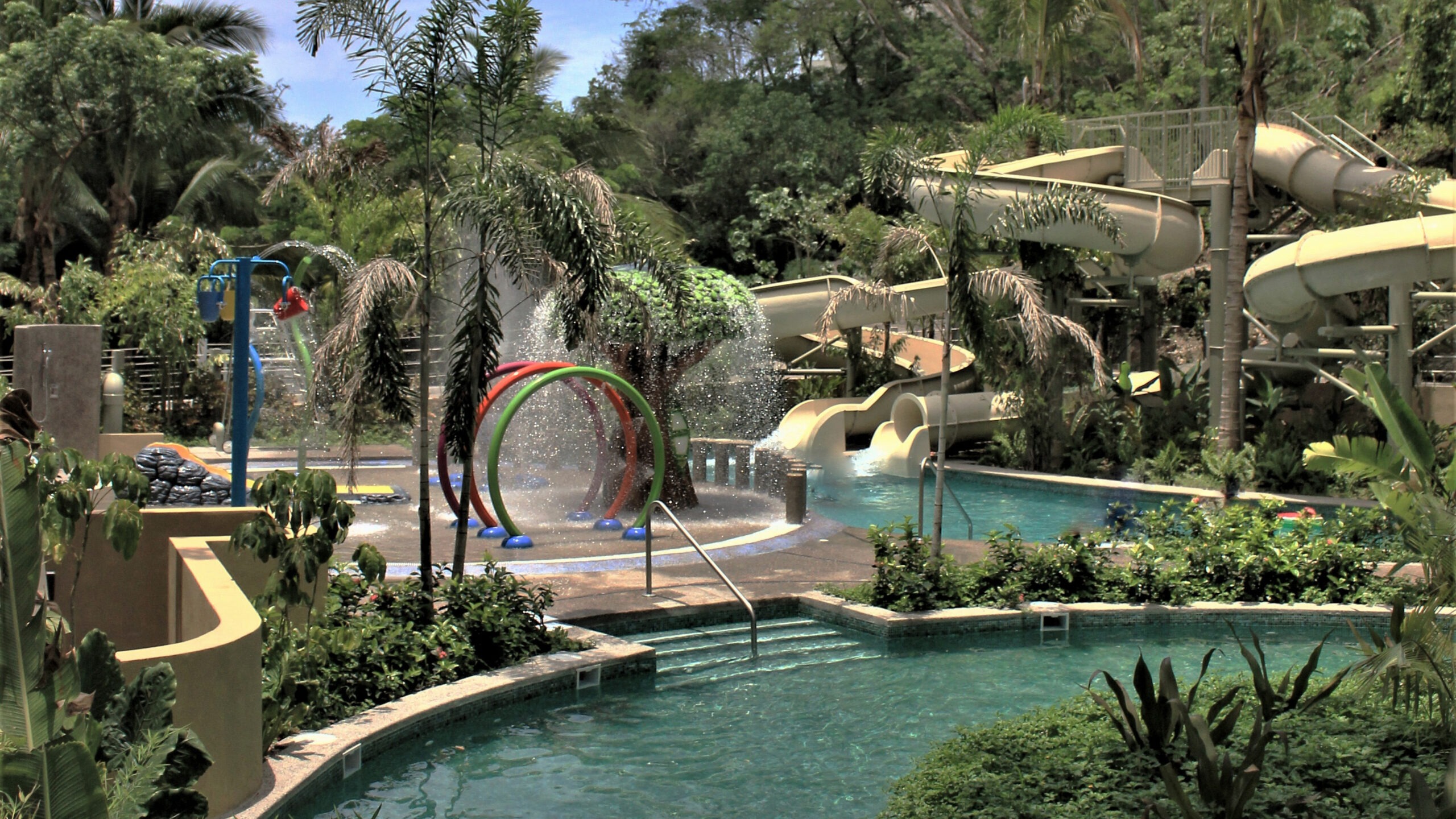
The Aqua Jungle & River experience is an immersion in the hotel’s onsite forest canyon. Guests can enjoy seven different pools, an elongated lazy river, two kid’s areas with waterslides and five jacuzzis for adults. Guests can also enjoy food and beverage offerings at the site.

The resort’s new rooms bring their total to 212 guest rooms and suites with mountain views. All rooms feature a Mexican art-inspired design and local elements. Groups can enjoy numerous event spaces of varying sizes and a number of team-building activities.

Read More: Playing with Nature: Outdoor Adventures in Riviera Nayarit

The City of Glass

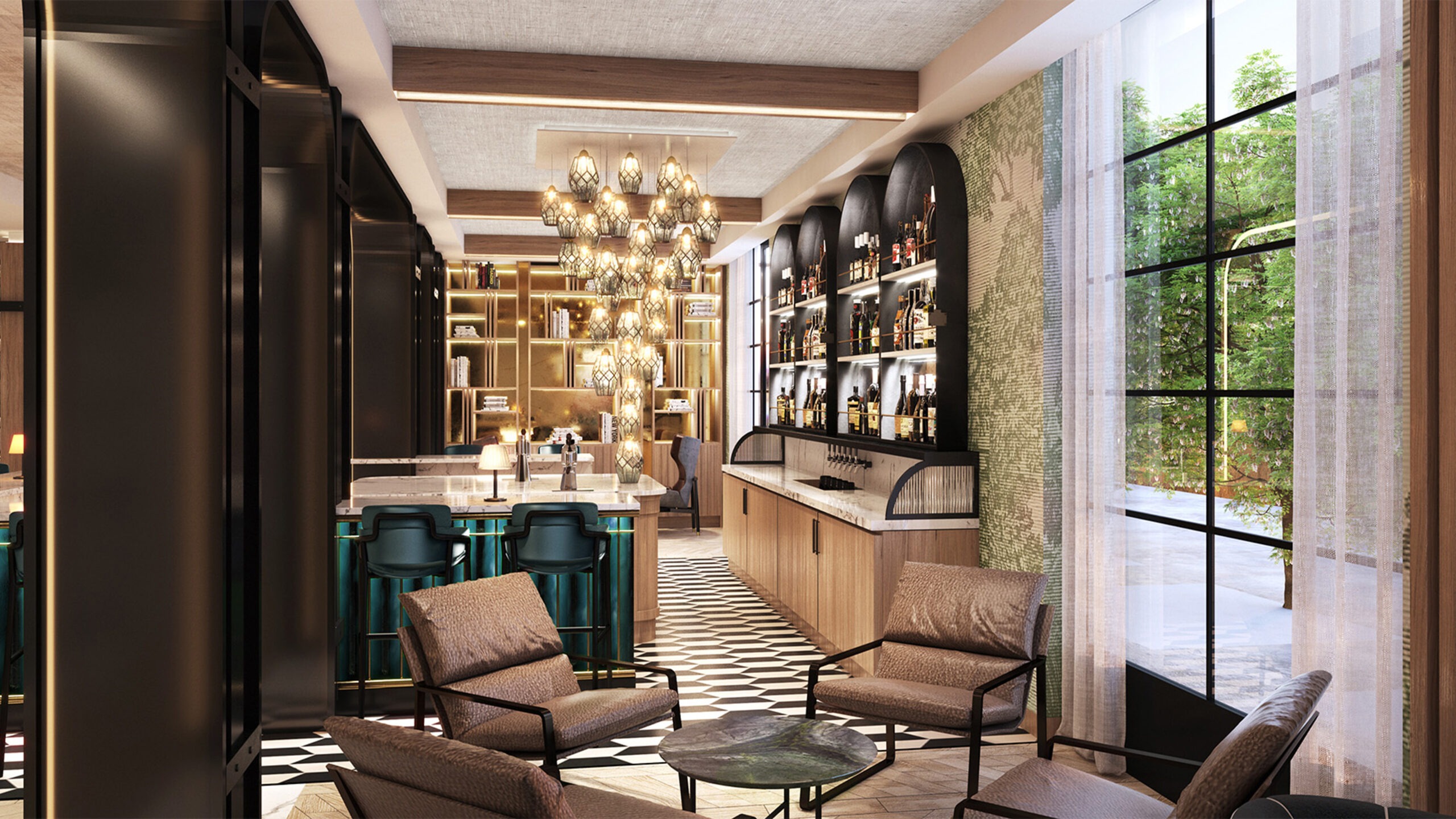
AZUR Legacy Collection Hotel

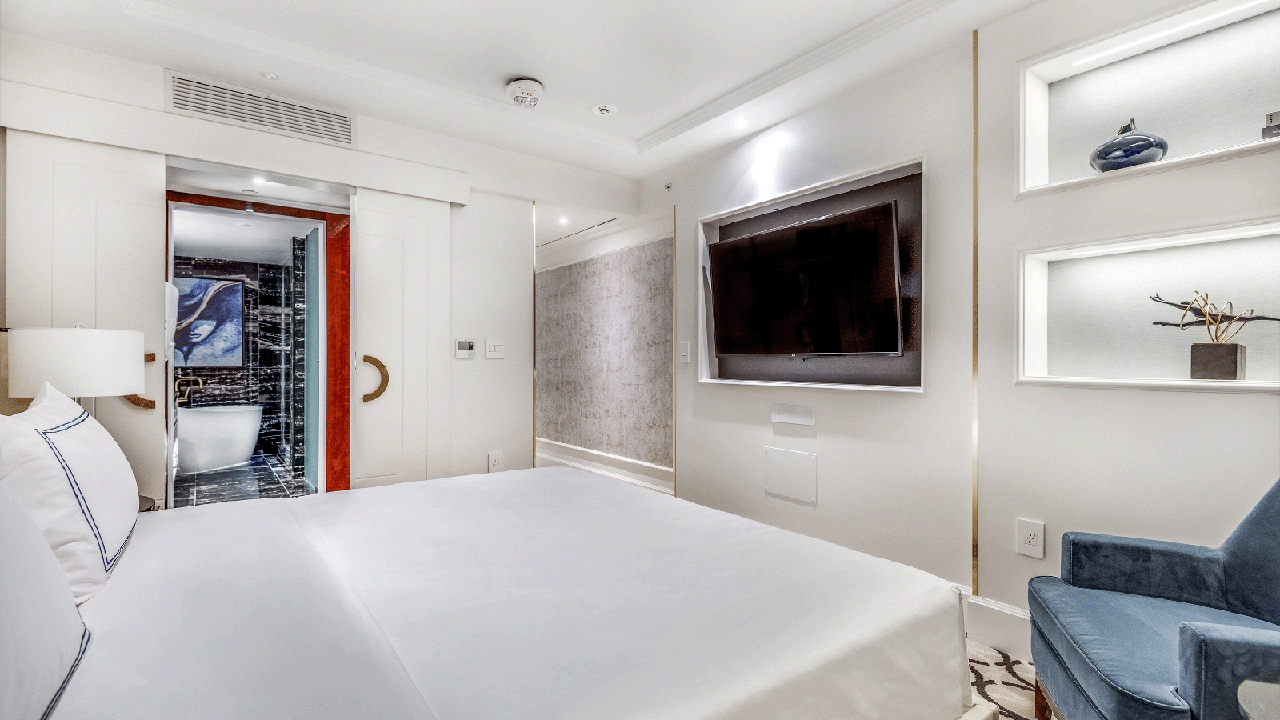
In the heart of Vancouver’s downtown financial district, AZUR Legacy Collection Hotel is an art-deco masterpiece. The city’s newest boutique hotel opened summer 2023 and offers 104 rooms and 13 suites all detailed with warm hues, plush carpet and incredible art. Guests can enjoy personalized service, complimentary wi-fi, onsite dry-cleaning and laundry, currency exchange and valet parking. Relax at their Lobby Lounge Wine Bar and enjoy a meal at their rooftop garden restaurant, which helped inspire Douglas Coupland’s City of Glass.

The property also offers private event space, and is one of LHW’s (Leading Hotels of the World) four new member hotels.