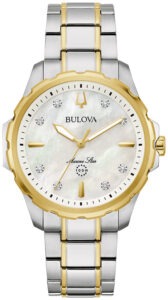
Citizen Watch America (CWA) offers a portfolio of leading and trusted brands for your business needs, including Bulova, Citizen, Frederique-Constant, Alpina, Bulova and Citizen Clocks, and Accutron, with prices ranging from $100 to $40,000 in retail value. These brands are known for their exceptional craftsmanship and design with cutting-edge technology and industry-leading quality and reliability, with hundreds of styles and tastes, unique customization options, and prices for every budget.


Citizen Watch America’s Gift in Time Program

Reward your best with iconic brands. Uniquely personal, delightfully interactive, and just plain fun, CWA’s Gift in Time transforms event gift-giving into an event in itself, creating a perfectly customized, truly memorable shopping experience.


We’ll work with you every step of the way, paying attention to your budget, your guests, and your goals. Pick the plan, pick the product and we’ll take it from there—providing displays, signage, tablecloths, shopping bags and even on-site sizing.

With CWA’s major brands, it’s easy to put together a program that meets your needs. With a brand that has been renowned for quality and design, your guests will know how highly they are valued.

CWA offers two event programs:

On Site Event and Pick-A-Gift Event


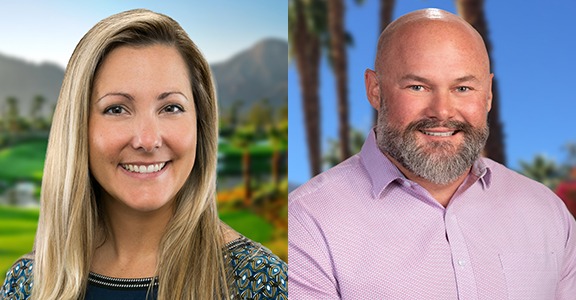
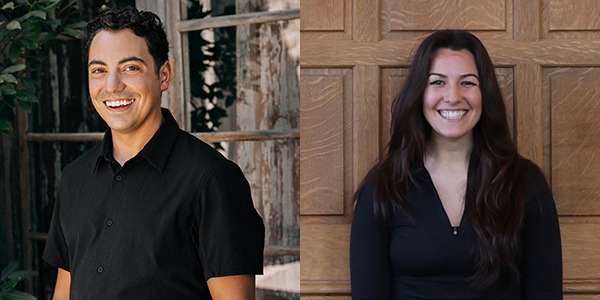
Davis Meyer and Sean Smith

Smart Moves headshots of Davis Meyer (left) and Sean Smith (right)
Davis Meyer (left) and Sean Smith (right), Visit Greater Palm Springs

Visit Greater Palm Springs makes two new appointments to support its government relations and economic development initiatives.

Meyer is promoted to the role of vice president of government and industry relations. She has been with Visit Greater Palm Springs in 2017, most recently holding the position of senior director of community engagement. She will continue to focus on overall partner investment in marketing programs, education and events. In addition, her role is now expanded to oversee new economic development responsibilities and government relations at the local, county and state levels.

Smith joins Visit Greater Palm Springs as the director of economic development. He will drive strategy and implement business attraction and growth for the area. Within this, he will focus on diversifying business sectors, attracting new businesses and strategically marketing and branding the region as a premier location for economic growth and development.

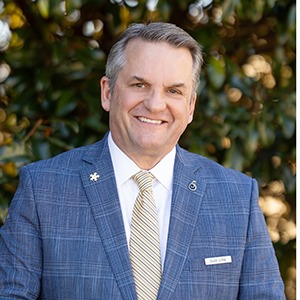
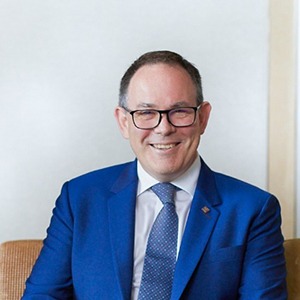
Scott Little

Smart Moves headshot of Scott Little
Scott Little, Salamander Middleburg

Little takes on the role of managing director at Salamander Middleburg. Most recently, Little served as vice president and general manager of Harbor View Hotel on Martha’s Vineyard in Massachusetts. He brings ample experience in numerous hospitality leadership roles and a range of expertise across luxury operations, community and investor relations, real estate development, preservation, finance and acquisition.

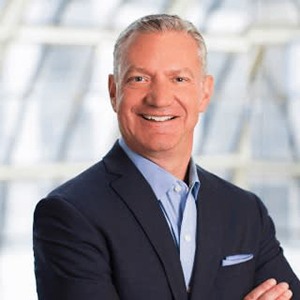
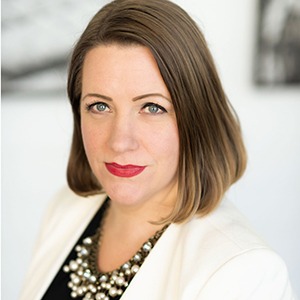
Gregg Nielsen

headshot of Gregg Nielsen
Gregg Nielsen, Jumeirah Group

Jumeirah Group names Nielsen global director of sales. He brings over a decade of experience in luxury hospitality across sales and marketing, which he will draw from to drive the global luxury hospitality company’s ethos of outstanding customer service at its 26 properties across the Middle East, Europe and Asia. Prior to this role, Nielsen established himself as a top performing, tenured senior account manager at Virtuoso.

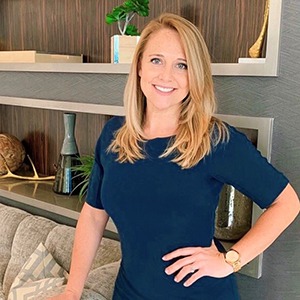
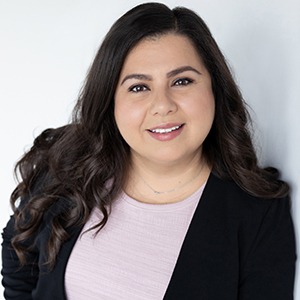
Jessica Sherbert

Smart Moves headshot of Jessica Sherbert
Jessica Sherbert, The Grove Resort & Water Park

Sherbert is appointed as director of sales at The Grove Resort & Water Park. She has been working in Orlando since 2011, holding multiple director positions with full-service properties within both Hilton and Marriott portfolio hotels, most recently as director of sales and marketing at the Marriott Village Orlando. She will draw on her extensive sales experience and knowledge of the Orlando market in her new responsibility for all sales activities, including maintaining and establishing relationships with key accounts for The Grove Resort & Water park.

Mike Waterman

Headshot of Mike Waterman
Mike Waterman, Visit Anaheim

Waterman takes on the role of president and CEO for Visit Anaheim. He brings over 30 years of leadership and sales experience in hospitality, previously serving as chief sales officer at Visit Orlando. He will now serve as the strategic and visionary leader responsible for developing, directing and overseeing Visit Anaheim, and will lead the DMO’s efforts to draw conventions and visitors to the Anaheim area to bring economic growth to the community.

Cara Pratt

Smart Moves headshot of Cara Pratt
Cara Pratt, CSI DMC

CSI DMC, Inc. promotes Pratt to the role of chief business development officer. She has designed and executed hundreds of events in greater Boston over the past 15 years. In 2018, she began as a partner with CSI DMC and subsequently helped to grow the team and to open three new offices around New England. She will now work with all 14 of CSI DMC’s regional offices to create a cohesive business development strategy to deepen local partnerships.

John Bottino and Gina McAlpin

headshots side by side of John Bottino (left) and Gina McAlpin (right)
John Bottino (left) and Gina McAlpin (right), The Ranch Hudson Valley

The Ranch Hudson Valley makes key appointments to its leadership team.

Bottino takes on the role of general manager. He will oversee all logistics of the daily structured schedule that supports guests on their journey towards improved well-being through programs such as The Ranch’s signature morning hikes, and will work to create and manage a vibrant team of program managers, hiking guides practitioners and instructors. His background extends beyond hospitality, into health, and he is also a certified yoga instructor.

McAlpin serves as director of programming. She brings over 12 years of experience as a fitness trainer, marketer and sales specialist. At The Ranch, she will lead a dynamic team of program guides, fitness trainers and wellness practitioners, as well as develop seasonal programming. She brings a master of science in Integrative Nutrition, which strengthens her understanding of the connections between nutrition, fitness and overall wellbeing, and will help her to create a meaningful, lasting guest experience.

Shane Pateman

Smart Moves headshot of Shane Pateman
Shane Pateman, Langham Hospitality Group

Langham Hospitality Group appoints Pateman as managing director of The Langham Huntington, Pasadena and as regional vice president, operations—North America. He brings over 30 years of experience in the hospitality industry and strong expertise in hotel management and operations and will now lead the Southern California hotel as well as provide operational leadership at properties throughout North America. Most recently, he served as SVP of sales and marketing at Langham Hospitality Group.

Misty Pacheco

headshot of Misty Pacheco
Misty Pacheco, Pensacola Beach Resort

Pacheco is appointed as director of sales at the Pensacola Beach Resort. She brings over 24 years of experience in the hospitality industry. Most recently, she served as director of catering and convention services at The Hilton Pensacola Beach & Holiday Inn Resort, where she has successfully coordinated events for up to 2,000 attendees. She will now work with the hotel team at Pensacola Beach Resort to secure and host various events and attract a greater volume of group and social bookings to the resort.

Cynthia Gonzalez

Smart Moves headshot of Cynthia Gonzalez
Cynthia Gonzalez, Visit the Santa Ynez Valley

Gonzales is the first director of sales for Visit the Santa Ynez Valley. She will lead the development and implementation of long-term sales strategies and tactics to attract overnight group business to the Santa Ynez Valley. In addition, she will lead the promotion of a Group Sales action plan to deliver value to Santa Ynez Valley’s customers and additional group business to the organization’s tourism partners. She brings nearly two decades of hospitality and tourism knowledge to this new role, most recently working as director of sales for Visit SLO CAL.

Read More: Smart Moves in Greater Palm Springs, Chicago and More

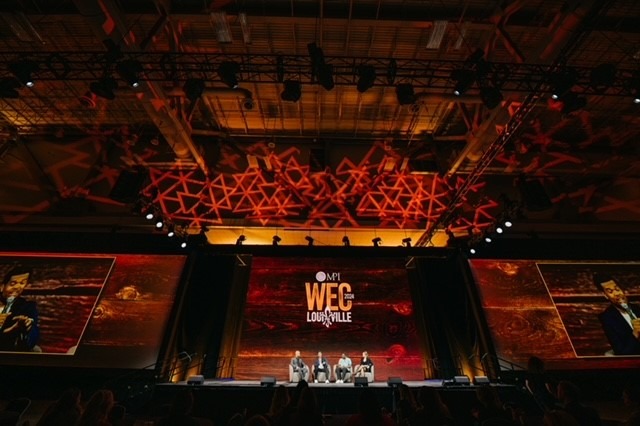
World Education Congress (WEC) 2024, Meeting Professionals International’s (MPI) annual gathering, is always notable for its range of educational programming. This year’s production in Louisville, Kentucky, was themed around crafting experiences and heavy on musical metaphors. But in the breakout sessions, real talk from working meeting planners about how AI, global risks and economic shifts will impact programs in the near future drew standing-room-only crowds.

Read More: What to Expect at MPI WEC in Louisville

First, the numbers. Nearly 1,900 people (700 of them identifying as meeting planners) traveled to Kentucky International Convention Center for the three-day event with a robust hosted-buyer component. It was the largest gathering since WEC ’19 in Toronto and an increase of 33 percent over WEC ’23 in the Mexican Caribbean.

Mirroring trends seen in the turnover in the industry since Covid, approximately 50 percent of the audience was attending for the first time. “This further showcases both the event’s appeal and the strong desire for educational opportunities within the industry,” concluded MPI CEO and President Paul Vandeventer.

High Notes

stage
Photo: MPI

Celebrity drummer and author Mark Schulman was joined by Neuroperformance Coach Heather Crider for a deep dive into hacking the rockstar brain. Whether you suffer from imposter syndrome or stage fright, regulating your overworked brain requires a combination of commitment, coordination and collaboration.

Mastering your art and reaching “drummer’s high” levels requires the ability to leverage the power of the “pause, breathe and drill down” on what is scaring you. “As a human, you deserve happiness and taking time to breathe gives you the chance to choose your course rather than blindly reacting,” explained Crider.

Virtuoso author and entrepreneur Felipe Gomez shared the importance of practice for musicians and meeting professionals. “We are all capable of extraordinary performances,” he said. “Aim for excellence, create meaningful and long-lasting connection and build effective cultures of innovation.” He demonstrated on the piano onstage that there are no short cuts and only by moving beyond your comfort zone can you achieve your personal best.

Finally, a trio of Broadway performers, Jessica Lee Goldyn, Taylor Parker and Fergie Phillippe, entertained and made the connection that, “We are all better together when working in harmony.”

Real-world Up-skilling

Two floors down in the education sessions, attendees were earning certificates in Event Data Analytics and Healthcare Meetings Compliance. Topics such as Navigating AI Integration, Building Mental Fitness, New Solutions for Your Tech Stack and Embracing Neurodiversity were drawing big crowds, challenging questions and lots of notes.

Read More: Neuroinclusion: Events for Everyone

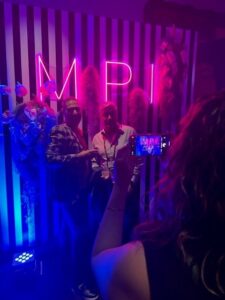
two people standing in front of purple neon letters that spell 'MPI'
Photo: MPI

Devon Pasha, director for North America of Event Design Collective, shared the power of co-creation, rapid prototyping and flexible focus, tools meeting professionals could put to use right away.

Pamela Schuller, a comedian living with Tourette Syndrome, helped attendees embrace their “messy” parts and leverage their individuality and unique talents to conquer their goals. She encouraged planners to think more widely about how they invite and welcome everyone.

Kevin Coffey, a retired Los Angeles Police Department detective shared tips for managing risk associated with travel and events, including technology failure, theft, facility evacuation, medical emergency and violence. “Most meetings take place without incident, he prefaced, but it just takes one thing to turn your next event upside down.”

The education wasn’t limited to those who could make the trip to Bourbon City. One hundred people registered for the digital stream of five hours of keynotes and interactive chats hosted by The Amani Experience, powered by Grit Productions and Expositions. The WEC Louisville Town Hall on Wednesday was also broadcast live on LinkedIn.

MPI WEC 2025 heads belatedly to St. Louis at the expanded America’s Center Convention Complex June 17-19, two years after it was originally planned. This will be a repeat performance, as WEC was last in Gateway City in 2012.

Celebrating Excellence

WEC is also when MPI awards its RISE (Recognizing Industry Success and Excellence) Awards. The focus was on innovation global transferability and influence. Winners Included:

  • Evan Nielson, CMP, event manager with AARP and member of the MPI Potomac Chapter for Young Professional Achievement.
  • Jenny Dao, business development manager with Discover Saskatoon and volunteer with the MPI Ottawa chapter for Member of the Year. She helped her chapter advance truth and reconciliation processes by embedding indigenous rotocols into event design.
  • Steven Foster, CMP, managing partner of Foster+Fathom, a team-giving group for Meeting Industry Leadership. He served as president of the MPI Dallas-Fort Worth Chapter and supported the creation of a $7,000 endowment to inaugurate the Travel, Exhibition and Meeting Management Program at the community college level and was instrumental in launching an advocacy day that led to what is now Global Meetings Industry Day (GMID)
  • MPI Tennessee Chapter was recognized with the Innovative Educational Programming award for its “educate through entertainment” initiative.
  • MPI Wisconsin Chapter was recognized with the Marketplace Excellence award for its Strategic Partner Program that has resulted in the financial success to help other chapters in need.
  • MPI Indiana Chapter was recognized with the Industry Advocate award for the collaborative effort to produce March Meeting Mania to raise GMID engagement and awareness.
  • MPI Pittsburgh Chapter was recognized with the Membership Achievement award for its personalized outreach strategies aimed at fostering growth and retention in membership with a special effort to engage student members.

A new award was announced for 2025. the Industry Advocate Award will be replaced by the Social Impact Award to honor the chapter that innovates in the promotion of diversity, inclusivity and social impact.


Association leadership conference addresses the things that go unsaid

A new event for female association event leaders planned for June in Washington, D.C., will focus on the conversations that aren’t always discussed in the office—personal brand management, fearless leadership and even menopause. Michelle Mason, president of ASAE, described The Exchange as a place where women can show up with their authentic selves, make critical connections and broach sensitive topics with honest, candid conversations.

Many of the speakers are inspirations from outside the meetings industry who will share their experiences to bring fresh ideas to the discussion. Smart Meetings sat down with some of the speakers to ask what they hope attendees will take away from the day.

Confident Style: Maria Pinto

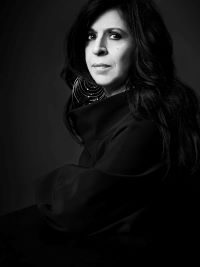
black and white portrait of woman in black coat

Fashion futurist Maria Pinto has evolved from dressing celebrities in extreme luxury styles to empowering women to feel appropriately chic and confident, whether in the boardroom, on the show floor or in their personal lives. Her deconstructed couture is comfortable, purposeful and functional—a combination that can be difficult to find.

“At this point, I am leaning in on sustainable clothing, core basics of a wardrobe rather that the frosting,” she said. “Dressing should be fun and empowering. It also needs to be easy to pack and wear so you can be a better version of yourself.”

She will be sharing her journey of building her company and what she has learned from her customers. “I have evolved over the years just as women’s bodies change from decade to decade and I want to support them with a balance that can take you into a business environment and go wherever you go.”

Read More: IAEE Women’s Leadership Forum Created a Safe Space

Continual Improvement: Michelle Korsmo

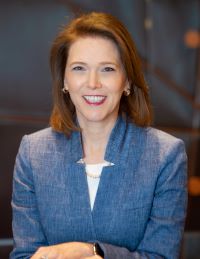
red haired woman in blue coat smilingPinto will be joined on the stage by National Restaurant Association President and CEO Michelle Korsmo. She is focused on the potential for inspiring growth. “It is important for those of us in the association community to be thinking about continuous improvement. Gathering and networking with your peers is essential to refreshing and engaging your brain so you can do your day-to-day work better,” she said.

Korsmo said she has known and valued the work of Maria Pinto for more than a decade. “She comes at the business of fashion in a way that really connects with professional women, helping them provide a lot of ease in their wardrobe at the same time, bringing a lot of style and creativity to how we show up and present ourselves every day.”

Korsmo’s goal is to help attenees think about fashion and work in a different way. “We need to think tactically about how we do our jobs and how to get better at our jobs and hearing from Maria Pinto will allow us to get some inspiration on bringing creativity into our day and it will be fun,” she said.

Taste of Success: Carla Hall

woman in pink long sleeve shirt laughing

As a contestant on Bravo’s “Top Chef” franchise and later on ABC’s “The Chew,” chef, entrepreneur and author Carla Hall encouraged everyone to cook with love. She believes food connects us all, a belief she strives to convey through her work, her cooking and in her daily interactions with others. She is currently featured on Food Network as a judge on competition shows such as “Summer, Thanksgiving, Holiday and Halloween Baking Championships.”

Her latest cookbook, “Carla Hall’s Soul Food: Everyday and Celebration,” was published in 2018, landing on annual “Best Cookbook” lists across the country and receiving an NAACP Image Awards nomination.


Looking for a sizeable infusion of cash to create an exciting recurring event and help carry it through the growing pains? How about mentorship to speed its way to success? In Silicon Valley, the model is familiar: Get a tech-savvy venture capital firm to invest in you.

In the event industry, not so much.

“Unlike Silicon Valley, where there has long been a focus on early-stage startups and betting on smart entrepreneurs, the event industry has behaved very differently,” says Greg Topalian, chairman of Clarion Events North America. “It’s starting things on your own, figuring out the intricacies of events. And you’re likely underfunded.”

Not until—or if—these little fish in the event world turn a profit are the industry’s bigger fish interested in you. So, it’s been swim, swim until you sink or are swallowed up for a big payday.

That’s why Topalian has joined five others with proven track records of building multibillion-dollar event-related successes in a new investment firm, Events Venture Group (EVG). “Our mission is to support the next generation of event entrepreneurs who redefine the event industry landscape,” Topalian, who is co-chair of EVG, says.

Other board members are:

  • Monique Ruff-Bell, chief program and strategy officer for TED
  • Jonathan Weiner, founder, chairman and CEO of HLTH
  • Marco Giberti, founder and CEO of Vesuvio Ventures
  • Joe Popolo, founder and CEO of Charles & Potomac Capital
  • Jay Weintraub, founder and CEO of Connectiv Holdings

Read More: Fresh Investments in Virtual Meeting Platforms

EVG will offer “a unique blend of expert mentorship, a collaborative community and strategic funding,” according to a press release heralding its official launch. It promises to provide “insights and access across every aspect needed for early-stage event success: sales, operations, marketing, administration, content and industry connections.”

“When I started there were lots of things I wish someone told me not to do,” Topalian, who directed the debut of New York ComicCon in 2006, says. “I wish someone made an introduction to a better vendor. I wish I didn’t go to that particular venue. And if I had the experience others had, I’d have known that was a mistake. On top of funding, this is really what we think we can provide that has measurable value.”

How to Win EVG Investment

So, how can someone get on the EVG bus?

Topalian continues: “It’ll be a bit like ‘Shark Tank.’ A project comes in front of the group, and we may have five members—out of, say, 10 members in all at that time—eager to get involved. We don’t make decisions as a collective. I’ve had a lot of experience with consumer shows. I happen to really like them. I’m probably a lot more likely to want to invest in, and get involved in, a ‘con’ than some of my colleagues who say, ‘I’ve never done that, that’s not my thing.’”

Read More: No More Ms. Nice Planner! It’s Time to Demand Support for International Programs

EVG is still recruiting investors. “We haven’t raised a specific amount of money. We have an initial board, but we’re currently interviewing other great trade-show luminaries who want to join the group. We ultimately see the group getting up to somewhere in the 20-25 range of members. They all have to meet minimum investment criteria. And it’s the aggregate investing power of those members that will give us significant power,” Topalian says.

EVG may invest in specific events and companies, startups or those with compelling visions in the early stages of growth. Topalian notes this includes event tech. “We’ve seen some absolutely big, bold concepts, and we’ve had conversations with folks who may have already run three or four shows. The idea is that they’re looking for how to accelerate their growth.”

Sharing the Rewards

As in the Silicon Valley model, EVG’s investing members will become shareholders of the companies they partner with, although Topalian says they’re not looking for controlling interest. If, with success, the businesses are sold, EVG investors would share in those rewards.

“Even that part of the process is something that our board has enormous experience in, having bought or sold many, many businesses,” Topalian says.

Even if the ultimate aim is to make money for both the startups and EVG’s investors, Topalian says he speaks for the entire board when he adds: “I love the idea of being able to engage with someone who’s got a brilliant concept but may just lack the 25-plus years of experience that I have. I want to be helpful to them. Sure, I’d like to see a great outcome. I’d like to see us invest in numerous businesses this year. But I’m equally interested in seeing us really make a difference for entrepreneurs in the event industry.”

Sometimes events could use a refresher. Whether a full re-creation or adding a few small elements, applying changes to an event can elevate its reception entirely. The former is the route MPI’s Southern California Chapter chose with its annual WeCon event, this time held in Newport Beach, California.

“The event was re-invented from the ground up,” says Jennifer Minzey, vice president of education for MPI Southern California. “Much thought and deliberate intent was behind pretty much every aspect—from its creative branding and messaging through a deliberately integrated approach to content development and delivery—and then there were the onsite creative moments of surprise and delight. We engaged the DMO, Visit Newport Beach, early on, and with their guidance and support, we were able to make integral changes to the event.”

The addition of fresh takes from new committee members also played a pivotal role.

Appealing to the Professional and Personal

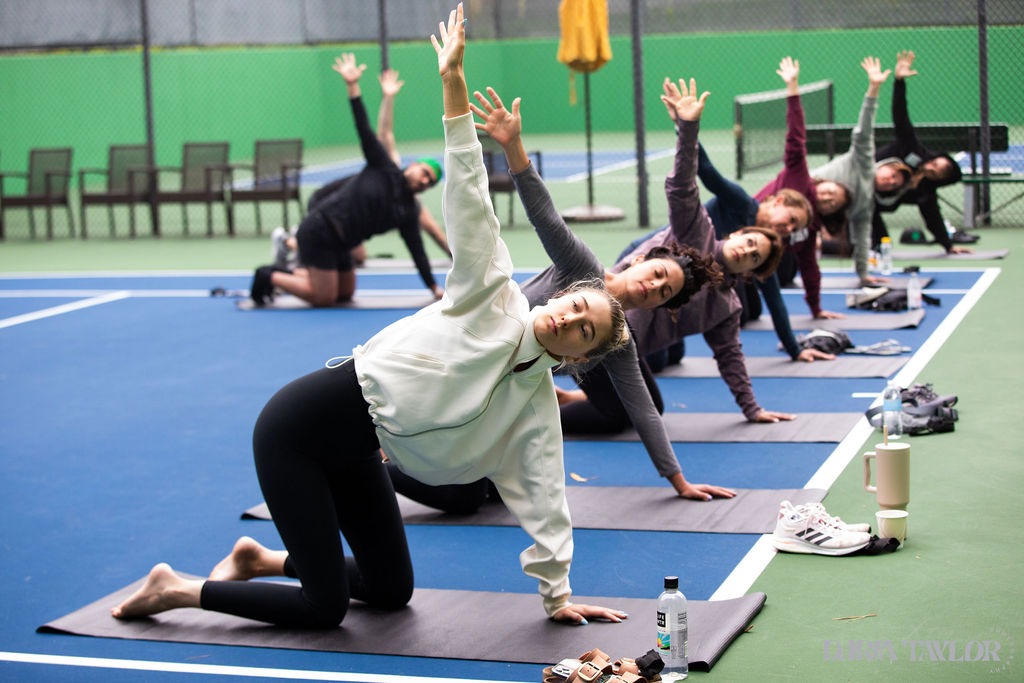
group of people stretching on mats at WeCon Southern California

Simply supplying content at events isn’t enough anymore, Minzey says. Creating inviting, holistic environments is the goal. “It takes a lot to get people to come out these days in a post-pandemic world,” she says.

Read More: Check In for Holistic Wellness

“We’re all a bit spoiled. So, when we are creating an event, especially for event planners, we have to appeal to both their professional and personal journeys. The activities were all part of that and more.  They fostered a unique connection between all attendees regardless of whether they were planners or supplier.”

The activities Minzey’s referring to include experiences designed to engage and foster camaraderie, like scavenger hunts, a tour around Newport Beach in Moke cars, group fitness classes and a guacamole-making competition.

Smaller Meetings Win Out

Coming out of the pandemic, there was much talk of smaller meetings taking center stage. During that time, the reasons for keeping it cozy were apparent—smaller groups lessened the chances of virus transmission. Now, the reasons to keep small meetings going are less about defending against viral infection and more about creating personalized experiences.

Read More: In Small Meetings We Trust

“Smaller meetings are gaining momentum primarily due to the personalized interaction they facilitate,” Minzey says. “In these settings, each participant has a greater opportunity to contribute, making the discussions more inclusive and detailed. This leads to a richer exchange of ideas, where nuances can be explored more thoroughly than in a larger forum.

“In smaller groups, attendees often feel a heightened sense of comfort and engagement, which can lead to more open and honest dialogue. The intimacy of the setting encourages a level of depth in conversation that is harder to achieve in bigger groups, where voices can be drowned out or participants may feel overwhelmed by the sheer number of people.”

Minzey adds that relationships created in smaller groups tend to be stronger and more meaningful. “The close interaction helps build trust and understanding among participants, paving the way for ongoing professional relationships and collaborations. This can be particularly beneficial in fields where networking and personal connections play a critical role in career development and business opportunities,” she says.

And as sustainability remains a crucial element for an increasing number of event profs and destinations, small meetings make sustainable practices a bit easier to implement, as smaller groups require a little less of, well, everything. As Minzey puts it, “Smaller groups can more easily adopt eco-friendly practices, from reducing waste associated with large-scale events to choosing venues and suppliers that prioritize sustainability.”

Collaborate, Innovate, Empower

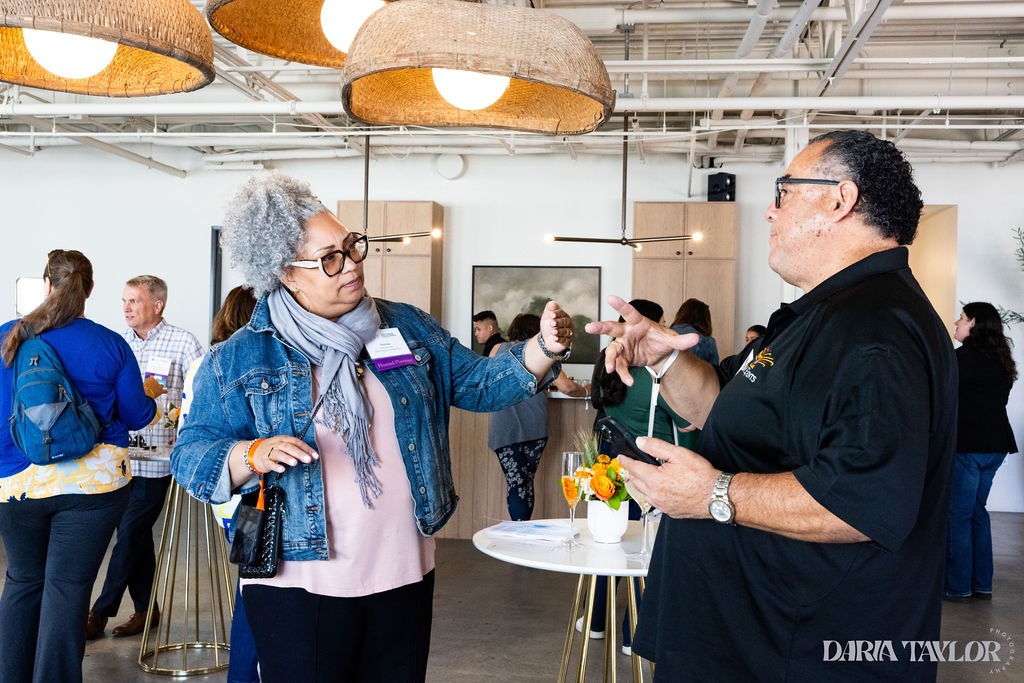
two people talking in meeting room at WeCon Southern California

Out of the many lessons learned from this year’s WeCon, Minzey chose to stick to her top three.

No. 1: Collaboration and Partnership

Minzey says the critical role of strong partnerships and collaborations were made apparent at this year’s [WE]Con. “Whether it’s with sponsors, host destinations, local businesses or other organizations, we leveraged these relationships to enhance the scope and reach of the event for the benefit of all,” she says.

Read More: Planner Said: Supplier Said—Hope for A Better Partnership Solution

“For next year’s WeCon, we will continue that…We’ll also continue to focus on working more closely with our technology partners to streamline event logistics. The goal is to leverage these partnerships not only for resources but also for innovative ideas and solutions that can elevate the event experience.”

No. 2: Innovate Marketing

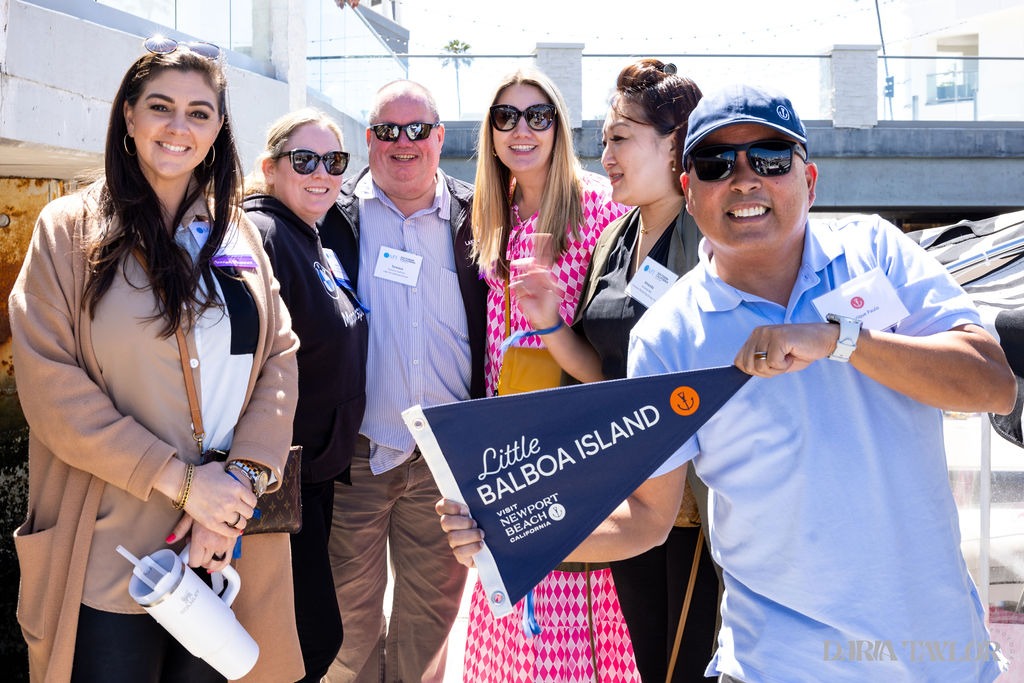
group of six people at WeCon Southern CaliforniaThis year provided new insights into which marketing channels and messages resonated most with their audience; and next year, Minzey says they plan to build on that approach.

WeCon organizers shifted the way they positioned the host city, Newport Beach, highlighting its features and emphasizing its position as a destination, as opposed to just the place in which the conference was held. This was really well received, Minzey adds.

“We’ll also use our extensive survey to better understand our attendee preferences and behaviors, allowing for more targeted and personalized marketing efforts, including using focus groups to better understand what our attendees will be looking for in the future,” she says. “Additionally, our goal here is not only to increase attendance but also to enhance participant engagement before, during and after the conference.”

Minzey and her team understand that their efforts to attract new members and gather more attendees to WeCon are now being directed to a younger professional demographic. This has required them to change how they reach out to prospects.

“We were very deliberate about the creative positioning and messaging in our marketing for this event and the channels we used,” she says. “LinkedIn is our primary social media tool and we catered our campaign to a broad audience with individual and targeted messaging, ensuring we gave everyone one or more reasons to attend. That was supported by a robust email campaign and extensive coverage in our newsletter. We also teased out content on an ongoing basis to keep our audience in the know and our engagement rates were up significantly as a result. Interesting to note that we started our marketing very early which resulted in big attendance numbers right away.”

No. 3: Empowering Fresh Objectives from Committee Members

Minzey encouraged committee members to introduce new objectives and perspectives, designed to foster a novel, exciting experience. “For next year, we want to build on this with regular brainstorming sessions, innovation workshops or maybe even feature a portal where ideas can be submitted and voted on by peers,” she says. “We feel this fosters a sense of ownership and ensures a variety of perspectives that will make the conference more inclusive and diverse.”

International hotels with vibrant art scenes, inside and out

Three new hotels open in vibrant international locations, and each features a robust collection of curated art that celebrates the local culture and local artists, in addition to standing in exciting areas, so guests can explore all the art within and beyond the hotel space.

From boutique to lifestyle to luxury, these new and renovated spaces offer an immersive atmosphere, no matter what size meeting you’re holding and what type of hotel experience you seek.

Eye-Catching in Ireland

The Leinster new and renovated
The Leinster

Dublin welcomes its first luxury lifestyle hotel with the grand opening of The Leinster. Just off Merrion Square, the hotel is in an ideal location for guests to visit art galleries, design studios and museums. The hotel space aims to ignite curiosity and encourage guests to explore their vibrant surroundings.

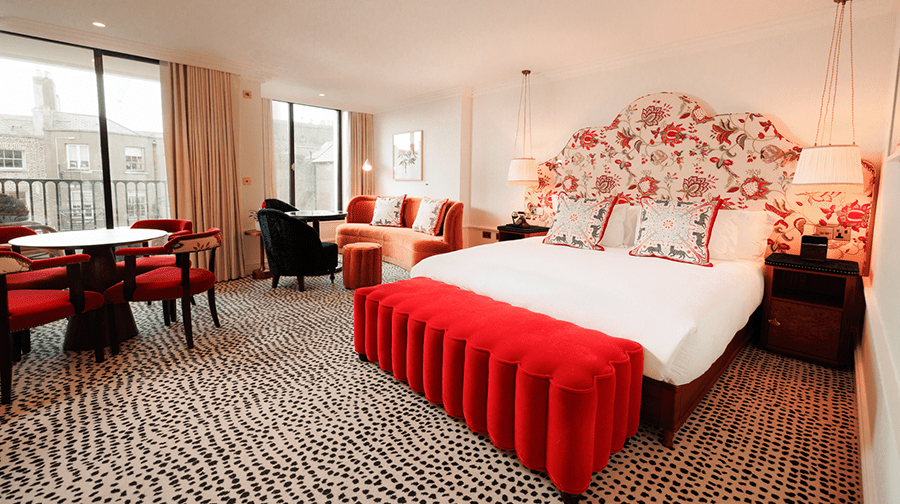
The Leinster’s design fuses classic architecture with Parisian boutique décor, blending classical and contemporary styles, with bold modern patterns, tactile materials and marble veining. It offers 55 chic guest rooms and suites featuring botanical flourishes, tasseled bedside lamps, copper bathtubs and more stylish elements. The hotel includes over 300 curated pieces of original painted art from more than 80 artists, whose work celebrates Ireland’s growing contemporary art scene.

Diners will be wowed at the rooftop restaurant, Jean-Georges at The Leinster, curated by acclaimed chef Jean-Georges Vongerichten, who has restaurants in London, New York, Paris and Kyoto.

At the O’Dwyer event suite, planners will find a versatile space that can host between 10 and 100 people in any kind of gathering, from business meetings to social corporate events. It also includes a dedicated food and drinks menu that includes The Leinster’s signature sips and small plates, as well as wines, champagnes and banquet dinners.

Urban Sanctuary in Nairobi

JW Marriott Hotel Nairobi New and Renovated
JW Marriott Hotel Nairobi

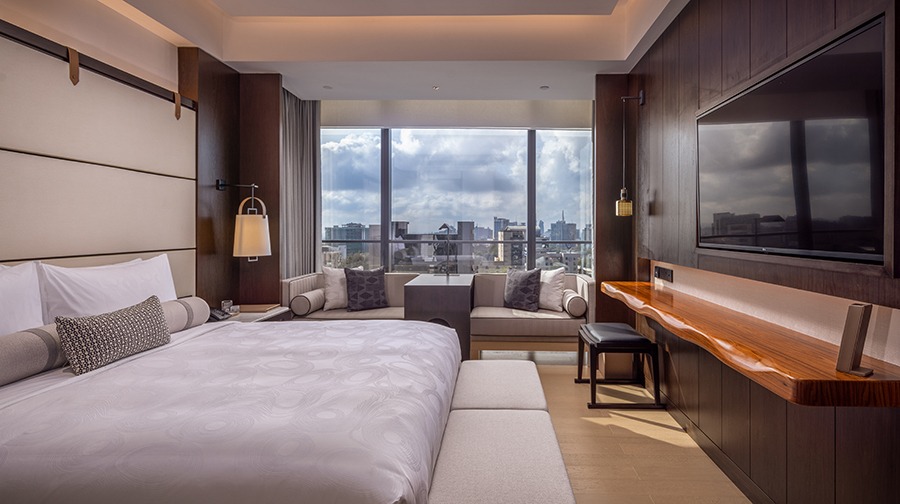
JW Marriott Hotel Nairobi opens its doors to bring 315 guest rooms and over 18,000 sq. ft. of meeting and event space, made up of eight spaces, to Kenya’s capital city. The new hotel also features five internationally inspired dining destinations, a luxury Spa by JW, a swimming pool and a fitness center.

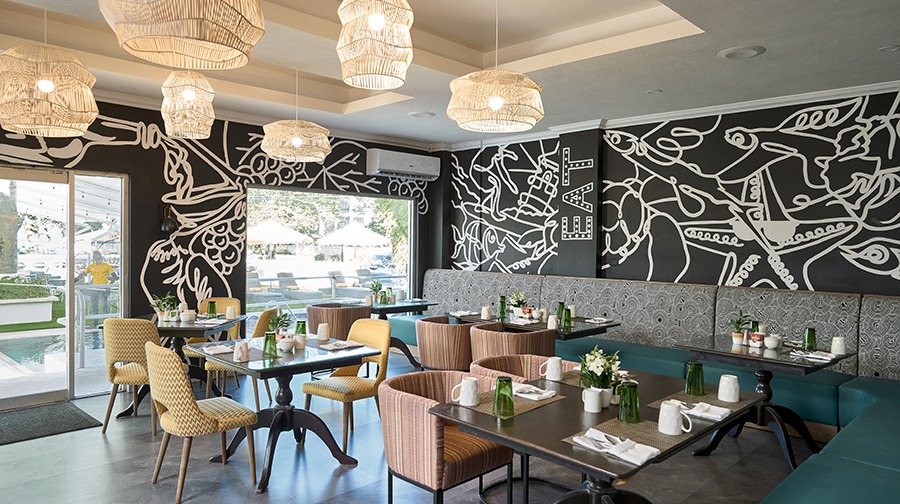
The hotel’s interior design builds on the concept of “urban sanctuary” that brings the outdoors in, inspired by the Kenya’s beauty, heritage and great outdoors. Unique artworks—everything from sculptures and handmade ceramics to wall murals and regional textiles—decorate the property. Dining concepts offer a wide array of culinary experiences, from a sports bar and grill setting at Hudson Tavern Bar & Grill to an evening hot spot, with Pan-Asian cuisine and upscale mixology, at Mr. Pang Sky Bar & Lounge.

Meeting and event space is equipped with the latest in technology. The pillarless Grand Ballroom can hold up to 800 guests. The hotel also offers a sustainable meeting program to help planners reduce waste, ensure responsible waste management and maintain energy efficiency in order to create events with a lower carbon footprint.

Read More: Hotel Art: More Than Just a Pretty Picture

Fun and Sunshine in Barbados

The Rockley New and Renovated
The Rockley

From Ocean Hotels Barbados comes brand new boutique hotel, The Rockley. This Barbados south coast hotel emphasizes a hip, local atmosphere to match its surroundings of lively bars, signature restaurants, authentic island experiences and location just across the street from Rockley Beach. The hotel space occupies what was once the South Beach Hotel, bringing in a playful and wonderfully modern new design.

The hotel’s 42 guest rooms feature colorful local touches, such as Bajan sayings on throw pillows. Social spaces build on the island’s culture, such as through the new outdoor covered bar area, which features daily and nightly entertainment in a beach club-like atmosphere, where guests can enjoy snacks and coffee. The reception, pool deck, the fitness room, play space, and guest hospitality suite have also all been updated. Throughout the hotel, guests can enjoy local artwork as well as an “Art for the People” gallery with rotating installations by local artists. The Rockley also introduces a “Dine and Sign” program, through which guests can dine out at partner restaurants and charge the meal to their room.

Multiple meeting and event spaces are available at its sister properties, O2 Beach Club & Spa and Sea Breeze Beach House, and Ocean Hotels Barbados will gladly arrange transportation between the hotel and venues. These spaces offer a versatile range of options from traditional meeting rooms to ample outdoor spaces. The Rockley itself is home to one private meeting room.

Read More: New and Renovated: Innovative Spaces for Small Meetings

Massive societal shifts have taken place within the world of corporate travel.

Despite discussions around the future viability of business travel, the reality is that in-person interaction will win out over virtual every time. Organizations have remained steadfast in their belief that meeting in person drives performance and growth, no matter if they’re fully remote, entirely office-based or a hybrid of the two options. Since almost nine out of ten (87%) of business travelers agree that in-person collaboration is necessary to cultivate relationships with customers and colleagues, it is not just employers who see the value.

Both companies and employees have changed since the pandemic, which means the way people travel for work and the goals for business trips are different than before. Corporate travel is entering a new era with changing policies that incorporate and prioritize employee wellness, modern technology and sustainability. Travel management companies (TMCs) and online booking tools are perfectly positioned to modernize business travel by creating the seamless experiences that employees crave and companies need.

From our own research, third-party sources and knowledge from Travelport’s TMC customers, we’ve identified six trends that are waking up the sector and driving big changes in corporate travel.

Well-being Moves to Top of the Agenda

 The influx of remote working environments has led to employees re-prioritizing their needs and expectations when it comes to business travel. Their focus extends beyond traditional benefits—and now encompasses factors like comfort, convenience, and personal time.

Our research indicates that 35% of business travelers now prioritize travel options that support wellbeing, productivity and recovery. Organizations that hope to attract and retain top talent should accommodate these priorities for employees while at home and on the road, because 87% of workers today say they would consider leaving a company that neglects their well-being.

Read More: Waldorf Astoria Las Vegas Pilots Holistic Harmony Wellness Retreat

Corporate travel policies that are shifting towards a more holistic approach consider individual well-being and allow traveling employees to take advantage of options that support their personal comfort, convenience and personal time. For many, this could mean handier departure times, meeting schedules or incorporating more time for recovery after a long flight or train ride.

The goal is to encourage a more positive business travel experience while causing less of an upheaval to one’s personal life which will enhance overall job satisfaction. TMCs can support organizations by balancing cost savings with employee satisfaction, offering transparent, flexible solutions that prioritize the needs of both business travelers and their employers.

Super Commuting and Employee Exchange Programs Emerge

Top talent is not always conveniently located close to the office. Employees who are hired in distant locations, and those who have moved far away or embraced the “digital nomad” lifestyle during the pandemic may now find themselves traveling long distances meet with colleagues or clients. Visiting distant offices isn’t something new, but the purpose, format, and frequency of visits is changing and giving rise to a new trend known as “super commuting.”

More than two-thirds of full-time workers support a hybrid work schedule, and companies that strive to unite remote workers in the office can get creative. Allowing employees to work from other national or international offices is a win-win, removing the grind of the daily commute for employees while attracting more people to in person, in office collaboration.

Flexibility and adaptability are key as companies seek to support employees engaged in longer, less frequent trips while maintaining productivity and job satisfaction. This manifests differently for companies with different needs. A company that doesn’t have a physical office, but need the occasional employee gathering might put aside a budget for off-sites and work culture experiences, for example.

Travelers Take the Pilot Seat

As consumers, people are now much closer to the planning, booking, and servicing side of a trip. Now more than ever, employees seek the same level of control when planning business trips that they have when booking their personal travel. Our research found that 88% are wanting full transparency into business travel purchases—and it makes sense. Employees are individuals, and as such, their priorities are going to vary greatly from one to the other.

Employers are finding ways to offer their business travelers more flexibility and empower them to make their own planning decisions while still adhering to corporate travel policies.

It is important to give employees more choice when traveling for work, with the ability to choose their own flights or transportation, hotels, and creating custom itineraries to fit their individual needs and preferences—while staying within budget. Working with TMCs, travel managers can lead the charge to scrap the one-size-fits-all approach to corporate travel policies and enable the employee to decide what matters most to optimize their business trip.

Personal Time Becomes Priority

Gone are the days when a business trip meant working 24/7. Employees are demanding work trips offer the same type of flexibility, freedom and respect of personal time that a regular workday provides. For some, that means being allowed to extend their work trip to see the sights and local attractions within their destination. Maybe they have family nearby and want to get in some quality time or perhaps bring a significant other along to enjoy a nice dinner out after work.

Leisure time looks different for everyone. Organizations that want to avoid work trips being seen as a disruption to everyday life must accommodate the need for employees to take back their personal time. Businesses can apply this thinking to longer corporate trips by offering perks like paid-for premium experiences or extra time to unplug and recharge as an incentive that gets employees excited about traveling for work.

AI and Automation Reduce Turbulence

In a world where travel disruptions are the norm, businesses can turn to technology to enhance the travel experience. Though 94% of frequent business travelers are undeterred by disruptions, AI and automation will allow business travelers to manage disruptions quickly and easily.

The entire travel industry has faced serious staffing challenges, and a big strain is placed on travel managers and TMCs when the lack of resources is coupled with greater demand for urgent support. Luckily, AI and automation tools can be applied to support travelers proactively, offering relevant destination insights, communication options for when something goes wrong, and self-service capabilities that make travelers feel in control of their trip.

Sustainable Travel Requires More Than a Green Leaf Icon Option

Business travelers care about the environment, but they need more clarity and transparency around what choosing the “greener” option really means. Nearly one-quarter of employees would decline a business trip based solely on sustainability concerns and that number is sure to grow. Companies are also under mounting pressures to track and report on their sustainability initiatives, with the forthcoming climate disclosure rules set by the U.S. Securities and Exchange Commission (SEC) bringing real urgency to ESG data strategy planning as an example.

Read More: Sustainability Tools for Easier Green Planning

Companies need to understand that eco-conscious travel extends beyond carbon offsetting and should incorporate the carbon emission estimates generated for each flight. This includes everything from greenhouse gases to the production and transportation of aviation fuel.

TMCs are leveraging technology tools that provide reliable, consistent insights for travel managers and travelers to easily identify the best options for a trip. By applying travel technology that empowers companies to prioritize sustainable options and provides employees with consistent, accurate information, organizations can reduce their carbon footprint while meeting employees’ personal desire for eco-conscious business travel.

Modernizing Corporate Travel

Traveling for work isn’t what it used to be—but it’s an invaluable factor that impacts growth and success for many companies. Employees are pressing for more flexibility, transparency and eco-conscious options along with the changes in travel policies and technology tools that help to create a seamless experience. Companies must keep up with evolving expectations to attract talent and keep employees happy while adhering to their organizational commitments.

It should come as a surprise to no one that the modern workplace is getting more complex. So, what’s next for the corporate travel sector? It’s quite simple: empower companies and TMCs with the right technology tools that support more flexible travel policies while helping travel managers and employees to stay within budget. As the industry works to modernize corporate travel, companies can generate more value and keep their employees excited about their next business trip.

woman in black coat smilingJen Catto is an award-winning executive with 20 years of leadership experience at both emerging and established technology companies. Prior to joining Travelport, she was chief marketing officer of Telaria, where she launched the Telaria brand to reposition Tremor Video as a sell-side video platform and the leader in connected television. 

Entrepreneurial in spirit and driven by data, Catto launched a full-service programmatic agency with the $45-million backing of a Hollywood film studio prior to her role at Telaria, and she has held influential positions at Travelocity, Conde Nast and SAY.

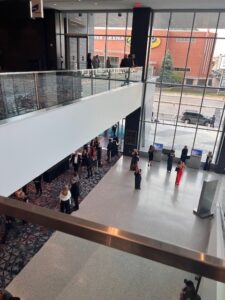
The official opening of the expanded Baird Center in Milwaukee, Wisconsin on Thursday (now officially Baird Center Day in The Fresh Coast City) was the realization of a plan put in motion when Wisconsin Center opened in 1998. Marty Brooks, president and CEO of Wisconsin Center District, was understandably emotional when he made the announcement. Standing in front of the new Great Five water feature in the sunny convention center, he thanked everyone who supported the project set in motion four years ago in the midst of a pandemic. Where a parking lot stood for decades is now a three-story event venue open for business just in time to host the Republican National Convention (RNC) in July.

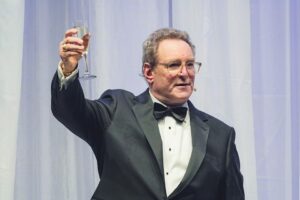
Marty Brooks, Wisconsin Center District CEO and President at Baird Center Expansion Grand Opening Gala making a toast in a tuxedo.
Marty Brooks

“This building will elevate our city to its highest potential and create not-to-be-missed experiences for everyone who walks through the doors,” he said.

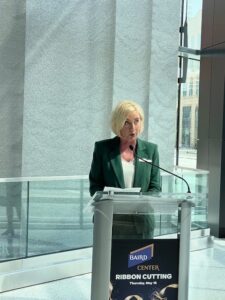
Peggy Williams Smith speaking at podium in Baird Center Expansion
Peggy Williams-Smith

Visit Milwaukee President and CEO Peggy Williams Smith estimated an additional 100,000 people would come to town each year because of the expansion.

What does the $456 million Baird Center expansion mean for meeting professionals? Smart Meetings attended the festivities to find out.

More Modern Space for Meetings

The North Expansion doubled the size of the convention center, added 24 new meeting rooms for a total of 52, added six new loading docks, and featured a 100,000-square-foot rooftop ballroom with an outdoor terrace and city views. A new parking structure makes getting to and from the venue convenient. A stepped wood seating area in the north lobby adds an interactive focal point. The total size of the expo hall is now 300,000 contiguous sq. ft. and when all meeting space is counted, it totals 1.3 million.

Read More: Convention Center: Bigger, Better, symBiotic

Baird Center Expansion North Lobby
Baird Center North Lobby

The former Wisconsin Center, now sponsored by the wealth management company Baird, is part of a collection of major meeting spaces in the walkable downtown area that includes Miller High Life Theatre and UW-Milwaukee Panther Arena. The 17,500-seat Fiserv Forum, home of the NBA Milwaukee Bucks, and The Trade, an Autograph Collection boutique hotel, are mere blocks away. The Hilton Milwaukee and Hyatt Regency Milwaukee are attached to Baird Center by a skywalk.

The expansion and renovations on the original building were designed to meet LEED Silver certification standards. A solar roof will produce 98,120 kilowatt hours, the equivalent of CO2 emissions from 7,488,199 smartphones being charged. Ceramic fritted glass will increase energy efficiency and prevent bird collisions. LED lighting is equipped with occupancy sensors that adjust usage based on usage and daylight levels. A grey roof membrane and 320,000-gallon underground stormwater detention system along with low-flow plumbing fixtures will minimize water use. An innovative food scraps program mimics a natural food digestion process to turn solids into liquid and divert up to 438 tons of food waste a year from landfills.

Inside, the building was designed for inclusivity with sensory and nursing rooms and all-gender restrooms. Contracts optimized the construction benefit to local and minority contractors.

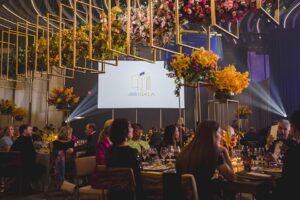
Baird Center Expansion Grand Opening Gala in rooftop ballroom.
Baird Center Expansion Grand Opening Gala

Art was a major focus with 21 artists, mostly local, adding cultural richness to the experience. Look for Syl, the hyperreal security guard sculpture by Serbian-American artist and Milwaukee resident Marc Sijan in the south entrance and a new female counterpart in the north entrance next to the water feature.

A time capsule filled by local students included artifacts as diverse as a map and a Palestinian flag.

Read More: Experience Nature & Modernity in Wisconsin

Operationally, the design will allow the Wisconsin Center District to book multiple events at the same time with seamless load-in and load-out. The additional space could also attract larger groups that couldn’t have considered the city before.

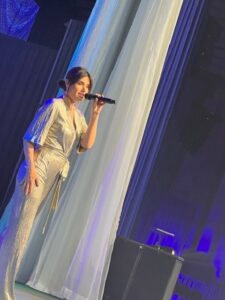
singer Idina Menzel in silver jumpsuit singingIn addition to the RNC, which will bring about 45,000 people to town, the first event after the Grand Opening Gala featuring “Frozen” singer Idina Menzel on Thursday night is Boys & Girls Club of Greater Milwaukee MVP Salute to Youth event on Monday night.

Visit Milwaukee reported that some months in the summer and fall are already completely booked with RFPs coming in up to 18 years out and some requesting holds for dates in 2031.


In 1996, Disney Institute launched to teach the highly successful Disney approach for customer satisfaction (or guest happiness, as Disney culture calls it) to managers and executives in a range of industries far removed from hospitality—like health care, automotive and retail.

Yet Disney is not the only hospitality brand to share its success formula with others for a fee. Disney Institute’s chief competitor resides under the Marriott International tent.

For over two decades, The Ritz-Carlton Leadership Center (TRCLC) has promised to transfer the underlying tenets of Ladies and Gentlemen Serving Ladies and Gentlemen, its brand motto, to anyone wanting to “improve customer and employee engagement, innovate their culture and differentiate themselves,” as TRCLC’s website puts it.

Read More: Don’t Call Me Walt, or How to Lead with Disney Magic

The hotel brand promises it has “identified key leadership behaviors that enable excellence to be fostered within an organization. Through this reflective and action-driven offering, you will explore the time-tested leadership framework The Ritz-Carlton deploys to foster an environment where employees aspire to not simply meet or fulfill customer expectations, but rather, proactively anticipate needs and exceed those expectations in every interaction.”

Throughout the year, TRCLC offers instruction online about the brand’s best practices and in two-day immersions onsite at The Ritz-Carlton hotels that teach culture building and a service mentality that can “anticipate and fulfill unexpressed needs, pivot quickly to customize interactions and make indelible impressions that create passionate internal and external brand advocates.”

Read MoreNew and Renovated: Putting on The Ritz

Topics in the curriculum include:

  • Brand Guardianship: Example-setting leadership through modeling behaviors for employees to follow.
  • Authentic Storytelling: Through storytelling, “an environment of continuous amplification of best practices” can be created.
  • Prioritize Company Culture: The Ritz-Carlton credits its success to “global alignment to our cultural pillars.” This alignment consists of “non-negotiable amplifications that are universally exercised through knowledge, ownership and energization.”
  • Drive Excellence: “If your employees connect to the purpose of their role, and of your organization, they will actively strive to perform at that next level.”
  • Enliven Empowerment: Empowerment is “foundational to the success of your employees and your organization.”

Other instruction is in the areas of personalized service, cultivating quality, leading with compassion and accountability, inspiring innovation and celebrating successes.

Consulting services at client companies and keynote speakers are also on offer.