Monumental hotels across the US unveil extensive renovations and restorations
Some of the most memorable names in hospitality history—historic Hotel Del, beloved Hotel Cleveland and the sparkling Inn at Stonecliffe—celebrate the culmination of extensive renovations centered around restoration, preservation and introducing modern amenities while maintaining their historic character.
A Landmark, Reinvigorated
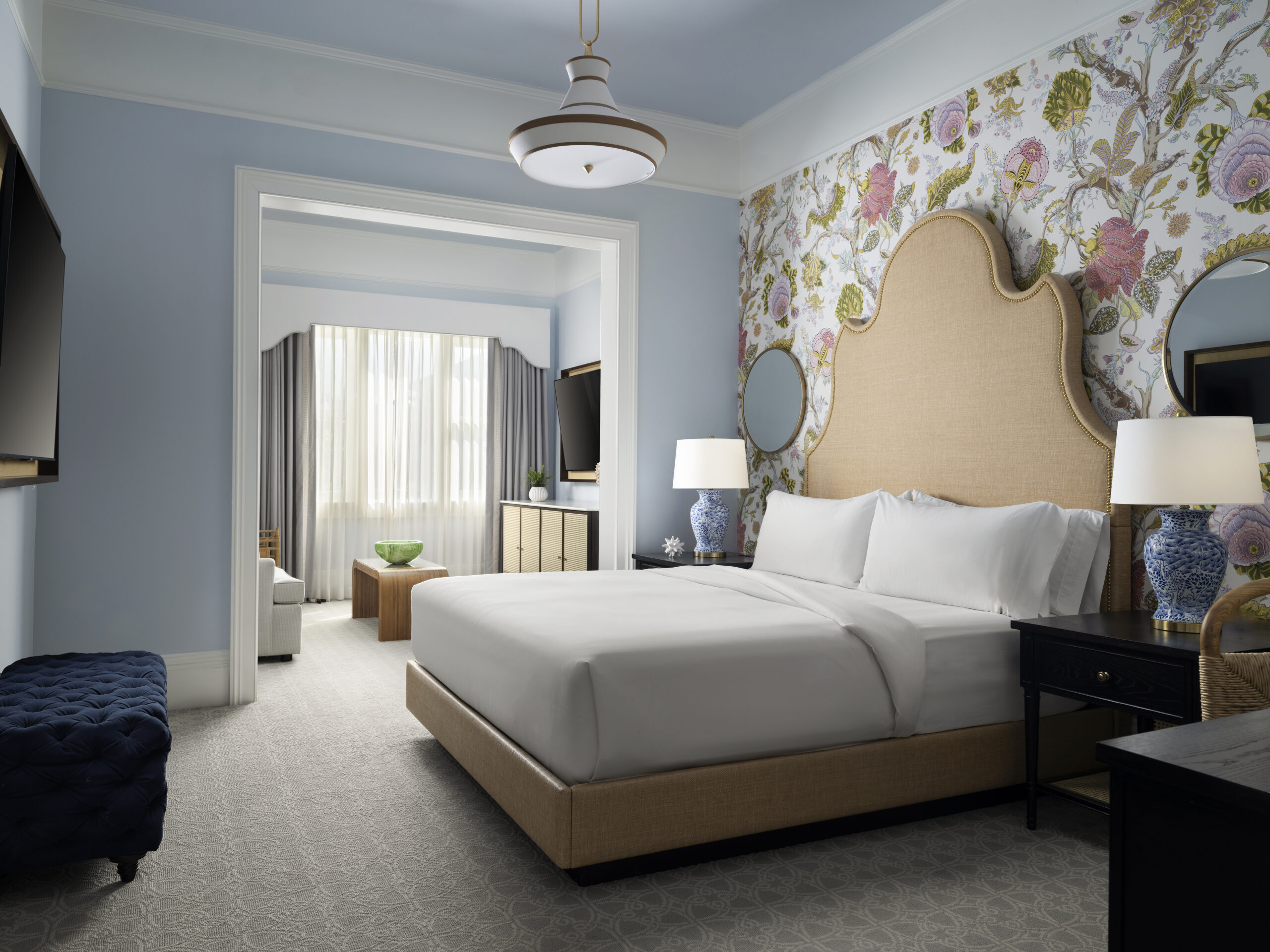
Guest room in The Victorian, Hotel del Coronado
The jewel of San Diego, Hotel del Coronado, opens reservations for stays in its newly restored Victorian building. The National Historic Landmark property saw over $160 million invested into the restoration plan, which aims to preserve the historic space for generations forward. Heritage Architecture & Planning, an architect firm specializing in historical restoration, spearheaded the renovation.
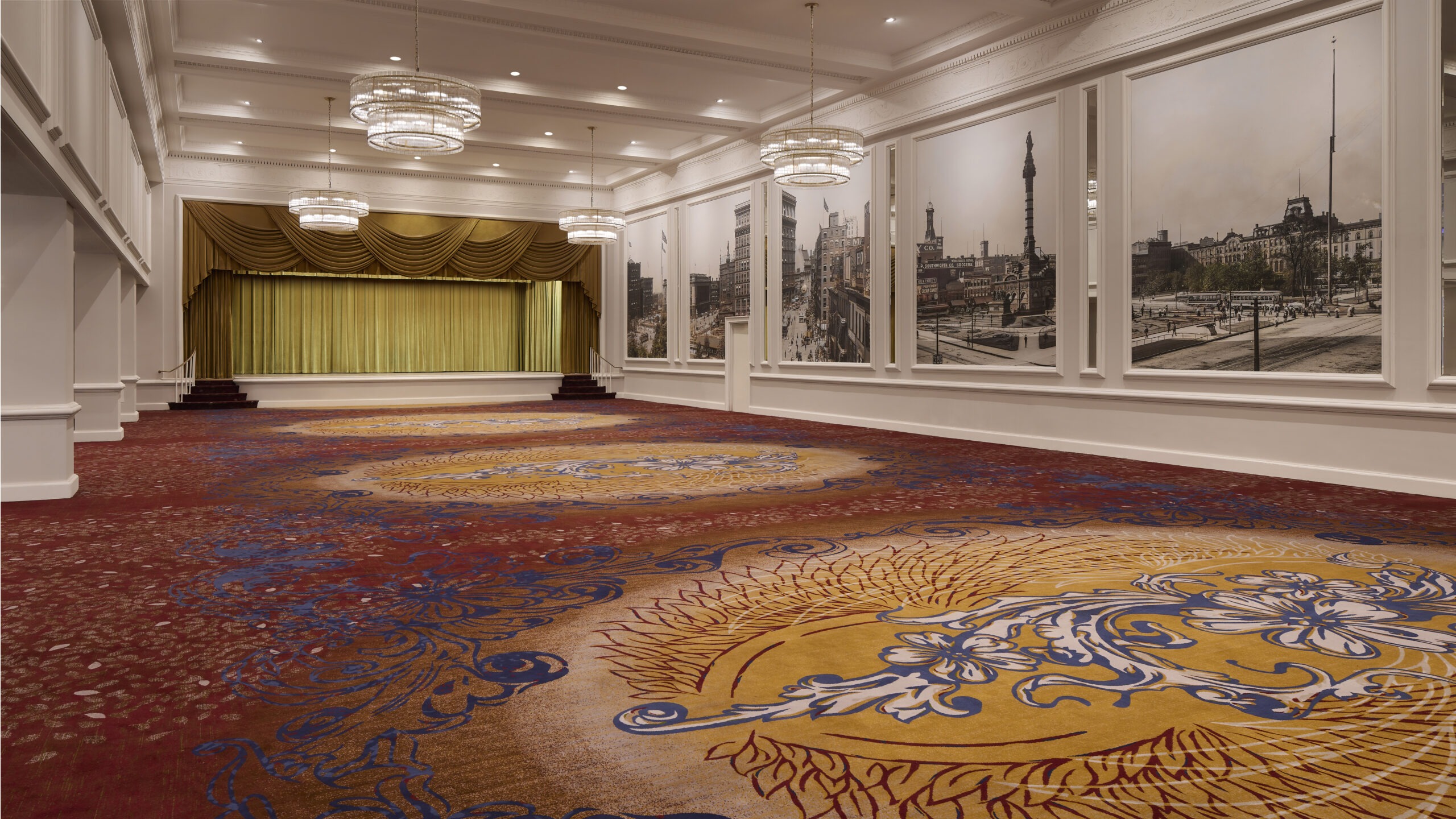
Not only does the resort celebrate its renovated guest rooms; the iconic Coronet and Crown rooms are officially open for planners to book after an extensive restoration. The renovation saw the Coronet Room’s historical coffered wainscot recreated; the Crown Room balcony “pop out” resorted and the pass-through wood paneling between the Coronet and Crown Rooms restored. In addition, both rooms feature all-new lighting and a background music system with built-in speakers and touchpad controls.
Total meeting space across the property numbers 96,000 sq. ft., including the 3,705-square-foot Coronet Room and the 9,300-square-foot Crown Room.
After nearly a decade of planning and $90 million invested, Hotel Cleveland, Autograph Collection has completed a property wide renovation. The historic property, formerly Cleveland Renaissance Hotel, originally opened in 1918 as Hotel Cleveland, and has held many names throughout its history; it now holds its original name. The renovation adds modern enhancements and leaves its history and iconic architecture intact. As a new member of the Marriott Autograph Collection, guests can earn and redeem Marriott Bonvoy points during their stays.
The new interior design draws inspiration from Cleveland’s character, blending the city’s steel-clad resolve with warm community. Thirty distinct event spaces total 59,000 sq. ft. of meeting space, including three ballrooms. One of these ballrooms is the largest in Marriott’s Ohio properties, at 22,590 sq. ft.
When not relaxing in one of the 441 guest rooms or 50 suites, guests can dine at restaurant Maker, enjoying the green crystal chandelier or views of Public Square. Mowrey’s offers a la carte American style breakfasts; planners can also book the space for private dining experiences. The restaurant’s design nods to the space’s history as an 1814 tavern and inn.
Carriage Ride to Paradise
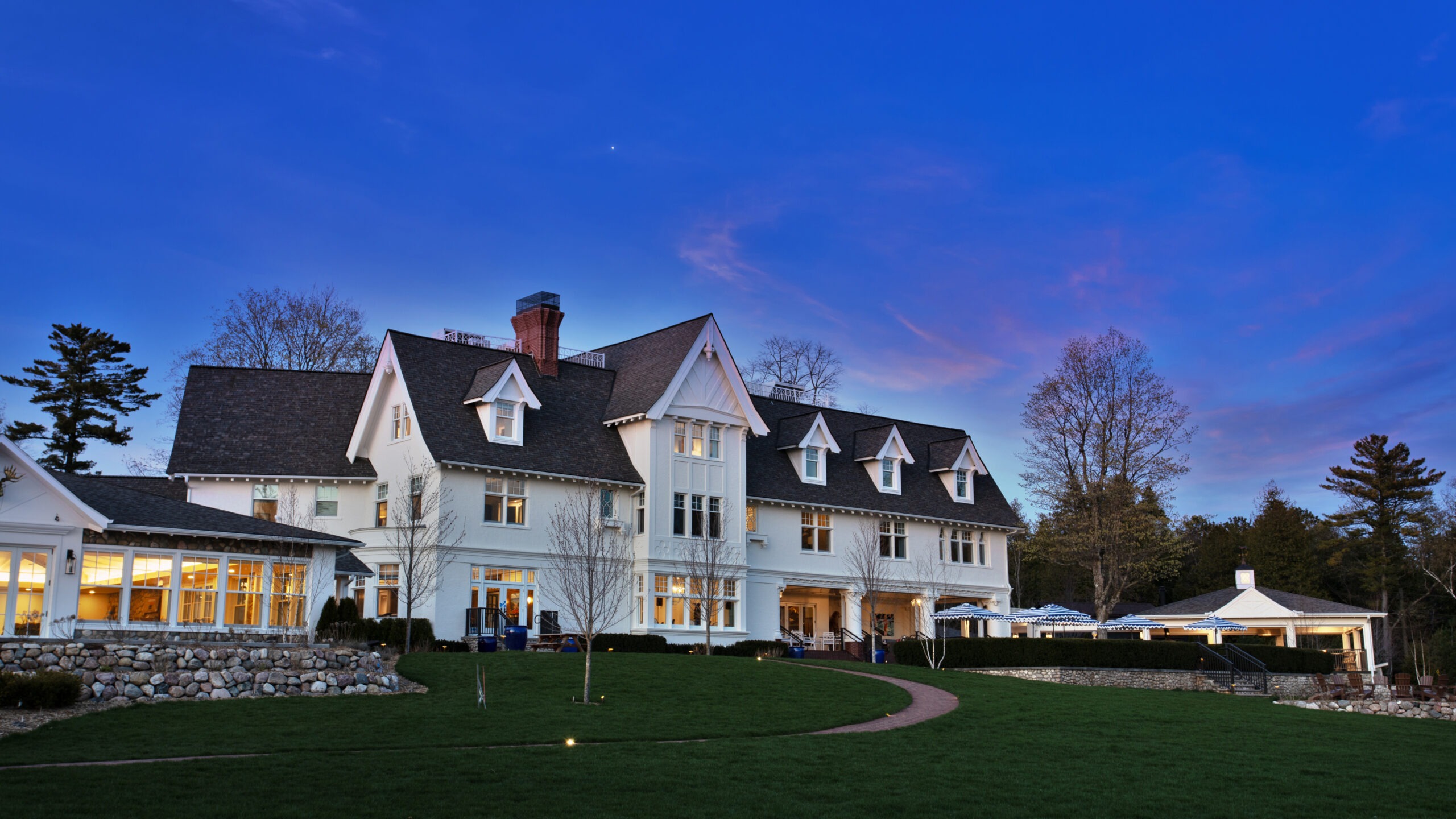
The Inn at Stonecliffe
The Inn at Stonecliffe had its start in 1904 as a lakeside estate for the Chicago-based Cudahy family. After two years of renovation, into which $40 million was invested, the luxury property has reopened.
In charming Mackinac Island, Mich., guests are welcomed with a ride in a horse-drawn carriage that transports them from the ferry to the estate. Brand new common spaces, guest rooms, food and beverage offerings, event spaces and 15 acres of lawn space featuring fire pits and games, plus an apple orchard, pool and more, make up the property-wide renovation.
Dining opportunities, though all serving up a farm-to-table vision, offer a range of experiences, with fine-dining at The Straits, a casual outdoor experience at The Backyard, and grab-and-go, from ice cream to coffee to souvenirs, at The General Store.
Within the 18,500-square-foot Mansion, all 16 guest rooms have been updated and restored; the Summer House offers 32 guest rooms, and across the property, guests will find the addition of three private cottages, each with three bedrooms, two and a half bathrooms, a living room and fully equipped kitchen.
Meeting and event space include the brand new, 3,000-square-foot Sunset Pavilion. Meetings and events on property enjoy custom menus, on-site AV, planning and design collaboration and private office spaces.
The annual convention drove home stewardship as key to prosperity for locals, visitors and meetings alike
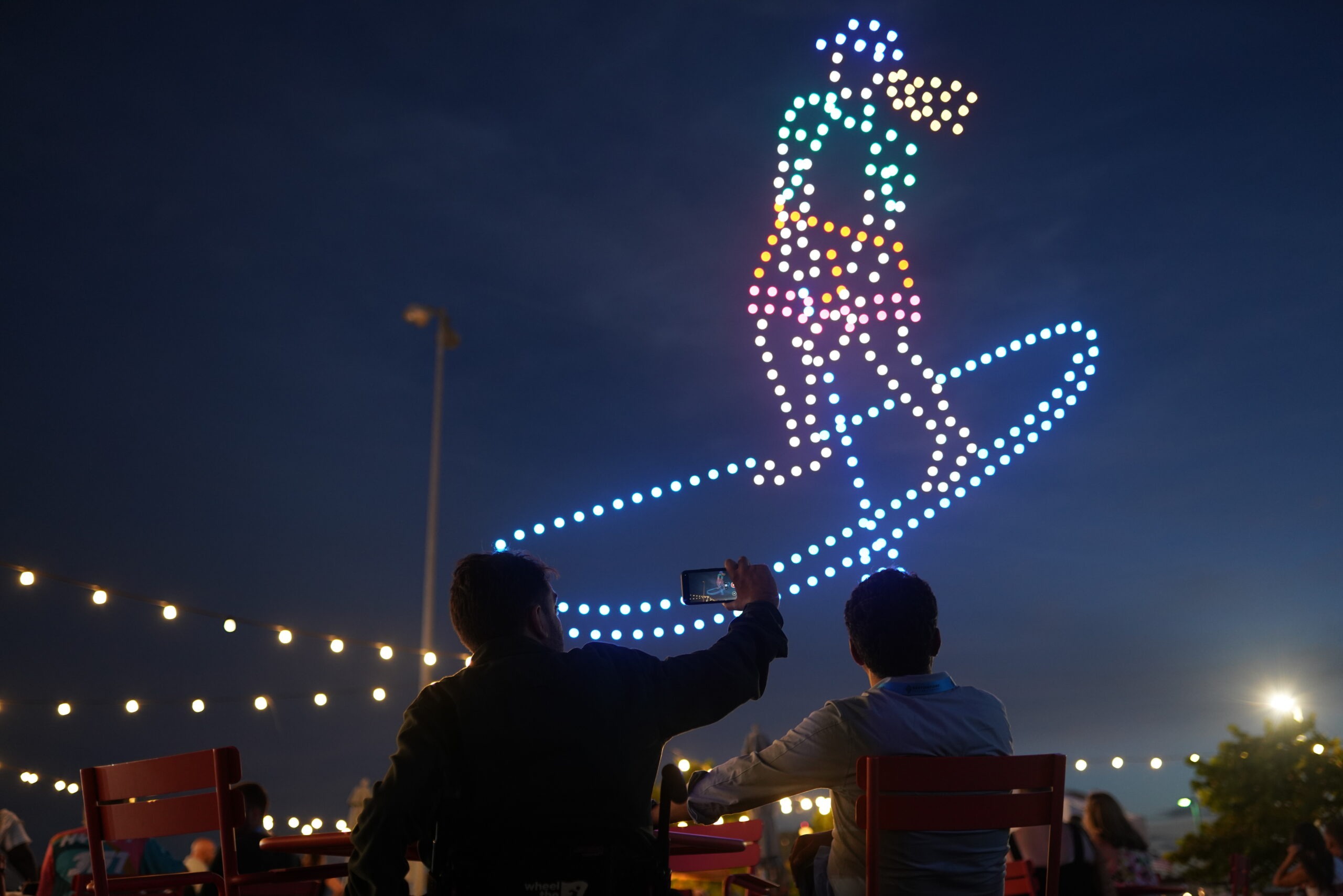
At Destinations International (DI) Annual Convention, 2024 (DIAC24), in Tampa, Fla. this past July 16-18, DI CEO Don Welsh’s opening remarks brought forward a wave of laugher from the crowd after he shared that the awe-inspiring drone show that kicked off the 2024 Annual Convention used an astounding 300 drones—and 298 of them made it through to the end! Ah, the drone show: the latest meetings industry favorite. Each one we see seems to get even better than the last.
Drone show at “Unlock the Block” opening celebration at Sparkman Wharf
The night prior had seen attendees gather in Sparkman Wharf for a night brimming with excitement amongst local bites and drinks, alongside that spectacular drone show.
In the opening ceremony, the crowd of 1,850 attendees—coming from 30 international delegations—were greeted by Santiago C. Corrada, President and CEO of Visit Tampa Bay, and Jane Castor, Mayor of Tampa. Together, the two expressed their passionate dedication to Tampa, sharing excitement for the destination’s continued growth and core values of being a safe, welcoming destination.
In an era that seems defined by divisive politics, Welsh addressed the continued debate around boycotting destinations when the organization holding and attending the meeting disagrees with politics in that area. “Destinations International is not in support of boycotting destinations,” Welsh said. “When a destination struggles, we go there to help and learn. ”
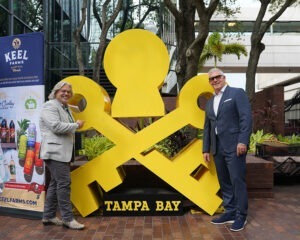
Santiago C. Corrada (left) and Don Welsh (right) at Sunset Market
In April, DI announced a comprehensive community engagement initiative for its annual convention in Tampa, that would demonstrate how organizations like DI can hold a meeting or convention that goes above and beyond to create positive impact in the destinations where they take place.
The press release opens stating that when DI announced Tampa as the annual convention’s destination, “the choice sparked debate among members due to recent Florida laws targeting women, the LGBTQ+ community and African Americans.” Welsh stated, in the release, “Choosing Tampa was a purposeful act to promote engagement and understanding…we recognize the concerns raised by our members and see this as an opportunity to highlight the importance of showing up, immersing and positively impacting the communities we visit.”
The Tampa Case Study Initiative was structured around four central components: community engagement, community support, lasting impact and local investment. Although the information demonstrating the impact post-convention is still being collected, the feel of moving through DIAC24 and seeing firsthand the activations, education sessions, award ceremonies and local community engagement set the stage to easily anticipate the initiative’s robust success.
When Smart Meetings sat down with Welsh on the final day of the convention, he shared, “I think when [destinations] see this case study, they will know that we made conscious decisions, like the opening and closing celebrations to be in Ybor City, and to make sure that we’re going into facilities that match up with our commitment to social inclusion.”
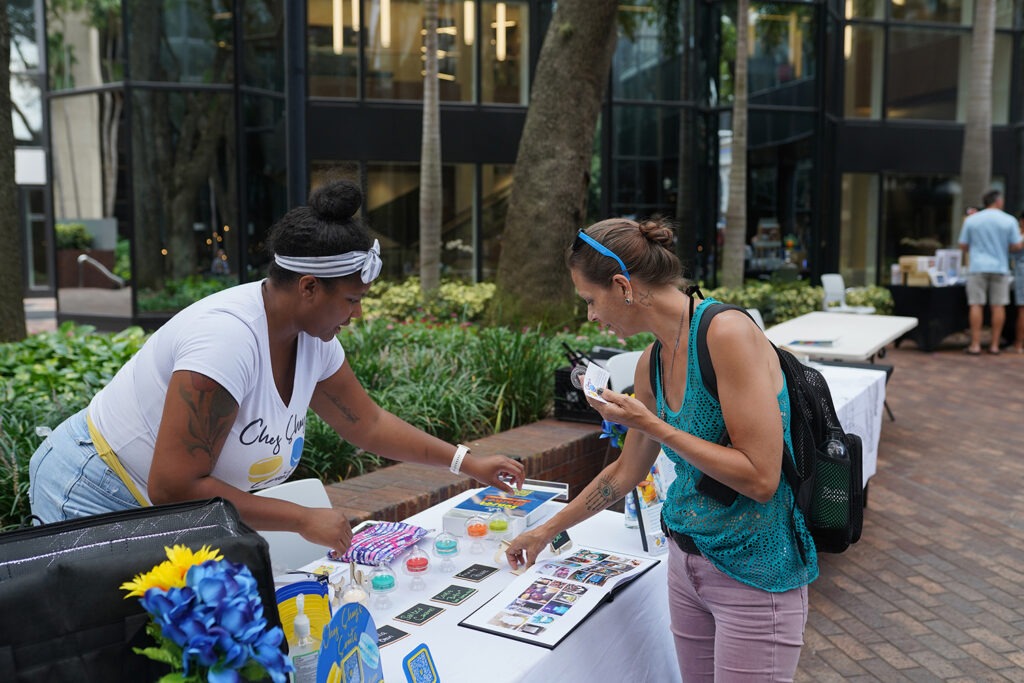
That Tuesday afternoon of the conference, DI held a volunteer activity with Feeding Tampa Bay, a local nonprofit that works to tackle food insecurity. 50 DIAC attendees—the maximum number of volunteers the space was able to accommodate—participated. The next day, Visit Tampa Bay held a “Sunset Market: Sip, Savor and Shop,” where local businesses and F&B partners, many of which are minority-owned, could showcase and sell their goods to attendees.
Sunset Market
When it comes to planners seeking to make the same impact, Welsh advises, “Make sure there is a conscious effort, when looking at restaurants or looking for talent; go deeper than the normal suspects. This forces you to consider, ‘Okay, what vendors am I going to use, how am I really going to give entrepreneurs and small business the opportunity to benefit?’”
Some of Tampa’s spectacular local talent showed up in a full-scale Cuban salsa dancing production prior to the opening keynote as attendees filed into the ballroom. The level of showmanship was one thing; the production’s ability to immerse the ballroom of attendees into a central aspect of Tampa’s local culture brought it to the next level.
Not only did DI work to engage local businesses; members of the Tampa community took part as well. Three local, high-potential high school students with interest in destination careers, identified by NAACP Hillsborough County, spent the convention shadowing DI staff.
In order to leave a long-term impact, post-meeting and beyond, DI established a Giving Circle. Donations given by attendees throughout the conference were directed to Feeding Tampa Bay, as well as two more local nonprofits: Dress for Success Tampa Bay and Rebuilding Together Tampa Bay.
The Impact Across Destinations, Internationally
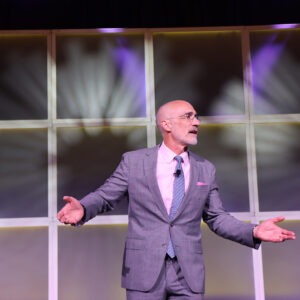
Arthur Brooks
An opening keynote from Arthur Brooks, happiness expert and Harvard Business School professor, drove home the point that the rest of the convention would center around: happiness is the key to success; not the other way around.
When a community is happier, it becomes a more successful destination. The breakout sessions that followed throughout the conference would include stewardship success stories and education sessions to equip attendees with the knowledge, connections and tools they would need to create the same type of happiness in each of their own respective destinations.
What does Destinations International hope attendees return home with having gained? Welsh explains, “I hope that those of us who heard Arthur speak, and overall have been in this positive environment, take these lessons back to their fellow team members. It all goes back to: people’s mental and emotional health are desperately needed. And we take that very seriously.”
Lessons for Planners
When it comes to planners and destinations working together to put on great events like this one, Welsh says, “I think that, right now, planners have a better understanding of what a destination needs from them. Use Tampa as an example. Somebody may be offended by the legislation that’s going on in the state of Florida; but there is record attendance here, of minority groups, of minority leisure travelers. Planners understand that we are in a very different cycle, and there is great communication right now in terms of the planner community and destinations.”
Partnering with Destinations to Create Stewardship
When planners look at destinations to book a meeting, they can act as an advocate to get tourism dollars into local businesses. In a panel during DIAC24, “Making the Catalytic Case for Your Destination Organization,” the audience heard from representatives from Visit Seattle, Great Lakes Bay Regional Convention & Visitors Bureau and Destination Greater Victoria. All were part of a larger study of 29 destinations which had been assessed by Tourism Economics for the broader economic benefits of destination marketing across the quality of life, local culture development, employment growth and more in the destinations selected for the study.
President & CEO of Tourism Economics Adam Sacks, who moderated the conversation, shared, “One of the things we found in the study is that as a destination increases their visitor-related employment, it actually has a net catalytic effect on other areas of employment. By the fourth year, if you’re able to increase visitor-related employment [by 10%], that has a causal generation of an additional 2% employment in other sectors [relative to the U.S. average].”
Transforming Business Travel
Welsh says that the MICE industry is crucial to the success of a destination’s tourism economy—and based on the impact tourism has on the wider economy, the MICE industry is crucial to the success of a destination. “If you look at how you fill cities, it’s the same way you fill a hotel,” says Welsh. “The business traveler is back, which is important. Because, mid-week, Tuesday through Thursday, or Monday through Wednesday, is when hotels will have a slightly lower occupancy. But when you have business travel and meetings, all of a sudden, that hotel does not have these swings of occupancy.”
Don Welsh
The way people travel has changed, as well. “Rather than come to the city, check into the hotel, go to the meeting and then leave—those days are over—people may stick an extra day on the front or back end,” says Welsh. “They want to go to the same restaurants that locals are in, do the same things that locals do…What’s happening in destinations is that they have to make it worthwhile for visitors to leave their homes and go to that place.”
Business travelers bring essential business to a destination, certainly in the hospitality industry, and, with the rise of “bleisure” travel, the broader local economy.
Destinations International Annual Convention in Tampa this year certainly set the standard. Santiago C. Corrada, Visit Tampa Bay’s president and CEO, stated in DI’s April press release, “Tampa’s vibrant spirit and dedication to welcoming all communities reflect our mission to make a positive and lasting impact. Our foundation as a multicultural community and our leadership in inclusivity are well-known and respected. We stand united in celebrating and promoting these ideals at every opportunity.”
With opportunities to explore Tampa far and wide within the context of robust education around the role of destination professionals, stewardship and overall creating happier communities to welcome happier visitors, attendees left DIAC24 equipped to not only serve the planners they’ll see coming in, but also strengthen and celebrate their local communities.
Amid the whirlwind of a high-powered CEO or celebrity’s life, many still find time to speak at corporate events, but what happens when these A-list event speakers’ busy lives get the best of them and they need to bow out of their speaking commitment, or they don’t arrive at the anticipated time? Although problem solving is a part of a meeting planner’s arsenal, this can still be a pain.
In fact, an A-list speaker can come with additional questions to think about. As in, what actions a planner should take, what they should ask and what they should expect when booking well-known names—people like Martha Stewart, Shaq, Mark Cuban and Warren Buffett—for keynotes?
Alan Kleinfeld, senior director of meetings and safety for event security company Arrive Management Group, offers guidance for when you are thinking of booking that A-lister, beginning with sheer bluntness.
“I can tell you that booking any level-A speaker, be it a president, celebrity, athlete, etc., is a big chore,” he begins. “The advance work—with all the safety details and hand holding—is challenging enough, but even worse is that after all that work, the A-level speaker may have a last-minute issue arise, preventing his/her appearance at all. Can you imagine, as a planner, prepping and promoting and jumping through all those hoops, at the risk of having to tell your guests, ‘Oops. Sorry. Our big-name celebrity keynote just had a schedule change and isn’t coming?’ Can you imagine how disappointed your attendees would be? Booking big names can have big rewards, but it can also have big burdens. It’s a balancing act.”
If Kleinfeld’s example seems extreme, he is quick to add that a similar scenario could apply to any high-level event speaker that a planner spent months (perhaps years) prepping for and expecting to show on the day of the event.
Kleinfeld’s tips begin with a bit of precaution. “I generally advise groups I work with not to book any speaker whose schedule is so demanding that they may not be able to show up,” he says. “I feel it’s too much of a risk and not worth disappointing my attendees. On the other hand, if the audience also understands the risks, then it could work.”
For the highly paid speaker with the demanding schedule, Kleinfeld says it’s important the contract covers what happens for no-shows and how compensation will be handled in that circumstance.
“If a planner chooses to hire these types of high-level event speakers, then it would also be wise to have a back-up presenter, and that has its own challenges. However, it can often be done by using internal people, like a company president or organization’s executive director,” he adds.
Working with Security Personnel
“Just about any level-A speaker is going to be traveling with security,” Kleinfeld continues. The president, for example, will have federal protection like FBI and the Secret Service. “Those might require a lot of advance work,” he says, “such as visits to the venue months, weeks or days prior to the event. So, working with the venue on rooming for security staff needs to be considered early on, perhaps during contract talks.”
For non-presidential but high-level bookings, Kleinfeld says private security for celebrities and athletes may not need to be as planned out, but is often more demanding. “Both planners and hoteliers need to know what those demands are up front, and often as part of the speaker contract,” he says. “Sometimes, hotel contracts might need to be amended or have an addendum added as the event draws nearer and you discover more of what security staff needs.”
Kleinfeld cautions that with certain event speakers planners and venues need to be aware of the attention the speaker may draw. “Someone politically divisive or with lots of fan followers may require extra security staff during the actual time the speaker speaks. This might include security screening, staging areas or stage protection,” he says.
“These days, it’s a good idea before you book a speaker, do a little research to see what kind of negative attention they could draw to your event.”
Travel and meeting risk trainer offers insights for the future
The news Friday morning that an update from the software protection company CrowdStrike crashed travel, emergency, hospital and banking systems all over the globe, was a reminder of the risks of planning events in a highly networked world.
Smart Meetings reached out to Kevin Coffey, travel security and meeting risk advisor and trainer, to get some insights on what planners can learn from the CrowdStrike incident and how they can prepare for the future.
Be Prepared
Kevin Coffey
No matter the size of the event, big or small, planning for the worst possible scenario is never an easy conversation. But it is important for planners and suppliers to be the same page.
Coffey suggests planners and suppliers sit down and walk through all the possible what if scenarios and come up with a contingency plan on how they should respond to each scenario.
Example: There’s a major outage the day before the event and most of the attendees are overseas or out of state and there are no more flights. Should the start of the event be postponed?
Example: What should we do if emergency services go down?
Example: Will the bus company be able to adjust their schedule if attendees fly in a day late?
Example: What if cell service goes down? What can you do?
Crisis Training
Making sure you and your team are well-versed in event risk mitigation is also an essential piece of the puzzle.
Coffey says planners should be asking themselves who their trusted sources of information and training on cyber health and safety are.
“Training is a key factor to prepare for the next event,” says Coffey, “to prepare for the future event.”
Coffey points to MPI Academy, which offers white papers and videos on risk mitigation. MPI Academy also offers an Emergency Preparedness Certificate that requires a six-hour course on the variety of issues of emergency preparedness.
“By [taking this course] you can share and prove that you’re aware of the importance of risk and you’ve done something about it,” says Coffey.
Coffey encourages planners to gather a team of five to 10 people that includes planners and suppliers to walk through simulations of all possibilities before each event.
Learn for the Future
Friday’s CrowdStrike outage isn’t the first and won’t be the last. According to Coffey, the likelihood of another incident is more likely than not. It is a vivid reminder that adding a technology bug that disrupts airlines, banks and hospitals to risk planning scenarios is a required step for planning an event in today’s world.
“Internet outages and cyber security issues are becoming more prevalent than ever before. At the minimum [planners should] start having the conversations about meeting and event risk,” Coffey cautions, “It’s not a matter of if, it’s a matter of when.”
William Fogler, founder and CEO of Atlanta-based WM Events, has come a long way from planning his mother’s 50th birthday party, when he hired a stripper from the Yellow Pages. He was 12 years old then. Today, his award-winning events company, which has a lengthy roster of household-name clients, including professional sports teams like MLB’s Atlanta Braves and corporate giants such as Microsoft and Delta Air Lines, is marking two decades of success.
Smart Meetings caught up with Fogler to ask him to reflect on his career and the changes he has witnessed in the events industry over the past 20 years.
Fogler grew up in Colorado in a family that loved to entertain. “I also loved making parties,” he says. “I loved cooking.” He cut his teeth working for a caterer in Denver.
Lead Times, Planning Cycles Shrink
William Fogler
What’s changed since 2004, when he started WM Events? “One of the major things is lead times and planning cycles. In the olden days, we used to plan our parties for a year, sometimes longer. But not anymore. It’s really lucky to get 90 days. Thirty to 60 days tends to be the norm,” he says.
He thinks this is not all bad. “The industry has gotten so used to it. It means there’s not a lot of time to switch back and forth as to what your objectives are. You just have to set them and go. We throw more people at it, working in teams. Our newer planners, they don’t know anything different.”
Burnout is a concern, he acknowledges, but overall the constant forward motion is a positive for his planners. “They don’t have extended time to talk about the same thing,” he says. “They get very focused; they get it done, and it’s over. It’s created a thicker skin for our team.”
When he first started, his team was him—and “a contractor here and there.” Like everyone else in the industry, he lost ground during Covid. Since then, he’s scaled up to more than two dozen employees, along with a large roster of contractors in 45 markets across the country.
Today’s Talent Challenge
His major challenge today? “Talent,” he replies without hesitation. “While I have a very wonderful team, I always have my ear to the ground. For years, we hired people right out of college, because the perception was that what we do is glamorous and a lot of fun. But the industry has become way more sophisticated than that.”
Like all small business owners, he worries about any turn of events that might derail further progress. The economy, another pandemic. But, looking back, he says he wouldn’t do anything differently. “Absolutely not. I’ve enjoyed such a wonderful career and had so many amazing experiences all over the world—in the British Virgin Islands, on Richard Branson’s private island; the opening of a factory in Mexico. I’ve learned so much.”
Are those kinds of events what he’s most proud of? “The thing that most excites me is providing a wonderful place for people to work and make a living,” Fogler replies.
Belonging is a fundamental human need that sits at the heart of Maslow’s Hierarchy of Needs, as a gateway to our full potential. In recent years, the concept of belonging has gained renewed importance for business as a key factor in driving employee engagement, productivity and overall success. As companies navigate post-pandemic challenges, including decreased productivity, widespread loneliness and difficulties in reintegrating employees into physical offices, the lens of business has identified belonging as a key to answering these challenges—and to unlocking serious growth in engagement and the bottom line.
Experience design offers a real and unique opportunity to foster cultures of belonging, addressing many organizational challenges and goals. A Harvard Business Review report shows that 40% of individuals feel lonely at work, indicating a significant portion of the workforce is not fully engaged. Sadly, recent reports show this number has risen to 47%.
When people feel disconnected, their engagement suffers. This means that nearly half of the people we design for are less engaged than they could be. Event designers can measure engagement as a barometer of belonging. When belonging is present, engagement rises, leading to compelling benefits. Research shows that teams with a strong sense of belonging perform 56% better, and individuals who feel belonging receive more promotions and raises, thriving both personally and professionally.
From a sales and marketing perspective, those who experience belonging are 167% more likely to recommend their organization, highlighting the value of belonging in driving customer advocacy and influencing purchasing decisions. Valuegraphics reveals that consumers are willing to pay 12% more for products and experiences that align with their values, with belonging ranking as the number one value in the United States and among the top three globally. Whether focusing on employee experience, customer experience, or user experience, these statistics underscore that the experiences we design can create cultures of belonging that benefit everyone.
The Wheel of Belonging: A Framework for Audience Understanding
Storycraft Lab’s research of belonging began with a collaboration with Google’s Experience Institute, where we explored evolving techno-social norms. Through extensive interviews and research, we asked people to tell us their stories of belonging. Three primary dimensions of belonging emerged: meaning, emotions and magic (transformation).
1. Meaning: This dimension encompasses relevancy, impact and actionable outcomes. It reflects how belonging fosters a sense of purpose and connection to something larger than oneself.
2. Feeling: Emotions play a crucial role in belonging. Feeling valued, heard, acknowledged, seen, considered, loved and appreciated are essential for individuals to feel a part of a group.
3. Magic: Transformation or growth, often described as magical, occurs when individuals experience moments that change their perspectives, allowing them to grow and evolve.
These were distilled into pathways that represent the journeys individuals undertake towards belonging. These pathways include empowerment, purpose, fulfillment and joy, freedom to be, love and appreciation, true authenticity, thinking differently and universality.
To translate these insights into practical applications, Storycraft Lab developed the Wheel of Belonging for participants to map their belonging journeys, fostering reflection and connection. In 2023, we used the wheel at various events both virtual and face to face, across North America, South America, and Europe. These interactives, where participants could weave their story, facilitated deep reflection and connection among participants. This was instrumental in identifying the key touchpoints such as trust, finding your people and connection that resonate across all industry verticals, geographies and roles.
Practical Applications
1. Belonging-centered Design
Storycraft Lab’s Wheel of Belonging offers practical applications that can transform organizational culture and events by design. For instance, by aligning the belonging journey with the customer journey, organizations can enhance belonging from pre-event digital interactions through to post-event experiences. In fall 2023, I taught NYU’s MA in Event Management program, successfully using this framework to introduce the ‘Belonging-centered Design’ method.
2. Revealing Your Organization’s Belonging DNA
Weaving stories into a collective structure created a space for discussing belonging experiences and fostered dialogues that led to emotional connections and shared understanding. It evolved from an individual exercise to a social and connective practice, igniting belonging through storytelling.
The insights gathered revealed unique patterns within different groups and organizations. For instance, corporate planners and managers exhibited different touchpoints compared to those in the fintech sector. Similarly, marketers and public health professionals showed distinct preferences.
This diversity in belonging stories underscores the importance of understanding the unique belonging DNA of each group. By identifying common touchpoints, organizations can tailor their strategies to foster a sense of belonging that resonates deeply with their specific audience.
3. Stories at the Heart
Sharing stories fosters an emotional connection essential to belonging. When individuals share what matters to them, they engage in an exchange that strengthens memory pathways and builds lasting connections. This emotional aspect aids in retaining information and cultivates a safe space for vulnerability, nurturing openness and understanding.
“The act of discussing belonging sparked a sense of Belonging.”
These elements are crucial in creating safe spaces where individuals feel valued and heard. Storycraft Lab’s framework allows both individual and collective stories to be told, helping organizations understand the unique Belonging DNA of different groups. By collecting stories year-round and using them to inform strategic design, organizations can create deeply resonant experiences. This continuous feedback loop enhances belonging within organizations and their events.
Now and Next: The Journey continues
In 2024, Storycraft Lab continues to develop and refine the Wheel of Belonging into an app with a dashboard to capture audience insights and needs around belonging, helping organizations benchmark and enhance their efforts to foster belonging by design. We are now offering facilitator training to leadership and development teams, running workshops to document the power of storytelling, and documenting the connection between Belonging and high-performing teams.
Incorporating the Wheel of Belonging into the design of experiences not only enriches the individual’s journey but also strengthens the collective fabric of your organization. The power of belonging lies in the stories we tell and the shared experiences we build. Embracing this approach can lead to more engaged, productive, and thriving communities, enabling experience designers to create cultures where everyone feels they belong. Get in touch to learn more about how you can use the Wheel of Belonging in your work.
—
Naomi Clare is founder and CEO of Storycraft Lab. She specializes in refining big ideas and concepts into meaningful and measurable experiences.
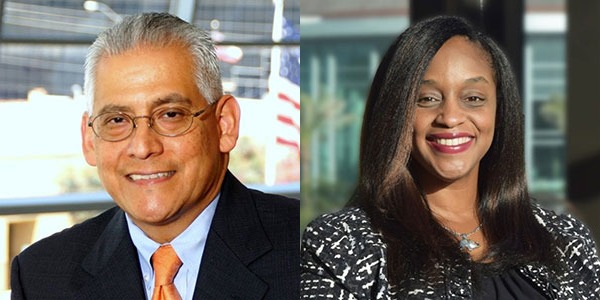
Alberto Rojas and Jaqueline Mitchell
Alberto Rojas (left) and Jaqueline Mitchell (right), Savannah Convention Center
Rojas joins as assistant general manager. He brings over 25 years of experience across finance, events and facility management. He most recently served as general manager with Jackson Convention Complex and the Oklahoma City Convention Center. At SCC, he will oversee the finance, administration, human resources and information technology department, while specially focusing on municipal policy, process optimization and project management.
Mitchell joins SCC as assistant director of event services. She brings an extensive background in hospitality and the events industry, having served as director of events at Palm Beach County Convention Center among other respected organizations. She will work to optimize the events department’s efficiently and effectiveness at SCC.
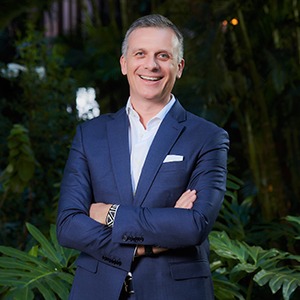
Edouard Grosmangin
Edouard Grosmangin, Rosewood Hotels & Resorts
Grosmangin is appointed to the role of regional vice president for Mexico and South America at Rosewood Hotels & Resorts. He most recently served as managing director of Rosewood São Paulo, where he demonstrated his skill and expertise since its opening in 2022. He brings a dedication to sustainability and social impact with purpose-led initiatives, and has been recognized as one of Rosewood’s Impact Trailblazers.
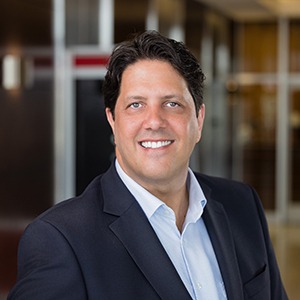
Markus Krebs
Markus Krebs, La Bahia Hotel & Spa
Krebs takes on the role of general manager at La Bahia Hotel & Spa, in Santa Cruz, California. La Bahia will open in spring 2025, and Krebs will be establishing the pre-opening offices and working alongside the project managers throughout the remainder of the construction. He will then go on to oversee the 155-room luxury beachfront property. Krebs most recently served as general manager of Outrigger Reef Waikiki Beach Resort in Hawai’i.
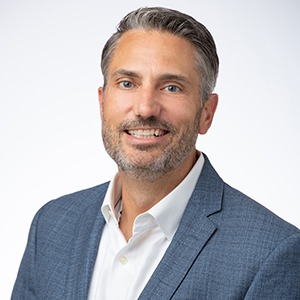
Brian Corbett
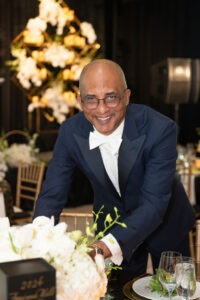
Brian Corbett, Timbers Company
Timbers Company brings in Corbett as its new chief operating officer. He will spearhead operational excellence and drive strategic initiatives to elevate Timber’s portfolio, overseeing all aspects of operational management, estate sales, marketing, partnerships and human resources. He brings over two decades of experience in luxury hospitality and real estate, most recently having served as commercial and sustainability officer at Atlantic Aviation,
Christopher Holbrook
Christopher Holbrook, The Westin San Francisco Airport and Aloft San Francisco Airport
The Westin San Francisco Airport and Aloft San Francisco Airport welcome Holbrook as complex general manager. He brings over 25 years of experience to lead the dynamic strategic direction of business initiatives and align efforts with business partners for the two hotels, and is a dedicated member of the Millbrae community, sitting on the SF Peninsula (CVB) Board of Directors and The San Mateo Area Chamber of Commerce Board of Directors.
Maureen Huffman and Keele Smith
Maureen Huffman (left) and Keele Smith (right), Sky Rock Sedona
Sky Rock Sedona, a Tribute Portfolio Collection Hotel by Marriott, brings in two leaders with a combination of over 40 years of experience.
Huffman will serve as general manager. She brings over 26 years of hospitality leadership experience, several of which she has spent in outdoor adventure and leadership companies. With a dedication to fostering a culture of teamwork and servant leadership, she will work with a deliberate approach to build on Sky Rock Sedona’s home-away-from-home environment and dedication to creating unforgettable moments for guests.
Smith brings over 15 years of experience to her new role as director of sales and marketing. She has a proven track record of driving revenue growth and orchestrating sales strategies to attract meetings and events. Throughout roles at Remington Hotels, Turnkey Vacation Rentals and Embassy Suites Flagstaff, she has consistently exceeded goals and driven productivity.
Carmine Iommazzo
Carmine Iommazzo, MacNaughton Hospitality
Iommazzo is appointed as director of hospitality operations at MacNaughton Hospitality. Three Waikiki hotels will fall under his leadership: Hotel Renew, Lotus Honolulu at Diamond Head Hotel and Waikiki Malia. Carmine’s career has taken him across three continents, and he spent 20 years in Hawaii. He most recently served as the general manager of the Kimpton Alma in San Diego.
TJ Helms
TJ Helms, Thompson Denver
Helms takes on the role of director of group sales at Thompson Denver. Helms has been with Hyatt Hotels & Resorts for the entirety of his 13-year career, most recently serving as sales manager and director of group sales at the Hyatt Regency Denver/Grand Hyatt Denver. In 2023, he was nominated as a Hyatt Commercial Services Director of Group Sales of the Year, and will now bring his expertise to oversee group and event sales efforts, planning, marketing, PR and hotel activations.
Steve Bailen
Steve Bailen, MGME
Global events agency MGME appoints Bailen as client development director. With over 25 years spent honing his expertise in brand experience, client service and event management, Bailen brings a deep understanding of event strategies and experiential programs, and a proven ability to deliver innovative solutions tailored to each client’s individual needs. He will spearhead projects across numerous industries, including sports, entertainment, consumer products, fintech, pharmaceuticals and technology,
Derek Kokinda
Derek Kokinda, The Ritz-Carlton, Cayman Islands
The Ritz-Carlton, Grand Cayman appoints Kokinda as director of marketing communications. He brings a proven track record of strategic leadership and extensive experience in travel marketing and luxury hospitality to this new role, in which he will oversee marketing and communications initiatives for the hotel. Most recently, he served as the director of marketing for two luxury mountain resorts: The Ritz-Carlton, Bachelor Gulch, in Colorado, and The Ritz-Carlton, Lake Tahoe, in California.
New and renovated hotels, from a secluded Florida island to artsy downtown Austin to New Hampshire’s pristine White Mountains, offer stays rich with opportunity.
Each brings a strong local pride seamlessly infused into their elegant atmospheres. Meeting in a space like the ones available at these properties is to offer your attendees a destination experience, within and without the hotel itself.
Living Large in the Island Sun
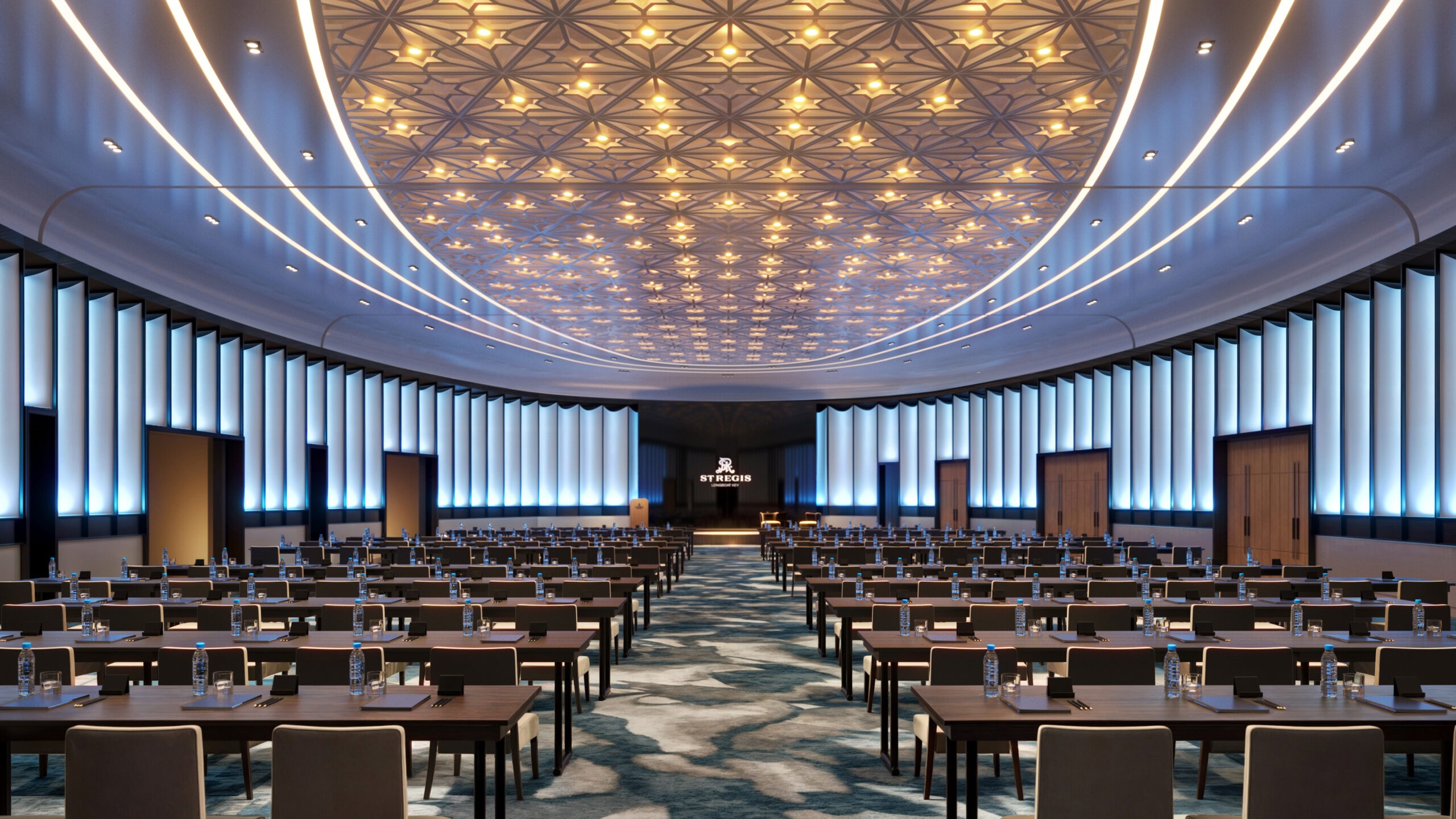
Astor Ballroom, St. Regis Longboat Key Resort
The St. Regis Longboat Key Resort is the only St. Regis property to open in the U.S. this year and represents the largest development in Florida’s Longboat Key in over five decades.
The luxury beachfront property stands on a barrier island in Sarasota, just outside the city’s bustling downtown, ample with culinary and cultural attractions. Across 18 acres of beachfront, the resort offers an unparalleled luxury escape. A design inspired by the surrounding sea, sun and sand comes with elements that nod to John Ringling’s circus and performing arts culture. Elegant, rope-like chandeliers and the circus tent-inspired, oval shape of the Astor Ballroom are just the start.
The resort offers 168 guest rooms, with 26 suites. 34,000 sq. ft. of flexible meeting and event space offer versatile options for upscale meetings and events. The resort offers itself as a culinary destination, with expertly prepared steakhouse classics at onsite restaurant CW Prime, and the cozy living room of the resort in The St. Regis Bar, where guests will enjoy not only stellar drinks but live piano performances and other entertainment. Also onsite is coastal Italian restaurant Riva, Latin American restaurant Aura and a Tiki bar with a special ode to the artistic local history at Monkey Bar.
Artistry, Technology and the Future
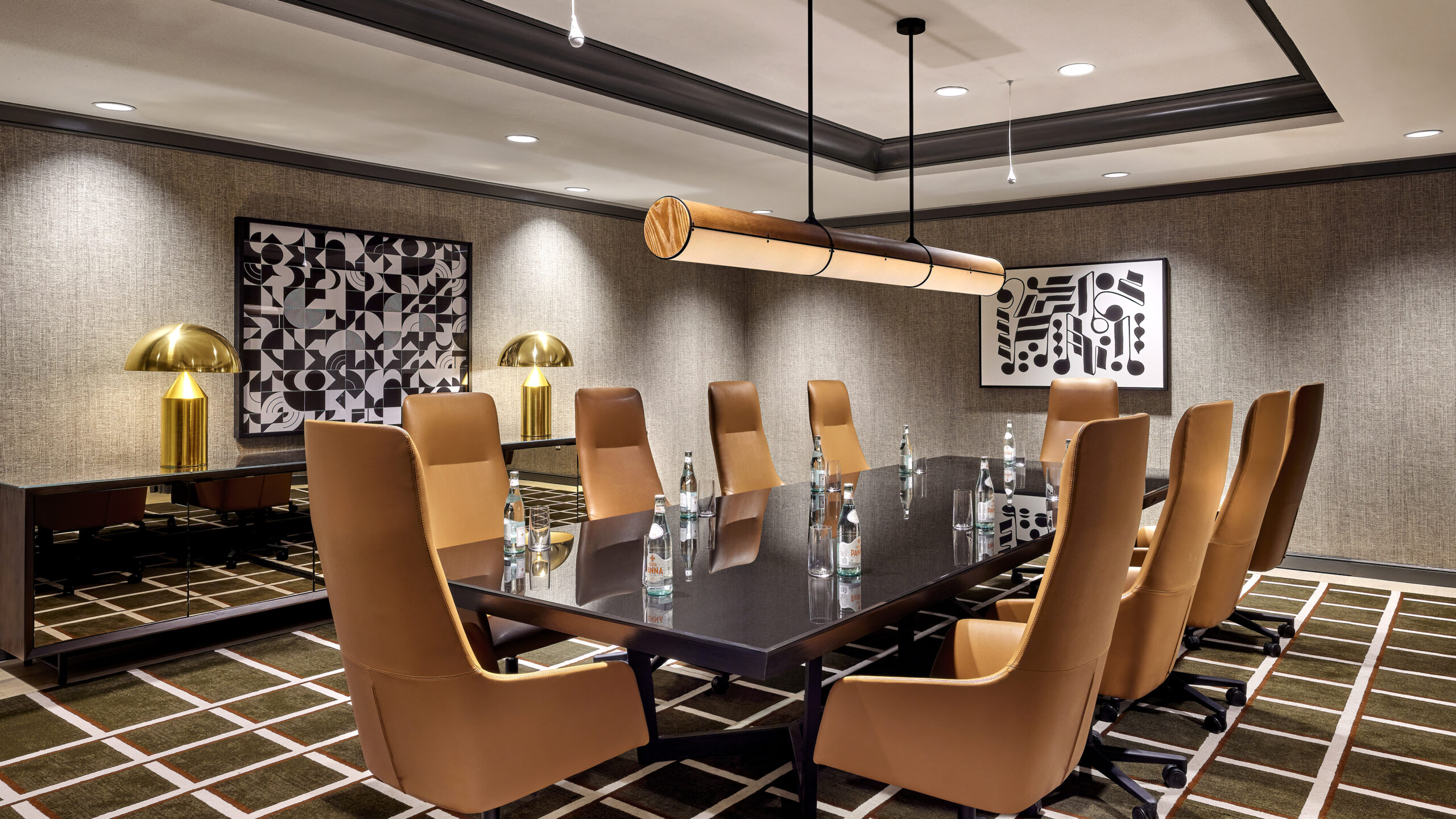
Governor’s Boardroom, Omni Austin Hotel Downtown
Omni Austin Hotel Downtown wraps on a multi-million dollar renovation, debuting a new rooftop pool, fitness center, restaurant, guest rooms and suites and even a podcast room.
Throughout the hotel, guests will enjoy a mid-century design inspired by the celebrated art scene of Austin’s Sixth Street. The Austin Modern Style amps up the inspiring entrepreneurial atmosphere through all 268 guest rooms, 44 premier rooms and three suites. The hotel’s top five floors feature a stand-out Texas Traditional style, with 45 suites and 33 guest rooms,
20,000 sq. ft. of meeting space, across 19 venues, have been reimagined to provide an authentically-Austin experience with expanded space. The debut of the podcast room nods to the city’s emerging tech scene, and its intersection with the arts.
New F&B options include Capital A, a laid-back dining space in the hotel’s large glass-walled atrium, the poolside Cloud Bar, with a refreshing seasonal menu and perfect poolside cocktails and stop-and-go café, President’s House Coffee.
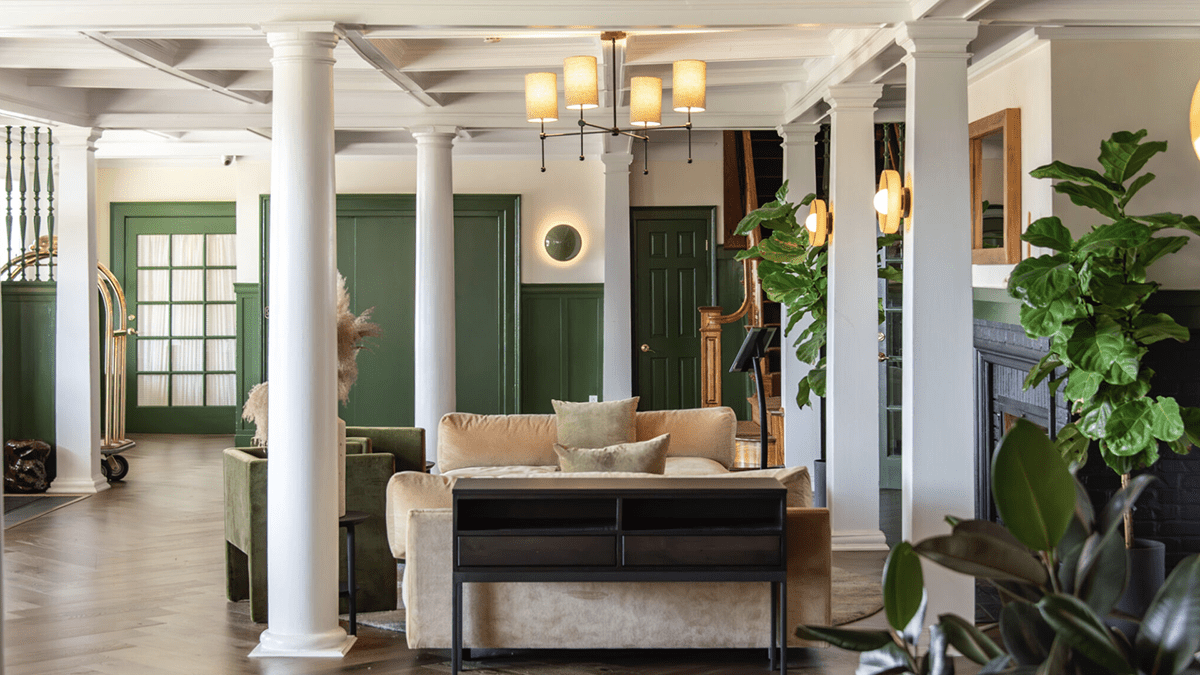
In Whitefield New Hampshire, Mountain View Grand Resort & Spa completes a multimillion-dollar renovation complete with enhancements to the lobby and guestrooms. as well as a new Tower Spa menu, wellness offerings and family-friendly programming.
The resort, on the National Register of Historic Places, offers unmatched views of New Hampshire’s famous White Mountains. The new design captures the destination’s rustic beauty and eye-catching landscape, alongside comfort and luxury, with decadent textures and updated amenities.
New programming aims to take advantage of the incredible natural surroundings, with options ranging from Campfire Stories under the starry night sky to educational programming such as falconry experiences. The Tower Spa, on the resort’s top floor, immerses guests in the healing properties of nature with materials like clay and botanicals, and programming seeks to integrate guests with nature through activities like outdoor yoga, meditation and forest bathing.
The 19th-century-built resort offers 141 guest rooms and suites and 23,244 sq. ft. of meeting and event space—not to mention, 1,700 acres of landscape that includes a historic golf course, a working farm with educational programming, a wine cellar and more.
What is more transformational for meeting professionals than flying car pods, underwater hotels, convention centers with aeroponic F&B programs and laser beams? Insight. That is why we cornered Cvent Senior Vice President of Sales Brian Ludwig at Cvent Connect in San Antonio to ask what he saw as the future of event technology—and what meeting profs can do now to prepare for it.
Brian Ludwig
Collaboration meters: Using smart apps and badges, meeting planners today can see how many people attended a session and who is sitting out the conference by the pool. And with an assist from geolocation and facial analysis, we aren’t far from being able to see who and what content they interacted with during the day. That could help to develop more engaging sessions on the fly and even build tracks that appeal to like-minded attendees, so more organic connections can be formed.
“That’s how you build a sense of belonging,” said Ludwig. “Here’s the thing, content is now a commodity and networking is the true value. Building relationships is why people come, so we need to start measuring that.”
Ludwig also had tips for optimizing the tried-and-true feedback survey. In addition to asking about the venue, the food and the speaker on a scale of one to five, ask, “Did you feel that you belonged?” and “Did you meet anyone new?”
True value of AI: The whole promise of AI for events is that it will take away the drudgery and free up organizers to be far more strategic. What now takes 40 hours could be done in as little as two hours, conceivably.
In addition to writing emails and web posts, AI can sort through mounds of unstructured data to summarize insights about value trends to help meeting professionals understand where investments ought to be made in the future.
“That is how you can march forward inside your organization and sit at the boardroom table with the exec team and say, ‘We’re cutting these three events—they don’t give us an ROI. But I’m going to propose these five events, and here’s the ROI that I believe it can deliver.’ That is powerful,” Ludwig said.
Another game-changing use of AI is its ability to translate content in real time in the speaker’s voice, even if that speaker doesn’t know the translated languages. “It sounds natural, and it allows the whole world to consume content,” he marveled.
Hybrid lives: The future may not be dominated by hybrid as we once predicted, but Cvent clients are still recording at least some of the sessions at events with more than 500 attendees, even if they are making them available after the event on demand rather than in real time.
Advances in event technology can help package and streamline content, so it is socially saleable and a possible new revenue stream. “It’s a newer form of hybrid that has longer legs because it’s not as hard to pull off,” said Ludwig. “It extends the value of the in-person event so it’s not a singular point in time and keeps the conversation going after everyone goes home.”
The cusp of AR, still: After years of being tagged as the next big thing, odds are that at least one of the kaleidoscope of augmented reality glasses that have come to market recently will take the technology mainstream. “The reason no one’s doing it now is because they look ridiculous. But if you had glasses that look like stylish tortoise shells throwing smart content about the real world as you walk around, that would be a different story. That’s coming. That’s here,” said Ludwig.
Once adopted, meeting professionals could use them for taking polls, sharing information and connecting people on the fly.
Hospitality leader Lisa Messina is leaving Las Vegas to take the role of chief sales officer at Visit Orlando. The Smart Women in Meetings Hall of Fame winner held the same title at Las Vegas Convention & Visitors Authority for the last two years and at Caesars Entertainment before that as part of her 30-year meetings and events career.
The Cornell University Hotel Administration graduate also had numerous sales leadership roles during 16 years with Hilton Worldwide and was chief marketing officer with ConferenceDirect.
Reached by phone, Messina said, “I’ve worked hard in my career to achieve great things, but it is truly an honor to have the ability to represent the two best in the business in Las Vegas and now Orlando. I’m appreciative of the customers, communities and team members who helped put me in this place.”
“Lisa Messina is a powerhouse in the meetings and conventions industry, has a tremendous reputation and a diverse hospitality background,” said Casandra Matej, president and CEO of Visit Orlando and another Smart Women in Meetings Hall of Fame inductee. “Her rich experience in leading high-performing teams, focus on driving results, passion for the industry and alignment with our company culture are exactly what our organization and destination need right now for this critical role.”
Messina has served on Cvent’s advisory board, HSMAI’s advisory board and the executive board of the American Heart Association Southern Nevada. She currently serves on the Meeting Professionals International board of directors.
She joins the Central Florida organization at a crucial time. Orange County Convention Center is set to embark on an expansion project to the North-South Building, opening up opportunities for new businesses to the region. Visit Orlando also grew its travel industry sales presence to more international markets as part of a plan to remain vital and drive full recovery in international visitation.
More Smart Moves
Mike Waterman left the chief sales officer role in Orlando in April after five years, migrating to Visit Anaheim in California. In May, another Smart Women in Meetings Hall of Fame winner, Mariles Krok, left her role as vice president of meeting and partnership sales at Visit Anaheim, where she had been for almost eight years, to take the job of chief sales and services officer with California’s Visit Sacramento.
 When planners look at destinations to book a meeting, they can act as an advocate to get tourism dollars into local businesses. In a panel during DIAC24, “Making the Catalytic Case for Your Destination Organization,” the audience heard from representatives from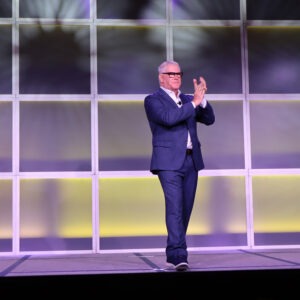

 Naomi Clare is founder and CEO of