We’re on a mission to make meetings more meaningful. When you meet in the Richmond Region, you get curated experiences and local connections from a team that’s committed to your event’s success.

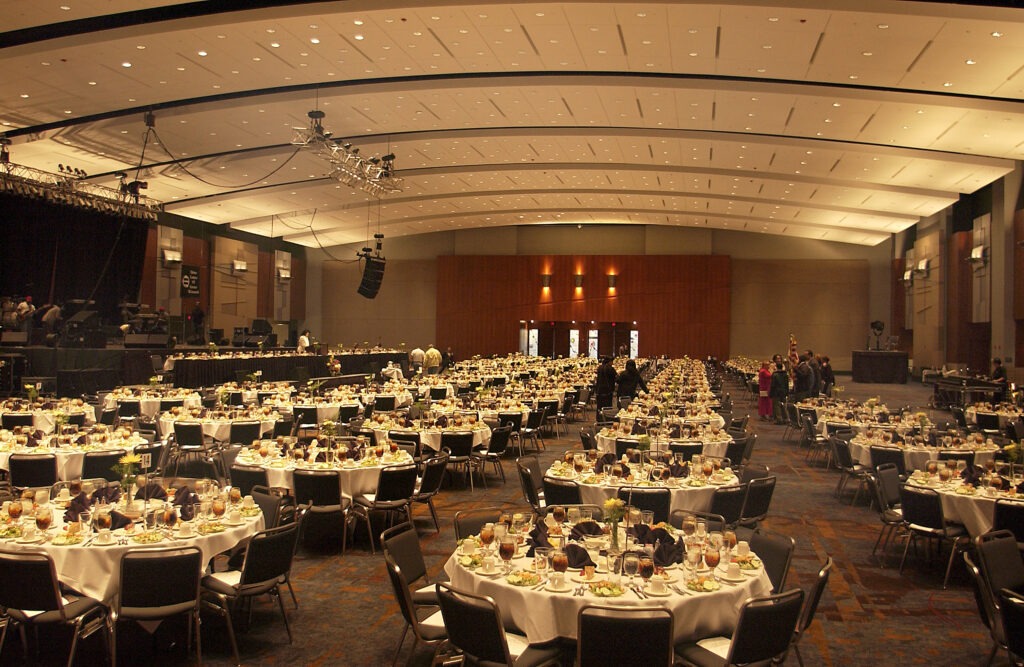
Our region is comprised of seven localities – that feature urban, rural and suburban settings – with seamless connectivity and limitless experiences. Before and after the event, attendees can hop on the region’s free bus system, rent a bike or easily explore by foot to discover the area’s distinct neighborhoods. You’ll see that our region speaks for itself: Award-winning dining and food, walls of murals, world-class museums and a welcoming community – and more.

Here are six things you can expect in the Richmond Region:


1) Easy to get to

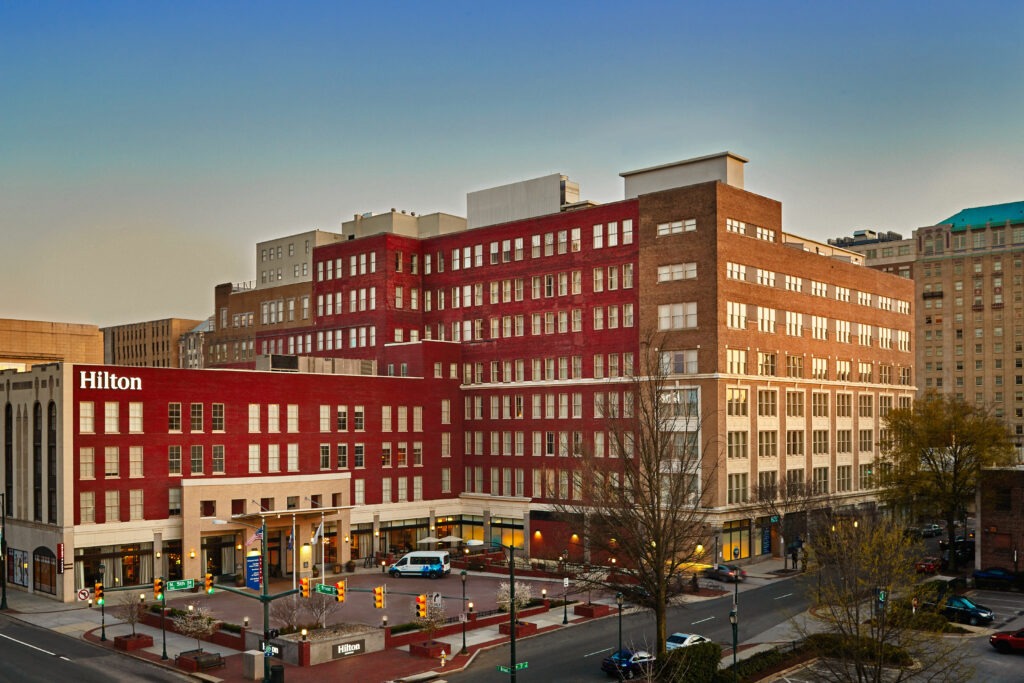
The capital of Virginia and at the center of the East Coast, Richmond is within a day’s drive of half the U.S. population and at the intersection of I-95 and I-64. We’re home to 150 daily flights and three Amtrack stations that make traveling here a breeze.
2) A dynamic business community

You’ll be meeting in a business-friendly community. Our region features eight Fortune 500 and four Fortune 1000 company headquarters. Here’s just some of the sectors thriving in our community: advanced manufacturing, IT, finance, food and beverage, pharmaceuticals, life sciences and logistics.

The Richmond Region is also home to five four-year higher education institutions, along with community colleges.

There’s innovation and an engaged workforce ready for you to tap into.
3) Craveable food and dining

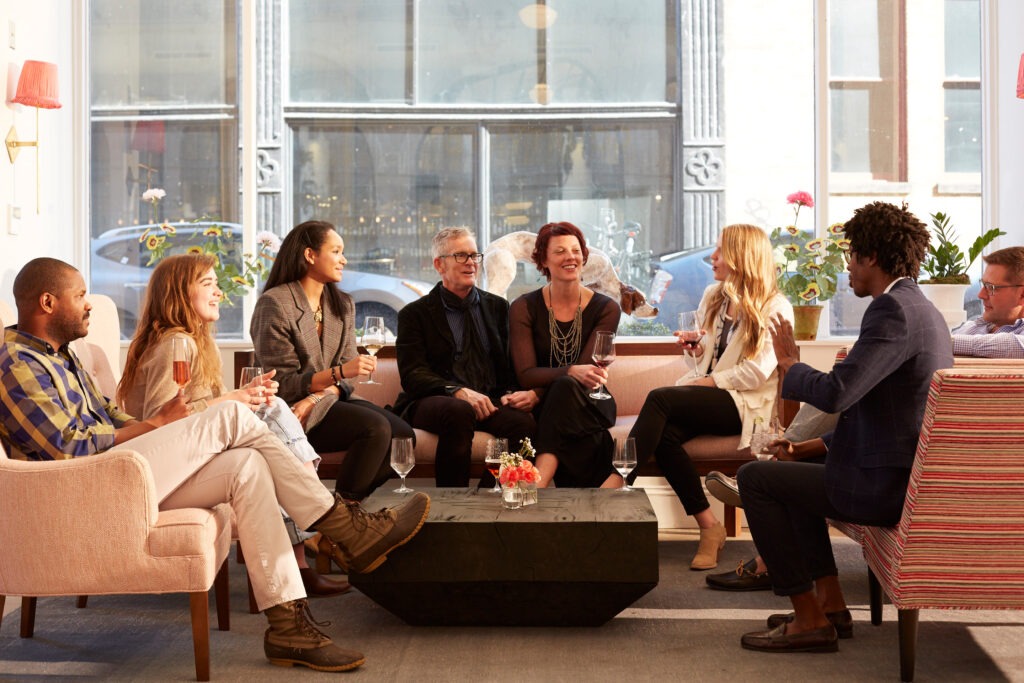
You won’t leave hungry, but you’ll be craving more when you’re back home. Richmond’s culinary reputation is nationally recognized, with James Beard-nominated and Food Network-featured chefs, thriving craft breweries and distilleries, and a vibrant food scene that gives groups memorable dining experiences and endless offsite options.-nominated -site options.

The region boasts hundreds of culinary options and restaurants, which are often named on “best of” lists like the oyster-focused Beaucoup, Mexican-inspired Cochiloco or Southern and soul staple Mama J’s Kitchen. Several establishments offer group dining and restaurant buyouts as well.

Don’t forget to try out the nation’s only Mimosa Trail while you’re here.
4) So much to do (you’ll have to come back)

The Richmond region boasts an art museum that will soon be the fourth largest comprehensive art museum in the U.S., and several other historical and cultural institutions to learn about our community and the world.

There’s plenty of quirky and fun things to do too, like a free pinball museum and a vintage movie palace with a Mighty Wurlitzer organ.

The region has many new and upcoming developments to experience, including CarMax Park and the Diamond District, a growing 43-mile biking and pedestrian path called the Fall Line Trail and the Allianz Amphitheater, an outdoor music venue overlooking the James River.

5) A focus on accessibility and sustainability

Visit Richmond maintains an ongoing collaboration with VisitAble to provide free disability inclusion trainings to hospitality partners to help ensure people of all abilities can better experience the region’s hotels and attractions. Approximately 1,800 hospitality employees have completed the training so far.

For planners focused on environmental sustainability, Richmond Region Tourism provides a Net Zero Emissions conference program, which offsets carbon emissions from car, train and plane rides utilized by attendees, as well as the environmental impact of meals and the hotel and meeting space.
6) Support you can count on

We understand your priorities because we’ve been in your shoes. Our team is built to support yours. From first call to final detail, we’re here to reduce stress and bring solutions.

The Richmond Region is more than a destination – we’re your partner and a connection to our community. We value relationships and want to see you, and your event, succeed. It’s why so many events choose to come back to the region year after year.

We’re ready when you are and with you all the way.

 

In Greater Palm Springs, meetings unfold beneath swaying palm trees and boundless sunshine. Mountain vistas don’t just set the scene — they rejuvenate and inspire. From poolside networking to team building in extraordinary desert landscapes, every moment fosters creativity and connection.


It may sound like a mirage, but this meeting oasis is real. Greater Palm Springs blends an effortless arrival experience, world-class accommodations, and unique attractions, making it the perfect backdrop for meetings that leave a lasting impact.

Easy Air Access

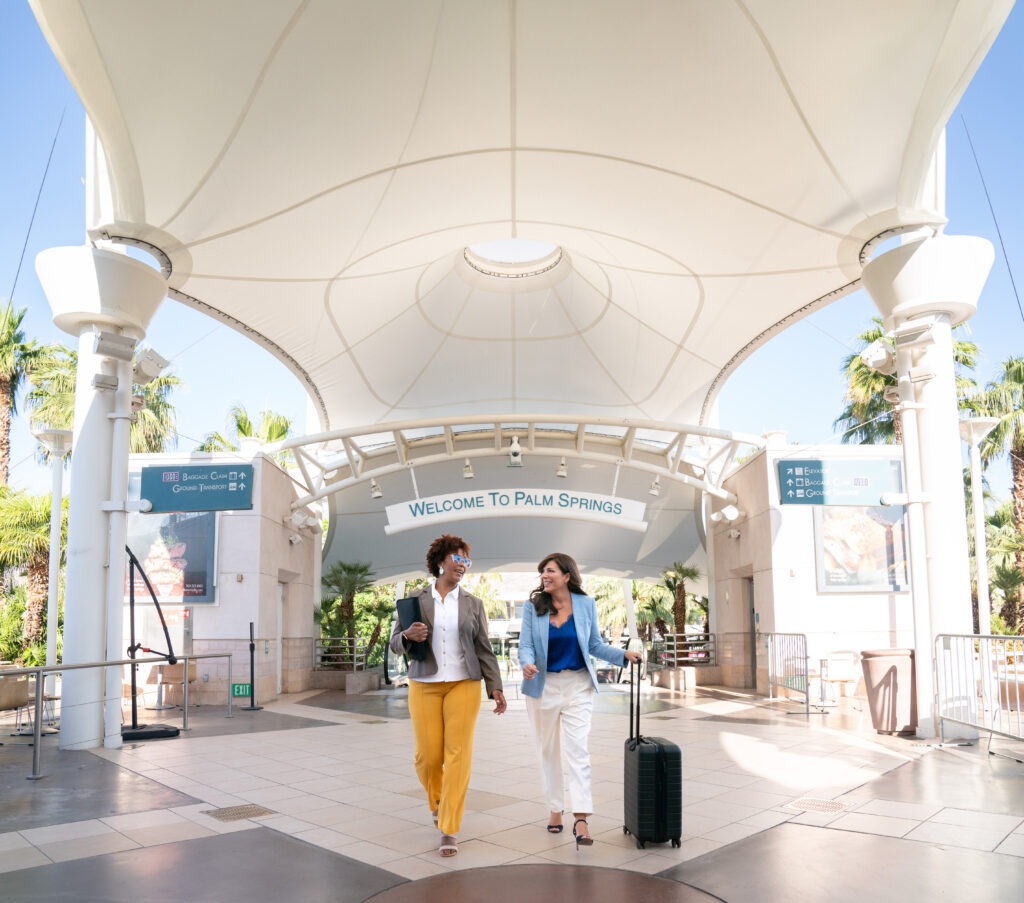
Getting here is as seamless as the experience that awaits. Palm Springs International Airport (PSP) offers more air access than ever — including new nonstop seasonal routes to Newark (EWR), Charlotte (CLT), and Washington, D.C. (IAD) — and convenient one-stop connections from 500+ destinations worldwide. Named one of the Top 10 Most Stress-Free Airports in America, PSP sets a relaxing tone with open-air terminals, new locally inspired dining, and fewer crowds.

What’s New

From reimagined resorts to must-visit attractions, the destination is always evolving. The highly anticipated Thompson Palm Springs is now open, with 168 luxury guest rooms, an on-site Napa Valley tasting room, and two outdoor pools with stunning mountain views. Nearby, the Riviera Resort and Spa (formerly Margaritaville Resort) will soon begin a phased renovation expected to reach completion later this year, while the Palm Springs Convention Center will usher in a $125 million transformation, elevating interiors, technology, and the overall attendee experience.

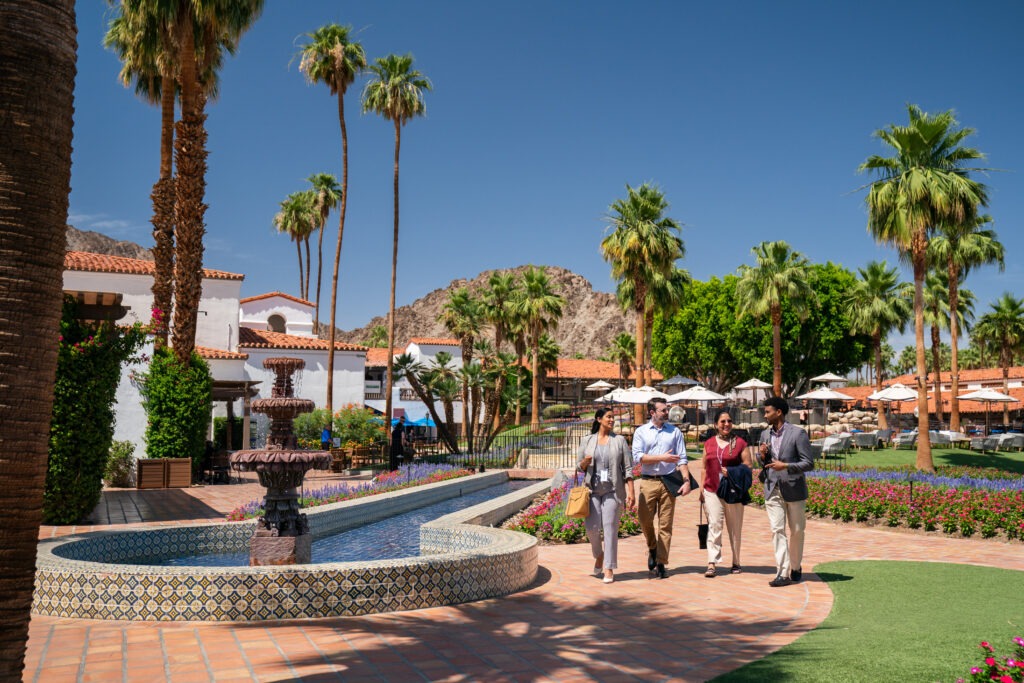
Cultural and resort icons are also in the spotlight, from the historic and fully restored Plaza Theatre, available for private events, to the centennial celebration of La Quinta Resort & Club, reinforcing Greater Palm Springs as a meeting oasis where productivity and creativity thrive.

For unique offsite experiences, consider booking private event space at the new Palm Springs Surf Club, where attendees can hang 10 in the state-of-the-art wave pool, or at DSRT Surf, opening summer 2026 with a 5.5-acre surf lagoon and group-friendly gathering spaces.

Inspiring Outdoor Meeting Spaces

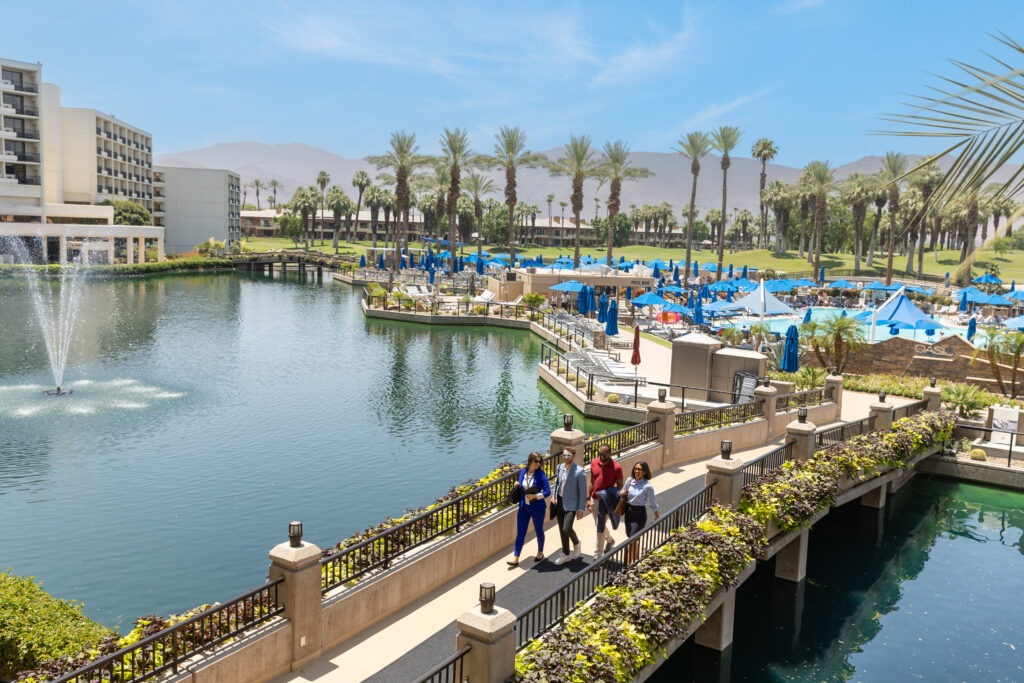
With 300+ days of sunshine, Greater Palm Springs is made for open-air meetings. Resort properties throughout the destination deliver exceptional outdoor venues, from lakeside lawns at the JW Marriott Desert Springs Resort & Spa to lush citrus groves at Tommy Bahama Miramonte Resort & Spa. Groups can also meet among native desert flora and enjoy wildlife encounters at The Living Desert Zoo & Gardens, ideal for receptions and private events. Whether it’s an al fresco dinner, a networking event under the stars, or a team retreat surrounded by nature, Greater Palm Springs ensures every meeting is not only memorable but meaningful.


In the event planning world, every dollar counts. Planners are expected to do it all under tight purse strings and ensure the final line-up of education, events and activities attracts a full house. When stakeholders rely on you to spin budgets into gold, Travel Portland is here to help you make smart decisions that contribute to a successful (and memorably fun!) event.

Oregon is one of the few states without sales tax. With a median sales tax of 7.8% in most other western states, meeting in Oregon can save you around $7,800 out of every $100,000 spent. Combined with Portland’s warm hospitality, exciting venues, and modern hotels, these savings let you reinvest in experiences that boost registration.

Here are a few uniquely Portland ways to put those savings to work.

Group excursions and experiences

For the geeks at heart, groups of up to 160 can rent out Ground Control Arcade, where guests can play any of the 100+ classic arcade and pinball games, socialize in the 30-person lounge, and enjoy food and drinks from the full bar in this lively, centrally located, two-story tall arcade.

Treat your attendees to a live performance at Revolution Hall, a 100+-year-old refurbished high school building. Its state-of-the-art, wheelchair-accessible concert venue is available for offsites, as is the fully stocked bar, cafe and private lounge. Alternatively, rent the entire building or opt for their intimate rooftop bar for guests to enjoy this parcel of Portland history. Revolution Hall can cater your event, or you can choose your own catering from any number of local eateries.

Catering, dining and food cart adventures

As for catering favorites, DarSalam’s Mediterranean food and Nong’s Khao Man Gai (specializing in Thai chicken and rice) are versatile, vegan- and vegetarian-friendly, and have gluten-free options. With multiple locations throughout Portland, your catering order will arrive piping hot at the time of service.

For dining out, the options range from small and intimate to full-building busters. Prize-winning Peruvian hot spot Andina can accommodate smaller groups of up to 72 in one of its two private rooms. The lobby of the nearby Moxy Hotel holds 200 and offers three food cart-style restaurants, about a dozen scattered spots for socializing in small and large groups, a full bar, massive screens, room for a DJ, and even a sweet little escape adorned with a fireplace (perfect for introverts). Another 200-person option is Cooper’s Hall, a fully customizable rustic chic winery and taproom. For even more space, the Portland Institute for Contemporary Art has 10,000 square feet of vaulted ceilings, high windows to flood the space with natural light, and a pavilion out back with space for food trucks.

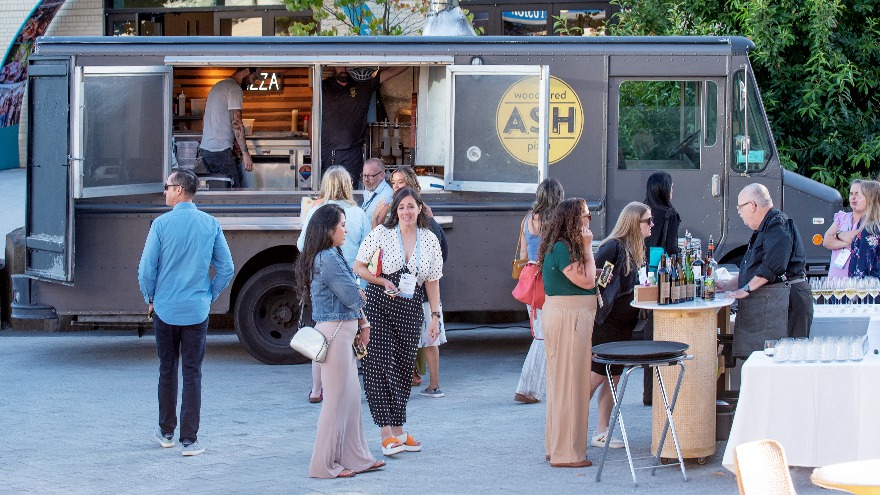
Food trucks (or food carts, as they’re known in Portland) are often available for events. Try Portland’s famous tiny donuts, Pips, local favorite soul food, Kee’s Loaded Kitchen, or the absolute authority on Venezuelan street food, La Arepa. If you don’t know if a truck will travel, just ask. Many offer catering options.

Shop ‘till you drop, tax-free

Attendees can visit local shopping staples like gift haven Tender Loving Empire and gender-neutral clothier Wildfang, or stroll Powell’s City of Books, the largest independent bookshop in the world. Guests at the Nines Hotel can even opt in for a private luxury shopping experience at Pioneer Place Mall, where they can shop brands like Louis Vuitton, Tiffany & Co., Yves-Saint Laurent, Tory Burch and more.

One thing’s for certain; Portland is the right place at the right price for your next meeting or event. Fun guaranteed, AND your sales tax back!


It was fitting that the 37th annual Meeting Professionals International European Meetings & Events Conference (MPI EMEC) gathered in Barcelona, Spain, a city that embraces its strategic role in 2,000 years of Mediterranean history, starting out as a Roman walled city, ushering in the Industrial Revolution and the Modernisme Movement led by its most famous resident Antoni Gaudí.

Today, the capital of Catalonia is an innovation hub, blending striking historic architecture and a thriving energy, design and technology hub alongside a vibrant sports culture in the living monuments where the 1992 Olympics burst onto the international travel stage.

Learning Moments

Main stage presentations included Xander Kranenburg, co-founder of Narrative, who shared tips for using curiosity to leverage AI tools. Think about this: It takes roughly 10,000 decisions to turn a blank piece of paper into a live event. If AI can do more of the work, meeting planners can focus on what people will remember and talk about. Often that means challenging audiences. “Sometimes we need to struggle to learn,” he said.

Bogdan Manta, an organizational neuroscientist, followed the next day with a presentation on how to help participants remember more of what is presented. On average, people remember less than 10% of the content a month later. Optimize that by playing to the brain’s strengths, including bodily limitations. After half an hour, blood goes to extremities and less oxygen is available for the brain. Standing up and moving helps the brain focus. “Give people the choice to take breaks,” he said.

Bárbara Agudo Friedmann, co-founder of Inusual Group, encouraged attendees to lead with heart and emotional intelligence to build energy and leave a legacy.

A total of 18 sessions focused on practical and strategic tools to plan even more effective gatherings anywhere in the world by embracing humanity, neuroscience and AI to design memorable experiences from start to finish.

Since attendees joined from all over the world, Wordly was on hand for real-time translation to ensure everyone had the option to listen in their preferred language.

Welcoming the Next Generation

Thanks to the work of MPI Foundation, 34 participants, including seven students, joined 250 senior-level industry leaders from across Europe and international markets to experience the energy and networking at the annual gathering. At a time when the talent pipeline is in need of nurturing, this is vital.

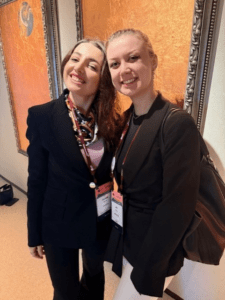
Amanda Mattei on left and Julia Gorniak on right
Amanda Mattei (left) and Julia Gorniak (right)

One of the students, Amanda Mattei, from BeAcademy in Italy, sees herself as a natural meeting planner because she is already constantly observing and thinking about how things could be done differently. “I am very critical,” she said. Being able to attend EMEC was a chance to put those skills to work.

Gorniak, another scholarship recipient, has known since high school that she wanted to organize one of the biggest horse jumping competitions in the world at some point. She’s keeping that promise to herself with her job in Poland. “I love that people and groups can inspire and motivate each other,” she said. For Gorniak, the conference is both a professional and personal win. She sees attending as a mental health solution and a way to find friends with the same interests. “I arrived here feeling a little bit lonely but I’m not alone anymore. We have incredible students all around the world and everyone has been so respectful.”

She continued, “I think it wouldn’t be the same without MPI. I don’t know what I would do without this type of networking and contacts.”

Mattei agreed. “There is a sense of a big community where there are no different levels.”

Their fellow student, Jessica Kunowska, also had an idea from an early age that she wanted to be in the events business by following in her mother’s footsteps. She is studying tourism and hospitality at Gdansk University of Physical Education and Sport in Poland and plans children’s events. “This is the best place for knowledge,” she said.

IMEX Group Head of Sales for North America and MPI Foundation Board Chair Richard Allchild, said, “We want to ensure no event professional is left behind due to lack of resources.” MPI Foundation is literally investing in the future of the events business.

A Warm Destination

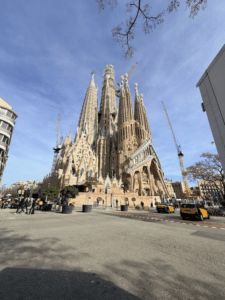
Basilica de la Sagrada Familia exterior
Basilica de la Sagrada Familia

Barcelona Convention Bureau Business Events Manager Noemí Rosell explained that despite rumblings that the destination is too popular, business groups are welcomed with open arms. She suggested exploring all the region has to offer beyond Basilica de la Sagrada Familia, although that is spectacular, especially now that the crowning cross is in place.

Optional learning journeys did just that. Tours included art, history and creativity at Antoni Gaudí’s Casa Bellesguard; Barcelona Marina, exploring innovation, the blue economy and waterfront regeneration; and an Innovation District architecture tour learning how urban design, public space and buildings influence creativity, collaboration and attendee experience. Finally, a group explored Alta Alella Winery, a Mediterranean vineyard operation that connects leadership, sustainability and sense of place.

Sustainability was an intentional focus overall. Artsy, edgy SLS Barcelona opened in 2024 with 470 guest rooms with private terraces looking over Marina Port Forum Harbour. It is LEED Gold and energized with solar power, waste reduction and recycling programs. In fact, sustainability was one of the tracks offered at the conference. The city is a global leader in sustainable urban tourism and alternative energy development.

A CSR activation collected sweaters to support Fundacio Roure, a local nonprofit serving women in need across Barcelona.

Bad Bunny’s Super Bowl halftime set did more than electrify the stadium—it sent a tourism tidal wave to Puerto Rico. It handed meeting planners a playbook for turning cultural moments into bookings. In the 72 hours after the performance, Discover Puerto Rico logged 537,000 site users (up 16% month‑over‑month) and a dedicated Big Game landing page pulled 143,000 users with a 73% engagement rate. Expedia reported a roughly 245% year‑over‑year spike in flight searches to the island, and Google searches for “Puerto Rico travel” and “Flights to San Juan” jumped 213% on Feb. 9.

But the story wasn’t just about clicks; it was about curiosity deepening into cultural intent. Searches for “What is Plena music” and “Bomba vs Plena” exploded by 300%, Spanish‑learning queries rose 89% with more than 63,000 U.S. searches in 72 hours, and Shazam recorded its biggest day ever for a Latin or non‑English artist with a 400% surge. Even interest in rum-tasting and neighborhood stays ticked up—searches for “Puerto Rico rum” spiked 140% and short‑term rentals reached parity with hotels, signaling travelers wanted immersive experiences, not cookie‑cutter itineraries.

Read More: A Tale of Two Half-Time Shows

“This wasn’t just entertainment, it was intent,” says Storm Tussey, chief marketing officer of Discover Puerto Rico. The DMO converted that intent into measurable impact with more than 31,000 direct partner referrals in the immediate window and a notable lift to secondary markets. Vega Baja—Bad Bunny’s hometown—saw searches surge about 1,450%, and interest in events like Ponce Carnival rose as the campaign redirected travelers beyond San Juan.

For meeting planners, this is a proof point: Cultural moments create programming and marketing opportunities that drive attendance, lengthen stays and boost ancillary spending. A halftime performance becomes more than a headline; it becomes the spark for local music nights, rum‑tasting pop‑ups, neighborhood site visits and language‑based learning sessions that make events memorable. Young, culturally engaged audiences respond to these cues, and data show they’ll move from discovery to booking fast when the storytelling is right.

The tactical lesson is simple: Be ready. Partner with DMOs early, build culturally immersive options into RFPs and site selection and use search and flight spikes to time promotions and create urgency. Dedicated landing pages and partner referral links—the very tools Discover Puerto Rico used—turn attention into conversions and give planners measurable ROI to show stakeholders.

Bad Bunny ignited global attention, and Puerto Rico’s coordinated marketing captured it. For planners looking to differentiate events and tap new markets, that combination of spotlight and readiness is exactly the kind of play that wins.

Major sporting events don’t just blow through town. For meeting planners, they leave behind a long tail of opportunity—new infrastructure, refined city operations and a destination brand boost that can make future meetings easier to sell and smoother to execute.

As Smart Meetings’ JT Long framed it in a recent Knowledge Exchange webinar, planners can be “the biggest winners in the wake of all the big sporting events sweeping the country,” because after FIFA World Cup, Super Bowl and Olympics-sized moments, “event planners benefit from the elevated profile of the city, new infrastructure and processes developed to accommodate all those big public crowds.” In other words: the event itself may be brief, but the improvements—and the proof that a city can handle pressure—stick around.

She was joined by Smart Meetings Editor Malik Anderson, Kris La Fata, director of convention services and events at Visit Seattle, Craig T. Davis, president and CEO of Visit Dallas and Shaun Yates, vice president of sales & services for Visit OKC. You can view the full webinar on demand.

The Long Tail: What Cities Build (and What Planners Inherit)

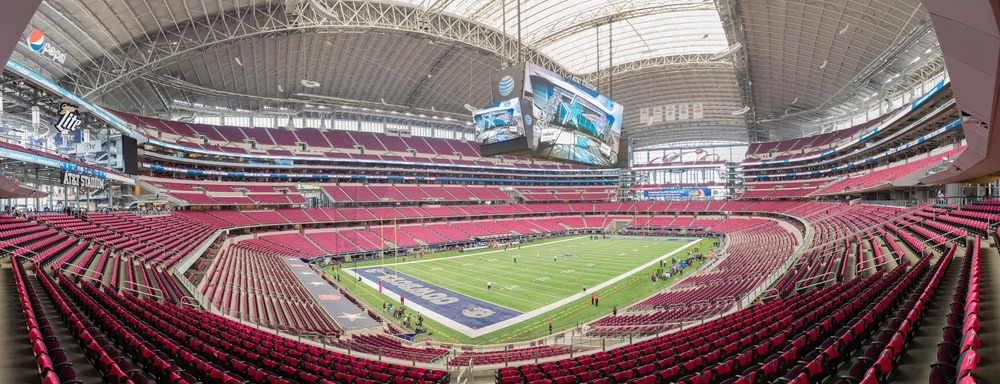
Interior shot of AT&T Stadium in Dallas
AT&T Stadium in Dallas

The most visible long-tail benefit is physical infrastructure. La Fata described how FIFA accelerated projects that were already needed but suddenly had immovable deadlines. “What FIFA did for us is move up the timeline on some huge capital projects to make sure that they were…done in time,” she said. The payoff for planners is immediate and ongoing: “Our light rail has significantly expanded so that people will be able to travel north and south and over to the east side of Lake Washington from the airport, way easier than they could have even three years ago.”

Air travel upgrades and route growth matter just as much. La Fata pointed to Seattle-Tacoma International Airport’s “considerable upgrades, especially to the international arrivals facility,” plus the addition of “non-stop routes like crazy.” For planners managing international attendees—or simply trying to reduce friction on arrival day—those changes outlive the tournament and improve the attendee experience year-round.

Read More: FIFA 2026: The North American Takeover

Dallas, meanwhile, illustrates a different kind of legacy: retrofits, regional coordination and major facility repurposing. Davis noted that the Metroplex didn’t need to build new stadiums, but it is retrofitting AT&T Stadium for FIFA. And the city’s convention ecosystem will be directly shaped by the event.

“Our convention center is closed down now and is going to become the international broadcast center for FIFA,” he says, “Every single game that will be televised across North America, will be televised from Dallas.”

That kind of mega-event footprint forces cities to sharpen not only buildings, but also how they work together across jurisdictions. Davis emphasized that “when you’re talking about FIFA in Dallas, you’re really talking about FIFA in the Metroplex,” spanning Arlington, Fort Worth, Irving and more. For meeting planners, that regional mindset can translate into more creative room-block strategies and more resilient transportation plans—if you know how to tap it.

The less visible long-tail benefit is operational: cities get better at moving people, communicating disruptions and coordinating security. Shaun Yates of Visit OKC captured why that matters beyond sports: “If we can show that we can move families around the city safely and effectively…that’s just a bigger message for all meeting planners.” A successful youth-sports weekend, parade day or FIFA match becomes a case study a DMO can point to when a planner asks, “Can you handle my citywide?”

Understand the Event You’re Drafting Off Of: FIFA Isn’t the Super Bowl

Planners make mistakes when they assume all major sports events behave the same way. The webinar panel kept returning to one core reality: FIFA is not the Super Bowl.

Davis put it bluntly, “We are expecting it to be more Super Bowl-esque. It’s not, though; it’s FIFA.” The difference shows up in everything from demand curves to guest behavior. A Super Bowl concentrates activity into a short burst. FIFA spreads it across weeks, in multiple cities, with an international fan base that travels differently.

Read More: Sports Venues: Sports, Community and the Power of Relationships

Unlike the “one night in one place” rhythm of the Super Bowl, Davis said, “you’ve got 100 plus games that are taking place around North America.” That means planners can’t rely on a predictable single peak; instead, they need to anticipate uneven “spikes and lulls,” especially in hotel pricing and availability.

Even host cities don’t fully know what to expect because the tournament’s ticketing and fan distribution can remain opaque until late. Davis explained that cities are still “waiting to see how the tickets fall and who’s coming,” and that “we have not seen the bookings yet that we had anticipated, because the availability of tickets has been rather restricted.” For planners, the lesson is to build flexibility into contracting and to pressure-test assumptions about compression nights.

And then there’s the migration factor. FIFA visitors may not fly in and out for a single match; they may road-trip the tournament. Davis said cities are watching closely, “We really don’t know what our visitors are going to do. They’re going to make this into a several-day, if not several-week trip.” He called the unknown “migration patterns…anybody’s guess.” For meetings scheduled during a tournament window, that uncertainty can affect everything from restaurant buyouts to airport congestion to last-minute room pickup patterns.

Timing and Strategy: Plan Around the Rhythm, Not the Hype

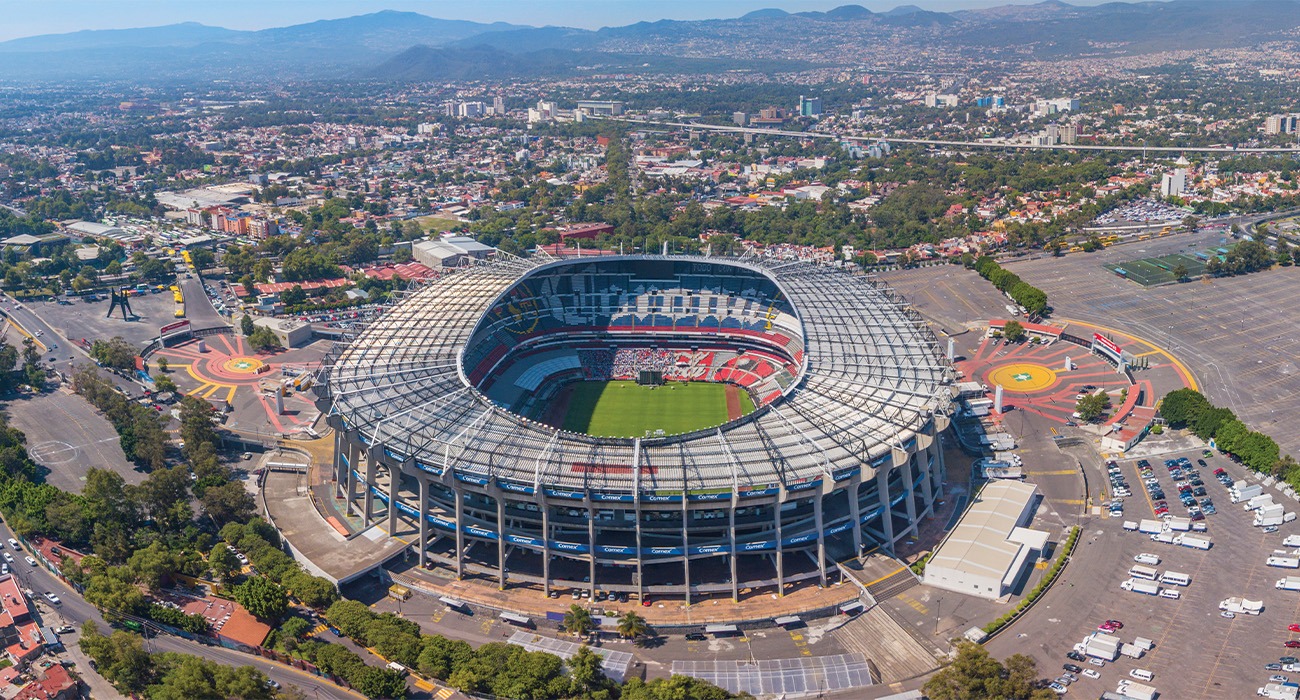
Aerial shot of Estadio Azteca in Mexico City
Estadio Azteca in Mexico City

Because FIFA demand can be uneven, a timing strategy can be a competitive advantage. Davis advised against scheduling directly on match days: “I wouldn’t suggest that the planner plans a meeting during a match event date in Dallas.” But he also offered a reality check: with “144,000 rooms in…North Texas,” the region “won’t go 100% occupancy,” and planners who work the calendar intelligently can still find opportunity “in between matches.”

Seattle’s constraints look different. La Fata noted Seattle has “six matches” and “we don’t have the hotel capacity that Craig has,” compounded by the fact that “we are an absolute peak season in Seattle during the tournament,” including cruise traffic. For planners, that’s a reminder to evaluate not only the sports calendar, but also the destination’s seasonal demand drivers. A city can be “FIFA busy” and “summer busy” at the same time.

One practical tactic discussed: think regionally. Seattle is working with Vancouver, British Columbia (also hosting matches), to balance demand: “Vancouver, B.C., has matches only a three-hour drive from Seattle, so we’re working to see how we can even that out a little bit.” OKC, though not hosting matches, is positioning itself as a convenient stop between Kansas City and Dallas, creating packages for travelers passing through. For planners, nearby cities can serve as overflow venues, pre- and post-event extensions or even alternative host hubs with more affordable pricing.

“We’re uniquely positioned between Kansas City and Dallas,” says Yates. “We’re not hosting games in Oklahoma City, but we do want to capture those travelers who may want that experience in Kansas City when they’re driving through Oklahoma, through Oklahoma City, staying overnight, heading to Dallas for another match. We’re working hand in hand with both Kansas City and Dallas to create packages to welcome those visitors as they traverse the country.”

Transportation and Safety: the ‘International Event’ Standard Becomes Your Meeting’s Safety Net

The most significant operational difference between a typical meeting week and a mega-event week is how transportation and security feel on the ground.

On mobility, La Fata highlighted why transit investments matter. Seattle’s stadium district is “accessible to everything that’s downtown, easy to the airport,” and the expanded light rail makes airport-to-downtown movement “way easier.” This is precisely the kind of improvement planners can translate into attendee messaging: fewer shuttles, more predictable commutes, and a stronger case for walkable agendas.

But planners also need to budget time for disruption. Davis warned that FIFA will bring “a level of security…incredible,” and that “people are going to have to take additional time to get there and just be patient.” He also noted that Dallas already deals with significant road construction—“you cannot get in North Texas from A to B without the orange cones”—a reminder that mega-events often collide with ongoing city projects.

On safety staffing, Davis answered directly when asked how cities plan for extra police presence. The good news: “the federal government is actually going to help us take care of that,” and cities will “import police forces and other security forces from across the United States.” For meeting planners, the actionable takeaway is to coordinate early with the DMO and venues on screening times, perimeter changes, credentialing requirements and contingency routes—and then over-communicate those expectations to attendees.

La Fata offered a vivid example of why that coordination matters. Seattle hosted a massive parade—somewhere between 700,000 and a million people—while also running two city-wide conventions. Streets shut down early, but the city still made it work by coordinating exceptions and alternate routes: “We were able to work with planners successfully…to make exceptions, have different routes, educate the attendees.” That’s the long tail in action—a city that has practiced under pressure can protect a planner’s program when the unexpected happens.

Major sporting events may be unpredictable in their details, but their legacy is consistent: better infrastructure, stronger interagency coordination and a higher standard of readiness. For meeting planners willing to understand the specific event they’re drafting off of—and to time their programs with intention—those global crowds can translate into long-term local advantage.

Interviews with experts on APAC’s can’t-miss event in Melbourne

If the Asia Pacific Incentives and Meetings Event (AIME) had a headline criterion, Matt Pearce would tell you to look up first, not down at a dashboard. “Smiles are a good metric,” said Pearce, CEO of Talk2 Media & Events, the organizer of the event. “Because if people are smiling, you know they’re having a good time. And the good time is really because they’re doing business.”

That philosophy framed the opening of AIME 2026 at Melbourne Convention and Exhibition Centre—the largest edition of the show to date under Event Director Silke Calder and her team. This year’s event welcomed more than 1,500 vetted buyers, over 5,000 total attendees and 750-plus exhibitors representing 36 countries and territories.

Yet for Pearce, scale alone is not the headline. “AIME 2026 is the biggest show our team has delivered to date,” he said. “And the continued growth in buyers, exhibitors and international participation reflects the confidence our industry places in the event.”

As planners parse attendance numbers and post-show reports, Pearce is clear about what actually counts. “The serious metrics are the number of meetings being held and then, at the end, what business they’ve done or are likely to do,” he said. “They’re the real metrics for us. The rest of it is vanity.”

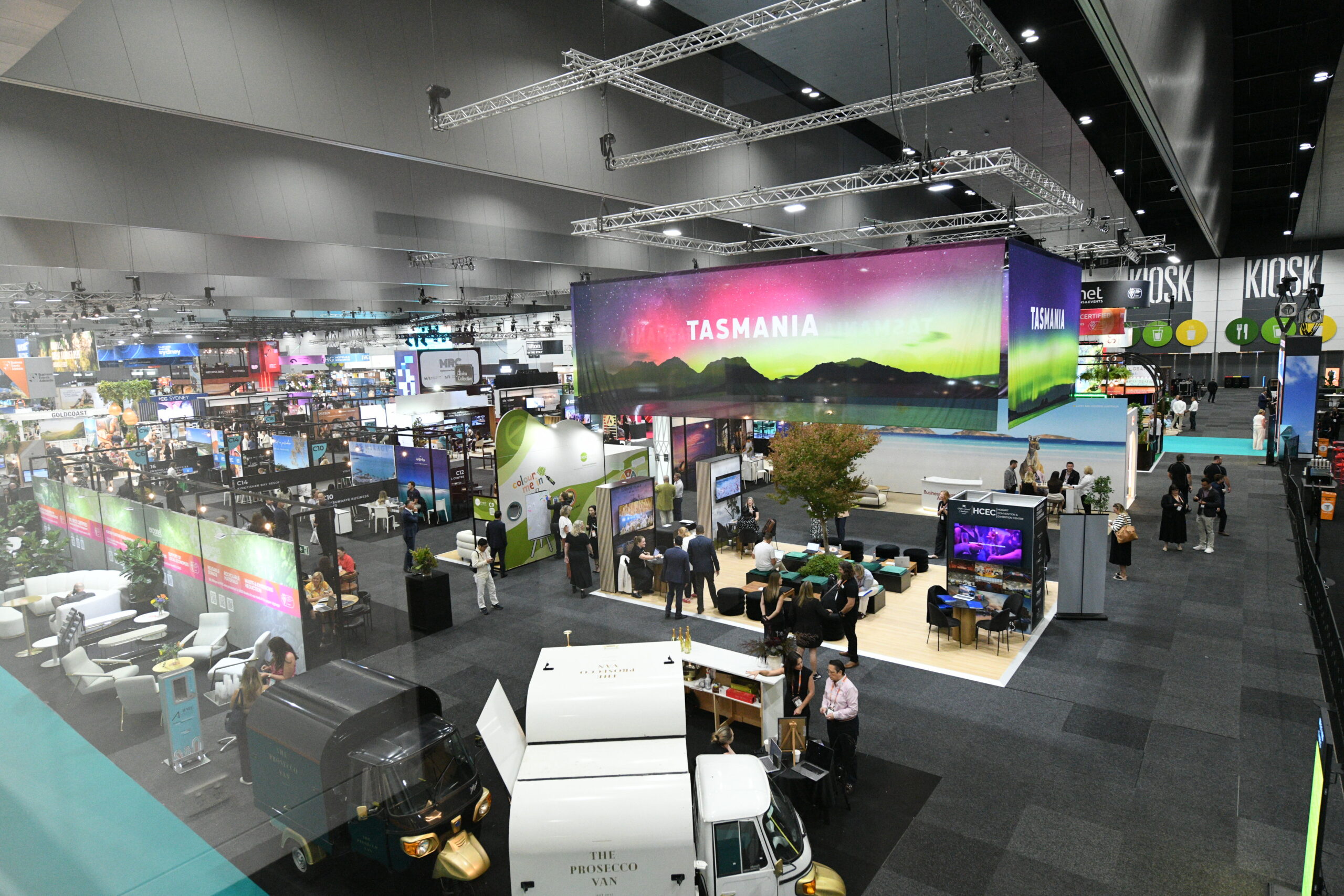
A walk around the show floor reinforced that approach. From Japan to Fiji and across APAC, destinations, hotels, experience providers and suppliers connected with rigorously qualified buyers who fuel the region’s MICE economy, each meeting intentionally curated for meaningful outcomes, not wasted time.

“We have thousands of people in here,” Pearce said. “But it wouldn’t make it a good show unless there are thousands of the right people.”

Curated, Not Casual

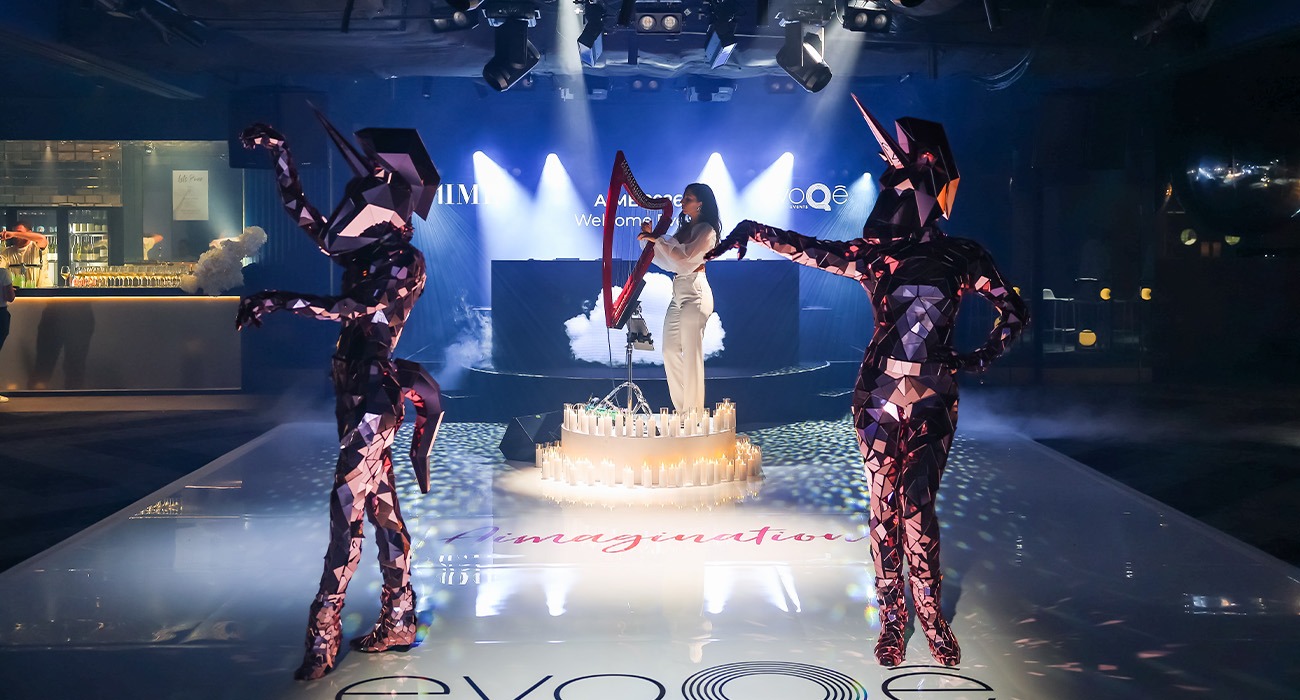
AIME Welcome event

AIME has long leaned into pre-scheduled appointments and data-backed matchmaking. In 2026, that strategy only deepened, supported by enhanced show floor zoning, expanded networking areas and an enlarged Ideas Academy.

Unlike events that rely heavily on serendipity, AIME’s structure is intentionally curated. That does not eliminate organic moments—it strengthens them. “It always comes back to finding the right people,” Pearce said. “This is an easy business. We put good buyers and good sellers together. The work that goes on in between is where it’s made. That’s what’s been the success of AIME.”

Technology, particularly AI, is sharpening that precision. “AI is giving us the opportunity to go deeper,” he explained. Buyers now arrive armed with information. “If somebody tells me how many seats their ballroom takes, I can find that out on the internet in 30 seconds. Talk to me about your capability, your approach, what you do, how you do it.”

Read More: AI: Resistance Is Futile

That depth is reshaping expectations on both sides of the table. It is no longer enough to exchange specs. Buyers want substance. Exhibitors need clarity of purpose.

Leadership Beyond the Show Floor

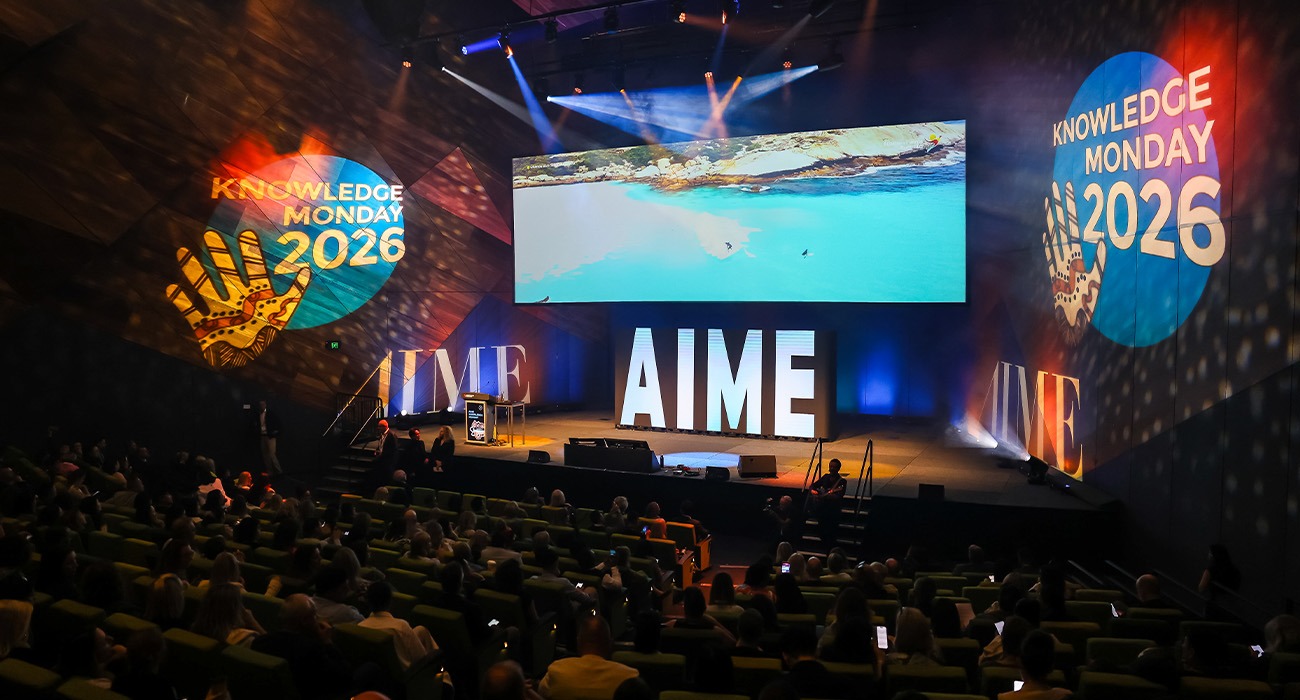
AIME Knowledge Monday

AIME’s opening day also spotlighted industry leadership through Knowledge Monday, the event’s professional development program. More than 1,500 attendees gathered under the theme “Expertise Matters!” for keynotes from Dan Haesler, Milo Wilkinson and Kristina Karlsson, followed by 20 breakout sessions across five content streams.

Curated in collaboration with El Kwang and BEAMexperience, and guided by an industry advisory committee, the program reinforced AIME’s positioning as both a marketplace and a learning platform.

The show’s leadership focus also extends to sustainability. “AIME signed up to the Net Zero Carbon Events initiative several years ago, with a milestone target of reducing emissions we can directly control by 50% by 2030,” Pearce said. “I’m pleased to share that we are well on the way to achieving that target.”

The result is an event growing in scale while tightening its operational and environmental discipline.

A City That Lives the Event

If Pearce spoke to the mechanics of connection, Julia Swanson, CEO of Melbourne Convention Bureau, spoke to the destination that makes those connections thrive.

Melbourne’s reputation as Australia’s cultural capital is not just branding. It is infrastructure. “There’s a huge amount happening in the cultural sector,” Swanson said, pointing to the $1.7 billion transformation of the Melbourne Arts Precinct. The redevelopment will unify traditional art, contemporary art, theatre, music and First Nations culture into a cohesive precinct expected to open in 2028.

Read More: Notes from the Road: Melbourne

For planners, that translates into real programming flexibility. “You can book out the National Gallery,” Swanson said. “It has the largest stained-glass ceiling in the Southern Hemisphere. It’s absolutely spectacular.”

Delegates do not need to board a bus to access it. “You don’t need transport because everything is walkable,” she said. “You can get a tram like a local. Walk through the city like a local.”

That authenticity is increasingly important. “[Visitors] want to feel welcome, safe, respected—but also have that authentic experience,” Swanson said. That includes integrating First Nations culture into meetings, from Welcome to Country ceremonies to partnerships with Indigenous suppliers and artists. “It’s about weaving that depth of culture into the meeting,” she said. “A real sense of place.”

Thinking Ahead (and Strategically)

AIME showfloor

For U.S. planners considering Melbourne, Swanson offered both encouragement and practical advice. “We work in longer cycles,” she said. “We’re talking to decision-makers out to 2032 for global conventions. So come and talk to us early.”

Early conversations unlock advantages: scheduling around major citywide events, exploring financial models and understanding Australia’s 10% goods and services tax. “If you structure it correctly, you can claim that back,” she said. “That’s significant.”

Melbourne’s convention bureau model also extends beyond marketing. “We can sometimes provide funding. We can help you register the event. We can support easier visa pathways,” Swanson said. “Convention bureaus here have a broader remit.”

Beyond logistics, however, she is seeing a deeper shift. “The questions we’re getting now are very different,” Swanson said. “Associations want to know what your destination stands for. What values do you uphold? What sectors do you want to advance and why?”

That alignment helped secure Women Deliver 2026, a major global gathering focused on gender equality set for April. “There was a strong values alignment,” Swanson said. “They saw Melbourne as a place where they could host an inclusive event and shine a spotlight on the Pacific region.”

Where AIME Stands Now

Building on more than $400 million in business generated following AIME 2025, this year’s event further cemented its role as the primary meeting place for the international business events community in Asia Pacific.

Taken together, Pearce and Swanson outlined a future that feels both grounded and ambitious. Success is not attendance alone. It is outcomes. It is alignment. It is depth.

“We’re quality first, led by quantity,” Pearce said. And in Melbourne, that quality is not confined to the show floor. It is built into the city itself.

From Auckland to Scottsdale, major openings and multimillion-dollar renovations elevate the meetings, hospitality and wellness landscape worldwide

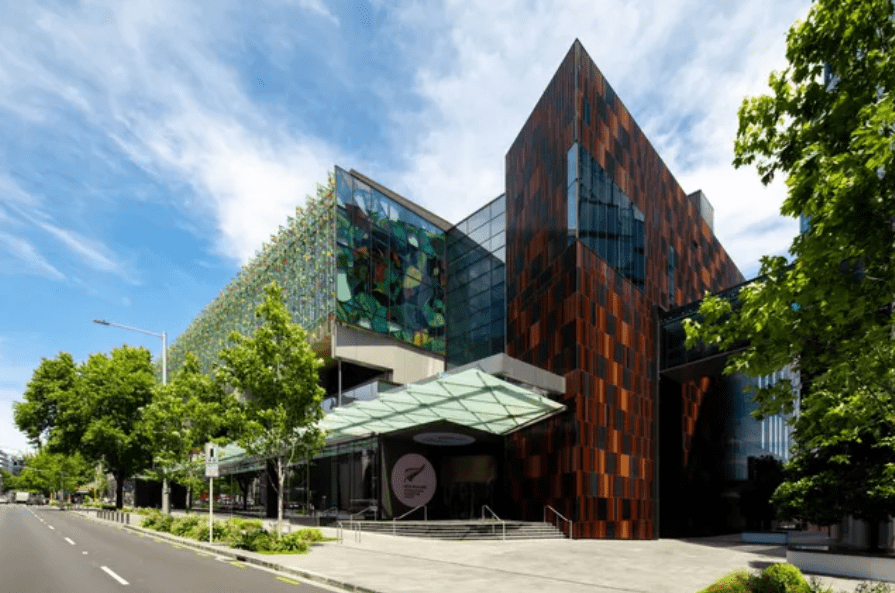
Across the globe, leading hospitality brands are unveiling ambitious openings and renovations designed to redefine the guest experience. In Auckland, New Zealand International Convention Centre has officially opened as the country’s largest purpose-built events venue, positioning the city as a stronger global contender.

In the United States, notable transformations include a $25 million resort spa renewal in Scottsdale, a comprehensive airport hotel renovation in Dallas-Fort Worth and a new lifestyle boutique debuting in Charleston. Together, these developments signal continued investment in design, wellness, culinary innovation and high-impact meetings infrastructure.

New Zealand International Convention Centre

New Zealand Convention Center exterior

New Zealand International Convention Centre (NZICC) has officially opened in the heart of Auckland, marking a major milestone for the country’s business events and tourism sectors. The $750 million, purpose-built venue is now New Zealand’s largest convention center.

NZICC features 33 meeting rooms, a 2,850-seat theatre and capacity for more than 4,000 delegates. The center is projected to generate over $90 million annually and attract approximately 33,000 international visitors each year.

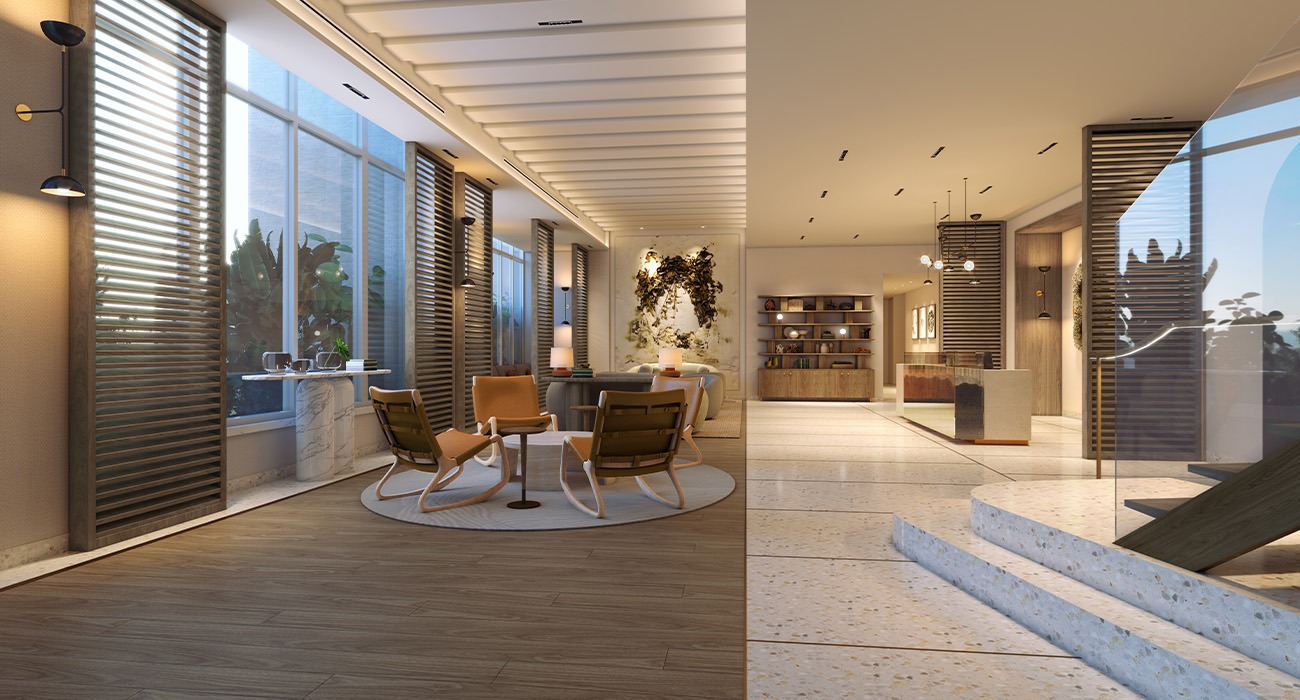
Live Oak Charleston

Lobby at Live Oak
Lobby, Live Oak

Live Oak Charleston, a 120-room boutique lifestyle hotel, will open in April 2026 on Meeting Street in downtown Charleston. The property will be the city’s first Tribute Portfolio hotel, blending modern design with Charleston’s architectural heritage. Guest rooms feature natural wood finishes and organic textures, while five Pool Patio Rooms offer private terraces and direct access to a heated saltwater pool.

Dining anchors the experience with Terra, led by Executive Chef Eucepe Puntriano, showcasing Lowcountry ingredients through Mediterranean influences. Bloo Pool & Provisions will serve Nikkei-inspired fare in a relaxed poolside setting. Wellness amenities include a cabana-lined pool deck and fitness center. Reservations begin April 1.

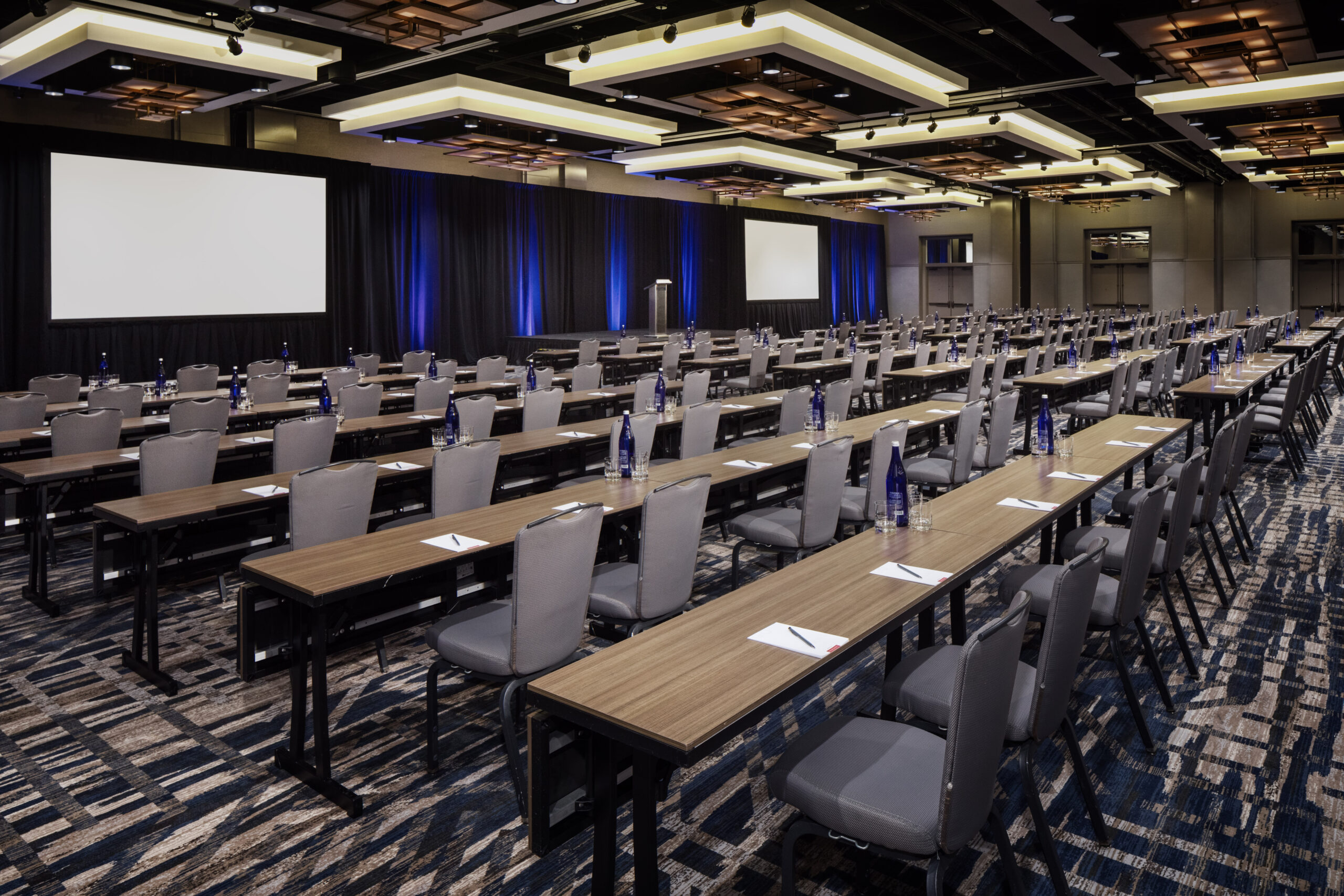
Grand Hyatt DFW

Ballroom at Grand Hyatt DFW
Ballroom, Grand Hyatt DFW

Grand Hyatt DFW has unveiled a major renovation, showcasing redesigned guest rooms and suites with runway views, refreshed meeting and event spaces, and a new indoor/outdoor rooftop venue with a pool deck overlooking the airfield. Updates also include a reimagined restaurant and bar, along with remodeled lobby and lounge areas.

These enhancements strengthen the hotel’s status as a premier luxury airport property, offering elevated experiences for both domestic and international travelers while blending modern design, comfort and functionality throughout the property.


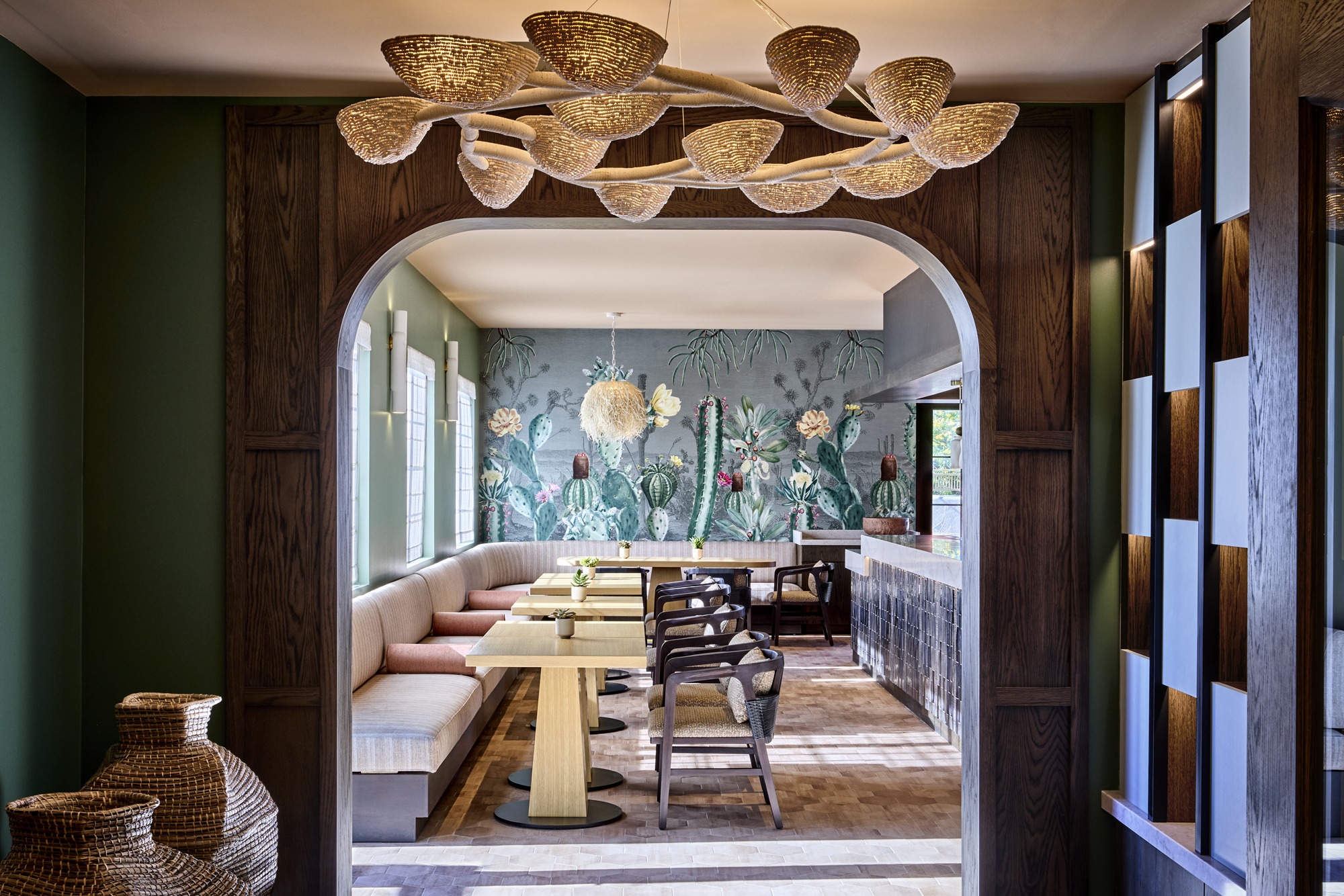
The Spa at Camelback Inn

Ora Cafe at Camelback Inn
Ora Cafe, Camelback Inn

The Spa at Camelback Inn, located at JW Marriott Scottsdale Camelback Inn Resort & Spa, has reopened following a $25 million transformation. Originally one of Marriott International’s first resort spas, the reimagined sanctuary introduces ariVéa, a philosophy inspired by the Sonoran Desert and centered on four wellness pathways: Detox, Soothe, Harmonize and Restore.

Enhancements include a new Wellness Circuit, outdoor hydrotherapy experiences, pathway-aligned treatments and Ora Café. The revitalized spa reinforces the resort’s standing as a premier desert wellness retreat.

What if the next evolution in meetings isn’t technology?

What if it isn’t bigger stages, more immersive production, or even smarter apps?

What if it’s time?

Not how we manage it—but how we design it.

For decades, we’ve optimized agendas for efficiency.
The next era of event strategy will optimize them for human performance.

Most meetings are built around logistics.

Room availability. Food and beverage minimums. Speaker schedules.  AV load-in times. Contracted event windows.

Time is treated as a fixed container.

Something to manage, compress and optimize.

But what if time isn’t just a logistical constraint?

What if it’s one of the most powerful, and overlooked, variables influencing engagement, energy and learning?

Enter chronodiversity: the idea that people have different biological rhythms and optimal times for focus, creativity and cognitive performance. Often discussed in workplace productivity and neurodiversity conversations, chronodiversity is rarely applied to meetings and events.

Once you view agenda design through this lens, it reframes how we think about energy, engagement and flow.

Read More: Spectacular Spaces: Event Design with Ed Libby

The Uniform Schedule Problem

Traditional event agendas tend to follow a predictable structure:

  • Early morning keynotes
  • Midday sessions competing with lunch
  • Afternoon fatigue
  • Evening networking layered on top of full cognitive days

This structure isn’t wrong. It’s efficient. It aligns with hotel contracts, catering minimums and travel windows.

But it assumes that every attendee performs at their best during the same hours, in the same format, with the same energy.

We know from research, and from lived experience, that is not how human performance works.

Some people are highly focused in the morning.

Others hit their cognitive stride mid-afternoon.

Some need quiet processing time to absorb information.

Others thrive in active discussion.

When we design one rigid schedule for everyone, we unintentionally privilege certain rhythms while sidelining others.

That’s not just an engagement issue.

It’s a design opportunity.

For planners, this isn’t just a philosophical idea. It explains why some sessions feel electric and others fall flat, even when the speakers are strong and the content is relevant. Timing, format and cognitive load are often the hidden variables.

Engagement Isn’t Just Content—It’s Timing

Event professionals invest tremendous energy into curating strong speakers and compelling topics. But engagement isn’t only about what is delivered.

It’s also about when and how it’s delivered.

Consider:

  • Is your most complex content scheduled at the point of highest fatigue?
  • Are you asking attendees to absorb dense information immediately after a heavy lunch?
  • Do you stack high-cognitive sessions back-to-back without recovery time?

Chronodiversity challenges planners to shift from:

“What fits here?”

to

“When are attendees most capable of deep engagement?”

That subtle question can transform energy flow across an entire event.

Working Within Real-World Constraints

Let’s be realistic. Meetings are bound by contracts. Venues have time blocks. Speakers have limited availability. Budgets have boundaries.

Chronodiversity does not require dismantling traditional structures.

It requires designing more intentionally within those realities.

Small shifts can create meaningful impact.

1. Offer Format Variety Within the Same Time Block

Instead of one format per hour, provide parallel options:

  • A lecture-based session
  • A discussion-driven workshop
  • A hands-on experiential format

Allow attendees to choose how they engage based on their energy at that moment.

Choice honors rhythm, and personalization is one of the defining expectations of modern attendees.

2. Rethink Energy Flow, Not Just Agenda Flow

Schedule high-cognitive content during natural peak attention windows—often mid-morning. Use post-lunch hours for interactive, movement-based or applied sessions rather than passive listening.

Build intentional reset moments into the schedule—not just breaks, but transitions that allow the brain to recalibrate.

Designing for cognitive recovery is just as important as designing for content density.

This doesn’t require longer days. It requires better sequencing. Energy-aware agendas often feel shorter, more dynamic and more valuable to attendees.

3. Extend the Learning Window

Not all value must occur inside the ballroom.

Pre-event briefings, post-event modules and asynchronous content allow participants to engage when their focus is strongest—not just when the contract says the room is open.

This approach reduces pressure to overload the live agenda and increases perceived value.

4. Treat Agenda Design as Iterative Research

Meeting professionals already analyze attendance numbers, app engagement and session feedback.

Now imagine layering in timing insights:

  • Which time blocks consistently underperform?
  • When does engagement spike?
  • Where does attention dip?

Agenda design can become evidence-informed rather than tradition-driven.

That’s not experimentation for experimentation’s sake.

That’s the shift from agenda building to experience design.

The Pioneer Advantage

The next generation of meeting leaders won’t just design beautiful spaces.

They’ll design intelligent time.

Chronodiversity introduces a bold but practical mindset: time is not merely a container for content. It is a variable that influences outcomes.

Forward-thinking planners will recognize that honoring human rhythm isn’t about making schedules chaotic.

It’s about making them smarter.

It’s about understanding that energy drives engagement—and engagement drives impact.

In an industry constantly chasing innovation through technology and spectacle, the most powerful shift may be far simpler:

Design the clock differently.

The planners who begin experimenting with energy-based design now will set the standard for the next generation of meetings, not because they added more, but because they aligned their programs with how people actually think, learn and connect.

Because when we respect the natural rhythms of our attendees, even within structured environments, we create meetings that feel more intentional, more dynamic and more human.

Time is not just something we fill.

It’s something we shape.

And the planners who embrace that perspective won’t just follow the future of meetings.

They’ll pioneer it.

Polly Rossi

Polly Grieger-Rossi, CMP-HC, CMM, is president of Meeting Achievements and works at the intersection of conferences and curriculum.

She designs engagement-focused learning environments for medical and professional audiences and writes about human-centered event strategy, adult learning and the evolving role of instructional design in live experiences.

When Michelle Allgauer, CAE, CMM, CMP Fellow, thinks about the moment that set the course for her career, it isn’t a single dramatic event but a series of small, formative experiences that added up to a vocation built on detail, service and connection. Raised in Marshfield, Massachusetts—a seaside town 30 minutes south of Boston—Allgauer developed an early affinity for the outdoors and a lifelong habit of paying attention to the elements that shape an experience.

That instinct for detail would prove essential as she moved from hospitality into associations and, ultimately, to becoming a recognized leader in meeting and event management, earning Certified Meeting Professional status in 2004 and membership in the inaugural CMP Fellow class of 2021.

Today, she serves as the senior vice president, education & engagement, Financial Services Institute, Inc. (FSI).

Allgauer’s path to meetings began in ways many meeting professionals can relate—by organizing, planning and imagining better guest experiences. In college, she thought she might work in a hotel creating recreational activities; instead, her exposure to the mechanics and meaning of meetings—a pre-event menu meeting at a conference in San Antonio organized by her father and a first walk down ASAE’s trade-show floor—revealed the power of gatherings to create professional connections and advance mission. Those early moments, paired with Hyatt’s management training program, gave her both operational rigor and a hospitality lens she still uses when negotiating with venues and partners.

After moving to Washington, D.C., following graduation from Ithaca College, Allgauer spent decades building a career that married hotel operations with association strategy. She transitioned into the association world where meetings became a vehicle for education, advocacy and engagement. Volunteer leadership through Meeting Professionals International (MPI) gave her governance experience and broadened her perspective; serving as President of the Potomac Chapter and eventually chairing the MPI International Board deepened her understanding of global strategy, financial stewardship and the responsibilities that come with leadership.

Allgauer’s professional development has been both deliberate and continuous.  In addition to her CMP, she holds the Certificate in Meeting Management (CMM), ASAE’s Business of Meetings Certification and the Certified Association Executive (CAE) credential.

“Each designation strengthened a distinct competency—financial oversight, governance, strategic alignment and executive leadership,” she says. That combination of credentials, experience and volunteer service shaped her approach to meetings as strategic tools, not merely logistics exercises.

Becoming a CMP

Her decision to pursue the CMP was pragmatic and personal. Although she had known about the certification for years, Allgauer waited until she felt she had the depth of experience the credential represented. Working for a nursing association where members held multiple certifications inspired her to demonstrate the same level of professional commitment. She prepared through MPI Potomac’s 12-week prep course and a smaller study group that met weekly to discuss contracts, risk scenarios and budgeting. The study structure and peer discussion were decisive: they rebuilt disciplined study habits and strengthened her confidence.

The CMP opened doors. It strengthened Allgauer’s credibility with hotel partners and executive leadership and deepened her involvement with MPI, which led to significant volunteer roles—culminating in a historic term as chair of the MPI International Board of Directors, where she became the first woman from a U.S.-based association to hold that role.

Fellow Designation

“Earning the CMP validated my expertise,” she says, “but becoming a CMP Fellow recognized sustained leadership and contribution to the profession.”

Her selection to the inaugural CMP Fellow class in 2021 was an honor rooted in service. Allgauer had served on the Events Industry Council Governance Committee and helped shape the Fellow program itself. The designation, she emphasizes, rewards stewardship and long-term impact rather than a single achievement.

Leadership for Allgauer is deeply practical. On event days, she keeps her fuel simple—an Americano with sugar-free vanilla and a solid breakfast—because the show’s momentum drives her. Her operational toolkit is modern and collaborative: Smartsheet and Microsoft Teams for planning, Dropbox for external materials, Excel for staff assignments and VIP movements, and Expensify for on-site expenses. In the last two years, she’s embraced AI tools like ChatGPT and Microsoft Copilot to refine session timing, tailor speaker remarks and analyze registration lists. Yet even as technology accelerates, what inspires her most is the human side of gatherings. “When members finally gathered again after multiple replans during the pandemic and thanked us simply for being together,” she says, “It reaffirmed why meetings matter.”

Read More: AI: Resistance Is Futile

Allgauer’s calm in crisis is part skill, part cultivated network. Seven days into her role at FSI, a host hotel breached its contract while registration was open and attendees had booked travel. Rather than panic, she leaned on relationships cultivated through MPI and secured a new San Diego property in days—delivering a successful event and record attendance. That episode crystallized two lessons she repeats: stay steady under pressure and invest in relationships long before you need them.

Gratitude and appreciation are baked into Allgauer’s post-event rituals. Before leaving a site, she and her team personally thank hotel staff and partners, often with handwritten notes and gratuities to those who went above and beyond. On the flight home, she sends thank-you messages while memories are fresh, then takes a day or two to recharge before diving into debriefs focused on continuous improvement. For partners who truly exceeded expectations, she follows up with a thoughtful gift and a personal note—gestures that reinforce relationships and cultivate goodwill.

Test Prep Tips

If there’s a candid lesson Allgauer offers to those preparing for the CMP, it’s twofold: prepare strategically and don’t wait until you feel 100 percent ready. She advises applicants to focus on application and understanding—think through contracts, risk mitigation and measurable outcomes—and to join a study group for accountability and richer learning. And beyond the exam, she urges new CMPs to use the credential as a platform to volunteer, mentor and engage.

“The designation opens doors, but your impact is determined by how you show up,” she says.

At the heart of her story is a commitment to making gatherings matter. From seaside beginnings to mountain retreats and decades in Washington, D.C., her career maps a steady expansion from operational excellence to strategic stewardship. The CMP Fellow designation acknowledges that arc as a practitioner who has evolved into a leader, mentor and steward of the profession. Along the way she met her husband the same day she sat for the CMP exam—a fun fact that captures how credentialing, community and life often intersect in unexpected ways.

The Future

Looking ahead, Allgauer is optimistic. The industry will continue to innovate—with technology, experiential design and new formats—but the enduring value of in-person connection remains central. For her, that balance between evolution and purpose is the industry’s greatest asset and the reason she continues to wake up, Americano in hand, ready to help the show go on.