Speaking with AI enthusiasts Ellis Messian, co-founder of Conference AI; James Spellos, Smart Speaker Award winner and president of Meeting U; Nick Borelli, an instructor at PCMA Event Leadership Institute and marketing director with Zenus Inc.; and Henry Coutinho-Mason, futurist and trend watcher about the event-changing power of large language model (LLM) personalization. The use of LLMs can free up planners’ time for more human-centered tasks.
Tips for integrating generative power for good
If you are still on the AI-curious edge, wondering whether to give in to the temptation of asking ChatGPT for help with a marketing email, loading up Gemini with your attendee registration data to look for trends or calling on Canva for an image for your event website, you may be fighting against the inevitable turn of history.
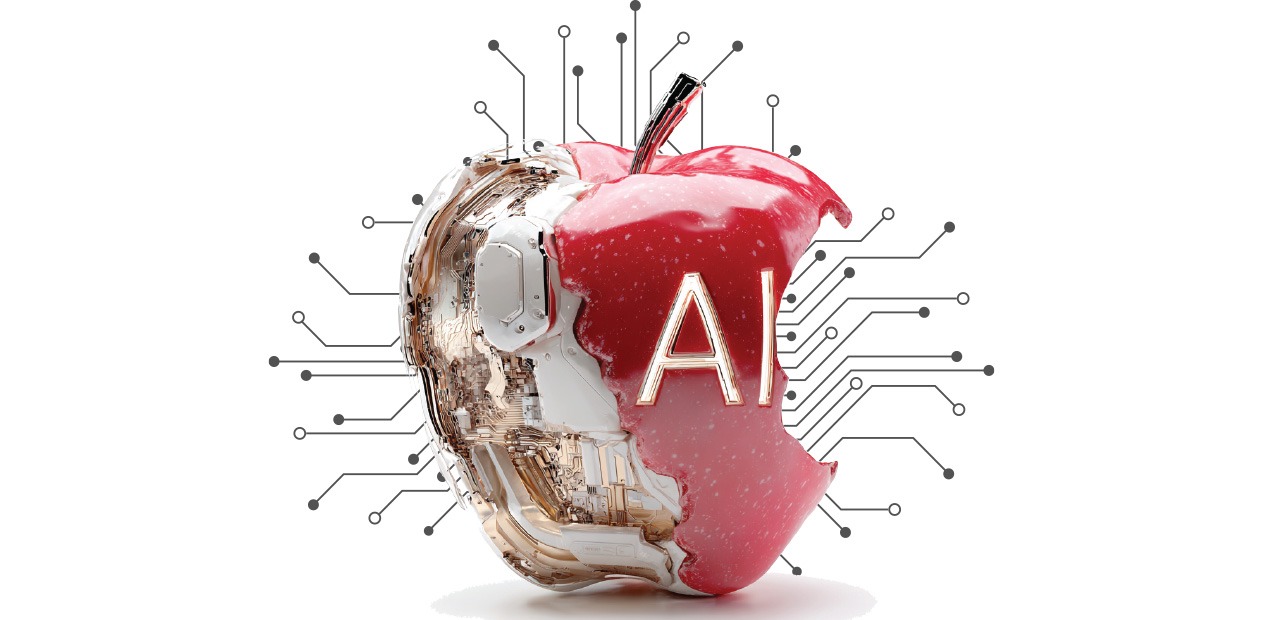
Resistance to artificial intelligence is futile at this point, as the technology is being integrated into everything from Google search and Excel spreadsheets to your Cvent platform. That doesn’t mean we are all headed for an error-free event paradise. If artificial intelligence is the modern equivalent of a tree of knowledge, allowing us to see what is and isn’t there, then the smart meeting pro will take appropriate steps to bite into the apple without choking on the seeds.
We talked to AI pioneers about how to incorporate the event-changing power of large language model (LLM) personalization to make everyone feel welcome while saving essential tasks more suited to human judgment for you.
Oh, It’s Personal
Personalization at scale has long been the holy grail for making events more meaningful. AI could be the missing link to make each person feel you had their needs in mind when designing the agenda.
“AI understands what’s happening on stage and delivers exactly what each person needs,” explains Ellis Messian, co-founder of Conference AI. New AI summarization technology doesn’t just deliver generic takeaways, but the specific insights that matter to their role, their challenges, their reason for being there,” she says.
Think about a salesperson attending a conference where target buyers are in the audience. They need to know what pain points surfaced on stage, what language resonated, what intent signals emerged that could shape their next conversation. Meanwhile, an engineer at the same event cares about technical deep dives and emerging frameworks. Same session, completely different value.
Read More: Practical AI: Weaving Personalized Experiences into Your Events
AI makes that possible, surfacing the right insights for the right person automatically. “For the first time, content and programming adapt to the individual.”
Now-ist, Smart Speaker Award winner and president of Meeting U, James Spellos, helps audiences overcome their AI hesitancy and pick the right emerging tool for the job. He listed helping attendees choose relevant sessions and setting up networking matches as two effective ways to use AI technology, with a caveat.
“Of course, this type of functionality is only as good as the information that the tools are provided about the people and the conference,” he warned, saying that while it will take time for more people to get comfortable with the tools, the promise is absolutely there.
Nick Borelli, an instructor at PCMA Event Leadership Institute and marketing director with Zenus Inc., says the industry is still in the early stages of applying technology, but he is seeing some glimmers of hope.
One example is an Association North’s Executive Edge event, where badges included AI images scraped from LinkedIn and themed to the event.
Organizations are leveraging AI for BEO variations that aid with a larger variety of accessibility accommodations, something that could lead to more people being able to attend.
One of the most promising use-cases of AI for event personalization, in his view, is email segmentation that analyzes registration trends to help deliver optimized messaging to the right attendees at the best possible time for conversion.
“My hope for the future is that a persistent and non-siloed source for attendee data can be utilized to make networking matchmaking much more powerful than it is today,” he said.
Close the Feedback Loop
Like an old-school radio DJ, meeting planners get requests in the form of hundreds of feedback forms but struggle to find the high notes in the midst of all those data points without a lot of pins, string and room-sized computers. Now, it could be as easy as feeding all that information into your proprietary GPT and asking the right questions.
Borelli praised AI’s capabilities to analyze event polls and survey responses and compile, infer and organize the information to highlight feedback that can help an organization find new revenue streams, improve experiences and better live their missions. Years’ worth of feedback can be analyzed to see trends a planner would never see by just looking at the previous year’s submissions one by one. “When you couple active data collection from attendees with passive data collection of behaviors, you get closer to seeing the full picture,” he said.
Attendee behavioral data gives a planner insights into the impact of experiences, not just information. Events improve iteratively when you measure comparisons between one design versus another or against benchmarks from the industry or previous events. This type of data takes planners from a binary pass-or-fail mentality to one of curiosity-led continuous improvement through responsible risk-taking.
Spellos pointed out that releasing the power of analysis at scale will require improving the ability to convince attendees to complete the forms. “Without fixing the chokepoint of having enough data, cool AI technology is just a lonely bystander,” he said.
Honor the Human Element
“Besides not being able to make a good latte in the morning, the limitation of AI is that it is only as good as how the people choose to use and prompt it,” he said.
“Clearly, we are nowhere near the ability to replace face-to-face interactions, and I don’t see that changing in the near future,” he concluded.
Read More: Why Human Capacity Is the New Competitive Advantage for Events in the AI Era
That observation mirrored results that Smart Meetings found in a recent white paper, which quantified the power of in-person events to build trust and achieve marketing goals compared to digital efforts.
But when set up properly, humans need to learn the humility and courage to set up the tools for success, Spellos said. Generative AI is better at logic.
“Besides not being able to make a good latte in the morning, the limitation of AI is that it is only as good as how the people choose to use and prompt it.”
— James Spellos
“We need to not get our ego worked up to a point where we think we’re smarter than the generative AI tool (the same way we’re not smarter than Google, or your library). The clear limitations of generative AI right now are in the humans’ hands.”
“We have a phenomenal tool that can help us in so many ways in our meetings and hospitality work…but we have to embrace it more fully and use it more effectively to gain value.”
“If we could only stop looking at this tool as a competitor, and look at it as the ultimate thought partner, this industry would start seeing greater benefit immediately,” Spellos said.
Human beings excel at many things that still challenge predictive engines. The snake in the AI adoption grass is taking every response as fait accompli, rather than applying human quality control, nuance and ingenuity.
Borelli explained the limitations of artificial intelligence this way: “AI is excellent at giving you the recipe for what has been, but it’s less qualified for realizing what has never been attempted.” For instance, AI can tell you where challenges may occur in specific event designs, but if they haven’t been overcome before, it’s less likely to give solid advice on how to address them.”
“By leveraging skills like empathy, creativity and a well-earned sense of taste, humans are still superior at decision-making, especially when the work we do impacts the emotions of other humans,” Borelli said.
“AI is excellent at giving you the recipe for what has been, but it’s less qualified for realizing what has never been attempted.”
— Nick Borelli
“The experience of an event will always be human,” said Messian. AI can process, analyze and personalize, but it can’t replace the spark that makes an event memorable.
“That feeling, that energy, the creativity that brings it all together—that will always come from people.”
Henry Coutinho-Mason, a reluctant futurist and provocative optimist, sees the human killer app as our ability to identify the signal amid the noise.
As anyone who’s opened five AI chat conversations at the same time will know, it’s never been easier to get probably-good-enough answers about any topic under the sun. But new abundances create new challenges: knowing what questions are worth asking; which of the three or four sentences in your 10,000-word response truly matter; and perhaps most interestingly, what isn’t in the AI’s answer.
In a similar vein, event organizers will have to show meticulous judgment, taste and anticipation. What are the topics that your attendees will need to know about in 6–24 months, but they don’t realize they need to know yet? What are the non-obvious signals that lie on the fringe today? Which are the hot companies of tomorrow?
“AI is infinite, people’s time and energy aren’t. Bridging that gap—making events feel natural, intentional and nourishing (both personally and professionally) will be all-important.”
Spellos drilled down to what is vital. “Besides not being able to make a good latte (or apple cider) in the morning, the limitation of AI is that it is only as good as how the people choose to use and prompt it,” he said. “Clearly, we are nowhere near the ability to replace face-to-face interactions, and I don’t see that changing in the near future,” he concluded.
“AI is infinite; people’s time and energy aren’t. Bridging that gap—making events feel natural, intentional and nourishing (both personally and professionally) will be all-important.”
— Henry Coutinho-Mason
That observation mirrored results that Smart Meetings found in a recent white paper, which quantified the power of in-person events to build trust and achieve marketing goals compared to digital efforts.
But when set up properly, humans need to learn the humility and courage to set up the tools for success, Spellos said. Generative AI is better at logic. “We need to not get our ego worked up to a point where we think we’re smarter than the Generative AI tool (the same way we’re not smarter than Google, or your library). The clear limitations of generative AI right now are in the humans’ hands. We have a phenomenal tool that can help us in so many ways in our meetings and hospitality work…but we have to embrace it more fully and use it more effectively to gain value.”
If we could only stop looking at this tool as a competitor, and look at it as the ultimate thought partner, this industry would start seeing greater benefit immediately,” Spellos said.
“The experience of an event will always be human.”
— Ellis Messian
Three Ways to Tiptoe into AI Adoption for Events
Still wondering how to get started in the right direction for next-level AI adoption? Futurist and trend watcher Henry Coutinho-Mason has some suggestions.
1. Improving connections and building micro-communities: Currently, most AI-powered attendee matches are blunt instruments, relying on high-level data taxonomies or out-of-date LinkedIn profiles. One of his favorite startups of 2025 was boardy.ai.
The platform allows people to have a very natural, open-ended phone conversation with an AI, which asks primarily two questions: “What are you working on?” and “Which type of people would you like to meet?” It then extracts data from your conversation and uses it to craft more intelligent matches with other people whom it has spoken to. He sees huge opportunities to use a similar approach to create small community “interest pods,” prompted to meet for sessions over a morning around a specific theme.
2. Enhance the relevance of the attendee learning experience: Desktop copilots will soon be both multimodal (able to see and hear what an attendee does) and embedded in wearables. The metaverse was a dud, but the Meta Ray-Ban smart glasses were the sleeper hit of 2025, which indicates that AI-augmented wearables are reaching a tipping point; Amazon has rolled out wearable AR glasses to its drivers; and Google is rumored to be putting its Gemini Live assistant into wearable smart glasses with Warby Parker in 2026.
As AI wearables become commonplace, expect to see attendees sitting in content sessions, not looking down at their phones (with all the distractions they offer), but with research copilots connected to their corporate data—alerting them when what’s being said on stage links to their work back in the office.
3. Engage entire audiences to co-create content: Invite participants to draw (yes, with pen and paper), an idea—it could be an industry’s future breakout product, the AI solution they wished existed or anything relevant. Transform these sketches into rich digital images. By aggregating people’s ideas to identify key themes, suddenly people can both create something personalized and also contribute to generating audience-wide data and insight.
This article appears in the January 2026 issue. You can subscribe to the magazine here.