italian-vacation-rental delivering excellent guest experiences

Travelers today want to be at home in the world, no matter where they find themselves. But because home means something different to everyone, meeting that desire is complicated for accommodation providers. A survey commissioned by online booking industry giant Booking.com found that travelers’ wish lists include a variety of amenities, from subjective (a comfortable bed) to practical (free Wi-Fi) to specific (a waterfall shower).

At least one ingredient remains consistent. Behind every outstanding guest experience is a host who expended time, effort and resources to ensure its success. Booking.com honored accommodation partners that consistently excel in this area with its 2016 Guest Review Awards.

Booking.com connects travelers with an immense global inventory of incredible places to stay, including resorts, B&Bs, villas, apartments and homestays. The 2016 Guest Review Awards recognized 355,535 properties in 205 countries and territories. Accommodations from the top 10 most awarded countries account for 56 percent of that total: Italy (53,005), the United States (24,761), France (23,003), Germany (18,221), Spain (18,037), the UK (16,514), Austria (12,659), Greece (12,439), Croatia (12,219) and Poland (10,399).

Given travelers’ growing preference for home-like lodgings, it’s no surprise that rental options such as apartments, vacation homes and villas dominated the perfect 10 review score category. Properties in this sector accounted for 70 percent of the 486 awardees to receive the coveted perfect 10.

Booking.com relied on a vast in-house resource to calculate partners’ scores—their more than 110 million posted guest reviews. To ensure authenticity, only guests who have actually stayed at an accommodation can review the property, and comments are not edited or adjusted. These policies enable users and accommodation partners to trust travelers’ feedback and use it to instruct decision making regarding where to stay and how to best serve guests.

“We not only help guide travelers to find their perfect stays, but also empower our accommodation partners to stay up-to-date with evolving customer expectations, including what travelers appreciate most about their property, as well as what can potentially be improved,” said Remco van Zanten, global director of partner services at Booking.com.

Reviews are part of that equation; the commissioned survey adds another component. Survey participants provided insight into what turns a stay into an experience. A helpful, professional staff (91 percent) and a personal connection with the host (59 percent) are essential for a majority of guests. Having those elements in place equips a property to incorporate the guest-specific details that make for a memorable stay.

In that regard, Booking.com and its partners seem to be succeeding. The total number of properties to receive a 2016 Guest Review Award outpaced the 2015 total by 25 percent.


southwest-wi-fi

These days, as fares get lower across the board, in-flight Wi-Fi and entertainment are becoming increasingly important to travelers looking to get the best bang for their buck. Over the last few months, major U.S.-based airlines such as Delta Air Lines, United Airlines and American Airlines began offering all in-flight entertainment for free.

In an effort to improve its in-flight internet connectivity and entertainment options, one of the nation’s most popular airlines, low-cost carrier Southwest Airlines, has recently reaffirmed its commitment to having a 100 percent Wi-Fi-connected fleet of more than 700 aircraft. Southwest operates the world’s largest fleet of Boeing aircraft, many of which already use satellite-based Wi-Fi that provides travelers with reliable internet service from departure to arrival.

The airline has signed agreements with Panasonic Avionics Corporation and Global Eagle Entertainment to use their services to enhance connectivity, increase Wi-Fi bandwidth, provide live television and offer exclusive content for passengers. These partnerships will help Southwest with next year’s upcoming introduction of new Boeing 737-8 aircraft and retirement of older, non-Wi-Fi-connected Boeing 737 aircraft. The agreements will lead to bandwidth being tripled, and Southwest passengers will benefit from greatly improved download speeds. In 2018, Southwest plans to increase bandwidth again.

“As the largest domestic airline in terms of originating domestic passengers boarded, carrying more than 100 million customers a year, we are committed to providing an enhanced inflight experience for our customers,” said Ryan Green, vice president marketing for Southwest Airlines. “Going forward, our customers will have the capability to stay connected on Southwest Airlines flights with even more bandwidth at their disposal.”

Passengers on Southwest Airlines can take advantage of the current in-flight entertainment options, which include nearly 20 channels of live television, offered free of charge. On-demand movies and television shows are also available for streaming on passengers’ own devices.

tsa-confiscates-record-number-of-firearms

2016 was a tumultuous year that included sky-high political tensions, significant racial discord and prominent terrorist attacks around the world. Naturally, many Americans are feeling uncertainty and apprehension about traveling. Some may even feel the need to carry a weapon when they fly.

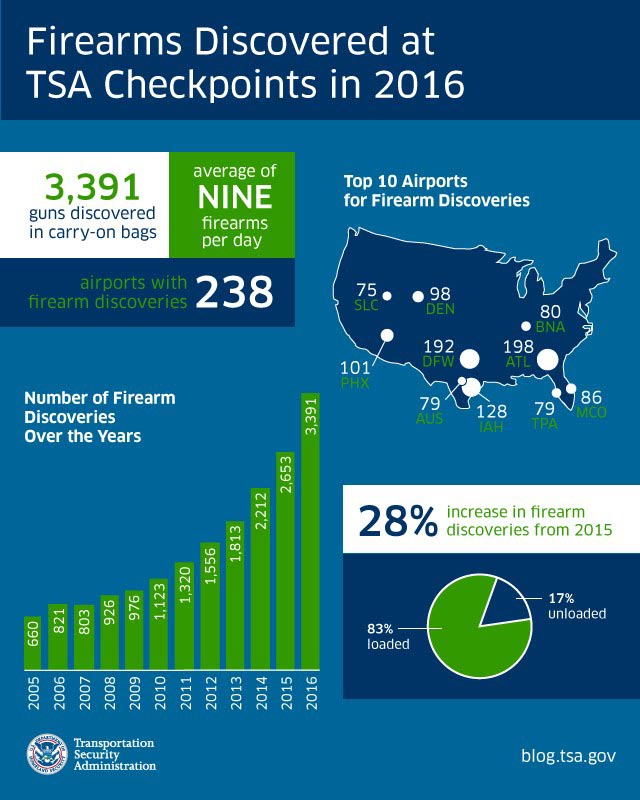
According to the Transportation Security Administration (TSA), which operates security checkpoints at airports across the country, an increasing number of travelers has been discovered to be carrying firearms at airports.

In 2016, TSA officers screened more than 738 million passengers, which represents an increase of more than 43 million since 2015. From those screenings, TSA agents discovered a total of 3,391 firearms in carry-on bags. An average of 9 guns were found each day, which is a 28 percent increase from 2015, when 2,653 firearms were intercepted. 83 percent of those guns were found to be loaded.

2016_end_of_year_firearms_final

Certain airports are more prone to firearm discoveries than others. The U.S. airport with the most firearms found is Hartsfield-Jackson Atlanta International Airport, where 198 guns were intercepted. Following closely in second place is Dallas/Fort Worth International Airport, with 192 firearms discovered.

Top 10 Airports with the Most Firearm Discoveries:

1. Hartsfield-Jackson Atlanta International Airport (ATL):198
2. Dallas/Fort Worth International (DFW): 192
3. George Bush Intercontinental Airport – Houston (IAH):128
4. Phoenix Sky Harbor International (PHX):101
5. Denver International (DEN): 98
6. Orlando International Airport (MCO):86
7. Nashville International (BNA):80
8. Tampa International (TPA):79
9. Austin-Bergstrom International Airport (AUS):78
10. Salt Lake City International (SLC):75

Firearms were not the only dangerous items confiscated at TSA checkpoints last year. In some cases, travelers attempted to conceal or hide their weapons, Cleverly disguised stun guns and knives hidden in pens, belt buckles, lipsticks, pill bottles and even smartphone cases are some of the more interesting finds.

Not all travelers intend to bring banned items in their luggage. In many cases, passengers who bring prohibited items such as guns, ammunition and knives tell security agents that they brought them accidentally. When packing and preparing for your trip, be sure to carefully inspect your bags and suitcases before you head to the airport.

virtual annual meetings

Why you should—and shouldn’t—host a virtual investors meeting

Last month, the Securities and Exchange Commission (SEC) made a move that could forever change the face of annual investor meetings: it gave the green light to virtual stakeholder meetings. As reported by the Wall Street Journal, Hewlett-Packard (HP) received an investor proposal which called for a vote to return to in-person investor meetings, but SEC said HP was allowed to drop the proposal without fanfare.

It’s a move that could very well open a Pandora’s box in the world of investor relations. Companies have been favoring virtual meetings, which can be done over the phone or via video conferencing, over the traditional in-person investor conference, as it saves them time, money and drastically minimizes meeting logistics.  But it’s a double-edged sword in this industry. Here are the pros and cons of hosting a virtual meeting.

Pro: The budget is drastically smaller

You don’t have to worry about booking a hotel block, hiring a caterer, hosting any special events or doling out any swag when investors dial in.

Con: There’s less interaction

Without those in-person meetings, a lot of collaboration is lost. Stakeholders aren’t able to ask as many questions or participate in the conversation as fully since virtual meetings tend to be a bit more structured.

Pro: It’s not a logistical nightmare

The same things that made the budget explode are the same things that are the nightmares of meeting planners everywhere. Instead of having to check on a million things to go right—did everyone get their special food requests? Is everyone’s room ready to enter upon check-in? Is the A/V system up to date?—planners just need to focus on making sure the calling system is up and running, which they only need to hire Broadridge Financial Solutions to do so.

Con: There’s less spontaneity

While there are plenty of things that could go wrong at live conference, it also lends itself to spontaneity and creative thinking. Spending multiple days with other investors and with the company executives allows people to interact with others they may not otherwise have approached. This can create new partnerships, new ideas and help build investors’ trust and faith in the company.

Pro: There’s more control

By doing a virtual meeting, you can schedule the meeting program almost down to the minute mark, which will not only save executives, shareholders and planners time but also help the company stay on message.

Con: It’s less transparent

With that control the company receives, investors lose their ability to ask tough questions and continue to press their point. A lack of transparency may be good in the short term for a company, especially if they are hoping to hide less than ideal quarterly returns or cut corners, but investors can’t trust in a company blindly. Plus, the truth always has a way of coming out sooner or later.

the-asburyThe Asbury, Asbury Park, New Jersey

USA Today honors 10 new hotels in its recent series of 10Best reports, which is selected by readers. A panel of hospitality experts created the original list of 20 properties, and readers cast their votes for the top 10. Most of the top 10 properties are also awesome boutique meeting hotels located in popular convention destinations.

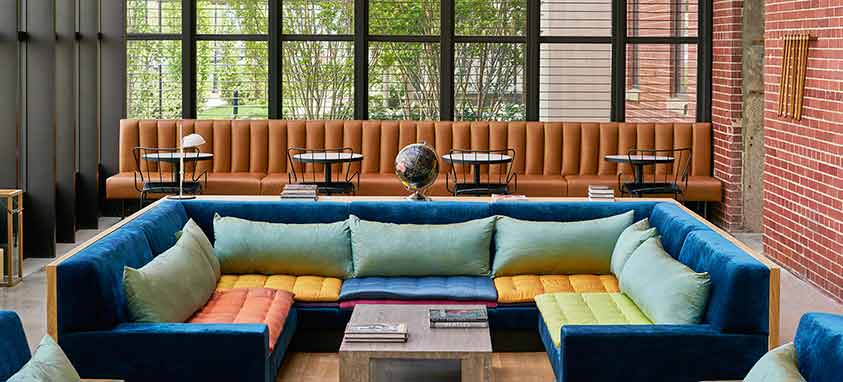
The Asbury in Asbury Park, New Jersey, was the No. 1 pick among USA Today readers. It opened in July and marks the first chapter in a multibillion development project along a 1.25 mile stretch of the city’s waterfront. The 110-room Asbury is the first new hotel in the city in 50 years. It offers 4,800 sq. ft. of indoor and outdoor event space.

andaz-scottsdale

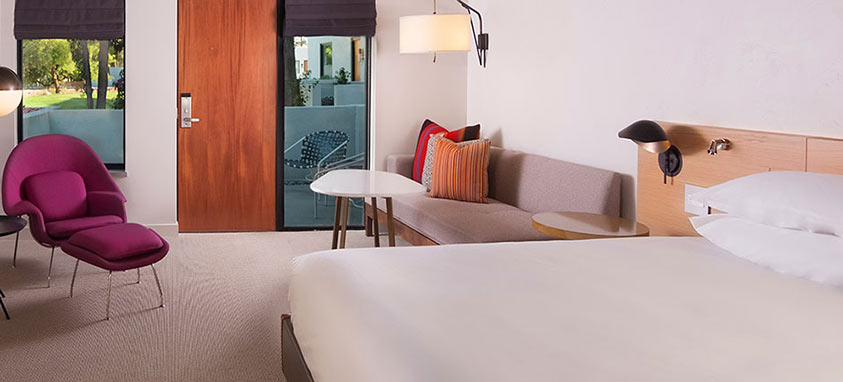
Andaz Scottsdale Resort & Spa checked in at No. 3 on the list. It opened in November with 201 guest rooms and 46,000 sq. ft. of meeting space. Iconic bungalows are inspired by the desert landscape.

The 21c Museum Hotel Lexington in Kentucky is an 88-room boutique hotel. Located downtown, the art hotel offers 7,000 sq. ft. of galleries and meeting space. The main gallery holds up to 250 guests.

the-watergate-hotel

The Watergate Hotel in Washington, DC, was featured in the April 2016 issue of Smart Meetings magazine. It completed a $125 million renovation of the entire property in the spring. Built in 1961, it’s famous as the site of the 1970s break-in scandal, which ultimately led to the resignation of President Richard Nixon. There are 336 luxury guest rooms overlooking the Potomac River. Among the 27,000 sq. ft. of meeting space is a new 7,000-square-foot ballroom and 10,000 sq. ft. of outdoor space along the river. The Watergate Hotel is an Associated Luxury Hotels International member.

the-beekman new meeting hotels

The Beekman, a Thompson Hotel opened late August 2016 in New York City. It returned to its former glory when it was built in 1881 as one of the City’s first skyscrapers. The hotel features 4,700 sq. ft. event spaces, accompanied by a beautiful nine-story atrium and pyramidal skylight. The hotel also features 287 guest rooms, 45 suites and two signature penthouses overlooking Lower Manhattan, as well as dining options from Tom Colicchio and Keith McNally

Here are the top 10 winners for Best New Hotels, according to USA Today readers.

1. The Asbury – Asbury Park, New Jersey
2. Hotel Emma – San Antonio
3. Andaz Scottsdale Resort & Spa – Scottsdale, Arizona
4. Spicer Mansion – Mystic, Connecticut
5. 21c Museum Hotel Lexington – Lexington, Kentucky
6. The Inn at Newport Ranch – Fort Bragg, California
7. Four Seasons Resort Oahu at Ko Olina – Kapolei, Hawaii
8. The Watergate Hotel – Washington, DC
9. The Beekman – New York City
10. Ace Hotel New Orleans – New Orleans

Luxury-hotels luxury travel trends in 2017

Luxury travel network Virtuoso has released its 2017 Best of the Best directory. The elite portfolio is published annually and features the most exclusive hotels and unique travel experiences around the world—amounting to more than 1,150 hotels in 100 countries. This year’s edition is a record-breaking 656 pages long and introduces 75 new properties.

The extensive Best of Best directory reveals some important trends developing in the luxury travel industry. A select few are highlighted below.

1. Luxury Travel in Emerging Destinations

South Africa, Colombia and Portugal are just a few of the trending destinations in the 2017 Virtuoso Luxe Report.  Naturally, leading luxury hotel chains are making rapid developments in these rising cities. South Africa’s Tswalu Kalahari and Six Senses Douro Valley in Portugal are two of the stellar luxury hotel and resort options in these emerging destinations.

2. Work-Centric Lobbies

Recently, it has become a priority for hotels to create multi-functional lobby spaces comprised of stylish lounges and work-friendly amenities. This environment is great for corporate meetings, because it encourages all aspects of business to be conducted in flexible spaces.  The new Four Seasons hotel in downtown Manhattan in New York City has pioneered the trend by providing usual work amenities such as laptops and interpreters for business meetings.

3. Authentic Cultural Experiences

One of the most prominent trends in travel is that travelers are increasingly looking for authentic and exciting experiences. Adding local flair and unique experiences gives planners an opportunity to create truly memorable events. Nighttime safaris in Laos and sushi-making sessions with top chefs in Tokyo are some culturally important experiences that are becoming readily available.

4. Social Media Photo Opportunities at Boutique Hotels

The search for a stunning locale to post on social media has contributed to the rise of boutique hotels. Often designed and furnished with a unique aesthetic, boutique hotels generally have fewer guest rooms, which permit enhanced customization, increased privacy and more opportunities for Instagram-worthy additions. Ted Turner’s one-room Ladder Ranch resort in New Mexico is the perfect example. Guests can enjoy wildlife-spotting opportunities, hot springs and snap away without any interruptions.

5. Enhancing Wellness

Wellness has been a pervasive trend around the world for some time now. This fascination is now entering the travel realm, as evidenced by Virtuoso’s prediction that the wellness travel niche will hit $680 billion this year. Wellness centers such as Reiki in Japan, which focuses on stress reduction methods, and Clinique La Prairie in Switzerland, a medical retreat combining cell therapy and holistic wellness, are two great options. Overall, health and wellness in travel is growing 50 percent faster than the general tourism industry.

2017-hotel-rates

Hotel rates will slightly rise in 2017 in Orlando, Seattle, Dallas, Atlanta and Denver, but potentially fall in Los Angeles, Houston, Washington, DC, and Charlotte, North Carolina, according to a recently released report.

The predictions are part of Travel Leaders Group’s 2017 Global Outlook, which utilizes data from multiple sources to make predictions for flight, hotel and other travel prices throughout the world.

The report predicts that overall, U.S. hotel rates will show a marginal increase in 2017, from $153.16 to $154.59, but says that this is not at all certain.

“Hotels have been reaping the benefits of low supply and high demand for the past 6–7 years,” the report states. “Major cities such as Chicago, San Francisco, Minneapolis, New York City, Philadelphia, Miami and Boston have added a lot of new room capacity over the last two years and it will take time for the market to adjust.”

It adds that the impact of Airbnb still hasn’t been fully analyzed, but that it will have a deflationary impact on traditional hotel rates.

The average price of a domestic airline ticket is predicted to be $410.21, the same as in 2016, but a significant decrease from $444.26 in 2014. Airline supply is outpacing demand for the first time since the “big three”—American, Delta and United—emerged from consolidation.

“We believe that airfares will remain largest flat in 2017 as carriers work to reduce capacity,” the report states. “Low-cost carriers will continue to thrive and their collective impact will restrict the large-network carriers from meaningful price increases.”

The report predicts slightly lower airfares in Western Europe and Latin America, and basically no changes in fares in the Middle East and the Asia Pacific region. A slight increase in hotel prices is expected in Europe, the Middle East and Africa, while no change is predicted in the Asia Pacific region and a small decrease is forecast for Latin America.

Overall, the report predicts that global travel transactions will show modest grow, and air and hotel prices will remain largely stagnant.

Travel Leaders Group operates company-owned, franchised, and affiliated travel agencies throughout the world, and issues its Global Outlook annually.

Alaska Airlines has added new amenities to target a younger demographic. It makes perfect sense, as Virgin America (a low-cost airline well-known for hip and youthful branding) was recently acquired by Alaska Airlines. One new in-flight feature is particularly promising–the convenience of free smartphone messaging from 36,000 feet in the air.

Alaska Airlines has announced the launch of a new service called Free Chat. The technology is provided by Gogo, which offers on-board Wi-Fi on many of Alaska’s flights. Free Chat permits passengers to use web-based messaging apps in-flight. “We know that staying in touch while on the go is essential to our guests, many of whom don’t need full Internet access. Free Chat is a great way to keep that connection alive without breaking the bank,” said Andrew Harrison, Alaska Airlines’ executive vice president and chief commercial officer. Virgin America and Horizon Air could implement this service too, depending on customer feedback.

Many are probably asking the obvious question: how is Free Chat different from the usual in-flight Wi-Fi services?

Onboard Wi-Fi has been an option on many airlines for some time now, but it is generally not a free service. Free Chat is unique because it focuses on smartphone messaging as a complimentary service. Contingent on internet access, passengers may use web-based messaging apps such as iMessage, WhatsApp and Facebook Messenger to send text messages through Free Chat. Short Message Service (SMS) or Multimedia Message Service (MMS) messages, which use phone networks, are not available. The beta version of Free Chat was released last Friday and the full version launches on January 24th.

Free Chat is one of several new in-flight products that will be available on Alaska Airlines in 2017. A premium economy class is expected to be seen on around 90 percent of the fleet by the end of the year. The new class offers more than four inches of extra legroom, early boarding and free snacks and beverages. An upgrade to premium economy will cost anywhere from $15-$79, depending on the trip.

U.S. customs checkpoints

Roger Dow, president and CEO of U.S. Travel Association, had some harsh words for the Customs and Border Protection (CBP) following a four-hour technical disruption on Jan. 2 that caused long delays at checkpoints nationwide.

According to the CBP, the service breakdown does not appear to be malicious, but it did create a lot of issues since customs was forced to manually process all travelers coming into the United States. The internet exploded with photos of long lines and complaints about lack of bathrooms, water and unprepared customs officials.

Miami International, Fort Lauderdale/Hollywood (Florida) International, Hartsfield-Jackson Atlanta International, John F. Kennedy International (New York), Logan International (Boston) and Los Angeles International were among the airports where travelers waited for hours.

“What happened at customs airport checkpoints yesterday is disturbing, but unfortunately it is not surprising,” Dow says. “Technology at these facilities is too outdated to cope with existing travel volume, let alone the increased traffic we hope and expect to see at our gateway airports in years to come.”

Dow is especially concerned with the impact that delays will have on international travelers.

“The U.S. customs and entry process is already notorious for dissuading long-haul visitors from dealing with the hassle of coming here, and lost inbound travelers means lost export dollars at a time when our economy can ill afford that,” Dow says. “A modern system is not only more efficient, but more secure, and both of those are very worthy priorities in the current security and economic environment. Let’s not forget that we have seen this problem before, and it is all too likely we will see it again if we keep failing to learn from these mistakes.”

A similar technical problem with customs happened in October 2015. That incident was blamed on issues with computers and kiosks as international travelers arrived to the United States.

pcma-convening-leaders-2017

PCMA Convening Leaders is the annual convention put on by Professional Convention Management Association. It is taking place this week at Austin Convention Center in Texas Jan. 8−11.

Austin is a very popular convention destination, with live music everywhere and star power. For example, Matthew McConaughey, who is an Austin resident, made a live appearance on stage during Day 1.

“We are thrilled to host convening leaders for the first time in Austin,” says Tom Noonan, president and CEO of the Austin Convention & Visitors Bureau. “Austin has become a premier destination for meeting, conventions and leisure business and we are confident that we will see return business from the PCMA attendees.”

Among the keynote speakers taking the stage during this annual convention are Issac Lidsky, Jeremy Rifkin and Rachel Bostman. Lidksy may be best known as Weasel on the TC show Saved by the Bell: The New Class. A graduate of Harvard Law School, Lidsky has many interests ranging from construction to starting a nonprofit that supports blinding diseases.

Rifkin is an economic and social theorist. The author of 20 international best-selling books, he often speaks and writes about the impact of scientific and technological changes on the economy, the workforce, society, and the environment. His most recent books include The Zero Marginal Cost Society (2014), The Third Industrial Revolution (2011) and The Empathic Civilization (2010).

Botsman speaks on the power of collaboration and trust enabled by technologies, which are changing the way we live, work, bank and consume. She defined the theory of “collaborative consumption” in her first book What’s Mine is Yours and in her TED talks. Her work has been published in The New York Times, Wall Street Journal, Harvard Business Review, The Economist, Wired, NPR and Fast Company.

On Tuesday evening, the closing gala will feature a live performance by Austin’s Willie Nelson.

“We are excited to be in Austin for Convening Leaders 2017,” says Deborah Sexton, PCMA president and CEO. “Austin is a high energy destination and the Austin Convention Center is located in the heart of a vibrant downtown scene, supported by an expansion of new hotel offerings.  Our PCMA Convening Leaders attendees will experience this unique city and convention center that nurtured SXSW from its early beginnings to the blockbuster event it is today.”

PCMA by the numbers:

40 local musicians have been hired to entertain PCMA attendees at the convention center, ABIA, and multiple events held through the conference.
2 local non-profits will be recipients of donations through the PCMA volunteer activity and the foundation fundraising events.
241 local volunteers have signed up to fill over 400 volunteer slots/opportunities
42 local venues and restaurants booked or rented for 63 hosted client events
53 local sponsors including retail, high tech, spirits and restaurants
300 meeting planners participating in sight tours

Live updates from Smart Meetings: