Call it the Oscars version of the hotel world (or maybe not, judging from Sunday night’s unprecedented best-picture gaffe). The Travel + Leisure 2017 It List does hand out an award of sorts by visiting all of the best new hotel and resort openings of the past year and ranks them in this envious list.

If you’re in the industry of planning meetings or events, it’s a collection worth noting whether it’s for destination inspiration or just to keep on top of what’s new and exciting. And it’s not solely based on glitz and glamour. As T+L’s editors note: “The 44 hotels and resorts ahead are making waves for different reasons—some for killer design, others for culinary bona fides or an unbeatable location—but all are inspiring the rest of the hospitality world to take note.”

We’ve done the very difficult task of focusing on properties in the United States that would also be best in class for event space. We can imagine, though, how tough it must be to travel to all the new and exciting hotels and resorts around the world and pick which ones are the best. Just saying in case T+L needed volunteers.

United States

Viceroy L’Ermitage Beverly Hills

Location: Beverly Hills, California

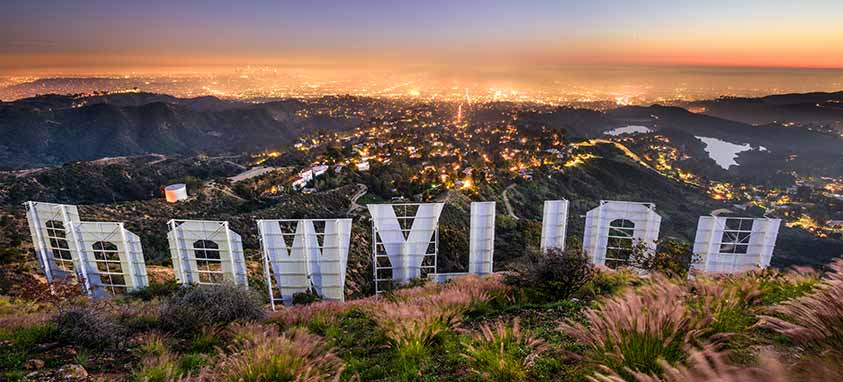
First stop, Beverly Hills. Not far from many of Los Angeles’ top attractions—such as Hollywood, Rodeo Drive, Universal Studios—this hotel offers 9,500 sq. ft. of indoor and outdoor meeting and event space that includes a rooftop pool and breath-taking views of the city.

The Asbury

Location: Asbury Park, New Jersey

With 4,800 sq. ft. of indoor and outdoor space on the Jersey Shore, there are lots of options for meetings.

The Beekman

Location: New York City

Ah, the Big Apple. It’s hard to compete in this crowded and pricey space, but at 4,700 sq. ft. of meeting and event space spread across two floors of beautifully appointed architecture, it’s a worthy NYC splurge.

The Dewberry

Location: Charleston, South Carolina

Southern charm at its finest, this Charleston belle offers 4,750 sq. ft. of indoor and outdoor event and meeting space that includes a grand ballroom, of course.

Montage Palmetto Bluff

Location: Bluffton, South Carolina

Another Southern belle, but this one is conveniently located between Savannah, Georgia, and Hilton Head Island, South Carolina. The resort offers more than 40,000 sq. ft. of event and meeting space that covers a chapel, a wine cellar and an inn.

Four Season Resort Lanai 

Location: Lanai, Hawaii

How any work gets done in a tropical paradise is hard to imagine, but it does. This Four Seasons in Lanai takes it one step further with its private island setting. Yes, an entire Hawaiian island that offers a total of 55,682 sq. ft. of event and meeting space, and the property is available for complete buyout.

21c Museum Hotel Oklahoma City

Location: Oklahoma City

If you ever wanted to stay in a museum that functioned like a hotel, this might be it. With more than 14,000 sq. ft. of event and meeting space that’s often adorned with art, it’s city sophistication and culture all rolled into one.
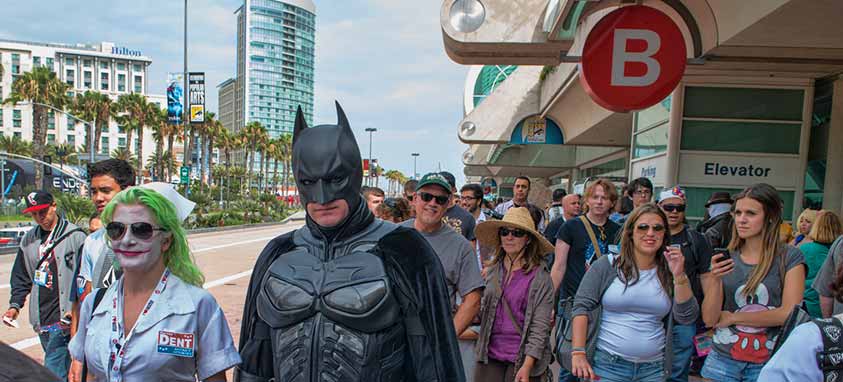
San Diego Comic-con

Planners and local governments both know that convention center capacity is a critical determinant of site selection. Cities that devote funds and square footage to building, maintaining and expanding state-of-the-art meeting facilities reap rewards in the form of increased meetings and conventions bookings, room night sales and visitor spending.

But what happens when a premier meeting city enters contract negotiations with its largest event client as its long-awaited convention center expansion faces an uncertain future? That scenario is playing out now as San Diego and Comic-Con International work toward an agreement to keep the reigning king of all comic book conventions in its longtime home after the current deal expires in 2018.

Comic-Con has been held in San Diego since it debuted in 1970 to an audience of some 300. Now, more than 130,000 fans flock to the annual gathering—celebrating comic books, video games, science fiction and fantasy films and literature—that attracts worldwide attention and scores of celebrity panelists.

Despite the presence of the 2.6 million-square-foot San Diego Convention Center, facilities in the booming meetings and conventions destination have struggled to keep up with demand. The convention center, which opened in 1989, welcomed nearly 825,000 guests to 158 events in fiscal year 2016.

“During that period,] events in our facility generated $1.1 billion in regional impact and $23.9 million in hotel and sales tax revenue into the city of San Diego’s General Fund,” said Clifford Rippetoe, president and CEO of  San Diego Convention Center Corporation, in a statement released Jan. 13, in partnership with  San Diego Tourism Authority (SDTA).

But the behemoth venue no longer feels so spacious. “Our clients have told us for years that an expanded convention center is needed to meet the demand for hosting conventions in San Diego and stay competitive in the marketplace,” said Joe Terzi, president and CEO of SDTA, in the same statement.

As the largest annual convention held in San Diego, Comic-Con is acutely aware of the space strain. To alleviate the issue, events have spilled over into nearby hotels in recent years. While workable, the campus-like approach is viewed as a stopgap measure on the way to the ideal solution—a contiguous addition to the existing convention center.

Convention center expansion plans have languished since 2014, when the appellate division of the San Diego County Superior Court declared that plans to fund the project with hotel tax revenue were unconstitutional. The expansion effort scored one legal victory by way of a Jan. 25, Superior Court ruling that the proposed development does not violate existing state environmental legislation. The funding matter stands unresolved.

It remains to be seen if San Diego and Comic-Con will emerge from this period of uncertainty with their premier pairing intact. The San Diego Union-Tribune reports that the two parties have agreed in principle to negotiate a new three-year deal. In addition to meeting space, accessible hotel room rates figure to play a significant role in the talks.

Airbnb Group Meetings

Airbnb’s recent purchase of Luxury Retreats for $300 million raises an important question: Can planners now look to Airbnb for group meetings?

Among meeting planners, Airbnb ranks low—or not at all—as a way to find beds for meeting attendees. The San Francisco-based home-sharing platform is better known for attracting leisure travelers, who are often on a budget. Planners favor hotels and resorts.

Airbnb’s acquisition could change that—or at least offer an option for certain types of gatherings.

Airbnb for Group Meetings

Luxury Retreats isn’t the sort of company that lists spare beds in a rusted camper parked behind the woodshed. The Montreal-based vacation-home management company deals in high-end rentals. It manages more than 4,000 properties worldwide, generating $150 million in annual bookings. Of luxury homeowners who seek to list their properties on the company’s website, fewer than 5 percent get their wish.

We reached out to Luxury Retreats to find out more about its group-meeting business, but the company didn’t respond. So we took a tour of its website to weigh the potential for booking a stay for groups.

Four Potential Meeting Spots

1. Chateau style: If you’re thinking about a meeting in Europe, Chateau Petit Versailles on the outskirts of Vienna, might suit your needs. The French-style chateau has 14 bedrooms and 14 baths, enough room to sleep 34 guests.

The property includes a billiard room, as well as a cigar and cognac bar. If the outdoors is more your style, the estate features 27 acres of private estate gardens and forest.

Chateau Petit Versailles rents for $27,089 per night.

2. Talk-show talker: Should you prefer to meet under the California sun, one option might be the Merv Griffin Estate in La Quinta, California.

“Legendary entertainer Merv Griffin lived large, so it was only fitting that he called this vast 39-acre, 13-bedroom equestrian compound, home,” according to the Luxury Retreats website.

Accommodations include the 5,400-square-foot main house, as well as four guest pods and two guest houses—all totaled, enough room for 26 visitors. Horses will find ample space in the 20-stall barn.

Rates range from $5,650 to $50,000 per night.

3. Caribbean for 50: For the planner looking for a Caribbean retreat, Sheriva Estate in Maundays Bay, Anguilla, has possibilities.

It offers 22 bedrooms spread among three villas. The property sleeps 50 and is open for weddings and corporate retreats. Events at the property can host up to 100 guests.

Rates range from $16,100 to $45,000 per night.

4. No meeting is an island: Or maybe you have something more exclusive in mind. Try Koh Rang Noi in Thailand, which is billed as “the only luxury private island in Phuket.” Its three houses and 19 bedrooms can accommodate up to 38 guests.

Cost $35,000 per night. You’ll get a day cruise, apparently gratis, on the island’s 70-foot private yacht if you stay a week or more. That’s one reason to like long meetings.


Meadowood Spa reception Courtesy of Meadowood Napa Valley

Forbes Travel Guide revealed its 2017 Star Award winners, a selection of the world’s best hotels, restaurants and spas.

Who’s new to the list? This year’s additions include 181 hotels, 32 restaurants and 40 spas.

Forbes Travel Guide used boots-on-the-ground research and a “proprietary algorithm” to ferret out the best properties, bestowing on winners a Five-Star, Four-Star or Recommended award.

Five Stars represents the best of the best. Among the newbies, 22 hotels nabbed top honors, 76 landed a Four-Star award, and 83 hopped on the Recommended list.

America Scores with Five-Star Award Winners

The United States didn’t outshine the world, but it cracked double digits. Ten U.S. hotels, restaurants and spas joined the Five-Star club.

Among hotels, California edged out Florida, 2-1.

* Faena Hotel Miami Beach

Fairmont Grand Del Mar in San Diego

* Solage, An Auberge Resort in Calistoga, California

In the restaurant category, Las Vegas grabbed all three spots.

* Le Cirque Las Vegas

* Picasso

* Wing Lei

Four spas spread the bliss across three states.

* ESPA at Vdara in Las Vegas

* Meadowood Spa in St. Helena, California

* Palm Beach Spa at Four Seasons Resort Palm Beach

* The Spa at Beverly Wilshire in Beverly Hills, California

Meet the Superstars of Five Stars

Forbes Travel Guide has no plans to introduce a sixth star in its rating system, but certain U.S. properties deserve special recognition. Here are the eight hotels that won the luxury trifecta—Five-Star ratings for their hotel, restaurant and spa.

* The Broadmoor in Colorado Springs

* The Cloister in Sea Island, Georgia

* Fairmont Grand Del Mar in San Diego

* Mandarin Oriental, Las Vegas

* Mandarin Oriental, Miami

* Montage Laguna Beach

* Ocean House in Watch Hill, Rhode Island

* Wynn Las Vegas.

It doesn’t get better than that anywhere in the world. That is, unless you’re staying at Mandarin Oriental, Hong Kong or Wynn Macau. Each tallied six Five-Star awards for its hotel, spa and four restaurants, a new record.

Americans are keen on traveling  to Cuba, despite uncertain U.S.-Cuba relations.

That’s according to a new  travel trends survey from Travel Leaders Group that expects Cuban travel to increase in 2017.

“The momentum of public opinion among the American traveling public for unfettered access to Cuba continues,” said Ninan Chacko, CEO of Travel Leaders Group, in a statement.

The number of visitors  from the U.S. jumped to 614,000 in 2016, a 34 percent pop over the previous year. More than two-thirds of those visitors—roughly 470,000—were Cuban Americans, mostly on family visits.

Heightened Interest in Travel to Cuba

Travel Leaders Group surveyed its travel agents to get a pulse on Cuba. In all, 1,689 agents responded. Here’s what the company found:

* 22 percent of the agents said they booked travel to Cuba this year.

* 59 percent said clients had expressed interest in a trip.

Both numbers pointed toward an increase in travel this year.

In one instance, the survey split the responses of those who identified as luxury travel agents and regular travel agents. Luxury agents said affluent clients listed Cuba as No. 12 on the places they wanted to visit. Clients of regular agents ranked Cuba No. 49.

Trump Effect? Hotels Rates Dip

Trips to Cuba have caught fire since former President Barack Obama used executive orders to ease restrictions on business and travel. But President Donald Trump earlier this year called for a full review of American foreign policy toward Cuba.

The president’s request has some travel industry experts worried, but it could benefit U.S. travelers in the short run. Hotel rates in Cuba have dropped for travel in spring, summer and fall of this year, according to a story in Men’s Journal.

Rates at Cuban hotels have doubled and sometimes quadrupled since 2014, when U.S.-Cuban relations began to thaw.

Incentive Travel and Meetings: No Worries

Lingering uncertainly hasn’t hurt at least one meetings and incentive travel company. Cuba Incentive Travel Associates has seen its business jump from “just a wide range of industries—from agriculture to automobiles to finance,” says Casey Lazar, director of client services for The Woodlands, Texas-based company.

Medical groups and university educators have also been growth areas for the destination management company. Medical groups tend to seek meetings for 40 to 80 people.

In both sides of the business—incentive travel and meetings—Lazar says clients are looking for cultural immersion for their Cuba trips. And not many of them seem nervous about new potential travel restrictions.

They’re planning their trips through 2019.


Trump Bathroom Ban

Not 24 hours after Trump’s “Bathroom Ban”—a rollback of protections for transgender students that allowed them to use the bathroom of their gender identity—the fallout has been swift, especially for those in education and the travel industry.

Protesters gathered outside the White House on Wednesday night to rebuke the president’s move, which critics condemn as discriminatory. Many fear the move will put transgender students at higher risk of harassment and bullying.

In a joint statement, the NAACP Legal Defense and Educational Fund, ACLU, Human Rights Campaign, among others, said: “They have sent a deeply troubling message to students that the administration will not stand up for students’ civil rights. We condemn the administration’s decision, vow to fight to enforce Title IX, which continues to protect transgender students, and call on individual schools and districts to treat students consistent with their gender identity and consistent with the rescinded guidance that accurately explained the law.”

Bathroom Ban Hits Meetings and Travel

Those in education are not the only ones feeling pressure under the so-called Trump Effect. Those in the meetings and travel industry have also been impacted.

North Carolina’s House Bill 2 law—which restricts “access to multiuser restrooms, locker rooms, and other sex-segregated facilities on the basis of a definition of sex or gender consistent with sex assigned at birth or ‘biological sex’ “—has cost that state numerous marquee events, such as the NBA All-Star Game and NCAA tournaments. Those high-profile boycotts translate into at least $630 million in lost business since the law went into effect last year, according to Forbes.

Planners Eye New Bathroom Bills

With 14 states considering their own Bathroom Bill this legislative season, should planners take that into account when deciding meeting and conference locations? The answers are not easy.

For a little perspective, consider this: Earlier this month, the Global Business Travel Association (GBTA) reported that the business travel sector lost nearly $185 million in bookings the week after Trump’s travel ban went into effect.

The stakes are definitely high.

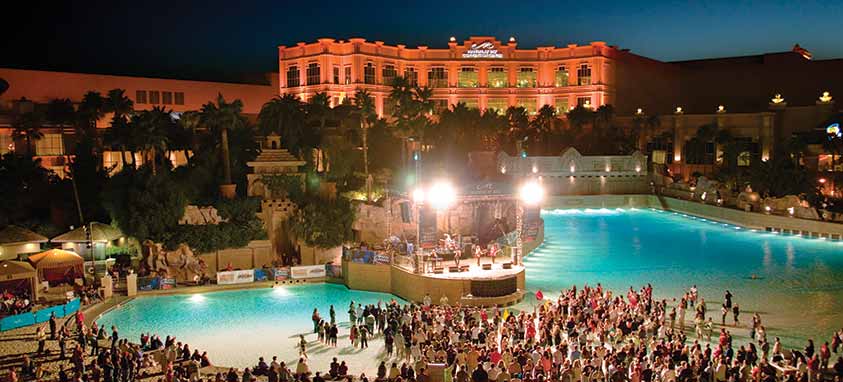
MGM Resorts International is the world’s leading hospitality and entertainment company. Within our deep and diverse portfolio of resort destinations, we create experiences that simply do not exist anywhere else.

Whether a guest wishes to escape for the day or enjoy an extended holiday at any MGM Resorts destination, they can choose from countless, beautifully furnished rooms featuring the latest in high-tech conveniences or stunning suites containing every luxury imaginable. There’s truly something for everyone.

For every culinary temptation, there’s a sumptuous dining destination waiting to take reservations. Featuring restaurants by celebrity chefs including Joël Robuchon, Masaharu Morimoto and Wolfgang Puck to name a few of our culinary collection reads as the ultimate “Who’s Who” of the international fine dining scene.

When it comes to pampering guests, MGM Resorts daylife experiences are second to none. We’ve perfected the art of relaxation with decadent poolside experiences and lavish spas and salons. And after dark, our iconic nightlife destinations and world-class entertainment venues, like our new T-Mobile® Arena, bring the world’s greatest entertainers out to play.

MGM Resorts offers endless event possibilities with 3 million square feet of meeting space throughout our destinations. Featuring dramatic ballrooms with stages to breakout rooms, boardrooms and pre-function space, we can accommodate any size event. Our multitalented team of technicians, artisans, designers, planners and logistic specialists offers unrivaled event and production expertise, with innovative audiovisual resources as well as a 105,000-square-foot fabrication studio and warehouse at their fingertips.

There’s nothing like MGM Resorts International.

thanksgiving-travel

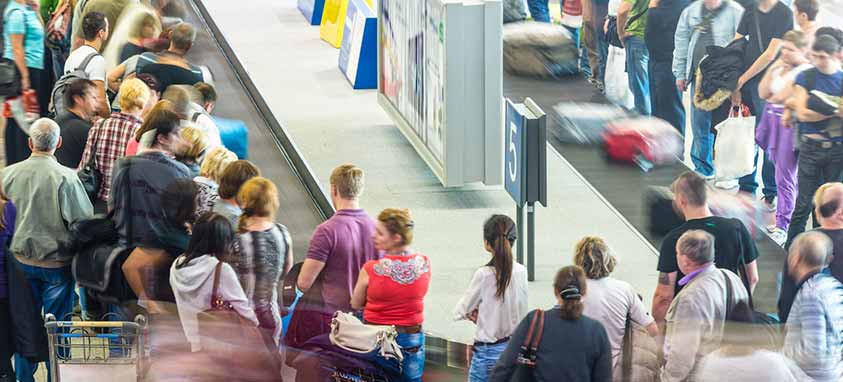
This Thanksgiving, the planes will be as stuffed as the holiday bird—at least that’s what most U.S. airlines are predicting.

U.S. carriers are expected to fly 27.3 million passengers worldwide from Friday, Nov. 18, through Tuesday, Nov. 29, up 2.5 percent from 2015, according to Washington-based trade group Airlines for America.

Travelers are taking advantage of low fares and added capacities. The most recent data from the U.S. Department of Transportation show the average domestic airfare in the second quarter was $352—the lowest price since 2011.

The Sunday after Thanksgiving will likely be the busiest, with an estimated 2.81 million travelers in flight. The Wednesday before the holiday is also expected to one of the worst days in terms of numbers. Thursday, Thanksgiving Day, is expected to be the lightest travel day within the 12-day period.

To accommodate the jump in numbers, airlines are adding 74,000 seats a day and larger planes.

Airline reward aggregation company RewardExpert released a forecast of the worst airlines in terms of traffic based on historical on-time performance from 2011-2015. See the findings below:

Worst Airports  Best Airports
San Francisco (SFO) – 75.4% Honolulu (HNL) – 91.8%
William P. Hobby (HOU) – 79.2% Atlanta (ATL) – 87.5%
Oakland (OAK) – 79.3% Charlotte (CLT) – 86.5%
Chicago Midway (MDW) – 79.6% Salt Lake City (SLC) – 86.4%
Chicago O’Hare (ORD) – 79.6% Reagan National (DCA) – 85.7%

TSA’s Thanksgiving Travel Tips

In preparation for what is sure to be a hectic few days at airports, the TSA has released some travel tips to help ease the congestion.

1. Get to the Airport Early
You knew that was coming, right? It may be an obvious one, but it’s not always followed as much as it should be. Plan on hitting traffic en route to the airport, plan on standing in line to check your bag and plan for a long security line. If none of the above are an issue, great. Now you’ve got time to crack open a book, grab a bite to eat and relax until it’s time to board.

2. Enroll in TSA PreCheck
Eliminate the security line hassles completely. You receive PreCheck authorization within two weeks of your interview, so yes, there is still time to enroll before the holiday. The application is available online and the interview takes just ten minutes. Learn more in our Complete Guide to TSA PreCheck.

3. Prepare While in Line
There is nothing—I mean nothing—more infuriating than seeing someone in front of you in line who reaches for their wallet to find their ID as the TSA agent is waiting to take their ticket and license. This is typically the same person that walks through the detectors with shoes on and gets stopped for the bottled water in their bag. Get your act together while you’re waiting in line: shoes off, ID and ticket out, beverages gone, laptops separate. There are signs all over reminding you what is and isn’t allowed.

4. Don’t Bring Prohibited Items
If you’re unsure – there are several ways to get clarity on what is and isn’t allowed. Visit tsa.gov and in the upper right-hand corner of the homepage, click on “What can I bring?” Tweet your question to @AskTSA. Send fb.com/AskTSA a Facebook message. Call the TSA Contact Center at 866-289-9673.

5. Remember There’s a Lost and Found
This is key—it’s easy to leave something behind at security, but don’t panic. Go to TSA’s Lost and Found page and enter the airport security code. Then you’ll be directed to the lost and found department for the correct airport to track down any items left behind.

event security

The world can be a scary, unpredictable place, but you don’t want your meetings to feel that way. Ensuring attendees’ safety should be your top priority for any event. Here are a few do’s and dont’s when it comes to event security.

DO get acquainted with your venue long before your event.
Security should definitely be a factor when deciding on a venue, but the real work starts once it’s been booked. Get to know the ins and outs of the venue, including room capacities and exit strategies. You’ll likely be going through the venue anyways to get an idea of its flow, but it’s important to keep security top of mind from the get go.

DON’T leave your security team out of the loop.
Your venue might be able to supply enough security services for your event or you might need to hire outside help. Either way, don’t leave them out of the planning process. If you’re hiring contractors, make sure to get them involved as soon as you have the venue booked. They need time to acclimate to the venue, and should be aware of every event happening in every space for the duration of your event.

DO think medical emergencies as part of security.
The most likely unplanned incident at your event is likely to be a medical emergency. Your security team should know where the closest emergency room is to the venue and the most efficient way to get there.

DON’T put the entire burden on your security team.
While your security team should know what to do in case of an emergency, but they should not be handling smaller medical issues. Set up a medical kiosk or have a designated care desk for those smaller concerns. Your security team needs to have their plate cleared so they can focus on the broader safety issues at your event.

DO set up a security station.
Your security team should also have a station somewhere within your venue where attendees can go if they feel unsafe, have a tip about sketchy behavior or have an urgent medical emergency. Attendees will feel safer knowing that the security team is on the clock and anyone looking to misbehave may be deterred by their presence.

DON’T let attendees take their badges for granted.
It could just be that they forgot their badge in their room or that an attendee from a separate event stumbled into the wrong conference, but if your meeting has a high profile speaker or classified information, then you don’t want to take any chances. Make sure attendees know that they need to have their badges on their person in order to access events. Your security team will help enforce that rule, but make sure your coordinators help monitor as well.

DO sweep the room.
It may sound a bit paranoid, but security should sweep the room for any recording devices, or other more ominous devices, before big presentations. Remember that part of security is protecting intellectual property, not just ensuring attendees are physically safe.

DON’T forget the venue staff.
Again, if you have a high profile speaker, you don’t want to leave anything to chance. Ask the host venue or hotel for a list of recently hired employees who might be working, or have access to, your event. It could just be a coincidence, but it could also be someone dangerous. Give the list to your security team to have them investigate.

DO put cyber security in place.
If a hacker is interested in your client’s private information, chances are they might see an event or meeting where that information will be discussed as their golden opportunity. Double down on firewalls and make sure that the people who absolutely need access to sensitive information are the only ones who can access it.

DON’T get paranoid.
It’s easy to start imagining the worst case scenarios when thinking over all the logistics, but the truth is it’s very unlikely to happen. However, it’s always better to prepare for the worst so that nothing takes you by surprise. Plus, if you are prepared, you’re likely to be less anxious.

2017 association trends

For professional associations and meeting planners, membership does have its privileges

As 2017 gets underway, what are the top trends to watch out for if you’re in the meeting planning industry? SmithBucklin—a leading association management and services company—released Circuit, its 2017 trend report that examines what issues professional organizations face in the coming year. Here are key takeaways that could impact the travel, trade show and hospitality industries.

Is 2017 a buyer’s or a seller’s market for hotel supply growth?

SmithBucklin cited conflicting reports forecasting “that hotel supply growth may outpace demand in 2017, indicating that the association event industry could be shifting from a seller’s market to a buyer’s market for the first time since 2009” or that more hotel mergers and consolidations “could further strengthen their ability to control pricing.” Accurately predicting the future is practically impossible, but here’s how you can prepare for uncertainty:

1. Plan ahead
2. Be flexible
3. Strategically prioritize
4. Leverage your partnerships

Ironing out the details early on in the process, booking during the week and being open to unorthodox solutions will help you stay ahead of change.

Trade shows to grow 3 percent through 2019

According to the 2016 Center for Exhibition Industry Research Index Report, trade shows will sustain a yearly 3 percent growth for the next few years. While that expansion is welcome news, attendees’ expectations will also grow. Specifically, “exhibitors and sponsors will continue to demand more energy, increased traffic, greater engagement, and enhanced networking and business opportunities.”

SmithBucklin advises organizers to collect and analyze attendee behavior data to design a more sophisticated trade show and offer enhanced experiences. One advancement readily available to planners is tracking smartphone and social media activity at the trade show and using that data in real time to respond to attendees’ interests.            

From smartphones to virtual reality

Smartphones have become an integral tool for everyday life, whether it’s work or play. Internet use on mobile devices went from 40 percent in 2012 to 68 percent in 2016, and is predicted to hit 75 percent in 2017, reports Zenith of the French ad agency Publicis Groupe SA. For the meeting planning industry, smartphones provide an easy way to keep clients engaged and deliver content.

The next step for mobile technology is virtual reality and augmented reality. We are reaching the point where this technology is becoming more affordable and attainable, which means that meetings and conferences could see practical applications in educational programs, product demos and speeches.

For millennials, experiences matter

Study after study has shown that millennials want more experiences and less stuff. According to the Eventbrite study Millennials: Fueling the Experience Economy, 72 percent of millennials want to increase spending on experiences. Market research by Mintel also predicts that consumer spending on vacations and dining will jump 27 percent between 2015 and 2019.

What does that mean for those whose business is to plan meetings, seminars and conferences? It translates into developing experiences that meet demand and exceed expectations.

In addition to planning experiences around popular cities and activities, industry professionals “who make an effort to engage members with experiences they cannot find anywhere else will likely find that these opportunities will resonate with all generations, not just Millennials, especially if those experiences are centered on the business of an association and its members.”

Connecting the dots

A primary focus for associations is audience growth and retention. The most effective recruitment and engagement efforts reflect the diverse interests and characteristics of members. They also identify subgroups where those needs and desires overlap and develop intra-networks to customize benefits.

Meeting professionals can harness this data by identifying patterns and tailoring programming, activities and travel to meet these specific needs. As the report states: “The days of an association being able to provide a year’s worth of value to members through one annual meeting are over. Members expect year-round interaction with their association.” Meeting planners do, too.