Laughter matters a lot. It provides numerous benefits to our physical and mental health, and enhances our experience and the experience of those around us. Event planning is fundamentally about building connections and memories. So why not turn up the humor in your work? We’re outlining expert tactics for catching the bug.

Respond to Haters with Humor

The best way to respond to naysayers, especially on social media, is to laugh at yourself. If the situation doesn’t call for this type of humor, then make light of the situation, in general. Indicate that you understand, but aren’t crushed. Big brands do this on social media, and their responses often go viral.

Audiences appreciate seeing that a human, not a bot, is behind the screen. So, demonstrating an ability to loosen up and not take yourself too seriously will make you much more likable.

Get Your Team Giggling

A good place to initiate comedy is within yourself. Laughter builds morale, trust, creativity and a positive perception of the workplace.  Without compromising your authority, prioritize laughter in team-building activities.

Comedy is contagious. It will not only strengthen the team, but also encourage fun at your events. In fact, research by laughter expert Robert Provine found that social laughter occurs 30 times more frequently than solitary laughter. Get it started with games during a company happy hour. Or share humorous anecdotes with everyone to set the tone.

Poke Fun at Your Audience

There’s a very big distinction between singling out a person and poking fun at your audience. Spotify mastered the latter technique with its billboard campaign in the 2016 and 2017 holiday seasons. Posters included snippy headlines based around pieces of user data.

Netflix followed suit.

How can this be applied to planners? Let’s say 62 percent of attendees reported in feedback that their favorite part of an event was the food. You could make a joke on Twitter such as, “The results are in. Turns out 62 percent of you came for free food.” The important takeaway is that teasing hits but avoid getting specific.

General Tips

Avoid any and all things offensive. When it comes to comedy and business, it’s always wise to veer on the side of caution. If a matter, word or joke is in question, just skip it altogether.   

Keep it relevant. Jokes out of context are baffling and unnatural. Stay on or around the topic.

Bring up timely matters. Big things in the media are useful common ground. People love discussions about the latest things. Just steer clear of controversial opinions (cough, cough, politics).

Know your audience. This is potentially a huge help. Everyone has different experiences, but if you can pinpoint a topic your group can mutually relate to, then you’re guaranteed more laughs.

Get the timing right. Timing is everything. Stand-up comedy often circles back to the beginning of the routine. Likewise, carefully build tension for a punchline and know when to hit “send.”

Know the basics. Not everyone is born funny, but basic comedy can be taught. Begin by taking note of what works. Find patterns in positive responses. Plus, you might be surprised how much reading up on the basic techniques (exaggeration, puns, etc.) can help.

Present with confidence. Being at ease on stage seldom comes naturally. It will likely come from practice and being present.

Remember, it’s all fun and games. If you chuckle during your presentation, go with it. Let go of any burdens. Stress is the antithesis of a silly mindset.

If you hear crickets, let it go. No laughs mean it’s time to stop pushing a joke, no matter how much time was spent on it. Swiftly move on.

virtuoso travel survey

Before deciding where to meet next, why not think out of the binder? Post-meeting surveys and other tried-and-true analyses certainly have their place, but site decisions can almost always benefit from a little creative input. To that end, global luxury travel network Virtuoso has issued its annual trend-spotting report.

According to Virtuoso’s “comprehensive survey of the network’s travel advisors worldwide,” top travel trends for 2018 will be:

  1. Multigenerational travel
  2. Active or adventure trips
  3. River cruising
  4. Food and wine travel
  5. Celebration travel

No activity is too unusual for the clients of Virtuoso travel advisors, as some of the more surprising requests show,” the report says. “Travelers are asking for everything from reaching the edge of space in a MiG-29 flight in Russia to herding cattle in Australia, to hosting a celebration in a private capsule aboard the London Eye.”

Here are other key findings.

Top Emerging Destinations

  1. Iceland
  2. Croatia
  3. Japan
  4. Cuba
  5. Portugal

 Top US Destinations

  1. New York City
  2. Maui Island, Hawaii
  3. Miami/South Beach
  4. Las Vegas
  5. Napa Valley/Sonoma, California

Top Millennial Destinations

  1. Thailand
  2. Italy
  3. Iceland
  4. Costa Rica
  5. Australia and South Africa (tie)

Top Travel Motivations

  1. Exploring new destinations
  2. Crossing off bucket-list items
  3. Seeking authentic experiences
  4. Rest and relaxation
  5. Personal enrichment

JFK delays

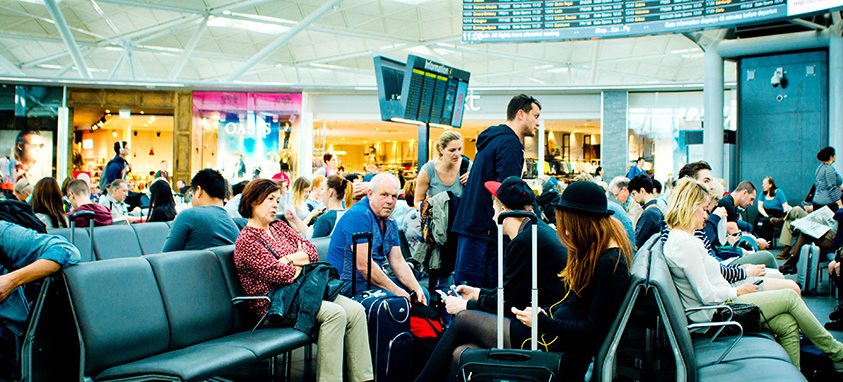
Operations are gradually returning to normal, but some flights were still delayed at John F. Kennedy International Airport in New York City on Monday after a water pipe break caused 352 delays and 46 cancellations the previous day.

The incident compounded problems resulting from a winter storm that hit New York City on Thursday, causing delays and cancellations.

The pipe break sent about 3 inches of water into the privately operated Terminal 4. Streams of water cascaded from a ceiling, requiring people to slog through pools of water. Power to the affected areas was temporarily shut off for safety reasons and additional staff and buses were arranged to assist travelers. Domestic arrivals and departures were delayed and some international flights were diverted or cancelled.

The Port Authority of New York and New Jersey issued an apology to travelers, and said that it would investigate the breaking of the water pipe, which feeds a sprinkler system, and hold all responsible parties accountable.

“What happened at JFK airport in unacceptable, and travelers expect and deserve better,” said Rick Cotton, executive director of the port authority, in a statement. “While the water pipe break that occurred appears to be weather-related, we have launched an investigation into the incident to determine exactly what occurred and why an internal pipe was not weather protected, and whether any other failures contributed to this disruption.”

Cotton emphasized that the terminal that was flooded is operated by a private company, not the Port Authority. Although the Port Authority is the landlord and overall operator of the airport, the airlines and other private companies operate the six terminals and are responsible for getting planes to and from gates, and getting passengers and their baggage on and off planes.

The pipe break was preceded by several earlier problems. In the aftermath of Thursday’s storm, operations slowed due to frozen equipment and understaffed crews. Cotton contends that given the situation, airlines shouldn’t have continued bringing so many planes to the airport.

“What broke down—and it broke down badly—was the coordination between terminal operators and the airlines to assure that there were gates available for the arriving airplanes,” Cotton said at a press conference.

On Saturday night, international flights at Terminal 1 and Terminal 2 were nearly paralyzed.  International flights bound for Terminal 1 were blocked from arriving and reportedly, some passengers in Terminal 4 were so aggravated over a flight being cancelled that fights broke out.

disrupt meeting without upsetting

For conferences, one size doesn’t fit all. Not any more. Attendees have individual motivations for signing up and engaging at meetings. That means our approach to marketing, producing and running events must appeal to very different audiences—and bring them together to build on their differences.

For tips on how to do this, we called on Jeff Hurt, executive vice president of education and engagement at Velvet Chainsaw Consulting. He is an advocate for evidence-based education methods, and explained the importance of starting with understanding.

Segment for Success

The first step in delivering personalized messages before, during and after a conference is getting to know your attendees deeply. That means listening to what they are saying and doing online and offline. You may be creating personas based on Linkedin groups they participate in, or based on what they visit and read on your site, but the segmenting needs to go beyond that. Marketing messages that reflect what events they have attended before, how long they have been interacting with your group and their individual communication preferences will be much more warmly received than generic dear [xxx] mail merge letters.

As Hurt puts it, we need to know what keeps people up at night, and what gets them up and out of bed in the morning. Design the messaging and program around those needs and aspirations.

Manage Expectations

Experiment with new ways to deliver information and encourage audiences to apply that learning. This is crucial. But surprising them with unfamiliar formats can be disastrous. That is why it is important to explain any changes—early and often—to help attendees understand why you are, say, mixing up this year’s opening reception.

Resistance to change is normal. Hurts reminds us that our job as event professionals is to help people relabel that uneasy feeling in the pit of their stomachs, and see it as opportunity rather than threat.

Plan Transformations Rather Than Transactions

The challenge in bringing together diverse groups of people is that they may not immediately recognize anything in common with each other. The opportunity, of course, is that they can teach things to each other. But first you must get them interacting. That can be as simple as shifting the format of a networking event from the handing out of business cards to actively seeking new ideas. Have attendees pair up with someone they would not normally interact with. Then have them ask, “Tell something you’ve learned in the last six weeks.”

Hurt says this is the approach used by most successful innovators. People who change the world actively seek out people not like themselves—and then look for unique ideas.

safest year air travel

Last year was the safest in the history of worldwide commercial airline travel, according to two industry research companies, but enhanced efforts will be needed in the future to keep improving safety.

The Aviation Safety Network (ASN) announced last week that in 2017, there were 10 fatal airline accidents, causing the deaths of 44 passengers and 35 people on the ground. This was a marked improvement over 2016, when there were 16 fatal accidents, resulting in 303 fatalities. If military transport aircraft accidents are included, the numbers for 2017 rise to 24 total accidents 230 fatalities, but these are still the lowest totals in modern aviation history.

Steady Decline in Accidents

“Since 1997, the average number of airliner accidents has shown a steady and persistent decline… thanks to the continuing safety-driven efforts by international aviation organizations such as ICAO [International Civil Aviation Organization], IATA [International Air Transport Association], Flight Safety Foundation and the aviation industry,” said ASN President Harro Ranter.

Five of the accidents in 2017 involved passenger flights and five were cargo flights. On Dec. 31, 398 days had passed since the last passenger jet airline accident.

The worst aviation accident last year occurred on Jan. 16, when a Boeing 747 Cargo plane crashed into a village in Kyrgyzstan, killing the four crew members and 35 people on the ground. The most on-board fatalities resulted from a Nature Air single-propeller Cessna 208 Caravan plane crashing in western Costa Rica, killing 12 passengers and crew, on Dec. 31.

Need to Stay Vigilant

To70, an aviation consulting firm, attributes the low fatality totals to stronger safety practices—as well as good fortune. It points out that there were several serious but nonfatal airline accidents in 2017, including an Air France 380 losing part of its engine during a flight from Paris to Los Angeles, causing it to divert to Goose Bay, off Newfoundland and Labrador, Canada.

Several ongoing risks were identified by To70, such as the increasing use of lithium-ion batteries in electronic devices, which creates a fire danger.

“[And] the application of new technologies in design, construction and operations is timely in relation to maintenance issues that have arisen on the engines used on the 787 Dreamliner,” according to To70’s website. “Human factors are, understandably, high on the agenda. Mental health issues and fatigue are central to this topic.”

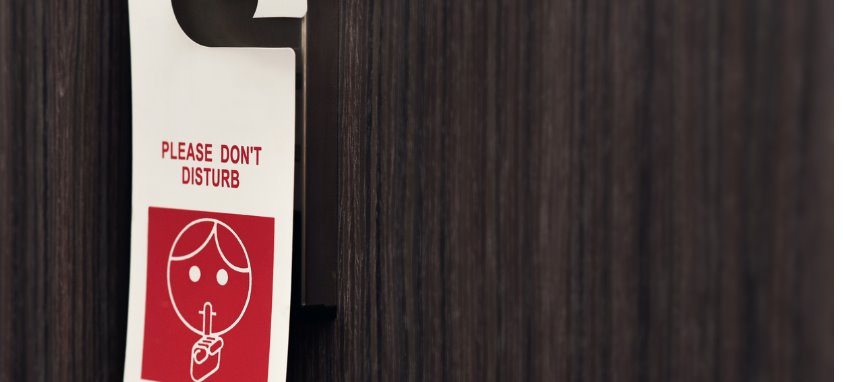
These are disturbing times. A few days before Christmas, four Walt Disney World hotels in Orlando replaced their “do not disturb” signs with ones that read “room occupied.” A Disney employee is now required to enter every room at least once every 24 hours. Disney told The New York Times it plans to make the same change at all Disney World resorts, as well as at Disneyland properties in Anaheim, California.

“The hotel and staff reserve the right to enter your room for any purposes, including, but not limited to, performing maintenance and repairs or checking on the safety and security of guests and property,” reads Disney’s new guest information pack.

Hilton Hotels & Resorts had already updated its own “do not disturb” policy. If that sign remains hanging on a guest room door more than 24 consecutive hours, Hilton housekeeping must advise security or a manager.

“The clock starts ticking when a team member first notices the ‘do not disturb [sign],’’’ Nigel Glennie, Hilton vice president for corporate communications, said in a statement. Flagging the room for attention will help inform management, but action will be taken on a case-by-case basis, he said.  “This guidance was provided to help properties protect guest privacy, but also manage suspicious activity and any concerns about a guest’s welfare,” Glennie added.

The website LoyaltyLobby.com, which tracks loyalty programs, reported that extended use of a “do not disturb” sign and requesting specific rooms will be considered suspicious behavior by Hilton.

Neither Hilton nor Disney will say the changes are the result of the massacre of concertgoers in Las Vegas on Oct. 1, when Stephen Paddock opened fire from his suite on the 32nd floor of Mandalay Bay Resort and Casino. He had checked in three days earlier, and kept a “do not disturb” sign on his door for his entire stay, during which he amassed his arsenal of firearms.

Shortly after that mass shooting, Steve Wynn, chief executive of Wynn Las Vegas, told Fox News he had begun instituting a counterterrorism program in his hotels and casinos in 2015. “If a room goes on ‘do not disturb’ for more than 12 hours, we investigate,” he said. Paddock’s behavior before he began firing “would have triggered a whole bunch of alarms here,” Wynn said.

Conferences, tradeshows and exhibits are a battleground for attention. The sea of competition is daunting. Your booth needs to incorporate the latest in technology and design, along with a dash of that little something extra, to win the lead war. Although being the talk of the exhibit hall can be difficult, this is the year you could own the tradeshow with a little planning, creativity and these seven expert tips.

1. Build up the Buzz

Create event buzz on your website and social media with details of dates, location, freebies and prizes. Event hashtags can seriously build up anticipation. Smart tip: Make your booth number clear and encourage visitors with a sneak peak of your special offerings.

2. Get Friendly

Make sure your staff brings their A-game. To attract potential clients to the booth, everyone absolutely needs to be mannerly and approachable. Smart tip: Have them wear t-shirts with your brand’s logo and approach people passing by. An enthusiastic attitude and friendly smile will warm up visitors instantly.

3. Go with the Flow

You want the layout of your booth to captivate passers-by. Create efficient flow, encouraging potential clients to visit and making it easy for them to move around. Not only should they be able to effortlessly navigate your booth, they should also feel at ease exiting. Smart tip: Accomplish this by keeping the structure open.

4. Transform Your Booth into a Destination

Turn your booth into a destination by treating potential prospects to a lounge area. Make it cozy by putting up string lights, and make it interactive by offering a photo booth. Smart tip: Locating the lounge at the back of the booth ensures that all traffic enjoys the full experience, while also maximizing brand exposure.

5. Turn-up the Swag

People love freebies, so it makes sense that this should factor into your planning. Offering coffee or candy is a nice touch. Make sure it stands out from the crowd by giving something a little extra. For instance, instead of putting out an open box of donuts, invest some time into making a fabulous donut wall. Smart tip: Why not generate leads by offering free Wi-Fi that requires prospects to create an account with their email address? Easy!

6. Be a Beacon of Marketing

Why not connect with customers via their smartphones? Using Bluetooth Low Energy (BLE), a beacon can pinpoint the location of customers who have downloaded your company’s app, sending them a timely invitation to visit your booth. This so-called proximity marketing is a great way of increasing brand affinity and creating a custom experience for customers. Smart tip: This is a great time to let people know about that donut wall.

7. Post-Event

So, your event generated a lot of buzz and was a great success. Now what? Post-event, it’s essential to follow up with all potential leads, personally thanking them for visiting, and opening the door to developing that all-important business connection. Smart tip: Keep monitoring your social media channels for feedback and be sure to interact there as well.

From translating ear buds to devastating earthquakes, the past year has been full of major developments that affected meeting professional road warriors. We saw some changes coming, while others took us totally off-guard. Here are seven developments in 2017 and a forecast of whether or not they will have a lasting impact.

Recovering from Natural Disasters

Unquestionably, 2017 was one of the most challenging ever in North America due to several natural disasters, which included several powerful hurricanes severely impacting the Caribbean and southern United States. Add to that major wildfires in California. These disasters significantly impacted the meetings and events industry by forcing the cancellation or postponement of many gatherings, but thanks partly to the industry’s efforts, most of the areas hit are recovering much more quickly than initially anticipated.

Forecast: Climate changes could leave the Caribbean and southern United States vulnerable to hurricanes, while continued building in high-risk fire areas will leave some parts of California vulnerable to large blazes. It will be important for planners everywhere to have contingency plans.

Unplugging

It could have been the need to get away from an increasingly buzzing world, simply a desire to experience exciting new areas—or a combination of the two. But 2017 saw a definite shift to groups and individuals wanting to unplug by traveling to more remote or unfamiliar locations, including small islands and rural areas.

The desire to unplug also resulted in a shift from massages and facials to holistic wellness and mental well-being, as seen by Four Seasons Hotels and Seabourn Cruise Line introducing mindfulness and meditation programs.

Forecast: Unplugging is likely to accelerate as meeting professionals and others face increasing demands in a high-speed world.

Enhancing the Cruise Experience

Some cruise companies made a big effort to lure younger travelers by offering more adventurous and innovative choices. These included everything from Seabourn’s open-water kayaking off the Alaska coast to Carnival Cruise Lines’ interactive entertainment experiences.

Forecast: The trend is likely to continue in 2018, and integrate more cutting-edge technology into customized options.

Navigating Multiple Travel Bans

New security regulations have made it difficult or impossible for people from North Korea, Venezuela and six countries with predominantly Muslim populations—Iran, Libya, Somalia, Sudan, Syria and Yemen—to travel to the United States. This triggered a response from some organization and groups, such as more than 6,500 Canadian academics, to boycott U.S. meetings as long as the ban exists.

Forecast: Whether the ban will continue in the future is uncertain, but as long as it exists it could have an adverse effect on participation in U.S. meetings.

Introducing Basic-Economy Fares

The good news is that United, American and other airlines began selling cheap, basic-economy tickets. The bad news is that the fares came with a host of tight restrictions, such as allowing only one small item aboard per passenger.

Forecast: The basic-economy seats haven’t generated much interest, but they’re likely to remain because they’re driving travelers to buy main-cabin tickets, which generally are higher than they were previously.

Treating Passengers Better

It took a high-profile case in which a passenger was dragged off a plane for refusing to give up his seat on a United Airlines flight to change the situation, but United and other airlines finally began taking steps to treat passengers better by making its bumping policy more client-friendly, among other things. On the other hand, critics complain that many other new policies—such as British Airways’ requirement for those who buy the cheapest seats to board last and Jet Blue Airways’ decision to reduce seat size in the main cabin—are increasing class disparity.

Forecast: Overall, airlines will continue to feel public pressure to treat passengers better, which will result in additional positive changes due to fierce competition in the industry.

Translating Ear Buds

Google’s Pixel Buds were created to translate other languages in real time, which potentially can boost communication among traveling meeting professionals and others.

Forecast: The initial launch of Pixel Buds has been a bit rough due to technical problems and the limitations of Google Translation, which powers the devices. But the concept is here to stay, and inevitably new products will emerge that are substantially improved.


‘Tis the season for shussing. Combining a winter meeting with a winter wonderland can make for high-speed team building and lasting impressions. Even nonskiers will love the ambiance—and all the alternative activities major ski resorts offer. Here (in alphabetical order) are some of the best U.S. ski destinations at which to combine mastering the slopes with a masterful meeting.

Aspen Mountain, Colorado

Aspen and Snowmass Village offer meeting venues that range from Aspen Meadows Resort (22,000 sq. ft. of meeting and event space) and The St. Regis Aspen Resort (more than 20,000 sq. ft. of indoor and outdoor conference and event venues) to AAA Five Diamond The Little Nell, which can accommodate 20 to 500 attendees.

Breckenridge, Colorado

In the heart of the Colorado Rockies yet just 90 minutes from Denver, Breckenridge meeting and event venues are varied and dramatic. In all, more than 43,000 sq. ft. of meeting space can be had. One of the largest venues is Beaver Run Resort and Conference Center, with 23 meeting rooms and more than 500 guest rooms.

Deer Valley, Utah

Deer Valley Resort, which features 385 guest rooms and suites and more than 45,000 sq. ft. of full-service conference facilities, is situated just 36 miles form Salt Lake City International Airport. Amenities include complimentary in-resort/in-town shuttle service provided by Cadillac.

Jackson Hole, Wyoming

The dozen major hotels in historic Jackson Hole offer a total of 1,319 guest rooms. Snow King Hotel & Grand View Lodge features more than 20,000 sq. ft. of meeting space and is six blocks from the town square. For an evening’s outing, it doesn’t get more Wyoming than Cowboy Steakhouse, which can accommodate up to 100 diners.

Jay Peak Resort, Vermont

In Northern Vermont, the resort’s conference center welcomes groups of 10 to 425. Seven spaces range from industrial to rustic to contemporary, and all have the latest audiovisual equipment. For nonskiers, there’s an indoor waterpark, ice arena and rec center.

Park City, Utah

Groups of up to 700 can gather at the home of the Sundance Film Festival, in a total of 125,000 sq. ft. of meeting space. Eclectic venues include Utah Olympic Park and local distilleries. Nestled within the Wasatch mountain range, Park City is a 35-minute ride from Salt Lake City International Airport.

Snowmass, Colorado

Snowmass Village boasts more than 70,000 sq. ft. of meeting space, from spacious conference centers to intimate boardrooms. The Westin Snowmass offers 24,000 sq. ft. of conference space, plus an additional 18,000 sq. ft. in the adjacent Westin Snowmass Conference Center.

Sun Valley, Idaho

Sun Valley Resort, which promotes Old World charm with state-of-the-art facilities, can accommodate up to 1,000 attendees at its meeting venues and conference center. Horse-drawn sleigh rides are a popular group activity. Nonstop flights to Sun Valley are available from six Western cities, plus Chicago.

Telluride, Colorado

A total of 14 meetings hotels offer 1,720 guest rooms. The AAA Four Diamond Peaks Resort & Spa features 18,000 sq. ft. of meeting space and a dozen meeting rooms. Madeline Hotel and Residences, a boutique property, has 124 guest rooms and 5,000 sq. ft. of meeting space.

Vail, Colorado

Vail’s newest luxury ski-in/ski-out property, Hotel Talisa, has 40,000 sq. ft. of meeting space and 285 guest rooms. Vail Marriott Mountain Resort, at the base of Vail Mountain and yards from the ski gondola, offers 25,000 sq. ft. of indoor and outdoor event space and 344 spacious guest rooms. Four Seasons Resort Vail features 9,000 sq. ft. of meeting space and 121 guest rooms.