Photo credit: Las Vegas Convention and Visitors Authority (LVCVA)

In a city of flashing lights, Las Vegas Convention Center (LVCC) expansion will be an eye-catcher, based on renderings released this week.

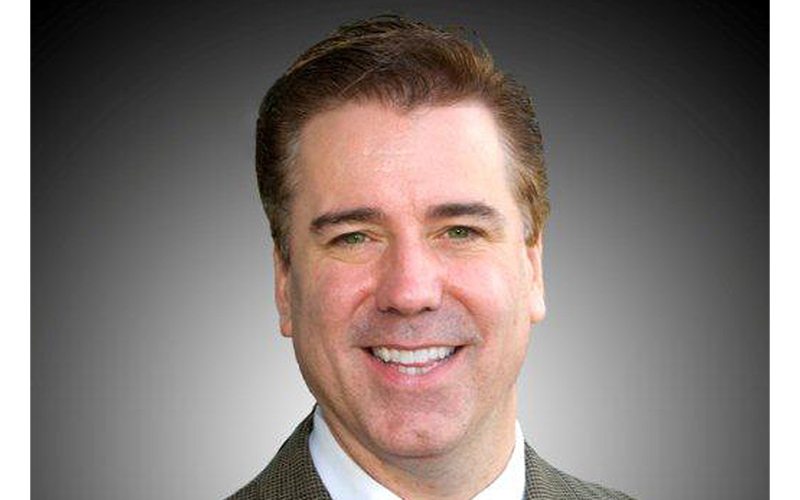
“The art and experience are designed to reflect Las Vegas, so the building will feature re-creations of classic Las Vegas neon signs and include an immersive video environment that can be used to display art, event messaging or whatever a client can envision,” says Robert J. Svedberg, principal for tvsdesign, the architecture firm hired for this project.

Las Vegas Convention and Visitors Authority (LVCVA) is enthusiastic about the concept and eager to add the expansion to their inventory of meeting space. “This is one of the most important days in the history of the LVCVA. These drawings show a modern, innovative design that is as iconic as our vibrant city,” says Rossi Ralenkotter, LVCVA chief executive officer. “Southern Nevada’s economy is driven by tourism and this expansion will propel our convention center forward to enable us to maintain our status as the number one trade show destination in North America.”

The convention center will be celebrating its diamond jubilee next year, and Svedberg is confident the expansion and refurbishment will ensure the facility will continue to be a leading venue for decades to come. “The trade show industry is always changing. To be successful long term, the design must delight and engage guests, provide flexible spaces that can be customized and configured for each event and efficiently designed to reduce set-up expense,” he says. “Nothing changes more rapidly than technology, so the building’s infrastructure is designed to be flexible and robust, allowing each new generation of gadgets to be easily accommodated.”

Phase II

The massive project’s second phase involves a $860 million expansion that will add 1.4 million sq. ft. At least 600,000 sq. ft. of this will be new exhibition space. Plans also include “a spectacular rooftop terrace overlooking Las Vegas Boulevard,” Svedberg shares.

Construction is due to be complete in time for CES, a highly-attended consumer electronics show, in 2021. The popular trade show is a loyal returning customer of LVCC. This past year, it attracted more than 180,000 industry professionals, including upwards of 58,000 from outside the United States.

“The renovation and expansion of LVCC is critical to the growth of CES. It ensures the show will have state-of-the-art facilities and space to grow strategically as more non-traditional verticals are incorporated into CES,” says Allison Fried, director of global event communications for the Consumer Technology Association (CTA), the organization behind CES. “Las Vegas has been the show’s home for more than 40 years and there is no other city in the U.S. that could host a show the size and scope of CES. We are happy and proud to be there.”

Phase III

The third and final phase of construction will involve completely renovating the existing 3.2 million square-foot structure. LVCVA is aiming to finish this in 2023, and projects the expansion will attract more than 600,000 additional convention attendees annually.

Las Vegas currently hosts approximately 22,000 meetings, conventions and trade shows each year with LVCC playing host to 21 percent of convention attendees in southern Nevada in 2017. “As an architect that loves and designs buildings, it is important to remember that it is the destination that attracts the meetings—and Las Vegas is a unique global brand,” Svedberg says. “The expansion will allow events to grow and attract more international visitors, and it will provide new flexibility and a delightful guest experience to keep the international attendees coming back.”


When in San Diego County, catch a breath of fresh, salty air. When in Oceanside, specifically, take a bike ride around town for a break from another hotel room. Located on the coast between San Diego and Los Angeles, Oceanside is an escape. With sandy beaches, a harbor reminiscent of New England, and rich history—check out Old Mission San Luis Rey—you’re bound to find relaxation in this charming town. Their newest initiative: a bike incentive program aimed to get your blood pumping and give you peace of mind in the process.

Group Pedaling

Oceanside is introducing a new incentive program for groups—ideal for those looking to unwind following a conference. If you’re planning an overnight stay before July 1, 2019, your group can qualify for one of three incentive packages. Extras include destination bike jerseys, sponsorships and gift cards. Keep in mind, however, that these incentives do not apply to summer months.

For those looking to participate in cycling events, Oceanside does not disappoint. Bike the Coast, Taste the Coast is open to all riders with varying route distances, with a food event at the finish line. Race Across America, known as one of the most arduous bike races, begins in Oceanside, with the goal of raising money for important causes as they ride through the country. And for those looking to put the pedal to the metal in the SoCal sun, Oceanside Ironman 70.3 invites elite athletes from across the country to compete.

Another addition for groups? The city recently opened the Multi-Use Cycling Course Oceanside, fitted for cyclocross—the combination of mountain biking, off-road and obstacle racing. It’s perfect for training events, races and potential team-bonding experiences.

Oceanside Keeps Cyclists Safe

Oceanside considers cyclists’ safety one of its biggest priorities. In fact, Oceanside was the first city in San Diego County that received a designation by the League of American Bicyclists—and it continues to hold a silver status as a Bicycle Friendly Community. On top of this achievement, it has also become the first city in San Diego County to support the Rider Safety Visibility initiative, in which communities use technology and innovation to create cycling apparel that increases safety on the road. It also advocates for alternative transportation vacations and bike safety. For event planners hoping to find a city that doesn’t hinder attendees’ daily routines and also prioritizes safety, Oceanside is becoming an ideal destination.

It’s no secret how important team building can be for the bottom line. An effective team works well together, communicates and trusts each other. But there can only be so many egg tosses or trust falls before the exercises turn into chores instead of transformative team bonding activities.

From paintball and camping to deep sea fishing and dance classes, the choices are endless for companies looking to strengthen their teams’ relationships. What is the best way to build that team bond? Experts say the winning strategy is to push people out of their element in unfamiliar situations where they must work together and learn from one another to achieve a universal goal. Pullman Miami Airport Hotel has created a turnkey program that your group has probably never done before: flying a plane.

The flight crew exercise is a brand-new activity offered to planners who are using the meeting space as a breakout activity. The immersive challenge focuses on group situational awareness, teamwork and communication skills.

How Does It Work?

The exercise starts off with each group in a classroom setting with local pilots and airline instructors. Teams are taught pre- and post-flight procedures, as well as how to manage various in-air scenarios. With each team member given their own responsibilities, the group will learn how to successfully land the plane together. Once the classroom session is finished, groups will then work together handling different in-flight emergencies and coordinating safe landings.

After the training is finished, groups will then put what they have learned to use. Choosing between Boeing 738 airliner and Cessna 172 full-motion simulators, official instructors stay alongside to assist. But don’t let this simulator fool you—by replicating an airliner with a 180-degree wrap-around screen, attendees feel the 33,000-foot altitude and 464-knot speed. So, buckle up—it’s going to be a bumpy ride.

Currently, group sizes are recommended to be no larger than 30 people, with the exercise lasting about an hour, but the program can be modified as needed.

Why Try It?

People act differently under stress. Their focus is altered, their attitude changed and their ability to work well with others is challenged. The flight exercise puts teams in a stressful situation where they must work together, keep an open mind and count on one another’s knowledge to successfully achieve a goal.

Have you made plans yet for Global Meetings Industry Day (GMID) coming up Thursday, April 12? The hospitality coalition Meetings Mean Business says the annual event is designed to “shine a light on the real impact meetings and events have on businesses, economies and communities” and built a toolkit to make it easy for industry groups to share statistics about the economic impact meetings have every day (spoiler alert, it supports more jobs than auto manufacturing, pharmaceuticals or oil and gas industries). At Smart Meetings, we think it is the ideal excuse to bring people together to talk about how important event professionals are to our daily lives. Following is a list of events going on so you can find a group near you.

New York

Meeting Professionals International (MPI) Greater New York Chapter and Professional Convention Management Association (PCMA) New York Area Chapter are pairing up for GMID on April 11. Hosted at the New York Academy of Sciences, speakers include Michael Dominguez, chief sales officer of MGM Resorts International; Jami Stapelmann, executive director of global travel & meetings at The Estee Lauder Companies and current PCMA corporate task force chair; and Carvie Gillikin, vice president of the Fourth Wall Events and former MPI Greater New York Chapter president.

NYC & Company will shine the city’s skyline in blue on April 11. They Javits Center, with a glass-enclosed Crystal Palace equipped with a customized lighting sequence, will activate its lighting system. More than 2,100 LinkNYC screens will display NYC & Company’s “Make it NYC” slogan as well as Meetings Mean Business and GMID logos.

Orlando

MPI Greater Orlando Chapter will host a stream of groudbreaking speakers throughout the day on April 12. Keynote speaker Jim Spellos, founder of Meeting U, will talk about evolving technology in the event industry. Lilly Graziani, director of corporate development at Florida Hospital Nicholson Center, will discuss the necessity of wellness in a professional’s life and Brian D. Avery, managing member of Event Safety & Security Services, will talk about the future of meeting and event safety and security.

Chicago

Chicago Industry Xchange will come together with Choose Chicago for GMID. Jack Johnson, chief advocacy officer for Destinations International will discuss research regarding travel bans and their impact on the events industry. Industry expert Joan Eisenstodt will continue the day with a talk about #MeToo in the industry, and Christy Lamagna, founder of Strategic Meetings & Events, will close the event by discussing how to tell your story to stakeholders.

Las Vegas

Las Vegas Convention and Visitors Authority (LVCVA), which saw a record-breaking year, with 6.6 million people coming in for business travel, understands the importance of the event industry. That is why it is turning up the volume on festivities. On April 12, Venetian Theater will host some 200 people in person and many more through a livestream focused on raising awareness in order to increase support. Paul Van Deventer, president and CEO of MPI, and Nan Marchant Beauvois, SVP of National Councils for the U.S. Travel Association, will be featured speakers.

Los Angeles

PCMA SouthWest, MPI SoCal Chapter and SITE SoCal will be hosting their own event for more than 300 industry professionals on April 12, where Nan Marchand Beauvois will lead an educational session.Following the educational portion of the day, Universal Studios Hollywood will open for professionals to celebrate, network and enjoy the afternoon in Southern California.

San Francisco

Join meeting professionals at AT&T Park on April 12. Ten Bay Area Industry Associations– including International Live Events Association North California Chapter, SITE and MPI Northern California Chapter–will advocate how important the meetings industry is around the world and allow those in the industry to network with local chapter leaders and veteran industry experts.

St. Louis

Explore St. Louis and Maritz Travel are presenting a panel of industry professionals to discuss industry trends, impact and event design. The free event will take place at Ballpark Village in Fox Sports Midwest at 9 am.

Celebrate At Home

For those unable to physically attend, MPI and Meetings Mean Business Coalition will collaborate for a free, 12-hour livestream of GMID highlighting celebrations around the world. Mexico Tourism Board will sponsor the GMID Virtual Event, and following the livestream, an archived recording will be available.

Whatever you do, be sure to join the conversation using the hashtag #GMID18 and tag us @SmartMeetings. We are celebrating you.

The news on Friday that Hilton Hotels & Resorts would follow Marriott International in cutting commissions to third-party planners from 10 percent to 7 percent—a move that according to one recent study will eliminate $10,000 on average from independent planner annual incomes—was met with a combination of groans, sobs and not a little bit of anger from some quarters. That was quickly followed by announcements from new and established groups offering to help with the transition to what many have resigned themselves to acknowledging is the new reality.

How did we get here?

Tracey Smith, executive director of Senior Planners Industry Network, SPIN, has seen the impact of decades of economic cycles on events and the people who manage them. “Just in this century, we saw the downturn of 2000 and the additional hit from 9/11 when a lot of people were laid off and gave up on full time work in favor of going into business for themselves,” she says, recalling the establishment of the independent planner role in the industry. “That was when it was a relationship business and you were valued for your Rolodex and your ability to deliver on negotiations.” The industry grew as the economy improved and even thrived during a short buyer’s market in 2008, according to Smith.

Flash forward to 2018

In a world of decentralized and ever-changing hotel staff, digital RFPs and transparent pricing, Smith laments that event planning it has become much more transactional—a commodity.

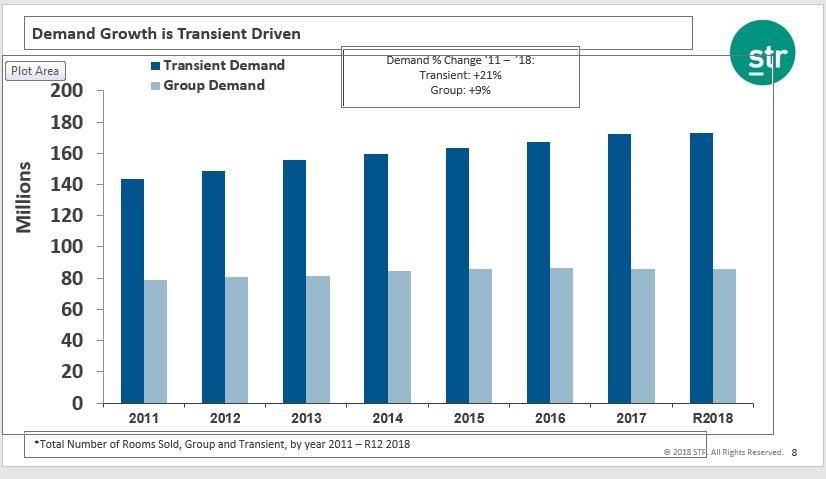
Jan D. Freitag, senior vice president of lodging insights at hospitality research company STR, echoed that 2017 was both a seller’s market and a transient-oriented one. His research shows that by all measures—occupancy, RevPar and ADR (average daily rate)—hotels had their best year ever. However, since the Great Recession of 2008, transient demand has increased more than twice as fast as group demand and the brands are responding by building less meeting space, making that segment a smaller percentage of their business. “Demand is coming disproportionately from transients,” he said. Moreover, supply coming online in the next few years reflects that changing market, with more than 70 percent of rooms under construction part of limited service properties with equally limited meeting space. “Very few ballrooms are being built,” he said. And that impacts the need to recruit new group business.

Who is affected?

SPIN conducted a survey of members in the weeks before Marriott’s April 1 commission change went into effect for planners not part of the major site selection companies HelmsBriscoe, HPN Global, ConferenceDirect and Maritz Global Events (Experient) and calculated the above figure that the cuts will result in an average loss of $10,000 per planner in 2018. It also found that the average number of years these planners had been running their companies was 14 years. Very few reported working on a commission-only basis with a mixture of flat fee, project-based and a combination of commission and fee models in place.

The SPIN study showed that 88 percent of respondents were women, and 49 percent own their own business. Many of them are very successful, earning six-figure incomes.

Suzanne Spaner, founder of one of those women-owned businesses, Meeting Matchmakers in Atlanta, Georgia, bemoaned the prospects for many of those companies and what it means for the industry and families. She spent the beginning of her hospitality career at Marriott and Ritz-Carlton Hotel Company working long hours. After giving birth to her first child, she pursued her dream of opening her own business. “I am passionate about this industry and love hospitality and my clients,” she said. She also enjoyed the ability to work from home, something she is worried will not be an option for others now that it will be more difficult to work independently and make a living. “This is going to hurt stay-at-home mothers trying to provide for their families,” she said.

What’s next?

“The commission cut was a slap in the face, telling us that we need to go back to those relationships,” Smith said. “Eventually the industry will turn again and we need to be prepared,” Smith predicted.

The change in business model may also require some small business owners to improve their focus on basics, such as marketing, legal and financial issues, things that may not have been their core competency. SPIN is positioning itself as a resource for those people by producing recorded webinars that can help fill in the missing skill pieces at a critical time.

A new industry group, Meeting Planners Unite, where Spaner is on the board, is looking for ways to develop new revenue streams for independents. This could include finder’s fees from nonhotel suppliers—audiovisual companies, exhibit and transportation companies, possibly destinations.

Dallas-based Meeting Professionals International (MPI), which has long included entrepreneurship courses as part of its web-based education, recently launched MyMPI Online Discussion Group as a resource for independent and small business owners and offers discounts to independent planners on MPI Academy certificate courses. In January, MPI President and CEO Paul Van Deventer issued a statement that said “As an association, MPI’s focus is on ensuring the long-term and sustainable financial health of the events industry, and raising the professionalism of those who work in it.”

Christy Lamagna, founder and master strategist at New Jersey-based Strategic Meetings & Events, called the decision a wake-up call to all event planners as the industry is fragmented and doesn’t have enough cache or respect. She suggested coming together on Global Meetings Industry Day to share the message that what planners do is not only important for the bottom line of companies, hotel properties and the economy as a whole, it requires a trained professional with the experience required to manage business goals. “A successful event is not something an executive assistant with a ton of other things on her plate can do in her spare time,” she said. “We need to come together and establish minimum standards for what we do.”

In the meantime, Lamagna is going to continue doing the best she can for her clients. “I am not going to let someone else’s bad behavior impact my good behavior,” she said.

Jim Anderson

I never thought I’d find myself telling 500 people, at California Society of Association Executives‘ largest event of the year, about a personal health issue. But you never know where your association management career (and personal life) will take you.

As it so happens, I found myself faced with the issue of skin cancer in the summer of 2017. I learned a few things along the way about managing my own health care, and I hope sharing those lessons may be helpful to you, a family member or a friend.

The Problem

The skin cancer I had (on my cheek) went undiagnosed for several years, even after I pointed it out to two different family doctors. Still that little voice in my mind told me something was wrong. It’s an odd feeling to believe something is not quite right, but not know what it is—even after the doctors had checked it out. While I do like and trust my doctors, they are human and can make mistakes. After several years, however, the color in the area changed slightly and the shape grew. So, after some persistence on my part, I was referred to a dermatologist. A biopsy was taken and a diagnosis was made.

I am fortunate that my skin cancer was a basal cell carcinoma, which is slow growing and does not spread easily. It is almost always fully treatable. This was the case with me—the surgery, while significant, fully removed the cancer, and I’m now good to go.

The Decision

By the time I had the surgery, our big Seasonal Spectacular trade show was coming up. At that point, I still had a lot of swelling on my face so it was pretty obvious that something had happened. I was unsure of how to approach my situation during the event, so I had some choices to make… give my typical speech at lunch… or not. Let people know what happened… or not. Walk the trade show… or not.

Ultimately, I thought it was important to be upfront and explain what had happened. Otherwise, people would be guessing or left to wonder. More importantly, I decided to share my story so that others might benefit from the lessons I learned from this experience.

I’m really glad I did. I had many people tell me that they were going to get something checked out they’d been putting off. I also had more than a few wives tell me they were going to encourage their husbands to do the same. I think men are especially prone to think, “It’s no big deal” and take no action or wait. The support I received was also tremendous and very gratifying.

The Lesson

I learned that I am the person in charge of my own health care. I know my body better than anyone, and I’m sure the same is true for you. So, if you think something is wrong, whether it’s skin cancer or something else, bring it up to your doctor and be persistent until you feel satisfied it’s been fully addressed.

Sometimes it takes a bit of courage and fortitude to be contrary with your doctor or the medical establishment, but I encourage you to trust your gut and follow through. I like to think of my doctor as my partner, but not the person in charge of my health care. That would be me.

The American Cancer Society says that one in five people will get some form of skin cancer during their lifetime. 1 in 5! While most are basal cell and fully treatable, the truly dangerous cancer (melanoma) takes the lives of over 10,000 people each year.

It’s more than a bit ironic that as the CEO of CalSAE, I tell executives all the time to trust their gut, but in this case, I did not take my own advice for too long. Now I am applying this professional lesson to my health care—I’m the person in charge… and so are you.

Do we ever really lose our love for getting in the spirit of a good theme? From birthday parties to weddings, themes are everywhere, and even the most corporate adult will join in on the fun when the opportunity presents itself. So, why not keep the good times rolling in your hotel room? We’ve compiled a list of 10 themed hotels that can set the mood for your next event.

The Roxbury, NY

The Roxbury has plenty of themed rooms, but the one that stands out most is The Wizard’s Emeralds. The room, from the bedding to the ceiling, is doused in green, emulating the heart of Emerald City. Veer off the yellow-brick road lining the bedroom floor into a grand bathroom, and you will find ruby red shoes sticking out from beneath your bed’s pillows.

Seven Hotel, Paris

The Agent Secret Suite is made for those hoping to channel 007. Vintage meets modern in the suite, with arched walls and purple lighting working together to create the perfect ambience. A mirror above the bed and lamps with a gold-gun base will make you feel like a secret agent, ready for anything.

The Curtis Denver, Colorado

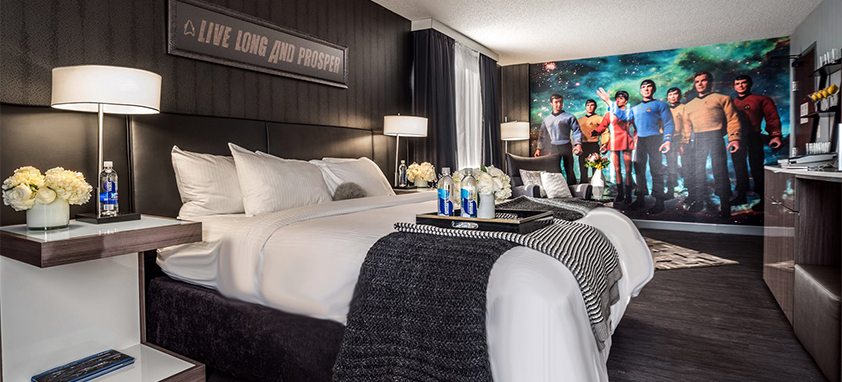
If you’re looking for a futuristic room, board the USS Enterprise…kind of. The Curtis Denver has created a room entirely devoted to Star Trek. With a sign reading “Live Long and Prosper” above the bed and life-size cutouts and art decorating the room, the Trekkie in you is bound to come out.

Dog Bark Park Inn, Cottonwood, Idaho

Dog-lovers, this is your dream bed-and-breakfast. Husband-and-wife artists began carving custom dogs, and this eventually led to their biggest creation yet—a giant beagle that you can stay in. The throw pillows are embroidered with dogs, the bed frame has an assortment of breeds and dog-shaped cookies are available to nibble on as well.

Winvian Farm, Litchfield Hills, Connecticut

Ever wondered what the inside of a beaver’s dam looks like? Winvian Farm can give you an example. With trees reaching from floor to ceiling, an arched roof made of stick canopies and a spiral staircase leading you to a loft, you’ll feel right at home in their Beaver Lodge.

Wonderland House, Brighton, England

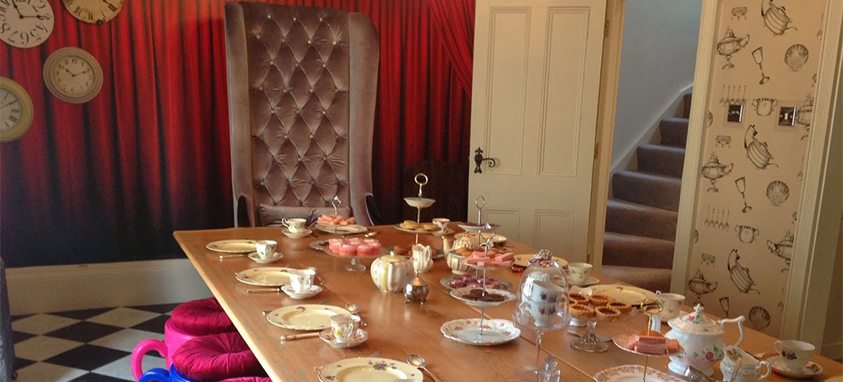
If you’ve ever dreamed of being in Alice in Wonderland, this is the place to stay. Though you can’t book one room—if you want to stay, you must book the whole house—it’s worth it for the experience. Have a Mad Hatter tea party, then retreat to your Flamingo room. Wanting a different ambience? The Queen of Hearts room or Tweedles room may be for you. Your guests will go mad over the house.

The Victorian Mansion at Los Alamos, California

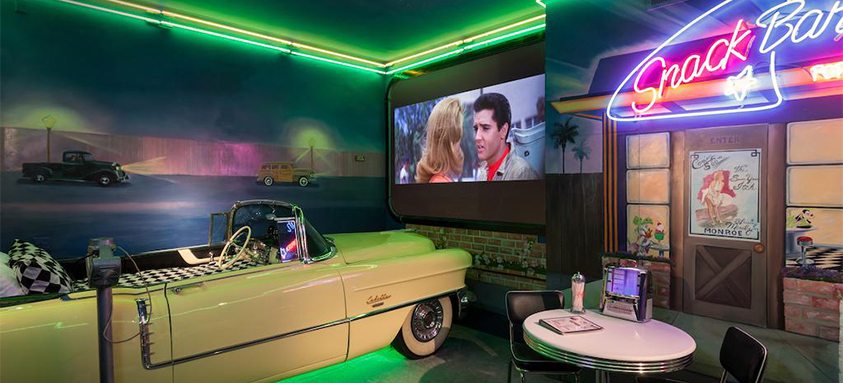
This hotel comes with plenty of themed rooms. Relax in the Pirate Suite, featuring a wood and stone fireplace, a treasure chest and a sink in a barrel. Or travel back to the ‘50s and fall asleep in a Cadillac while watching your favorite movies from a reel-to-reel projector.

Keio Plaza Hotel, Tokyo

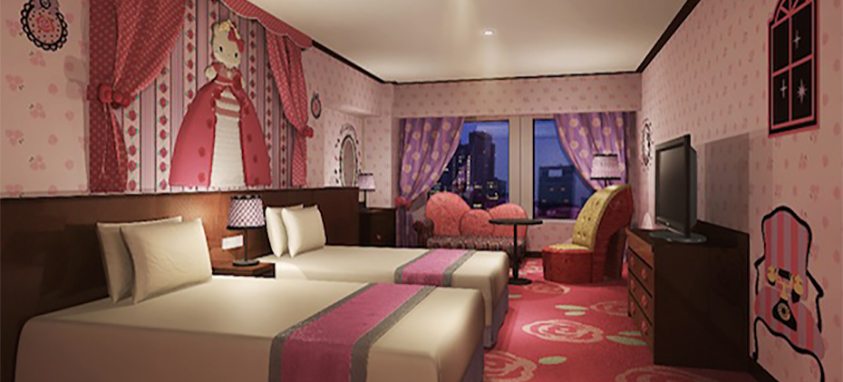
Hello Kitty is one of Japan’s most beloved cartoon characters, and many outside of Japan consider it a mascot. Stay in Keio Plaza Hotel Tokyo’s Hello Kitty themed rooms and you’ll fall into a world of pink. Your key contains her signature bow tie, sandwiches are cut into the shape of her famous face and her original signature is on the bathroom mirror. You’re also welcome to take home themed amenities.

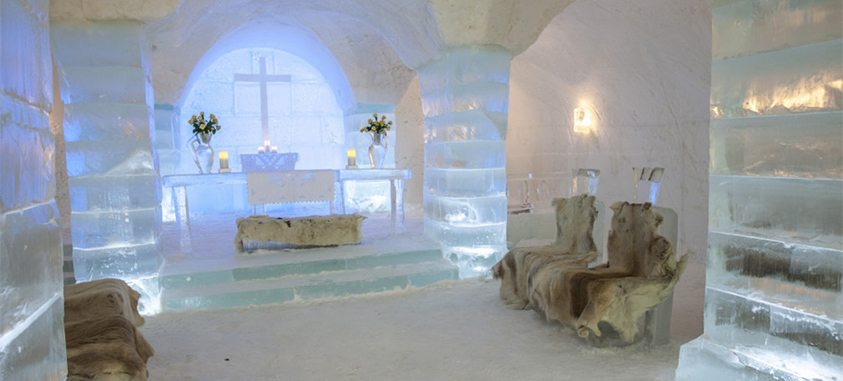
Sorrisniva Igloo Hotel, Norway

Live like Eskimos in this seasonal hotel. Yes, seasonal—because as spring comes, the igloo melts away. Everything inside is made from ice, though you will stay cozy and warm in the provided sleeping bags.

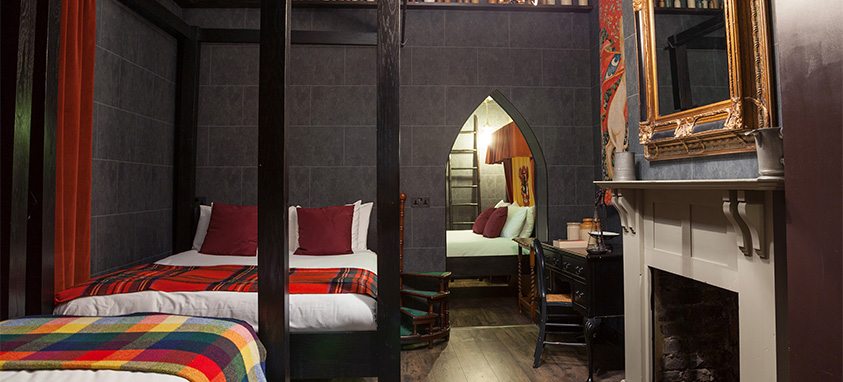
Georgian House Hotel, London

The Wizard Chambers will make you feel as though you just entered Hogwarts. Enter through a bookcase door and head through a hall lit only by candlelight. The bedroom mirrors those in the movies, with canopies hanging above the beds, stained-glass windows and cauldrons in the fireplaces.

seatbelt restriction

From elite rewards members to priority boarding classes, airlines are constantly trying to rank you. While these categorizations are usually based on how much you’re spending, Thai Airways has initiated a new seatbelt restriction some may feel shame larger passengers. Other airlines may follow suit soon.

The airline’s new seatbelt for passengers in business class on Boeing 787-9 (Dreamliner) aircraft is limited to a 56-inch waistline. Thai Airways added two Dreamliners to its fleet last September, introducing installed airbags on seatbelts for business-class seats. The safety upgrade also prevents children from flying on an adult’s lap.

seatbelt restriction

U.S-based airlines, such as Hawaiian Airlines, will add Dreamliners to their fleets in the next few years, but it has not been announced whether they will have the seatbelt safety upgrade, as well.

There has been social media backlash about obesity policies airlines have implemented in recent years, with many air carriers requiring passengers who can’t fit in one seat comfortably to purchase two adjoining seats or upgrade their tickets to wider seats at the front of the plane. United Airlines, for example, offers same-rate pricing on two tickets for the same passenger when purchased together. However, if an additional seat is required to be purchased on the day of the flight, a higher ticket price may apply. American Airlines’ policy requires that a new seat must be purchased if the customer’s body extends more than one inch outside the edge of the armrest, and a seat belt extension is required.

Some airlines outside of the United States may not allow customers to remain onboard if there are no adjoining seats on the flight, assigning them instead to the next available flight with open seats.

Form of Embarrassment or Motivation?

Although some passengers may feel embarrassed by these restrictions, others look on them as a motivator. New Zealander Michaela Martin was advised by an airline last year that a seatbelt extender would be needed and that she should consider purchasing an additional seat. For Kayla, this kickstarted her to get serious about losing weight, and since then she has lost nearly 70 pounds. “The feeling of pure embarrassment and shame is something I’ll never forget,” she wrote in an Instagram post. “The day I started loving myself enough to start taking care of me and nourishing my body was the day I turned a new page.”

Every airline has its own regulations, but flights originating or landing in the United States must adhere to guidelines issued by the Federal Aviation Administration. The FAA requires that each passenger is secured with a seat belt during certain phases of flight, and allows use of seat-belt extenders up to 25 inches. It does not, however, require that extra seating be provided.