HyperloopTT
HyperloopTT Concept Design

Imagine if attending a meeting in a different city, or even a different state, required nothing more than a quick afternoon trip. It could be possible with hyperloop technology, and recent headlines have caused us to wonder if it really will be the high-speed, eco-friendly transportation answer for the future.

Since entrepreneur and investor Elon Musk first introduced the idea for hyperloop in 2013, multiple companies have been quietly working away, and there have been estimates of general application as early as the mid-2020s.

What is Hyperloop?
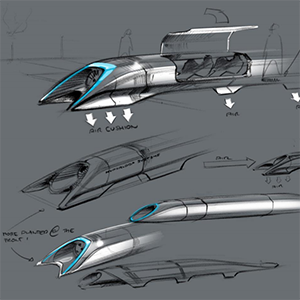
Elon Musk hyperloop designs
Elon Musk’s Original White Paper Designs

When Musk released his first hyperloop designs to the academic and business community, he requested an open-source process, asking for feedback and collaboration on what he saw as a new, fifth mode of transportation—beyond rail, road, water and air. The first four currently exist in a balance between cost and efficiency. “Hyperloop is a new mode of transport that seeks to change this paradigm by being both fast and inexpensive for people and goods,” Musk wrote.

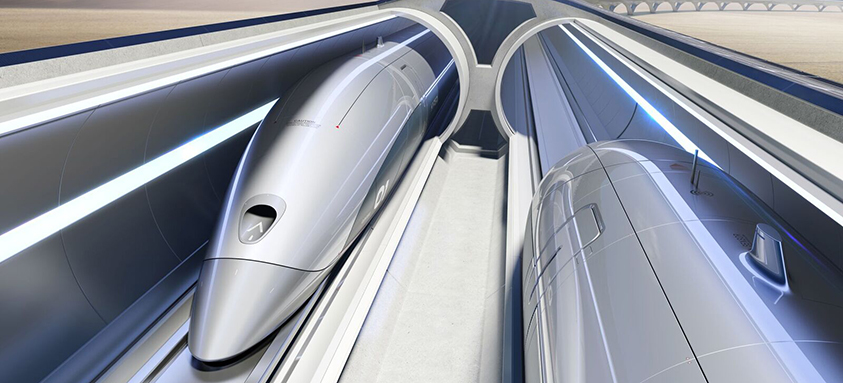
Utilizing a low-pressure, sealed-tube system, Hyperloop is essentially a much larger-scale version of the pneumatic tubes some buildings use for mail and other deliveries. But using compressed air or magnetic repulsion, capsules can travel through the low-friction environment, carrying passengers at more than 700 mph. If functional, that could shorten the current six-to-seven-hour commute between San Francisco and Los Angeles to a breezy 35 minutes or less.

When it comes to the structural designs of the various capsules, the tubes themselves and everything needed to ensure the trips are completely safe, other companies picked up the baton. The five years since have then seen important, though limited, progress.

More: Hands Off the Wheel: Self-Driving Shuttles Debut in Columbus, Ohio

Who are the Major Players?
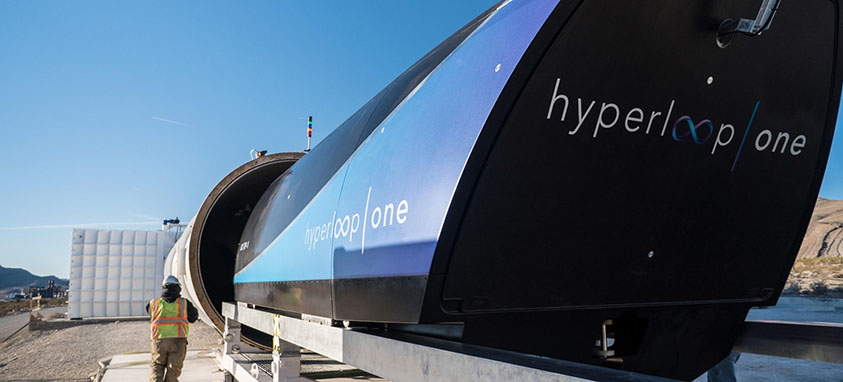
Virgin Hyperloop One
Hyperloop One Pod at the DevLoop Test Site

Currently there are three companies working at the cutting edge of the still-embryonic hyperloop industry. Hyperloop One was the first to produce a successful test of the propulsion and levitation technology required for the system to work. In December, seven months after that initial test, the company entered a partnership with Virgin, making the company officially Virgin Hyperloop One, with Sir Richard Branson taking over as chairman.

When it comes to making waves and kickstarting the technology across the globe, Branson’s company has been at the forefront. In January, Virgin Hyperloop One partnered with University of Missouri to begin a feasibility study for a possible route between St. Louis and Kansas City, Missouri, potentially shortening a 3.5-hour trip to only 28 minutes. Less than a month later came an agreement with the Indian state of Maharashtra to build a hyperloop between Pune and Mumbai. Deals in Dubai and Saudi Arabia soon followed.

https://youtu.be/yCVHtJ6yJxo

Meanwhile, the next biggest player has been the global team of Hyperloop Transportation Technologies (HyperloopTT). Utilizing a crowd collaboration approach, drawing in team members and crowdsourced funding from around the world, the company began construction of its first full-size hyperloop track in Toulouse, France, in April. Since then, HyperloopTT has signed on to build the first routes in the United Arab Emirates and China.

And finally, there is Musk’s own Boring Company. Though the company did not start up until 2016, it has already made significant progress. Notably, it began as a pet project after Musk joked about “digging” his way out of the mess of Los Angeles traffic. While it is predominantly a construction company devoted to developing new technology for boring tunnels—and perhaps most famous for its fundraising stunt of selling actual flame-throwers—Musk plans to use those tunnels for ultra-high-speed passenger transport pods. Somewhere between trains and hyperloop, these pods will carry passengers, or entire cars, at 155 mph. Going forward, the same tunnels could be used for full hyperloop systems.

Over the past year, Musk received approval to begin digging between Washington, D.C., and New York City, as well as a deal to dig between downtown Chicago and Chicago O’Hare International Airport (ORD).

What’s Happening Now
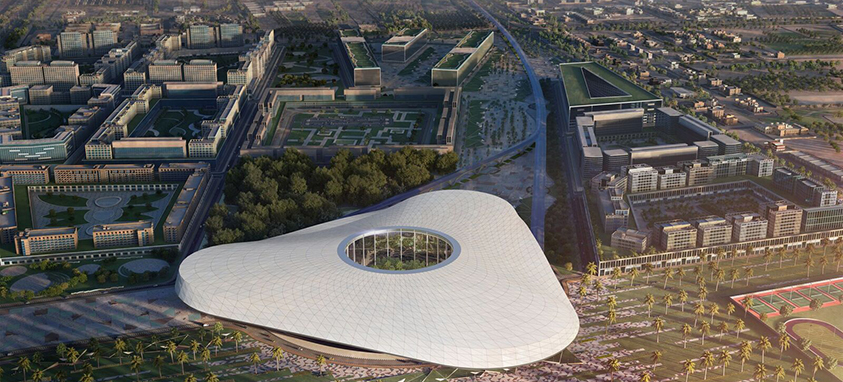
HyperloopTT
HyperloopTT Proposed Station Design

Each of the three major companies has made headlines in the past two months, and have reached a few major benchmarks.

On Sept. 13, Virgin Hyperloop One became the first company to send a representative before the U.S. Congress. Josh Raycroft, director of business strategy, spoke to the Senate Committee on Commerce, Science and Transportation in a hearing called “Transportation of Tomorrow: Emerging Technologies that Will Move America.” While answering senators’ questions, Raycoft acknowledged the current limitations of hyperloops being under the jurisdiction of the Federal Railroad Administration and pushed for the regulatory pipeline to be sped up. He also stated that, at the current pace, hyperloops will be ready for widespread use by the mid-2020s.

As if to emphasize the point, the results of the Missouri feasibility study released on Oct. 17 shined favorably on the proposed route and the economics behind it. Steve Edwards, chairman and CEO of Black & Veatch, the company responsible for the study, said, “We found this project is a case of solid engineering meeting up with Virgin Hyperloop One’s innovative vision to create a network transforming the very concept of community.”

This all took place against a growing political turmoil with Saudi Arabia, however. Following the alleged murder of journalist and The Washington Post columnist Jamal Khashoggi by the Saudi government, Richard Branson severed several business ties with the country, resulting in the proposed hyperloop plan being canceled. A week later, on Oct. 22, Branson announced he would step down from his position as Virgin Hyperloop One’s chairman. The search for a replacement is underway.
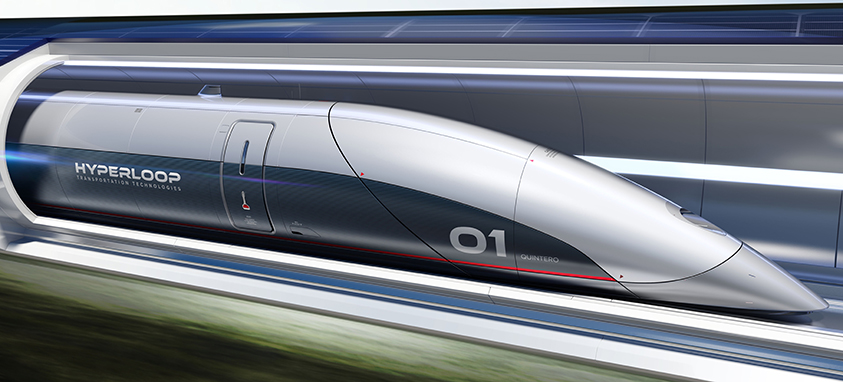
HyperloopTT
HyperloopTT Capsule

Meanwhile, moving ahead with projects around the globe, and in the United States, HyperloopTT unveiled its first passenger capsule on Oct. 2. Company Co-founder and CEO Dirk Ahlborn marked the occasion, saying, “This capsule will be a part of one of the most efficient transportation systems ever made.” Likewise, on Oct. 24 the company announced a deal to begin construction on a commercial hyperloop in Abu Dhabi in the third quarter of 2019.

Within the United States, however, HyperloopTT has continued working away on a deal with Northeast Ohio Areawide Coordinating Agency (NOACA) to build a route between Chicago and Cleveland. The multistate proposal, known as Great Lakes Hyperloop, is in the midst of a feasibility study of its own due to conclude in 2019.
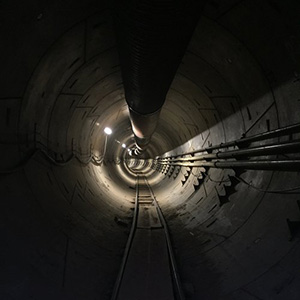
Boring Company Tunnel
Boring Company Tunnel Beneath SpaceX

NOACA Executive Director Grace Gallucci explained the deal, saying, “We believe in investing in projects that promote mobility options and improve quality of life. What hyperloop represents to Northeast Ohio and the entire Great Lakes Megaregion is so much more than just speed and efficiency. It opens our region to the rest of the Midwest, connecting us all in a network of technology, resources, people and jobs.”

It is an excitement echoed in the deals The Boring Company has made. But to top it off, Musk took to Twitter and announced on Oct. 22 that the public can look forward to a fully functional prototype system of the company’s high-speed sled in the tunnels dug beneath SpaceX headquarters as soon as Dec 10. Seeing Musk’s new design in practice will tell us a lot about the future of The Boring Company’s contracts.

Where Does That Leave Us?
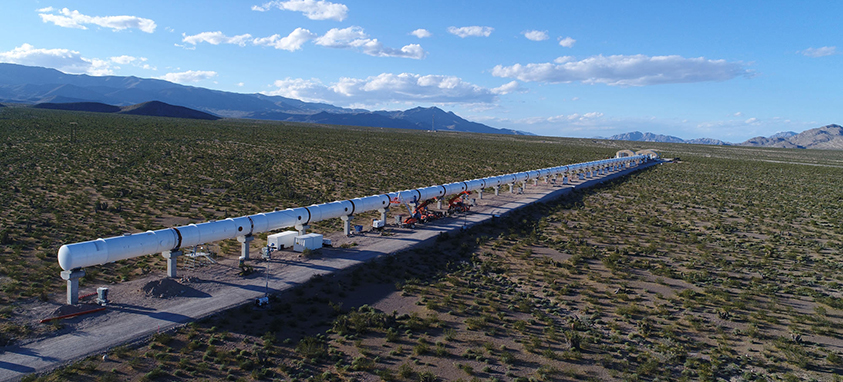
Virgin Hyperloop One Devloop Test Site
Virgin Hyperloop One’s DevLoop Test Site in Nevada

Hyperloops sound like something out of science fiction—probably because they are. And there’s no shortage of detractors and critics, citing everything from logistics to cost as reasons to not buy into the technology. Rather tellingly, the very first response to Musk’s “Opens Dec. 10” tweet is a post of Wile E. Coyote painting a fake tunnel on a cliff face. But none of that means it won’t work.

Some of the best scientists in the world are tackling the question of hyperloops. And while a healthy skepticism of Virgin Hyperloop One’s mid-2020s estimate might be for the best, the progression toward a new form of transportation likely isn’t stopping anytime soon. Whether it is the near-vacuum tubes of Virgin Hyperloop One and HyperloopTT, or the tunnels of The Boring Company, change is coming, and this is still only the start.

Birmingham Conclave

When 300 certified meeting professionals arrive in Birmingham, Alabama, the second week of November for CMP Conclave, they will be greeted by three days of immersive education on every aspect of event planning—all of which counts toward continuing education units for recertification, of course.

More: The Ultimate Road to CMP

They will also find fellow CMPs eager to talk about what they are seeing at their events and the tricks and tools that have allowed them to be successful. Smart Meetings asked three local planners about their road to certification and what attendees should know about their city before arriving at the annual Events Industry Council (EIC) gathering.

An Indication of Professionalism

When Lisa Ramsay was growing her career 15 years ago, she knew the CMP designation was something she needed. “It is highly regarded, and people take notice,” says Ramsay, who is now assistant vice president of event and meeting management at Protective Life Corporation in Birmingham. “When employers see the CMP initials, they know this isn’t some random person who has decided it might be fun to plan a meeting.”

Certification is also difficult to attain, she reports. Just to qualify to sit for the test, a planner must have years of experience. Back when she was pursuing the designation, there were no study groups in Birmingham, so she studied a little bit every night on her own for three months. Then she drove to Atlanta to sit for the four-hour test. She waited weeks for the results of her test to arrive in the mail. Today, they come much faster online.

But she doesn’t regret a minute. “My career would have been more difficult if I hadn’t decided to do that hard work 15 years ago,” she says. Now that she is certified, she makes a point of recertifying regularly. Her membership in Financial & Insurance Conference Professionals helps her earn and track the continuing education hours required.

Three CMPs are Better than One

Now that Ramsay is managing a team, she looks for the certification when hiring and has written it into the job description as a preferred criterion. She has also encouraged a member of her team to earn the designation. In fact, all three members of the events team at Protective Life now have their CMP certification.

Julia Bailey, manager of marketing and events, studied for the test last year while working at Protective Life, a challenge that took no small amount of will power considering her full-time work and travel schedule, but something she classifies as totally worth it. “I honestly did not realize just how highly regarded the certification is throughout the hotel industry. Several hotel sales contacts reached out to me, congratulating me, when they learned I had earned my CMP. It was such a nice surprise!” she reports.

Jill Harris, who is now director of meetings and Incentives at Protective, moved from the event management side at a hotel property to the corporate planner side when her client, Ramsay, hired her away.

When Harris was still on the hotel side, she found that CMP at the end of her signature line put clients at ease. “They knew that I would speak the same language and was a professional,” she says.

The process of studying was eye-opening as well. “I was able to look at a meeting from other points of view and it helped me be more effective at helping the customer deliver what they needed for their stakeholders,” she says.

Like Ramsay, Harris drove an hour-and-a-half to take the test and waited six weeks to get the results in the mail. “I was sweating when I saw the envelope and it was just a huge relief when I finally opened it,” she recalls. Staying certified proved more difficult on the hotel side as she had to go outside the company to find training that counted as accredited time. Joining MPI helped her clock the hours she needed.

Welcome to The Magic City

The three local CMPs are eager to welcome visitors to their home, known by many as The Magic City for its early rapid growth, and for its abundance of trees and rolling hills. Ramsay calls the city a well-kept secret that is getting out as the foodie world is starting to take notice.

MoreAlabama—Eat Well, Sleep Well, Meet Well

Harris boasts that she lives in a progressive, diverse community full of Southern hospitality, “and all the sweet tea you could want.”

Kayaking

From small gatherings to large celebrations, corporate events are the perfect way to show gratitude to your employees. They can be great for team building as well as building morale, and when they’re done right, they can be a great experience for all.

But ask employees what they think, and they’ll often tell you that corporate events are boring. To get attendees excited to attend, check out these nine corporate event ideas that break the typical mold.

1. Eating Competition

Everyone has been to the traditional corporate dinner. If you want to shake things up a bit, try incorporating an eating competition into your next one. Aside from speeches and award presentations, corporate dinners often lack in entertainment. Competitive eating is a perfect way to incorporate some much-needed entertainment into your event.

Depending on how large you want the competition to be, you may want to encourage employees to participate. But it’s especially great if you can get a few of the bosses or team leaders to go head-to-head.

2. Skydiving

This one requires a decent budget (and a bit of guts), but if you’ve got them both, skydiving is a great way to bring people together. Not only is it something that most people haven’t done, but it’s an experience that will be remembered for a lifetime. The camaraderie that you can build skydiving with others is immeasurable.

3. Sledding or Tubing

Many companies host annual events near the holiday season. If you’re in a cold weather climate, look for ski resorts, local mountains or even golf courses that have sledding or tubing hills.

It’s a great way to get people out of the office, and it’s a fun activity that people of all ages can enjoy. A sledding or tubing excursion is sure to bring out the little kid in everyone!

4. Volunteer

Giving back to the community is a rewarding experience that everyone in your company or on your team can enjoy. Reach out to local food kitchens, shelters, children’s hospitals, and community organizations. They are usually looking for volunteers, and it’s something you can do once in a while or as often as you wish.

Volunteering to help those in need may even inspire some of your employees to do more volunteer work on their own!

5. Board Game Tournament

In the spirit of the family game night, hosting a board game tournament in your office is a great way to inspire friendly competition. Set up stations with various games around the office. Let employees form teams and play in groups.

It’s best to avoid games (like Monopoly or Risk) that can take hours to play (unless you prefer to play one game all day). Instead, look for games that don’t take too much time so that people can move around and play various games throughout the day. To make it worth it for everyone, have some prizes ready to award at the end of the day for the winning teams.

6. Trivia or Game Show

Whether your favorite topic is sports, science, or pop culture, it’s easy to engage people in a game of trivia. And team trivia is a great way to gather people together who know a little bit about a lot of different things.

Create a trivia contest at your next corporate event and let your employees get competitive. It can be as simple as a game of trivial pursuit or as complex as a Jeopardy-style game show. It’s best to stick to a broad range of general knowledge questions. But if you really want to make it interesting, you can create questions about your company and employees.

7. Canoe or Kayak Trip

If your company is full of outdoorsy types, a canoe or kayak trip can be a memorable and relaxing way to spend an afternoon. Rowing doesn’t require any special skills or fitness expertise, so it’s perfect for everyone, regardless of age or level of fitness. Unlike skiing or hiking, this is one outdoor activity that everyone can enjoy.

8. Be a Tourist

If you live in a city that’s full of tourist attractions, there’s a good chance you’ve never seen many of them. Natives often steer clear of those spots—even though people from all over the world come to view them.

Organize a tour and immerse your employees in a bit of local history and local culture. Sightseeing in your own city is something you probably wouldn’t do on your own, but as a group, it can be a great experience. Depending on where you live, you might want to make it a walkable tour or rent a trolley to get you around town.

9. Film a Movie

Is your office full of creative, enthusiastic people? Challenge your group to film a movie together! They can spend the morning creating a plot and writing a script and film in the afternoon.

You can hire the services of a professional film company to help you out or do it yourself. Just make sure you have the equipment and someone in-house who can handle the editing. Once the film is ready for viewing, host a second party to let everyone see the flick. You’re sure to enjoy a few laughs over your coworkers’ creative acting skills!

Picking the Right Entertainment for Your Organization

Not every idea on this list is ideal for every company, so keep in mind what you think your employees will like and which activities they will want to do. Whether you follow one of our suggestions directly or take inspiration to create your own event, make sure you keep your employees in mind. With a little bit of ingenuity and some strategic planning, you can make your corporate event one that everyone will want to attend!

Lisa Clapper is the Owner of Copper Mugs. She has an extensive marketing background in all facets of marketing but a true entrepreneur at heart. Her interests and experience in home design and decorating has led her into the housewares industry where she designs and sells copperware for Copper Mug Co.

Extravagance and luxury are well and good. But sometimes your group fits best in a hotel with a character uniquely its own. Here are four properties with personality to spare.

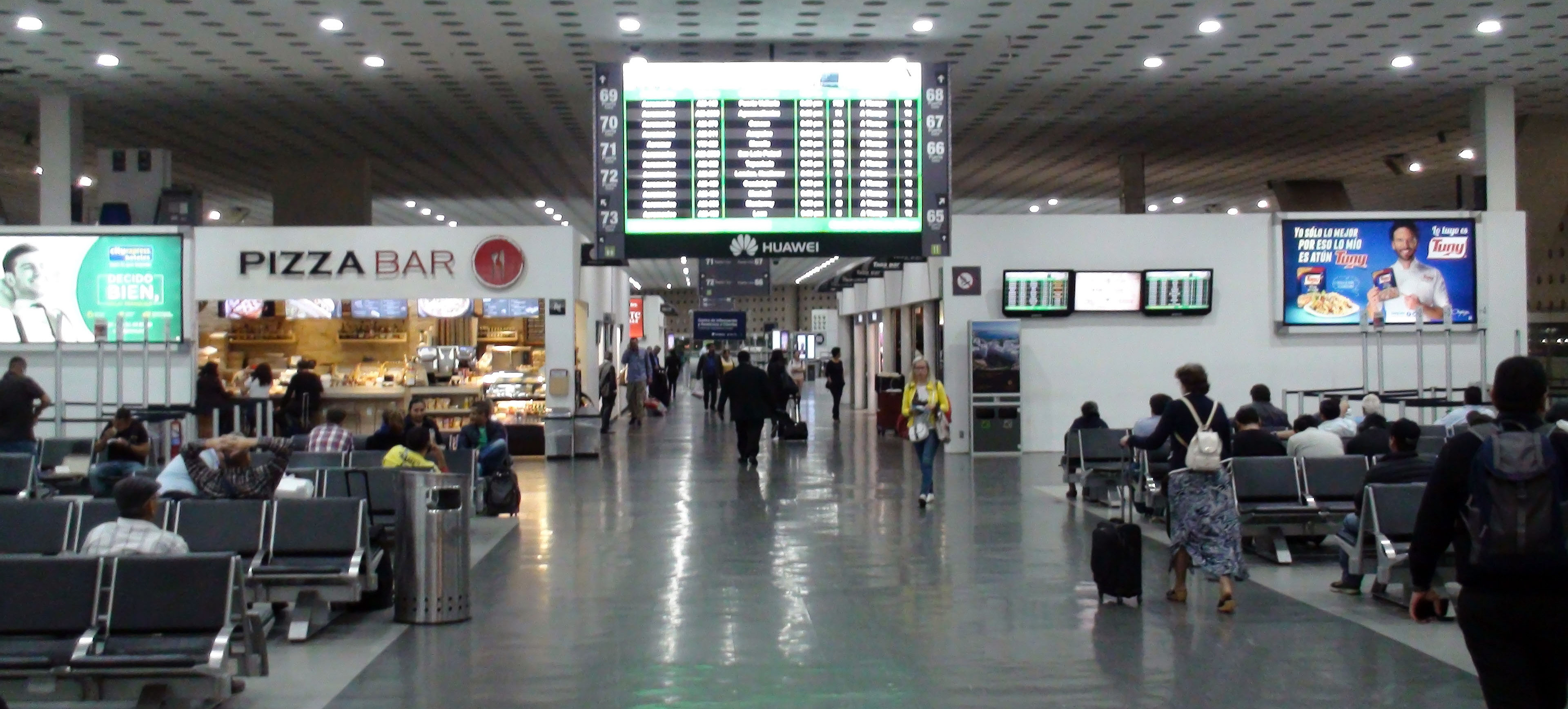
Mexico remains the meetings powerhouse of Latin America, but its vibrant capital city may have to do with runway additions at a nearby air base instead of heralding a shiny new airport. Mexican president-elect Andres Manuel Lopez Obrador said on Oct. 29 that he intends to scrap construction of the $13 billion project to replace cramped and aging Mexico City International Airport (MEX).

More than $5 billion has reportedly already been spent on the project, which is one-third complete.

MorePreparing to Travel? Know Which Airports are the Best

The huge new airport was designed by innovative British architect Norman Foster, who designed Chek Lap Kok Airport in Hong Kong.

Outgoing President Enrique Pena Nieto intended the new airport, on the dry bed of Texcoco Lake east of the city, to be his signature public work, and a new hub for the Americas, according to The New York Times. Lopez Obrador, who takes office in January, had repeatedly questioned the project’s cost and whether construction contracts were awarded fairly. There have been other concerns as well, such as those of environmental groups that argued the area would flood during the rainy season.

mexico city
Mexico City International Airport

A nonbinding referendum in which fewer than 2 percent of Mexico’s eligible voters participated gave a strong thumbs down to the new airport, and Lopez Obrador said he would heed the result. Some 70 percent of voters chose an option to build two new runways at an air base north of the city to take some of the air traffic from the current airport.

MoreMexico’s East Coast: Intriguing Experiences Beyond the Beach

Many in Mexico’s business community are protesting the cancellation, according to news reports, arguing that it will send a signal of Mexican instability to the world.

More: 7 Smart Moves—at Experience Columbus, Casa Velas and More

thinking the unthinkable: how to stop a bullet at your next event

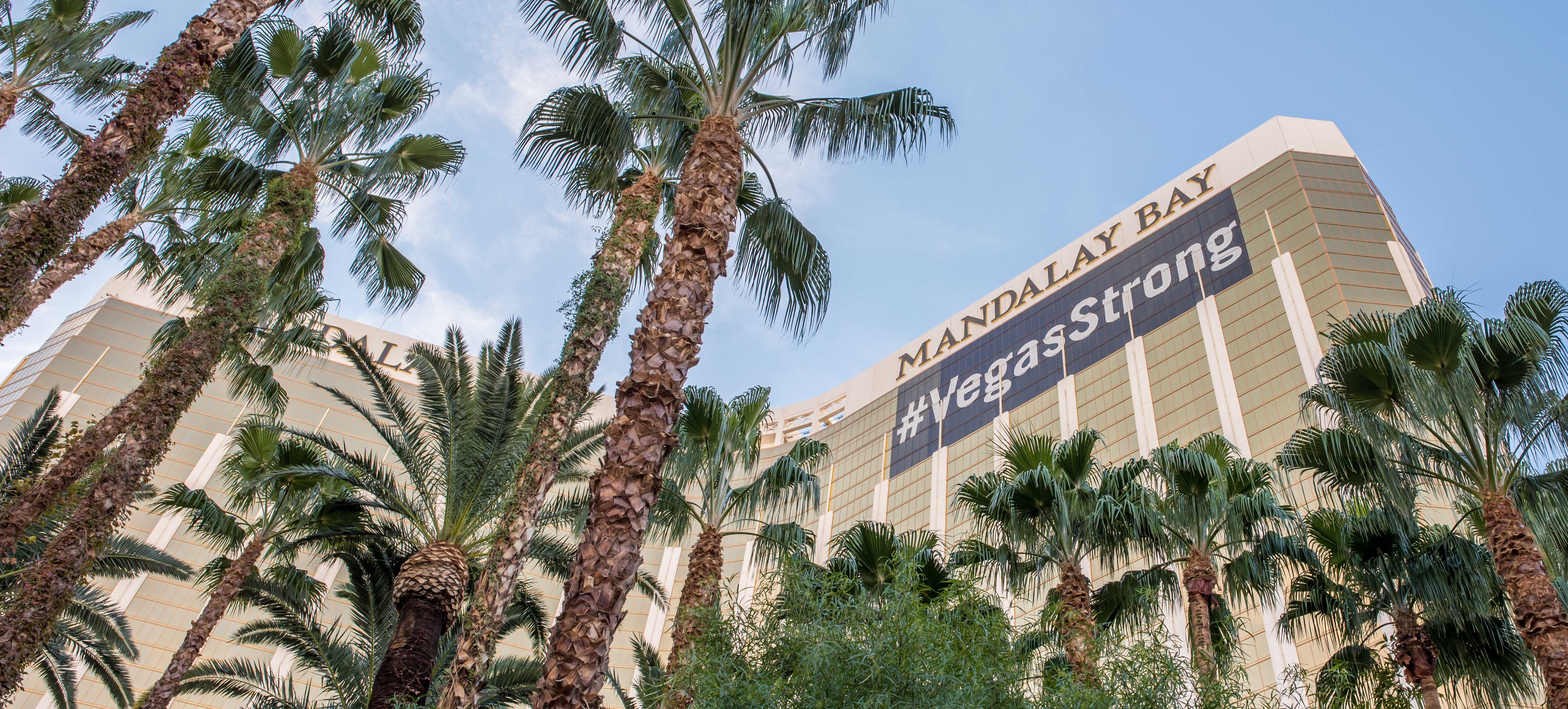
This week marks a year since the horrific mass shooting in Las Vegas, which reminded meeting planners and the hospitality world in the worst possible way of the need to prepare for the possibility of a live shooter situation as part of every pre-event planning.

Multi-Threat Shield (MTS) is among devices now being marketed to hotels to help hotel staff, security guards and others to protect themselves while waiting for police and emergency personnel to arrive.

More: How Can Planners Prepare for Las Vegas Massacre-Style Attack?

Marketed by Force Training Institute, a Southern California company, MTS is a collapsible shield that weighs 7 pounds that resembles a laptop bag until unfolded. When flipped opened, it becomes a three-foot-long barrier that can withstand multiple impacts from knives, as well as most handgun, shotgun and pistol-caliber submachine gun threats. With an additional insert (increasing total weight to 10 pounds), it can withstand rifle fire.

Marketing information suggests that security personnel can hold it up while tending victims, and it can also be hung on a door to shield people inside.

MTS is made of 25 layers of laminated Kevlar, and it’s rated to be as effective as body armor for police. But does it really work? Yes, proved PC World, which tested it as a “bulletproof” laptop bag. The laptop didn’t survive, but a variety of weapons failed to pierce the shield. You can watch the video to see for yourself.

Should you add an MTS to your planner emergency kit? You decide. But be aware the basic model retails for $995, and the shield with “rifle plate” sells for $1,639.

St. Louis has undergone an incredible transformation in the last few years, including a $380 million renovation and revitalization to the Gateway Arch grounds. The downtown area has truly become a world-class destination that is more convenient and accessible than ever before.

In addition to the Gateway Arch renovation, the city boasts endless opportunities for meeting planners to organize an unforgettable and truly localized experience for their attendees. As a resident and hospitality professional, I am excited to share all these enhancements with guests to our city. From the delicious St. Louis cuisine (world-famous barbecue and some of the nation’s best craft beer available) to our renowned museums and historical attractions, there is so much to discover. Here are some suggestions for planners looking to add all that good stuff to their agendas.

Get Outside

Groups that meet in St. Louis have all the conveniences of being in an urban setting while also having the unique opportunity to visit a national park at the Gateway Arch.

More4 Feel-Good Benefits of Outdoor Meetings

Working at the closest hotel and meeting venue to the Gateway Arch, I’ve noticed that groups are taking more time to enjoy the outdoors since the completion of the park’s renovation. Visitors can enjoy a true national park experience with direct access to more than six-miles of trails and green space surrounding the world-famous monument, as well as regular fitness classes, concerts and events.

Save on Ticket Prices

St. Louis has more airlift and flight options than most mid-sized cities. With our central location, St. Louis Lambert International Airport (STL) provides more than 71 nonstop flight options and an average airfare ticket of just $201 per person, which translates to easy access and cost-effective transportation for attendees from all over the country.

Be a Fan

One of my favorite things about St. Louis is the immense sense of pride from the city in everything that is local. When planners choose to meet in St. Louis, they have endless opportunities for locally-immersive activities and team-building activities for their attendees.

I’ve seen everything from group trips to Busch Stadium to catch a Cardinals game and customized brewery tours, to rooftop yoga overlooking the Gateway Arch and St. Louis barbecue-making contests. Planners can also coordinate group outings to our many famous museums, including City Museum, the National Blues Museum or the St. Louis Science Center.

Incorporate History

Many people who visit St. Louis are surprised to learn the important history that has happened here. In fact, just steps away from our hotel’s doorstep is the Old Courthouse where Dred and Harriett Scott sued for their right to freedom and Virginia Minor fought for women’s right to vote.

Meeting attendees can now also visit the new, underground Gateway Arch Museum located at the base of the monument. Interactive exhibits showcasing the important role the city had in the westward expansion of the United States.

Have Fun

St. Louis is a fantastic meeting destination to ensure that your attendees have a memorable and fun experience. From exploring Ball Park Village or grabbing a drink at Laclede’s Landing to renting paddleboats at Forest Park and enjoying the must-have St. Louis cuisine staples of toasted ravioli or signature frozen custard, St. Louis offers something for everyone to enjoy.

Jennifer Byrnes is the director of sales and marketing at Hyatt Regency St. Louis at The Arch. She has worked with Hyatt for more than 15 years and has overseen sales and marketing and planning of meetings at the company’s downtown St. Louis location since 2015.

St Louis Convention Center Expansion
America’s Center Convention Complex Proposed Expansion

Over the past two years, the city and county of St. Louis have discussed plans to expand and renovate the destination’s 41-year-old, downtown America’s Center Convention Complex. Most of those discussions have treated the expensive renovations as much more of a necessity than a luxury.

The breadth and strength of the modern meetings and events industry means groups have more choices than ever. Instead of simply being an element in a destination’s success, modern and future-proof convention centers may be the key to surviving in an increasingly competitive market.

Earlier this month, St. Louis announced AC Next Gen Project, a $175 million plan to renovate America’s Center, adding 92,000 sq. ft. of exhibit space, a 65,000-square-foot ballroom, 42,000 sq. ft. of additional area, an outdoor pavilion and 26 new loading docks.

Also, on Friday a groundbreaking ceremony took place for the $9.1 million renovation of Atlantic City Convention Center. The project will completely overhaul the facility’s 32 restrooms, which will involve modernizing more than 20,000 sq. ft. of space and include the installation of new wall tile, flooring, mirrors, toilets and lighting.

Likewise, last week Indianapolis announced a $120 million renovation for Indiana Convention Center, adding a 50,000-square-foot ballroom—the state’s largest—and two more connected hotel towers for a total of 1,400 additional guest rooms.

Washington State Convention Center Proposed Addition

These announcements come on the heels of recent developments countrywide, a few even breaking the billion-dollar mark. The $1.6 billion Summit Building is an expansion comprising 255,000 sq. ft. of event space being built alongside Seattle’s Washington State Convention Center. Construction officially started in July of this year, with an end date of 2022.

“Today, WSCC turns away as much business as it books,” the convention center’s website claims. “In the past five years, the convention center could not accommodate more than 350 event proposals due to lack of dates or space.”

MoreOrange County Convention Center Adding More Than 280,000 Sq. Ft. of Meeting Space

In every destination, the promise of additional business and event opportunities is difficult to ignore. But such enhancements don’t happen in a vacuum.

Pressure to Compete

St. Louis America's Center Convention Complex
America’s Center Convention Complex Proposed Expansion

When announcing the America’s Center renovation, Explore St. Louis (the CVB) said, “The need to expand the complex has never been more urgent as cities across the country are making large investments in their convention centers and luring lucrative meetings and events to their communities.”

According to those cities, especially those in the shared market of the Midwest, that perception isn’t wrong. Feeling the same pressure to innovate and deliver for larger, more diverse groups, aging convention centers simply are not going to make the cut. But, for the time being, taking the plunge with renovations or diving in head first with an entirely new convention center is resulting in exactly the kind of city-wide return destinations want.

A sense of that urgency has peppered the conversation about St. Louis’s renovations for years, often with the market gains of other cities lurking in the backdrop. “We’ve lost ground,” Explore St. Louis President Kitty Ratcliffe told St. Louis Public Radio in May of 2017, when the prospect of a convention center upgrade seemed increasingly likely following a local election. “So, your question about when should we do it? We should have done it six years ago.”

While the process of hammering out exactly what improvements are needed and how to pay for them has continued ever since, Ratcliffe’s views haven’t changed. “Virtually every city in our competitive set for national convention business has improved their convention facilities,” she said in a more recent statement to St. Louis Public Radio, marking the announcement of the current renovation plans.

The convention and visitors commission isn’t alone. “Frankly, “we see cities that are hardly our peer cities advancing and investing in their centers—and sort of leaving us behind,” said Steve Stenger, a St. Louis County executive. “We can’t have that. We have to be competitive.”

Planning for the Future

Oklahoma City Convention Center Rendering

The CVB and businesses in Oklahoma City felt much the same about the now 46-year-old Cox Convention Center, located downtown. “The meetings industry has changed dramatically in the past 50 years,” says Mike Carrier, president of Visit OKC. “The old convention center just wasn’t meant to expand.”

Faced with the implacability of that hurdle, Oklahoma City is one of the handful of metro areas that has chosen to build a new convention center from the ground up. With a budget of $288 million, June saw the city break ground on what is the largest single construction project in its history, and what promises to be a state-of-the-art facility offering a 200,000-square-foot exhibit hall, a 30,000-square-foot ballroom and 45,000 sq. ft. of general meeting space.

But what excites Carrier the most is the fact that the new convention center is being built with the future in mind. Though there is no way to know exactly what the meeting’s industry will require of destinations over time, the new facility is designed specifically to make continued expansions and improvements as simple as possible. “For this, we’re looking 50 years down the road,” Carrier says.

And even though construction won’t complete until 2020, the convention center is already having an effect. The investment alone has driven greater interest at trade shows and generated a palpable excitement from groups. “It’s put us on the map,” Carrier says.

Staying Modern is a Moving Finish Line

Indiana Convention Center Proposed Expansion

Oklahoma City’s plan to stay flexible and open to renovations in the future matches with the framework already operating in destinations such as Indianapolis. Alongside pointing out the hard work Indiana Convention Center leadership puts in to make sure the facility is as desirable as possible to groups, Visit Indy Senior Communications Manager Lisa Wallace says, “We’re always looking for ways to enhance the space.”

That desire is the core drive behind the newly announced expansion, the sixth major expansion in the convention center’s 46-year history. As recently as 2011, $275 million went into another round of expansions, at the time propelling the venue to be the 16th-largest convention center in the country and connecting it to 4,717 hotel rooms.

Since 2010, however, even with the new additions, Visit Indy has been unable to bid on more than 200 conventions and events, due to not having enough hotel rooms and ballroom space, according to Visit Indy President and CEO Leonard Hoops. The new expansion “will transform our ability to secure major new events that have never been held in Indy,” he said in a statement. “It also gives us the capacity to better host multiple citywide conventions at the same time.”

Reaping the Rewards

Music City Center
Nashville’s Music City Center

Exhausting and expensive as staying on the cutting might seem, however, St. Louis, Oklahoma City and Indianapolis have inspiring case studies right in their regional backyard. It is hard to ignore the visceral impact a new convention center and an expansion have had in Nashville and San Antonio.

The Music City Center has exceeded expectations on every level,” Visit Music City President Butch Spyridon says regarding the $623 million, 2.1 million-square-foot Nashville facility, built in 2013. “[There is] surrounding hotel development, restaurant development, healthy reserves and performance. It is essentially booked to capacity. Our only regret was not building it sooner or making it bigger.”

Henry B. Gonzalez Convention Center

Discussing the 2016 expansion of Henry B. Gonzalez Convention Center, Casandra Matej, president and CEO of Visit San Antonio, tackles the numbers head-on. While the expansion itself, adding 726,000 sq. ft. of event and meeting space, carried a total budget of $325 million, she says, “We have booked 68 major meetings with planners that otherwise would not have considered San Antonio. These meetings represent an estimated economic impact of $685 million for San Antonio.”

But the benefits don’t stop there. “On top of that,” she says, “we would not have been able to secure the 2018 NCAA Men’s Final Four without the expansion and upgrades. The economic impact of the 2018 NCAA Men’s Final Four Basketball Championship alone was another $185 million in direct spending for San Antonio and a total economic impact generated by jobs of $350 million.”

What’s Next?

The potential upside is clear for destinations willing to make the investment, but that doesn’t mean upgrading to a modern convention center is an easy sell. St. Louis and Indianapolis now must wait for new county and city legislation to pass, enabling—among other things—taxes that would ultimately pay for both projects.

Estimating a potential 36 percent growth in event bookings in St. Louis, more than making up for the 20–30 percent decline the city has seen in in recent years, proponents of the expansion have put forward a plan to extend the hotel-tax model still being used to pay off the last major America’s Center expansion. Funded through taxes on out-of-town visitors, the plan would see the city and county paying off a new set of 40-year bonds.

Taking a different tactic, Indianapolis is proposing that Indiana Convention Center expansion will, in a way, pay for itself. Funds will come from the property tax increment generated by the development, and reallocation of tax increment financing (TIF funds) already dedicated to downtown for the Capital Improvement Board of Managers, the organization managing the project.

While we will likely have to wait until 2019 to hear the fate of both convention centers, the growing pressure on the destinations isn’t likely to be alleviated any time soon, since there is an intense need to stay competitive for meetings.

businessman-looking-through-telescope-at-graph

Planners in the United States expect all types of meetings to grow in attendance in 2019, noting an anticipated 1.24 percent increase in internal meetings. The smallest growth (more than 0.7 percent) is expected for conferences, trade shows, senior leadership meetings and board meetings. This is according to findings from American Express Global Business Travel’s Meetings & Events division (M&E) annual 2019 Global Meetings and Events Forecast.

“We’re actually seeing more training meetings,” says Yma Sherry, vice president of North America for M&E. “The economy is doing better, and as a result, corporations are hiring more people and have an increased need for training.” The unemployment rate in the United States dropped to 3.7 percent, according to the Bureau of Labor Statistics, and approximately 134,000 jobs were created last month. Internal team and training meetings account for 30 percent of North American meetings.

Although meetings aren’t expected to grow much in number of days per meeting, North Americans do anticipate meeting length to go up for product launches, incentives, customer advisory boards and senior leadership. Not much, if any, change in length is expected for conferences or tradeshows. Whenever feasible, it was found that North Americans prefer to meet in person.

Experience

Planners who participated in the survey were posed with a hypothetical question about how they’d spend extra money if their meeting budget were increased by 10 percent. The most common response was they’d put that money towards enhancing the experience.

“An optimal experience effectively primes the attendee to get the absolute most out of the meeting,” says Christine Lawson, SVP of sales for Loews Hotels & Co. “We partner both internally and with our customers to ensure we are providing the right environment that actually fuels the attendees’ mind, body and spirit so that the meeting objectives are met and that we have in return exceeded the customers’ expectations as well.”

Linda McNairy, vice president of global operations and shared services for American Express Meetings & Events, provides a smart tip to ensure attendees are maximizing the consumption of content through the experience of the event. She suggests that “the logistics around it have been facilitated in the most seamless way possible.”

Demonstrate Results

Milton Rivera, M&E vice president of business development and summarized what planners can take away from the forecast. “With activity and investment growing, planners will need to rise to meet two key challenges,” he prophesies. “The first is to quantify the value they are providing to the organization. This doesn’t necessarily mean measuring ROI, but they will need to demonstrate they are delivering against the objectives of the meetings they are managing. Second, they need to engage an increasingly diverse set of attendees in their meetings and content. Meetings are dynamic, as are audiences. These are not easy challenges.”