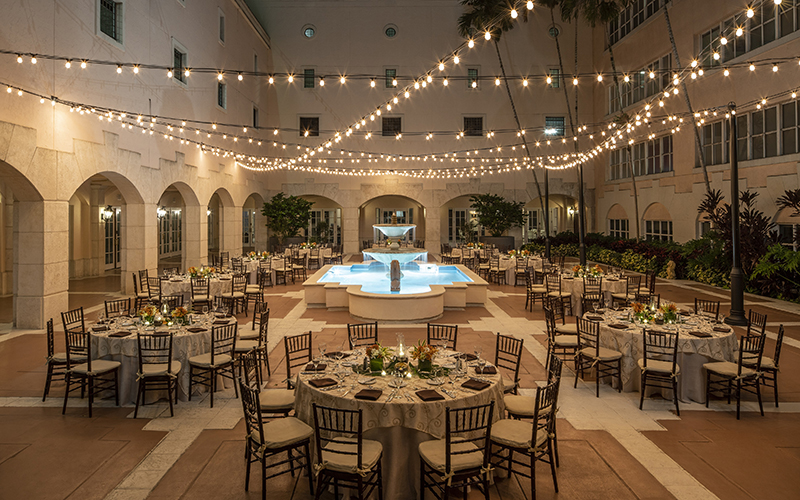
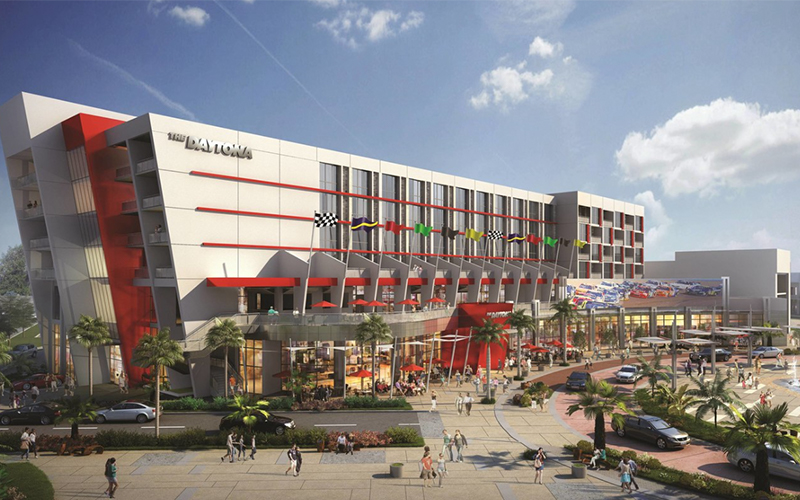
Boasting hotels near international speedways and properties with amazing rooftop bars, the Orange State is constantly checking off items on the never-been-done list. Historically known for alligators and abundant beaches, its remarkable hotel properties just keep getting better.

Creating sustainable practices in the event planning industry is an art that can be both difficult and rewarding. Planning greener meetings isn’t on every event planners mind, and there are reasons for that. Namely, it’s a common myth that it’s impossible to create a brilliant event that is both cost-effective and sustainable. But you really can have it all. Just a few simple actions can have a positive, lasting impact—not just on your event, but on the future, as well.

Following are five actions you can implement today.

MoreGreen Meeting Resource Guide

Eliminate Waste

Between websites, evites, social media and mobile apps, there are myriad ways to promote and register for events without the use of paper. And it’s easier than ever to remove paper and plastic from the dining room with reusable tableware. If reusable isn’t an option, go for compostable products and have a good composting plan in place with the venue. If you must print collateral, use recycled paper and print on both sides.

Choose a Sustainable Location

Location matters—a lot. Look for LEED- or Green Key-certified venues and ask your venue what their sustainability practices are. And don’t forget transportation: How your guests get to and from the venue has a big impact on the carbon footprint. Make the event local if possible and give attendees incentives or discounts for taking public transportation or sharing cars.

Conserve Water and Energy

Lighting and power are key to any event, but it’s still possible to save energy. Use solar panels if you can or swap standard bulbs for light-emitting diodes (LEDs) or compact fluorescent lamps (CFLs). You’ll reduce energy usage by 90 percent over standard lighting. And of course, thirsty attendees are unhappy attendees. Help them save water with water refill stations instead of bottled water, or offer them water bottles to use at the event (swag, anyone?).

Recycle and Compost

Did you know recycling one aluminum can offsets 90 percent of the energy needed to make a new one? Most venues these days have recycling programs, so be sure to work that into your plan. And talk to the venue about its composting policies; if it doesn’t have one, then work with it to implement one.  Label containers and make sure they are available throughout the venue.

MoreHow to Make Planet-Friendly Catering Decisions

Inform and Encourage

Work with your attendees to create an actionable sustainability plan for your event by informing them of your sustainability policies and encouraging them to join you. Motivate them with fun contests and

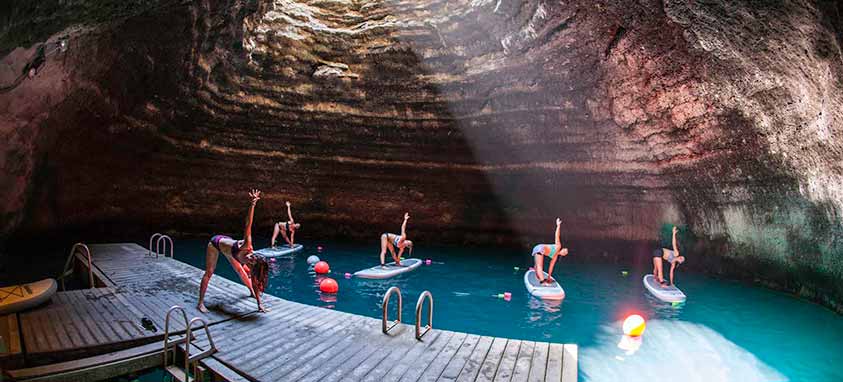
paddle boarding resort activity

Exercising makes you feel alive, and what better place to do than among fellow colleagues. There’s nothing like getting dopamine pumping through your system, the brain chemical responsible for that pleasurable feeling commonly felt post-workout, making you feel like you’re ready to take on the day.

Corporate events are a great place for attendees engage in physical activity. Not only do these activities encourage attendees to get to know one another better, but they also promote a healthy lifestyle. Below are some ideas to jump start your next corporate gathering.

Cycling

Bike-riding can make for a great alternative to the traditional, sedentary corporate gathering. Attendees can go for a simple ride with the intent to team build or they can make it more competitive.

Corporate Cycling Challenge hosts events the weekend of August 18 in Omaha, Nebraska. Starting in the Heartland of America Park participants can choose from three different routes: Olde River Ride (10 mi.), Riverside Ride (25 mi.), and Tour De Fort and Gran Fondo—both of which are 42 miles. Proceeds will be donated to Eastern Nebraska Trails Network, a non-profit for trail development in Omaha and eastern Nebraska.

Many of the companies that host cycling events are based in Europe and Australia, such as Corporate Cycling in Melbourne, Ride25 in the U.K. and Truecycling in Yorkshire, New England.

Run a Marathon Relay

No need to fear, in relays all attendees don’t have to run the entire 26.2 miles. Many marathons for corporate events are structured as relays, in which each attendee runs their own section of the race.

In Denver, Colfax Marathon Relay runs every May; this year it lands on the 19th. A multitude of winners from various divisions receive a total of more than $90,000 in awards for an eligible charity partner.

In La Crosse, Wisconsin, the Festival Foods Grandad Half Marathon is hosted in May as well, on the 4th. Teams can run in either a 5k or half marathon, based on fastest finish times. In the relay, the number of miles that attendees must cover depends on the size of the company.

Jump on Trampolines

Surely the suggestion of a trampoline park for a corporate event will be met with wide eyes. They are as fun as they are exhausting.

At trampoline parks, such as House of Air—located in California, Texas and Poland—and Skyzone—located in the U.S., U.K, and many more countries—there are numerous activities to engage in within the park, such as freestyle jumping, dodgeball, dunk basketballs or jump in the foam pits. You can rent out a room or buy-out the entire facility.

Stand Up on a Paddleboard

wacky water workouts

Stand-up paddleboarding (SUP) is all the rage. Yoga, scavenger hunts and bingo—who knew you could do so much on a paddle board?

At Mantra Fit, in Severna Park, Maryland, you can do all this, as well others, including SUP stroke class, where you learn the fundamentals of paddle boarding technique, Sunset SUP N’ SIP, during which attendees enjoy a casual paddle and refreshments at the adjacent waterside restaurant, Paddlefit, a boot camp that includes a mix of paddle intervals and bodyweight exercises, and Barre on Board, which—like it sounds—is barre class on paddle boards—talk about a challenge.

Hyatt Regency John Wayne Airport Newport Beach

Editor’s Note: Grand Hyatt at SFO was added as an additional on-airport hotel on April 11, 2019.

For decades, airport hotels have refreshed passengers with long layovers or canceled flights. Today, these convenient resting places have shifted gears to mimic the upscale evolution of airports by modernizing and offering amenity-rich accommodation. Here are a few airport hotels you can take advantage of while you are on the go!

More: 3 Alternative Airport Lounges

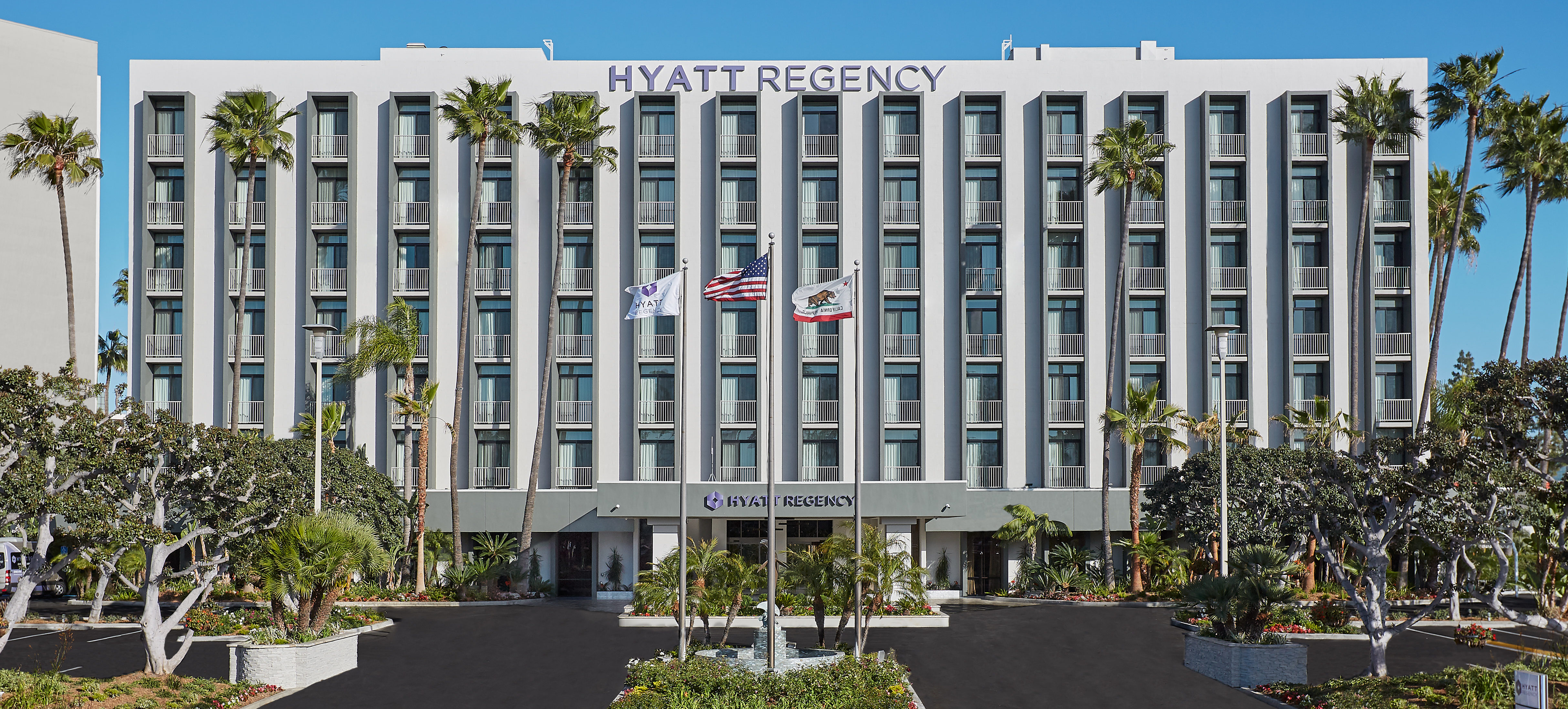
Hyatt Regency John Wayne Airport Newport Beach

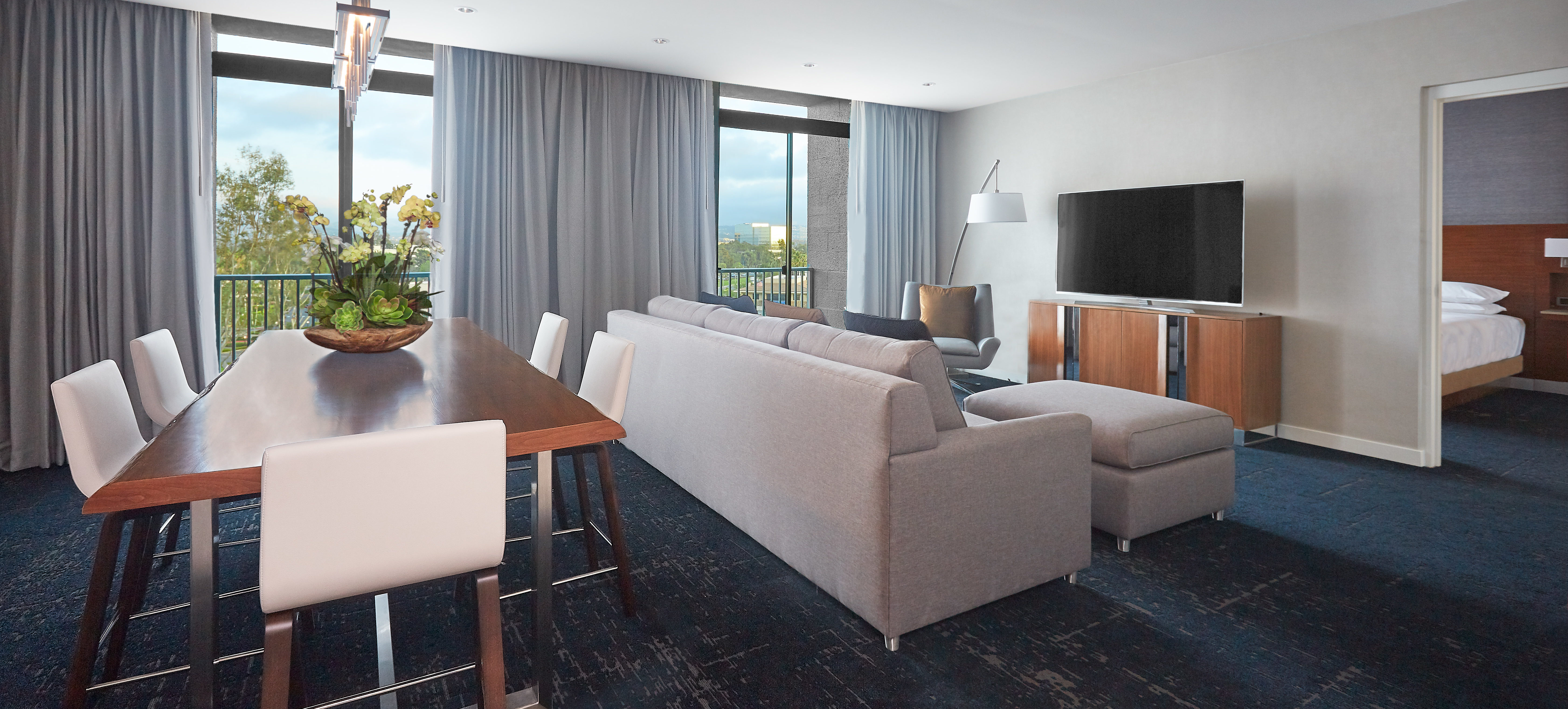
Located five miles from John Wayne Airport, this resort-style hotel features 343 guest rooms and suites with Juliet balconies that serve travelers looking to enjoy the California sun and cool Newport breezes. The hotel also features a resort-style outdoor pool, a jacuzzi and fitness center with a separate yoga and stretching room. Guests and visitors to the hotel have access to signature restaurant WAVE Newport Beach and an elevated gourmet market and bistro where they can enjoy fresh-pressed juice. This amenity-rich Hyatt also provides a complimentary shuttle service to John Wayne Airport, the West Coast’s largest shopping mall—South Coast Plaza—and Fashion Island.

Westdrift Manhattan Beach

Located just four miles from LAX airport, Los Angeles’ first Marriott Autograph Collection property is a unique blend of East Coast bold and California cool. The 393-room coastal-themed property features a nine-hole golf course, a Cross-Fit inspired fitness center, a pool with private cabanas and bicycles for guests’ use. Visitors may also dine at an indoor/outdoor restaurant lead by executive chef Octavio Sabado, the hotel’s Jute Coastal Bar and Kitchen, play lawn games, spend a day at the beach and bike to the city’s shopping and entertainment hub—The Point.

TWA Hotel at JFK International Airport

New York’s JFK Airport is all set to welcome its first on-airport hotel. Nearly two decades since JFK’s former TWA Flight Center terminal closed in 2001, the iconic building will reopen as the TWA Hotel. Although it officially opens May 15, the hotel is already accepting bookings. With the largest hotel lobby in the world, at 200,000 sq. ft., the property will also house a museum celebrating the Jet Age.

More13 Hotels, 6 Airlines Named Best Places to Work for LGBTQ Equality

TWA offers 512 midcentury modern-inspired guest rooms that include striking, floor-to-ceiling windows with views of the runways. Guests don’t need to worry about noisy naps since the glass windows are four-and-a-half inches thick, made of seven panes and two gas pockets to block the runway noise. It is the second-thickest window ever manufactured in the world after the new U.S. Embassy in London. This luxury hotel features six restaurants, eight bars, a coffee bar, a ballroom, a 10,000 sq. ft. fitness facility and rooftop observation deck and pool, a restaurant by chef Jean-Georges and a handy AirTrain to all JFK terminals.

Grand Hyatt at SFO

San Francisco International Airport (SFO) also welcomes its first on-airport hotel this summer. Located at the entrance to San Francisco, Grand Hyatt at SFO is close to terminal buildings and parking garages and is directly accessible via the AirTrain light rail system. This luxury hotel offers 351 guest rooms, including 22 suites with floor-to-ceiling soundproof windows in each room. It will also feature amenities such as yoga and movement studio and luxury spa room, complimentary 24-hour Hyatt StayFit gym, 24-hour in room service, a bar, 18 meeting rooms, two spacious ballrooms, and 14,435 sq. ft. of flexible event space.

Guests can enjoy a multi-cultural dining experience at their signature restaurant—Quail & Crane. The menu will represent the coming together of the East and West and will focus on fusion and classic Asian food preparation techniques, alongside Western dishes.

Participants at IACC Americas Connect 2019 last week were encouraged to shake things up by finding more innovative solutions to challenges in the meetings and events industry, and by accepting more global responsibility.

These bold messages set a dynamic tone for the conference, with the theme “Radical Innovation—Change Everything!’’ which was held at Vantage Venues and The Globe and Mail Centre in Toronto April 10 and 11. More than 230 participants—including some 20 meeting planners—attended the event.

Need for Disruptive Experimentation

At the opening general session, Pablos Holman, an inventor, innovator and faculty member at Singularity—an organization that prepares global leaders and organizations for the future—emphasized that rather than simply advance current lines of research, we need to think outside of these lines. He advocated disruptive experimentation, even though we are likely to have more failures than successes.

https://twitter.com/SmartMtgsDan/status/1115993761606139905

“No one person alone can provide answers—no one is that smart,” he says. “The only thing we can do is come up with a lot of ideas and test them. That’s true not only for inventors, but also for you.”

Consistent with the innovation theme, all the speakers at IACC Americas Connect were new, and their PowerPoint slides were limited to one word each. Also, on the first day, Smart Meetings and other industry media sources judged a contest in which candidates each made four-minute presentations on their innovative projects. Janice Cardinale and Richard Emmanuel of The Idea Hunter won the competition for Social Roamer, which takes enhanced photographs of attendees at gatherings and makes them quickly available to them for use on social media.

Becoming a More Responsible Global Player

The need to realize the broader effects of meetings industry activities was stressed throughout the conference. Alex Cabanas, CEO of Benchmark and the outgoing board president of IACC, spoke passionately about the need for enhanced sustainability efforts. “The meetings and events industry is one of the worst industries when it comes to waste,” he said. “We need to do a much better job.”

Educational sessions covered a wide range of topics, including radical innovations through values, gaming, virtual reality, the future of meetings, sustainability, F&B trends, and food risks and liability.

https://twitter.com/SmartMtgsDan/status/1116146968772923392

This was the first year that IACC involved meeting planners as well as university students—from Ryerson University and Seneca College, so that they could gain experience in the industry.

IACC’s next European conference, “Knowledge Festival,” will take place in Brussels Oct. 4–6, 2019. IACC Americas Connect 2020 will be held in Dallas.

Founded in 1981, IACC is dedicated to representing the best meeting venues globally. Consisting of more than 400 conference venue members, its conferences offer presentations and networking, with a focus on innovation.

Intelligence can be subjective. As we learn more about the mind’s effect on our personal and professional lives, we understand that our thoughts, words and actions are all elements of human behavior. Holistic Intelligence Quotient (H.i.Q.) helps us understand our own—and others’—behavior for improved work and interpersonal relationships.

In a recent Smart Meetings webinar, human behavior and conflict resolution expert, Amilya Antonetti, chief digital strategist and marketing officer at Steve Harvey World Group, shared exciting insights on applying H.i.Q. to understand different human behaviors and personalities for better meetings.

What is H. I. Q?

According to Antonetti, “H.i.Q. are robust assessments and programs that guide people, teams, and leaders through the layers of individual human development. It is a tool that can decode people and problems. It allows you to narrow down or streamline exactly what you want to do and reverse engineer it to tell you exactly how or what you need to do, step by step, to get it done.”

How does it work?

As the first layer in H.I.Q, it is essential to recognize where you are in your development. “Only when you decode you, can you understand how to decode another person,” said Antonetti. At this stage, you start with understanding human behavior that teaches you how learn, recall and remember. H.I.Q refers to this process as “imprinting.”

The three learning styles are visual, auditory and kinesthetic (VAK.). “VAK is a permanent attribute learned and encoded in the brain at a very early age, normally beginning from birth and developed by the age of four or five; and this attribute is wired to be the primary style,” Antonetti noted. People in each of these styles experience the same things differently, and this creates a gap, as it makes it extremely difficult for the other two styles to follow or try to learn from one another.

Visual Learners

This type of learner stores visual information in their mind, such as a collage of pictures, to recall and remember experiences. Even if they receive information by sound, their subconscious mind creates images from the different sounds they hear. So, as they recall an experience, they use words such as “I see” and “I saw” with intricate details in their mind, which has stored a collage for them. They remember details such as the color, texture and people in their experience.

Auditory Learners

This type of learner depends on listening and repeating as a primary way of learning. They convert everything to a list so they can check what they need to accomplish. Even if they only see something, they transform the experience into a list. This type of learner may have difficulty understanding instructions with pictorial references as they prefer lists. They do well when presented with instructions in a logical order or in a sequence of things that need to be done. They need to be organized and process everything in an orderly manner. Auditory learners also have a keen sense for tone and pitch and can understand when emotions are high or low by the change in tone.

MoreThe All-Inclusive Meetings Revolution

Kinesthetic Learners

This type of learner is the most difficult to interact with on the front-end, but they reinvent and re-engineer processes for new and better ways. They are tactile learners who like to dwell deep and go as far as they can until they hit a roadblock. A kinesthetic learner remembers best the different things they experience. They can hold on to great experiences for a long time and can quickly eliminate experiences that did not meet their expectations.

Kinesthetic learners find it difficult to understand information from written or audio forms. They also can remember enormous details from an experience or nothing at all. These types of learners are great in a team that is trying to find a way to duplicate a process, as they will discover efficient, alternate ways to achieve results.

Which learning style is the best?

Each learning style is different and holds its own unique ability that adds value. In short, no one learning style is better or worse than the other. It is important to understand your façade of personality and take appropriate measures to communicate with different types of learners.

What is your learning style?

It is common for people to identify with all three learning styles or feel like they are a combination of two or all three styles, but everyone has a primary, preferred style which stands out when faced with a conflict situation.

How does it benefit you?

Once you understand your preferred style, it enables you to teach people how to best communicate in your learning style when you are looking for guidance or help. Learning the different learning styles also allows you to understand how to adjust your style to communicate with others effectively.

More4 Top Trends for Inclusive Meetings in 2019

If you are planning for an event or meeting, it is important to incorporate your information in all three learning styles as it allows you to bridge the gap and communicate your message to a broader audience. This can help you achieve:

  • Higher conversion rates
  • Higher retention rates
  • Higher ratings on the overall experience

Remember, if you communicate in just one style, you are only reaching one-third of your attendees.

If you are curious about understanding your learning style, you can take the decoding conflict assessment to learn more.

Editor’s Note: Updated 4/17.

On Tuesday, Caesars Entertainment Corp. announced a new CEO, Tony Rodio, after a six-month search to replace Mark Frissora. Rodio previously worked at Harrah’s and spent part of his 40-year gaming career in Atlantic City.

After acquiring operational control of the “Venue of the Decade,” Caesars Entertainment has decided that it’s in need of a facelift. The Colosseum at Caesars Palace will be getting new equipment to make the theater experience more immersive and engaging. Included in The Colosseum’s upgrade will be a state-of-the-art sound system, moving light fixtures and a high-definition LED video wall, more than doubling the size of the former 110 ft. long and 34 ft. tall LED screen.

The venue’s new automated lift seating system—the only one in Sin City—will allow the space to accommodate multiple seating arrangements, giving guests a whole new way to enjoy the show.

If that major move wasn’t enough, Caesars Entertainment also partnered with entertainment promoter, Live Nation. With this collaboration, guests from all over the world can listen to an even more immense list of artists in a top-tier venue.

John Gatswith, president of entertainment for Ceasars Entertainment, expressed how thrilled he is about the enhancement of the venue and melding of these two industry giants. “The timing of these enhancements couldn’t be better as Caesars Entertainment and Live Nation now partner to program The Colosseum with a commitment to bring world-class performers to this refreshed, iconic entertainment venue. The best seat in Las Vegas just got better.”

More: 7 Smart Moves at Benchmark, Rosewood and More

At a time when “thinking outside the box” has become a rallying cry for the meetings industry and other industries, a faculty member at Singularity University in Seattle is encouraging an even more disruptive approach.

Basically, it’s to go beyond thinking outside the box by transcending even that box.

“If I’m interested in creating a better Inkjet printer, I’m not going to just improve upon the current models—HP will do that. I would want to create what comes next,” said Pablos Holman in his keynote address, “Innovate or Die Trying,” at 2019 IAAC Connect, currently being held in Toronto.

https://twitter.com/SmartMtgsDan/status/1115993761606139905

Holman teaches at Singularity, an organization that focuses on preparing global leaders and organizations for the future. He emphasizes that in other contexts, as well—including the meetings and conventions industry—a more radical approach is needed than simply building upon past work.

“The meetings industry needs to provide a context in which people can come up with ideas, test them and then share results,” he said.

MoreHow to Disrupt and Deliver at Your Conference

Holman stated that there may be far more failures than successes, but that disruptive experimentation is necessary to attain ground-breaking achievements. As an example of how critical this new way of approaching problem-solving is, he cited the current malaria outbreak, in which 725,000 people die each year.

“We can and we will eradicate malaria in our lifetime, but it won’t be done by reading an instruction book: We need to be inventive,” Holman said.

Another year, another tax season. Taxes can be stressful for even the most tax-adept individual. Deductions. Exemptions. Tax credits. You’ve probably been dealing with taxes for years, but it’s just as bothersome as the first time.

With the new tax bill put in place January 1, 2018, taxpayers will see some changes in their return, but most affected will be the self-employed, a category many third-party planners find themselves in.

More9 Tax Season Tips for Meeting Planners

With the help from tax experts at Nerdwallet and TurboTax, here are five tax deduction tips to help planners (and everyone else) lessen the stress and heighten the returns. If you have any specific questions, you should always consult with a professional.

Self-employment Tax Deduction

According to the IRS, when you are self-employed, you are both the employer and the employed, making you responsible for both the employer and employee tax contributions to Medicare and Social Security. The good that comes out of this is that—under the new law—50 percent of what you pay in self-employment tax is deductible.

Qualified Business Income (QBI) Deduction

Self-employed taxpayers have a new deduction that assists small businesses with pass-through income. Sole proprietorships, partnerships and S corporations may deduct up to 20 percent of QBI.

Health Insurance

If you meet the requirements outlined in the “Business Expenses” section of the IRS Publication 535, you may be able to deduct premiums for you and your family. The new tax law no longer penalizes those without health insurance from 2019 on. However, as it was still required in 2018, it still must be filed this tax season.

Car Deduction

The deduction for automobiles has increased for cars used for business. Self-employed and employees driving for business can use the standard mileage rate, which for 2018 is 54.5 cents per mile, up from 53.5 cents per mile in 2017.

Itemize or Standardize

The self-employed will likely have a lot to itemize. Standard deduction is a fixed amount that you’re allowed to deduct from your AGI, depending on your filing status. Itemizing lets you cut your taxable income down by listing the hundreds of individual tax deductions that you qualify for; it’s time consuming, but could potentially save you a lot of money.

The amount you’re able to deduct from your standard deduction this tax season is double what it was during last tax season. This time around, you may find bigger savings if you take the standard deduction.

Reminder: Pay on Time!

Filing taxes is one those things that’s often put on the backburner, but the delay could cost you. If you file late, the IRS will issue a late-filling penalty of 4.5 percent and late-payment penalty of 0.5 percent per month for as long as the tax is owed. If you absolutely can’t file, consider filling a Form 4868, which will give you a six-month extension to October 19, 2019.