It’s entirely normal—and almost expected—to feel lost in the beginning stages of your job. You’re trying not to forget details, dealing with clients, all the while trying to maintain sight of the big picture. And aside from some internet articles, there isn’t a real guidebook. Enter: mentors.
Mentors in your field can be underrated. But they hold information and wisdom that will help guide you through your job—and even far into your career. So, how do you find one, and how do you present yourself as the perfect mentee?
1. Figure out why you want a mentor.
It might sound silly, but think about what you really want to get out of a mentor/mentee relationship.
Are you looking for someone to connect you to other muckety-mucks? You might do better at a networking event and working your way up the professional ladder. Do you want them to solve all of your problems? Mentors have their own careers. While they can offer advice through crises, not every problem will sound the alarm.
But if you’re looking for someone who can listen and share their experience from time-to-time, mentorship might just be the ticket.
2. Create your elevator pitch.
Why are you worth their time? It might sound harsh, but it’s important to figure out your strengths and how being a mentee will improve them.
What is your ultimate goal? It’s a big question, but it will help a potential mentor know what you are hoping to get out of the relationship. Being able to articulate your vision and flexible in how you structure the relationship is the best starting point.
3. Remember: the worst thing they can say is no.
Working up the courage to ask someone to mentor you—especially someone in a senior position—can be difficult. But keep in mind that the worst thing you’ll hear is a rejection. It can feel personal and sting a little, but it’s not the end of the world. This person may simply not have the time to take on a mentee, or they might not feel qualified—it’s not you simply being a failure. Continue your research and reach out to others.
4. If they say yes, dedicate yourself to being a good mentee.
Remember: you are taking up somebody’s time. Do not abuse the privilege—rather, strategize so that when you do have their attention, you are asking worthwhile questions to receive answers that will benefit you.
It might sound obvious, but it bears repeating: listen to what your mentor has to say. If they’re successful, ask about the steps they took. Mentors won’t have all of the answers, but they will have insight that could help you find your own path.
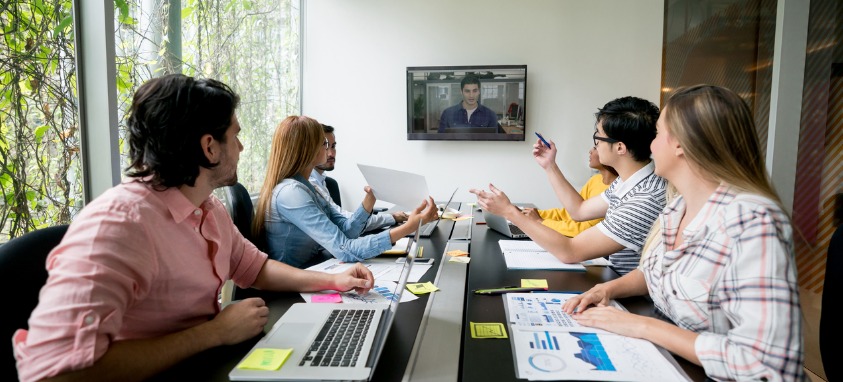
How many meetings do you sit in during a typical day at work? How many hours do you devote to brainstorming ideas, resolving problems, sharing updates and collaborating with your colleagues, direct reports and bosses? Despite collaborating so often, business meetings are not always productive and problems too often don’t get resolved until too much time has been wasted.
How can you improve these meetings and save precious hours? First, use your technology wisely. Adopting innovative technology can increase your productivity or improve your collaboration.
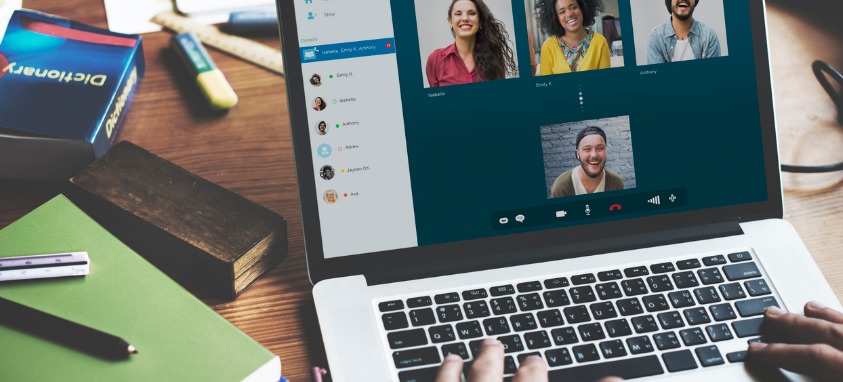
Secondly, adopt video conferencing when possible. It can streamline communication and ensures everyone has access to the same information in real time. But not all video apps work the same. Choose your technology carefully so you don’t spend half of the time trying to hear what others are saying over a weak connection.
Are You Still Using These Technologies?
The Tools
1. Skype—Skype was a widely used software for video conferencing, but in this era, it just fails to be effective. For starters, the call quality is often poor, even if you have a great internet connection. Second, they just recently changed their interface, which may make usage more complex for some of your participants. Third, group video chats are limited to 25 people for the free version; what do you do when your team has over 50 members?
Fourth, information can be shared in real time, but it cannot be simultaneously edited by everyone on the call. This makes data exchange an issue. Fifth, the file sharing limit for Skype is 300 MB; bigger files must be shared via OneDrive, or Google Drive, or an extra solution. Sixth, additional participants have to be invited to a call; they can’t join using a link as other tools offer. And lastly, Skype can only be used when the software has been downloaded and a user ID has been created; there aren’t any options that allow you to use the program as a guest.
Skype is amazing for one-on-one meetings and touching base with a few team members, but whenever entire teams have to collaborate, look elsewhere.
2. Zoom—Zoom is a tad bit better than Skype; you can make presentations and share screens more conveniently. However, proprietary software must be installed when using Zoom for the first time. Also, if you use Zoom on a Linux platform, you’ll probably be facing connectivity issues. The paid version of Zoom is more expensive than other similar tools; while you can customize the plan, there are too many factors to consider which may make the process more complex.
3. Google Hangouts—Google Hangouts is a pretty basic audio and video calling software. Screen sharing is offered, but group calls are limited to 10 people, even fewer than Skype. There is no desktop app and only images can be shared.
Hangouts display every chat as a new window; should you open too many of these together, they all get mixed up, especially on a smaller screen. At most, only five or six chat windows can be displayed on the screen without cluttering the screen.
4. GoToMeeting—GoToMeeting is much better than other video conferencing tools. But there are still certain negative aspects of using this software. For instance, only 25 cameras can be turned on during a group video call. Also, you must have a bandwidth of at least 1 Mbps, so GTM won’t work until your internet connection is solid. If there are too many attendees, call quality may deteriorate for the participants. Meetings cannot be recorded if you have a Starter plan. Moreover, the chat option is limited as the chat room is available only for the duration of the meeting.
The Hardware
5. Laptop and Mobile Cameras—Do you still use the camera that came with your laptop or phone for video calls? The output at the receiving end of the call may not be so good with the picture often freezing or getting delayed. Also, these cameras only show a certain angle. Newer video conferencing technology features a smart 360-degree camera that provides an entire view of the boardroom.
6. Internet Connection—You will definitely need a speedy internet connection to ensure an above par audio and video quality at both ends.
7. Incompatible Devices—Compatibility issues often arise because of outdated hardware and/or software. Switching to newer technologies can prevent these challenges.
8. High-Quality Audio Devices—Gone are the days when you could judge a call quality based on how good the audio reception and transmission was. Rather than focusing on microphones and speakers, think about upgrading your conference room to a better and quieter work environment.
What Features Should Your Conference Room Have?
Many businesses prioritize a fast internet connection, audio and video quality and power outlets when determining the quality of their video conference tools. Considering the smart range of tools that have emerged like digital whiteboards, AI integration and voice assistants. These solutions are pushing companies to step away from obsolete video conferencing platforms and to change their approach.
Other essential features of a conference center include cloud collaboration, streamlined document integration, mobile compatible design and browser-based video conferencing.
A Look into the Future
Video conferencing technology is a must-have rather than just being a strategic advantage. AI, augmented reality, facial expression monitoring and language translations can be expected to take video calls to an entirely new level.
The meeting rooms of the future will be designed to offer incredible experiences to both present and remote users. Siloed communication tools will no longer be used; Unified Communications and Collaboration or UCC will be the new approach.
Amanda McPhail runs the booking team for IQ SmartCenter—a sleek and modern San Diego conference center. Her expertise is in the wedding and event industry, and she enjoys blogging about the latest trends and industry topics.
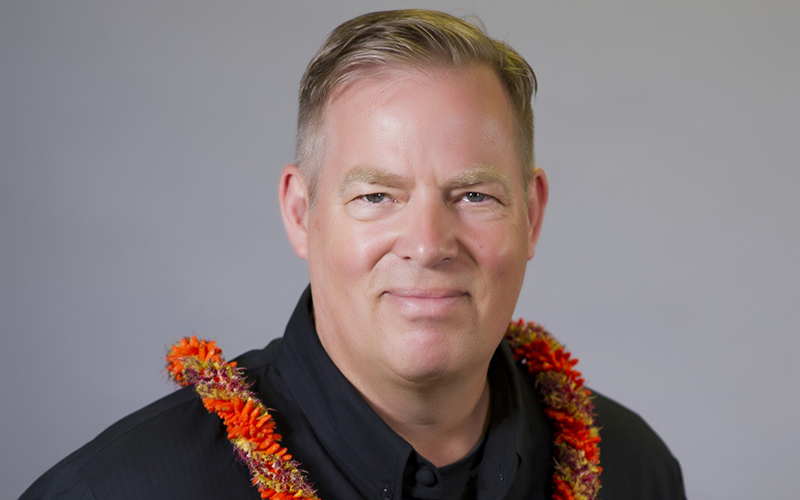
Hansen Lee
The Monarch Beach Resort in Dana Point, California, has appointed Lee as executive chef. His career in the kitchen began at The Peninsula Chicago, where he started as a line cook. He had held multiple chef positions at various properties in California, including Beverly Hills, Huntington Beach and Los Angeles. In 2011, he was a competing chef on NBC’s America’s Next Great Restaurant.
Hans Lentz
The Hawaii Convention Center in Honolulu has welcomed Lentz as executive chef. He has worked at resorts and convention centers in Hawaii, Dubai, Oman, Africa, the U.S. mainland and Puerto Rico. Most recently, Lentz served as executive chef at Jumeriah Hotels & Resorts in Dubai, United Arab Emirates. Prior to that, he was the executive chef at Hilton Waikoloa Village and Mauna Kea Beach Hotel—both on Hawaii Island.
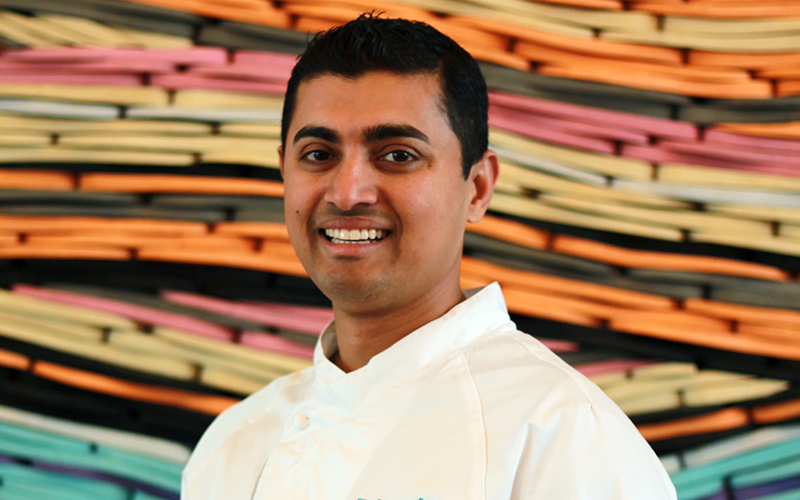
Prabeen Prathapan
Pasea Hotel & Spa in Huntington Beach, California, named Prathapan its executive chef. Prior to joining Pasea, he was the executive sous chef at Montage Laguna Beach in California. He spent his early years in Mumbai, India, and later gained experience at various Taj Hotels locations, such as the Taj Fisherman’s Cove in Chennai, India, where he served as sous chef.
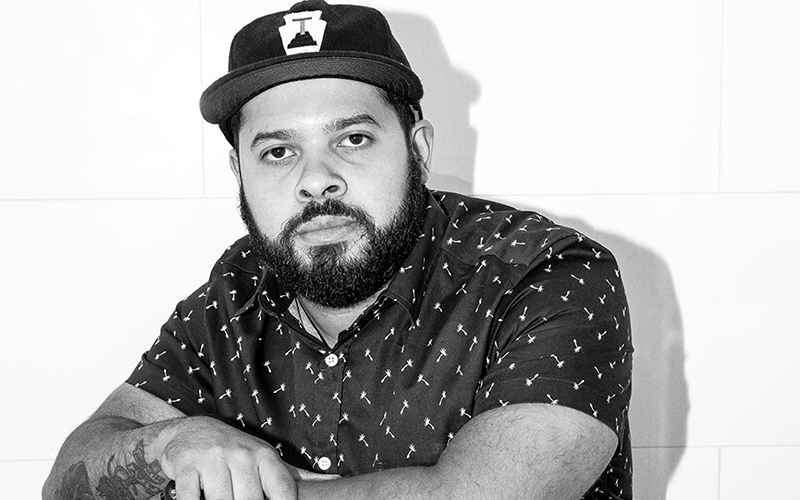
Andrew Rodriguez
Rodriguez is the executive chef at Holston House Nashville in Tennessee. He’s worked in various high-end restaurants in New York City, New Jersey and Nashville. Rodriguez began his career under the tutelage of chef Missy Robbins at A Voce Madison in New York City and later joined the opening team of A Voce Columbus, also in New York City. Following this, Rodriguez joined the Adele team in Nashville as the executive chef. Later, he opened Pinewood Social, located in Nashville, with Mac and Benjamin Goldberg.
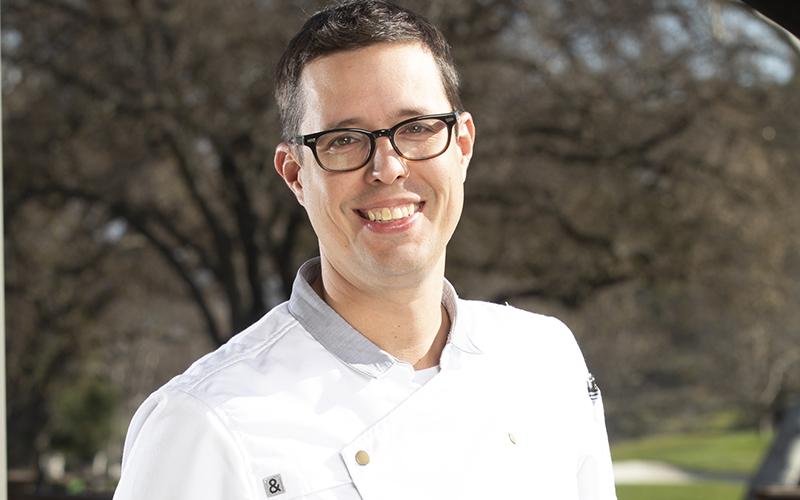
Alexander La Motte
La Motte has been appointed executive chef of Rosewood CordeValle, in San Martin, California. In his most recent position, he was executive chef at Hotel Californian in Santa Barbara, California. He was introduced to the hospitality industry when he became executive chef at Four Season Hotel Westlake Village in California, and later, at Four Seasons Hotel San Francisco.
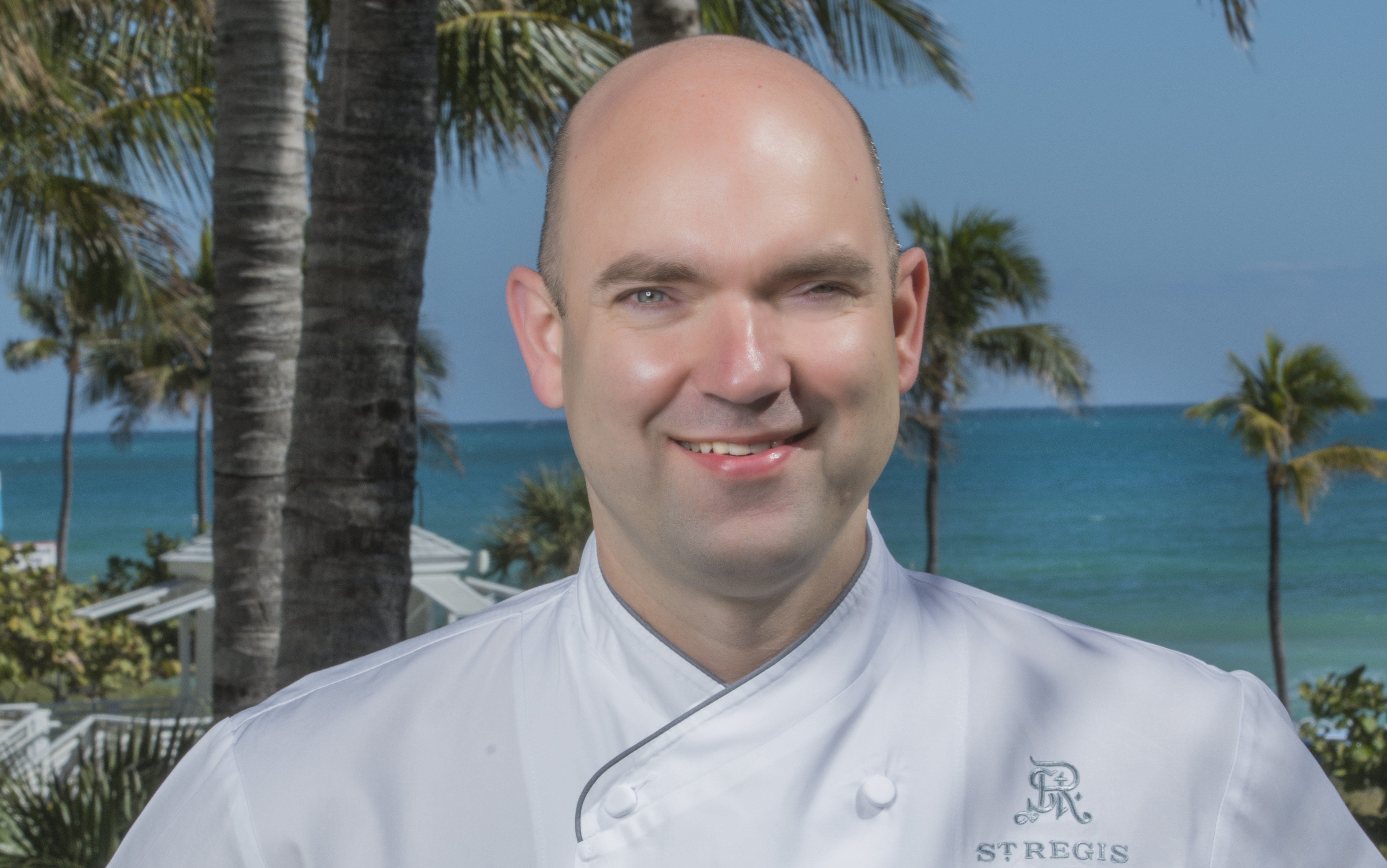
Andreas Schatzscheider
St. Regis Bal Harbour in Miami Beach has appointed Schatzscheider as executive chef. Most recently, he served as executive chef at The Ritz-Carlton, Dubai International Financial Center in United Arab Emirates. He previously served as executive chef at The Ritz-Carlton, Cancun in Mexico, executive sous chef at The Ritz-Carlton in Guangzhou, China, and executive chef at The Ritz-Carlton, Vienna in Austria.
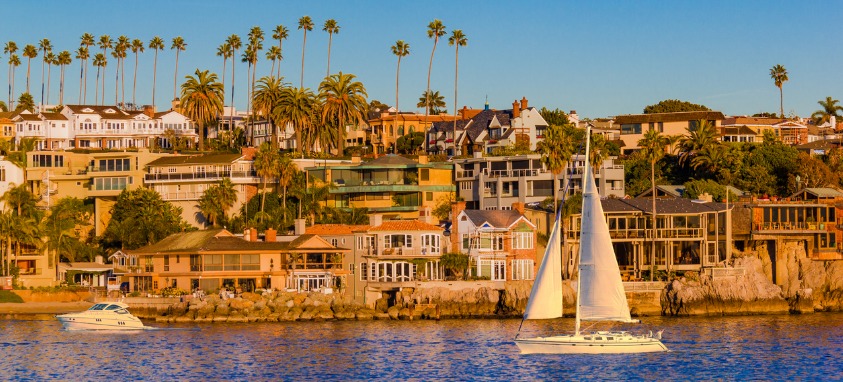
Home to more than 3 million residents, Orange County, California, boasts miles of parks, beaches and hiking trails, as well as thriving businesses, tourist attractions and a vibrant arts and entertainment scene. It’s also home to Irvine Company, which owns several residential and commercial properties in the county, including three high-end hotels under Irvine Company Resort Properties.
The three hotels are distinct, but work together to offer the best of Orange County to visitors. From hiring a personal Fashion Island shopper to beach excursions and bike tours to and around Balboa Island, to hiking and group golf lessons, guests have it all. Each property is happy to work with each other to provide custom experiences for groups, and all three provide virtual reality goggles to enhance the meeting experience.
We recently performed site inspections at each of the three properties. Here are the highlights.
Hotel Irvine
Courtesy of Hotel Irvine
Located in the heart of Orange County, Hotel Irvine is a modern lifestyle hotel that caters to guests with personalized touches and customizable experiences. It is undergoing a refresh of both the back and front of house, to be completed in July. Improvements include new fabric, artwork and lighting; bedding and mattress upgrades; new banquet equipment; smart elevators; updated technology; and kitchen equipment upgrades. All hotel facilities and rooms are available during the refresh.
Meet and Sleep
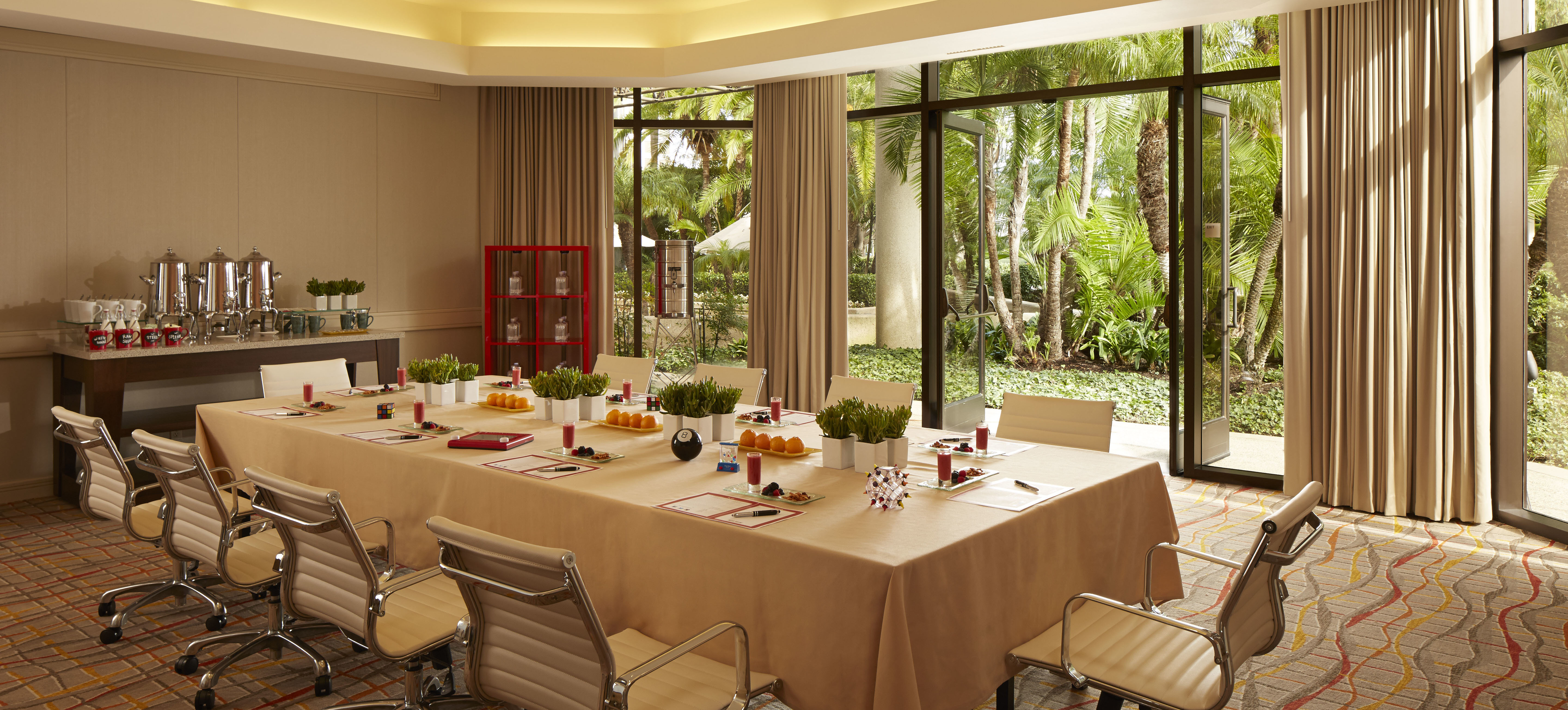
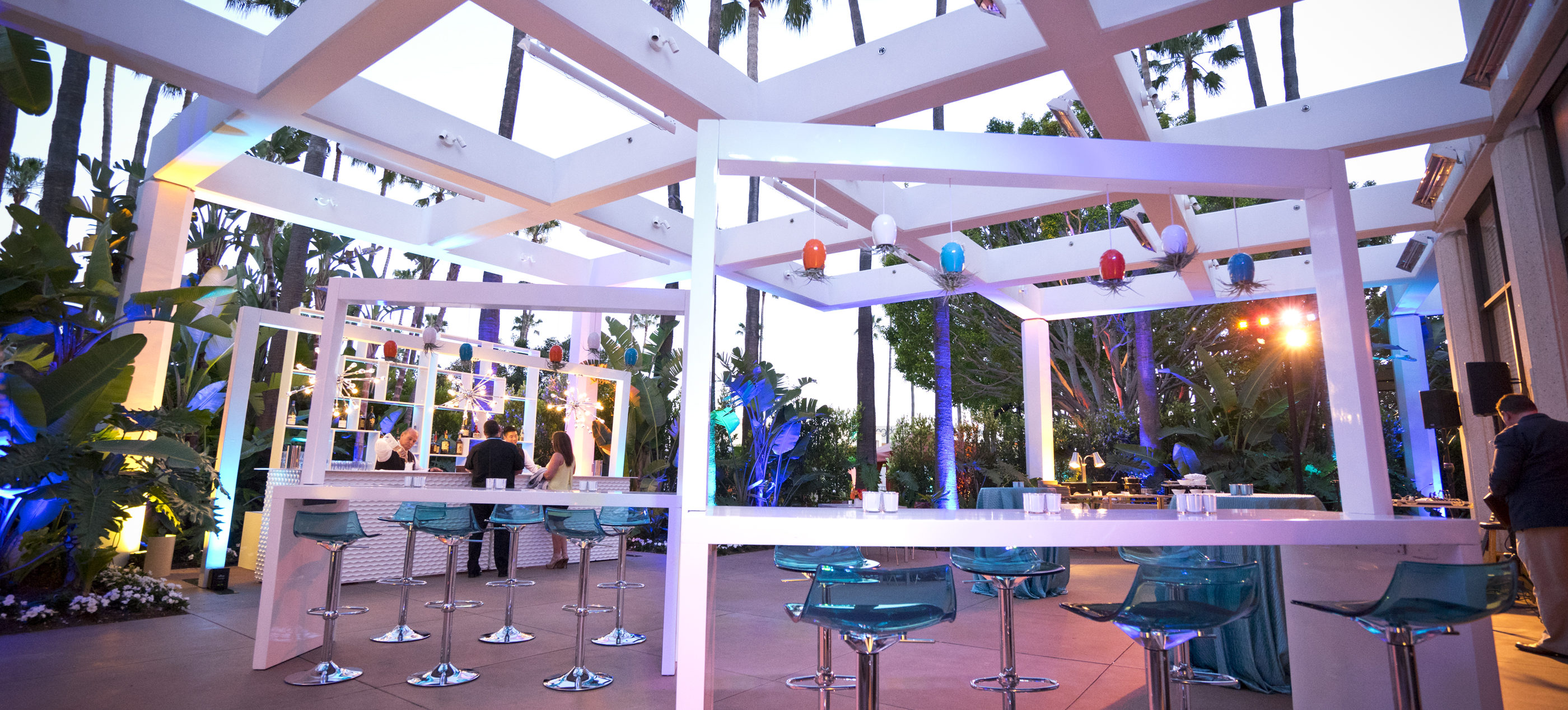
Hotel Irvine houses 520 guest rooms, 16 suites and several flexible indoor and outdoor meeting spaces (many with floor-to-ceiling windows and terraces); a theater for up to 120 people and a 15,000-square-foot, flexible grand ballroom with a 5,400-square-foot foyer that can accommodate up to 2,100 attendees— one of the largest ballrooms in Orange County. Attendees can soak up the beautiful Orange County weather in the backyard, with 10,000 sq. ft. of open lawn space and 6,000 sq. ft. in the adjacent customizable pavilion. (Bonus: It’s adjacent to the pool and cabanas.)
Eat, Drink and Play
The hotel provides catering services, and the staff at Eats Kitchen and Bar will keep everyone fed from breakfast through happy hour and beyond. Planners can arrange a meet-and-greet session at Red Bar and Lounge, where attendees can chat over craft cocktails and chef-prepared bar bites. The hotel’s market is available 24/7—send a text for delivery at any time.
Courtesy of Hotel Irvine
Mixology, cooking and yoga classes are available for small groups, and cruiser bicycles are available for exploring the area. Attendees who can’t make it to Fashion Island can request a personal shopper to go for them. The hotel is happy to arrange beach time at“The Dunes” for large and small groups alike.
Fashion Island Hotel
Courtesy of Fashion Island Hotel
Fashion Island Hotel provides relaxed sophistication in—you guessed it—Fashion Island, Newport Beach’s high-end shopping and entertainment centerpiece. Newport Center is the area’s thriving business district and Newport Beach provides a plethora of activities for attendees to enjoy in between meetings. Planners will appreciate the staff’s can-do approach.
Meet and Sleep
The luxury property offers 295 guest rooms, ranging in size from 435 to 600 sq.ft., and 82 suites. All rooms have walk-out balconies or furnished patios. Multiple bright and airy, indoor and outdoor meeting spaces, including an 8,710-square-foot ballroom—the largest in Newport Beach—are ideal for corporate meetings large, small and in between. The ballroom provides a private prefunction area.
Eat, Drink and Play
Attendees can gather for pre- or post-event cocktails around the fire pit outside, and small groups can enjoy a meal together at Oak Grill, the hotel’s signature restaurant. The hotel’s catering partner will be happy to create custom menus for meetings of any size. Attendees can regroup and unwind during happy hour at Aqua Lounge, the hotel’s night-life hot spot.
Courtesy of Fashion Island Hotel
Attendees can get some sunshine on Balboa Island via electric bikes and catch a Duffy Boat for some team building on the harbor, and then luxuriate, relax and rejuvenate at Fashion Island Hotel’s premier spa, or make the most of Fashion Island with a shopping break (or personal shopper).
The Resort at Pelican Hill
A luxury resort in Newport Beach, The Resort at Pelican Hill provides a comfortable yet lavish seaside setting for meetings, team building, and incentive and corporate retreats, with sweeping views and architectural and landscape design reminiscent of Old World Mediterranean splendor. The property boasts three distinct pools and two world-class golf courses, totaling 36 holes.
Meet and Sleep
The resort features 23,200 sq. ft. of function space, including a range of rooms for board meetings and corporate retreats. Meeting rooms are divided into distinct areas of the property, and include a 4,560-square-foot ballroom, which can be divided into three sections; three ocean-view terraces, ranging from 2,800 to 5,600 sq. ft.; and a boardroom that can seat 24.
The property’s Mar Vista provides several unique meeting spaces in a more private setting, a circular lawn providing 4,950 sq. ft. of space and a Renaissance-style rotunda, while the 3,200 square-foot golf pavilion is ideal for large team gatherings.
Accommodations include ocean- or garden-view bungalows and suites, and two-, three- and four-bedroom villas.
Eat, Drink and Play
With four high-end restaurants serving farm-to-table fare, two cafes and a gourmet market, planners can ensure attendees are well-fed. On-site activities for groups include painting, floral arrangement and cooking classes, a poolside “luxology” (luxury mixology) class, half- or full-day luxurious spa retreats, art and architecture tours and “dine-arounds” (for intimate groups as well as for groups of up to 100).
Attendees can get into the team spirit (and take in breathtaking views) at one of the resort’s renowned golf courses. Planners can arrange for attendees to practice their putt or master their swing at a golf academy (with classes for every level), led by a PGA professional, then test their skills in a nine- or 18- hole game on one of the two courses. Both courses promise breathtaking views and challenges throughout.
Offsite, groups can hit the water for kayak and paddle boarding adventures, take a hike in nearby Crystal Cove and pedal around the local hot spots.
Art at Parc 55 in San Francisco.
No longer relegated to just decoration and beautification, art has become an essential element of the overall hotel experience—and a win for all.
Art and artist at Parc 55 in San Francisco.
From big and bold, daring and adventurous, to unique and local, art stands out in the memories of visitors, making the hotel the topic of conversations and Instagram stories—and sometimes ensuring return visits. It becomes woven into a hotel’s image, becoming, in effect, another way to market the brand while delighting visitors.
Local artists who display their works in hotels benefit greatly from the exposure. With hotels come global travelers who take the memory of the exhibit back home with them. And since the exhibits are available to the public, locals have the opportunity to learn about artists in their community while enjoying their work for free in a public space, so the artists broaden their viewer base more than they do by showing only in galleries.
Hotel art can also spark or renew interest in a city or neighborhood by providing unique perspectives on local customs, history, people and culture. It becomes a visual manifestation of an area’s flavor and distinctive qualities, shedding light on a place’s character. And it can tell stories in ways words cannot.
For some hotels, art is an extension of the community. Parc 55-A Hilton Hotel, for example, shows only work from local, nonprofit arts organizations through its revolving Art at the Parc series. Since it started in 2017, it has been a hit with guests looking for diversity and entertainment. The hotel’s staff encourages guests to roam the exhibits, and guests can purchase pieces they like.
Molly Blaisdell, Parc 55’s art curator and PR representative, says one the best success stories from the program is “that the Boys and Girls’ Club sold art from it being featured and on display.” The hotel’s current exhibits, Alcatraz: Life on the Rock and Alcatraz, The Last Day, celebrate the 55th anniversary of Alcatraz Island’s closure as a federal prison. The exhibit will be on display at Parc 55 through September. Visitors can catch art from both Pride and the Boys and Girls Club from October through the end of the year.
On the East Coast, Art Ovation Hotel, Marriott Autograph Collection: Sarasota in Florida makes art an immersive experience. Sarasota is proud of its rich arts and cultural programs, and Art Ovation Hotel brings that culture to guests through rotating art collections, art curators and an artist-in-residence program. The walls are galleries, adorned with the work of local artists, and art is not limited to the visual: Music, theater and performance art also take center stage at this boutique hotel.
Guests not only view art at Art Ovation Hotel—they can experience it through art tours, music and painting classes, workshops, and access to artists and performers. Sketchbooks, coloring pencils and ukuleles—available in every room—are sure to inspire the inner artist in everyone who stays at this unique hotel.
InterContinental Hotels Group (IHG) recently unveiled plans to add Atwell Suites, an upper-midscale brand with an emphasis on enhancing connections among guests, to its extensive array of properties.
With the intent focused on making hotel stays more comfortable and inviting, Atwell Suites properties will offer all-studio suites.
“The Atwell Suites brand is tailor-made to meet the significant demand in the upper-midscale segment for a new all-suites brand,” said Kevin Barr, chief executive officer of IHG. “Our newest offer gives owners and guests something different than what’s out there today—a stylish suite with the flex for guests to work, socialize or explore over a four- to six-night stay.”
The lobby, huddle areas, outdoor spaces and indoor/outdoor working spaces will feature meeting areas. Guests can access public spaces from the guest rooms and they can collaborate in whatever way they see fit.
IHG expects Atwell Suites construction to begin in 2020 and for hotels to open in 2021, focusing on the U.S. market.
Atwell Suites hotels will serve a complimentary hot breakfast that will include two or three hot item choices, as well as smaller grab-and-go items and coffee, like the offerings at Holiday Inn properties.
In addition to this launch, IHG has introduced new designs to existing brands Holiday Inn, Candlewood Suites and Staybridge Suites.
Looking to sate the beast that is your social media feed? Well, you’ve come to the right place. Compiled here are eight restaurants and hotel properties featuring remarkable backdrops that make posting on “the ‘gram” almost too easy. You know what they say…pics or it didn’t happen.
Casa Marina, Key West, Florida
Want to add some excitement to your outdoor meeting? At Casa Marina, A Waldorf Astoria Resort, guests can create their own cocktail garden wall; snap a pic then take a sip (or the reverse, if you prefer). The property features 11,000 sq. ft. of meeting space, including seven outdoor venues.
International Smoke Aventura, Florida
Hoping that people will share images of the property on their social media pages, International Smoke Aventura provided two picture-friendly walls for selfie kings and queens. Posts such as “The Perfect Wall for your Social Media” can be found around the property, serving as not-so-subtle reminders that photo time is near. For private meetings, the restaurant can be bought out.
Living Roots, Rochester, New York
Formerly a jewel factory, Living Roots Wine & Co. is a haven for amateur wine drinkers and connoisseurs alike. Groups can book private meetings in the property’s old vault. Within the vault lies a wall with low-hanging greenery, perfect to grab a selfie before the wine-and-cheese pairing commences.
This picture-perfect mural was created to commemorate the sweets-maker’s first-year anniversary. Cut into four distinct sections, the mural presents the Instagrammer with multiple options from which to choose. Gotta have options, ya know.
It’s located in Amway Grand Plaza, and guests can take images in front of the delicious donut wall. If you saved some room after the feast, help yourself to one (or three). Who knew donuts could be so photogenic?
Trademarked neon lips adorn the vine wall in this “punk rock Mexican” taco eatery. After grabbing an obligatory image, engage in some of the tequila- and taco-fueled festivities.
Queensyard, New York City
The recently opened Queensyard, located in Hudson Yards, pays homage to its British roots by featuring two floor-to-ceiling murals depicting scenes of the River Thames in England. A private dining room seats up to 12.
Pacific Hideaway, San Diego
In Pacific Hideaway at the Kimpton Shorebreak Beach Resort, you’ll find a bouquet of flowers resting atop a profile of Mexican artist Frida Kahlo. Two 500-square-foot private rooms combine to make room for a group of 75.
What can you, as an event professional, do to help the 40.3 million people around the world who are victims in the multibillion-dollar human trafficking trade? It turns out the answer is: a lot. During a panel discussion of the many faces of trafficking, attendees at The Smart Woman Summit at Planet Hollywood in Las Vegas learned that they could make a real difference by doing something as simple as taking a picture of their hotel room.
As more states pass laws requiring hotels to train employee around this issue, awareness is becoming not just a moral responsibility, but also a requirement. Because people are selling human beings against their will in the venues where event professionals fly, stay and hold meetings, they are well-positioned to take action. Industry groups, such as American Hotel and Lodging Association Educational Foundation and Meeting Professionals International, have made more resources available, but there is still some confusion about what it is and how to spot it.
Signs of Trafficking
“Anyone can be a victim; this crime has no country, race or class boundaries,” explained Halleh Seddighzadeh, founder of Asylee Refugee Migrant Assistance Network (ARMAN), a clinical human rights agency headquartered in Las Vegas that recently completed a project for Caesars Entertainment on counter-trafficking strategies. “It is a shadow economy and a very lucrative industry. Just as you can sell drugs only once, you can sell a person many times over.”
Tu Rinsche, director of social responsibility for Marriott International, acknowledged that trafficking is a hard topic, but one that can’t be ignored. “We need to recognize that this is a problem and we need to talk about it,” she said.
Marriott International has mandated human trafficking awareness training for all on-property employees in more than 7,000 venues in 130 countries. That covers 700,000 employees. The company worked with the nonprofits ECPAT-USA and Polaris to teach what indicators need to be watched for in lobbies and hotel corridors—such as someone acting uncomfortable, underdressed or overdressed for the weather, or ordering lots of towels or sheets.
“These are red flags,” she said. “No one single indicator means it is human trafficking, but reporting anything suspicious to a manager can help staff put the signs together.”
Have the Hard Conversation
Sandy Biback, founder of Meeting Professionals Against Human Trafficking in Toronto, said that when she first started learning about the issue, she wanted to save the world. “I knew from my time as an event planner that I saw things that didn’t look right when I was setting up at 5 in the morning; but I didn’t know what to do,” she said. “Now, I know it starts with the heart. It starts with understanding that this is a local problem in addition to a global problem. We have to have the conversation.”
Biback suggested that when planners send an RFP, they ask about trafficking awareness training and the culture of social awareness at the hotel. “We can make this an economic issue,” she said.
Editor’s Note: MGM Resorts International announced that it has signed ECPAT’s Tourism Child-Protection Code of Conduct and will be supporting the group’s training and shelter mission in addition to the work it has already done on the issue, including a $250,000 grant to the McCain Institute for International Leadership at Arizona State University’s work with runaway and homeless youth and a $30,000 grant to support three Las Vegas treatment and rehabilitation services for human trafficking victims.
Take a Picture, Save a Life
Event professionals can be part of the solution by uploading photos of their hotel room to TraffickCam.com. Take pictures of different areas and submit them to the website so authorities can look for matches in videos that have been put on the internet to sell victims.
And if you see something unusual, report it to the property or call National Human Trafficking Hotline at 888-373-7888.
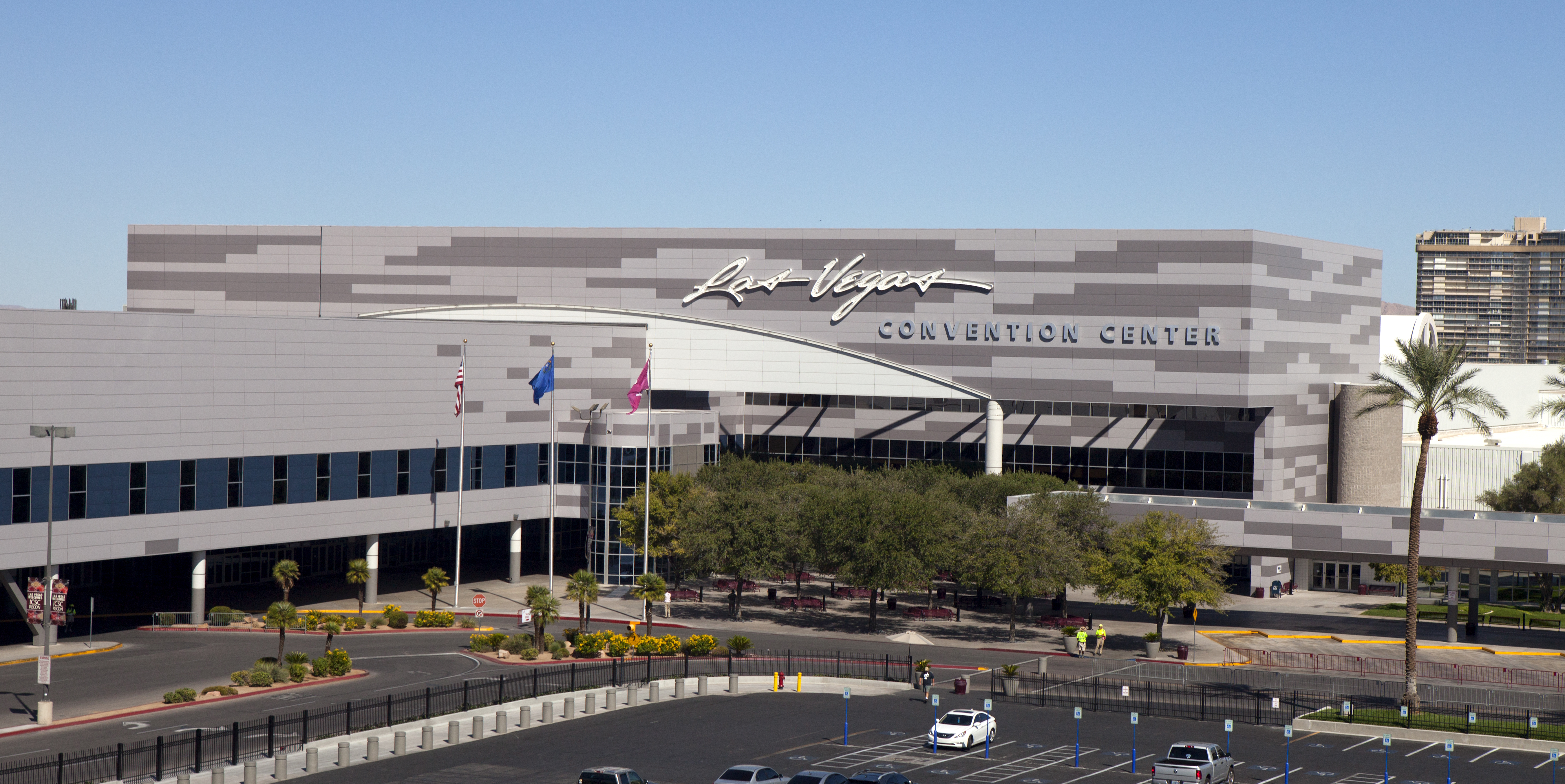
The Boring Company, Elon Musk’s transportation brainchild, has found its way to Las Vegas. The city has signed a contract with the company to install an underground transit system under Las Vegas Convention Center (LVCC).
LVCC Loop will be the company’s first commercial project and first payout ($44 million) since it was launched in 2016. The Boring Company won’t receive it in a lump sum though: The contract will withhold two-thirds of the payment until construction is complete, which is projected to be just in time for the Consumer Electronics Show, which begins in January 2021.
The goal for the project is to transport 4,400 passengers per hour. Currently, no Tesla models are in production that can transport that many people at such a rate, and The Boring Company hasn’t indicated that it is working on it yet. One solution it has proposed is to modify the Model X—the brand’s largest model, which holds seven people—to accommodate up to 16 people.
This underground transportation system would enable planners to whisk attendees from one end of the convention center to the next within about a minute; it’s estimated that a trip on LVCC Loop will take approximately one minute, as compared to a 15-minute walk. Since meetings and events are attended by hundreds or thousands of people, considerable time would be saved, allowing for more connections in a shorter time.
Discussions have taken place about whether to extend the project to other places in Las Vegas if the LVCC project is successful. The extension could include McCarren International Airport (LAS), The Strip and Las Vegas Stadium. The Boring Company has similar projects underway in Chicago, Los Angeles, Washington, D.C., and other cities.
The 2019 edition of C2 Montreal is taking the exploration of commerce and creativity to a whole new level—and venue. After seven years, the event that pioneered alternative conference delivery opened on Wednesday with a Cirque du Soleil extravaganza for 7,500 people in a massive hangar on Rue Le Ber. The theme of the gathering is “Tomorrow.”
“After years of talk—about climate change, diversifying the workforce, embracing new business models, and holding ourselves to higher professional and societal standards—the time has come to take action,” is how Genifere Legrand, chief creative officer for C2 Montreal, described the event’s purpose.
In the days before the opening, Legrand offered a look behind the scenes at the rotating stage, brain dates and a new batch of labs designed to get participants—attendees are expected to actively engage rather than passively watching—talking to each other.
A Greek-style amphitheater will allow for “moments of connectedness”; soundproof workshop spaces make use of a previous sound stage previously; and a content wall will keep ideas alive after the event ends. “The new venue, with its 60-foot-tall ceiling and oversize windows, will offer more proximity, make it easier to engage and include a lot of nature inside the venue,” Legrand explained.
The center stage will host former Apple Retail Senior Vice President and Burberry CEO Angela Ahrendts, filmmaker Spike Lee, chef and entrepreneur Marcus Samuelsson, Cirque du Soleil founder Guy Laliberte, and musician and tech entrepreneur will.i.am. “Presentations will be a mix of well-known and unknown thought leaders who might be working on projects that could impact our lives,” Legrand said.
The event will also be red-meat-free, a sustainability measure Legrand described as “a bold move that costs more, but will reduce the carbon footprint. We are walking the talk.”
Beyond the formal brain dates that connect people in micro-meetings, advanced badge technology allows attendees to map their sessions and exchange contact information with others through their name tags. “We are encouraging behavior, such as leaving comments, by giving away personalized prizes,” Legrand said.
Experimental Meeting
In place of the perspective-changing, elevated meeting rooms of past conferences, C2 Montreal 2019 is introducing six new experimental labs to “challenge participants to find new ways of being in the world.”
Slow Lab: Participants look at a work of art together (including an exclusive Andy Warhol print) for 15 minutes. Theory being tested: Practice of attentive observation unlocks new modes of learning, meaning-making and critical thinking.
In the Dark: Participants are immersed in a completely lightless room to explore leadership and communication without sight. Theory being tested: Listening and speaking with intention could lead to more effective collaboration.
Alter Ego: Participants adopt new identities through a mirrored experience. Theory being tested: Breaking perceptions of ourselves can help us be bolder.
Pivot: Participants work with professional dancers to challenge assumptions about strength, trust and collaboration. Theory being tested: Understanding the mechanics of the body can help deepen trust in teams.
Sync: Participants take part in a group experiment about the influence of online platforms. Theory being tested: Staying both critical and optimistic about social media could improve it.
Barometer: Participants literally take a stand on issues—business, cultural and societal. Theory being tested: Challenging assumptions will provoke peer-to-peer debate and open new perspectives.





 Molly Blaisdell, Parc 55’s art curator and PR representative, says one the best success stories from the program is “that the Boys and Girls’ Club sold art from it being featured and on display.” The hotel’s current exhibits, Alcatraz: Life on the Rock and Alcatraz, The Last Day, celebrate the 55th anniversary of Alcatraz Island’s closure as a federal prison. The exhibit will be on display at Parc 55 through September. Visitors can catch art from both Pride and the Boys and Girls Club from October through the end of the year.



 Event professionals can be part of the solution by uploading photos of their hotel room to