Local attractions are much of what makes a town appealing. But occasionally, you come across a hotel that gives you every reason to stay on-property.

The newly reimagined Sheraton Dallas Hotel—a town in and of itself—is a case in point. Boasting 1,841 guest rooms, the property is the largest hotel in downtown Dallas. The calm ambiance and neutral tones of white, copper and champagne, complemented by hints of blue and gray, are a welcoming invitation for guests.

The Sheraton Hotel Sleep Experience provides guests with the proper bedding for a restful night’s sleep, but when there’s so much to do (and eat), you won’t want to rest your head for very long. Five new culinary options have made Sheraton Dallas a must-visit for first-timers, as well as locals.

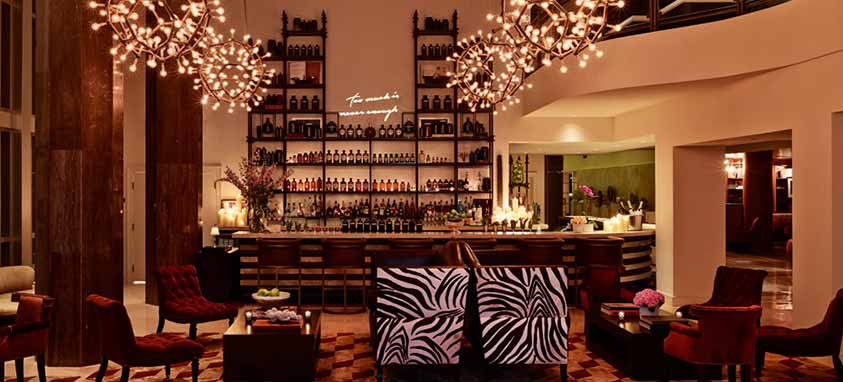
It won’t take much to keep attendees satisfied. Guests can grab coffee at Moka Pot Coffee Shop, taste the latest in American cuisine at Open Palette, or enjoy handcrafted cocktails or any of the 12 local beers at Draft Sports Bar & Lounge. Whether you’re dropping by for a nightcap or the night is just beginning, The Parlor’s upscale and inviting atmosphere offers craft cocktails and delectable bites that attendees can indulge in to their heart’s content.

When the dining is over, guests can work it all off at the 5,884-square-foot fitness center and outdoor heated pool, located on the center tower’s fourth floor, providing incredible views of Dallas’ downtown landscape.

After a $100 million transformation, Sheraton Dallas’ more than 220,000 sq. ft. of meeting space, divisible into 60 different breakout rooms, has been reinvented with new carpeting, lighting and technology. With the high-speed internet and top-tier audiovisual technology filling each meeting room, technological hiccups will be a thing of the past.

Downtown Dallas is surrounded by numerous beautiful neighborhoods and entertainment districts, such as Dallas’ Deep Ellum, home to a thriving arts and music scene, and Trinity Grove, a 15-acre dining and entertainment mecca. It’s home to more Old School and experiential restaurant concepts than you’ll be able to chow down on in a single day.


Transition seamlessly from day meeting to evening fun at The Westin Birmingham. The Westin allows meeting planners to get more from your meeting with its state-of-the-art meeting facilities, prime location near the state’s largest convention center and Uptown Birmingham entertainment just steps away. After hosting a productive meeting, we are highlighting five tried and true ways to turn an ordinary meeting to a business unusual experience.

Live Music at Todd English P.U.B.

Switch gears and unwind with live music at Todd English P.U.B. Located onsite at The Westin Birmingham and known for its modern twist on traditional English pub fare, Todd English pairs perfectly with live music from local musicians in an intimate setting.

Group Outing at Topgolf Birmingham

Leave your handicap at the door. Golfers of all levels are welcomed to enjoy team building and friendly competition. Win or lose, expect an evening here to be a big hit. Topgolf offers upscale amenities, great food and full-service bars.

Uptown Birmingham

Just steps from The Westin Birmingham, organize a dine-around and choose from multiple eateries at Uptown Birmingham. From Eugene’s Hot Chicken to Texas de Brazil, guests can enjoy a variety of dining options. As another option, enjoy a Broadway in Birmingham dinner and theater evening. BJCC Concert Hall is no more than a 10-minute walk away.

Talladega Superspeedway

If you’re looking for adventure, get ready to hear the rumble of powerful engines and experience heart racing speeds of more than 200 mph at Talladega Superspeedway.  Talladega celebrates its 50th anniversary this spring and visitors can expect the celebration to last all year long. Elevate your experience on race day with fan favorites like pit passes and scanner rentals.

Year-Round Festivals

Birmingham’s season of festivals and fun grows larger each year making wish you had more time to stay. Make it a long weekend and enjoy an array of concerts and festivals catered to music, arts, film and food. Popular festivals include Magic City Art Connection in the spring and Trucks by the Track in the summer.

Looking ahead: Exciting developments are on the horizon for Birmingham. In preparation for hosting the World Games, an Olympic-style competition, a new 55,000 seat stadium is being built to host the competition as well as offer visitors more options for tourism and entertainment. Just one more reason to host upcoming meetings in this southern city with cosmopolitan charm.

IMEX-Group-CEO-Carina-BauerWhat is the secret behind IMEX’s success?

This year the fifth IMEX America will take place in Las Vegas. To mark this milestone we spoke with Carina Bauer, CEO of IMEX Group, to gain insight into what’s behind the strong performance of the show, and what’s in store for this year and beyond.

SM: You’re currently creating the fifth IMEX America. Congratulations. The show has been strong and growing in popularity from the very first year, in 2011. What’s IMEX’s secret to success?

Carina Bauer: Thank you. At the heart of IMEX America is our focus on delivering outstanding business opportunities for buyers and exhibitors across North America and around the world. We concentrate on bringing together the whole meetings industry to do business, network and learn in a fun but really business-efficient environment.

What makes it work is the committed presence of thousands of U.S. and global exhibitors, senior buyers and attendees. In addition, high-level partnerships with all the leading trade associations are very important in enabling us to bring together all sectors of the industry and offer best-in-class education. All of these combine to provide a valuable IMEX experience and a successful event.

SM: What are some specifics that you think make IMEX America so appealing to the entire industry?

Carina Bauer: IMEX America is focused around delivering business, networking and education. There are several elements of the show that help to deliver these great benefits.

Firstly, our large-scale hosted buyer program ensures that the top meeting industry buyers attend the show from North America and around the world. This, in turn, means that the most senior executives on the supplier side also attend. With buyers having control of more than 80 percent of their schedule at the show, the program is one of the most flexible in the industry, giving top buyers the opportunity to preschedule meetings with exhibitors of their choice, as well as take part in prearranged booth presentations. This makes the show extremely time-effective for these busy executives.

Secondly, our strong partnerships with the industry trade associations are extremely important in bringing together all the diverse sectors of the meetings industry—offering their memberships colocated educational and networking events that ensure that people are brought together with their peers. Among the many networking events organized at the show are the MPI Foundation Rendezvous, Site Nite North America, CIC Hall of Leaders and the CEIR Golf Tournament.

Important, too, are the educational opportunities on offer from both ourselves, IMEX and our industry partners. MPI, as our strategic partner and premier educational provider, provides four early morning keynotes as well as powering Smart Mondaya full day of education on the day prior to the showoffering up to 40 sessions and including Association Focus, PCMA Business School, deep-dives, venue tours and certification programs. Once the show opens we offer education in a variety of formats, lengths and learning styles, with precertified education credits and sessions split into 10 tracks.

Together, the variety of networking and educational offerings from across the industry, combined with a guarantee of top business opportunities, means that attending the show is a highly effective use of everyone’s time, as well as being enjoyable!

SM: What is new for IMEX America 2015?

Carina Bauer: At IMEX America 2015, there will be several new features to experience.

We look forward to welcoming many new hosted buyers from across the United States and around the world, with demand from Asia and Latin America particularly high this year.

The choice for buyers will also be even greater. Adding to the 2,900 exhibitors from 150-plus countries, there will be more than 60 new booths including Cincinnati USA, Cuba Travel Services, IfOnly, Hungary, Juneau CVB, Montage Hotels & Resorts, Taiwan and more, bringing many more destinations and venues to the show. Additionally around 50 established IMEX exhibitors have expanded their booths—including the Louisville CVB, Maui Jim, Mexico, Thailand, Hilton and Hyatt to name a few.

This year’s education tracks are searchable by level of industry experience with sessions designed for those with up to three years experience or more than eight years in the industry. And there is a great lineup of daily MPI keynotes scheduled including Lee Papa on mindfulness, Tim David on building human connections, John Tickell talking about Gen Y marketing and management, and Patrick Henry on becoming memorable by customers. Wellness will also be a new education and engagement theme at the show, including a meditation room.

Opening hours and group appointment timings are being changed to give our hosted buyers more time to explore the show floor, experience the extensive education program and schedule their own appointments.

SM: Sounds like we’re in for a phenomenal event. Thank you for taking the time to speak with us.

Carina Bauer: My pleasure, thank you.

discover-the-treasure-3.1

Shelbourne-Wyndham-Grand-South-BeachAmaury Piedra, GM of Shelborne Wyndham Grand South Beach, in Miami Beach, Florida, discusses 2016 hospitality trends, AirBnB and his own hotel in this Q&A.

What are your predictions for South Florida’s 2016 travel/hospitality industry?
AP: 2016 should prove to be another solid year for South Florida’s tourism industry. Miami Beach has seen a large increase in inventory over the past year and it will take some time to absorb, but compared to others, the market remains very strong.

What trends are impacting the hotel world?

AP:  Millennials will continue to be a fast growing segment of the trend population. The way hotels market to, communicate with and serve this growing segment is a key to success over the next several years. In addition, we must all continue to find the best uses for technology and how it can allow hotel and hotel brands to further strengthen their relationships with customers.

How is the rise of mobile/digital impacting your business strategy?

AP: It’s amazing how fast tech continues to evolve. Keeping up with sufficient bandwidth for multiple devices people utilize is always challenging. From a strategy perspective, it’s more important than ever to have a strong social media presence. The best thing is that there are so many new ways of communicating and reaching out to your customers, even on an hourly basis, allowing you to build strong relationships.

How are concierges adapting to the growing technology?

AP: I believe concierges will use technology to further strengthen their relationship with customers. Whether it’s communicating through the various apps available to being able to fulfill requests faster through the use of technology; the end result is faster response time to customer needs.

What do you think about services like AirBnB?

AP: AirBnB and services like it have created new competition for hotels for a certain type of customer. This is why building relationships with your customer is key. People still want the warm greeting upon arrival, the concierge that knows their preferences and takes care of their needs, the signature onsite restaurant and the ability to be served their favorite beverages by the pool or on the beach.

What are your top feeder markets, and where do you see future travelers coming from?

AP: The top feeder market for South Florida always has been, and continues to be, the domestic market—especially the NY/NJ/CT tristate area. Internationally, South American countries like Venezuela and Colombia always had strong visitation. The UK was always a strong international feeder. Over the last several years, visitation from Eastern Europe has really grown, along with Brazil. In addition, increased airlift for the Middle East such a Qatar Airways allows the destination to continue to broader its reach to new customers.

What is the key to a hotel’s success?

AP: In my opinion, it is the people. The staff makes a hotel a success. Assuring a properly renovated, clean and maintained hotel, it’s the staff that travelers will remember. At the Shelborne Hotel, we are blessed with a group that truly embraces the meaning of hospitality and in our case, Wyndham Hotels “Count On Me” service spirit. While we receive positive comments on our facility, the truly passionate comments are always driven by the actions of our team members.

What amenities at Shelborne set you apart from the competition?

AP: Sarsaparilla Club, our soon to open restaurant, has made numerous lists as one of the most anticipated openings of 2016. Our pool deck lends itself to an exceptional day of relaxation. Our stunningly appointed, air-conditioned private cabanas feature an entertainment center, private bathrooms, spa services and the option to have your own mixologist and rows of inviting lounge chairs. The Drawing Room Bar features a staff of talented mixologists, creating craft cocktails that have been featured in numerous publications.

In conjunction with Art Basel Miami 2015, Shelborne Wyndham Grand South Beach introduced six large scale paintings and five of Bosco Sodi’s glistening gold rock sculptures, and has them on permanent display for the enjoyment of our guests. The pieces were commissioned by hotel owners and serious art collectors, Paul and Dayssi Kanavos, to be a part of the hotel’s permanent collection.

What types of green practices does the Shelborne offer?

AP: We utilize LED energy efficient lightbulbs throughout the property. In every guest room, there is a recycle bin, along with VFD controlled air handlers. We also reuse our keycards. In 2016, we have plans to enhance our “go green” initiatives to increase our environmental commitment.

meeting security questions

11 questions from Alan Kleinfeld’s Smart Meetings financial and insurance webinar

In a world of heightened security awareness, Arrive Management Group’s Alan Kleinfeld found himself answering a lot of event planner questions during the Smart Meetings webinar on Security May 25. While he is not a lawyer or a doctor, he was happy to provide the following answers to questions about liability and medical issues based on his experience in meeting planning and law enforcement.

1. Is it mandatory to have insurance when organizing a business to business event?

Short answer: it depends. Is it just you and one other person? Where are you holding it? Longer answer: Most hotels and venues will require a signed contract and in almost all cases, they’ll ask for proof of insurance and/or a hold harmless clause. Depending on your company structure, you may be required to have insurance for your staff or some type of general liability. Ask your accountant and/or in-house council. In some cases, you may also want to check local/state ordinances.

2. We hold a lot of our meetings internationally. Do you have any suggestions for dealing with safety and security when in another country?

I focus mainly on the U.S. because our laws and cultures—including gun laws—are so different from so much of the world’s. Seek out information from your international venues, ask the local law enforcement for guidance and check in with your local CVB or equivalent for guidance.

3. If you are CPR and/or AED certified, don’t have the device, but at an event that does, are you personally liable if you use it and the person doesn’t make it?

This would fall in the category of the Good Samaritan Law. The answer would depend on where and the circumstances. Seek input from a lawyer or human resources expert.

Often when I’m doing safety and security plans, especially for larger groups, I tend to include medical personnel. For example, I may work with local government agencies or private providers to stage an ambulance nearby so they can be where I need them when I need them.


To get more content like this, watch Alan Kleinfield’s cover story: Zeroing in on Meetings Security

4. Since hotel staff may be certified in CPR, how important is it for the meeting planner to also be certified?

I think there’s nothing wrong with more education and training, even if you don’t use it. Maybe you won’t have to do it onsite at your meeting, but perhaps you may wish to have it at other times, like at home or on vacation. Having said that, one of the reasons you want a safety and security plan is so this question doesn’t come up. If you need CPR done, your plan should state who can perform it. If your venue has that resource and has agreed to offer it, then use them.

5. Is there a Canadian equivalent to the ICS & FEMA?

Short answer: I don’t know. Longer answer: I googled “emergency response Canada” and found a government web site dealing with emergency prevention and mitigation along with a link to emergency management planning. It seems similar to our ICS, but the terminology is different.

6. What have you seen for planning in the case of a gas leak? We had one recently and the whole company froze.

Don’t freeze! Dial 9-1-1 and get out. First responders are often equipped to deal with this. They may tape off a large perimeter and do a leak check. Then the local utility or gas company can often deal with it.

7. If I want to contact the local police dept. where our meeting is being held, who do I talk to there?

Call them up and ask if they have a PIO (Public Information Officer) or a Community Relations Officer. If it’s a small department, ask to speak to the Chief of Police or Director of Public Safety.

8. Is it okay to give over the counter medicine or band aids to attendees for first aid?

It depends. What if you give some them some aspirin and they have an allergic reaction? Or offer them a bandage and the cut gets infected? Are you liable? Try to avoid the issue and refer them to the front desk of your hotel or suggest a trip to the closest gift shop or convenience store. The point is to find opportunities to be helpful without putting yourself at risk.

9. Should our association buy a AED to take onsite with us in case someone has a heart attack?

It depends. What kind of liability will you risk if you take it and don’t use it? Or use it and it doesn’t work right? Or use it and the attendee doesn’t survive? Also, you’ll need to keep the AED maintained and have someone certified to use it. One way to avoid this risk it to see if your venue has an AED and someone who is qualified to use it.

10. How do I know if there will be any protests or rallies in the city where our meeting is being held?

In many cases, local law enforcement and even local FBI offices track information and intelligence on protest groups. You can also check the Internet. Some of these groups post announcements online and on social media.

11. What about if my guests over-drink, am I liable?

You could be. In many cities and states across the country, a bartender can be held liable if he/she over-serves a customer and then the customer causes an accident (or death) on his drive home. Best is to avoid it. Onsite, give drink tickets and/or make sure bar staff are trained to notice such things. Encourage them to stop serving or, at the very least, inform you so you can make a decision to stop serving that person.

Obscurity
Atlas Obscura takes over Brooklyn’s Green-Wood Cemetery. Photo by Steven Acres.

When was the last time you staged a meeting for 1,600 people in a cemetery at night? That is exactly what Atlas Obscura co-founder Dylan Thuras did at Green-Wood Cemetery in Brooklyn. Participants, wielding maps of the 478-acre space, happened upon musical performances, readings, pop-up bars and candlelit crypts as they navigated their individual journies. “That sense of discovery is what makes an experience stick,” he says, even as he acknowledges that it takes more time to put the guidepost in place to help people find the surprises on their own.

Thuras took the same hands-on discovery approach when he put on a lock-picking party for 400 people in the Library at General Society of Mechanics and Tradesmen of the City of New York, which happens to have an amazing collection of antique locks. Guests were given a lock or key when they entered and had to find their match. Then everyone received a lock-picking kit and the keynote speaker, a professional locksmith, taught them how to open any door while driving home a larger message about finding patterns. To make the event a true party, he added dancing and an open bar.

Thuras is passionate about celebrating different ways of looking at the world. Here are his tips for putting on an event that leverages the wondrous to create the meaningful.

1. Look for the elicit, the magical, the unexpected. To be memorable, an activity has to take people slightly outside their comfort zone. It is basic psychology. That sense of being a little unsure and asked to make a decision that pays off is what creates a catharsis and releases the dopamine that makes a mental impression. Note that this sense of slight nervousness has to be accomplished within the framework of a safe, legal space that may be more controlled than it appears.

2. Make it contextual. Matching the group to the place adds meaning immediately. A meeting of neuroscientists at the Cushing Center with its room of brains in jars makes any message more relevant. The group will see it as a perk and the conversations may have a little more spark as well.

3. Look to the past for unusual venues. That Independent Order of Odd Fellows hall may not be on the radar or connected to a hotel, but it can be a beautiful backdrop that will leave an impression. Consider some of the spaces built by fraternal organizations of yesteryear, such as Masonic, Moose and Elks lodges. These are huge, beautiful spaces scattered all over the world, Thuras says. Museums, libraries and churches also capitalize on the sentiment of the past in the context of large, architecturally stunning spaces.

4. Look up, down and out. Extremes make an impression. Consider rooftops on skyscrapers, subterranean spaces or taking a group out on a boat to put some distance between their state of mind and ground level thinking.

The good news is that wondrous spaces don’t have to be more expensive. Often these spaces are much less in demand and therefore cheaper than the hot new ballroom, Thuras says.

Hollywood Walk of Fame

Planners are all too often hidden in the shadows, even though they are responsible for all the heavy lifting. But, once in a while, an event of epic proportions occurs and everyone wants a little piece of the planner. They step out from behind the curtain to center stage as the star of the production. Such is the case for Ana Martinez, vice president of media relations for Hollywood Chamber of Commerce.

In her 30-year career with the chamber, she’s planned about 700 Walk of Fame star ceremonies. This month alone, there are five new star unveilings. One would think events of this magnitude would take a village to plan, but such is not the case.

“I am the team. I have a person that proofs my releases and then she helps me do check-in for press the day of and we have a girl who does guest check-in. It is me only on the daily,” says Martinez. “I am starting to go a little crazy, but it is so fun and I love my job and the craziness it brings.”

Social Media Presence

When Martinez announced April 30 as the date the band N*SYNC would receive their star on the Hollywood Walk of Fame, Martinez grew her own fanbase on social media. Known as @wofstargirl on Twitter, her following increased by 400 overnight, with more added daily. As of press time, she has a following of more than 9,000. Besides overseeing all the logistics of planning the event, Martinez has taken the time to respond to fans asking questions from all over the world, even while battling pneumonia.

“Press releases are great, but social media is instant and, honestly, I enjoy the banter with the fans,” she says. “I don’t love when some are mean. I am very protective of our Walk of Famers.”

She uses Twitter as an outlet to communicate with fans regarding location, line-up time and bathrooms. It tore up a lot of fans’ hearts that they couldn’t be there in person today, but thanks to the power of the internet, all Walk of Fame star ceremonies are livestreamed online in partnership with Variety.

Keynotes

Keynote speakers are a key part of Walk of Fame star ceremonies. The honorees, not Martinez, selects the guest speakers, but she encourages them to select fellow celebrities because “it makes the fan experience much more exciting.”

Television hosts Ellen DeGeneres and Carson Daly each had a few moments at the podium for the N*SYNC event. Daly was a VJ on Total Request Live during the band’s heyday when the streets of New York were a gridlock of teenage fans every afternoon, especially when Justin Timberlake, Lance Bass, JC Chasez, Joey Fatone and Chris Kirkpatrick appeared on the program.

“Perhaps my greatest achievement occurred back in 1998 when a boy band came to the U.S. hot off the charts in Europe [and] landed on our MTV doorsteps in Times Square,” Daly said. The honorees also each take a turn on the stand. “All five of us would like to thank Ellen and Carson for coming out and roasting us,” Timberlake teased.

“A star on this boulevard is more than just an honor,” fellow singer, Bass, said in his acceptance speech. “It’s a lasting reminder of all the artists from all the colors of the rainbow that your voice matters and I am truly humbled and honored to be a part of that legacy in some small way.”

Send in the Crowds

“I want to thank the Hollywood Chamber of Commerce for making events like this possible for the entire world,” said City of Los Angeles councilmember Mitch O’Farrell. “After this day, millions of fans from across the world will be able to come to this spot just so they can enjoy N*SYNC.”

Part of Martinez’s job is filing for a permit to have a star made and a permit for the ceremony itself. One lane of traffic needs to be shut down in a busy sector of Hollywood. Los Angeles Police Department (LAPD) Hollywood Division Captain Cory Palka was there on the momentous day to ensure the safety of all attendees.

Martinez is used to the stars attracting massive crowds. The late Selena had 4,500 audience members. “Today we broke a record for Boy Band Fan attendance!” she tweeted after the N*SYNC event concluded. “2,500 amazing fans showed up! Thanks to @lapd2014 @LAPDHollywood and our security team for all the great work and protecting the fans and shutting down the blvd!”

The ceremonies are also beneficial to Los Angeles tourism, as some fans fly in from far and wide and stay in area hotels. The walk is steps away from major meeting hotels, such as W Hotel Hollywood, Loews Hollywood Hotel and The Hollywood Roosevelt.

Dealing with Mishaps

From hiring photographers to credentialing press and everything in between, Martinez has her formula down pat. But, when life sometimes throws her a curveball, she’s at the ready.

Los Angeles is known for its lack of rain, but once in a while precipitation does fall from the sky, in which case she arranges for canopies and tents. “We are like the U.S. Post Office,” she jokes. “Through rain or snow, except we don’t have snow!”

As with every Hollywood production, even Walk of Fame star ceremonies have a blooper reel. In 2010, engravers accidentally misspelled actress Julia Louis-Dreyfus’ name as “Luis.” It has since been corrected. “The late Johnny Grant introduced Joan Rivers as Joan Collins because Joan had a Dynasty in the jewelry business! Joan pushed him aside and said, ‘That’s ok Johnny, I’ve been called a b**** before!’” Martinez says. This just goes to show you that no matter how much you prep a keynote speaker and give them the ground rules, they may go rogue once given the mic.

After so much planning goes into scheduling one of these ceremonies, it’s a coordinators worst nightmare when the star is absent. “I heard that a no-show was Barbra Streisand, but I was not here at that time.”
Imex America

Preparing for IMEX America, the largest and most significant annual meetings event in America, can be a daunting task. Participants—including organizers, staff members, planners and suppliers—all need to determine how to maximize their efforts to achieve the greatest rewards in an expansive environment.

The four-day event, which includes a three-day trade show, takes place at Sands Expo Convention Center in Las Vegas. Suppliers come from throughout the world to do business with planners and others, and the largest local presence is MGM Resorts International, with 14 properties in Las Vegas.

MoreIMEX America 2018: Hold on to Your Hats

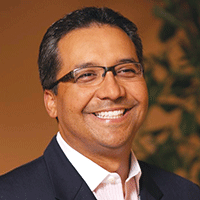
Mike Dominguez

IMEX America always is attuned to—and in many cases ahead of—the main trends in the industry, and it looks as if IMEX America—to be held Oct. 15–18—will be particularly exciting because so much emphasis will be placed on the experiential element, with new additions such as C2 and its Learning Labs.

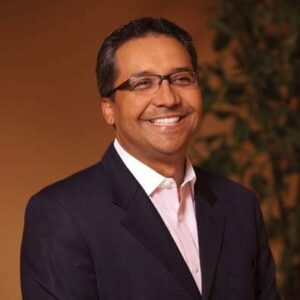
Mike Dominguez, MGM’s chief sales officer, has been immersed in the planning and executing of the company’s IMEX activities since the event began in 2011. He has collaborated closely with IMEX leaders each year as the event has evolved, and he has modified MGM’s approach as needed. Here are some of his insights in this, the first of a two-part interview.

What accounts for the tremendous success of IMEX America?

What I thought Ray Bloom [IMEX Group chairman] did so well, and so brilliantly, is that years before IMEX America was launched, he was out literally building relationships and getting other organizations to participate around it. All the major organizations not only support, but also meet during the IMEX show—that’s the brilliance behind it. IMEX America became, for the lack of a better term, the Super Bowl of our industry, as far as events go. Three years into it, you knew IMEX America was going to provide the opportunity to be visible in the industry with all the right players. It’s about all of us coming together to celebrate the industry and do a lot of good business.

Was IMEX America a challenging event for suppliers during the first few years?

At first, we didn’t know what it was going to be. At that time, AIBTM was still in play, and there was a little competition. We just didn’t know how all that dust was going to settle.

During my first couple years at IMEX, I was just exhausted. The first year, we experienced sensory overload. There was so much coming at us… In the last couple years, I’ve been tired, but not exhausted. So, I’m learning how to do it. I think we all are. We got into a rhythm. I think the beauty of IMEX is, as much as it continues to reinvent itself, there is a cadence to it that we now all understand, and we know what that looks like.

How has MGM changed its approach to better serve attendees?

The first year, I had chefs doing cooking classes and had candy displays in our booth. After the second year, we just got rid of all of that. We realized that because of how IMEX had grown, it had become a hosted buyer program.

At IMEX, people are serious about business and education, so during the past couple years, I’ve gotten rid of all the style, and added much more substance, even in our booth. I’ve simplified it. I’ve really focused on the challenges. We have hosted buyer appointments, but we also have organized presentations where people come in and learn more about the company and what we’re doing.

We know we have very loyal partners and friends who are going to come by because we’ve asked them to. We now have a larger window for them—it’s more of a flow, more come and go, rather than sit-down meetings. We want people to feel comfortable to come by even if they only spend 30 minutes with us, because it’s a busy week.

We have made other changes. Even though we have walls in our booth, we don’t have a ceiling, so the noise was always challenging during our presentations. So, my team suggested, “Instead of us getting up and trying to pitch while fighting the noise, why don’t we film our IMEX presentation?” So, now we basically film it and put some video around it, and when people come in, they put on headphones to hear the presentation. So, they’re not distracted by the noise around us. It’s been much more effective.

Do many IMEX participants stay at MGM properties?

We have a huge, one of the largest, hosted buyer blocks, and a couple hundred planners stay with us in our different buildings on an annual basis. We all work to invite customers to end up in our IMEX blocks. People invited by our hotel partners that don’t necessarily have hotels here end up in our buildings, too. When MGM had Mandarin Oriental Las Vegas [now being rebranded as Waldorf-Astoria Las Vegas], anybody that Mandarin Corporation invited would stay with us because we were in some way, somehow, all family. It always tends to work out well.

You serve as the top sales person for MGM, so it is surprising that you are on top of so many intricate details. How do you manage it?

I think I’m really good at connecting the dots, but I can’t connect those dots unless I am seeing them. So, I’m knee deep in it all. I always feel like I’m most effective for my team by staying stay connected with what’s really going on. So, it’s also important that I hear from my customers. That’s how I like to do my job. I always feel that I have the pulse, but if I disconnect from these things, I just don’t think I will have the pulse.

In the second part of the interview, Dominguez will focus on IMEX America’s move to Mandalay Bay Resort and Casino in 2021 and MGM’s close relationship with IMEX Group.

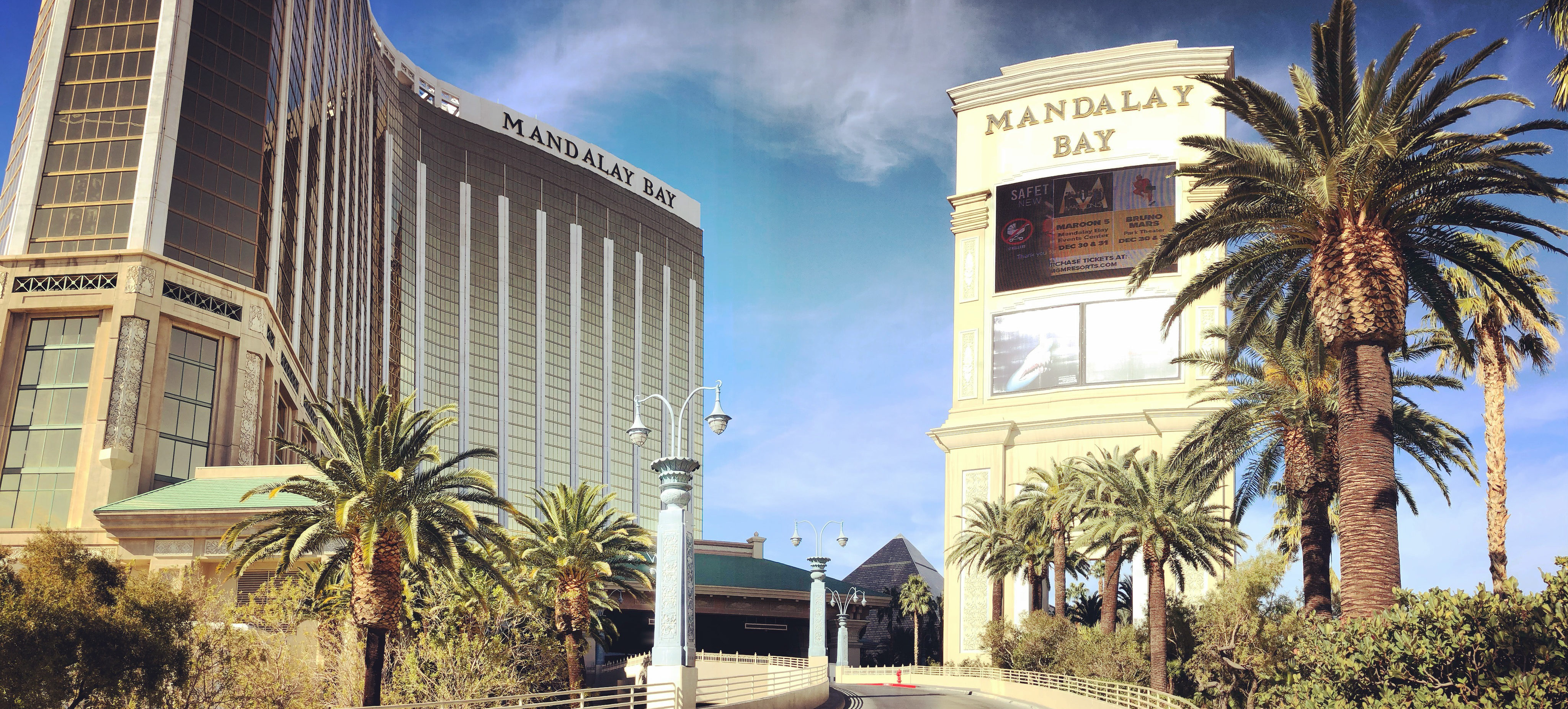
After 10 years at Sands Expo Center, IMEX America will move to Mandalay Bay Resort and Casino, a MGM Resorts International property, in 2021. Mike Dominguez, chief sales officer for MGM, shared his thoughts about this move—and MGM’s close relationship with IMEX Group—in this, the second of a two-part interview.

Part 1: Dominguez Offers Illuminating Insights on IMEX America

IMEX America will be moving to Mandalay Bay Resort because IMEX wasn’t able to lock in space at Sands Expo starting in 2021. What impact will this have?

Mike Dominguez

All the way around, I just think it is the right timing. We are excited about it and think it makes a lot of sense. It works for IMEX, and it works for us. Moving to a new location gives them a different feel: IMEX America will have been here a decade by the time it moves to us, and it will probably be time for a facelift, basically.

To make it all work, though, we had schedule the 2021 event in November, and then it settles back into more prime dates. But Ray Bloom [IMEX Group chairman] was willing to work with us to make it happen. I think it shows a little bit of the evolution of Las Vegas, because in 2021, we’re going to have a stadium [tentatively called Las Vegas Stadium] on that side of The Strip. So, what has always been the South Strip, with no main driver, is now going to be the main driver, with the stadium there to anchor it. The stadium is going to be an entertainment venue in addition to a football stadium.

How will the relocation to Mandalay Bay affect MGM in general?

It’s going to change from the standpoint that we’ll probably have more people with us. So, we are going to have to place a little more emphasis on what we’ll do while they’re there. But what is more important to me is that it kind of changes my emphasis on what else I need to do in those buildings on an annual basis. IMEX America is kind of our Super Bowl, and since everyone there will be coming through our buildings, I have an opportunity to really promote and highlight MGM resorts.

I’m not sure how aggressive I’ll be about hosting some other large shows. I’m not sure it’s needed, because a lot of our money, effort and time is going to be going into IMEX America on an annual basis. But I also think it gives us the opportunity to really focus on which customers are going to be here in our buildings and how can we utilize them even more. From my standpoint, I would love to get some of them in earlier and later to talk about the industry.

I wouldn’t be bringing them in for a fam—I would bring them in because I want to pick their brains. I want to know where they see us headed, and what’s going on in their business. And it gives me a good opportunity to take a snapshot of different verticals. That excites me. I think I can get that done without pulling a lot of their time. That’s the fun part.

Does MGM actively collaborate with IMEX Group before each IMEX America?

We sit down to meet with them every year. We’re always throwing out ideas and ask where they need our help; it’s a very open dialogue. With all the technology and everything we have now, you know what hasn’t changed? We still do business with people we know and trust. I know Ray, I know Carina Bauer [CEO of IMEX Group]. I know who they are. And what I trust and what I know about them is that they have an interest that is much larger than just finance. They care about this industry, and so do I. And that’s what, to me, makes the partnership and the relationships so brilliant. We just sit and talk, knowing that our biggest interest is in expanding the industry—and they have a platform that allows us to do it.

This spirit of partnership was evident on a larger scale following the mass shootings in Las Vegas from a room at Mandalay Bay just before IMEX America 2017. How did everyone come together?

We didn’t call a press conference. We just made a couple of quick phone calls to say that all the industry leaders should talk about it and understand it. And more than anything, after everyone said they’re standing with us, we wanted a visual—a picture of everybody standing with us. We weren’t standing there alone, and we thought that was important.

The beauty of it is that all we did was ask the question, “Will you please support us?” and then everything started happening very quickly. All of our peers in the industry were all-in. It was a special moment in that regard, because after taking all the competitiveness away, taking all the business side away, at that point we were all united as being human beings.

This was so needed for this city, and so needed for the destination, and I always go back to that. Our ability to utilize that platform as something to catapult our healing was kind of special.

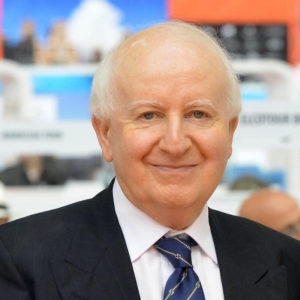
Ray Bloom

Ray Bloom, founder and chairman of IMEX Group, started IMEX America in 2011. Since then, the event has steadily built its legacy and sometimes is referred to as “the Super Bowl” of meetings industry events. Bloom provided a look back at how IMEX has developed and the reasons for its success.

Have IMEX America and IMEX Frankfurt become what you originally envisioned?

They are even more than we could have envisioned. The enthusiasm, passion and energy people bring to the IMEX shows is incredible. For us, it is amazing to help provide a global platform for this and to be a part of it!

What do you hope 2018 IMEX America will achieve?

Great business, great spirit and great innovation.

How does IMEX America differ from other meetings industry events?

IMEX America and IMEX in Frankfurt bring together—in one place—the entire industry from every sector and corner of the world, working together to make the show a success. We are also unique in that IMEX America offers a large number of co-located events, the largest hosted buyer program in the industry, an absolute focus on business and an extensive, free education program.

How have IMEX America events changed over the years?

IMEX America has really grown enormously over the years. In terms of sheer size, the number of exhibitors as well as hosted buyers from North America and around the world has continued to expand, and along with that that the size of the show floor itself. The education program has also become larger and richer at the same time—on and off the floor—and the number of initiatives we run around the show generally has increased. For example, our sustainability targets, goals and efforts have steadily grown year-on-year, our wellness efforts have really caught on and our community efforts in Las Vegas and beyond have always been a big passion of ours and our attendees.

How does IMEX America stay relevant?

We do this by taking part in a lot of events and happenings around the world, by being involved in all sorts of industry efforts and initiatives, and by staying in close touch with thought leaders, buyers, planners, associations, destinations, partners service and tech providers to get a pulse of things.

Key Planning Insights from IMEX America

Play Room, IMEX America 2017

Bloom says that the IMEX Group has learned a lot over the years from planning and organizing IMEX America events and continues to do so. He singles out a few lessons learned that apply to event planning in general.

Always keep trying new things: People want and need to get new ideas and see how new things could work in practice in their own meetings in a low-risk environment like IMEX.

Ask for, really listen to and act on, feedback: Pay attention to feedback from exhibitors, buyers, attendees, the IMEX team, industry thought leaders and business leaders beyond our industry.

Keep your ear to the ground: In our industry, business as a whole and beyond, we should be helping people make sense of the trends out there and pointing out what’s coming next.

Stay focused on putting on a show that the industry can be proud of: We need to really deliver ROI and inspiration for all.

Tap into the collective power and energy of others: This is not a show IMEX pulls off on its own. It takes great amounts of partnership and collaboration and idea exchange across and with the industry, and that makes it all the stronger and a better experience.