MGM Resorts International has emphasized that its recent legal action regarding the Oct. 1 mass shootings in Las Vegas is not seeking money or other compensation from victims, but instead is merely an effort to determine whether or not a federal law prohibits the victims’ lawsuits against the company.
Gunman Stephen Paddock fired 1,100 rounds from a guest room on the 32nd floor of Mandalay Bay Resort and Casino, which is owned by MGM, during the Route 91 Harvest Festival concert. Fifty-eight people died and 851 were injured, making it the deadliest mass shooting by an individual in the United States. MGM contracted Contemporary Services Corporation (CSC), backed by the Department of Homeland Security (DHS), to provide security services at the event.
MGM has indicated that it is seeking a ruling through the federal court system to reach a timely resolution to victims’ lawsuits and put an end to plaintiffs’ attorneys filing and refiling lawsuits throughout the country. The company filed for a declaratory judgment, based on the Declaratory Judgment Act, which permits a federal court to declare the rights and other legal relations of parties in “a case of actual controversy.”
“All we are doing, in effect, is asking for a change in venue from state to federal court,” said Debra DeShong, an MGM Resorts spokesperson. “We are not asking for money or attorney’s fees. We only want to resolve these cases, quickly, fairly and efficiently.”
MGM is requesting a federal court to determine whether the SAFETY Act prohibits lawsuits by victims against the company, thus restricting them to sue only CSC. The SAFETY Act was part of the Homeland Security Act of 2002, and limits liability for claims resulting from an “act of terrorism” in which qualified security technologies or services are involved.
The company claims that because CSC provided the services to a customer (MGM), and because it has received a special designation by the DHS, it is covered under the SAFETY Act. That would potentially allow victims of the Las Vegas mass murder to receive federal funding designated specifically for assisting victims of mass violence and terrorism.
Facebook’s recent user data scandal has left many planners wondering if the communication is coming at too high of a price. Is it time to break up with the social media giant, one of the most effective marketing tools that planners use to share meetings magic?
What Actually Happened?
Facebook announced on March 16 that the data-analysis firm Cambridge Analytica (which played an important role in the online strategy for Trump’s 2016 campaign), had been suspended from using the social-media platform for mishandling data of more than 50 million users. According to Facebook, the information was gathered in 2014 from the thisisyourdigitallife app, created by Cambridge University researcher Aleksandr Kogan.
In 2015, Facebook learned that Kogan had sold the data to Cambridge Analytica without user consent, a violation of Facebook’s policy. Facebook ordered Cambridge Analytica to destroy all stolen data and to provide a formal legal certification confirming it had done so.
Though Cambridge Analytica provided documentation, Facebook learned last week that it possibly didn’t follow through, leading to the suspension and investigation of the firm. It is uncertain as to whether the firm used the data to channel political ads towards users.
Facebook has since created new restrictions on developers and how they can access user data. It also has plans to create a new tool in the coming months to help users monitor their own data.
These new restrictions will start to affect the event industry, says Liz King Caruso, social media expert and founder of Techsytalk and Liz King Events. She says that event organizers may need to report their use of data on their attendees, speakers and sponsors, and will need to be hyperaware of data security.
“Everything from what data you collect, how you store it, who you share and sell it to, and what they do with it could change,” Caruso says. “There are several standard industry practices that are no longer going to be acceptable in the near future.”
Do I really need to worry?
According to Caruso, yes, you do.
“For all people using Facebook, this is a huge wake up call,” she says. Billions of people have made this free service a huge part of their lives, leaving their sensitive data vulnerable to many forms of monetizing.
“I think the big difference with Facebook is that people feel like it is a more private space, because you have to send and accept friend requests,” Caruso says. Facebook feels more private than other social media platforms such as Instagram and Twitter. But while consumers are focused on status updates and things they’re sharing with their network, Caruso says Facebook’s founders are much more interested in the activity data, which she calls, “a very dangerous combination.”
I Never Used the App, so I’m Safe, Right?
Maybe. Even if you didn’t use the app, your information could still be compromised. The app not only took data from the 270,000 people who used it, but also from the friends of those users, depending on what their privacy settings were set at in 2014.
No one knows who has purchased what personal data on the “dark web” in the last four years.
How Can I Stay Protected?
With Facebook being a major marketing tool for event planners, simply kicking it to the curb (#DeleteFacebook) may not be the best solution. But some simple steps could help protect you, your friends and your event attendees
1. Study up!
Do a top-to-bottom evaluation of your own privacy policies, and then communicate and enforce those policies.
2. Spring Clean Your Facebook Apps
Have you ever signed into a third-party website, played a game or used an app using your Facebook profile? Those services may still be accessing your data. From the settings page on your Facebook, click on the apps tab. From there, you can see which apps you have granted permission to and decide whether to remove them or not. In the same tab under app settings, click “apps others use,” and choose which details about you are shared when your friends use apps.
You can also protect yourself by auditing your Facebook privacy settings and minimizing the information you share publicly. For example, you can allow only your friends to see your posts.
3. Install a Tracker Blocker or an Ad Blocker
Add-ons such as Disconnect, Privacy Badger and uBlock Origin block trackers and advertisements embedded on websites. This may limit the functionality of some parts of websites, but it might be worth it for privacy’s sake.
4. Clear Your Browser History and Cookies
This will temporarily delete trackers that may be on sites used, but they might reappear over time, so make it a regular practice.
5. Read the Privacy Policies
Although it may seem like a waste of time to do so, and is easier to simply hit “I accept” privacy policies, you may be agreeing to something suspicious. If you see language that suggests your data could be shared in a way that makes you uncomfortable, don’t use the program.
6. Listen to Your Gut about Unknown Brands
The internet is still an unregulated space, with new programs, apps and viruses popping up constantly. Some sites may look legitimate, but on further review they are not. Even after reading the terms of service, think about it. In the case of thisisyourdigitallife, the fine print of the privacy policy said the information would be used for academic use, not commercial. If your first instinct is that it’s a sham, get out immediately.
In the aftermath of a shooting at a Florida high school that left 14 students and three adults dead, and threats of a boycott of businesses that support the National Rifle Association, several travel and hotel companies announced they were severing ties with the gun rights advocacy group.
On Feb. 22, Enterprise Holdings, which operates Enterprise Rent-A-Car, National Car Rental and Alamo Rent A Car, echoed sentiments from First National Bank of Omaha by saying it would end its discount program with the NRA, effective March 26.
The announcement came in the form of tweets, with Hertz posting, “We have notified the NRA that we are ending the NRAs rental car discount program with Hertz.” Within a day, the post received 300,000 likes.
Two days later, Delta Air Lines made a statement that it would end NRA’s contract for discounted rates through the company’s group travel program, and asked that the Delta name be removed from the NRA website. United Airlines followed, saying it would not offer a discounted rate to the group’s annual meeting in Dallas in May.
In the meantime, Dallas City Councilman Dwaine Caraway suggested that NRA move its planned event from Kay Bailey Hutchison Convention Center, a comment that he said resulted in death threats from NRA supporters. Nebraska Gov. Pete Ricketts subsequently tweeted that the NRA could hold its annual convention in his state.
Wyndham Hotels and Resorts responded to calls for the company to sever ties with the NRA by saying, “Please know, Wyndham is no longer affiliated with the NRA.”
The move cuts one of the benefits of membership in the organization that is described on its website as “huge savings on car rentals, hotels and travel.”
NRA spokesman Andrew Arulanandam said in a statement that canceled benefits would not impact NRA membership, and called the decisions cowardly.
“The law-abiding members of the NRA had nothing at all to do with the failure of that school’s security preparedness, the failure of America’s mental health system, the failure of the National Instant Check System or the cruel failures of both federal and local law enforcement,” Arulanandam said. “Despite that, some corporations have decided to punish NRA membership in a shameful display of political and civic cowardice. In time, these brands will be replaced by others who recognize that patriotism and determined commitment to constitutional freedoms are characteristics of a marketplace they very much want to serve.”
Editor’s Note: After publishing Visit Dallas responded with the following statement:
“We have been in contact with the Mayor’s office, and we support the city’s position.” Mayor Mike Rawlings, said, “We’re always working to be a welcoming city for people and organizations of diverse backgrounds and beliefs… they [the NRA] have a legal contract that was signed in 2012 and I’m not advocating that we violate that agreement.”
Almost everyone can agree: there are fewer things more stressful than long lines when you’re rushing to make your flight on time. Removing laptops from bags, taking shoes off or simply printing a boarding pass can take longer than anticipated. But the travel industry isn’t blind to these problems; in fact, they have already started testing and implementing solutions to reduce time getting through security and allow extra time to relax before your trip. Here are some improvements that might soon be coming to an airport near you.
Intelligent Portals
Smart gates have already been implemented in Dubai International Airport (DXB). How do they work? If you’re a UAE resident, GCC national or passport holder from a country eligible for visa on arrival, bring along a passport, Emirates ID, e-gate card or QR code (which you can receive through the General Directorate of Residency and Foreigners Affairs’ mobile app). Simply place the photo page on a scanner, step through a gate for an eye scan and then proceed through. First-time scanners must register with immigration officers after their first scan, but the process is simple thereafter.
Michael Ibbitson, executive vice president of technology and infrastructure at Dubai Airports explains that the use of smart gates can smooth the security process by slashing transaction times to just 10 to 15 seconds and shortening queues.
Liquid ID
In September, the TSA approved ConneCT Scanners, a new airport security scanner that will enable travelers to avoid taking liquids and electronics out of their bags, similar to members of the TSA PreCheck program.
Created by Analogic, the scanners provide a 3D-image of the contents within luggage, allowing agents to visually check bags for prohibited items and alleviate regularly sifting through luggage by hand. Though travelers would still have to remove shoes, belts and jackets, the change would dramatically increase the flow of traffic.
“We’ve been talking about the checkpoint of the future, but the future is now,” said Mark Laustra, vice president of global business development and government programs at Analogic, in an interview in Travel + Leisure. “The checkpoint of the future is moving passengers very quickly.”
Just-In-Time Check-In Assistance
If you flew from Kansai International Airport (KIX) or Osaka International Airport (ITAMI) in February, you might have met KATE during the check-in process.
KATE, created by SITA, uses artificial intelligence combined with geo-navigation to travel to congested areas to assist the check-in process. Collision avoidance technology and various data sources determine where the robot is needed within the airport. Should its battery run on low, it even has the ability to find power sources to charge itself.
Sumesh Patel, president of SITA for Asia-Pacific said in a statement that “Japan has always been a forerunner in robotic innovations and intelligent technology, [and] we are thrilled to be partnering with the airport to introduce intelligent machines to improve the passenger experience.”
Seventy-seven countries from throughout the world, with the support of 41 associations, will celebrate the third annual Global Exhibitions Day (GED) on June 6.
Presented by UFI, the global association for the exhibitions industry, GED celebrates the people working in the $1 billion industry and shows the business world the considerable positive impact that exhibitions and trade shows have on cities. Rallies and events will be organized across the world. A list of celebrations can be found here and supporters can use the hashtag #GED18.
Events range in all forms such as a Global Exhibitions Run in Paris, presented by UNIMEV, and a Leaders Forum and Global Exhibitions Day Dinner in Sydney, presented by The Exhibition and Event Association of Australasia.
Even with the monetary success of the exhibitions industry, it is still a very unknown career with students. That is why an emphasis of this year’s celebration is to show students and other young people the importance of the industry and to encourage them to pursue careers in it. UFI wants to show case the career opportunities and growth potential that this industry can offer.
Exhibition World and UFI GED awards will be given out in five categories for events happening around GED 2018. The categories for the awards are as follows: Most Creative Activity, Highest Profile Online Activity, Biggest Scale Physical Activity, Industry Impact Award and Talent Promotion Award.
In the United States, the fifth annual Exhibitions Day will be held in Washington, D.C., on June 5 and 6. Presented by International Association of Exhibitions and Events (IAEE), Exhibitions Day encourages members of the exhibitions industry to sign up and collaborate to create relationships with federal legislators, as well as advocate for exhibitions and events to governmental leaders on Capitol Hill.
Last year’s Exhibitions Day saw more than 100 members of the industry come together to show their support for issues such as protecting the funding for Brand USA, the Industry Security Initiative and the Online Booking Scam Act. The event is free, and registration is now open.
Mike Burns
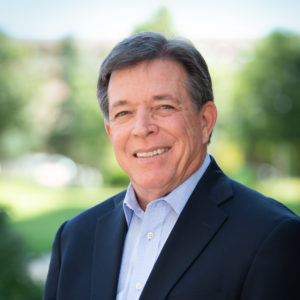
Oklahoma City Convention and Visitors Bureau welcomed Mike Burns as vice president of sales, a position to which he brings over 38 years of industry experience. Most recently he was senior vice president of convention sales and services at Destination Cleveland for 7 years. Before that, he was executive vice president of DMI Hotels, a position he took following 22 years in various leadership roles with Conferon Inc. (now Experient).
Erin Musni
San Francisco Marriott Marquis hired Erin Musni as senior sales executive. Musni began her 10 years of experience with Marriott Brands, working in guest services at Residence Inn & Courtyard San Ramon. She was later destination sales executive for New York Marriott Brooklyn Bridge as well as sales executive for New York Marriott Marquis. Most recently, she was senior account executive at Wailea Beach Resort in Maui.
Scott Boyle
Scott Boyle is now vice president of design and creativity at Viceroy Hotels & Resorts. Most recently, he worked in Park City with Columbus Pacific Development. He was formerly corporate director of design at Montage International, and was senior project/design development manager at Timbers Resorts. With over 20 years of experience, other positions include project management for SB Architects and WATG.
Franco Diaz
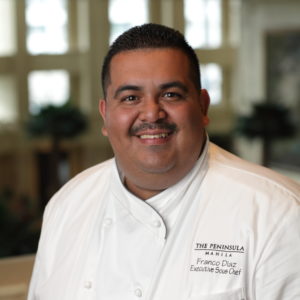
Franco Diaz returns to his hometown as new executive chef at the Ritz-Carlton, Chicago. Diaz began his professional career at The Peninsula, Chicago, where he held roles including Garde Manager Sous Chef and Banquet Sous Chef. He was then selected to participate in an exchange chef program in Switzerland, and upon his return stateside was appointed Executive Sous Chef of the St. Regis Resort in Aspen. Most recently, Diaz was executive chef at The Peninsula Manila in Makati, Philippines.
Chris Rynkar
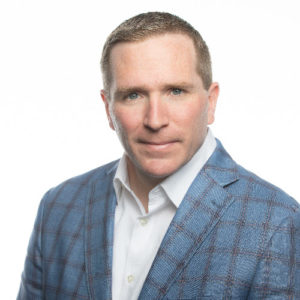
The soon-to-open Renaissance New York Chelsea Hotel hired Chris Rynka as general manager. Rynka brings over 15 years of experience in the industry in various roles across the country, from San Diego to Boston. He was awarded “General Manager of the Year” by Real Hospitality Group and was also named “Manager of the Year” during his four years at Hyatt.
Yeli Gonzales
Yelithza Gonzales is new director of sales and marketing for the new Renaissance New York Chelsea Hotel. She brings years of sales experience in the NYC hospitality industry and was most recently director of sales marketing at the city’s first Hyatt House. Prior to that, she was director of sales at Hotel Indigo in Brooklyn.
Charlene Lopez
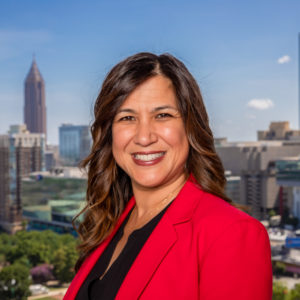
Atlanta Convention and Visitors Bureau promoted Charlene Lopez to director of citywide sales from her recent position as national account sales manager. Formerly she was director of sales at Omni Hotel at CNN Center. Prior to that, she worked as associate director of sales at Hyatt Regency, Atlanta. She previously held the same title at Hyatt Regency Hill Country Resort & Spa.
FastBooking, a Paris-based company that sells hotel booking software, was robbed of customers’ personal information and credit card data. The company sent out emails last week warning those affected among its 4,000 customers in 100 countries.
The breach, which took place on June 14, is the latest flare to the hospitality industry to take action. An attacker infiltrated a vulnerability in FastBooking’s software to install malware. That gave the attacker remote access to the company’s server.
Hospitality Hack
Ian Eyber, owner of Nanovms, a company that makes attack-preventing software, says the hospitality industry is at significantly more risk than other industries for data infiltration. Because more than just credit cards numbers are collected from customers, hotel booking data is highly valued.
“Also, much of the traditional means of booking and other hospitality-specific software is moving to newer web-based applications that, while they may be newer, suffer from web application-style vulnerabilities,” Eyber says.
Fastbooking runs its software on the open-source Linux operating system. “I think it’s very common for developers that deploy to Linux systems to think they are ‘secure enough’ from malware, because they aren’t running Windows,” Eyber says. “It might be better, but it still suffers from the same vulnerability of being a multiple-process system—that is, [it can] run multiple programs [at the same time] instead of just the one that should be running.”
A Promised Fix
Eyber says a new technology does addresses the problem. Nanovms sells unikernels applications—as do several other companies—that do not need an operating system, such as Linux or Windows.
Typical software application systems often have “shells”—programming that powers a user interface—that contain codes hackers can use to hijack the system. Or, attackers will infiltrate a system call, the way a computer program orders a computer to perform a certain task.
Unikernels have neither, says Eyber. The technology combines the application and the operating system into one. This makes it nearly impossible for attackers to invade, because other applications, such as malware, have no entry for infiltrating.
“Many remote code-execution attacks rely on the capability of running other ad-hoc commands on the targeted system or downloading new software to be run on that system,” Eyber says.
Hotels Fall Victim
The hotel industry has felt the shockwaves from cyberattacks in recent years. Major chains such as InterContinental Hotels and Hyatt Hotels have fallen victim, resulting in large monetary reparations and the loss of trust from thousands of customers.
Steve Oates is the director of SAVIT group and specializes in IT and cybersecurity. In a recent LinkedIn article, Oates notes that an attack has repercussions beyond financial.
“A breach will erode the confidence in your brand,” Oates said. “Depending on the level of the attack and the extent of the news coverage, your brand can be permanently damaged. After an attack, even if you put the necessary safeguards in place, customers might never know about them. People are willing to forgive a business for being a victim of a crime, but they are less likely to forgive a business for being negligent toward them.”
Solving the Predicament
His prescription? Oates suggested promoting a “culture of security” and educating employees on digital security the same way a company would for physical security. Hiring a chief information security officer (CISO) can also be a positive step toward ensuring continuous surveillance, he says.
Besides credit card attacks, the industry is at risk from other tactics, including ransomware. This attack uses a vulnerability in the system or encrypted files and links to completely lock down devices. The attacker will then demand payment, often in the form of Bitcoin, to relinquish its control. In the meantime, all hotel operations can be frozen. Property managers will not be able to see reservation details, make financial transactions or create electronic keys.
Oates’ article reports that ransomware rose 250 percent in 2017. HospitalityTech.com categorizes the phenomenon as an “industry.” The website advises brands to act quickly by isolating the infected network of devices, then temporarily removing unaffected computers to stop the problem from spreading.
Eyber urges companies to give priority to the security of management systems over convenience of their use.
“Web application software has been for some time eating into traditional desktop-based software environments for lots of good reasons, like centralizing data and making updates easier to apply,” Eyber says. “Unfortunately, if certain precautions are not taken, web applications are just as vulnerable as desktop applications are. A good start is ensuring that only the application that should be running is able to run. It should not be possible to run attackers’ code on your system.”
Photo credit: BoxFox
Instant gratification and convenience will never go out of style. They are the forces behind the popular click-and-collect trend, where shoppers can order online and pick up their items in store (or have them delivered) within hours. Add to that a demand a growing demand for customization (of everything), and you’ve got unique gift-giving opportunities.
The following three companies have built their businesses around these trends, providing planners innovative ways to delight guests with the ability to choose their own gifts online and then pick them up the day of the event.
How it works: Simply pick the size of the Sugarwish—from the duet, with two bags of treats to the ultimate with 16 bags of treats—and an ecard to send your guests via email, text or social message. Your guests pick their favorite candy and voila! A box of tasty treats greets them at the venue the day they arrive. It doesn’t get much sweeter than that.
Packed with Purpose
From soaps that support economic development in Uganda and India to teas that help fight cancer and baked goods that empower at-risk youth, Packed with Purpose handpicks a broad range of products from over 50 socially and environmentally conscious small businesses that support charitable, environmental and social causes all over the world.
How it works: You pick a theme (or themes) for your gift boxes, and the folks at Packed with Purpose will create a custom landing page your guests can use to choose their gifts. Send the landing page link to your guests and Packed with Purpose will make sure they receive their gift boxes when they arrive (the company suggests a lead time of four to six weeks) at the venue. Not only will your guests love picking their own gifts—they’ll feel great knowing they’re making a positive impact on the world.
BoxFox
Women-owned and run BoxFox’s mission is to “bring gifting into the 21st century—creating stronger relationships through personal gifts, powered by the simplest user experiences.” And that’s exactly what they do.
The company curates a variety of fun and practical products, such as gummy candy, reusable straws, books, candles, hand cream, cozy socks and eye masks, that will help your guests relax and enjoy their trip. Each gift box is beautifully packaged and includes a handwritten note.
How it works: You pick a theme, color and one of three box sizes. The ladies at BoxFox will work with you to create a gift card or a page to send your guests so they can build their own perfect gift box through BoxFox’s proprietary platform. They will then prepare and send each box to the venue so your guests have a fabulous, customized gift waiting for them when they arrive.
Let’s Portland!
Image credit: Travel Portland
Portland, Oregon is a vibrant, multicultural city with a flavor all its own. Its sophisticated, cosmopolitan flair, combined with its warm and friendly vibe have inspired creatives, entrepreneurs and innovators for nearly two centuries. In true Portland style, Travel Portland has teamed up with one such innovator, Nike, to provide a one-of-a-kind gift experience for meeting planner contacts: custom Nike sneakers, inspired by the City of Roses.
How it works: Travel Portland will send a box containing a Nike gift card, good for a pair of custom kicks, along with a pamphlet containing a welcome message, artist renderings of their team with note about each person, and a link to a website where mailer recipients can create their own sneakers. The box displays a colorful illustration of the city. A truly unique experience—just like Portland.
Finding ways to include corporate social responsibility initiatives in events is an increasingly important detail as employee-driven activism is rising around the world. Unfortunately, there isn’t always a significant amount of funding available in the budget to design and implement give-back activities. While this does present a challenge, it’s also an opportunity for savvy event professionals to think creatively about how to help organizations achieve these goals.
While many companies and associations may have established give-back programs in their home office or regional offices, they might not immediately see how to incorporate that same spirit of service when traveling. This is where event professionals can assist clients by identifying and implementing low-cost or free activities that still carry a sizable impact.
Companies committed to environmental health and reducing the carbon footprint of their events can donate centerpieces and floral arrangements to local hospitals or retirement homes. Easy to accomplish and usually universally welcomed, this gesture cuts down on waste and helps to brighten the experiences of staff and patients.
Catered Doggie Bags
Food that is not consumed—including unopened bottled water or sodas—can be packaged at the end of a meal and donated to local shelters.
CSR Collection
For more hands-on involvement, donation drives are another no- or low-cost option. While many guests will be traveling light for business trips, an invitation to bring one or two gently used books won’t take up too much room in anyone’s carry-on bag, and the request can be sent to guests as part of their registration materials. Set up a collection point that is central to the meeting’s programming, allowing guests to see their contributions grow and evolve in person, with the books being donated to a local library, book drive or hospital at the program’s end. A similar impact and effect can be achieved by inviting guests to contribute gently worn professional clothing, which can then be donated to a local branch of Dress for Success or a similar organization.
Play for Good
Corporate social responsibility initiatives can even be threaded into an event theme, creating opportunities to give back via gamification. For example, at a casino themed event, any funds bet by players and won by “the house” during the course of an evening can be donated to a charitable partner. Guests can even be invited to help select this charitable partner by voting via survey during their registration process.
While being able to commit funds to giveback initiatives during meeting and special event programming is wonderful, there’s no reason to believe that companies and organizations can’t make a difference in communities, even without a dedicated budget for this kind of activation. When creating a plan for a client, it’s always worthwhile to understand their values and goals and offer suggestions of how to incorporate those values into their program.
Emily Schneider is a Creative Services Manager with CSI DMC. With more than 16 years in the events industry, her work with CSI DMC focuses on discovering and creating innovative activities and experiences for CSI DMC’s clients and partners.
PCMA EduCon planners set the lofty goal of hacking homelessness at their June event in Los Angeles. To address the complex issue of helping the unsheltered—a topic that touches meetings in cities across the world—President and CEO Sherrif Karmat brought in Jamie Murdock, vice president of sales at Experient, and Donna Kastner, founder of Retirepreneur, who have been leading “hackathons” to facilitate brainstorming teams on topics related to the industry—but usually not issues quite as big and complicated as this one.
Karamat saw the topic as a perfect fit with PCMA’s Giving Good program, which allows event organizers to help local causes in host cities. “We want to take the learnings to a broader community,” he said after the winner was revealed.
“We can’t hide our issues or sweep them under the rug. We have had events move out of cities because of homelessness,” he said. “There is no blame, but we need to help these people instead of avoiding the problem. If we aren’t there, how can we have the real, difficult conversations that need to happen?”
The goal was to address the root causes of the problem of people not having reliable housing. But how can a group of experts on producing transformational “moments” at meetings uncover innovative, long-term solutions to seemingly intractable problems in two days? We asked the hackathon facilitators for a behind-the-scenes look at how they approached the conversation.
JM: The idea of tackling this topic was almost crippling. Three months prior to the event, we were overwhelmed with the amount of data and sensitivity of the topic. We were asking, “What did we get ourselves into?” We focused on the fact that we were just the facilitators and were trying to create the best meeting-of-the-minds possible to start dialogue.
DK: There was so much potential, and it was unfamiliar territory, but we reminded ourselves that beautiful chaos reigns in a hackathon. We knew we couldn’t solve homelessness in two days, but we pivoted to addressing how the industry can prevent or decrease homelessness and catch people who are vulnerable. We focused on getting the right people in the room as mentors to support the discussion.
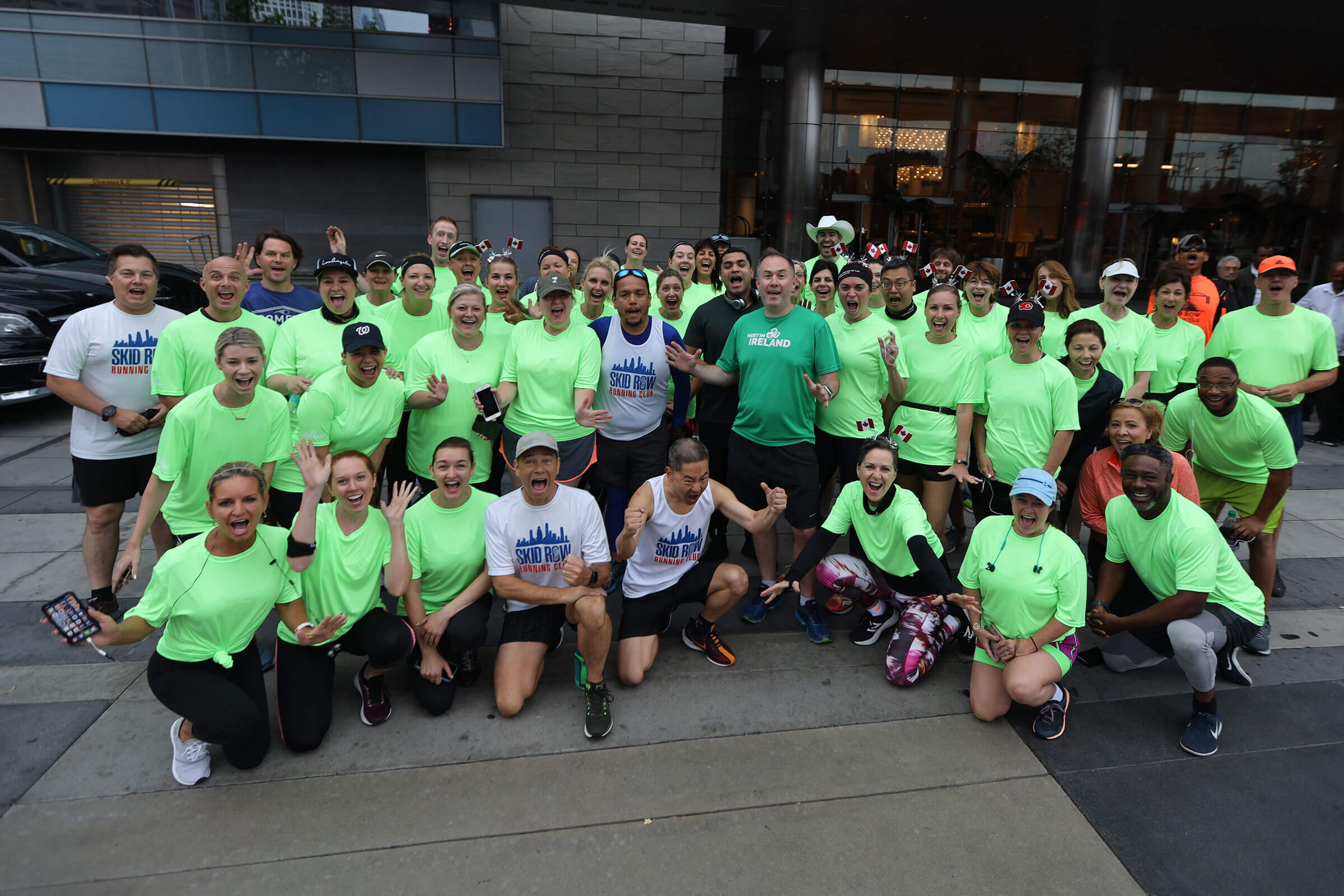
2019 PCMA EduCon participants join the Skid Row Running Club in Los Angeles on June 26. Photo by Jacob Slaton Photography.
Q: How did you determine who the mentors would be?
JM: PCMA was instrumental in getting William Thomson, founder of Gallus Events in Barcelona, Spain, and Illah Schalles, program director of Back on My Feet Greater Los Angeles, a nonprofit that uses running as a way to combat homelessness.
We recruited the sock philanthropy company Bombas and they brought Josh Dean, co-founder of Human.nyc, a nonprofit that works to connect the street homeless in New York City to housing. Then, I reconnected with a college friend who is an entrepreneur and philanthropist in Los Angeles. I think we struck gold.
The highlight was how much knowledge was shared. The mentors helped to “right-size” the facts because homelessness is not always the face that is on the poster.
DK: I learned that a lot of the things I thought were wrong. Homelessness happens for a variety of reasons. We were concerned, in today’s politically divided world, that it would get political and it was not a problem. The mentors guided the conversations in a constructive direction.
JM: There were some opposing thoughts on the teams. Some said money is not going to solve anything and expressed frustration with a lack of progress when so much has been spent, but the mentors were able to turn that around to the root causes.
The 5K run in the morning with Skid Row Running Club was a chance for people to see the problem up-close—even though the route didn’t actually include skid row.
Q: How did the preparation/explanation of the mission differ from your instructions when the challenge is a little smaller?
JM: Before the volunteer teams arrived, we sent them home work so they had background. We didn’t want to require too much, because we wanted them to come with their own lens.
DK: We had more people associated with the destination, in addition to planners. They really wanted to know how it would impact their destination.
JM: We had to balance the discussion because the exercise was also a lesson in how to hold a hackathon so that people get an understanding of the process and whether they wanted to bring that method back to their destinations.
Q: Were you surprised by the solutions?
DK: Not shocked. There was definitely a focus on advocacy. In previous hacks, there was money on the line. This time with the award going to the nonprofits, the groups were more collaborative and relaxed, moving inside and outside, not hiding their white boards. The venue, JW Marriott Los Angeles L.A. Live, was perfect.
JM: No one went to the low hanging fruit of how to use excess food at banquets. It was more geared toward advocacy or prevention.
DK: The other huge difference was that we waited a day between when the brainstorming ended and making the final pitches, so we had them do a trial run and get feedback. That gave the teams a chance to sharpen their short presentations, so it was even better. Plus, this time the audience was the third judge, since they could vote.
JM: They proposed serving those who serve us—a topic that really hit home. A lot of people in the hospitality industry live paycheck to paycheck. By tapping into the power of U.S. Travel Association, they proposed a path to making this an even better industry to work in.
The other team that got a lot of plaudits was IMPACT, (Impathetic Meeting Professionals Act). groups want to do something to help when they go to a city, but often there is no way to find the right cause. Their solution was to build an app to get philanthropic organizations in front of planners.
Q: How did the sock donation come about?
JM: We knew we wanted Bomba involved when we found out this was going to be the topic, and we convinced them to come and donate 50 socks to the participants and attend. But at the end, they said they were so impressed by the experience that they offered to donate 5,000 socks to the cause of the winning team’s choice. That still touches me so much. We were left speechless.
Q: Where does this lead?
JM: To be continued. I hope it is explored more at PCMA Convening Leaders in San Francisco in January.
DK: I think this is a movement in need of a champion.
Q: What do you hope people take away from this experience?
JM: Don’t wait. Don’t wait for someone to organize something. Even if you go back and change one thing in your life to impact homelessness in your community, that will be more than what is being done today. While we are going to try to rally around this as an industry, don’t wait. Do something now.
DK: I am a dreamer who hopes the whole will be more than the sum of its parts. I hope there is an opportunity to band together and do something bigger, but Jamie is right. Don’t wait for that.
We hope to publish these findings and encourage planners to execute on all these ideas.