Mexico’s largest Caribbean island, with 185 square miles, Cozumel features gorgeous natural settings and is generally more affordable than other tourism and meetings destinations on the Mexican Riviera.

“Cozumel is gifted with many beautiful places,” says Andres Martinez Reynoso, executive marketing director for Quintana Roo Tourism Board. “It has more than 35 dive sites, five natural reserves, a secluded little island called Isla de la Pasion, along with parks such as El Pueblo del Maiz, Discover Mexico and Punta Sur, and San Gervasio archaeological site.”

Many groups can easily access the island, since it has its own airport, Cozumel International Airport (CZM), which handles air traffic from many cities in the United States, Canada and Mexico.

Awesome Experiences
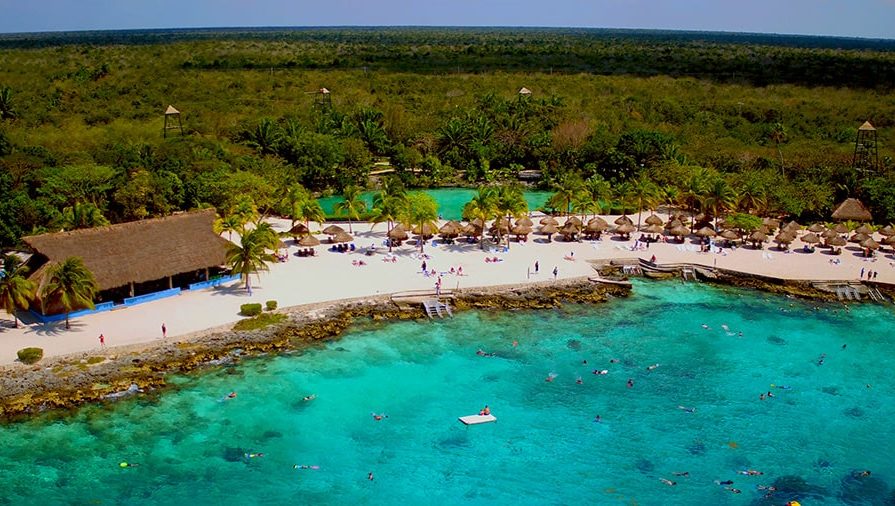
The High Experience Cozumel at Chanakanaab Adventure Beach Park

One of the top restaurants on the island, Casa Mission is a hacienda with a colonial-style facade that is surrounded by gardens and fountains, and framed by exotic birds and ancient trees. Located in San Miguel (the island’s largest city), it serves traditional Mexican food and seafood, and accommodates private groups.

Groups seeking a (literally) elevated adventure love dining 82 feet above the ground at The High Experience Cozumel at Chanakanaab Adventure Beach Park. The restaurant features Mexican haute cuisine and an amazing view of the Caribbean Sea. Groups can opt for brunch, lunch, snacks and drinks, or dinner, which includes a guitar or saxophone player to enhance the mood.

The most significant annual festivities on the island are Cozumel Carnival and La Feria del Cedral. Cozumel Carnival, held in February, has been a part of the city’s fabric for more than 140 years. It features an exciting program of warm-up events, including the election and presentation of carnival kings and queens, along with dancing and live music from top singers and groups.

Eight days of main events follow, concluding with Fat Tuesday, featuring dazzling technicolor processions along Cozumel’s downtown oceanfront. Costumed revelers join in dance competitions and bands play live music. People line the street, dancing with the performers and catching gifts that are showered on them. After the oceanfront extravaganza, the music keeps playing and parties continue well into the night throughout San Miguel.

Held in the small village of El Cedral, La Feria del Cedral honors 21 founding families who settled in Cozumel in 1848 after being forced to flee the mainland during the War of the Castes. The fair—one of the oldest in Mexico—features rides, food stands, rodeos and traditional dance, including the time-honored Baile de las Cabezas de Cochino (Dance of the Pigs’ Heads). It’s held at the end of April or beginning of May.

Dazzling Meetings Venues

Cozumel Convention Center is located a few blocks from the main square in San Miguel, so it is within easy walking distance to hotels, restaurants and shopping malls. It has 17,114 sq. ft. of meeting space and the 14 nearby hotels collectively offer 2,437 guest rooms and 39, 462 sq. ft.

Surrounded by lush vegetation and turquoise waters, InterContinental Presidente Cozumel Resort Spa is a unique hideaway situated on a half-mile stretch of a private white-sand beach. The 218-room property has 2,964 sq. ft. of meeting space, along with four ballrooms.

Read about the offerings of other Mexico cities in Dan Johnson’s story, “Amazing Adventures on the Mexican Riviera: A Fiesta of Experiences Awaits Groups,” in the December issue of Smart Meetings.
Planning a meeting for a group of connoisseurs? WalletHub has some suggestions from a new report on the best foodie cities in America based on affordability, diversity, accessibility and quality. On a 100-point scale, Portland ranked No. 1 out of 180 cities, with a total score of nearly 70 points reflecting its breadth of cuisines, number of options, affordability, freshness of ingredients and food-centricity (think farmers markets, specialty food stores, food trucks and food festivals).

Coming in after the Rose City in order of ranking were New York, Miami, San Francisco, Los Angeles and Las Vegas. Note that with the exception of Portland and Las Vegas, the other four were at the bottom of the affordability scale. Additionally, Portland was the only West Coast city present in the 30 least expensive.

With dozens of weighted factors from grocery prices to craft breweries per capita, the sparkling commendation may come as no surprise to Portland, which was also ranked best food city in the U.S. by Jetsetter magazine and best food city in Oregon by Thrillist this year.

The Making of a Food City

Accessibility to fresh ingredients, variety of options and an exploratory approach to beer, wine and spirits were common factors in designating locations as food-obsessed. In an article from Food & Wine, Dana Cowin’s additional criteria includes artisanal mastery with a singular focus—think that one great boulangerie that makes sourdough einkorn loaves, or a chocolatier who crafts a sumptuous menu with single-estate cacao. Opinions at The Atlantic add that a contender should have connection to place; a city’s gastronomic soul should be informed by the local terroir and seasonal bounty.

Goodbye Gourmet

One might assume that a food city is just place with a lot of 5-star restaurants, but Portland’s consistent top ranking suggests this measure is of less import. While WalletHub included a presence of Michelin-starred restaurants in its algorithm, it counted for just .77 points, while food trucks per-capita contributed 3.08 points.
The factors constituting a great food city are mostly tenets of the slow food movement, which like the tortoise is still going strong. While the real-food movement encompasses many dining experiences, its crowning achievement is not two octopus tendrils and a sprig of herbs dashed with mystery sauce and served up for $38. Rather, an emphasis on seasonality, sustainability and lifting the veil between source and product is what determines value—whether that comes from a walk-up window, a roving vehicle or atop starched linen tablecloths. An article in The Washington Post echoed similar sentiments when naming the top 10 food cities, as its writer admitted a preference for casual fare or innovative ethnic dishes over “places that charge triple digits for dinner.”

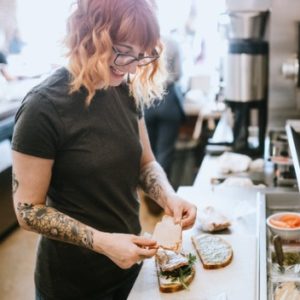
FYI, Portland was at the top of that list, too. If you’re booking your flight already: Fuse traditions with tropical Texas barbecue at Eem, browse artisanal products and stay all day for the buffet/deli counter/cocktail bar at staple Elephants Delicatessen, or answer emails with cocktail and coffee in hand after a homemade biscuit breakfast sandwich at Commissary.

Lights are shining brighter. Colors are popping with vibrancy. As the holiday season falls upon us, the drinks and food start to get a little tastier, too. And what better way to talk about Kimpton’s 2020 Culinary and Cocktail Forecast, or what’s up and coming, than over some F&B?

Kimpton Hotels & Restaurants’ sixth annual Culinary & Cocktails Trend Forecast predicts spicy drinks, sustainable meals and succulent ingredients. Chefs and bartenders are getting creative, and both your eyes and stomach will be satisfied.

Each year, the forecast tells of the most anticipated and innovative dishes, flavors and ingredients that will be explored in the year ahead. Surveying more than 130 chefs, sommeliers, general managers and bartenders from more than 70 Kimpton restaurants and bars, the forecast is quite comprehensive.

Related: A Guide to Alcohol for Holiday Events

As one of the largest operators of multiconcept restaurants and bars, Kimpton leverages decades of experience and deep industry knowledge across the globe to come up with a complete list of trends. Here are some of its predictions.

First, let’s look at the cocktail trends.

Tea Time

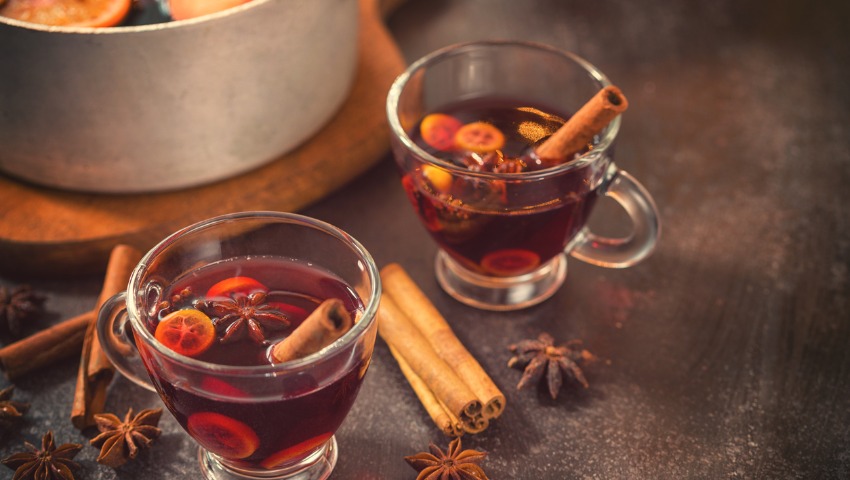
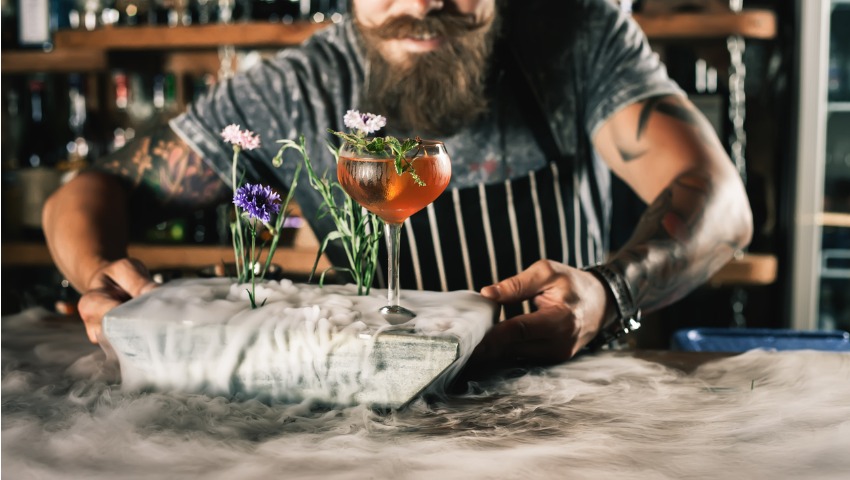
From fruity hibiscus to classic chai, tea brings complex flavors to cocktails. Tea-infused spirits and syrups, as well as fire-roasted fruit, rose to the top among cocktail creations this year and are predicted to remain popular. Across the United States, mixologists are capitalizing on this trend by infusing cocktails with everything from chamomile to Darjeeling.

Hearing words such as “smooth,” “smoky,” and “floral” might hint at notes of bourbon, tequila or gin, but could also describe Earl Grey, oolong or matcha. The subtle similarities between teas and spirits make them perfect companions in a cocktail.

Cocktail and Cooking Collaboration

Multiconcept restaurants and bars offer a unique opportunity for collaboration. Kimpton bartenders predict a grasping of culinary techniques for cocktail prep. There will be more teamwork and learning from one another; from chefs to bartenders and bartenders to chefs. More bartenders will request kitchen time to use equipment and tools otherwise not available to them. Not only is there more participation, but bartenders also can efficiently and effectively prepare and store their ingredients.

Hold the Alcohol, Please

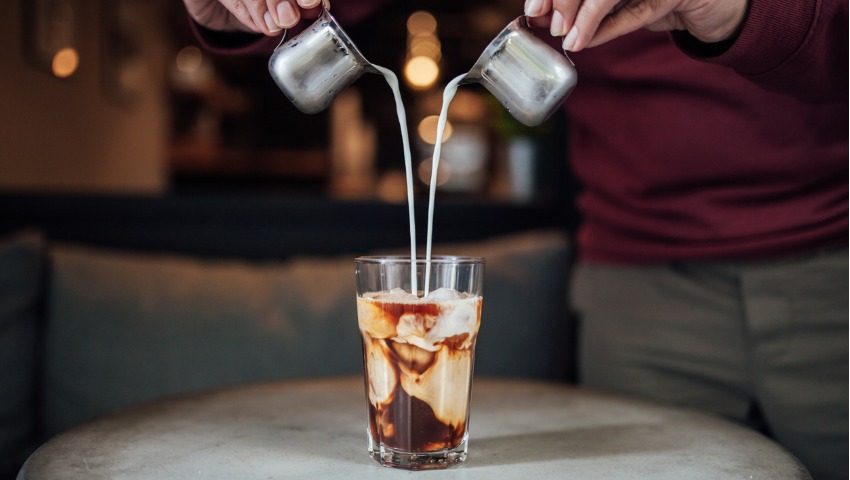
Nonalcoholic bar beverages have been around, but are becoming a main focus. The coffee spritz is predicted to be the drink of 2020, and leads other coffee trends such as nitro cold brew on tap, cold brew alternatives and CBD coffee. And as for low alcohol content, you’ll be covered there, too. Influences from Mediterranean regions have given way to light, refreshing, often low-alcohol spritzes.

These lower sugar, crisper cocktails are the next evolution of Spanish Gin & Tonic, which took over bars a few years ago. Spritz culture will also affect coffee programs, according to nearly a third of respondents. Drinks such as espresso tonic will be requested all year round.

Now, for the main course: culinary trends.

Substitutions and Sustainability

Over half of respondents predict plant-based meat will be mainstream. Diets once considered alternative are now the norm, so expect to see gluten-free, dairy-free, vegetarian, vegan and keto options become menu mainstays.

Trending are Gluten-free pastas and breads. Gluten-free cauliflower schnitzel. Gluten-free calamari. Chefs will continue to make a concerted effort to get away from wheat. Oat and hemp milks will continue to dominate, alongside nut-based, dairy-free cheeses. Creamy-cashew-cheese alfredo sauces, hearty plant-based burgers, oat milk honey lavender lattes and vegan breakfast quesadillas filled with nut-based cheese, veggies and tofu are on the horizon to shine.

Captivating Components, Interesting Ingredients

Spicy tomato granita, pickled carrot and whipped avocado—what do they have in common? They’re all things that may find their way in your ceviche! Also, almost a third of chefs surveyed said that unusual seeds, including lotus, basil and water lily, are predicted to be some of the trendiest ingredients.

Chefs will simultaneously play with unconventional flavors while making accommodations for different diets. One in five chefs also said that “grown-up sundaes” will lead the way for desserts. Again, with funky fruits and unusual elements.

Hyatt recently unveiled plans to add more than 20 luxury properties worldwide by the end of 2020. Park Hyatt, The Unbound Collection, Andaz, Alila, Grand Hyatt and Miraval all will add new properties.

The Unbound Collection’s expansion is making waves in the European market. Upcoming hotels set to open include Great Scotland Yard, London’s former police headquarters, expected to open Dec. 9 and Hotel du Palais Biarritz in France, due to reopen in June after a renovation.

Related: Caption by Hyatt Will Encourage Conversations

The Park Hyatt brand—which will be celebrating its 40th anniversary next year—will open five properties across the eastern region of the world, in locations including Auckland, New Zealand; Doha, Qatar; Niseko, Japan; Suzhou, China; and Jakarta, Indonesia.

The Alila will open luxury resorts in Switzerland, Malaysia and Oman. Andaz is set to open properties in Bali and Prague, as well as Dubai, United Arab Emirates; Shenzhen and Xiamen, China; and Palm Springs, California.

RelatedHyatt Says a Louder ‘No!’ to Plastics

Like the other brands, Grand Hyatt—the company’s largest brand—will open in several locations around the world, including Nashville and Kuwait, as well as the Hefei and Shenzhou peninsulas in China; Gurgaon, India; Jeju, South Korea; and Nashville; and Al Khobar, Saudi Arabia (the brand’s first in this city).

Below are listed all the luxury properties that recently opened and are set to open within the next few years.

Alila

  • Alila Dalit Bay in Malaysia (2020)
  • Alila Hinu Bay in Oman (2020)
  • Alila La Gruyere in Switzerland (2023)

Andaz

  • Andaz Dubai The Palm (2019)—the brand’s entry into Dubai
  • Andaz Seoul Gangnam in South Korea (2019)
  • Andaz Bali (2020)—the brand’s first in Indonesia
  • Andaz Palm Springs in California (2020)
  • Andaz Shenzhen in China (2020)
  • Andaz Xiamen in China (2020)
  • Andaz Prague (2022)–the first Hyatt hotel in the Czech Republic

Grand Hyatt

  • Grand Hyatt Hefei in China (2019)
  • Grand Hyatt at SFO—the only on-airport hotel at San Francisco International Airport (opened 2019)
  • Grand Hyatt Al Khobar in Saudi Arabia (2020)—the brand’s first in Saudi Arabia
  • Grand Hyatt Kuwait (2020)—the brand’s entry into Kuwait
  • Grand Hyatt Gurgaon in India (2020)
  • Grand Hyatt Jeju in South Korea (2020)—the largest Grand Hyatt hotel in Asia Pacific
  • Grand Hyatt Nashville (2020)—the brand’s debut in Tennessee
  • Grand Hyatt Shenzhou Peninsula in China (2020)

Miraval

  • Miraval Berkshires Resort and Spa (2020)—the brand’s first in Massachusetts

Park Hyatt

  • Park Hyatt Doha (2019)—the brand’s entry into Qatar
  • Park Hyatt Kyoto in Japan (2019)
  • Park Hyatt Auckland (2020)—the brand’s first in New Zealand
  • Park Hyatt Jakarta (2020)—the brand’s debut in Indonesia
  • Park Hyatt Niseko Hanazono in Japan (2020)
  • Park Hyatt Suzhou in China (2020)

The Unbound Collection by Hyatt

  • Great Scotland Yard (2019)—the brand’s entry into the United Kingdom
  • Hotel du Palais Biarritz in France (2020)

Meeting professionals and other travelers can enjoy airplane food—yes, airplane food—without even hopping on a plane, now that a fast-food restaurant featuring in-flight menu items is opening in Malaysia, with many more to follow around the world.

Santan Restaurant and T&Co Cafe, which is debuting this month in Kuala Lumpur, is the latest brainchild of Tony Fernandes, CEO of AirAsia—and given his past successes, he is totally confident that it will succeed. When he told people in 2001 that he was going to create a low-cost airline headquartered near Kuala Lumpur, they didn’t know whether to laugh or simply shake their heads in disbelief.

MorePortland Ranked No. 1 Foodie City

Fernandes followed through on his dream, however, creating AirAsia, which soon became widely recognized as the world’s top low-cost air carrier and is now the largest airline in Malaysia. And he has people laughing and shaking their heads again as he opens the fast-food eatery this month, featuring a menu that draws from AirAsia’s in-flight offerings at affordable prices (about $3 per meal).

“A year ago, when I first conjured up the idea of turning Santan and T&Co, our in-flight food choices, into a fast-food restaurant, people thought I was crazy—just as they thought 18 years ago, when I said I was starting an airline. Look how that turned out!” Fernandes wrote in a LinkedIn post.

Don’t think that he’s simply replicating the entire AirAsia menu or creating an Asian version of McDonald’s, though. Some 30 percent of the menu items at Santan Restaurant and T&Co Cafe will consist of offerings aboard AirAsia flights, such as nasi lemak, a signature Malaysian rice dish with a chili condiment. The menu will be supplemented by items that use local ingredients sourced from around the ASEAN region. For example, the house blend coffee is made from the best beans in the ASEAN region, including Laos, Vietnam and organic, shade-grown coffee beans from Muser Coffee Hill, Thailand.

RelatedGet Ahead of 2020’s Top Dining Trends

“We have seen a significant appetite for our in-flight menu offerings beyond our flights across the region, and this is our answer to that demand,” Catherine Go, the restaurant’s general manager said in a statement. “We are very proud to extend what started out as an in-flight menu into new markets and reiterate our support for local and ASEAN producers and suppliers.”

This only begins to tell the story. At the restaurant—which is in Kuala Lumpur’s Mid Valley Megamall, about 40 miles from AirAsia’s headquarters at Kuala Lumpur International Airport (KUL)—all customers will place orders at digital kiosks, while a camera scans their faces to process payment. A highly automated system then will prepare and serve meals in about four minutes.

“While the involvement of these devices will include basic tasks at first, the ultimate aim is for the installation of machines that are able to interact with most kitchen equipment, such as blenders, whisks, knives and bobs,” Fernandes wrote on the LinkedIn post. “In other words, we aim to have our own ‘robotic kitchen’ in the near future.”

Fernandes says the kiosks will utilize artificial intelligence and Machine Learning to understand each customer’s meal preferences, thereby enabling them to customize the menu display for subsequent orders.

The new restaurant represents just the first step in what Fernandes foresees as the creation of a large chain. By the end of 2020, he plans to have five fully owned restaurants and 100 franchise locations.

“Our dream is to have one in Times Square,” he told Reuters.

Despite slowly diminishing revenue growth, the U.S. lodging industry will remain strong for the next two years, according to a leading industry source.

Lodging occupancy levels are expected to take a dip over the next two years, but these levels will stay above 65.5 percent through 2021, according to CBRE Hotel Research’s December issue of Hotel Horizons. During this same period, RevPAR is projected to increase by 1 percent per year.

RelatedA Trio of Industry Reports Point to Growth in 2020

Lodging demand during the year has improved by 0.2 percent, to 2 percent, from the rate reported in the September edition of Hotel Horizons. The December Hotel Horizons reported that hotel occupancy rates will remain at the record-level 66.1 percent it achieved in 2018, making this the 10th consecutive year without a national occupancy decline.

CBRE forecasted the annual average daily rate (ADR) for the U.S. market to be $131.08, 0.9 percent more than the national average of $129.97 in 2018. The net result of this is a RevPAR increase of 0.8 percent for the year.

“Despite an economy that has supported strong growth in lodging demand and record occupancy levels, hoteliers have been unable to achieve gains in average daily rate commensurate with what we have seen during equally strong market conditions. We believe an environment of high occupancy with low ADR growth will persist for the foreseeable future,” said R. Mark Woodworth, senior marketing director for CBRE Hotels Research.

CBRE forecasts nominal RevPAR growth rates of 2.1 in 2022 and 3.5 percent in 2023. This represents real RevPAR gains of 0.3 percent in 2022 and 1.5 percent in 2023.

“Like other industries, hotels historically have followed the traditional business cyclical performance pattern: peak, contraction, trough, expansion and back to peak,” Woodworth said. “By our measure, the U.S lodging industry reached the peak of its current cycle in 2018. History calls for a downturn in 2020 or 2021. However, because the forecast declines in occupancy and real ADR are minimal, we are seeing a slight rollback in performance, which leads to sustained expansion starting in 2022. We expect to see a mini-cycle within the cycle.”

What makes an independent hotel truly independent is its ability to set itself apart without the need for words. Whether it’s amenities the hotel offers, an attraction in proximity or a rich history, hotels that are authentically their own have a way about them that other hotels cannot emulate. Sweeping views of the Mississippi River are just one thing that sets The Merrill Hotel, Muscatine, a Tribute Portfolio Hotel—rated the No. 1 hotel in Iowa—apart from your average venue.

Keep it Green

That sense of gratification that follows decompressing after a hard-won, productive day is a language that transcends all differences. However you relax, be it with yoga, a book, winding down in front of the hotel television or relaxing in green spaces—which The Merrill Hotel offers, along with outdoor fire and water pits—guests have many choices for chilling at the end of the day.

Meetings Certified

Knowing your event space is trusted by other planners—and the event industry as a whole—can be a comforting thought. The Merrill Hotel’s more than 12,700 sq. ft. of picturesque meeting space is IACC-certified—only one of two that can claim the title in Iowa—a sign that the property is a leader in everything from sustainability to service and innovation, so planners can rest assured that the property’s meeting spaces will have Four Diamond service and be ready for business.

Day meeting and complete meeting packages, which includes 100-inch LED television screens and a list of recreational amenities, makes The Merrill Hotel a property that not only offers beautiful backgrounds for meetings, but ensures planners have what they need to get the job done.

There’s a certain level of comfort in meeting in an intimate space with familiar faces, and when your attendees meet in cozy properties, it’ll feel like a home away from home. Your attendees will be happy they came, and you’ll be glad you chose this award-winning property by the Mississippi.

The busy lives that event ­professionals and their attendees lead can often leave them feeling drained at the meeting’s end, but what if your guests left an event feeling more refreshed than when they arrived? The experts at JW Marriott Bonnet Creek Resort & Spa in Orlando, Florida, which is opening in early 2020 with 516 guest rooms and 50,000 sq. ft. of event space, have some tips for helping guest leave rejuvenated and inspired.

Holistic Wellness

Health and wellness are of the utmost importance, especially on the road. Embrace the joyful energy that comes from being naturally relaxed and refreshed. Scheduling some downtime so attendees can take advantage of rejuvenating massage and facial treatments can go a long way toward helping them focus during the keynote. Express pods located and Spa by JW allow for holistic wellness to enrich mind, body and spirit.

A dip in the warm, outdoor pool or a relaxing soak in a whirlpool as the sun sets over Bonnet Creek, a nature preserve, as we bring nature inside to create moments of focus and calm.

Offering morning yoga by the pool or rooftop—JW Marriott Orlando Bonnet Creek—allows attendees to choose a healthy start to the day. Back that up with fruit and yogurt as an alternative to pastries and coffee.

Elevated F&B

That same rooftop terrace could be the site of a dinner that starts with a jazz quartet, locally inspired dishes under twinkling lights and a toast by the glow of nightly firework displays from nearby Walt Disney World. Signature restaurants and personalized catering services onsite connect attendees to the destination we nourish the soul through inspiring dining options.

Get Closer

Leave the marathon treks for the fitness track, however. When all the meeting space is on one floor, that allows attendees to mingle while providing plenty of space to spread out. JW Marriott Bonnet Creek’s 22,000-square-foot Griffin Ballroom and 8,000-square-foot Palm Ballroom nourishes the spirit with abundant natural light, while Griffin Ballroom Foyer and many of the breakout spaces offer floor-to-ceiling windows and inspiring views.

When it comes to sunshine, more is better. And when it is time to focus on the presentation, there are blackout curtains and an advanced AV system for that. We offer thoughtful areas with inspired programming.

The best meetings have a flow, a way of putting attendees in a productive state of mind from the moment they arrive on property. Smart Meetings asked the event experts at JW Marriott Tampa Water Street for tips on how to achieve that magical state.

Keep it Fresh

The view from 6th floor Terrace Bar and Restaurant is the backdrop for a fresh approach to meeting in the Sunshine State. With craft cocktails and light bites served poolside, the mood is decidedly relaxed. Designers rethought the feel of the 42 event spaces and 100,000 sq. ft. of room for more than 2,000 attendees to make meeting new again. Even the fitness center and 519 guest rooms were reimagined with streamlined, modern layouts, sophisticated decor, plush bedding and water or skyline views.

Planners looking to keep attendees engaged have a partner in finding creative ways to approach agendas and menus that take advantage of the refreshed spaces and abundance of light.

Offer Lots of Options

No one wants to be forced into doing what everyone else is doing. That is why giving your guests clear options for how to spend their free time—aquatic activities such as boating and kayaking or cultural options such as world-class museum hopping, for example—is the best way to empower them for the learning ahead. From one of the country’s largest water education centers, The Florida Aquarium, to one of the world’s longest waterfront promenades, Bayshore Boulevard, attendees can explore on their terms.

Also nearby is Amalie Arena, home of the NHL Tampa Bay Lightning, which hosts names such as Elton John and Jimmy Buffett. It is a short stroll to Riverwalk and Sparkman Wharf dining area. Local nightclubs, breweries, bars and an emerging culinary scene allow guests to find something that fits every taste.

Now attendees don’t even have to leave the property to find their path to enrichment. A Spa by JW offers personalized pampering.

Make It Easy

Even when the convention center and all those amenities are nearby, offering passes to local transportation, such as streetcars, water taxis and bike share programs makes it easier for attendees to explore farther afield. In Tampa that could include stand-up paddleboards, pedal-powered water bikes, group cycleboats or a ferry equipped with lounging areas for seeing the sights. Suggest a free afternoon before a final banquet, giving attendees the chance to enjoy these magnificent attractions.

Linked to Tampa Marriott Water Street via glass skybridge, guests can enjoy a combined 1,256 guest rooms and suites, and planners have even more space to host the meetings they desire in the more than 150,000 sq. ft. of seamless event space, connected on the 3rd floor.

End on a Watery Note

The sound of water can transform moods and bay views put everyone in a more relaxed state. Leverage that calming influence by scheduling a sunset yacht cruise or welcome dinner on a patio overlooking sun-dappled currents.

A leading global destination and event management company has decided to expand its efforts by initiating additional programs to address environmental and social development issues.

After successfully launching the initiative, #bringchangewithME, at IMEX America 2019, Pacific World expanded the conversation about global issues at IBTM World 2019 in Barcelona this month. The company hopes that the initiative will “raise awareness and work with our customers and partners to contribute to building a sustainable world for future generations,” according to Selina Sinclair, global managing director of Pacific World.

Emphasis on Place-Specific Action

The initiative takes a hands-on, bottom-up approach to address key global issues at specific destinations around the world. It was developed by teams around the world, and focuses on place-specific action and change. Examples include Tourism Authority of Thailand’s support of 55 “secondary cities” as the country tries to diversify tourism and spread out business hubs, and Pacific World Thailand’s curation of authentic experiences in these lesser-known cities.

Similarly, Pacific World Greece has established partnerships with local communities to help reduce unauthorized or illegal (IUU) fishing practices along the coast to ensure an environmentally friendly fish market.

Learn More

Pacific World’s website provides information for meeting professionals who want to incorporate positive environmental and social elements into their events, or learn more about the company’s efforts in their favorite destinations.

Founded in Hong Kong in 1980, Pacific World operates in more than 40 countries around the world. Through #bringchangewithME, it seeks to empower clients to use business events as a pathway to drive social change and economic development, and redress the negative impact of tourism at a grassroots level. It is committed not just to sustainable development at destinations, but also to changing attitudes and behaviors in our own backyards.