Las Vegas loves high-stakes gambles, and two big ones were announced today. The Venetian Resort Las Vegas and Sands Expo—a meeting planner favorite and site for years of IMEX America—are being sold in two separate deals.
Total price tag: $6.25 billion.
With the sales, the property’s current owner, Las Vegas Sands Corporation, exits The Strip and the city to concentrate on its Asian casino resorts. The deals come barely two months since the death of Sands patriarch Sheldon Adelson, the longtime CEO.
VICI Properties will buy The Venetian and Sands Expo for $4 billion. Vici is a New York City-based real estate investment trust specializing in casino properties. It was formed in 2017 as a spin-off from Caesars Entertainment Corporation. It already owns 29 casinos, hotels and racetracks, as well as golf courses, throughout the United States.
At the same time, Apollo Global Management is acquiring the operations at the property for $2.5 billion. Apollo, also based in New York City, is a private equity firm that manages capital for fund investors like university endowments, charitable foundations and pension funds in dozens of countries. Previous ownership stakes in the hospitality industry have included Harrah’s Resorts and Diamond Resorts International.
“This investment underscores our conviction in a strong recovery for Las Vegas as vaccines usher in a reopening of leisure and travel in the United States and across the world,” a company statement said.
Sands officials said selling the resort is “bittersweet.” The late Adelson opened The Venetian in 1999 and the adjoining The Palazzo in 2007, both on the site of the original Sands hotel.
Because it will no longer have ownership in the city, the company is shortening its name from Las Vegas Sands to Sands Corporation.
“This company is focused on growth, and we see meaningful opportunities on a variety of fronts. Asia remains the backbone of this company and our developments in Macao and Singapore are the center of our attention,” said Sands Chairman and CEO Robert Goldstein in a press release.
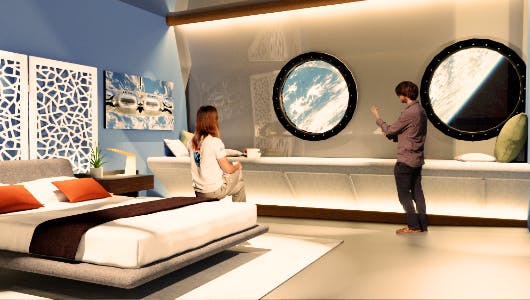
Why host a meeting on Earth when your venue can provide a view of Earth from afar? Beginning in 2027, this could be a possibility. You may soon be able to level up your group’s stay to interstellar proportions at the first-ever outer space hotel, made possible by Orbital Assembly Corporation (OAC), the first large-scale space construction company.
Named Voyager Station, the company plans to begin building in low Earth orbit in 2025 and believes it will be operational two years after, as reported by Daily Mail.
Photo credit: Voyager Station
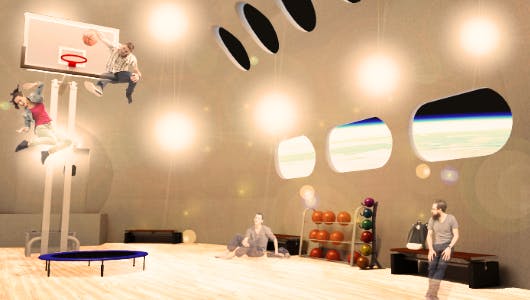
The space hotel will be circular and made up of a series of 24 modules, or pods, each of which will serve a different function, such as restaurants, lounges and bars, movie theaters, gyms and spas, concert venues and guest rooms for 400 people; crew quarters, and air, water and power infrastructure, will also take up sections of the facility.
Orbital Assembly plans to make multimonth stays a possibility. The company hopes to sell sections of the hotel to stakeholders, such as government agencies that may want to use the space as a training center or owners wanting to create a villa out of pods.
Some specs about Voyager Station:
11,600 m2 (125,000 sf) of habitable space in modules and access tubes
200m in overall diameter (ISS is 73m long and 109m wide)
Estimated mass of 2,418 metric tons (ISS: 419 tons)
Estimation volume of 51,104 m3 (ISS pressurized volume: 915 m3) pic.twitter.com/iuToy39GW7
“This will be the next industrial revolution,” said John Blincow, founder of Gateway Foundation, which will run some of the modules. He believes it will launch a new space industry.
How much will it cost to be a meeting attendee in space? Pricing is yet to be announced, but it’s safe to assume the sky’s the limit. Ditto for transfers to and from.
Photo credit: Voyager Station
Fancy a new experience off the Strip? A swanky stay in South Beach? Then, check out these spunky hotel debuts in Miami, Las Vegas, Indiana and DC.
The newest Virgin Hotels will offer 1,500 of the brand’s functional, flexible “chambers” off the Vegas Strip, with design inspired by the desert landscape. The resort will include a five-acre desert pool oasis with an event lawn, a live music and entertainment theater with 4,500 capacity, 24 Oxford show rooms, and 12 varied dining concepts. It will also be integrated with the brand new, 60,000-square-foot Mohegan Sun Casino.
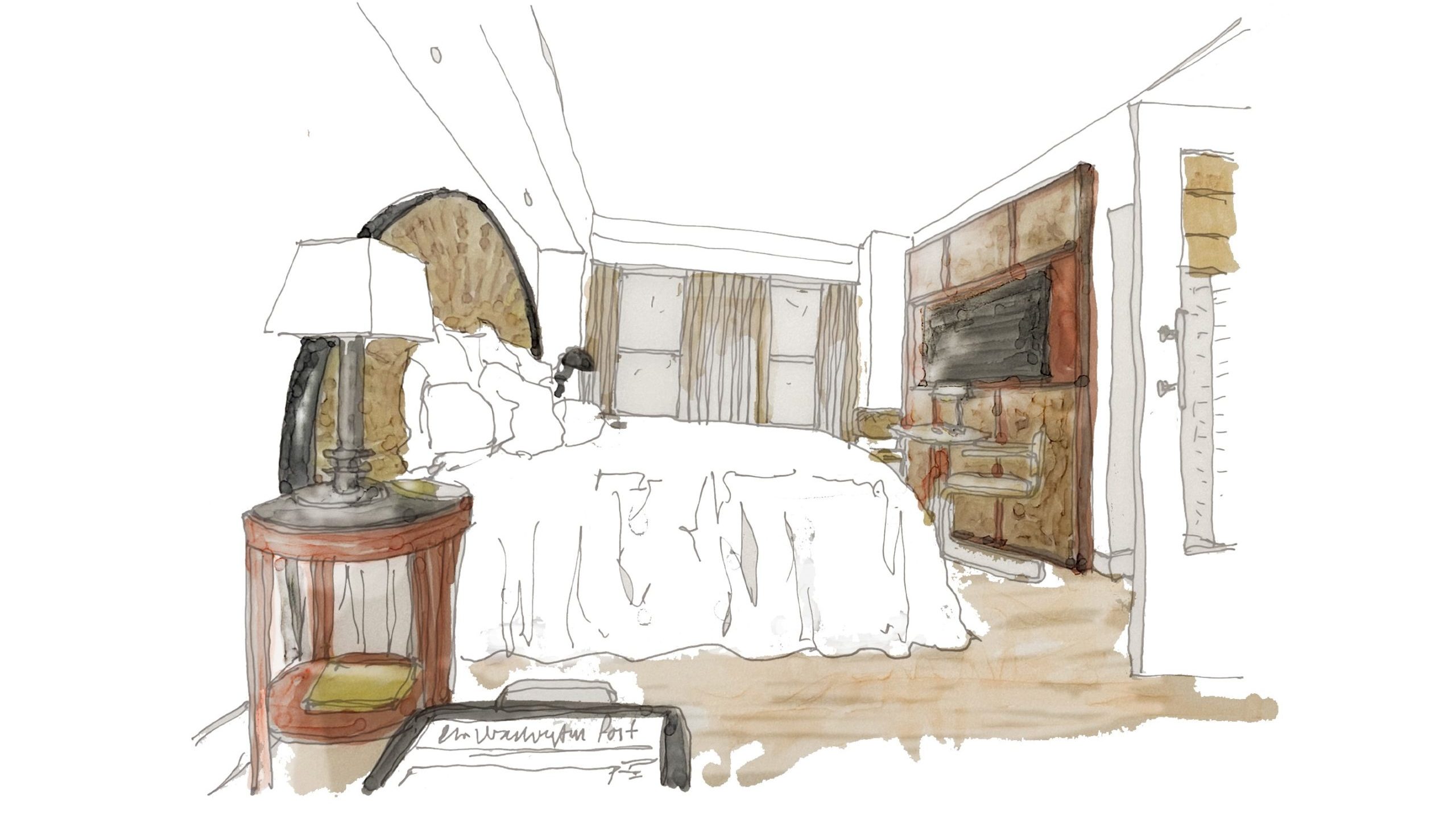
Housed in an original Art Deco building, the hotel brings 196 rooms to Dupont Circle in April. With comforting palettes and natural materials, it is designed to replicate a home away from home—like you’re staying in a friend’s beautiful apartment. Seven meeting spaces range from a private dining room (240 sq. ft.) to the Drawing Room (900 sq. ft.). For longer stays, 56 of the suites have kitchenettes. Or dine at Lyle’s, the hotel’s “neighborhood restaurant,” albeit with a chef from a Michelin-starred heritage.
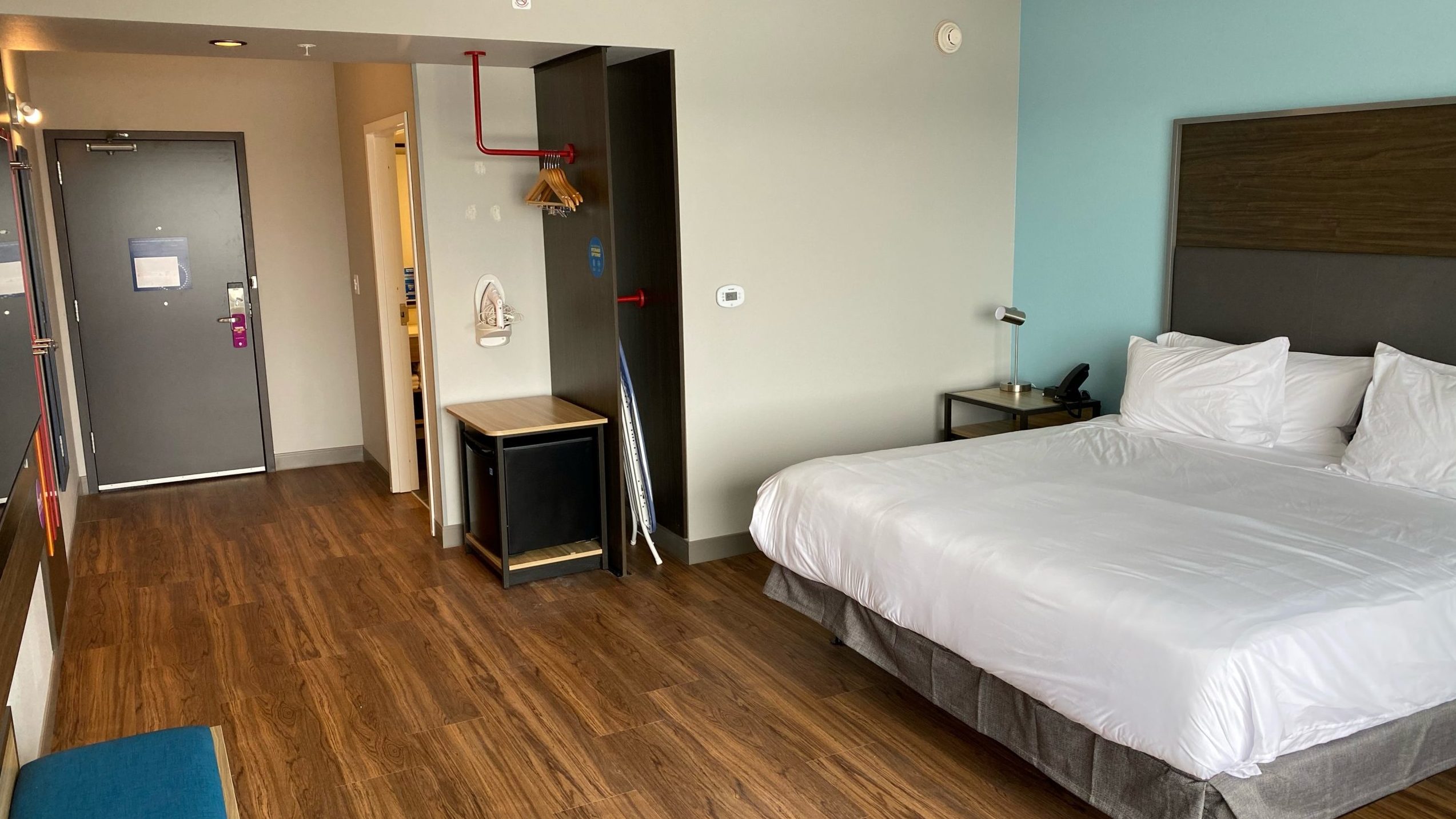
The 148-room hotel is just a 10-minute walk from Indiana Convention Center. The Hilton concept aims to bring affordable rooms with a boutique feel—highlighting the features that matter most to guests. Stay productive with flexible workspace, whether in the nearly 2,900-square-foot lobby or in its efficiently designed rooms. Guests will further enjoy premium bath amenities, a complimentary breakfast bar and a fitness center equipped for the latest trends.
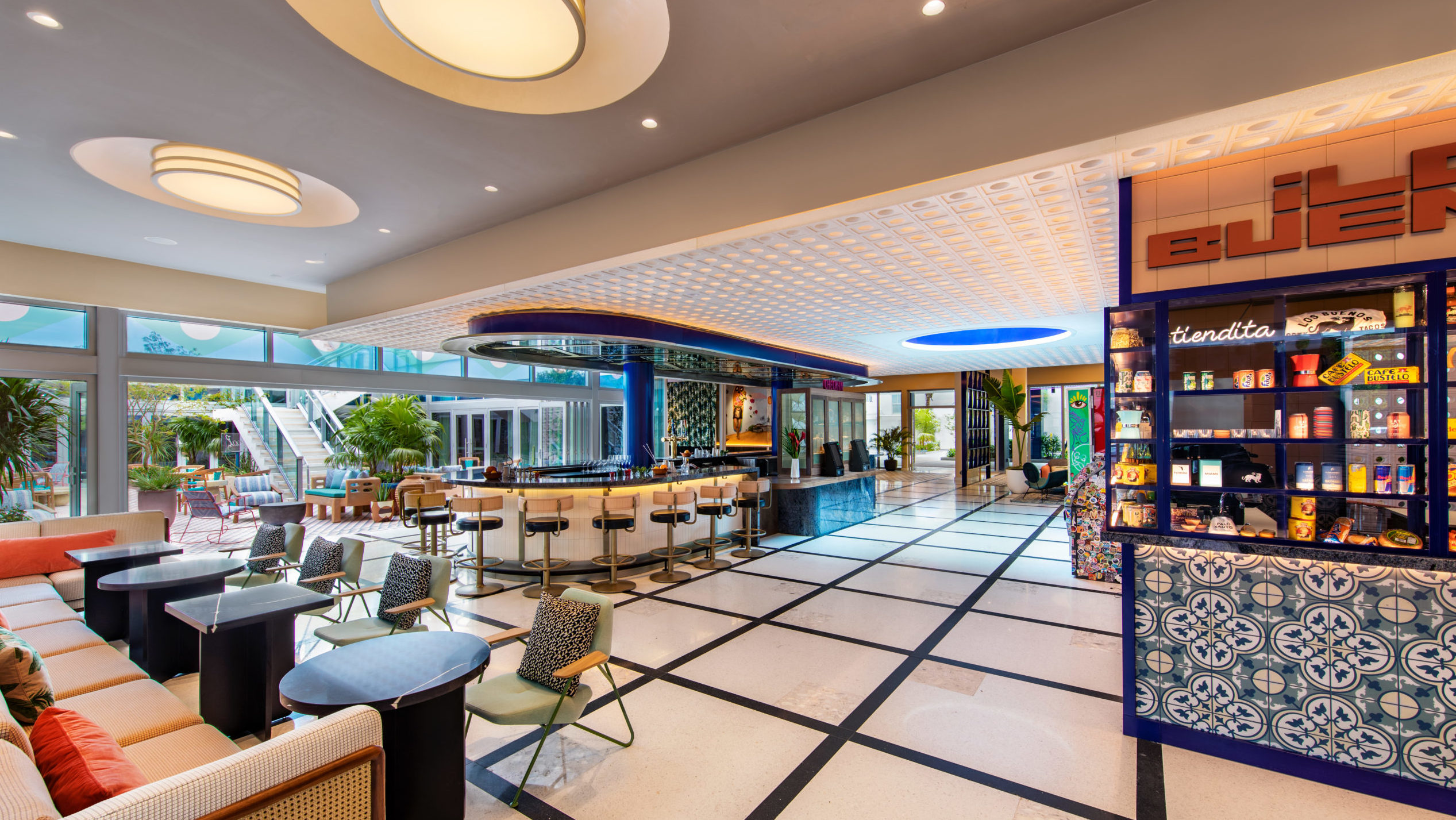
The first resort-style property under the Moxy brand, the Miami location brings 202 rooms to South Beach. For a truly guest-designed experience, travelers can be as social or socially distanced as they please. An open-air courtyard surrounds the lobby’s three meeting studios and restaurant, while an 8th-floor outdoor movie screening room makes for a fun event space. Six dining and drinking venues draw on the area’s Mexican and Caribbean cuisine. Worry not—resort or no, typical Moxy whimsy abounds, with touches like the lobby pay phone that delivers free horoscope readings from a local astrologer.
One of the top challenges event professionals face is finding time for continual learning. In a fast-moving and constantly changing industry, it’s vital to keep your knowledge current with the latest insights from publications, conferences, podcasts and event blogs. One of the best and simplest ways to stay effective is simply to ask a variety of event professionals—planners and others who’ve been deeply enmeshed in the industry—for guidance.
When seven experienced event pros, most of them members of the Women in Event Tech community, were asked, “If you could give event planners/marketers one piece of advice, what would that be?,” the answers were enlightening.
Though each answer was unique, a few interesting themes did emerge:
Look outside your industry for new ideas and inspiration.
Optimize attendee engagement and incorporate selected guests during the event planning phase. They know what appeals to them and can draw on a variety of experiences with other vendors and gatherings.
In order to create fun, have fun. While organizing an event is a lot of work, it doesn’t need to be drudgery. Making the process fun for employees will more likely lead to fun for the guests.
Your people matter more than your venue. While your choice of location and facilities is certainly important, it’s the expertise and hospitality of your team that ultimately creates positive, memorable guest experiences.
“Co-create your events, experiences and content. Don’t depend solely on your internal team to come up with everything. Bring in people who are not related to your industry, or who know your attendees, and have them help you co-create new areas, session formats and ideas for your events. You are competing with a far broader range of different experiences now, so you need to cater to your event participants differently.”
“Have more fun! From the pre-event marketing to during and after the event—think about how you can inject some fun and humor into what you do. While not everything can be light-hearted, just thinking about it can help make decisions that will have a great impact on your attendees. Creating fun experiences at your event will have attendees energized and keep their attention fresh.”
“Innovate, lead, refine, design, co-create and build based on the core dream, concept or mission of the brand or cause behind any given event. Sure, use research and metrics to help intimately understand what delights, inspires and motivates guests, but information is nothing without allowing a passionate team to artfully apply their expertise and allowing them to add the final human touches.”
“Communicate personally. You still have to talk to your clients, on the phone or face-to-face, no matter how cool all of the technology is.”
Pauline Kwasniak, Founder, Female Event Planners:
“Invest in the training of your staff and hiring the right people—the people who are in love with this business and care about the others. Love your clients and you will never go wrong. People will forget what they saw. People will forget what you told them. But they will never forget how you made them feel. Focus on making people feel good. This is how you provide a truly luxurious or first class service events service.”
Donella Muzik, Brand Manager, Concierge and Experience Designer, Muzik and Muzik:
“Look to adjacent industries for inspiration, and don’t hesitate to use emotion to engage an audience!”
“Future-focus your surveys and data. So many event planners are still following the traditional path of post-event surveys that focus on what’s been. A simple shift in focus to create three stages of surveying—registration, during event and post event—with questions that focus on the future and on gathering more relevant data on the delegate experience, will help you create a more personalized experience for attendees.”
Editor’s Note: This story originally published on May 17, 2019. Some answers have been edited for clarity and conciseness.
Meeting professionals have spent the last year learning the quirks and limitations of the now ubiquitous Zoom video streaming platform, but just like almost every other tech, just when you have memorized the short cuts and found work arounds for the most egregious irritants, they come out with automatic “fixes and enhancements.” The release rolling out March 1 focuses on what is seen in meeting and webinar views, security and recording tics.
New Meeting Features
An enhancement to the custom gallery view in meetings and webinars will allow participants who turn on their video during the meeting to be added to the right corner of the last page of the gallery view. When screen sharing is not activated, participants can choose speaker view, gallery view or floating thumbnail window. Users can also pin up to 9 participants’ videos and up to 29 thumbnails per page in the gallery view. The Feb. 1 update gave hosts the option to push specific video layouts to webinar attendees in the “View Options” button. And new “Side-by-Side: Speaker” alternative was added.
To solve the problem of accidentally sharing your inbox with the world, new clearer designation of shared content will provide clear notification of what you are sharing and when they can see it.
Also, this update should fix the problem of slides used as virtual backgrounds not recording properly.
Security Enhancements
The February and March fixes build on the major security enhancements put in place in November. That is when they added “Suspend Participant Activities” and made it easier for hosts to temporarily pause meetings and remove Zoom bombers—unauthorized attendees who disrupted sessions with inappropriate content. Hosts and participants were also empowered with the ability to report a user with a screenshot.
An “At-Risk Notifier” scans public social media posts and web sites for publicly shared Zoom meeting links to further reduce the threat of unwanted guests.
The platform had already added a “Waiting Room” feature so hosts could control who joins and/or require a password. This was on top of the introduction of two-factor authentication support and enhanced encryption.
The platform, which counted 10 million daily meeting participants in December of 2019 passed 300 million by the end of 2020 and continues to develop the service to meet the growing utilization.
Joe Schwinger
While the last year has drastically shifted the way we do everything from socializing and traveling to hosting meetings and events, the meetings industry is currently experiencing another change—the shift from fully virtual to hybrid meetings and events. Still an evolving concept, MeetingPlay is focusing on the balance between hosting virtual and in-person attendees for both small and large-scale meetings and events, while ensuring that each attendee will have the same impactful experience.
Most recently, MeetingPlay teamed up with Marriott to roll out their Connect with Confidence hybrid meeting program. Marriott’s most recent event showcased how the experience for virtual and in-person attendees differ, and the tactics that can be employed to deliver strong levels of engagement, connection and interaction for all guests. Here are some of the top lessons learned.
1. Choose the Right Technology
A critical decision when planning a hybrid meeting or event is selecting your hybrid event technology. Choosing the right platform and partner is just as important as the selection of the venue itself. Your partner’s virtual platform should enable your attendees to actively participate in your meeting by creating personalized agendas, engaging with content, asking questions, meeting and networking with like-minded attendees, and interacting with sponsors.
Conversely, your hybrid event partner’s mobile app should empower your in-person attendees to do the same, while enabling an interactive, but safe experience. Lastly, your technology should act as a bridge between your virtual and in-person audience. Be sure to ask your technology partner how much their hybrid event platform has been used and for what kind of meeting/event, and what level of support you’ll receive in order to be successful.
2. Delivery is Key
Your event goals should drive what content you offer your guests, how and when it’s delivered, and what will be most engaging to your in-person and virtual audiences. Keynotes and breakouts can be livestreamed, while other content can be pre-recorded.
Whether you live stream general sessions or present pre-recorded content, a great benefit of hybrid event technology is the ability to store content so all attendees can watch on-demand, either during the event or after.
3. Have a Strong Engagement Platform for Virtual Attendees
An evolutionary step above webinars, a strong engagement platform will provide virtual attendees with experiences that they would encounter at an in-person event. From networking and content discovery to making connections with sponsors and brands to find solutions for pain points, virtual attendees should be able to have the same interactive experience as in-person attendees.
4. Think About Engagement Tactics
Creativity is what keeps audiences engaged. Using communication channels such as chats and emoticons will give attendees the opportunity to chat both publicly and privately with fellow attendees. The use of interactive emoticons helps attendees express their feelings and also give you, the planner, insights into what wowed them during the presentation.
5. Avoid Having Virtual Attendees Feel Like 2nd Class Citizens
Experiences such as meals and cocktail hours should be available to all attendees, so planning these out for virtual guests is important. One program showed hotel staff in a pre-recorded segment explaining all of the food and beverage items in-person guests were about to have and the safety protocols involved in the service. The same program sent virtual attendees Uber Eats gift certificates to use at home while in-person attendees were at lunch.
6. Gamification Keeps Things Fun
In addition to helping planners create successful events, gamification creates a fun environment and keeps your attendees engaged from the first day to the last. While you can customize event gamification apps to fit any situation, common activities include answering questions, completing challenges, connecting with colleagues and visiting sponsors. Attendees can interact and work together on team-based activities, even during a hybrid event.
7. Exhibitors Are Still Relevant, So Incorporate Them!
People buy into experiences and most importantly, they buy from people. Identify new ways to connect virtual attendees directly with exhibitors that will help them make face-to-face connections that are missing from many virtual events. Offer live office hours, one-on-one appointments and live product training sessions.
8. Keep the Element of Surprise at the Forefront
Tease to the group that the session or event will end with something spontaneous and fun to encourage them to continuously interact throughout the event. Then, give them a surprise! Some examples are having a band where the audience can request songs and interact with the entertainers in real time. Cooking classes, “Ask Me Anything” sessions or wellness classes have been successful in breaking up more serious content and keeping attendees engaged.
9. Incorporate Live Q&A Sessions
Live Q&A sessions are a great way to connect with both in-person and virtual guests, especially since everyone can use hybrid event technology to ask questions. Live online audiences have a shorter attention span, so provide shorter content and frequent breaks for your virtual participants. If you plan to stream your live in-person sessions, you’ll need to shorten your sessions to accommodate both audiences if hosting a hybrid event. Having multiple live sessions for a breakout topic, for example, will allow for virtual attendees in multiple time zones to participate.
10. Proactively Combat Virtual Fatigue
Like it or not, virtual fatigue is real. Long presentations are exhausting for attendees and currently, there is little opportunity for virtual attendees to have a voice. To proactively combat this, planners must think about ways to incorporate short video formats into their events and create a 2-way dialogue between presenters and the audience. Connecting attendees and driving engagement through user-generated content will drive the future of events.
Events Industry Council’s (EIC) 2020 global awards are upon us. On Thursday, March 25 at 11:30 a.m. EST, EIC will honor its 2020 Hall of Leaders inductees and celebrate the winners of two new global awards, EIC Social Impact Award, and EIC Adaption and Innovation Award.
The Hall of Leaders, the industry’s “lifetime achievement award,” recognizes those who have had a hand in shaping the events industry. 2020 Hall of Leaders awards will also honor leaders who have contributed to the following areas.
Driving key support programs and adaptations, and offering transformational leadership to address the impact of the Covid-19 crisis in the global events industry.
Driving key support programs and adaptions, and offering transformational leadership to address diversity, inclusion, equity and accessibility in the global events industry.
The Hall of Leaders 2020 inductees are.
John H. Graham IV, CAE, president and CEO, ASAE (posthumously), Nominated by ASAE
Jonathan Howe, president and senior partner, Howe & Hutton, Ltd., Nominated by MPI
EIC’s Social Impact Award, given to an individual or organization, is a recognition of efforts made in diversity, inclusion, equity and accessibility in the global events industry. EIC’s Adaption and Innovation Award recognizes efforts to retain the industry’s relevance as it emerges of out the global crisis.
EIC Social Impact Award: Individual
Latoya Lewis, founder and executive director, EnventU (nominated by Andrea Liss)
EIC Social Impact Awards: Organization
The Above and Beyond Foundation (nominated by Tony Lorenz, HeadSail)
EIC Social Impact Award: Leading in Times of Crisis
Black Tourism and DMO Leaders (nominated by Mike Gamble, SearchWide Global)
Timothy Bush, CDME, TMP, chief tourism development officer, OneSpartanburg, Inc.
Julie Coker president and CEO, San Diego Tourism Authority
Gregory DeShields, CHE, CDE, executive director, PHL Diversity)
Jason Dunn, Sr., CTA, immediate past Chairman, National Coalition of Black Meeting Professionals; and group vice president, diversity, equity and inclusion, Cincinnati USA Convention & Visitors Bureau
Lorne Edwards, senior vice president of sales and services, Visit Phoenix
Elliott Ferguson, president and CEO, Destination DC
Darren Green, senior vice president sales, Los Angeles Tourism & Convention Board
Michael Gunn, CMP, CFMP, senior vice president, convention sales, Greater Birmingham Convention & Visitors Bureau
Al Hutchinson, president and CEO, Visit Baltimore
Charles Jeffers, chief operating officer, Visit Baltimore
James Jessie chief sales officer, Travel Portland
Connie Kinnard, vice president, multicultural tourism and development, Greater Miami Convention & Visitors Bureau
Robin McClain, senior vice president, marketing and communications, Destination DC
Angela Nelson, CTA, vice president, multicultural business development, Experience Grand Rapids
Marie Sueing, senior vice president, diversity and inclusion, Nashville Convention and Visitors Bureau
Melvin Tennant, CAE, president and CEO, Meet Minneapolis
Rickey Thigpen, MSL, president and CEO, Visit Jackson
Dan Williams, CTA, vice president, convention sales, Experience Columbus
Ernest Wooden, Jr., former president and CEO, Los Angeles Tourism & Convention Board
Check out who won 2019’s EIC Hall of Leaders and Pacesetter Awards, a celebration of emerging leaders in the industry, here.
Details on registration and programming will be released soon on eventscouncil.org
Ophelia Muradian
Muradian is general manager for Hidden Pond and The Tides Beach Club, both in Kennebunkport, Maine. Muradian recently worked as director of guest experiences for The Newbury Boston. Before this, she was director of front office and operations at The Godfrey Hotel Boston. She’s also worked in directorial roles with InterContinental Boston and Hotel Commonwealth in Boston.
Mark George
Island Hospitality Management promoted George to senior vice president of sales and marketing. Before this, George was vice president of sales and marketing. He first joined Island Hospitality Management in 2005 as general manager of Residence Inn Binghamton in New York. Since then, he’s held other general manager roles at Island Hospitality-managed properties, such as Sheraton Rockville Hotel in Maryland and Courtyard Fort Lauderdale by Marriott in Florida.
Robert Marusi
Marusi is chief commercial officer for Turtle Bay Resort, reopening this summer. Marusi previously served as director of sales and marketing for The Resort at Pelican Hill in Newport Beach, California. Before that, he held the same position for Hamilton Princess & Beach Club in Bermuda. He’s also held several sales leadership positions for Marriott International.
Scott Flexman
Flexman is vice president of sales and marketing for The Broadmoor in Colorado Springs, Colorado. Before joining The Broadmoor, he was complex director of sales and marketing for Caribe Royale Orlando and Buena Vista Suites. Flexman also worked as vice president of sales and marketing for Fontainebleau, Miami Beach and director of sales and marketing for Landsdowne Resort and Spa in Leesburg, Virginia.
Sunni Dupree
Hotel Effie Sandestin in Miramar Beach, Florida, named Dupree general manager. Dupree previously worked as general manager for Highgate Hotels. She’s also held roles for brands such as The Ritz-Carlton, Four Seasons Hotels and Resorts, Morgans Hotel Group, Hyatt Hotels, and Interstate Hotels and Resorts.
Clay Moon
Moon is senior sales director for national associations for Little Rock Convention & Visitors Bureau. He worked as regional manager for Drury Hotels, a 25-year relationship, where he was responsible for 10 hotels in Kansas City, Iowa and Missouri.
Ana Purritano
Purritano is sales manager for Albany Capital Center (ACC) in New York. Purritano has been with ACC since its opening in March 2017, when she was hired as event services manager. She’s also worked at Hilton Garden Inn at Albany Medical Center, where she began as sales coordinator and was promoted to sales manager within a year.
Memphis — home of the blues, soul and rock ‘n’ roll — has long been legendary among leisure travelers. But the $200M modernization of the city’s Renasant Convention Center creates a state-of-the-art facility in a boutique, affordable destination. Meeting and event planners, take note:
FLEXIBLE, ONLY-IN-MEMPHIS DESIGN
The modernization of Memphis’ Renasant Convention Center was designed to create flexible meeting space and embrace the outdoors, with glass and open-air spaces showcasing natural light and Mississippi River views. Features:
300,000 SF including a 118,000-SF, column-free exhibit hall (the region’s largest); 28,000-SF ballroom; 18,000-SF secondary hall/ballroom; 2,100-seat theater and 46 breakout rooms – all with flexible configuration options
Expanded pre-function space leading to a new public concourse on Main Street, offering direct access to Memphis’ vintage trolley line and easy entrée into the walkable downtown
Outdoor terraces overlooking the Mississippi River, providing space for breaks and receptions
RESPONSIVE TO COVID-19
When the COVID-19 pandemic coincided with the final phase of Renasant Convention Center’s modernization, the team built safety protocols into the construction process. It started with creating an internal safety committee to oversee and monitor protocols and review new systems and products. Today, Renasant Convention Center is GBAC STARTM accredited through the Global BioRisk Advisory Council. Sanitizing stations, thermal imaging, fogging machines and other critical safety equipment are in use on-site. And, the facility team is actively meeting with planners to customize responsible meeting plans.
RIVER CITY ON THE RISE
The Renasant Convention Center isn’t all that’s new in Memphis. A $17B wave of investment is currently transforming this legendary city into a destination for the future:
With 2,000 hotel rooms in development in the downtown core alone, Memphis will soon offer more hotel inventory than ever. 600 rooms are already directly connected to the Renasant Convention Center via Sheraton Memphis Downtown; an additional 500 rooms are planned for a second convention center hotel in partnership with Loews Hotels.
Phased openings for Liberty Park, a $200M sports and events center that expands public space around Memphis’ Liberty Bowl Stadium, are set to begin in 2022. When complete, more than 227,000 SF of indoor and outdoor space will accommodate sporting events.
Memphis International Airport (MEM) is nearing completing on a $245M upgrade. Wider corridors, larger boarding and lounge areas, and additional moving walkways will streamline the traveler experience.
THE MEMPHIS EXPERIENCE
While a convention center can anchor your event, delegates are excited by moments that connect them to the surrounding city. Here, groups soak in Memphis’ legendary and live music, from the bars of world-famous Beale Street to attractions such as Elvis Presley’s Graceland, Sun Studio and the Stax Museum of American Soul Music. They enjoy 60-plus attractions, including riverboat tours, award-winning Memphis Zoo and the National Civil Rights Museum. They savor more than 100 barbecue restaurants and other local favorites serving fine dining to soul food. What’s more, many Memphis landmarks and attractions double as unique offsite venues for memorable, only-in-Memphis meetings and events.
Following the untimely death of Marriott International’s president and CEO Arne Sorenson, the company has named new leaders to take the helm of the hospitality giant.
Tony Capuano
Tony Capuano, previously group president, global development, design and operations services, is the company’s CEO and has joined the company’s board of directors. Stephanie Linnartz, previously group president, consumer operations, technology and emerging businesses, is the company’s new president.
The moves solidify actions already taken by the company. When Sorenson stepped down from his full-time position to receive more treatment for pancreatic cancer, Capuano and Linnartz took over shared responsibilities of his role in short-term capacity.
Steph Linnartz
Capuano and Linnartz have each been with the company for more than two decades and have also been behind the conception of key programs, such as Marriott’s Commitment to Clean initiative and Marriott Bonvoy, respectively.
Capuano began his career with Marriott in 1995 as part of the market planning and feasibility team. He then led the company’s efforts in Canada and the Western United States. From 2005 to 2008, Capuano worked as senior vice president of full-service development for North America; he later became executive vice president and global chief development officer, in 2009. He is an active member of the Cornell Hotel Society and The Cornell School of Hotel Administration; Capuano is also a member of American Hotel and Lodging Association’s Industry Real Estate Financial Advisory Council.
“Tony has played a critical role in Marriott’s growth over the last decade,” said J.W. “Bill” Marriott Jr., executive chairman and chairman of the board, Marriott International. “He will be a terrific leader as we continue to advance our growth strategy while also navigating the market dynamics of the Covid-19 pandemic. He works thoughtfully and pragmatically with our owner and franchisee community and has been steadfast in ensuring Marriott delivers operational excellence and elevated customer experiences at our properties.”
Linnartz started her career with Marriott in 1997, working in finance and business development roles. Linnartz later worked as senior vice president, sales and marketing planning and support, from 2005 to 2008; senior vice president, global sales, from 2008 to 2009. From 2013 to 2019, she worked as global chief commercial officer. She serves on the board of directors of The Home Depot and is also a member of College of the Holy Cross’ board of trustees.
“Every member of the leadership team feels a profound sense of loss at Arne’s passing. He was not just a friend and a leader for us, he was a guidepost for the hospitality industry,” said Linnartz. “The best way we can honor Arne’s memory is to continue to move the company forward. It is my privilege to take on the role of president and to work with Tony and the rest of the executive team to ensure a seamless transition and to successfully execute our strategy.”




 “Innovate, lead, refine, design, co-create and build based on the core dream, concept or mission of the brand or cause behind any given event. Sure, use research and metrics to help intimately understand what delights, inspires and motivates guests, but information is nothing without allowing a passionate team to artfully apply their expertise and allowing them to add the final human touches.”
 “Invest in the training of your staff and hiring the right people—the people who are in love with this business and care about the others. Love your clients and you will never go wrong. People will forget what they saw. People will forget what you told them. But they will never forget how you made them feel. Focus on making people feel good. This is how you provide a truly luxurious or first class service events service.”

 Experiences such as meals and cocktail hours should be available to all attendees, so planning these out for virtual guests is important. One program showed hotel staff in a pre-recorded segment explaining all of the food and beverage items in-person guests were about to have and the safety protocols involved in the service. The same program sent virtual attendees Uber Eats gift certificates to use at home while in-person attendees were at lunch.