As part of Back Light, a series of articles sharing illuminating insider observations, we asked Melissa Mahon, executive vice president of operations with MAS and 2021 Smart Woman in Meetings Award winner, to talk about new roles that are becoming crucial in the event experience industry.  

Melissa Mahon

Recruitment in the brand experience industry just got really interesting. To appreciate the shift, I think we need to zoom out and remind ourselves that this industry is only about 12 years old. There was advertising and marketing but experience as we define it today is barely a tween. Bright and shiny but with a long way to go. In the last 15 months, our industry was forced to confront the new realities before us, much like leaving the safety of grade school to conquer high school.

Like an eighth grader used to dominating our middle school for that one precious year, we had become comfortable in our predictable roles as creative directors, producers, graphic designers and planners. But once we got to high school, virtually everything would be different…pun intended. We needed to begin again, to reimagine the landscape of brand experience, the user journey, how to build authentic connection between a brand and its audience, all while working through the growing pains of how we would adapt to our new circumstance.

Adaptability is the key word here. We would be artists in a new medium. Painters that paint with a new brush. And from that lens, Covid catapulted our work into the future.

New Job Descriptions

When looking for new hires now, the hard skills have evolved. Where we used to look for a history of event production, we now want that background alongside video production. Where we used to look for creative design rooted in storytelling and purpose, we now want that alongside killer storyboards. Where we used to look for strategic user journey, we now want to see that play out IRL, in virtual and on social. We are looking for unicorns. But guess what… they are out there!

We are entering the ‘hybrid phase’ and it couldn’t be more exciting. It’s not less. It’s more of everything! More strategy, more integration, more connection, more digital, more creative, more production.

You now need experts to guide the conversation, but you also need a workforce that is above all else adaptable. Our workforce should be willing participants on this ride through adolescence, willing to luxuriate in the unpredictability of the future and how they will define themselves within it. It’s the time when new roles are born out of necessity.

In addition to experience and an all-in attitude, you need to look for true collaborators. You find this in their soft skills. Sometimes that can be difficult to ascertain in the interview process, because everyone is on their best behavior. Try asking questions that encourage more back story, or what part of the project was their responsibility, who else was on the team, how did they feel about the team structure. If they had it to do over again, how would they manage it differently.

More6 Employee Retention Strategies for Event Management That Work

You are looking for signs of appreciation for others, acknowledgment that this is a team sport. It’s possible that an event or experience may have been one person’s brainchild but I’m certain it was executed by a village. As you add to your team in this hybrid model, remember you are building a community. Collaboration, emotional IQ and empathy are key drivers of success.

A Promising Tomorrow

The future is now. If you want your company to be ready for it, you are looking for excellence alongside a love to learn, a desire to expand and reinvent, and an appreciation for collaborators. There will be long days and long nights ahead, but let’s be inspired by the new opportunity as it presents itself.

Regardless of what you thought about high school the first time, in a few years, we’ll look back at this adventure together with pride.

Melissa Mahon is the executive vice president of operations for MAS Event + Design, was voted among the 100 most influential people in the event industry by EVENTEX and honored on the Smart Women in Meetings Award from Smart Meetings. Her masterful, big thinking approach and empathic leadership has helped grow MAS from a 14-person agency to a 60+ organization, with offices in Brooklyn, Los Angeles and San Francisco. Melissa has spearheaded award-winning events such as the Google Home Mini Donut Shop, Google Hardware, YouTube Creator Summit and YouTube Brandcast Delivered.


The past year has undoubtedly been the year of virtual events, thanks to Covid-19. But chances are, online events are likely to stay even after the pandemic because of the many benefits they provide. For example, they allow you to reach a wider audience at a much lower cost.

But how does one decipher whether their virtual event has really been a success?

Many virtual event management services use software to calculate the ROI and performance of an event to determine its success. However, these can sometimes be inaccurate. Luckily, there are other analytical tools event organizers can use to find out how well their event performed.

The Measure of Success

There are multiple ways to measure an event’s success, whether through an online event platform or an in-person event. Let’s take a closer look at each of them to gauge your event’s success.

1. Event Registration

Checking to see how many people have registered as attendees to your event is one of the easiest ways to measure event success. But it’s essential to compare the number of people who registered with how many actually showed up. If the gap between the two is too large, you might want to figure out why that is so and how to bridge it. With this information, you can also enhance your marketing strategies since you will know what day, time, content type and month led to maximum registrations and attendees.

2. Attendee Engagement

A significant factor that determines an event’s success is the level of engagement of attendees. After all, that is the reason you are organizing the event in the first place. However, when you are conducting an event through online event platforms, checking to see if your audience is engaged can be slightly challenging. Software features such as gamification can give you a measure. Or you can simply check to see how long attendees stayed online and whether they participated in discussions.

3. Attendee Retention

A vital measurement for event success is attendee retention, as it helps determine how well-liked your event was and whether or not it resonated with them. This is particularly helpful if your event is not a one-time occurrence and when there will likely be other such ones. To ensure attendee retention, make sure that your event is engaging and not too boring. For example, consider adding break-out room discussions or Q/A sessions. Lead conversion can also help measure attendee retention, and in turn, the event’s success and ROI. Many event agencies use software to help with that.

4. Online Visits

A key performance indicator (KPI) that can help analyze event success is the number of visits you have on your website after the event. Doing so will help identify whether the event left an impression on your attendees and that they are searching your website for more information. Again, several agencies can help you identify the number of website visits if you have created a specific event website. However, if it is your own website, you can check to see the traffic with the help of Google Analytics. It can help tell you how many clicks a specific landing page has had.

5. App Visits

Similarly, you can measure event performance through your app downloads and visits. Many virtual event management services create apps for specific events, which are gaining traction. This helps in tracking annual events, employee engagement and streamlines the entire planning process of events. Now, when things have become even more digital, checking the number of downloads of your apps can be a helpful KPI.

6. Feedback Forms and Surveys

An excellent and extremely helpful way to communicate with your attendees and ask them for their opinion on your event is through feedback forms and surveys. Your post-event feedback measure does not have to be too complex and lengthy; it should just include the necessary questions that can help gauge event success. For example, you can ask the following questions:

  • How likely are you to recommend this event to your friend, family member, or colleague?
  • How likely would you attend another event by the same event agency?
  • Are there any improvements you want to suggest?

7. Social Media Metrics

When it comes to measuring the success of virtual events, social media metrics can be particularly helpful. You are likely already posting about your event on all social media platforms, and so analytics can be easily monitored. This can be done by:

  • Checking to see if your followers have increased
  • If people are using your event’s hashtag
  • If people like your posts
  • If people are reposting you, tagging you, or mentioning your event or page in their stories

8. Revenue Generated

The most significant way to measure virtual event performance and your ROI is by directly checking the revenue generated. Besides engagement, a key reason why virtual events take place is to generate sales and profits. Some of the ways to assess the generated income are the number of tickets sold, sponsorships, and funds collected. Many virtual event management services help calculate and analyze revenue and provide ways to increase your generated revenue at your next virtual event.

The Bottom Line

The success of a virtual event can be measured in a number of different ways depending on the purpose and nature of the event. However, the important thing is to use measurement tools that give you an insight into how you can do even better.

Sarah Hill is a content writer at Seven Events Ltd, a leading event planning company offering event management and venue finding services in the UK. She started her career in the events industry almost a decade ago as time progressed she became an avid event blogger sharing her insight on corporate event planning.

Visit Anaheim has partnered with local nonprofit health-care network Hoag to provide clinical solutions for meeting professionals to minimize Covid-19 risks. Hoag’s clinical solutions will include on-site screening solutions, live event medical directorship, clinical event planning services and Covid-19 technology solutions.

As conducted by Hoag, Visit Anaheim will give a preliminary review of clients’ safety and health plans for incoming events. Clients with a scheduled event are eligible for a complimentary review of their safety plans if submitted at least three months in advance, with comments and suggestions provided by Hoag within one week. If state and local guidelines happen to change before the events, planners can resubmit their plan for another review.

“As we begin to welcome back meetings, events and conventions to Anaheim, the work to safely and responsibly reopen continues and remains the highest priority for Visit Anaheim,” says Jay Burress, president and CEO of Visit Anaheim. “We have taken extensive steps to prepare for our clients’ return, and now that we have a well-respected leader in the health-care space on board as a partner, we know our clients and their attendees will have an added layer of confidence about their safety while in Anaheim.”

The health-care network provides these solutions to many Orange County employers, as well, including Disneyland Resort and John Wayne Airport (SNA).

This is just another step in the right direction for the city. In late April, Anaheim hosted its first event since February 2020, as part of dance competition organization Starpower Talent’s 2021 Regional Tour, which drew around 500 attendees to Anaheim Convention Center. Orange County Sports Commission has booked low-contact youth sporting events through July, including Fortune Fencing Cadets and South California Volleyball Association.

Editor’s Note: As part of Back Light, a series of articles sharing illuminating insider observations, we asked Anh Nguyen, head of community engagement at twine, to start a conversation about how meeting professionals are managing the question of requiring vaccinations at events.

#Eventprofs Rejoice! A time that seemed like a far-off dream—a fantasy almost—is now upon us. With governments and countries all over the world starting to lift restrictions on gatherings, the light at the end of the Covid-19 tunnel is becoming visible as we emerge from the darkness.

Event planners can now start to think about what life looks like on the other side. The distribution of vaccines has ushered in hope and excitement for the industry, but with it comes a host of complex questions, and the role an #EventProf plays in all of this is not a simple one.

Duty of Care

Anh Nguyen

As event planners, we’ve always taken responsibility for the safety and security of our attendees while they were in our care. Traditionally, this included clear emergency and evacuation procedures, what to do if the building was on fire, or making sure that special needs and requirements were looked after. It is universally accepted that if the building is on fire, everyone wants to get out, and it was our job as event professionals to have a plan in place for that. But what happens if not everyone wants out of the fire? Or if the understanding of the fire isn’t a universal one?

The polarization surrounding every aspect of the Covid-19 pandemic has been palpable. Close or open borders? Masks or no masks? Lockdown or herd immunity? It seems that you can’t talk about how to manage the pandemic without hearing drastically opposite perspectives from both sides of the spectrum, and the “cure” for the pandemic is no different.

With the rollout of vaccines, paired with the return to live events, planners are now faced with one of the toughest questions we’ve been faced with since our industry was shut down 12 months ago: “How do we create safe, healthy environments for our attendees while still ensuring our events are inclusive and accessible for all attendees?”

The Vaccine Passport Dilemma

Many events that have begun their relaunch are insisting attendees have a vaccine passport before admitting entry. We’ve seen technology providers start to offer vaccine passports and tracking. We also heard from the CDC that fully vaccinated individuals do not have to wear masks indoors anymore. On the surface, this looks like an easy, no-brainer solution. Get vaccinated, we know you’re safe, things can go back to normal, and you can come to the event.

In a recent discussion on this topic, I was reminded of the film GATTACA, a 1997 dystopian science fiction film where two classes of humans co-habit earth—one group conceived through careful genetic selection (making them superior from a genetic perspective) and one group conceived naturally—also known as invalids. The film centers on Vincent Freeman, the protagonist who was conceived outside the eugenics program and struggles to overcome genetic discrimination to realize his dream of going into space.

Although this might be a bit of an extreme analogy, the idea that as event planners, we can control who has access to certain events, education, networking opportunities, arts, culture and content based on their vaccination status, has eerily similar connotations. If we believe that events are designed to connect audiences, spark collaboration, share best practices and create community, the idea that we may be intentionally leaving out a segment of the population seems to create a disconnect we have to manage.

Vital Questions

What are the long-term effects if certain cultural, religious, racial or marginalized groups who are not able to or choose not to get the vaccine are not able to access live event experiences? How does this impact long-term innovation and knowledge transfer?

How does our event vaccine policy navigate privacy and freedom of choice while ensuring attendee safety? Do we put our attendees at risk if we choose not to implement a vaccination policy for our events? Are we even legally allowed to discriminate on vaccination status?

On the flip side, without the assurance of a safe and healthy environment, how do we regain consumer, sponsor and stakeholder confidence in face-to-face events to start the rebuilding of our industry? Many attendees will not feel comfortable returning to large crowds and gatherings unless event owners and planners can promise a fully vaccinated attendee base.

As #eventprofs, what is our duty of care? Do we become the judge and jury when it comes to deciding who’s in and who’s out? This is one of those complex topics that does not have a clear right or wrong answer. There are ethical, health and legal implications that we need to be talking about as an industry.

The Event Vax Debate

If this is a conversation that you think #eventprofs need to talk about, register here to join us for a #twineTalks session on this topic on Thursday, May 27 at 9 a.m. PDT, 10 a.m. MDT, 12 p.m. EDT, where #eventprofs can consult with each other about this hot topic. We will follow with a Twitter Chat on Tuesday, June 1 at 11 a.m. PDT, 12 p.m. MDT and 2 p.m. EDT using the hashtag #TheEventVaxDebate. We want to hear what is working for you and your groups.

Anh Nguyen is the Head of Community Engagement at twine. She supports #eventprofs around the world in creating forums for engagement, networking and connection during their events. She whole-heartedly believes that having conversations with each other is how #eventprofs uncover solutions to our most complex, complicated issues as an industry.

Who am I excluding? DEI

Jess Pettitt

After almost 20 years of Diversity, Equity and Inclusion (DEI) education and consulting work, I have gotten plenty wrong. I worked in this space for years without examining my own privileges or how I even show up in a space to others. Not taking responsibility for my own actions and collecting vocabulary words negatively impacted my ability to create equitable opportunities that included diverse perspectives and experiences. I have learned over the past 5 or so years how to correct these errors and also expect more.

To be fallible and prepared means that I don’t have to react defensively and can respond in the present moment from a place of connection and responsibility (at least some of the time—I still struggle with this, of course). It took me a while, even as a DEI practitioner, to shift my focus to my learning journey and not my collecting habit.

I mean a learning journey literally because being self-reflective and responsible for who and how I am doesn’t mean focusing on diverse experiences and a current vocabulary. Pursue education in a manner than leads to more questions, not expertise. More knowledge should lead to an acute awareness of what you don’t know, and this is the foundation of a learning journey. Often, you don’t even know what you don’t know.

Course Corrections

So, now that you are primed to ask questions instead of hoard answers, what is one thing you can do to be less wrong about DEI initiatives?

The best question I would ask any client of mine when reviewing their DEI practices is simple, but not easy to answer. Who are you leaving out? Most exclaim, “No one!” in response, but this can’t be true. You don’t have a venue, enough chairs and certainly not a big enough budget to include 100 percent of the global population.

You and I make choices both consciously and unconsciously, because of our positive and negative biases that inform our habits. Our informed habits shape our decisions about who we do and do not target, invite, include and/or engage with. We discriminate. Recognizing this catches our behaviors up with our minds. Bad diversity trainings have taught us that we aren’t allowed to discriminate (at least not according to protected classes that the law shields from prejudicial judgment). The biggest mistake we all make is not noting the difference.

Think about an event you are currently planning. I didn’t mean to make you stressed out! Let’s just pick tonight’s dinner. I am a terrible cook, but I don’t do dishes, so I have made a lot of mediocre dishes over the past year.

Sometimes, I intentionally try something new or bring out an old favorite. Sometimes, I find myself halfway through a box of Cheezits and I don’t even remember retrieving from the cabinet. In my family, I don’t cook beans and potatoes as part of the same meal, but I put multiple forms of dairy on a baked potato without thinking about it.

Certain hot sauces are not appropriate for different dishes and I don’t have these rules written down. I encourage you to think about your next meal and see what you consciously or unconsciously bring to the menu decision table as well as what you do intentionally or unintentionally. Bonus if you can also identify a positive or negative bias that is present in your choices. If you can come to terms with the fact that you make choices, then you can become more conscious of those choices.

Charting Choices

Conscious Unconscious
Intentionally + +
Unintentionally + +

When thinking about DEI initiatives, see if you can complete the same chart. I will use my current clients as an example to see if that helps you.

Membership qualifications are the easiest examples of intentional conscious choices. Someone has to pay dues, be in good standing and meet specific standards according to the association in order to become and remain a member. If these standards aren’t met, then the organization intentionally removes or suspends the person. Unintentionally, some folks may be interested in membership, but not purposefully targeted.

For example, a REALTOR Association I am working with has 5,000 members, but only 1500 are active in both the industry and association. Some 3,500 members meet the standards of membership, but only 1,500 are active in the industry, so who are the 2,000 paying members that aren’t active in the industry or the association? It turns out that a lot of people pay for access to an MLS or a credential for other reasons. Even more folks maintain membership and licensures but haven’t made a professional leap just yet. These would all be consciously targeted markets, some intentional and others unintentional. If this organization launches a membership drive, it likely won’t target all of the types of members directly and may make some unconscious choices with the language, images or marketing platforms.

MoreDEI Resources for Meeting Planners

Board Rooms are another great example that can help you fill in the chart. Often organizations strategically include DEI in their plans and statements, and yet the board tables remain pretty homogeneous in race, age, experience, class, ideology, etc.  When I work with boards, I often hear something like, “We have done all of the things, they just don’t come.” Well, they are telling you that they don’t feel invited. If you truly want to include others different than who is already at the party, you may have to invite them in a different way. Unconsciously, most boards do the same things with new information so that the same people get the new information, but new people are still left out from these communications.

Helpful Questions

So, when asked for one question to get started in the right direction, I simply ask, “Who are you leaving out?” The answer to this question will help you clarify who you are inviting, but starting with the invitations doesn’t seem to allow room for the rest of the chart.

  • Who doesn’t respond and you are glad they don’t?
  • Who does respond and you wish they didn’t?
  • Who doesn’t respond and you wish they did?
  • Who does respond as you hope they will?

Jessica Pettitt has been stirring up DEI Conversations for almost two decades with her concept of Good Enough Now—how doing the best you can with what you have some of the time is better than nothing never.

European Union officials have agreed to reopen to nonessential travel for fully vaccinated visitors.

According to the Associated Press, ambassadors of the 27-nation bloc have given a preliminary green light to letting tourists from outside the EU enter their territories. The European Commission says entry will be granted to those vaccinated with shots authorized by the European Medicines Agency, which includes those created by Pfizer, Moderna, AstraZeneca and Johnson & Johnson.

Reaction in the United States was swift and positive. “The European Union’s risk-based, science-driven plan to reopen international travel will hopefully spur the U.S. to heed the many calls for a plan and timetable to safely reopen our borders,” commented Roger Dow, president of U.S. Travel Association. “The right conditions are in place: vaccinations are increasing, infections are decreasing, all inbound visitors get tested or have to prove they’ve recovered, and it’s possible to determine vaccine status.”

Christian Wigand, EU commission spokesman, could not provide a date for the EU’s reopening, as the measure awaits full approval by countries within the bloc. The change will be nonbinding, and, according to Wigand, it includes an “emergency brake” system that is designed to stop the spread of virus variants by imposing travel limits if infection rates surge in a non-EU country.

Greece, with its heavy reliance on tourism, has already lifted restrictions for the United States, Britain, Israel and other non-EU countries. Spain announced it will open soon, and France is scheduled to open June 9.

Wigand says the agreement among EU nations must be approved and finalized by the end of the May for a system to be in place before the summertime travel surge.

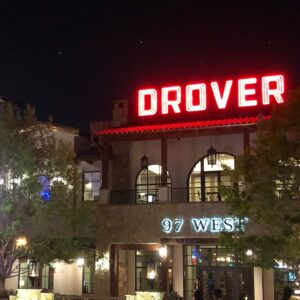
The trail back to meeting F2F has to start somewhere. And for the 75 meeting professionals who attended Smart Meetings Mid-America Experience this week, the ideal place to get back in the saddle turned out to be the brand-new Hotel Drover in Fort Worth, Texas.

Smart Meetings founder and CEO Marin Bright

The in-person event—Smart Meetings‘ second in three weeks—was filled with innovative tools (color-coded buttons to signal comfort level and sanctuary seating to make distancing not awkward) to make the return safer and more comfortable for attendees and staff. It was also chock-full of cowboy-chic touches, some of the best steak in the land and team building that turned lines into dances.

Lessons learned:

1. Focus on the positive. Everyone was already giddy about putting on real clothes and talking IRL, but an all-star cast of uplifting speakers helped set the tone for looking up. Comfort speakers included Scott Friedman, who shared secrets for turning life into a celebration (spoiler alert: they require GPS, gratitude, play and surprise); Joy Earl on finding your funny; and Debra Fine on the lost (and hopefully quickly rediscovered) art of small talk.

📍 Pro-tip: At your first in-person cocktail party start with “catch me up on what you are doing now,” rather than asking about a job situation that may have changed for the worse.

2. Work with innovative partners. By gathering top meeting professionals in one of the hottest new properties east of the Rocky Mountains (Hotel Drover), with help from a destination partner that embodies the can-do spirit of cowboy country (Visit Fort Worth), and launching a partnership with travel technology leader ITS, the heavy lifting was done before the event team’s flight touched down at DSW.
After all, if you are going to ask people to travel again, why not reward them with a sense of place? That is why one-one-one meetings were held in The Barn, a light-filled, high-ceilinged space crowned by reclaimed trusses and oversized, custom chandeliers; team building was line dancing lessons in a converted sheep barn in Stockyard Station; the VIP reception was at John Wayne: An American Experience museum; and dinner was at award-winning steakhouse Lonesome Dove Bistro.

MoreSite Inspection: Meetings and Entertainment in Irving, Texas

All of it was within walking distance along the cobblestones where longhorn bulls run daily.

3. Let people determine their comfort levels. Virtual supplier options allowed those who couldn’t travel to still participate in business meetings. And for those on site, color-coded pins offered at registration allowed attendees to signal their caution levels.

Event management businessesor even event management roles within a wider organizationare often subject to a lot of turnover.

This can be due to:

  • High-stress working environments
  • Unsociable working hours
  • Part-time, seasonal or entry-level staff
  • Difficulties coordinating with other staff or teams

So, how can you reduce these difficulties and improve employee retention in your event management business?

Many common retention practices, like continuous performance feedback, training and development, may not necessarily apply if you’re hiring temporary or seasonal staff. Plus, the pressures and requirements of events management are quite different from office-based roles.

Here are six employee retention strategies that are specifically tailored for event management businesses and roles.

1. Improve Your Recruitment Processes

If you need to recruit a large number of staff, or if you’re recruiting in a rush, then it’s easy to end up hurrying through the recruitment process.

See alsoEtiquette Tips for Job Hunting on Social Media

To improve retention, you need to start with hiring. Either spend time on interviewing candidates so you can be sure that they’ll be a good fit (and enjoy the fast-paced environment of event management) or use an agency that can provide you with candidates who they’ve already carefully vetted.

2. Pay a Higher Rate and/or Offer Benefits

If you want staff to stick around, then you need to compensate them well: better than competing companies. This ideally means paying more per hour, but you could also look at adding benefits. This can obviously include standard benefits such as health insurance, but you could also think about perks or other offerings like free fitness classes.

Of course, it goes without saying that you should always make sure you pay on-time and in-full. It’s best practice to use a payroll checklist to make sure you stay on top of everything related to payroll.

3. Ensure Volunteers and Casual Staff Are Included

One big issue with events management is that you may have a large number of volunteers or casual staff who are only needed at the most pressured times (e.g. during the live event itself).

This can create issues for these individuals, who may feel stressed and inadequately prepared, but it’s also difficult for full-time members of your team, who may feel that they can’t fully trust the more casual workers.

It’s important to make casual staff and volunteers feel included. Try to introduce them to key members of the team in advance. Make sure they know what to expect on the day, what their duties will be, and who they should go to (or who they should contact and how, e.g. by text) if they have problems.

Kathryn Dinsmore from Flock Events explained: “I started off my career in a volunteer role, and I know how tough the unpaid work can be when you don’t feel appreciated. Making volunteers feel engaged and excited to learn new skills is a fantastic way of keeping them around, and motivating them to go the extra mile for you.”

4. Brief Your Team Fully before the Event

If staff feel unprepared, they’re likely to feel stressed. You might think that there’s no problem, so long as everything goes smoothly during the event, but staff members may think differently! High stress levels can be a huge cause of turnover, so make sure you do what you can to help staff feel confident about the event.

Before the day of the event, have a conference call with everyone or send out a document to give details of everything they need to know. As Becki Cross, managing director of the UK company Events Northern Ltd, explains: “This will include practical and logistical information such as what to wear, directions and public transport information, who to ring in case of problems, which entrance to use and who to report to. We also outline their anticipated tasks with a chronological timeline of the day and their responsibilities. Finally, I include a paragraph about our company ethos and brand and what we expect from our staff

5. Seek and Respond to Staff Feedback

You almost certainly ask your attendees for their feedback, but do you ask your events management staff how they thought things went? It’s easy to assume that if people have suggestions or even complaints, they’ll come to you, but some staff won’t speak up without being invited to do so.

Be proactive about seeking feedback. You might want to ask direct questions, like “Is there anything we could do to make things easier for you?” or “What do you like most and what do you like least about your job?”

This feedback may well surprise you. Perhaps you think that staff members don’t like the long hours during live events, but actually they don’t mind at all. Instead, maybe they dislike sudden changes to plans or not having a chance to get to know their colleagues.

6. Give Staff Plenty of Recognition and Praise

We all like to be thanked for a job well done and your staff are definitely no exception. If they feel taken for granted, that may cause them to leave for a new position elsewhere. (If they feel that they only get criticism about things that go wrong, instead of praise about things that go well, then they’re very likely to leave.)

Make sure you recognize the efforts your staff go to, before, during and after events. As well as a verbal “thanks.” Small gestures like a handwritten card or a box of chocolates can make a big difference.

These retention strategies should make it easier to keep great staff members. By making sure they’re happy and by treating them well, you’ll have a fantastic team that stays around for many events to come.

Rupert Jones is a financial independence geek who strongly believes in the power of networking. He spends his time helping people leverage secrets of financial wealth and process to achieve financial freedom.

Kimpton Alton, San Francisco

The newest Kimpton property just opened in the brand’s hometown. The waterfront hotel brings 248 guest rooms to the iconic Fisherman’s Wharf. A rock-and-roll aesthetic pays homage to the original 1970s building, shown off in the lobby with blond wood, vintage rugs and earthy colors. Music is a focal point, with each guest room housing a classic Victrola record player while a curated vinyl soundtrack infuses common spaces with an eclectic mix of modern sounds. Evoking further harmony is the brand’s green commitment, from recycling Nespresso pods and unused soap to using sustainably harvested wood products.

Hyatt Place NY Chelsea

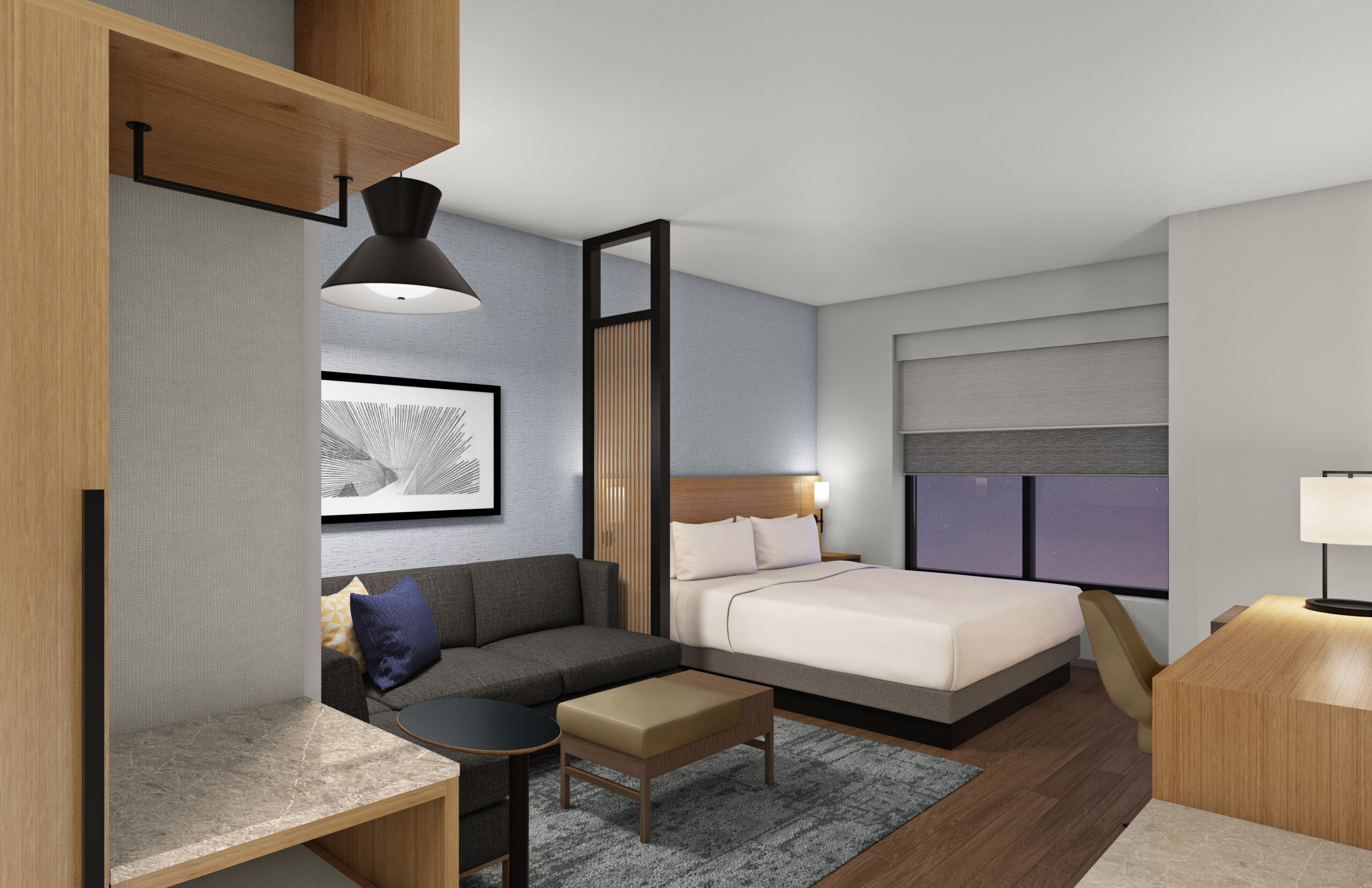
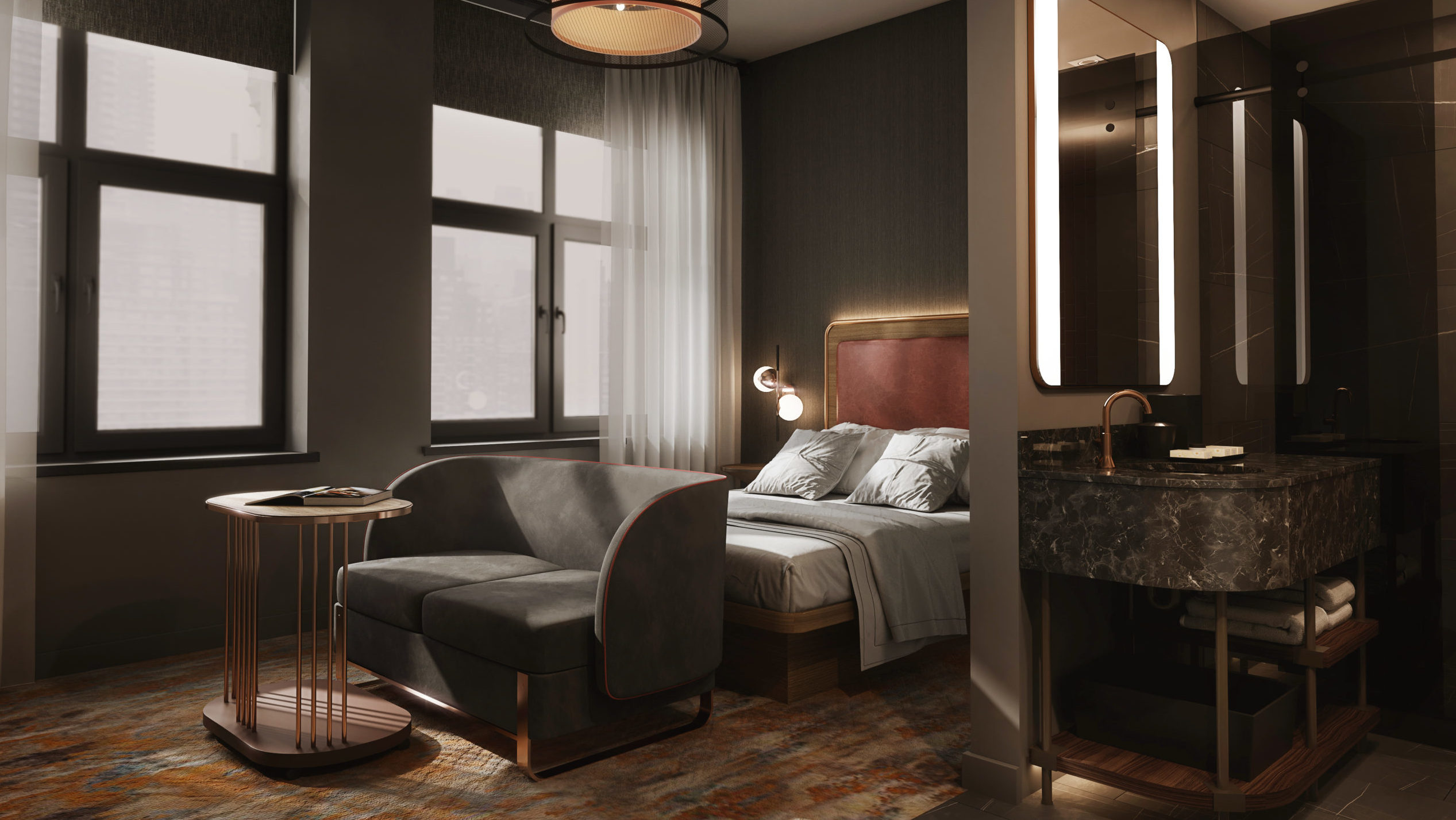
Set to open this August, the 45-story, 510-room hotel is within walking distance of neighborhood favorites such as Chelsea Market and The Highline. Private events for up to 100 reception-style can be held on The Terrace, accessible year-round thanks to its retractable roof. Equally expansive views will abound in skyline and city-view guest rooms from the 20th floor up. Amenities include a cozy sofa-sleeper in every guest room, a 24-hour gym, 24-hour market, free Wi-Fi and a breakfast bar.

Casa Cody, Palm Springs, California

Casa Cody – Palm Springs, CA

Palm Spring’s oldest operating hotel just reopened after a restoration, marrying its classic adobe hacienda style with fresh modern elements, such as glossy gem-hued tiles and bright peach velvet sofas. Set at the base of the San Jacinto Mountains, the 1.5-acre property has 30 accommodations, including four freestanding homes, many with kitchens, private patios and fireplaces. The onsite Market will serve a light Mediterranean menu, house-baked cookies and bottled beverages. The original 1920s property is walking distance from downtown Palm Springs and has event capacity for up to 200.

Hampton Inn and Homewood Suites Boston Seaport, Massachusetts

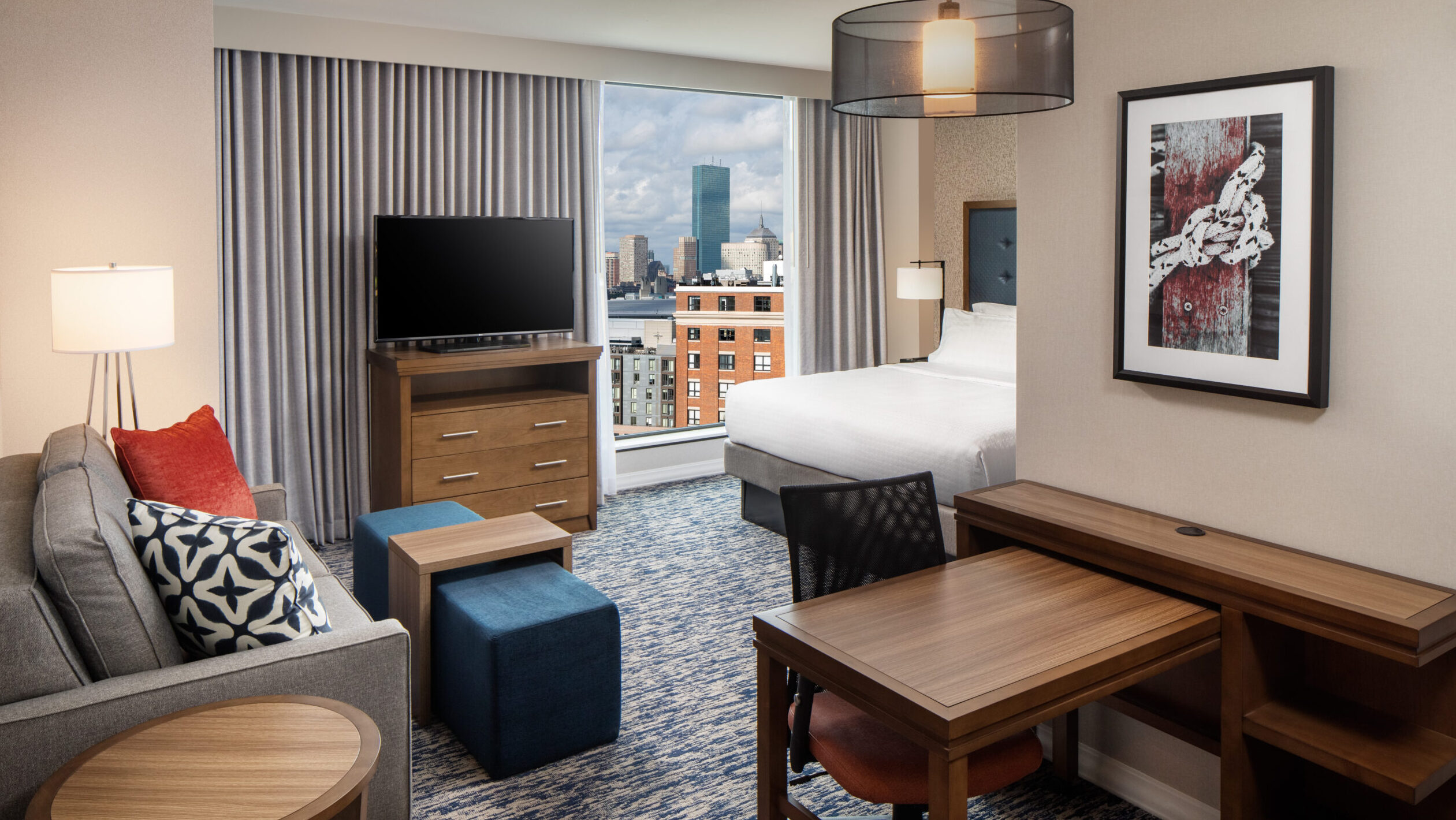
The waterfront hotel opened in April with 416 rooms and 6,000 sq. ft. of event space. Stylish, modern decor hearkens to its port location with blues, golds and whites set against warm woods and water-like patterns. Guests will enjoy atypical amenities for such a boutique feel, such as a complimentary hot breakfast and a 24-hour fitness center. Its prime location is less than three blocks away from Boston Convention and Exhibition Center and a short drive from Boston Logan International Airport (BOS).

New and renovated properties in Illinois, Pennsylvania, Arizona and California.

The Forester Hotel, Lake Forest, Illinois

Debuting this April, the hotel will be the first to open in Lake Forest since 1929. Its design is imbued by the city’s Latin motto, which translates to “love of science and nature.” From the front desk, made of a single white oak tree trunk, to artwork inspired by the microscopic elements of nature, the property will highlight the marriage of modern comforts to the beauty of the wild. The hotel will feature 156 guest rooms, including 10 suites, with 4,500 sq. ft. of flexible event space.

The Industrialist Hotel, Pittsburgh

The Industrialist

An Autograph Collection hotel opening this spring, the 124-room property is housed in the historic 18-story Arrott building in the city’s Golden Triangle District—once a home to Pittsburgh’s “Bathtub King,” who commissioned the building in 1902. With 1,200 sq. ft. of meeting space, the hotel provides for small gatherings amid the preserved Venetian-style architecture. The second floor lobby and lounge will be a vibrant hub suitable for working or socializing, imbued with the energetic grit of the industrial city—and a killer cocktail program.

Embassy Suites South SF, San Francisco

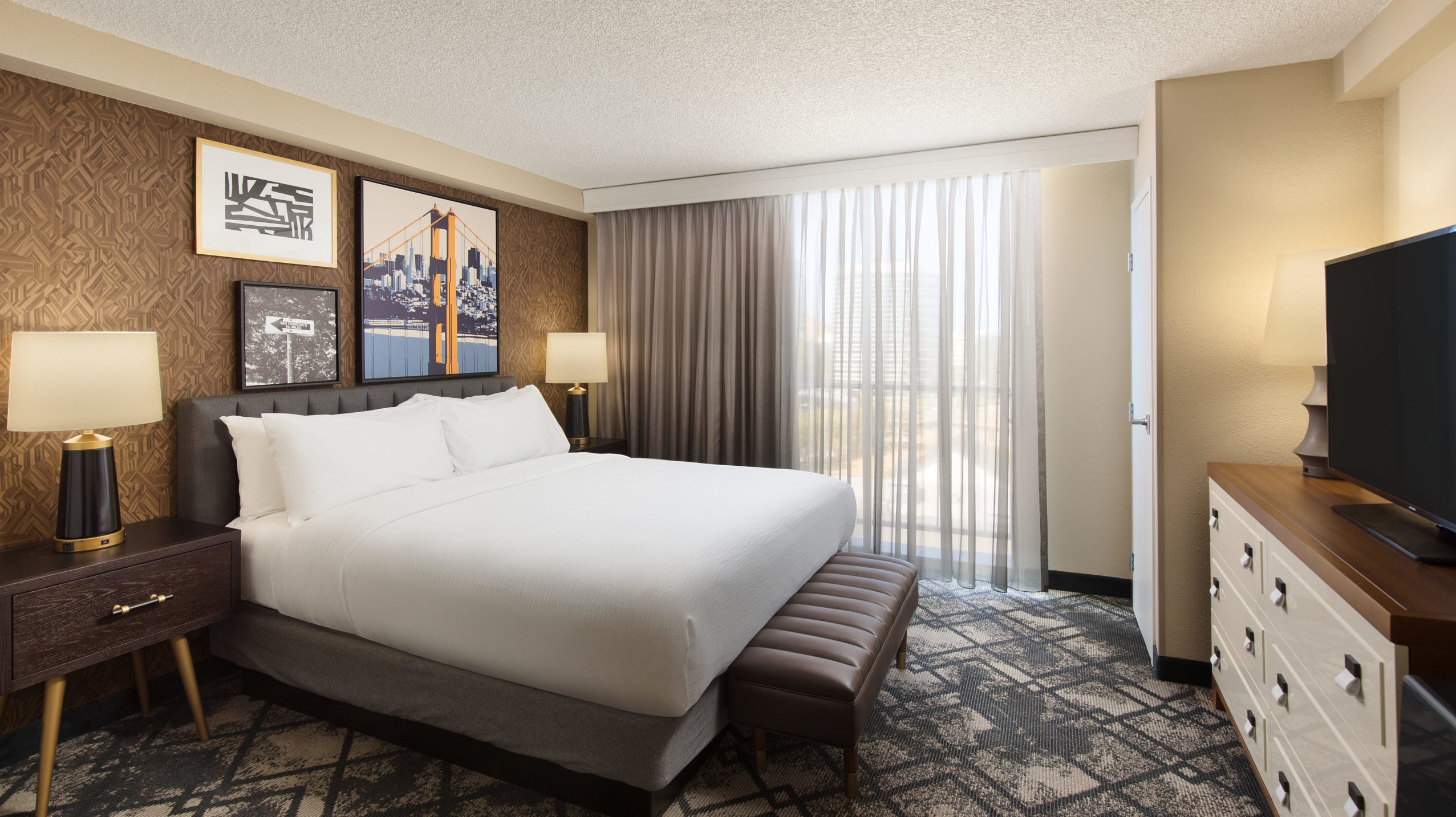
This Hilton property just reopened after a multimillion-dollar renovation, transforming the hotel’s public space, Taste restaurant and all 316 of its two-room guest suites. You’ll feel the refreshment as you enter the 7,000-square-foot open-spaced atrium, ideal for working with plenty of socially distant, hunker-down seating options. The property has 20,000 sq. ft. of meeting space and is just a free 10-minute shuttle from San Francisco International Airport (SFO).

Arizona Biltmore, Phoenix

Arizona Biltmore

This historic property has housed many a dignitary and celebrity since opening in 1929. This spring, it will stage another debut after undergoing drastic renovations, elevating its ambience to the modern era. Among the changes are a brand-new spa and fitness building, a reimaged event lawn and bar with mountain views for outdoor affairs, refreshed cottages with outdoor decks and a shiny new lobby in the Wright Bar. The Waldorf Astoria Resort boasts 250,000 sq. ft. of indoor and outdoor meeting space.