As destination and corporate conferences and meetings are making a comeback, I have noticed that the trend of incorporating wellness into events is proving to be more popular than ever.
During the Covid-19 pandemic, many companies and organizations enhanced their focus on overall wellbeing, from physical wellness and safety to mental health and self-care, all of which has become crucial in maintaining a caring workplace and employee morale.
Not only can incorporating wellness activities into a meeting encourage relaxation and focus, it can help attendees try something new and out of the box. These experiences do not need to be extravagant or outlandish, and simple practices can make a big impact. I’m sharing my top tips for easily and successfully incorporating wellness to into your next meeting or event.
Keep it Short and Sweet to Encourage Participation
Timing matters and knowing the habits of participants can help planners schedule the right kinds of activities based on attendee preferences. For example, as many attendees are often up late with receptions and networking events, an hour-long, 6 a.m. yoga session might be a big ask for participation.
I recommend incorporating wellness experiences as part of the actual program as well as something guests can opt into during a break. Many attendees have busy schedules and want to maximize any free time to check emails and catch up on other priorities, so having a quick guided meditation or stretch session at the beginning of the day’s program or a pop-up massage station that participants can enjoy during the event ensures that everyone has the opportunity to participate in an activity.
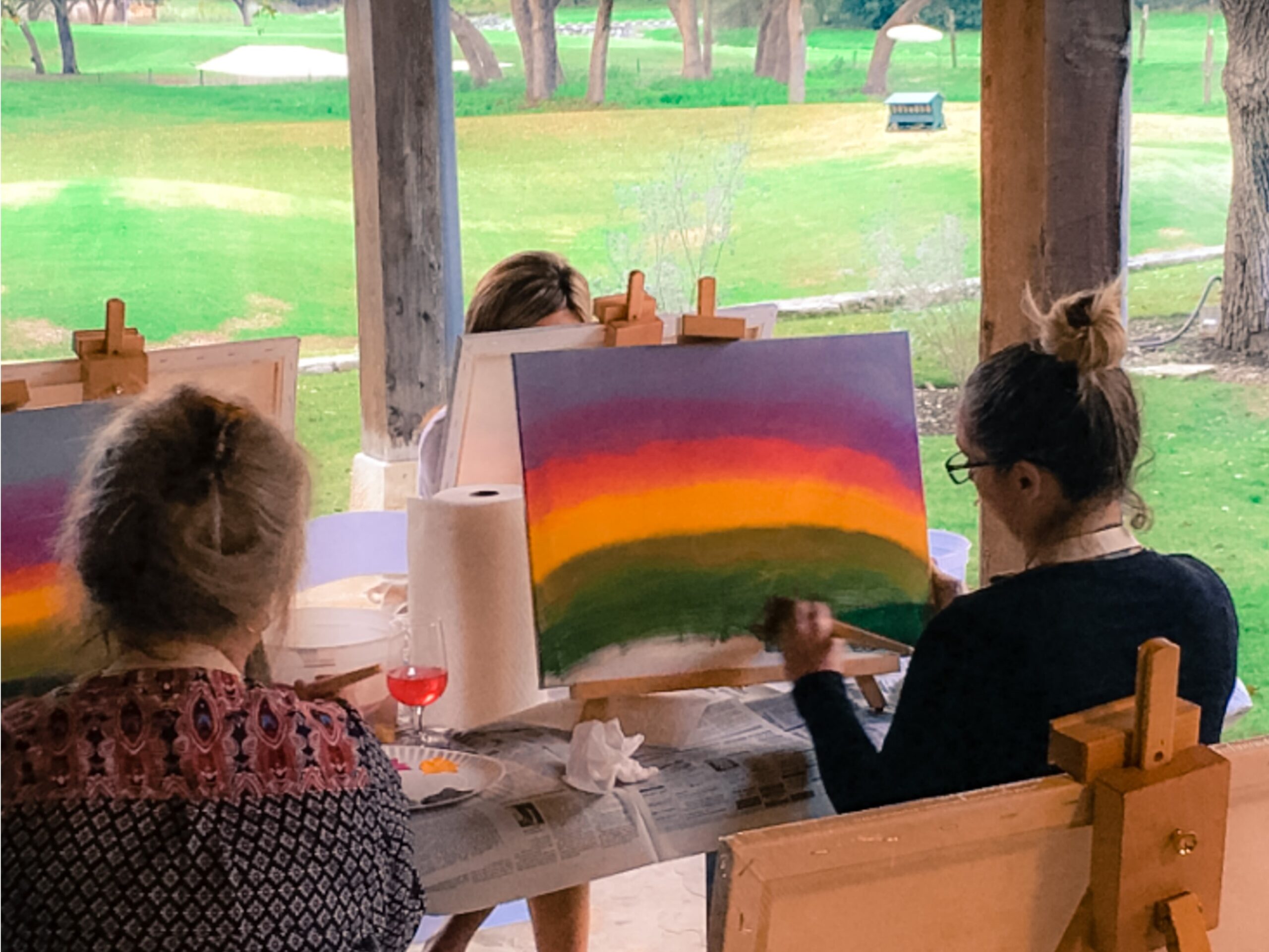
Canvas, Corks, and Country Sides, Credit: Hyatt Regency Hill Country
Yoga, stretching and mindfulness are definitely the most popular wellness activities—the mind-body connection is real and vital to overall well-being. The activities are also appropriate for all ages and abilities, and many people are already familiar with the practice.
Personally, my favorite experience is guided meditation. While it seems very simple, it can have a pretty profound impact on attendees. I’ve seen several “a-ha” moments where the meditation clicks for participants, and helps them use the practice not only at the meeting but moving forward in every day life.
Get the Blood Flowing with Creative Activities
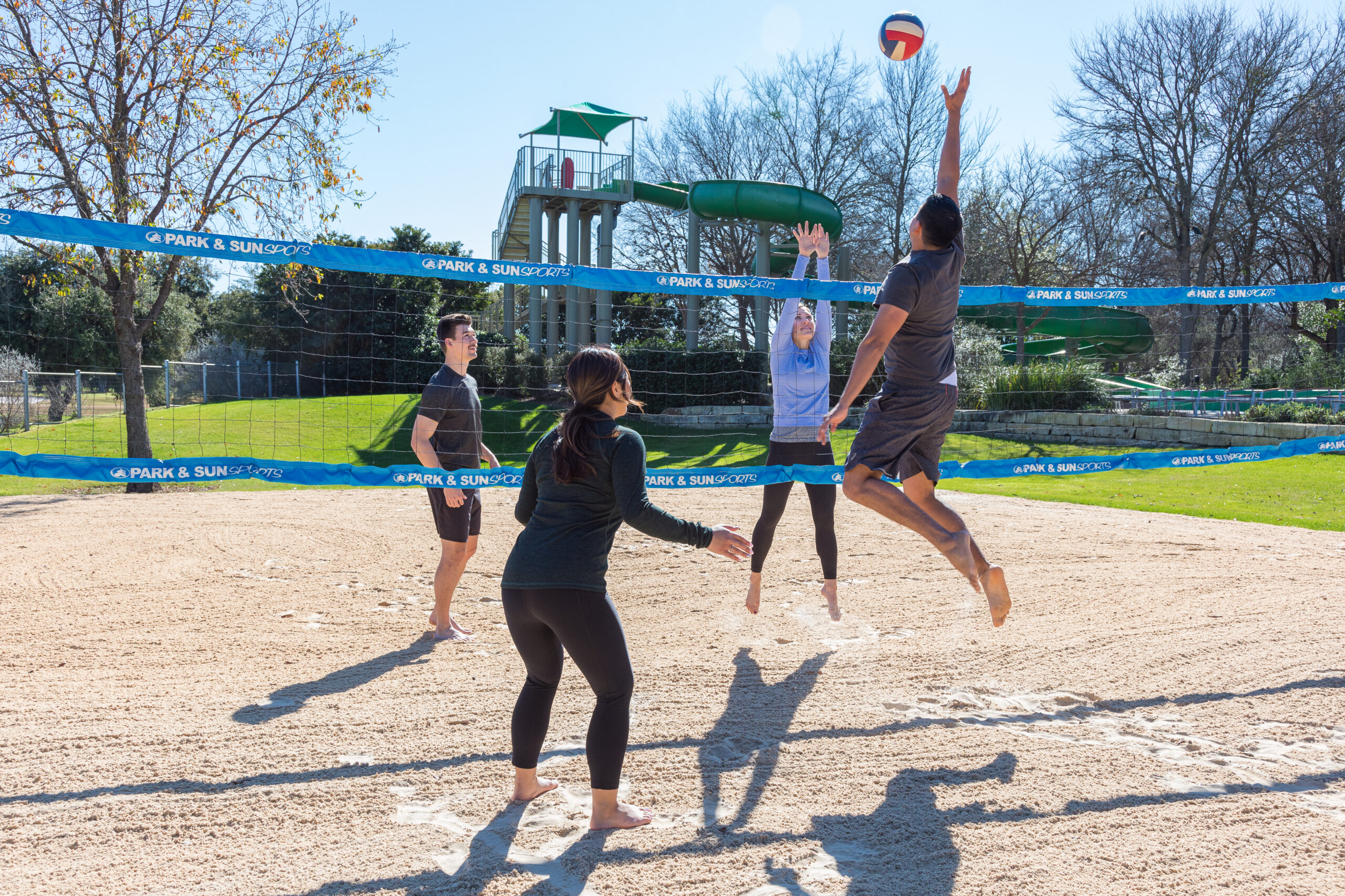
Sand Volleyball, Credit: Pierce Ingram
Physical activity always gets participants’ blood flowing and builds a positive atmosphere with wellbeing in mind. If timing permits, I always recommend thinking outside of the box for fun and unique experiences. For example, groups can get active with team volleyball tournaments, golf lessons, a fitness or Zumba class, or even a 5K walk or relay race around the meeting location.
For example, at Hyatt Regency Hill Country Resort and Spa, we offer several unique activities that help groups get outside and stay active. One of my favorites is the “Hang Ten” tournament at our FlowRider wave simulation machine. Attendees work with “Flow Pros” who teach them how to master the skill of body boarding or stand up surfing. A little healthy—and health promoting—competition definitely appeals to the go-go types at any meeting.
Joe Herman is Director of Spa and Recreation at Hyatt Regency Hill Country Resort and Spa in San Antonio, Texas. With more than 30 years in the hospitality industry, Herman has helped to provide unforgettable wellness experiences at hotels throughout the country from Kauai to the Florida Keys.
The Golden State’s Multifaceted Appeal Draws Attendees
The state of California offers a rainbow of the world’s variations in one sunny, convenient place. A long history of welcoming all comers has built a solid hospitality foundation for this gem of a destination. Pioneers drawn by a robust mix of economic activity and open spaces have inspired a rich layering of options for meeting professionals looking to check all the boxes on their RFPs.
From urban convention centers, world-class sporting arenas and wine country retreats to coastal beach and mountain resorts, the spirit of inspiration and acceptance that resulted in what is today the world’s fifth-largest economy infuses gatherings with possibility and purpose.
Where else can you surf epic waves in the morning, snowboard in the afternoon at historic Snow Valley and be back in La La Land for a nightcap before the bars close on Wilshire Boulevard? Only in California can you grab a coffee with venture capitalists at the exclusive retreat, Rosewood Sand Hill, then cruise up to San Francisco for a sourdough bowl of clam chowder at the Ferry Building with clients before toasting a successful event with a 96-rated Caymus Cab at luxurious Meadowood Napa Valley in St. Helena.
With more than 163,000 square miles and 40 million residents, the sheer size of the state (larger than Japan) and diversity of terrain (mountains, deserts, 840 miles of coastline), means annual events can site a completely different type of program each year and never cross state lines.
What does that built-in economic, geographic and cultural diversity mean for planning your next event? We talked to leaders in the state to learn more about the roots of the many branches of the hospitality tree and how the abundance of intellectual and creative capital is being harvested by meeting professionals siting events from San Francisco to San Diego.
Many Shades of Understanding
The addition of California as a state in 1850 was the realization of a nation’s dream intent on living out its Manifest Destiny. Explorers looking for a fresh start, drawn by the fertile land of the Central Valley and the promise of riches in gold fields, growing urban cities of San Francisco and booming movie studios in Southern California, brought their energy and ideas to contribute to the future of the new state.
That mix of backgrounds resulted in a population kaleidoscope that still inspires an attitude of acceptance and inclusion. In fact, eight of the top 20 most diverse cities in the country as listed by the financial website WalletHub are in California.
Fresno, a Central Valley agricultural and energy powerhouse for its size, clocked in at the ninth most diverse. It is 69% White and 49.5% Hispanic, reflecting the robust role immigrants from the south have played in growing the economy.
Los Angeles, the second largest city in the country and growing with more than 4 million people, came in at eighth with 67% White, 49% Hispanic and 11.2% Black residents. The City of Angels also boasts 15.6% Asian American population.
San Jose’s more than 1 million people in the heart of Silicon Valley are considered a majority-minority destination with 47% White, 32% Hispanic, 42% Asian and more than 3% Black residents.
The fifth most diverse city, Long Beach in Southern California, is both the home of The Queen Mary-floating hotel and 467,000 residents, 60% of whom are White, 41% Hispanic, 17% Black and 16% Asian.
Half of the state capital of Sacramento’s 500,000 residents are White, 29% Hispanic, 22% Asian, 15% Black and more than 2% Native Hawaiian or Pacific Islander. The East Bay urban alternative of Oakland counts 42% of its more than 400,000 residents as White, 28% Black, 26% Hispanic and 19% Asian.
Most diverse on the list was the port town of Stockton where fewer than half of the 311,000 residents are White, 42% Hispanic, 24% Asian and 13% Black.
Why do those numbers matter when you are considering where to bring your group? Meeting in a place with diverse points of view increases the odds that all attendee needs will be considered and the program will have better outcomes.
Research by Social Psychologist Deborah Gruenfeld, PhD., of California-based Stanford Graduate School of Business, found that teams encompassing at least two separate points of view on a particular question make better decisions because the pressure of the minority forces the majority to think more complexly and consider all evidence. She studied 1,000 U.S. Supreme Court decisions over 40 years and found that everyone took into account more nuance before making a decision when more backgrounds were in the room.
Let’s take a closer look at how those shades of understanding have played out in three key California meeting destinations.
San Francisco
San Francisco, Palace Hotel, a Luxury Collection Hotel
The City by the Bay has witnessed waves of population and business booms since the state officially became part of the Union in 1850. In fact, in the months before California earned its U.S. star, a reported 1,000 people a week were arriving to make their fortune through the natural harbor off the Pacific Ocean.
The population grew from 1,000 people in January of 1848 to 25,000 in 1849. During this time, an influx of Chinese arrived to work on the railroad and in the gold mines and established what is still one of the largest Chinatown districts outside of China.
The diverse pool of early business leaders included William Leidesdorff, an African-American who built one of San Francisco’s first hotels in 1846. Italian chocolatier Domenico Ghirardelli established his self-named confectionary company after arriving in San Francisco from South America in 1852. Levi Strauss was a German-born merchant who founded the first company to manufacture blue jeans in 1853.
The following decades witnessed a transformation of the city into what became known as The Paris of the West. Central to the civilizing of the urban center was the building of Golden Gate Park in 1887. The three-mile green space brought museums, recreation and a sense of community to rival New York’s Central Park.
Fairmont San Francisco (left) and Gelateria Ghirardelli (right)
After the 1906 earthquake and resulting fire proved the resilience of the residents, the city grew back quickly and established itself as one of the major economic centers of the country. The Palace, which opened as one of the country’s largest and most opulent hotels in 1875, reopened in 1909 after repairing damage from the blaze and still shines on Market Street with a glass ceiling, Austrian crystal chandeliers and the famous Pied Piper of Hamelin Maxfield Parrish mural.
The Fairmont Hotel had to be rebuilt when the earthquake hit the Nob Hill beauty just weeks after it opened, but the two sisters, Theresa Fair Oelrichs and Virginia Fair Vanderbilt, who built it on picturesque Nob Hill to honor their father, Senator James Graham Fair, were undeterred. They hired the young architect Julia Morgan, who later went on to prominence as the country’s leading female architect and her creation is still a favored site for galas and stylish events.
Sixty years later, the city proved its mettle in cultural significance as more than 100,000 people descended on Haight-Ashbury district for what became known as the Summer of Love.
The city also personified the LGBTQ quest for acceptance. The Castro neighborhood still welcomes all with an annual Street Fair, established in 1974 by Harvey Milk.
The gathering brings artists, vendors and residents together to celebrate their full identities with music, costume and care. Today, San Francisco’s Annual Pride Parade is one of the largest in the country, drawing 2 million people for Pink Saturday parties followed by colorful costumed marches along Market Street.
Chinatown, San Francisco (left); rooftop of Westin Anaheim Resort (bottom right); JW Marriott Anaheim Resort (top right)
As the city has grown, so has the meetings infrastructure, according to statistics from San Francisco Travel Association. The city is home to 33,793 hotel rooms in 218 properties ranging from boutique to Hilton San Francisco Union Square’s 1,921 guest rooms. The circa-1981 Moscone Center underwent a massive, four-year renovation and expansion that opened in January of 2019 with a visit from Specialty Food Association.
The upgrade to 1.1 million sq. ft. of contiguous meeting space improved the environmental footprint of the building and accessibility for attendees drawn from all over the globe. It is crowned by the largest rooftop solar installation in the city, which provides 20% of the building’s power. An innovative water recovery system will harvest fog from the air, along with storm and groundwater to reuse for landscaping and street cleaning.
Anaheim
Grand Plaza, Anaheim
When the visionary animated movie producer Walter Elias Disney first laid eyes on 160 acres of orange groves in Southern California, he saw the potential as an innovative, entertaining and powerful economic force. Disneyland Park opened July 17, 1955, with a princess castle, Mr. Toad’s Wild Ride, Peter Pan’s Flight and Jungle Cruise to larger-than-anticipated crowds.
Today, it draws more than 18 million visitors a year, incorporates nine themed “lands”, including Star Wars: Galaxy’s Edge, and growing. As Disney said, “It will continue to grow as long as there is imagination left in the world.”
Jay Burress, president and CEO of Visit Anaheim, shared that the city has become a magical place even for groups that never venture inside the gates of the park. Anaheim Convention Center (ACC) is the largest on the West Coast, with 1.8 million sq. ft. of space over 53 acres after a $190 million expansion. Juice Plus+ LIVE returned to in-person events at ACC in April with a commitment to fully welcome all guests with language translators and accommodating meals.
Burress pointed to the location and climate when explaining the appeal of the city to groups of all types and sizes. “The advantage in Southern California is the weather,” he said. Outdoor space totals 200,000 sq. ft. Registration, receptions, morning yoga, concerts and movie premiers are often featured in plazas.
The convention center is at the heart of 4,873 guest rooms in 11 hotels within 100 yards, with 38 hotels in a half-mile radius and 487 hotels in Orange County. Burress boasted that ACC can host a “citywide” in a 1-mile area with Disneyland Park across the street, so there is no need for sprinter vans.
“It will continue to grow as long as there is imagination left in the world.”
— Walt Disney
The city has grown up with a bubbling craft brew scene, buzzy downtown, and new luxury four-star and higher rated hotels, including The Westin Anaheim Resort and JW Marriott Anaheim Resort. Both feature rooftop bars, restaurants and potential event venues with front-row seats to watch the daily Disney Fireworks.
“The new properties make the destination a favorite of medical and financial groups looking for more upscale experiences,” Burress reported. More is on the way. OCV!BE, a $3 billion, 95-acre master-planned, mixed-use development surrounding Honda Center. A performing arts venue, hotels and restaurants—all linked by rail—will be one of the largest entertainment destinations in the country when it is complete in 2024.
Los Angeles
Diversity can come in the form of an abundance of types of businesses, racial backgrounds and generations. Los Angeles is filled with all of the above, along with infinite variations of types of sporting venues. The city is home to 10 major league sports teams and modern venues that cater to them and their fans—a win for meeting professionals looking for big spaces, easy access and energetic cache.
Rose Bowl Stadium in Pasadena, home of the UCLA Bruins, gets its close-up in the most famous annual college football game each year. The city dazzles with historic diamonds at Dodger Stadium in LA’s Chavez Ravine, just north of downtown. The stadium opened in 1962 and is the third-oldest ballpark in the majors—and it’s the world’s largest.
Banc of California Soccer Stadium in Exposition Park, Los Angeles
Los Angeles Memorial Coliseum is the only venue in the world to host two Summer Olympics—in 1932 and 1984—and soon a third, in summer of 2028. Darren Green, Los Angeles Tourism and Convention Board senior vice president of sales, says the city is “unlocking the destination for major convention planners” by filling a hole in Los Angeles Convention Center to create a total of 2 million sq. ft. in an integrated campus with L.A. Live! At the same time, JW Marriott Los Angeles is expanding to offer more than 1,700 guest rooms and a new 51,000-square-foot ballroom.
Nearby, Crypto.com Arena, formerly known as Staples Center, plays home court to NHL Los Angeles Kings, NBA Los Angeles Lakers, Los Angeles Clippers and WNBA Los Angeles Sparks. The flexible, 10,000-seat concert venue has played host to seven NBA Finals, five WNBA Finals, four UFC pay-per-view cards, two Stanley Cup Finals, the Grammy Awards and the 2000 National Democratic Convention. The 160 luxury suites are popular locations for corporate events and film shooting.
New to town is Banc of California Soccer Stadium in Exposition Park, home field for MLS Los Angeles FC and NWSL Angel City FC. Recently in the limelight for Super Bowl LVI was SoFi Stadium, where the NFL Rams brought home the trophy for their city. The open-air stadium can hold a capacity of 5,000 people and is the heart of a 298-acre, mixed-use development springing out of the urban soil with a fresh crop of retail, entertainment and hotels.
One of the most critical questions IMEX encounters during the planning and operations of their iconic annual tradeshows in Las Vegas and Frankfurt, Germany, is how to convene thousands of attendees from across the globe, while balancing a responsibility to do so sustainably, and ensuring that environmental impacts are mitigated to the greatest degree possible.
This commitment has led to more than a decade of work across venues and suppliers around the topics of waste, water, energy, supply-chain, social equity and social impact. Of particular interest to many planners and attendees in 2022 is what can be done to account for and manage their carbon footprint.
IMEX initiatives and efforts in this domain may provide inspiration and a roadmap of ideas for those teams seeking to apply practices in their own conferences, meetings and events.
Carbon accounting is inherently different than other components of an event’s environmental footprint. For example, the weight of recycled material can actually be weighed on a scale, in ideal circumstances, or be tracked and reported through detailed venue hauling records. Emissions on the other hand, are always “modeled” and are essentially science-based estimates.
A Place to Start
MeetGreen Director of Sustainability Eric Wallinger here and in photo at top.
Another unique feature of carbon accounting across nearly every industry is that there is significant variation around what emissions sources are included in an emissions inventory. The closest universal guidance many organizations operate from is the Greenhouse Gas Protocol, which advises, at minimum, that a company measure and report on the fossil fuel emissions of its company facilities as well those of its owned vehicle fleet, such as trucks.
When we apply this concept to the world of events, this would translate to venue and hotel fossil fuel emissions and supplier freight transport. If you are looking to embark on a first-time carbon footprint, starting in these categories will keep you aligned with general accounting best practices and setting these baselines is an essential part of measuring-to-manage. IMEX began here and many teams are surprised to learn that IMEX America has been measuring its carbon footprint all the way back to 2011.
Getting Energized
Since your venue and hotels are the domains your team will have the most ability to directly influence or control, your team could prioritize selecting a site that is generating or sourcing renewable energy for its onsite operations. These are the very kinds of questions and considerations that the IMEX team has had with their venues over the years.
What to expect at #IMEX22… IMEX-EIC People and Planet Village
This is THE place to explore the actions IMEX and our industry are taking to ensure we’re inclusive and conscious of our impact on the planet.
For example, the electricity that powers Messe Frankfurt for IMEX Frankfurt 2022 is 100% renewably sourced through German utilities, while for IMEX America, the Mandalay Bay Convention Center draws a significant portion of renewable energy from both the MGM Mega Solar Array as well as those atop the Convention Center roof itself. In both cases, a venue’s energy mix or willingness to purchase renewable energy credits for your event could be a compelling reason your event might contract with a particular venue.
Getting Centralized
When convening an in-person event, people will need to get there, and will ultimately incur travel-related emissions along the way. While it can sometimes be difficult to directly reduce attendee travel, given a planners’ limited control, some options are on the table. One the most strategic decisions your leadership team can take is locating your event near the bulk of your attendees.
For example, the centralized geographical proximity of Frankfurt to locations throughout Europe is unparalleled and offers numerous reduced emissions transportation options for reaching the Messe Frankfurt venue. This relative proximity to IMEX offices in Brighton UK allows a large contingent of IMEX staff to conveniently travel to the event via rail, with initial estimates projecting a 78% reduction in fossil fuel emissions compared to the full team flying from London.
Carbon & Choices
Attendees will also need to eat at an event, and numerous studies continue to find that vegetarian and plant-based meals require lower greenhouse gas emissions to raise, produce or manufacture. At IMEX Frankfurt, the team has highlighted “low carbon” options across its menus event-wide, to help educate and inspire around this emerging topic.
For example, did you know if everyone at IMEX in Frankfurt ate just one plant-based meal in place of meat during the conference, it could save the emissions of an average fossil fuel vehicle driving around the Earth’s equator, twice!
Similar to food choices, your team’s decisions around attendee gifting and appreciation items can have surprising emissions accounting implications as well. The less things your event “makes”, the less emissions impact from upstream production and transport. For example, by eliminating the IMEX tote bag, an item historically offered as part of the onsite experience, estimates indicate this action alone can reduce carbon emissions by about 61 metric tons of CO2e per year.
The Road to Decarbonization
While emissions and events can sometimes feel like a somewhat theoretical topic, the more we peel back the layers, opportunities for taking meaningful action are often more immediate and tangible than they may first appear. Questions such as: “Where are we meeting?” “How are we getting there?” and “What we are eating and sourcing?” have tremendous implications on not only reducing an event’s carbon footprint, but also on taking significant strides forward for the industry as well.
We all hope to see you at IMEX Frankfurt or IMEX America in 2022 and can’t wait to share more about sustainability initiatives in progress and those being planned for the future.
Find out more about IMEX’s approach to sustainability and what you can do to help in Frankfurt here.
Eric Wallinger is director of sustainability at MeetGreen where his focus on resources and the environment is complemented by 20 years of experience in event and conference planning and delivery. He is excited to have collaborated with the IMEX team’s sustainable event initiatives for the past five years, including IMEX Frankfurt 2022.
We’ve all made the shift to virtual meetings—because we had to. We were riding the bike while building it, and despite some early stumbles, most of us have mastered the basics.
Now we’re onto the next challenge: making the virtual event a great online experience. The competition is fierce: a barrage of content from a multitude of channels all vying for your attention. How can your digital meeting beat a Netflix binge or mindless scrolling?
Here are five tech tips to make your virtual event engaging.
Cut the Quality and You’ll Cut Your audience
Broadcast quality is a must, both in terms of the image quality, as well as how the event is produced. In the early days of the pandemic, attendees were more accepting of bad camera angles, awkward transitions between segments, or video that looked grainy.
But we’re not so forgiving anymore. You need to invest in a platform that supports high-quality broadcast video, and you need skilled professionals who can design compelling content to keep your audience engaged. If working with an event agency, make sure to ask specific questions before you hire a firm for your next virtual event around their production background.
It may sound contradictory, but by appealing to more than just the visual senses, you’ll actually make the content you’re delivering digitally stand out even more. For instance, you could start with the “soundtrack” of your event. What do they hear between the formal presentations? What greets them when they sign in? How can music play a role in setting the mood?
For other senses, consider sending an event box full of items to appeal to all the senses. Maybe a fidget toy to keep their fingers busy (and away from clicking on other tabs!). Maybe it’s sensory putty with calming or invigorating scents to make this a two-for-one win!
Food is another way to keep the audience in front of your presentation, instead of getting up to go to the fridge. And don’t forget “old school” notebooks. Writing down information makes it stick, so give them a nudge to take notes.
Plus, anything you send attendees gives the organization another avenue to layer the learning (colors, themes, swag).
Meet the Demand With On-demand
Attendees may not be watching the event in real-time. Or more than likely, they were, but they missed some key content, so they want to watch parts of it again.
Beyond having the presentations available on demand, which has become fairly standard, what about sharing supporting documents? Or background information that will help attendees learn faster?
Before saying “no” to anything that’s not a video, remember not everyone is an auditory learner. Some people prefer to read to learn, and some like to do both—make sure those options are available. (And speaking of how people learn, make sure your technology platform supports the differently abled or those who don’t share the native language of the presenters.)
And what about “behind the scenes” content? Authenticity is a high value right now. Show them what you put into the event and tell them why.
It’s Not All About the Tech: Make Sure the Content Connects
While your technology can’t be an after-thought or “good enough,” content still counts. TED Talks are known for their speaker-based content— meaning, no flashy animation or stunts—that gain millions of online views.
Take the concepts that make those talks successful and apply them to your presentations. Keep the talk focused on a singular idea; relate your idea to a story (the universal attention-getter); back up the idea with data; make it personal; and make it actionable.
Bottom line: encourage speakers to move away from the “we have to tell them” mindset and keep the focus on: what do I want my audience to think, feel or do after they’ve heard me? Distill that idea into one sentence. It’s hard to do, but good discipline to make sure the presentations win a double-A—for both attention and action.
Last but not least, don’t overlook the small details. Make sure registration is easy to navigate, choose a mobile-friendly platform, and one with engagement options built-in (Q&A, chat, polling). Have tech support ready to help in real time. As we all know, you can’t predict what technology problems will pop up out of nowhere! A distracted audience is a lost audience.
Corporate events probably won’t win Oscars any time soon, but they can be just as engaging as an award-winning movie, if we think of it as a production — with all the related quality — not just an event online.
Melissa Patruno, Executive Producer at Bishop-McCann, has been helming events for Fortune 500 and 100 companies since 2011. With her Digital Event Strategist (DES) certification from PCMA, Melissa has been the driving force behind Bishop-McCann’s virtual event strategy.
“You have to know what you’re trying to accomplish before you even try and think about doing the technology,” urged Brandt Krueger, technical producer, owner of Event Technology Consulting and Smart Meetings’ event tech correspondent, during the Smart Chat Live! webinar, “Top Event Tech Tips From a Year of Change.”
With Tess Vismale, award-winning Event Rescuer and founder and CEO of iSocialExecution Inc., the conversation focused on attendee questions about what we’ve learned, how to incorporate those lessons and where we need to keep evolving.
While virtual technology helped preserve and grow the events industry throughout the pandemic, hybrid events have become a contentious issue among event leaders, especially as we “reincorporate in-person audiences in our meetings,” as Krueger describes where we are in the process. Hybrid events can unlock uncharted avenues for connection that can alter the very makeup of—and standards for—diversity, equity and inclusion across the world of events.
Know Your Event, Know Your Tech
“How do we actually push the boundaries of things?” Krueger asked, reflecting on recent event tech innovation. While we can improve lighting, cameras and sound, he doesn’t really classify such adjustments as innovation. “It’s just taking the stuff that we knew from our in-person events about good production and applying them to online events,” he explained.
Making the tech for online events easily portable and keeping the production value high—that’s an area of current growth for the industry, Krueger explained. “You know, the lights, the green screen, the whole nine yards. How do I take that on the road?” Krueger wants to see industry innovators and event producers bring the advanced tech and knowledge we’ve gained over the last two years fully into both online and in-person events on a larger scale.
However, the influx of comprehensive platforms for online events has left a lot of planners and producers feeling overwhelmed: “I’ve spent a lot of the last two years just trying to make people feel a little bit better about the choices that they’re making,” he said.
The starting point for both event tech experts was the goal. You need to know information about who the event is, who the stakeholders are, what you’re trying to accomplish, they echoed each other.
When it comes to picking the right platform, there is no one one-size-fits-all solution. “It’s the ‘Big D’—it Depends—and I go back to my basics as a CMP. We were always talking about goals,” Vismale elaborated. “If you hit whatever the must-haves are, then that’s a success for you.”
Technology is evolving and in order for events to evolve in tandem, the goals we set and tech we choose to use need to involve and reflect who’s coming to the event. “I had to rely on that simple thing called humanity,” Vismale said. “We need to seek that first, and an understanding of our audiences, who we are, our capabilities—and to give each other grace.” From there, we can figure out what tech is best for the types of content the production team is delivering, she said.
Tech in Practice
Krueger praised a successful approach to juggling technology used by a meeting professional, who picked one event platform for their company’s annual event produced during lockdown, then used smaller events as a “farm team” to try other platforms. That way, they could test innovative methods like gamification at smaller events, and those that work can move up to the “big leagues.”
When it comes to technological fluency, everyone involved in event planning and production should, at some point, receive a basic elemental education, Vismale asserted. “Those kinds of skill sets will help you be more comfortable in exploring new opportunities”—a crucial aspect of innovating our industry for better events and event outcomes.
Having a general level of comfort with the tech you choose helps put you “in the seat of the attendee—someone who’s actively engaged—and give them what they truly need and deserve; but you can’t do it if you don’t understand it, or if you’re standing away from it,” Vismale said.
A final tip for putting your tech into practice: “When it comes to hybrid events, and even just limited interaction broadcast events, I think there’s going to be a great chance for those companies that were event app companies first,” Krueger predicted.
Defining a Good Hybrid Event
“There’s a lot of loose definitions of hybrid out there,” Krueger acknowledged, and that’s largely where disagreement begins over whether hybrid events are possible. The issue lies, however, in the conflation of broadcasted events and hybrid events, as Krueger and Vismale explained.
Krueger gave Meeting Professionals International’s (MPI) definition of hybrid: “A hybrid event is a meeting or event with at least one group of in-person participants connecting with remote participants in one or more other location” (see page 11 of MPI’s “Hybrid Meetings: How-To Guide”). The key word, Krueger said, is “connecting.” He furthered this definition by stating, “A true hybrid event makes people feel like they’re a part of the same group, part of the same event—no matter where they are in the world.”
Contrary to a common position among meeting professionals that hybrid is just too expensive, Vismale explained that it depends on what percentages of the investment is in what delivery method. Every hybrid event doesn’t have to be half virtual and half in-person. Consider where the most important stakeholders will be located and put more resources in that area.
“One of the bad roads we’ve gone down in the last couple of years is trying to make equal experiences,” Krueger observed. The phraseology he uses is an equivalent experience. Modern display technology, high-resolution pictures, augmented reality (AR) and the like can revolutionize attendee experiences.
Krueger expanded on the importance of reworking budget percentages, “It doesn’t have to be that much more expensive because, in a lot of small- to medium-sized events, we already have a camera in the room because we’re recording; we already have audio; we already have lights in the room.” You can save on equipment by using what’s already available and familiar.
That leaves your time and your planning and production teams’ time as your biggest budget item, Krueger said. And that means paying for labor. “Everyone should be paid for their time and respected for their time,” Vismale reminded the audience.
Vismale said she anticipates more meaningful conversations in meetings; “we know [more meaningful conversations] take place in smaller groups of people,” she said. Group numbers may go down, “but the impact is going to be greater because of the concentration of the numbers of people.”
Dismantling the Accessibility Barrier
Krueger led the conversation to the topic of accessibility: “For many people, this was the first time they felt like they had equal seating at the table,” he said. Vismale quickly seconded his statement: “Yes, and we should have been designing events that way from the beginning.”
“We’ve expanded our audience to include many people who couldn’t attend before, either for financial reasons, or disability reasons, or for whatever reason. If we just go back to what we were doing before, that is the same as saying, ‘You didn’t matter, thanks for playing, goodbye.’”
Moreover, as Krueger pointed out, “If you’re being accessible and you’re really thinking through the experience for people with disabilities—and it’s not just people with disabilities, as all people can benefit from the same technologies—you get to advertise that fact.”
Bottom line: Hybrid can be worth the time and financial expense; it just takes a willingness to reprioritize.
Editor’s note: This Week in Travel (TWT) is your essential guide to smoothing the road from here to there for your attendees and yourself.
Florida Continues to Come Back Strong
Florida Tourism has released Quarter One (January to March) results for travel to the state in 2022.
Not surprisingly, travel is up and hotel bookings are strong, with a 36 million total visitor figure, a 39.6% increase over Q1 2021. Visitation was 1.4% higher than in Q1 2019, continuing a trend of three consecutive quarters in which visitation rates exceeded pre-Covid levels.
Domestic travelers got the lion’s share (94.7 percent) of arrivals with Canadian and overseas visitors accounting for 3.7 and 1.6%, respectively.
Florida airports saw an influx of visitors. Traffic at 19 Florida airports increased 70.1% during Q1 2022 compared to Q1 2021 and were down from Q1 2019 by 5.5%.
Miami had the largest number of passengers with 6.3 million (+112.2%), followed closely by Orlando International with 5.8 million passengers (+66.7%). All 19 airports saw substantial growth compared to 2021, with notable increases in Jacksonville (+99.8%) and Melbourne (+99.4%).
Quarterly hotel demand in Florida exceeded pre‐Covid (2019) levels for the first time since the onset of the pandemic in Q1 2020. Compared to Q1 2021, the number of hotel rooms sold during this last quarter grew by 31.4%. The average daily rate (ADR) was up 38.3%, while the occupancy rate increased by 23.9%.
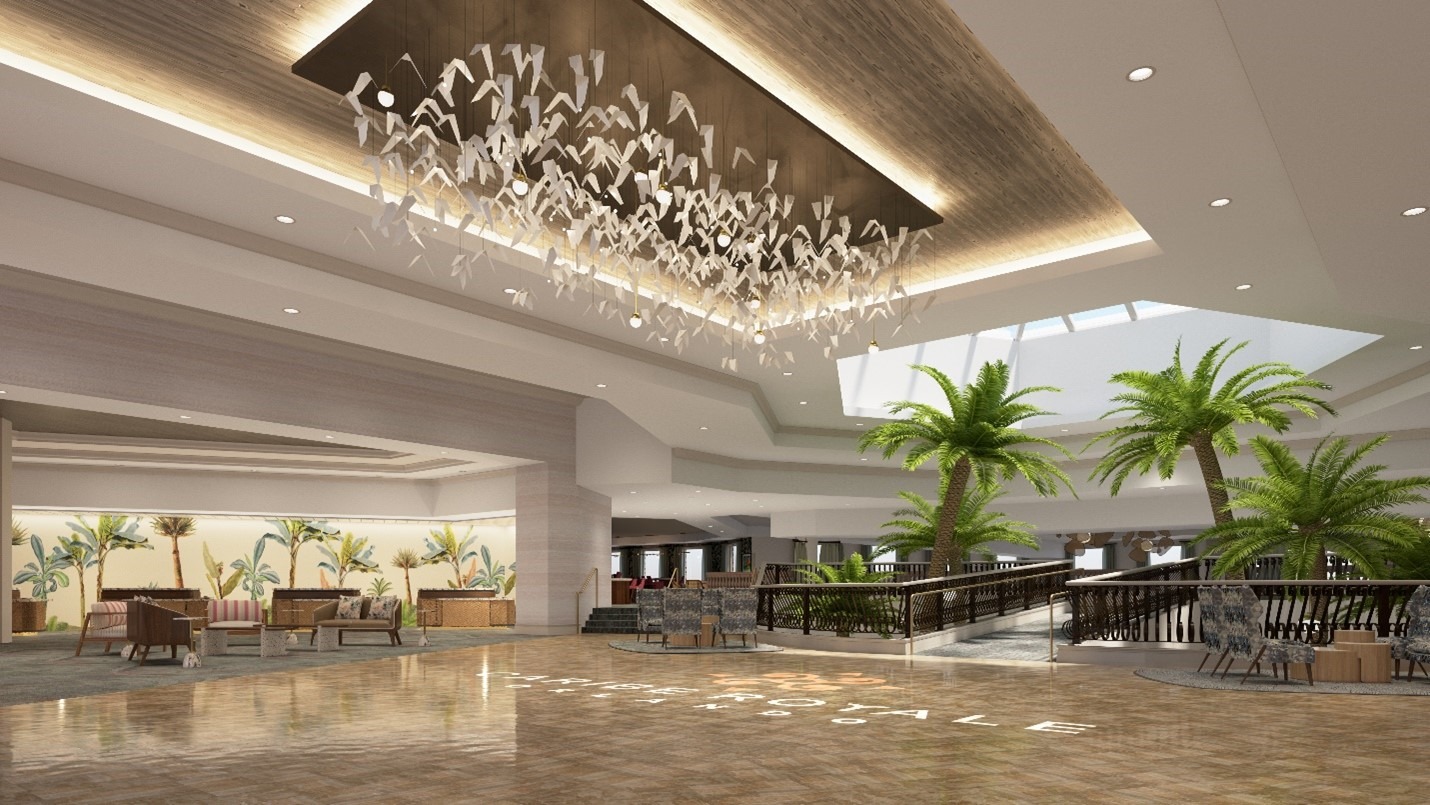
As Florida continues to bask in the sunshine of boosted tourism numbers, flights will get harder to book and hotel rooms may get harder to source. Plan early when booking Florida and even earlier if your group is large. Hotels like Caribe Royale Orlando (which just added its fourth AAA Diamond to its rating) are sprucing up and renovating in time for the influx. Expect more amenities (like great new F&B options), but expect that bookings may be thinner on the ground.
CDC Recommends Masking, Testing
As reported Covid-19 rates in New York City rise to “high” this week (although mandatory masking has not yet come back, according to Mayor Eric Adams), the CDC is asking travelers (asking, not mandating) to test themselves for Covid three days before traveling domestically. They also recommend testing yourself after travel “if your trip involved situations with greater risk of exposure such as being in crowded places while not wearing a well-fitting mask or respirator.”
And while any domestic trip will prove that the ending of mask mandates in flight has taken off (your seatmate may not be wearing one), you may want to keep that mask on during your trips.
CDC Director Rochelle P. Walensky says that the “CDC continues to recommend that all people—passengers and workers, alike—properly wear a well-fitting mask or respirator in indoor public transportation conveyances and transportation hubs to provide protection for themselves and other travelers in these high-volume, mixed-population settings. We now have a range of tools we need to protect ourselves from the impact of Covid-19, including access to high-quality masks and respirators for all who need them.
“Additionally, it is important for all of us to protect not only ourselves, but also to be considerate of others at increased risk for severe Covid-19 and those who are not yet able to be vaccinated. Wearing a mask in indoor public transportation settings will provide protection for the individual and the community.”
Bottom Line for Meeting Planners
Consider rising Covid rates when organizing F&B this summer. While the culture of masking has changed, state regulations will revert to mandates if hospitalizations rise beyond acceptable levels. That means 20 people standing around a buffet won’t work. Some recent media events for press in NYC were cancelled this week because of the rising levels of Covid, the absence of mask mandates and F&B issues around both in crowded indoor venues.
Best (and Cheapest) U.S. Cities for Travel Now
WalletHub has published a survey naming the top 100 U.S. cities to visit this summer.
The top 10 on the large list are as follows.
Orlando-Kissimmee-Sanford
Washington-Arlington-Alexandria, DC-VA-MD, WV Metro Area
Tampa-St. Petersburg-Clearwater Metro Area
Austin-Round Rock-Georgetown, Metro Area
Salt Lake City
Los Angeles-Long Beach-Anaheim Metro Area
Urban Honolulu Metro Area
Minneapolis-St. Paul-Bloomington Metro Area
Cincinnati, OH Metro Area
San Antonio-New Braunfels Metro Area
The criteria for “best” were attractions, prices, low-cost flights and attractions.
Stephanie Burdette
Mr. C Beverly Hills welcomed Burdette as assistant general manager. Burdette most recently held the role of director of front office at Ojai Valley Inn in California. A 14-year hospitality and events veteran, she has also been event planning manager and executive housekeeper at Hyatt Regency Hill Country Resort and Spa in San Antonio, Texas.
Jessica Candy
Montage Kapalua Bay in Lahaina, Hawaii, appointed Candy director of spa. Most recently, Candy was director of spa at Hawanawana Spa at Four Seasons Resort Lanai. In her decade of industry experience, Candy has also been spa manager and fitness center, events and community partnerships manager for Cooper Aerobics in the Dallas/Fort Worth area, as well as spa manager at Resort at Squaw Creek in Olympic Valley, California.
Visit Carlsbad welcomed Arrogante as business development manager. With 20 years of hospitality and business development experience, Arrogante most recently worked for Maritz Global Events as its global event strategist. He served as business development manager for Waldorf Astoria Monarch Beach in Dana Point, California, sales manager at Omni La Costa Resort & Spa and more.
Carrie Sims
Fireplay, an event production company based in Nashville, is opening a Los Angeles office and has selected Sims to lead the branch. Sims has spent over 20 years in the events industry, most recently the owner and event designer for Carrie Sims Events Design, a company she started in 2019. She has also served as associate publisher for BizBash, director of business development at Rachel Cho Floral Design, an event leader at both Industria Superstudio Overseas and Sole East Resort in New York, and more.
Jeff Carlson
Hotel Haya in Tampa, Florida, appointed Carlson director of food and beverage. Most recently, he was director of food and beverage at Atlanta’s Culinaire, an F&B management company. Bringing 17 years of restaurant and hospitality experience, Carlson has been restaurant general manager and director of food and beverage for Hilton Hotels & Resorts properties, general manager at CraftWorks Restaurants & Breweries and more.
Peter Andersen
Visit Seattle welcomed Andersen as senior director of convention strategy. A 12-year hospitality veteran, Andersen was previously area director of revenue management for Kimpton Hotels & Restaurants in Seattle and Portland. He has been regional director of sales and marketing at InterMountain Management, overseeing eight Washington and Oregon properties, and director of revenue management for over six years at Fairmont Olympic Hotel in Seattle.
Edward Searle and George Sous, MBA
Fairmont Dallas appointed Searle director of food and beverage and Sous director of rooms.
Most recently, Searle was director of food and beverage for Hilton Dallas/Plano Granite Park in Plano, Texas. Bringing 20 years of industry experience, Searle has served as restaurant general manager for Hotel Palomar and Marie Gabrielle Restaurant and Gardens in Dallas, Texas, as well as director of food and beverage for Warwick Melrose, a luxury hotel also in Dallas.
Sous has 12 years of hospitality experience, most recently working for Swissotel Chicago as director of housekeeping. He has also held the role of director of housekeeping at Conrad Chicago, assistant director of housekeeping at Hilton Chicago and housekeeping manager at Palmer House, a Hilton Hotel in Chicago.
Altamer, a luxury villa collection in the Caribbean’s Shoal Bay West, Anguilla, promoted Masshardt to general manager, making her the first woman to hold the role. Most recently, Masshardt was resort manager for the brand. With almost a decade of hospitality experience, she has been sales and events manager at Zemi Beach House in Anguilla and gained marketing experience at Hotel St. Georg in Einsiedeln, Switzerland.
Becca Lloyd, CTA, CHS
Louisville Tourism promoted Lloyd to senior housing services manager. Lloyd has been in the hospitality industry for over 20 years, beginning her career with Executive Inn & Suites. In 2004, Lloyd joined her current DMO and served most recently as its housing services manager.
Avi Phookan, CHBA
Four Seasons Resort Lanai in Hawaii appointed Phookan to resort manager. Previously, Phookan was pre-opening resort manager for Alaia Belize on Ambergris Caye, the Belize island. With a decade of hospitality experience, Phookan has held leadership roles at Hilton Worldwide, Starwood Hotels and Resorts Worldwide, Marriott International, Waldorf Astoria Hotels and Resorts and more.
Sophie Ahmed
Event management company Hubilo Technologies Inc. welcomed Ahmed as senior vice president of market strategy. Ahmed brings more than 20 years of events industry experience, most recently serving as CEO and co-founder of Virtual Events Institute (VEI). She has also held the roles of group director, global training solutions director, global sales director, head of sales and marketing and event manager at Informa Markets.
Rich Ainsworth
Visit Greater Palm Springs in Rancho Mirage, California, appointed Ainsworth small meetings manager. Previously, Ainsworth was a meetings and group management leader for 16 years at Hyatt Regency Indian Wells Resort & Spa. He has specialized in small groups for the past nine years for the property.
Kristin McGrath
Pasadena Convention & Visitors Bureau (Visit Pasadena) appointed McGrath executive director of the DMO. McGrath most recently served as vice president of sales, services and sports at Visit Albuquerque. A tourism industry veteran of more than 20 years, McGrath has been vice president of sales and services at Richmond Region Tourism in Virginia and at Providence Warwick Convention & Visitors Bureau, and she has held roles at Boston properties and Greater Boston’s CVB.
Debbie Liberio
Array, a content engagement company for life sciences events in Denver, welcomed Liberio as head of sales. Most recently, Liberio was vice president of business development and client services at Ashfield Event Experiences, based in Leicestershire, England. She has also held roles including executive director, director of business development and business development manager for additional events and virtual engagement companies.
Wondering what the dynamic meetings industry future holds? We asked the stewards that will be leading the way to whatever comes next, the 2022 Destinations International 30 Under 30 Class, what most excites them about the future of meetings and events and their responses gave us hope for a brighter tomorrow.
The 30 Under 30 Class
“The meetings and events industry has nowhere to go but up coming out of the pandemic. We’ve had a great opportunity to slow down and really think about what was working, what wasn’t, and how to bring things back even better than before—and now we get to act on that.”
– Chris Riggins, destination marketing manager, Destination Bryan
“Globally, the Covid-19 pandemic showed destination organizations that we are ready and capable of handling the unexpected. At the local level, it is exciting to see new meeting and conference sectors emerge that engage a new market and heighten our ability to reach new visitors.”
– Mallory Snyder, vice president of communications and strategic development, Visit York County
“I’m excited to see our industry return to normal! Aside from that, I am really excited about all the sustainable changes that are being implemented in our industry. It is wonderful to see more and more meetings going in a sustainable direction. Knowing people care about our environment and our planet is very comforting.”
– Amy Shen, sales coordinator, Destination Toronto
“I am excited about meetings and conventions returning to Greater Palm Springs post-pandemic, as group business is such a vital part of the tourism economy. Just as the year-round sunshine and wide-open spaces make for an inspirational meeting experience in Greater Palm Springs, I look forward to seeing how the future of meetings will include unique and memorable settings for networking and in-person events.”
“Give-back programs at meetings and events are the future. Having purposeful experiences at conferences for attendees is something that I enjoy. Attendees are interested in having an opportunity for a hands-on eco-tourism experience to give back to the host destination. Seeing those experiences on conference schedules allows for breaks and the ability to do something good for the community attendees are visiting.”
– April Brown, special events manager, South Padre Island Convention & Visitors Bureau
“Through the Covid-19 pandemic and the age of uncertainty, the M&C industry has been adjusting to accommodate the importance of choice in planning safe and engaging events. Meetings and events are shifting to allow attendees the power and the means to choose their own experiences, whether it’s an elevated in-person environment or the flexibility of a digital platform. Key topics such as sustainability, diversity, equity and inclusion, and mental and physical wellbeing are being prioritized, and I’m eager to see how these philosophies will be incorporated to engage attendees and grow the industry.”
– Celeste Rodriguez, digital communications specialist, Reno-Sparks Convention and Visitors Authority
“I’m excited by the shift towards more socially and environmentally responsible meetings and events and the impact that this movement will have on our communities. Policies and practices that support sustainable and responsible business events are a priority for both residents and visitors and will ultimately lead to important economic investment in addition to a positive community impact.”
“I am excited for the endless opportunities to use technology to bring us together. During the pandemic, we used technology to gather virtually together and utilized new ways to share data. As restrictions are being lifted, we can meet in person and technology gives us an opportunity to enhance our experiences together. There are hot technology trends in our industry which include using apps, gamification, augmented reality and the metaverse. I am thrilled to see what the future has in store for us creating one-of-a-kind of experiences.”
– Dani Keller, business applications specialist, Explore St. Louis
“With all the new additions and happenings in Oklahoma City right now, I am super excited to see the city come together to make each meeting and event an outstanding experience for all attendees.”
– Kellie Myers, convention services manager, Oklahoma City Convention and Visitors Bureau
“The future of meetings and events is exciting to me because of a heightened level of intentionality among attendees. I am eager to see people express their rejuvenated gratitude for these opportunities going forward. I envision that gratitude manifesting in the form of increased willingness to network and interact outside of structured time as well as being present in the moment. I’m excited to see how a two-year, in-person event hiatus positively impacts the way attendees show up to meetings and events.”
“What excites me most is the human interaction. It helps to interact with people and bounce ideas around regarding the growth of the industry. Human interaction gives me more ideas on issues that I want to focus on because I had the opportunity to discuss and engage other people. The other factor is travelling, mixing business and pleasure (bleisure). Travelling to different places to interact with other people is something that I look forward to and the opportunity to expand my network.”
“Thanks to the pandemic, meetings and events have already improved a lot. Now we have webinars, hybrid conventions, on-demand sessions available and still have in-person events which gives everyone a chance to attend meetings they might never have been able to attend in the past. We are now able to connect through a combination of virtual and face-to-face experiences, which will increase numbers of attendees, return on investments and economic impact in the meetings and events industry. I am excited to see what new creative ideas and technology we will come up with in the next few years.”
“The resurgence of meetings and events is exciting because they are the perfect opportunities to spark the next great idea. Whether it’s through networking and collaborating with like-minded professionals, hearing from energizing speakers about outside-of-the-box thinking, or simply by being outside of the typical daily workflow and office space, there is immense potential to ignite new and exciting connections and ideas that can better one’s own work, company and industry. Nothing can replace the energy and expectancy of in-person meetings and events.”
“What’s exciting about the future of events is how the focus on supporting local and the community during the pandemic will transition into post-pandemic events. We make a strong effort to source from local vendors to give visitors a uniquely Fort McMurray experience during the events we host. I’m looking forward to having less cookie-cutter events in the future and more experiences that are by and of the community that is hosting them.”
– Tyler Cole, economic development officer for sports and events, Fort McMurray Wood Buffalo Economic Development and Tourism
“I am most excited for the continuation of technology advancement and what that looks like for future meetings and events. Meetings and events are done completely different than they were even 5 years ago with the help of technology so it is very exciting to see what the future looks like for our industry. Opportunities are endless.”
– Kayla Adams, sports sales manager, Greensboro Area Convention and Visitors Bureau
“I’m excited to contribute to expanding the of definition of success in our industry, navigate the challenges and opportunities that come with identifying and measuring new KPIs, and to create a desire for families to travel, for teams compete, and for Rhode Islanders to showcase our homefield advantage.”
– Jonathan Walker, sports sales manager, Providence Warwick Convention & Visitors Bureau
“The future of travel and tourism is now. As the industry continues to shift and adapt to environmental and cultural needs, we also see this change in our destination services. Destination marketing leaders are challenged to implement more value-based marketing, experiences and technology-forward resources that connect on a deeper level with our clientele and allows them to access information at their fingertips. What most excites me about the future of meetings and events is to welcome this new approach, and people to our destination, as we celebrate the value travel holds for our communities, businesses and economy.”
– Courtney Swenson, marketing manager, Stafford County Department of Economic Development & Tourism
“What excites me most about future events is our new product developments. We have been working towards an indoor multi-sports complex that is on schedule to break ground later this year. This will position our destination to be more competitive with the top destinations in the country. This will also expand our sports tournament resume and welcome sports that we do not currently host right now. We have also launched our Tourism Capital Improvement fund which will improve our existing venues and attractions, so they are ready to welcome visitors for many years to come.”
– Nick Kleva, sports tourism manager, Visit South Bend Mishawaka
While 2022 is in full swing, the meetings and event industry is continuing to navigate best practices regarding safe meetings and social gatherings during the Covid-19 pandemic. One trend that we are continuing to see is that of outdoor meetings.
Now, more than ever, planners are opting for an outdoor setting for much if not all of their programs. While I expect this trend to continue to rise in popularity, I am sharing my top tips to help ensure an unforgettable outdoor event this year.
Keep It Down
Melissa Woodley
When creating outdoor meetings and events, it’s important to be aware of the local noise ordinances. The worst thing that can occur is to have an event shut down due to excessive amplification.
It is always wise to check with local authorities for specific information as to decibel levels and/or any time restrictions in scheduling a function. Armed with this information, you’ll be better prepared to advise planners as you receive detailed information on their ideas and requests for events, games and motivating team-building competitions that can get quite exuberant.
Naturally Good
The benefits of hosting a meeting in nature are many. First, fresh air can give attendees an immediate boost of endorphins just from being outside. Reveling in the spaciousness and freedom from confinement, soaking in the sun and fresh air, and enjoying the sights and smells of the natural environment all have positive effects on the human psyche.
Both of the properties I represent provide spacious and inspiring backdrops based solely on their location, from stunning mountain backdrops to lakeside views. Participants feeling refreshed and relaxed are the biggest benefits of hosting a meeting in nature, as inspiration and creativity tend to flow more freely.
The planning of outdoor events is not without the risk of sudden weather variables; contingency plans should be built into each program. It is important for planners to work closely with their venue to understand the specific backup options and what that will look like for attendees.
When having a conversation about contingency options, I recommend planners ask if there is a cut-off time to move the event indoors and what indoor spaces will be available for their program. I also suggested asking the venue’s team of examples of when an event had to change setting last-minute and how they can help to ensure best practices if the need arises.
Creative Ideas
In terms of visual appeal, I have noticed a trend toward decor that enhances the natural setting of the outdoor venue. The increased use of decorative flora and fauna that complement the landscape make outdoor meetings and events feel vastly more energizing and motivating than typical indoor gatherings.
We have had the opportunity to host several meetings that showcase the stunning natural setting we have at Resort at Squaw Creek. One recent program created a 450-person amphitheater with camp chairs on our hillside and covered the large seating area with sail shades. This setup provided a unique and inspiring venue for the attendees to view the speakers, while also featuring a natural backdrop of dramatic and beautiful mountains framing our gorgeous valley.
With 14,000 sq. ft. of deck space perfect for outdoor meetings, stunning views, and many large lawns, the resort works with planners to create meetings that truly feel inspirational and are at one with nature.
Melissa Woodley is the area director of events and event operations at Resort at Squaw Creek and Hyatt Regency Lake Tahoe Resort, Spa & Casino. With more than 14 years working in the wedding and events industry, she has helped to plan hundreds of events at popular destinations throughout the country from San Diego to Maui. Woodley is dedicated to helping event planners create unforgettable experiences through customized programs that showcase the beauty of North Lake Tahoe.
Editor’s note: This Week in Travel (TWT) is your essential guide to smoothing the road from here to there for your attendees and yourself.
In a long-anticipated move, the European Union Aviation Safety Agency (EASA) and European Centre for Disease Prevention and Control (ECDC) have issued an update to the health safety measures for air travel, now dropping a mandate for medical masks in airports and on-board flights.
The agencies, however, note that a face mask is still one of the best protections against the transmission of Covid.
The agencies issued a join statement that cited levels of vaccination, naturally acquired immunity and the accompanying lifting of restrictions in a “growing number of European countries” as the reasons for the change.
“From next week, [May 16] face masks will no longer need to be mandatory in air travel in all cases, broadly aligning with the changing requirements of national authorities across Europe for public transport,” said EASA Executive Director Patrick Ky in a release.
“For passengers and air crews, this is a big step forward in the normalization of air travel. Passengers should, however, behave responsibly and respect the choices of others around them. And a passenger who is coughing and sneezing should strongly consider wearing a face mask, for the reassurance of those seated nearby.”
The statement warned that flights to and/or from a destination where mask-wearing is still mandated would “continue to encourage mask-wearing.”
U.S. carriers dropped the mask mandate several weeks ago when a Florida judge questioned the legality of the Biden administration extending it.
Since that time, airlines have reported a drop in on-board disturbances and the necessity for flight attendants to police passengers’ behaviors.
Bottom-line for meeting planners: Look for airlines to respond by bringing back services like alcoholic beverages, full meal services and other business and first-class perks that got paused. Economy and economy plus services will, of course, lag way behind. Meetings groups traveling to Europe will now have more consistent and seamless experiences since U.S./Europe mask mandates are more closely aligned.
Also, look for harder-to-book flights as mask removal will boost airline traffic, already handling pent-up demand.
Mask mandates have lifted and the “normal” in-flight experience seems more in sight, but customer satisfaction is lagging far behind.
Results of the J.D. Power 2022 North America Airline Satisfaction Study, released on May 11, point to high load volume and low approval ratings.
“Customer satisfaction with North American airlines climbed to unprecedented highs for all of the wrong reasons during the past two years,” said Michael Taylor, travel intelligence lead at J.D. Power.
“Fewer passengers meant more space on airplanes, less waiting in line and more attention from flight attendants. But that business model was simply not sustainable. Now, with volumes surging and some remnants of pandemic-era constraints still in place, passenger satisfaction is in decline—but that’s not really bad news. If airlines can find ways to manage these growing volumes while making some small adjustments to help passengers feel more valued, they should be able to manage this return to ‘normal.’”
Key findings of the study include:
Overall passenger satisfaction declined sharply across nearly all measures: Overall passenger satisfaction across all three study segments—first/business, premium economy and economy/basic economy—is 798 (on a 1,000-point scale), down more than 20 points from a year ago. Passenger satisfaction with cost, flight crews and aircraft all declined in this year’s study.
Premium passengers want their free drinks: Remnants of pandemic-era restrictions, such as the suspension of alcohol service in premium class, has driven sharp declines in passenger satisfaction with food and beverage offerings. This year, food and beverage satisfaction scores declined 38 points in the premium economy segment and declined 12 points in the first/business segment. By contrast, food and beverage satisfaction scores increased 7 points in the economy/basic economy segment.
Cost is a driving factor in satisfaction as average ticket cost rises 20%: With higher fuel prices and rising demand driving a 20% increase in average airfares through March 2022, cost continues to be a significant factor in passenger satisfaction. Overall satisfaction with cost & fees declined in the premium economy segment (-66 points), in the economy/basic economy segment (-33) and in the first/business segment (-21).
On individual airline rating, JetBlue Airways ranked highest in customer satisfaction in the first/business segment with a score of 878. Alaska Airlines (876) ranked second and Delta Air Lines (862), third.
JetBlue Airways also ranked highest in customer satisfaction in the premium economy segment with a score of 851. Delta Air Lines (837) ranked second and Alaska Airlines (825) ranked third.
Southwest Airlines came in highest in customer satisfaction in the economy/basic economy segment with a score of 849. JetBlue Airways (828) ranked second and Delta Air Lines (813) ranked third.
“Airlines should be able to solve their fleet, crew and schedule problems by later this summer. But by that time, the flying public will likely be focused on the price of a ticket. Fuel costs are expected to be a major price factor if travel demand continues on its current trend, Taylor told Smart Meetings.
“Although it’s not something we track directly in the airline study, there seems to be a renewed demand for travel to conferences and group meetings. The ‘animal spirits’ of people wanting to interact in-person seems to reflect the desire to get away from tedious virtual meetings.”