Traveling for a conference is no longer an excuse to abandon your mental health and physical well-being goals. In fact, according to a trio of meeting professional experts, taking care of yourself is even more important when you are the one charged with caring for your attendees. But how?
Smart Meetings chatted with Dave Stevens, director of field marketing and global events at data.world; Rachael Riggs, general manager of environmental sustainability and well-being with Martiz Global Events; and Dr. Romie Mushtaq, wellness officer of Evolution Hospitality, to share tips on making your wellbeing a priority in meeting spaces everywhere.
Dave Stevens offered a thoughtful example of why planners should be more aware of their personal wellness. “If you’re a broken vase, how are you supposed to hold water? If you’re burnt out, how are you supposed to find that energy to take care of other people?”
The group pointed to the Covid pandemic as a major factor for the shift in the discussion of wellness within the meetings industry. “A lot of people had time to think about their well-being.” Riggs offered. “This pandemic has put an exclamation point on that.”
Dr. Mushtaq built on the wellness epidemic currently playing out. “We are still in the middle of mental health crisis inside and outside of the workplace in the United States and around the world,” she said. “What are you doing for your brain, body and your team? The same thing should be true for a meeting.”
Best Practices
People are different and therefore how they choose to unwind and better themselves varies. However, Stevens suggested that hotels could be part of the solution for many. When it comes to open space, resistance training and aerobic capability, hotels can offer the tools to empower people to take care of themselves on the road.”
Dr. Mushtaq suggested meeting planners to ask the question, “What am I doing today to fuel my energy and what is robbing my energy during the day? What am I doing to restore energy and resetting myself when the sun goes down?”
As an ambivert, someone who is a mixture of an extrovert and introvert personality, Dr. Mushtaq listed taking quiet time as a way that she recharges. For the event space, this could take the form of a quiet room.
Riggs encouraged meeting planners to include members on their team who are mental health first-aid-trained for both meetings staff and event attendees. “Why are we separating these resources that we put together for attendees when staff needs it, too? You are a community. Let’s have the community come together.”
Sleep as Self-Care
Dr. Mushtaq pointed to sleep as one of the most important aspects of wellness. Hotel rooms also play a major role in how attendees feel when they prepare to head over to their first meeting for the day.
“I want to know: does [the hotel] offer sleep shades and blackout shades? Outdated hotels that haven’t been remodeled have blue lights everywhere from the alarm clock to the air conditioning setting to the on-off light switches. Is a room set up for noise cancelation for your attendees?” she asked.
How Can We Make Better Choices?
In order to better understand how planners can make the best choices for themselves, Riggs presented the five Dimensions of Wellbeing.
Personal Wellbeing: Focusing on one’s physical, mental, intellectual and spiritual health.
Social Wellbeing: Growing a connection with others and developing a support system.
Environmental Wellbeing: Caring for the state of the Earth.
Financial Wellbeing: Managing and caring for your financial situation.
Career Wellbeing: Being focused on the continued growth of your career.
Riggs encouraged planners to bake these concepts into an event to best serve attendees but also to build a community. “[Attendees] want to come back year-after-year because they know they will be cared for as a valued member of the community.”
Give Attendees a Choice
Dr. Mushtaq advised planners to build flex time in agendas. “There needs to be brain break time in the mornings, in the afternoon and in the evening and give people choices,” Dr. Romie advised. “Be thoughtful to create flexible schedules. It doesn’t need to be packed and forcing every attendee to do everything together.”
Riggs agreed and noted choice is an essential element, “We have to offer variety. We have to start with the guests’ well-being at the heart of the experience.”
Stevens gave an example of asking attendees in registration sign up what type of workouts guests enjoy so an event can properly reflect their needs, “By giving people the opportunity to choose that’s where you empower people.”
European Travel Is Rebounding Says New Study
The European Travel Commission (ETC) has released a new study that says European destinations are “on their way to recovering pre-pandemic tourist arrivals.”
The report compared year-to-date data compared to 2019 and showed that about one in two reporting destinations have recovered more than 80% of their pre-pandemic foreign arrivals.
Southern Mediterranean destinations posted the fastest recovery as the year ended. Slower destinations to recover were in Eastern Europe due to the war in Ukraine and the loss of Russian visitors to their destination.
As the Asia Pacific region broadly reopened over the second half of 2022, travel demand from the region to Europe is likely to rebound in 2023 said the study. In particular, encouraging news came in December with the end of the three-year-old “zero-Covid” policy in China. Experts anticipate a gradual return of Chinese travelers to Europe from the second quarter of 2023, as significant barriers remain.
Transatlantic travel is expected to continue making significant contributions to European destinations. The U.S. leads the recovery of long-haul travel to Europe, thanks to short-lived and fewer travel restrictions, and the strength of the dollar against the Euro, the ETC study said. Based on year-to-date data, almost one in four of reporting destinations saw U.S. arrivals exceed 2019 levels.
Arrivals from this market to Europe are 25% below 2019 levels in 2022 and are expected to recover 82% of 2019 volumes in 2023. Canada is performing similarly to the U.S., if a little weaker, with arrivals from Canada to Europe looking to be 28% below 2019 levels in 2023. Growth from North America, however, might slow in 2023 as the economic outlook points to a mild recession due to challenges associated with inflation, labor markets and consumer and business confidence, among others.
Governor Kathy Hochul and the Port Authority of New York and New Jersey broke ground on Feb. 23 on the new Terminal 6, a $4.2 billion,1.2 million-square-foot, state-of-the-art new terminal on the airport’s north side. The new terminal will feature 10 new gates—including 9 wide-body gates.
“New York remains committed to providing travelers with a premier experience that includes world-class amenities, expanded and streamlined airport transportation and state-of-the-art security,” Governor Hochul said.
Terminal 6 at JFK
The new Terminal 6 is a public-private partnership between the Port Authority of New York and New Jersey and JFK Millennium Partners which is developing the new terminal in two phases, with the first new gates opening in 2026 and construction completion in 2028. The new terminal will create an anchor for passenger travel on JFK’s north side, spanning the sites of the former Terminal 6 and the existing Terminal 7. JFK Millennium Partners is managing Terminal 7 until the 50-year-old facility is demolished to make way for the second phase of construction.
The new Terminal 6 arrivals and departures hall is designed to be “spacious, bright, and airy thanks to floor-to-ceiling windows and high ceilings throughout the new terminal.”
Art by New York-based artists and architectural elements will depict New York landmarks. More than 100,000 sq. ft. of shopping and dining will feature local restaurateurs, craft beverage options and Taste of NY stores.
Touchless technology will whisk travelers from check-in to gates. Security systems will include automated TSA lanes, biometric-based access control systems and a flexible design to accommodate future technology or regulatory changes. A taxi plaza as well as designated for-hire vehicle pick-up areas will be shared with Terminal 5. In addition to JetBlue, Lufthansa Group will also make its home in the new Terminal 6, operating international flights out of several gates and creating a lounge experience for guests traveling on its airlines, which include Lufthansa, SWISS, Austrian Airlines, and Brussels Airlines.
A special message in advance of Global Meetings Industry Day 2023
As we approach Global Meetings Industry Day 2023 on March 30, we’re going to talk a lot about the economic value of meetings. Facing renewed economic uncertainty, that’s an important message for any organization. But here’s another important message: Let’s advocate for the intrinsic value of meetings to connect and unite communities, beyond the immediate commercial aspect. By doing that, we can solidify the role of events in business regardless of the economic climate.
Ben Erwin
The silver lining around the challenges of the bust and boom our industry experienced from the pandemic is that many of our stakeholders have now lived The Great Lesson: in the absence of the ability to meet, they discovered that nothing can replace the power of meeting in person.
We felt it in the surge of events flooding back in 2022. We’re inspired by social organizations rallying communities through events that spread messages for a better future. We witness corporate CEOs prioritizing events to engage their teams as they wrestle with the impact of hybrid work. We see organizations increasing their budgets to overcome rising costs so they can continue to benefit from the power of meeting.
All of it underscores a recognition that togetherness is an essential ingredient for success.To riff on the popular mantra from acclaimed author Glennon Doyle: Together, we can do hard things.
The Essential Lesson
The beauty of The Great Lesson is that the role of the meeting professional is now even more important. If you can bring people together in ways that inspire collaboration and innovation, you can spark change in your organization, ultimately creating better businesses, better communities, and a better world.
The magic is in how you bring people together to do that.
My advice is to start with a deep understanding of the people involved and a clear picture of the outcomes you want those people to achieve. That’s a best practice of great leaders, and as it turns out, also a smart strategy for effective event design.
As you work to leverage the power of events to propel change across your organization or community, here’s a bit more advice to consider:
Always align to the organization’s greater goals. It happens all too often in business that people are doing great work, but sometimes missing the alignment to the bigger picture. Start by centering on the “why” of your organization (its purpose) and the priorities in pursuit of it. Think then about how event experiences can advance that purpose through alignment with the commercial objectives.
Get to know your audience on a deeper level. Great leaders know their audience, whether its customers, partners, board members or team members. Meeting planners, too, can use a high EQ and emotional intelligence to design successful events. Don’t know everyone’s sentiments? Ask. The best teams actively seek feedback.
Inspire, motivate and follow up. We have to earn their attendance, and then earn their attention. The challenge for leaders today is to create environments where people feel like they belong, that they have a clear picture of their goals and that they can contribute to something greater than themselves. As leaders, it’s our job to ensure our teams feel motivated and prepared to achieve ambitious goals.
Hold yourself and others accountable. Did the work even count if you cannot measure the outcomes against the expectation? The best leaders are looking to influence increments of change over time, and they hold themselves accountable to the process and the results. Build a plan to influence attitudes, beliefs, motivation, or perception and hold yourself, and your organization, accountable for positive change.
Realize it’s a journey, not a destination. Be prepared to interpret data and respond. The path to success is hardly ever a straight line. Embrace always being in pursuit of making things better by valuing candid communication, getting comfortable experimenting and nurturing change with strategy.
Meetings are essential to business because they drive human connection and inspire growth. The way to start the conversation with our stakeholders is to speak the language of strategy, lean into the powers of empathetic leadership, find win-win alignment and deliver measurements of change.
We can keep the momentum of The Great Lesson going. Together, we can do hard things.
—
Ben Erwin is president and CEO of Encore, a global event production and technology provider, and a current board member of American Hotel & Lodging Association.
Incentive travel has always been more about inspiration than dollars given for work done. The motivation inherent in earning public recognition in the form of time spent with executives is almost, as they say, priceless. At a time when many companies are taking a second look at the new ROI (return on incentive) out of an abundance of caution over global economic conditions, Society for Incentive Excellence (SITE) Global brought 800 planners and suppliers together at New York Marriott Marquis Times Square for a celebration of the transformational power of immersive experiences.
The global professional organization officially launched 50 years ago in 1973 in that very city and has since grown to include more than 2,000 members, delivering research, education and networking. The banner New York City anniversary event was a record attendance for the organization and the content reflected the golden anniversary moment and the pivotal time for the industry as it faces the challenges of sustainability, economic uncertainty and changing demographics. It reflected the association’s “50 Reasons to Love SITE: Connections, Friendships, Education & Opportunity” storytelling campaign and culminated in former SITE presidents flying in to celebrate together.
“I think the reason incentive travel has always survived economic downturns and remained a priority for achievement programs is our drive to explore and experience new destinations. After the pandemic, there’s an even great desire for us to be together. The incentive market will continue to lead the way in presenting new locations, unique experiences and immersive programming,” said new CEO Annette Gregg, who joined the organization in November after serving as chief revenue officer for MPI.
Overcoming
“The only airplane that doesn’t experience turbulence is the one that stays in the hangar,” shared Amelia Rose Earhart, who is not related to her namesake, but followed in her footsteps to be the youngest woman to fly around the world in a single-engine airplane. She brought her action-packed message about overcoming to the incentive experts with a laugh and a nod. “When we set our minds toward any big goal, we imagine creating our plan and executing it to completion. Then we are thrown off course by something we never saw coming…This is the point where we have to ask ourselves if we are doomed for a crash landing or if we are willing to learn to love the turbulence,” she challenged the audience.
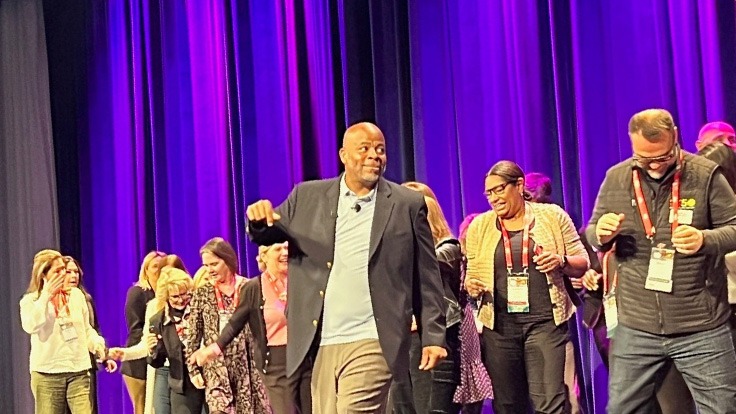
Andre Norman danced out the emotions from his presentation with the audience onstage.
Andre Norman, former prison gang member and author of “Ambassador of Hope: Turning Poverty and Prison into a Purpose-Driven Life,” shared his story of redemption with a ballroom filled with teary eyes and dancing feet. He recounted how he went from surviving as boy from a poor, violent family, to an aspiring musical talent to losing his way in the streets and earning the title of “King of Nowhere” in a state penitentiary. While in solitary confinement, he decided he was going to get out and go to Harvard University and spend his life giving back, helping others who were on a path to making some of the same mistakes he did. He was paroled 23 years ago and armed with his GED, did just that all over the world.
“Transactions took me to prison, relationships moved me forward,” he said.
His advice for the influential incentive professionals in the room: “Don’t jump over your own to take care of others. Make your family number one. You can help them by showing you care.”
$10 Million Strong
SITE Foundation, the philanthropic arm of the association, had its own celebrating to do. After 35 years, the total dollars raised and invested in the business events industry is now $10 million and the group is in the midst of a matching fundraising campaign to help victims of the earthquake in Turkiye, which happens to also be the newly announced location for next year’s SITE Global Conference, Istanbul.
New Foundation President Hamish Reid, MICE Consultant with Hills Balfour, shared that between 2016 and 2022 alone, more than $1.7 million was invested in 105 projects, touching 16,000 people. The funds go toward funding educational certification programs, such as Certified Incentive Specialist and Certified Incentive Travel Professional. Since its founding in 1987, the organization has also funded research, such as Incentive Travel Index, which is produced in partnership with Incentive Research Foundation and Financial & Insurance Conference Professionals.
More Wise Words from SITE Global
With dozens of sessions over three days, some of the most challenging industry issues were addressed. Here are three takeaways from breakout sessions worth repeating.
“Stop overscheduling people. You can give them a break and save some money,” said Chetan Shah, CEO of micebook and moderator of the “Mitigate Cost Rises and Keep Your Incentive in Play” session. He added, “Itemize all value given to help with procurement departments and partner with DMCs and CVBs.”
“To thrive in the future of work, you have to build trust. Once you have established trust, a little intellectual conflict can actually be a good thing,” said Eric Termuende, author of “Rethink Work: a Practical Guide to Finding and Keeping the Right Talent” and speaker at the “Thriving in the Future of Work: How to Build Incredible, Resilient Teams” session.
“Don’t use TikTok to get mental health tips; be your own best cheerleader,” said Kate Patay, director of engagement, Terramar DMC, during the “Hard Reset, Real Talk” session.
Crystal Awards
Eight SITE Crystal Award recipients were celebrated on the final night of the largest-ever SITE Global Conference in New York City. “This year’s winners strongly reflected an ability to deliver the many impacts and benefits of incentive travel, while also leading the way in embracing new and emerging trends,” read the press release, which highlighted the range of destinations and companies represented and the growth of incentive travel as a key reward and motivational strategy for top firms looking to retain and attract talent.
Carina Bauer, CEO of IMEX Group, which sponsored this year’s awards praised the international reach of the programs honored. “The Crystal Awards bring our community together and spotlight the innovation and excellence powering these teams and their standout incentive programs,” she said in a press release.
This year’s complete list of Crystal Award recipients includes:
Access Holidays & Events, for Excellence in Incentive Travel: Africa and the Middle East
Amstar DMC (Costa Rica), for Best Destination-Based Experiential Incentive Travel Program
Amstar DMC (Mexico), for Best Destination-Based Experiential Incentive Travel Program
Arabian Adventures Meetings, Incentives & Events, for Excellence in Incentive Travel: Africa and the Middle East
Augeo, for Best Virtual Motivational Experience
AV Business & Communication, for Excellence in Incentive Travel: Latin America & Caribbean
Creative Travel India & FMC Solutions South Africa, for Excellence in Incentive Travel: Asia Pacific
Motivation Excellence, for Excellence in Incentive Travel: Europe
Traveling internationally as an individual is tricky. Coordinating international travel for large groups? That requires a lot more planning and forethought.
Smart Meetings spoke with Harmony Nordgren, vice president of operations at Cyberbacker, about things to consider when setting up international travel for your attendees.
“Coordinating international travel is far more different and difficult than coordinating travel domestically because event planners must account for schedules and personal issues (health conditions that may flare up in long-haul travel, fear of flying, claustrophobia, etc.),” Nordgren says. “But also professional limitations (i.e., client-facing roles that require regular communication, accounting for jetlag when planning events), as well as travel restrictions such as attaining visas to go abroad, understanding which vaccines are needed if any when traveling to high-risk countries, accounting for illness that may occur from long-haul travel (like Covid) and more.”
Common International Travel Challenges
It’s easy to think everything is under control when setting up international travel but there exists common challenges that, while giving attention to some you may neglect other, just as important, concerns. Nordgren says these are common challenges she sees when coordinating international travel:
Jetlag: Help people understand time-zone jumps and provide a proposed rest schedule that aligns with the time zone they’re traveling to
Fares: Plan far in advance and make sure all flyers have appropriate documentation ahead of time
Travel time: Provide a schedule with dates, times and locations, a list of essential items they should bring, and consider some activities to occupy people during waiting times
Delays: Have potential hotels identified in case of any delays or layovers
Also, it’s recommended to keep in mind peak travel times, June to September, which Nordgren says makes these factors more expensive and difficult to plan.
Traveling to the U.S. Is Getting Difficult for Some
Covid remains a topic of concern when traveling and the United States hasn’t been particularly flexible when it comes to letting people back into the country from certain places. According to the CDC, regardless of citizen or vaccination status, travelers coming to the United States from China, Hong Kong, or Macau, and those traveling from Seoul, Toronto and Vancouver who have been in China, Hong Kong, or Macau in the past 10 days are required to show a negative Covid test taken no more than two days before departure.
All others arriving in the U.S. are recommended to take a test as close to the time of departure as possible, although it is not required.
Nordgren says the Visa process is getting more challenging to comply with, as well, which she believes is mainly due to Covid. For many travelers with a U.S. passport, traveling outside of the country is relatively easy but visitors coming to the U.S. generally have a much tougher time.In fact, the majority of the world’s population required a visa to enter the U.S., and visas are not required for 40 countries, including the United Kingdom, Australia, Japan and most European countries.
In 2022, more candidates were denied visas than were approved, but the U.S. embassy didn’t provide any information about why this happened.
Health Challenges
Nordgren says health issues while traveling is a big factor that is often overlooked. Your immune system can be significantly compromised when flying for extended periods, especially if you are already at risk. As international travel is often longer than domestic travel, the possibility of illness is something to consider.
In addition to the possibility of catching Covid while flying, another concern for longer flights—typically those that are more than four hours—is the development of deep vein thrombosis (DVT), where blood clots form in the legs when sitting for long periods. These blood clots can then travel to other parts of the body, including the lungs, which can be fatal.
According to the CDC, developing a blood clot on a long-haul flight isn’t that common. Those who typically developed travel-induced DVT usually have other health risks as well, such as obesity, pregnancy, a previous blood clot and varicose veins, among others. To remedy this, the CDC recommends moving and stretching your legs frequently. Another remedy recommended often is wearing compression socks during your flight, as they promote blood flow in the legs.
Although you can never be too sure what will happen when planning internationally, Nordgren advises, “Plan well, and plan in advance. Always have a backup plan for any potential problems that may arise.”
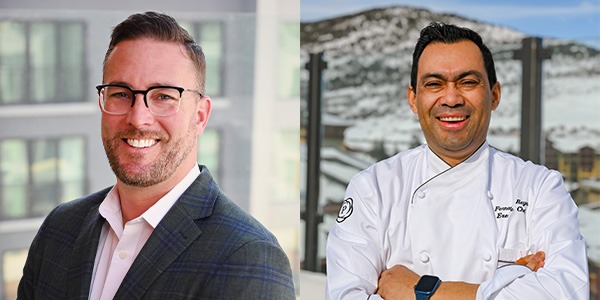
Ashley Chaney and Fernando Reyes
Ashley Chaney (left) and Fernando Reyes (right)
Chaney is director of food and beverage, and Reyes is executive chef for Pendry Park City in Utah.
Chaney comes from Montage Palmetto Bluff, where she worked as assistant director of food and beverage. She also worked in various roles with Sea Island Resort in Georgia and The Eldridge Hotel in Kansas.
Reyes most recently worked with Maravilla Los Cabos in Mexico, where he worked as executive chef. Reyes’ chef roles have also taken him to Westin St. Francis Hotel in San Francisco, where he worked as executive chef; The Ritz-Carlton in China’s Hainan Province as executive sous chef; and JW Marriott Hotel L.A. Live in Los Angeles as executive sous chef.
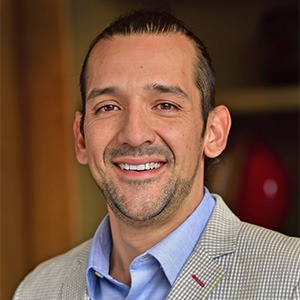
Di Paolo is executive chef for Carmel Mission Inn in California. Di Paolo’s most recent position in his 17 years in culinary leadership was with Esme Miami Beach as executive chef. He has also worked with Trump International Beach Resort in Sunny Isles, Florida, as executive chef, as well as Hotel Victor in Miami Beach, The Tides South Beach and Viceroy Icon Brickell in executive chef roles.
Bryan Simonsen
Simonsen is senior food and beverage manager for The Westin Riverfront Resort & Spa Avon, Vail Valley in Avon, Colorado. He comes from spending more than three years as general manager for Blue Moose Pizza in Beaver Creek, Colorado. He also worked as operating partner at CentraArchy Restaurants, where he oversaw operations for Joey D’s Oak Room in Atlanta.
Amir Nematipour
Nematipour is Four Seasons Resort Lanai’s food and beverage director, promoted from his previous roles as executive chef. Before the move to Hawaii, he worked as executive chef for Beverly Wilshire, A Four Seasons Hotel in Los Angeles, as well as Brentwood Country Club in Los Angeles as executive sous chef.
Daniel Sabo
Los Angeles’ The Hollywood Roosevelt named Sabo food and beverage director. Sabo most recently worked at Fairmont Century Plaza in Los Angeles as executive assistant manager with an emphasis on food and beverage operations. Sabo started his career as a bartender at Five Leaves in Brooklyn and worked his way up to general manager. Between then and his most recent position, Sabo worked as corporate director of food and beverage at Palisociety Hotels & Residences and beverage director at Hotel Figueroa in Los Angeles, among other roles at various properties.
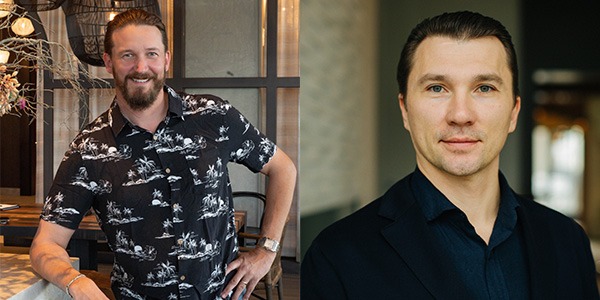
Philipp Martens and Sergii Chepko
Philipp Martens (left) and Sergii Chepko (right)
Martens is director of restaurants, bars and events; and Chepko is assistant director of food and beverage for Hyatt Centric Buckhead Atlanta.
Martens has more than 20 years of experience in hospitality—he most recently worked as director of operations at Andaz Maui at Wailea Resort. He has also worked at Hyatt Grand Central New York as director of outlets, among other positions.
Chepko has spent most of his 10-year hospitality career with Hyatt Hotels, including Grand Hyatt Doha Hotel & Villas in Qatar as outlet manager, Hyatt Regency Tashkent in Uzbekistan as pre-opening assistant food and beverage manager, and Grand Hyatt Atlanta as food and beverage manager.
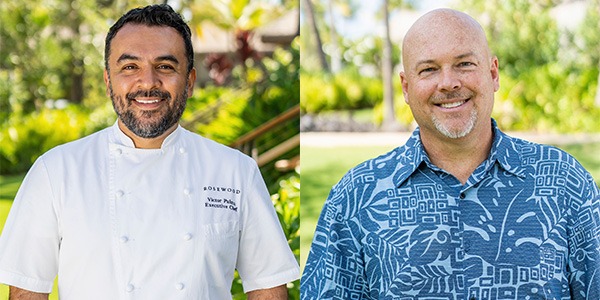
Victor Palma and Dan Daughtry
Victor Palma (left) and Dan Daughtry (right)
Hawaii’s Kona Village, A Rosewood Resort, scheduled to open summer 2023, named Palma executive chef and Daughtry director of food and beverage.
Palma’s most recent role was at The Cape by Thompson Hyatt in Mexico’s Cabo San Lucas, where he worked as executive chef. Palma has worked at four Rosewood properties in Mexico and United States, including Las Ventanas al Paraiso, A Rosewood Resort, where he worked as executive sous chef, and Rosewood San Miguel de Allende as executive chef.
Daughtry has worked with properties in North America, Micronesia and Bermuda, most recently he worked as vice president of restaurants, bars and events at Garden of the Gods Resort & Club in Colorado Springs, Colorado. Before this, he worked with Edgewood Tahoe in Nevada as senior director of food and beverage and Hilton Santa Fe Buffalo Thunder Resort in New Mexico as director of food and beverage.
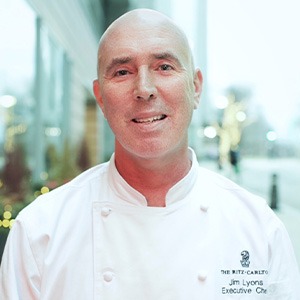
Jim Lyons
Lyons has been promoted to executive chef for The Ritz-Carlton, Boston. Lyons joined the team in 2021 at executive sous chef. Before The Ritz-Carlton, Lyons worked as executive sous chef for Sheraton Boston Hotel. He also worked with Sheraton Framingham and Sheraton Needham in Massachusetts as executive chef.
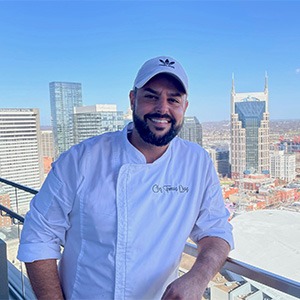
Tomas Diaz
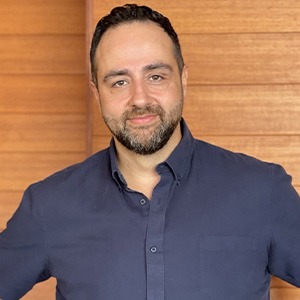
Diaz is executive chef for Embassy Suites by Hilton Downtown Nashville. Included in his more than 15 years in the industry are his most recent positions as executive chef for Fortune House Hotel Suites in Miami and as chef de cuisine for Aramark.
Black History Month is underway during the month of February and many companies within the hospitality industry are recognizing and honoring the achievements of African Americans and their contributions throughout U.S. history. Black History Month took root in 1915, 50 years after the Thirteenth Amendment abolished slavery in the U.S. when the Harvard-trained historian Carter G. Woodson and minister Jesse E. Moorland created the Association for the Study of African American Life and History (ASALH) that later sponsored a national Negro History week in 1926. The date of observance was set for the second week of February to coincide with the birthdays of Frederick Douglas and Abraham Lincoln.
During the subsequent decades, mayors from around the country began recognizing “Black History Week” until the week-long celebration evolved into Black History Month on many college campuses due to the civil rights movement that took shape in the 1960s. In 1976, then-President Gerald Ford officially recognized Black History Month and called upon the American people to “seize the opportunity to honor the too-often neglected accomplishments of Black Americans in every area of endeavor throughout our history.” February was officially designated as Black History Month in 1986 after Congress passed Public Law 99-244.
Today, many companies and brands in the hospitality industry are celebrating Black History Month with special events and offerings to celebrate and honor the legacy of African Americans. Moreover, certain organizations, such as Tourism Diversity Matters (TDM) have made it their mission to guarantee that the tenants of Diversity, Equity and Inclusion (DE&I) are embraced throughout the hospitality industry to confront ethnic disparities and promote strategies to retain diversity within the workforce.
Tourism Diversity Matters Celebrates Icons of Black Leadership
In an effort to recognize, support and mentor the next generation of Black leaders in the hospitality industry and effect positive change, TDM is celebrating Black History Month by recognizing Black tourism and hospitality icons who have made a lasting impact, paving the way for decades to achieve equity and inclusion.
“Here are a few whom we all stand on their shoulders, first my forever mentor, Valarie Ferguson, Sol and Gloria Herbert, Robert L. Johnson, Sheila Johnson, Ernest P. Boger, CHA, FMP, CHE, Gerry Fernandez, Andy Ingraham, Roy Jay, Howard F. Mills, Ana Aponte Curtis, Cheryl Richards, Albert Tucker, Carol Wallace, Ahmeenah Young, Curtis Dean, Ernest Wooden Jr, and Hank Thomas,” wrote Greg DeShields in a statement published on the TDM website.
TDM provides an Apprenticeship Program for inspiring Black professionals pursuing a career in the tourism and hospitality industries, providing hands-on experience, which includes three tracks: a Destination Track, a Sports Track, and a Meetings & Events Track.
America’s Black Holocaust Museum
The volunteers and members of Milwaukee-based America’s Black Holocaust Museum (ABHM) strive to educate its visitors with an on-site museum, and an online gallery featuring over 3,300 virtual exhibits, both of which guide guests through the events of the Black Holocaust in chronological order. Following the conclusion of Super Bowl 57 last Sunday, ABHM highlighted the contributions of Black football players throughout the history of the Super Bowl, noting that the teams of the latest matchup were both led by Black quarterbacks, Jalen Hurts of the Philadelphia Eagles and Patrick Mahomes of the Kansas City Chiefs—a Super Bowl first. Prior to Sunday’s game, a Black quarterback led a team to victory during the Super Bowl only three times, with Mahomes leading his team to victory in 2020.
ABHM presents a tremendous opportunity for planners seeking to provide their attendees with an enlightening and educational experience. In 2022, ABHM opened in its new location in Milwaukee’s Bronzeville Neighborhood after shuttering its former location in 2008 due to the financial crisis that struck the U.S. economy. The new space features a reception hall and outdoor patio with a maximum capacity of 260 people.
National Civil Rights Museum Launches Webinar Series
The National Civil Rights Museum at The Lorraine Motel in Memphis, Tennessee, launched its 2023 webinar series this month to commemorate Black History Month, highlighting the efforts made by leaders and everyday citizens who contributed to the Civil Rights Movement. The webinar series is intended to invite a wider audience to learn more about the movement, which recently hit a 60-year anniversary, as well as the 55th anniversary of the Memphis Sanitation Strike, and the March on Washington.
The series kicks off on Nov. 15 with the MLK55 and 1968 Sanitation Strike webinar with a discussion on the events led by Dr. Noelle Trent, director of interpretation, collections and education, and Ryan Jones, associate curator.
On Feb. 16, guests can register for World War II, Double V & The March on Washington highlighting the March on Washington during the Second World War and the leadership of civil rights leader A. Philip Randolph in 1941. Randolph and other civil rights leaders pushed for the U.S. to confront the injustices experienced domestically at the outset of the war in Europe. The March on Washington in 1963 embraced the same strategy that was adopted decades earlier.
The Whole World Was Watching: Remembering 1963 in The Civil Rights Movement will take place on Feb. 22 and will feature a presentation on multiple events during the Civil Rights Movement in 1963, including the nonviolent desegregation of Birmingham during the Project C Campaign carried out by Dr. Martin Luther King Jr. and others, the killing of NAACP Field Secretary Medgar Evers on June 12, 1963, the March on Washington and JFK’s commitment to passing a Civil Rights Bill into law. The webinar will be presented by Ryan Jones.
The webinar for young audiences (K-12), Honoring 1963: A Pivotal Year of Protests with Dory Lerner will take place on Feb. 21 and will explore Dr. King’s “Letter from a Birmingham Jail,” the Children’s Crusades and the bombing of 16th Street Baptist Church that led to the tragic death of four little girls.
Marriott Celebrates Black History Month with Complimentary Events
On Feb. 24, Marriott International will celebrate Black History Month with a series of free events including a storyteller from the Black-owned Grassrootz Bookstore & Juice Bar performing at Renaissance Phoenix Downtown Hotel. In addition, ASU magna-cum laude and local artist ArtJudyyy will be in attendance presenting a live art demonstration.
Caesars Entertainment Highlights Employees of Color
To celebrate Black History Month, Caesars Entertainment is highlighting recently promoted employees of color throughout the company’s social media channels to showcase the profiles of these employees. “Black History Month is an important opportunity for us to celebrate the significant contributions of Black people throughout history, including those within our company who are blazing the trail in the gaming-hospitality industry. At Caesars Entertainment, Black History Month is an opportunity to deepen our commitment to educate, engage and empower,” said Heather Rapp, senior vice president of corporate social responsibility for Caesars Entertainment.
An internal campaign led by Caesars Entertainment’s Black Employee Resource Group Leaders program features quotes from participants who are currently participating in the program. Caesars has also committed to making donations to organizations that empower the Black community and has a set a diversity goal for the company to have 50% people of color in leadership positions by 2025.
On Valentine’s Day, people invariably turn to their favorite V-day rom-coms to turn up the volume on romance. Rom-coms like “Four Weddings and a Funeral,” “You’ve Got Mail” and “When Harry Met Sally” are as popular now in their second life on Netflix and Amazon as when they debuted.
What can meeting planners learn from these classics? You’d be surprised!
Woo the wallflowers. You know them, the participants that don’t…participate? Just like in rom-coms the wallflowers sometimes blossom into the most valuable participants in a meeting with a little encouragement. Plan engagement that encourages even the most hesitant of meeting-goers by deliberately connecting with the margins of the room where wallflowers traditionally hang out. Plant mic holders at those margins to make sure every voice is heard.
Be clear on dress codes. One major plot point in rom-coms is when the hero or heroine comes to an event or a party woefully mis-dressed. Avoid similar dramas by being clear on dress codes in your advance communications so they can pack appropriately. If a dinner is dressy, don’t be afraid to ask folks to spruce up. If jackets are required at a dining venue, don’t assume participants will intuit that.
Be a great matchmaker. A constant theme in rom-coms is the matchmaker. “Hey I thought you guys might like each other.” Or as Sylvia Miles, the traditional yenta in the rom-com, “Crossing Delancey” says, “Sometimes it fits and sometimes it don’t.” Smart Meetings founder Marin Bright found a sweet spot in matching meeting planners with meeting vendors and venues and our world-renowned events were born. Don’t be afraid to organize “speed dates” with willing participants. One-on-one dynamics have never been more important.
Be like the “supportive friend” character. You know how in rom-coms there’s always that person the star of the film can count on? S/he, they/them are not always the most glamorous character in the movie but they are always there with the best advice and a shoulder to cry on. Be that character for your clients: listen to their needs and concerns without judging or diminishing their concerns but don’t be afraid to give them solid advice and a supportive shoulder if things get stressful.
Chemistry is more important than perfection. In rom-coms, sometimes the most unlikely partners connect. Don’t strive for perfection in mixes of people but do look for dynamics that get folks talking and making meaningful exchanges. Give groups enough time to network with their peers. Make sure there’s enough seating in meeting areas to give people a place to park when they do connect. Sometimes a less rigid schedule of activities provides the most meaningful amount of time to make lasting impressions with other participants.
Occasionally, hospitality professionals and meeting planners get the chance to produce an outdoor event and let the fresh air and sun wash over them while standing in the cool shade of a tree. But often, meeting planners are working with in-door spaces, sans nature.
As more companies are transitioning back into working onsite, and event spaces are kicking back into gear, meeting planners have an opportunity to explore the benefits of a biophilic design, defined as the human tendency to interact or be closely associated with other forms of life in nature.
Bringing Nature Inside
For insight into how adding a biophilic design can benefit a meeting space, Smart Meetings spoke with Joe Zazzera, the leading biophilic design pioneer of Plant Solutions, a company that specializes in bringing nature into interior spaces.
“We build these great buildings, but why have we not incorporated nature as part of the design of those buildings?” Zazzera asked. He pointed to the example of the typical conference room with no windows, no sunlight and no sense of what’s going on outside.
From Decorations to Health Benefits
Over the course of his 43 years working in biophilic design, Zazzera has seen a shift in how employers are using nature.
“When I first started, it was really just about putting plants in office lobbies to make their place look good. It was more about image,” Zazzera stated. “We now know the benefits of living plants indoors; it’s become more and more of a health benefit.”
According to Green Plants for Green Building’s website, plants help lower tension and anxiety by 37%, and reduce feelings of anger by 44%. Also, worker fatigue was seen to have decreased by 38%.
Research also shows work environments, creativity and productivity increased by 15% when plants were added. More importantly, one indoor plant reduces CO2 levels by 20% for every three individuals.
Why Plants Are Important for the Human Body
Cortisol levels, which dictate the human body’s stress response and blood pressure, are naturally lowered when people are present in nature.
“They’re probably feeling less stressed. They’re probably feeling less anxious. They’re probably being more apt to connect with other people,” Zazzera said.
His firsthand experience speaking with individuals who get to experience his work is a testament to the importance of a biophilic environment.
“People love to see us coming bringing plants indoors,” he said. Comments include: “Oh, you’re making the air fresher,” or “Oh, you’re making me so happy,” or “Oh, I wanted that plant so badly.’”
For many indoor facilities where direct light may be an issue, event organizers can add low-light plants and use artificial light sources. For indoor living walls, which are growing in popularity now, he suggests elevated lamps to light up the wall and help the plants grow.
The Lasting Impact
Demand from employees has caused the shift in thought around biophilic design. “Employees, especially younger people, are really wanting to have nature in their workspaces because it not only increases productivity, but it makes them happier. It makes them more willing to come to work and stay at work. It helps employers to attract and keep employees,” Zazzera said.
“Employees are demanding more from their employers than they ever have before and bringing nature into the space is one of those things,” he concluded.
As legendary mythologist Joseph Campbell, spelled out in his description of the time-tested storytelling tool, “The Hero’s Journey,” a crisis calls on ordinary people to do extraordinary things. The disruption caused by the pandemic and subsequent Great Resignation in the events world is no exception. The urgent call to restaff hotels and events teams and engage discriminating audiences will include many unimaginable trials, learning new skills and, ultimately, a reinvention of ourselves and the industry. For tips on how to embark on this epic journey, we turned to some mentors to point the way forward.
Baby Steps
Elliott Ferguson
“We can’t do business the way we did before,” said Elliott Ferguson, president and CEO of Destination DC (Smart Meetings 2021 Catalyst Award winner). “The needs of the customer have changed.”
Ferguson, who serves on the boards of directors for both the U.S. Travel Association and The Downtown DC Business Improvement District, has seen that associations are getting 30% or more attrition and it is more difficult to have in-person, one-on-one meetings when many are working from their kitchen in the suburbs and some from second homes in the Caribbean.
Even though Fear of Missing Out is driving demand for in-person events, some travel budgets have been cut because the C-suite thinks Zoom meetings can accomplish everything. But Ferguson is optimistic because the result is not the same. “Sooner or later, when Coke finds out Pepsi is meeting in person and getting the benefits of young people interacting with more mature coworkers, Coke [and all the other competitive companies] will demand a return to a physical location,” he said.
“We can’t take attendance for granted anymore,” agreed Brad Dean, CEO of Discover Puerto Rico (Smart Meetings 2021 Catalyst Award winner), citing one of the hurdles facing meeting professionals looking to resume in-person events. In the pre-Covid days, meeting organizers could often estimate attendance based on the previous year’s behavior. Today, to coax attendees out of their homes, event organizers will have to give them a reason to get on a plane. Dean suggested a co-management arrangement with the venue and the destination. Regular check-ins to keep everyone updated on attendance expectations can help soften the blow of attrition. “The days of locking in room nights and moving on are gone. It will require a different level of ownership,” he said.
Dean added that partnering with a destination to inject local culture in every aspect of the event from site inspection to keynote and closing ceremony is the fast track to helping attendees see the affair as a must-attend in-person event. The group of islands promotes “live—and meet—Boricua” as a way to share the unique local flavors and culture with visitors.
New Skills
David Peckinpaugh
Technology should be a tool, not a driver, said David Peckinpaugh, president and CEO of Maritz Holdings (Smart Meetings March 2022 featured leader), reflecting on how some planners are incorporating some of the new virtual streaming skills they learned over the pandemic because they can, rather than because of the results it will drive. “We tend to outsource innovation to tech companies,” he explained, “but tech should be an enabler. Let’s get back to designing with intent.”
In his perspective, artificial intelligence and blockchain will have an application, but they will serve as adjuncts and enhancements. “We have to take the pieces that work and then do what we do so well, plan experiences.”
Peckinpaugh acknowledged it won’t be easy. “Change is exhausting, and our organizations are suffering from burnout, but we can’t afford the status quo.”
The Rebirth of Staffing
Hotels and destinations from Puerto Rico to Washington, D.C., are reporting that people are back working again, but the dynamic has changed after the period of loss and reflection in 2020 and 2021. Dean shared that while the island is ahead of the national average for staffing due in part to the return of those who were displaced after Hurricane Maria in 2017, a lot of businesses still aren’t fully staffed. “That underscores the importance of attracting more diverse employees,” he said.
The hospitality industry is built on being welcoming and inclusive and Dean stressed the importance of telling that story during recruiting to replace the brain drain that happened with diverse faces bringing fresh ideas. “We are where your values meet your vacation,” he said, a message he believes resonates with potential visitors and employees.
“The pandemic gave people a chance to rethink how they want to spend their lives.”
“We need to look beyond university hospitality programs because even if we retain everyone majoring in hospitality, it will still be only a fraction of the workers we need,” Dean said. He looks at historically black colleges and universities, hotels, sales and customer service employees and even gamers (they adapt quickly to new event technology) to find aspiring servant-leaders by considering what they have accomplished outside the classroom in the work and social sphere. “We have to be mindful that what comes on the college degree doesn’t guarantee success.” The search for nontraditional candidates may include recruiting earlier at high school career fairs so the next generation knows the expanse of the opportunity in hospitality.
“We have to talk about recruitment and retention together,” Dean warned. The younger generation wants to have an impact and contribute in a meaningful way. “We need to harness that.”
Ferguson observed that while a lot of people moved on to other industries that offered more flexibility, that opened opportunities for younger job seekers. “The pandemic gave people a chance to rethink how they want to spend their lives,” he said. “If you are a meeting planner, it is in your blood. They may move on to different facets of planning, but they are finding ways to give back.”
To fill the seats of those who retired, Ferguson ventured that planners may need to advocate for allowing virtual seats at events and remote positions in the office to be successful.
“Once you create the opportunity, people raise their hands.”
Peckinpaugh advocated for playing on the strengths of the job when recruiting. “This is a fun industry because it is based on relationships,” he said. That appeal hasn’t changed because of the pandemic and risk has always been part of the meetings equation.
The trick, he said, will be integrating the new ideas with the established ways of doing things. Maritz has hired over 1,000 people over the last 12 months. “We have to create a career path as a company and an industry,” he said. That will include some marginally different skills, including event technology and data analytics and they must be married with the core design functions. Peckinpaugh has found that people are able and willing to step up to these new challenges. “Once you create the opportunity, people raise their hands,” he said.
Peckinpaugh sees the search for new industry leadership as an extension of the staffing integration work. “If you identify someone cut out to be a leader, you have to provide the framework and coaching to help them reach their potential,” he said. “Industrywide, there is a huge gap and a big opportunity.”
The Gift of Perspective
Many destination marketing organizations crystallized around a role that had always been part of the picture but was front and center when travelers left the picture. Convention and Visitors Bureaus ultimately serve their local communities. “Puerto Rico is using hospitality and meetings as a transformative tool for the community,” said Dean. “That requires us to be more thoughtful about things such as sustainability, diversity and social justice in addition to the benefits of providing opportunities for full-time employment and the gig economy.”
In Central Florida, Casandra Matej, president and CEO of Visit Orlando (2022 Smart Women in Meetings Award winner), took away some powerful lessons from the crisis about the importance of embracing all parts of the market and keeping everyone healthy. Youth sports was a key market during the pandemic when corporations were hunkered down. In addition to the needed business from volleyball and basketball tournaments, the gatherings served as an example for people around the country figuring out how to reopen again. “That is leadership,” said Matej.
A formalized partnership with Orlando Health gives meeting planners 24-hour virtual health care access. A new clinic taking shape in Orange County Convention Center will offer drop-in tests and treatment. Enhanced 360 virtual tours of hotels give planners visibility into potential spaces no matter where they are located. “That can also help when companies are budget-conscious,” Matej pointed out.
“As an industry, we had an opportunity to solidify our partnerships with the local community, Orlando Economic Partnership and Orange County,” Matej said. She serves on the local emergency task force and gives the industry a place at the proverbial table. “The result is that we are all talking with one voice,” she said.
“We are constantly reinventing and looking at new innovations to service clients. We have Disney and Universal, which are always reinvesting in themselves, 450 hotels 130,000 hotel rooms and are adding more, including a Fairmont in 2025,” she said with a smile.