How AI and new demographics are changing incentive travel

AI can help find relevant data and perhaps even write the first draft of an incentive program outline, but the level of personalization required to really motivate employees by rewarding them with experiences requires a human touch. That was the consensus from multiple stages during Incentive Research Foundation’s Invitational event at Resorts World Las Vegas this week.

For hoteliers, AI and other event productivity technology can help remove friction and pain points in booking and checking in, but the goal is to relieve employees of mundane tasks so they can focus more on human interactions, explained Ben Space, vice president and commercial director Americas managed with Hilton. “We are in a race to make it easy to do business together,” he said.

For meeting designers, ChatGPT can save the organizer time by answering mundane questions like, “What does business casual mean?” thereby freeing up time to design more meaningful, sustainable and motivating programs.

The changing elements that go into doing those last three event features effectively took up most of the time at the gathering of more than 500 incentive meeting professionals. “Incentives matter,” said Stephanie Harris, president of The Incentive Research Foundation. In fact, she pointed to results from the recent “Attendee Preferences for Incentive Travel” report that showed 64% of Gen Z and millennials found incentive travel to be “extremely motivating,” more than their older counterparts. “We make a difference,” she concluded.

Read More: Not Your Mother’s Incentives

man on stage juggling ball and hatchet through legs
Jeff Civillico

Keynote juggler, comedian and philanthropist Jeff Civillico brought that point about the importance of what incentive travel professionals do on the edge of a spinning knife. “You are more than someone who books corporate travel,” he said. “That is only a sliver of who you are.”

He pointed out that incentive programs touch larger audiences that ever since incentivizing salespeople used to be available to only the top 1%, but now programs are moving “the massive middle” and influencing success across company cultures.

“You change lives,” he said. “It may feel like a Tuesday, but your power can start ripples that can flow through multiple generations.”

Incentive Trends You Need to Know

Beyond the technology, meeting professionals are struggling with an uncertain economy, exchange rate and inflationary picture, making it difficult to commit in the time frames some suppliers would like to have. And when planner professionals do put on a program, their C-suite is looking for hard numbers to show the ROI on the Caribbean cruise. “Whatever you do, make sure it is measurable,” advised Kelly Kunz, director of incentives with Brightspot. She suggested creating a dashboard so the executives can quickly see if “the juice is worth the squeeze.”

Read More: How to Manage Outsize Hospitality Budget Inflation

One measurement that can put incentive budgets into context that a representative from a Fortune 100 property and casualty (P&C) insurance company uses is comparing the cost of the incentive that makes them feel valued vs the cost of onboarding a new employee—a price tag estimated at $25,000 or more.

Other incentive ROI measurements include increased sales, employee morale and productivity.

Another change? Individual travel gifts, the fallback during Covid for many companies, are morphing into white glove curated experiences. Even for traditional group trips, attendees are looking for programs that have enough free time in them that they feel like a reward rather than a meeting.

Kunz stressed the importance of considering the way participants will feel from the time they participate in discovery, sharing their preferences for an awards experience to the way the program is announced and updates are given, to the end when they leave feeling good about having spent quality time with executives and peers as a valued member of the team, thinking about what they are going to do to ensure they earn the trip next year. “That is the art,” she said.

The Future of Incentive Planning Workforce

Many at the conference were concerned about how future hospitality and events staff will find their way to the industry. Harris referred to the recent “The Future of the Incentives Industry Workforce” study. “The biggest barrier is lack of awareness,” she said.

When prospective employees do know that opportunities are available in events, too many have the mistaken impression that these are low compensation positions with little job security. “We need to stop amplifying how stressful it is and focus on upsides—creativity, opportunity to travel and learn new skills,” she said. “Let’s normalize celebrating our jobs.”

To boost interest in incentive planning jobs, a new IRF Accelerate program will foster growth and development of new leaders for six to eight people. Over a year, mid-level incentive professionals from the buyer and supplier side will join a committee, volunteer for a research study, meet with a mentor and attend next year’s IRF Invitational.

“With all the technology and AI, let’s not lose sight of the humanity of this industry,” Harris said.

Canadian CVBs say skies still clear for meeting planners

While an orange haze of toxic smoke from wildfires in Canada hovered over New York City, Canadian CVBs say that Québec City and Toronto remain relatively smoke-free and no events have been canceled in those cities.

“Few clients have made enquiries and most upcoming events are national and regional events,” said Emilie Belisle, assistant director and new communication officer, Québec City Convention Centre. She added, “We are monitoring the situation closely.”

In characteristic Canadian politeness-first fashion, Tara Gordon, senior vice president of global sales and services for Destination Toronto, apologized for the smoke coming to the U.S. from Canada but said, “As Toronto is significantly west of New York, i.e. right above Detroit, we are definitely experiencing the haze and the smell of the smoke, but we are not experiencing anything like the unfortunate photos we are seeing from New York. Environment Canada has issued a special weather alert for the Toronto area advising people with respiratory issues to consider rescheduling or reducing outdoor activities if symptoms are experienced, but otherwise it is business as usual.”

Read More: Meeting Professionals Supporting Hospitality Rebound After Hurricane

In New York City, Major Eric Adams asked private groups to cancel outdoor events, however the Javits Center with its largely indoor convention and business space remained open. New York City Tourism + Conventions (formerly NYC & Co.), did not address the issue on its social media—perhaps with the prediction that the hazardous weather situation would resolve over the weekend.

However, forecasters predict that Canada’s wildfire situation usually is at a height in August. Early fires may have been caused by lack of snow runoff this winter—setting New York City and the Eastern Seaboard up for more air quality issues and wildfire consequences as the summer goes on.

Currently, the air in New York City has cleared somewhat from its hazardous status on Wednesday but city officials are still asking people to stay indoors and to wear N95 masks if they must go outside. Flights have been sporadically delayed at LaGuardia (LGA) and Newark (EWK) airports.

While New York City is new to the cost of wildfire smoke, the city can learn from the State of California. A recent study saw that California 2018 wildfires cost the U.S. economy $148.5 billion (0.7% of the country’s annual GDP).

Feeding the Big Island through hard times

There’s something about an uplifting father-son story that beckons our attention. Perhaps it’s the endearing tale of bonding among men who grapple with immense life transitions—the younger finding his way as he comes of age, the elder coping with the passage of time—or perhaps it’s simply a happy ending in a commonly difficult family dynamic that we can’t help but find warm and cuddly. And depending on your own life experience, such tales may provide a much-needed cathartic experience.

Take the likes of Simba and Mustafa, Dell and Steph Curry, or Henry and Indiana Jones—much of the time their greatness blossoms in the face of conflict and their unions provide something we can all benefit and learn from. Meet Chef Jayson Kanekoa and his son Ocean—the father and son duo that snapped into action three years ago on Hawaii’s Big Island as the world came under the grips of the Covid-19 pandemic by combining their culinary talents and entrepreneurial spirits, they rallied around local farms and members of the community who were at risk of going without.

Chef Jayson, executive chef at Marriott Waikoloa Beach Marriott Resort & Spa, takes pride in sourcing roughly 90% of the ingredients used in the resort’s kitchen from local farms. However, when the hospitality industry came under lockdown, the then-14-year-old Ocean recognized the urgency of supporting these local farms and helping to feed the community. “We had to shut down the hotel and close for business, but my father’s true concern was for the farmers and a lot of the vendors on the big island,” said Jaydene Kanekoa, senior marketing manager at Marriott Waikoloa Beach Marriott Resort & Spa—and Chef Jayson’s daughter.

“He took my brother at the time—who was also out of school—and they went and did rounds at the different farms around the island,” said Kanekoa. And what they quickly learned was that many of the producers were forced to till their crops beneath the topsoil, simply leaving them to rot on the vine, as there were no available options for them to sell their produce.

Planting Seeds of Hope

person standing among stacks of boxesThe situation struck a true sense of urgency in Ocean, says Kanekoa. “They came home, and we were talking and he said ‘we need to do something.’ So, we started Pa’ina by Ocean,” noting that the meaning of Pa’ina in Hawaiian is to form a gathering and come together to celebrate. Getting Pa’ina by Ocean off the ground required the young son to venture around the island to the various vendors that typically supplied local hotels and started assembling community agricultural boxes in the form of meal kits and to sell them throughout the community at a reasonable rate to help sustain local vendors.
Read MoreMeeting Professionals Supporting Hospitality Rebound After Hurricane

“We started with the idea of assembling 25 boxes, hoping that we’d be able to sell them, and by the end of the program which lasted one year, we were doing about 2,000 boxes a week,” Kanekoa said. And much of that volume was set afloat by nonprofits, such as the IRONMAN Foundation, that committed $1 million to the island to help feed families and individuals in need during the shutdown.

As the program progressed, the boxed meal kits were enhanced with custom recipes. “It was really to help people avoid buying produce aimlessly and then letting it go to waste,” she said, adding that the meal kit options also included proteins from local farmers and fishermen. The program has since ceased operations as pandemic restrictions have been lifted and business has resumed.

A Local Celebrity Chef Is Born

two people sitting in front of hotel window
Chef Jayson and nine-year-old Ocean prepping for a corporate event at Tokyo Marriott

Ocean’s family made certain that word of the ambitious young man’s efforts got out, marketing his local startup over social media, including YouTube videos.

“This is where it really started,” Kanekoa said. “What transpired from all of that, my brother really getting into the culinary side of it.” It wasn’t long before local news outlets began picking up Ocean’s story. “He became pretty well-known for being the kid who started the agricultural box program, but who also liked to cook.”

Read MoreGordon Ramsey: Tried and True

Ocean’s notoriety as an up-and-coming chef soon gained national attention. In 2021, he was picked up by the series Top Chef for the show’s Family Style edition, a spin-off from Top Chef Junior. Overseen by head judge and celebrity chef Marcus Samuelson and hosted by Grammy Award-winning singer/songwriter and TV personality, Meghan Trainor, the format of Top Chef: Family Style paired a junior chef with an adult and inexperienced family member. “I was my brother’s partner,” Kanekoa said, adding that her father had too much culinary experience and their other sister is a culinary teacher at a local high school, essentially barring them from competing on the show. “I was the black sheep that was not good in the kitchen, so we got to do that season of Top Chef.”

With over 30 years of culinary experience, Chef Jayson is now coupled with his son Ocean’s status as an emerging talent and reputation for embracing Hawaii’s cuisine. The duo has garnered the attention of event planners who are looking to wow attendees with the father-son duo, “which is pretty unique,” she said.

“We get picked up by a lot of meeting conventions that come to the hotel,” Kanekoa said. “They bring Ocean in and it’s really neat to see the different generations of our family in the kitchen. A lot of information—nearly everything has been passed down from my father to my brother and it’s great to see how he takes it, interprets it into his own and how he applies it to a lot of the meetings and conventions hosted at the resort.” Kaneko also attributes much of her brother’s popularity with event planners thanks to their local DMC partners who have made a tremendous effort to promote Ocean.

“We’ve done tastings for different groups, and they end up falling in love with the little kid who can cater an entire dinner for them because he’s literally in the action and doing everything.”

Up Next

“The one thing for both Ocean and my dad, coming off the program started during Covid, is how to keep that momentum and support going for local vendors, trying to become more sustainable on the island and we do that through highlighting the food through their culinary experiences,” Kanekoa said.

One way Ocean is pursuing this goal is by inspiring the next generation of culinary professionals to embrace agriculture and the culinary world, which can be a very tangible and crucial factor to destinations dependent on tourism dollars such as Hawaii. Culinary programs hosted at various schools such as junior colleges have seen moderate attendance figures in the years preceding the pandemic with attendance having dropped to a fraction of that since Covid.

“That’s concerning,” Kanekoa said. “And this something we’ve heard all across the nation with trying to get the younger generation interested in the culinary art,” adding that identifying younger people with an interest in agriculture poses an even greater challenge, especially considering that many of Hawaii’s farms are generational.

Read MoreWhat the Official End of Covid Means for Meetings

“That was one of Ocean’s main goals while running the program during Covid,” she said. “The thought was, your kids are at home—get them in the kitchen,” she said. “How do they learn to cook dinners or help mom and dad in the kitchen,” adding that getting kids involved was a large part of the concept.

One avenue of inspiration that worked well for Ocean is participating in the Hawaii Food and Wine Festival, placing his culinary skills center stage. “They have these programs to inspire kids to get in the kitchen and Ocean has definitely been their poster child for inspiring younger talent to get involved,” Kanekoa said. All of the proceeds from the Hawaii Food and Wine Festival go into funding culinary education on the island.

“Chef Jayson has reiterated this several times that you can only hope that your child takes an interest in something and really wants to pursue it with passion,” she said. “Being in the kitchen and being in the culinary arts is hard,” adding that Chef Jayson’s mission was to guide Ocean while letting him choose his own path. “From a father’s point-of-view, he’s very proud of what he’s accomplished so far.”

Ocean and his family plan on touring colleges this summer before he graduates high school next year. “He’s looking at a few schools on the mainland,” Kanekoa said. “He checked out the Culinary Institute in Napa Valley and toured French Laundry and learn about their internship programs and now we’re looking at San Antonio and possibly upstate New York as well for the different CIA (Culinary Institute of America) schools they have there.”  Ocean’s goal is to not only gain an education in the culinary arts but to receive an education in business as well.

Creating a safe, friendly and memorable event

Forging a safe and engaging space can be a tall order for some meeting planners, but there is a road map to creating an inspiring event that will continuously drive engagement for your current and future events.

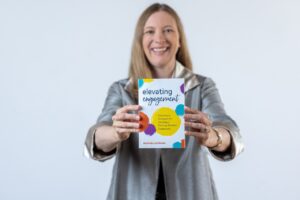
woman holding bookTo get the low-down on event engagement Smart Meetings chatted with Amanda Lea Kaiser, speaker, engagement strategist and author of “Elevating Engagement: Uncommon Strategies for Creating a Thriving Member Community.
Progressive Participation

Not everyone in your event is going to be a bubbly extrovert. It is always important to remember one size does not fit all. Asking for certain types of engagement from your audience can make the introverts in the room shrink into their seat cushions.

Read MoreHow to Encourage All Personality Types to Open Up

Kaiser suggests asking attendees to raise their hands if they agree with a statement and raise both hands if they really agree with said statement. “Progressive participation is all about starting really slow, and then kind of making the participation more and more substantial. But by starting slow, it gets people into the habit of participation, and they realize that it’s fun and quick and easy.”

Ask questions without any right answers.

“Everybody comes from very different lived experiences. There’s no statistical right answer. We’re just looking for a directional answer. No answers are wrong. All that kind of stuff makes people feel safe,” said Kaiser.

Power of First Impressions

Because planners only have so many resources, meeting and getting to know every single attendee probably won’t be possible. However, planners can work to make sure that every attendee feels connected and has a firm understanding of what to expect from the initial orientation email.

“If I’m hosting [an event] I’ll send out just a three, four-sentence orientation email. But if you’re doing something like a conference, you can do a whole nice set of quick emails. Especially for [your] newcomers, they don’t know how to dress, they don’t know how to meet other people and all of that. I love the idea of orientation emails, maybe even for a three-day long conference, doing some kind of orientation events where they get to meet other people, and then they’ve got a buddy.”

Kaiser points to the registration table as another big aspect of first impressions between meeting planners and attendees.

“For the attendees, it can really set the tone. If somebody on the other side of the registration table even just smiles at me or says, ‘How was your trip?’  It makes an impression. Or if there are sign holders and greeters. And some conferences will have board members walk around their registration area, and they’ll just talk to people they don’t know. All that kind of stuff makes a humongous difference in people’s minds.”

An Opportunity for Collaboration

One thing Kaiser sees coming out of the pandemic is that there is an opportunity to play with the event format.

“During pre-Covid there was maybe a bit more tolerance for keynotes for panels, where audiences passively learned and took in all kinds of information. And then there was sort of designated networking time,” Kaiser recounted, pointing to how people grew accustomed to various formats during the pandemic.

Read More: How Customized Generational Engagement Can Benefit Meeting Profs

“There’s a lot of formats and a lot of interesting ways to learn and connect. The just being talked to and just a reception are not sufficient formats. I think there’s a big opportunity for a lot more collaboration and co-creation, and contribution.  I’m really heartened when I see people talking about how they’re going to make their events much more collaborative where the participants are really working on solutions.”

Would You Be a Dragon or Own a Dragon?

When reaching into the bag of tricks for ice breakers, Kaiser likes to remind herself that ice breakers don’t have to be super serious.

“You know my icebreakers are usually silly questions. Sometimes I’ll ask a question that’s way off topic, but it’s intended to set the tone.”

In a recent online discussion, Kaiser asked the audience: “Would you be a dragon, or own a dragon?” The question was outside of the scope of the topic, but it allowed audience members to think, reflect and be creative.

Regarding in-person events, Kaiser’s approach is a little different.

“I am not your average keynoter. We’re going to work on this together. So, my opening icebreakers are always super short, sometimes funny and require almost no energy to give me a response, because I’m just trying to get them into the habit of realizing that we’re not sitting here for a keynote, the way you think about it. We’re gonna participate now.”

Why Marriott CEO Tony Capuano is not expecting a hospitality downturn, especially in meetings

Marriott International’s Exchange Association Masters customer event at the flagship renovated Sheraton Phoenix Downtown last week was an opportunity for meeting planners to ask top Marriott leaders what they could expect from the company in the future and talk about what they had been through together.

Marriott International President and CEO Tony Capuano kicked off the event by thanking the 314 association planner customers for sticking with the company and helping the hospitality industry recover so quickly. He added that despite some predictions of a recession, he just isn’t seeing it in the data. “When we look at our forward bookings, particularly in the group segment, which has been remarkably strong, we’re just not seeing it, yet.”

Capuano softened his statement by saying the booking windows are shorter than in past years, but he also referred to three other trends that could bode well for hotels and events: a shift away from buying goods towards investing in experiences that have expanded to all generations, a desire to explore (and post pictures on social media of) the world, and an increase in the percentage of conference and business travelers who are extending their stays for leisure.

The return has been uneven depending on the region and the industry. Marriott’s Chief Sales and Marketing Officer for the U.S. and Canada Julius Robinson clarified that banking, finance and medical groups are returning with more small, regional meetings. After some rocky years, urban cities are returning to strong occupancy again as well. “You can’t look at the headlines; you have to understand what is happening in your local community,” he said.

All of these changes require new responses for the almost 100-year-old hospitality company. Marriott International’s third board chair in the company’s 96-year history, David Marriott, explained at the opening session that the company is focused on technology, growth, sustainability and DEI.

Belonging: An Expanded Definition of DEI

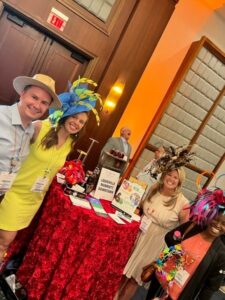
four people posing for picThe pledge to embody DEI started at the board level where Marriott pledged that as board members age out, he would be replacing them with diverse, talented, international business leaders who embody environmental, social and governance principles. Marriott stepped into the role his father vacated in February 2022. At the same meeting, Isabella “Bella” D. Goren, former chief financial officer with American Airlines, was appointed to the board’s audit committee.

“The other thing we’re trying to do with the board is to bring [employees] closer to our culture and our core values and help them understand our business better,” he said. “We want board members with varying backgrounds, different understandings that can challenge the management team, challenge one another in the board room and help us become better.”

The very definition of diversity was being expanded beyond what you could see, however. A panel led by Marriott Vice President of Global B2B Evens and Programs Glenn Stress featuring Marriott Senior Vice President of Multicultural Affairs, Social Impact and Business Councils Apoorva Gandhi and Smart Women in Meetings Award winner and Google Global Events Strategy lead Megan Henshall summed the meaning of DEI as welcoming the full personhood of everyone connected to an event with all of their strengths, talents and disabilities.

Read MoreWhy is DEI Critical to the Hospitality Industry?

Henshall shared learnings from her recent Google Xi Days and the Nue Project she started to better meet the needs of neurodiverse people, demystify and normalize speaking a culturally sensitive language. “In effect, this is a love letter to everyone who doesn’t love forced fun at a networking event,” said Henshall.

Ghandi also talked holistically about how Marriott is working to diversify supplier partners to build economic security and innovation. “That leads to welcoming all guests,” he said.

Technology: Removing Friction from the Hotel Stay

Marriott has been investing in the Marriott Bonvoy app since it was created as part of the Starwood merger in 2019. It now allows members to book hotel rooms, check-in, access mobile keys, “unlock experiences” and “have the world in the palm of your hand.”

“We are constantly looking for ways to drive efficiency, to remove friction from the guest experience, to make the working environment more appealing for prospective future associates and to drive efficiency for our owners,” said Capuano.

Robinson called the company’s technology advances a journey that includes replacing the company’s property management and reservation systems. “We’re rebuilding our infrastructure for the future to support all this personalization,” he said. It should be able to combine customer requests with data from previous stays to create better end-products.

The end goal is for Marriott to have its own ecosystem that includes partnerships with Uber and others that make everything associated with a stay seamless. That could include changing credit cards mid-stay when switching from business to pleasure. And, of interest to many of the meeting planners present, integrating billing to make it more user-friendly.

In January, Marriott announced that instant booking would be available through GroupSync Marketplace in the U.S. and Canada. The partnership with Groups 360 allows for Expedia-like experiences booking simple meetings based on real-time inventory available in the system.

“One thing that we have been really pleasantly surprised about is that association of customers have been interested in trying to use some of this product,” said Robinson.

While he predicted that the product will grow beyond the current 1,500 properties and could even handle more complex transactions in the future, the traditional RFP is not going away any time soon.

31 Hotel Brands: A Growing Footprint

A month ago, Marriott announced that it was acquiring the limited-service, Latin American brand City Express for $100 million, making City Express by Marriott functionally the 31st brand for the company by August. The deal made Marriott the largest hotel company in the Caribbean and Latin America. Capuano explained the logic behind the deal and his litmus test for future deals this way: “I don’t feel a burning need to do transactions to gain scale simply for the sake of gaining scale.” Instead, he looks at the company’s geographic and service footprint and if he sees gaps in either of those that the company can’t fill organically, then he considers a transaction.

Read MoreMarriott International’s ‘Meet with Momentum’ Keeps Growing—Here’s Why

“I love the breadth of choice that our portfolio offers to our guests and our owners and franchisees,” he said. “We want to make sure you never need to look outside our ecosystem for every type of meeting that you plan.

In addition to buying brands, new Marriotts are also opening around the world. Gaylord Pacific is set to debut in 2025 in Chula Vista, California, seven miles from San Diego with 1,600 guest rooms and more than 477,000 sq. ft. of meeting space.

And the Sheraton renovation that started with Phoenix is continuing with 17 underway in the U.S. and Canada. A similar refresh is in the works for the W brand starting with W New York Union Square.

In her new position as director of hotel sales at Visit Houston after 15 years in the hotel industry, Melinda Mintz spoke with Smart Meetings about her personal and professional journey. Smart Women in Meetings: Innovator Awards 2022 winner Mintz discusses her gratitude towards mentorship and her desire to pay it forward, the ways in which grit and resilience have been catalysts in her successful career and the aspects she loves about working for Visit Houston to help meeting profs have a stellar event.

Melinda Mintz

Q: How did you get into the meetings industry? What was the one moment you knew that this was the industry you wanted to be in?

A: It was a little bit like a fluke. When I first started in hospitality, I knew I wanted to work with people and I wanted to be able to help accommodate people in their requests. I started at the front desk and I got to know everybody. After I graduated college, I moved to Texas and the first job that I applied for was in a catering sales office as an assistant. I had a really great mentor there who helped teach me a lot about what it is to take care of customers. She helped push me into the conference planning role and it really helped me launch my career in the meetings and planning industry.

From there, I went into sales and I was a sales manager for about five years. I had the opportunity to get another great mentor (who) helped me and push(ed) me in into the director of sales role where I get a chance to now mentor other people in the hotel and meetings industry.

Read More: The Story Behind Smart Women in Meetings Awards 2023

Q: Sounds like mentorship is a theme in your career. How important is mentorship in the meetings industry?

A: I think mentors are so extremely important. One of the coolest things about our industry is that you may have the background and the education and the experience, but really it’s about interactions. It’s about getting to know what you do and figuring out how to make it happen for people. Asking the right questions and understanding what people need in order to help them.

Q: You recently made the move from the hotel industry to Visit Houston. What made you change from the hotel industry to working with a CVB? What’s the best part about working for Visit Houston?

A: I was working in the hotel industry and have been for 15 years, between front desk and conference planning and sales and services. I was looking for a greater and bigger opportunity. It’s nice to be able to now have a bigger platform to be able to work with more Houston hotels. What I love more than anything is providing hospitality, but also building a network and connections between our customers and the partners that can really help find them what they want in order to make their event successful.

Q: What is the best food you can get in Houston?

A: There is no shortage of anything you want to eat in Houston. Like barbeque, brisket that has been smoked for over 20 hours. But the cool thing about Houston is that we have a lot of fusion restaurants as well. My favorite thing about Houston is being able to try something new, no matter what. We have a food hall and I met a customer there the other day. She wanted to go to this North African fusion restaurant. I said “alright, I will have what she’s having.” And it was delicious. Sometimes you just need a little bit of a nudge to try something that you haven’t tried before. You say favorite food in Houston? I don’t even have a favorite restaurant.

Read More: Houston: The New Capital of Southern Cool

Q: In the Smart Woman VIP Club, we have been talking a lot about leadership, grit and resilience. Are there any times had had to dig deep and mobilize these qualities in your career and/or personal life?

A: A couple of times. You don’t see males majors going from salesperson to being a director of sales. But my director of sales was a great mentor for me to learn a lot about what she did. She ended up (taking) medical leave and so I was filling that position. So I was in the process of filling that position, and not being only a co-worker to my current co-workers but also being their boss. At some point, you have to realize that even in those times, when you don’t know where you’re supposed to be going or what you’re supposed to be doing, you have to put yourself out there.

I had to let my boss know – I’m interested in this position. (That) was really hard for me at the time because I was younger, I was a sales manager, why would anybody consider me to be a director of sales? But I had already been doing the job. They gave me a shot and the rest is history.


Looking for hotels with an array of meeting options? We got that. One-of-a-kind themed event spaces? We got that, too. Experienced professionals who are passionate about bringing your meeting to life? Look no further. Partnership is our middle name – we are built on it. And it’s all in one amazing, awe-inspiring location.

Learn more

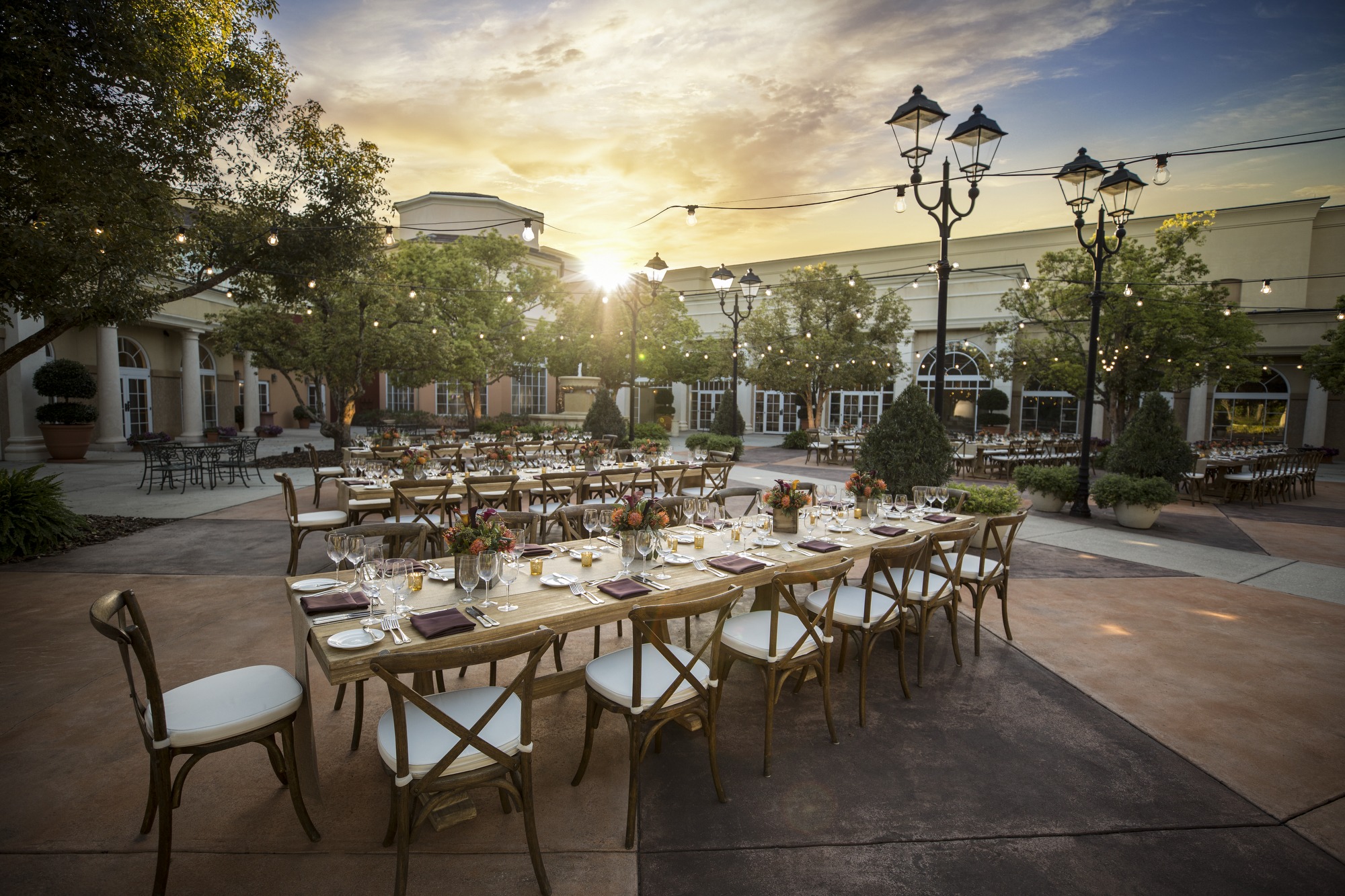
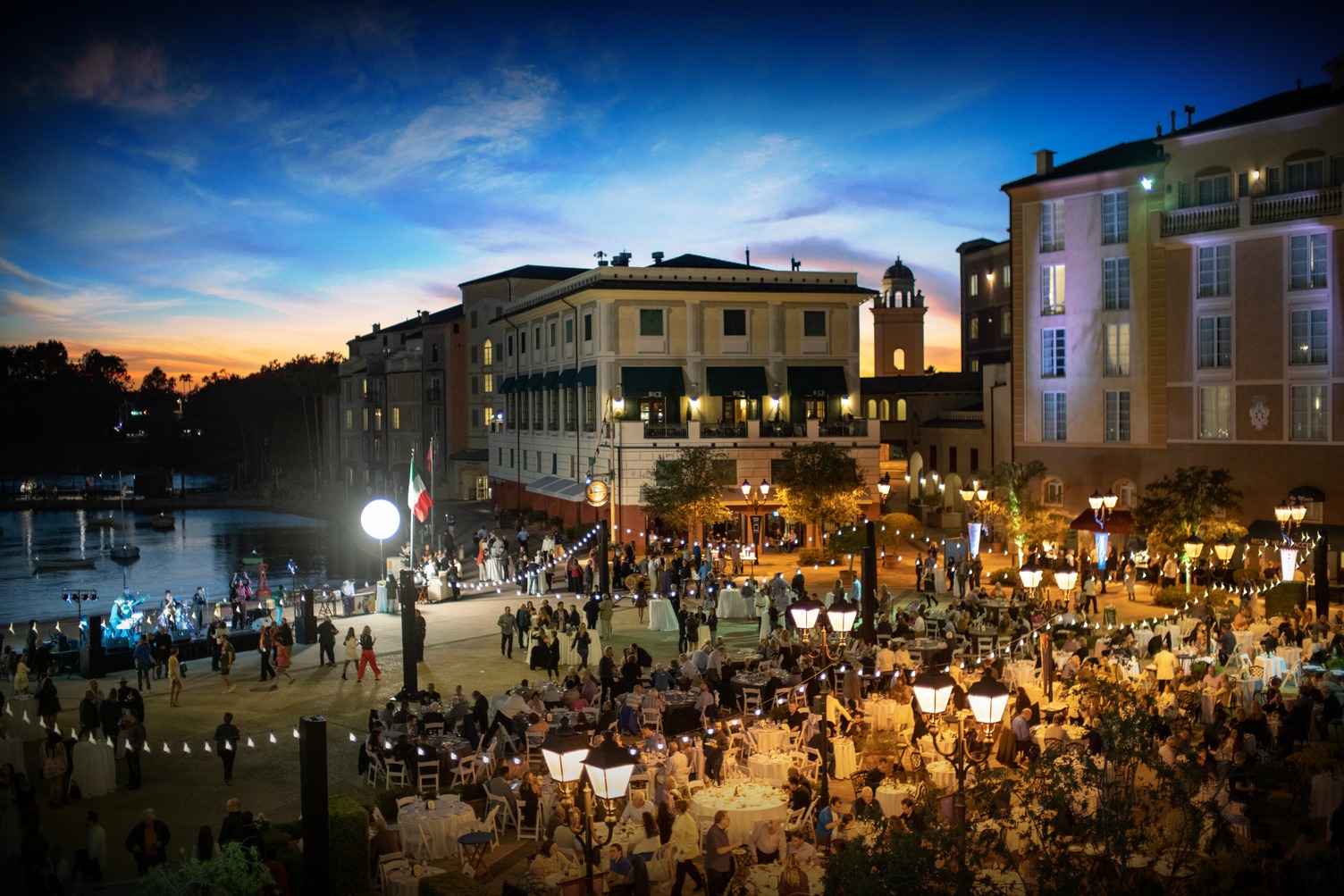
Your guests will feel like you’ve brought them somewhere special, to a scenic Italian seaside village. A re-creation of the famed town on the Italian Riviera, Loews Portofino Bay Hotel at Universal Orlando has charm for days, with no passports required. Much of the hotel encircles the Harbor Piazza, with its sidewalk cafes, live music performances, European architecture and sparkling blue waters. Your guests will definitely be living “la dolce vita—the sweet life” during their stay.

The hotel offers 750 luxurious guest rooms, including 45 suites. With 42,000 sq. ft. of flexible indoor meeting space, we can handle the big events, the intimate meetings and everything in between. Feeling Al Fresco? We get it. The hotel offers 47,000 sq. ft. of beautiful outdoor meeting space as well. Our culinary experts can work with you to create unforgettable experiences for your guests. The banquet menu is Italian inspired with deliciously crafted classics as well as new dishes sure to be favorites. From simple fare to gourmet dining – breakfast, lunch, dinner and everything in-between—the hotel’s chefs offer their own unique touches and expertise to work together with you to craft something truly memorable.

Don’t forget our restaurants. In-between or after sessions your guests can enjoy authentic Italian fare, including the classic cooking of Mama Della’s Ristorante. Between scheduled meals, there are plenty of places for your guests to stop for a bite or a drink, including The Thirsty Fish™ overlooking the harbor, a grab and go Starbucks® and more.

At Universal Orlando Resort, we deliver an incredible collection of meetings product and an unrivaled standard of quality in one awesome location. Our immersive environments, innovative partnerships, and committed team of Events professionals, makes you a hero by creating meeting experiences that connect organizations to their attendees in ways you’ve never dreamed possible.

Portofino Bay Hotel TM & © 2023 UCF Hotel Venture. All rights reserved.

The Hospitality Show Las Vegas will place eco-friendliness front and center

The first-ever Hospitality Show is coming to Las Vegas and its producers are making strong sustainability efforts from the get-go. In addition to three days of speakers, networking opportunities and idea-sparking content, The Show’s sustainability efforts—a big topic in the hospitality industry in general, and a topic of focus at The Show in particular—will be on full display.

The Show, which will take place June 27-29 at The Venetian Las Vegas, is a collaboration between American Hotel & Lodging Association (AHLA) and information services company Questex, which offers data insights in other fields in addition to hospitality, such as technology, healthcare and wellness.

The two organizations have come together to make The Show as eco-friendly as possible, adhering to Questex’s Quest Zero initiative, through which the company has joined the Net Zero Carbon Event initiative, along with its vendor partners and colleagues.

How The Show’s Eco-friendly Initiatives

Efforts within different operations of The Show are being made to ensure it aligns with its sustainability goals, including reducing carpeting to two main aisles and only a few activations, after which the carpet will be used by future conventions and some will be recycled; limiting lighting and HVAC on the set-up days leading up to the event; donating food waste or sending it to a local farm to either be composted or used as pig feed.

Read MoreDitching the Dump

Even smaller details, down to what the badges are made of, will be given the sustainability treatment. “The badges will be plastic-free and made of paper,” says Akshar Patel, senior director of events and strategy at Questex. “We will encourage all attendees to return their badges for the reuse and recycling of the materials, including lanyards.”

Patel adds, “We have eliminated single-use bottles, prioritized local vendors to reduce travel when shipping products and equipment, organized staff and volunteer travel to and from the event to offset emissions, and roughly 95% of all on-site graphics will be recycled or reused.”

Venetian Convention and Expo Center, where The Show will take place, is also a sustainability advocate. In 2013, it became the first venue in the world to receive APEX/ASTM Level 2 Certification in 2013, meaning the convention center adheres to comprehensive standards for environmentally sustainable meetings. Although the APEX/ASTM standard was replaced by the updated EIC Sustainable Event Standards in 2019, The Venetian continues to follow eco-friendly guidelines.

“The Venetian operates with a focus on targeting ways they can eliminate waste, reuse, replace and recycle to limit environmental impact through natural resource conservation, waste management and supply-chain sustainability,” Patel says. “We will be communicating and encouraging our attendees to support the hotel’s effort and our team has also kept these efforts at the forefront in planning and execution of The Show.”

Patel says they will be running back-of-house tours at The Show, two of which will be focused on sustainability. “Attendees can tour the recycling dock where they will see all the waste properly sorted and recycled,” he says. “Seeing these sustainability efforts first-hand is a great way to bring our educational content full circle and a nice way for attendees to feel that they’re a part of something bigger.”

Read MoreSustainable Meetings Through Renewable Concepts

For meeting profs who wonder how they can make their events more sustainable, Patel has this to say: “My first tip would be to educate yourself on sustainability issues. There are so many ways to make an event more sustainable that are just not common knowledge or top of mind when thinking eco-friendly. Do a bit of brainstorming at the beginning of the planning process, decide what choices might impact the environment and research all possible alternatives.

“The smallest change can still have a great impact on the environment. Sometimes, it’s just not logistically possible to make every single choice in favor of sustainability, but the efforts that are made, even small ones, make a big difference and really matter to the cause.”

The Show 2024 will be held at Henry B. Gonzalez Convention Center in San Antonio Oct. 28-30. Beyond 2024, the two organizations have agreed to produce the event for 10 more years beginning this year.

artificial-intelligence-calendar

If you’re one of the many people who don’t have their own personal scheduling assistant, you know that setting up meetings can be time-consuming and tedious. Sending emails back and forth, trying to find a time that works best for each person, can take time away from more critical tasks.

What can make it easier for planners and other professionals to schedule appointments with vendors and site visits with venues? A scheduler powered by artificial intelligence (AI) that can send correspondence and set up meetings for you. That’s the goal of Microsoft’s new project, which goes by the name of Calendar.help. The scheduling tool uses Cortana, Windows 10’s digital personal assistant, to take care of all of your scheduling needs.

Calendar.help is powered by Microsoft Research, Outlook, Cortana and Genee, a scheduling AI technology startup that was recently acquired by Microsoft. The project emphasizes natural language in correspondence so users get the experience of having a real assistant handle the process.

How to use Cortana to schedule a meeting:

1. When using Calendar.help, write an email that gives Cortana instructions to specify the meeting’s length, general timeframe and location. Cc Cortana in the email, and she will look through your calendar to find times that you are available.

2. Cortana contacts your invitees to propose times for the meeting. Once they reply, Cortana continues the conversation until a suitable time is found.

3. If attendees fail to respond within 48 hours, Cortana also follows up with them.

4. Once date and time are confirmed, Cortana creates an event in your calendar and sends an invite to everyone involved.

Currently, Calendar.help is available only to those who sign up for a preview waitlist, but it should receive a broader rollout in the coming year, when it is sure to be a hit with many meeting and event planners.

6 steps to finding the right event tech vendors and product

Finding the right event tech can be a long, tedious process. The journey of locating vendors and the resources that best match your needs can send any planner into a tailspin.

To help planners avoid the inevitable headache, Smart Meetings sat down with Huong Nguyen, CEO and founder of Shiloh Events, to find the best path forward for meeting planners looking for the right event tech for their needs.

Listen to the entire webinar here.

1. Understand Your Goals

Having a firm grasp on your vision grounds planning and simplifies the prioritization of must-have tech necessities.

Nguyen posed a few questions for planners to ask themselves.

  • What is the purpose of your event?
  • What type of event is it?
  • Who is attending?
  • Who is the target audience?
  • What are the KPIs?
  • What does success look like?
  • What will the attendee experience be?
  • What does failure look like?

“Once you have identified your final destination, you’re gonna have to navigate through those waters to overcome certain challenges to make it successful,” said Nguyen. “Event tech tools are going to help you solve those problems and challenges.”

2. Understanding Event Tech

If your goals include attendee engagement, improved DEI and a stellar attendee experience, the solutions could consist of things like mobile apps, digital accessibility tools (live transcription and subtitles) and audience response software to track crowd reactions.

Read MoreEssential F&B: F&B Event Tech

“We want to facilitate an environment for that connection to be intentional and meaningful,” said Nguyen.

3. Factors to Consider

As meeting planners start mapping out their needs, here are a few more aspects to consider.

Functionalities: What features do we absolutely need?

Often, consumers purchase products, but upon using them realize none of the features actually help them.

“Keep in mind what you really need,” Nguyen advised. “Is this software going to make your planning experience more efficient? Is it going to alleviate the manual work to save time? What issue is this software going to solve for you?”

Ease of use: Is the event tech software intuitive?

Cross-training staff allows you to delegate tasks to team members so that multiple people can support when needed.

“The learning curve for technology can be very hard to overcome and oftentimes discouraging without the right guidance and support,” Nguyen said.

She suggested utilizing free trial periods and asking vendors to build out your event as a sample. Then, request access for you and your team to test. You can also ask to extend the trial and open all the functionalities to see the full scope of the tech.

“Select a platform that is intuitive, easy to access and with readily available resources,” she said.

Cost: How much is each line item?

Nguyen suggested asking vendors what exactly is included in the total price tag.

“Sometimes the cost of an event tech platform does not include the initial build or the support hours. Be sure when you’re reviewing the cost proposal, to ask the vendor what it actually includes.”

Another budget maximizer: ask for refunds for features that are not used.

Support: What resources are available?

When asking the vendor about support options, ask these questions:

  • How many support hours are included at the baseline?
  • What are the basic vs. additional packages? Are there add-ons available?
  • Where and in what time zone is your support team located?
  • Are you going to assign someone specific to me?

Scalability: Are you looking to scale your program up for the future?

Event planners looking to scale up for the future may want to look at: advanced ticketing, task management, discount codes, sessions tracking, robust e-mail marketing and communications.

“Ask how often the vendor updates their technology,” Nguyen suggested. “There may be some features that you want today that are affordable. But after year one, you’re going to want new features, right? The question is, is this vendor going to be able to grow with you?”

4. The Market Place

The search for the right vendor can be daunting. But it doesn’t have to be! Once you have narrowed down your top choices, you’ll then start emailing vendors to request demos.

“You need to send them what it is that you’re looking for, because you do not want to waste 30 minutes of your time with each of 10 tech vendor demos.”

Check out customer reviews. Be specifically mindful of whether and how the vendor responded to negative reviews.

Once you start doing demos, ask a lot of questions and involve your teammates. Consider doing a comparative analysis between the vendors with your team.

5. Always Negotiate

When negotiating your contract, consider these aspects:

  • Quantity of registrants or users
  • Training and support hours for pre-event and day-of-event support
  • Initial build

Read MoreDon’t Blame Covid if Rooms Aren’t Ready When Guests Check In

“We all know during the day of the program, a lot of things can go wrong, and we need someone there to help us solve and troubleshoot these problems,” said Nguyen.

6. Implementation

You got your tech ready? Great. Now the process of getting everyone on the same page begins. Create an implementation strategy to address training and onboarding and starting the initial build.

“This is where the whole team comes together to learn the platform. [During] the initial built you gather assets and content,” said Nguyen.

Plans should also cover:

  1. Launch of event tech
  2. Testing, testing and testing again
  3. Updates and maintenance
  4. Reporting

Keep these steps in mind in the future to avoid poor user experience, stressful planning, chaos and lack of preparedness.