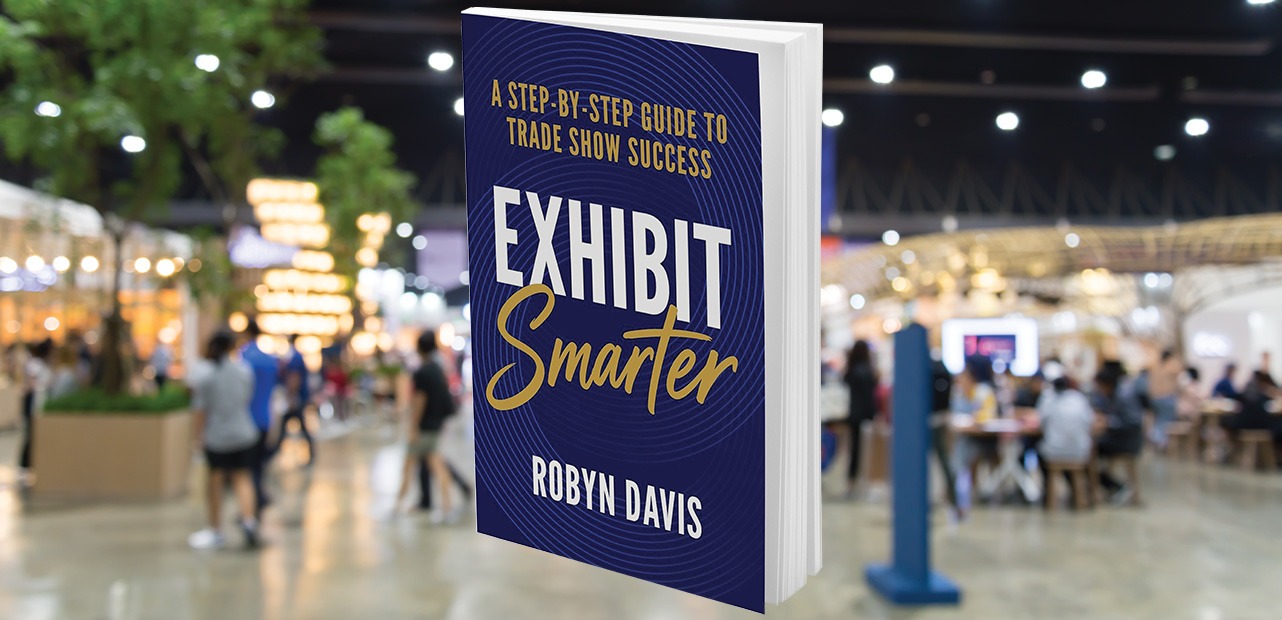
According to Robyn Davis, author of Exhibit Smarter: A Step-by-Step Guide to Trade Show Success, discusses the inevitability of things going wrong at conferences and the more important matter of recover quickly, refocusing and giving people your full attention. She cites three examples of this from her own experience.
Smarter lessons for exhibitors
Trade shows rarely go exactly according to plan. A late arrival, a technical failure or even a booth mishap can quickly derail the experience—but only if exhibitors let it. In Exhibit Smarter: A Step-by-Step Guide to Trade Show Success, Robyn Davis draws on her years of experience on the show floor to help exhibitors navigate the unexpected, connect more effectively with attendees and get more from their investment.
In this excerpt, Davis shares a lesson that applies well beyond the trade show floor: Things will go wrong. What matters is how quickly you recover, refocus and give the next person your full attention.
Excerpt from Exhibit Smarter:
There’s a saying in the theater: “The show must go on.” It means that if someone forgets their line or a prop doesn’t work, for example, everyone onstage agrees to do their best anyway so the audience doesn’t know anything’s wrong.
If you choose to exhibit, you’ll soon see that while our challenges in trade shows can be more extreme than those in theater, we say the same thing. Not just because we care about our audience, but because we deserve a chance to finish what we started. Exhibiting requires a significant investment of money and more. When we put in blood, sweat and tears, that has to count for something.
I remember working in a booth when the power went out in the convention center. I was in the middle of qualifying an attendee when the entire building went dark except for the floodlights, one of which was positioned right over our heads. I felt lucky. Even though I couldn’t do our demo as planned, it wasn’t a total loss. We continued our conversation comfortably.
On two other, separate occasions, I happened to be standing near an exhibitor when their booth fell forward. One was a light, fabric-based display, so the exhibitor held it just over her head until she finished her conversation. The other resulted in broken glass and significant damage to the display, but since no one was hurt, the exhibitor had the same solution: Focus on the attendee now and worry about the damage later. They simply stepped to the side and kept talking.
Another time, when I was just getting started in trade shows, I tried to be extra early because I knew the show was important to the exhibitor I was working with. Unfortunately, I ran into heavy traffic and got lost. When I finally made it to our booth 30 minutes after the show opened, I felt so bad about letting everyone down that I burst into tears. I don’t typically cry at work, now or back then, so I felt even worse. My contact was more confused than angry. The way he reframed the situation for me was so smart: “New people come into the booth all the time,” he said. “There’s nothing we can do about the ones who already came and left. But if you’re still upset about them, everyone who comes later will suffer too.” That resonated. Within a few moments, I was back in the booth with my game face on.
If you exhibit and put so much pressure on yourself but something still goes wrong, you may feel like crying too. That’s normal, but it doesn’t have to be. Exhibiting is an iterative process, which means you aren’t supposed to be perfect, but improve show after show and even visitor after visitor instead. Visitors care about how you engage with them, not what’s happening around you or what happened before they arrived. How could they even know what happened when they weren’t there? They couldn’t, so don’t let those things bother you either. Each visitor is a fresh start.
It’s okay to start small and make mistakes, just like I did, as long as you keep trying.
This article appears in the November 2026 issue. You can subscribe to the magazine here.