Interviews with experts on APAC’s can’t-miss event in Melbourne
If the Asia Pacific Incentives and Meetings Event (AIME) had a headline criterion, Matt Pearce would tell you to look up first, not down at a dashboard. “Smiles are a good metric,” said Pearce, CEO of Talk2 Media & Events, the organizer of the event. “Because if people are smiling, you know they’re having a good time. And the good time is really because they’re doing business.”
That philosophy framed the opening of AIME 2026 at Melbourne Convention and Exhibition Centre—the largest edition of the show to date under Event Director Silke Calder and her team. This year’s event welcomed more than 1,500 vetted buyers, over 5,000 total attendees and 750-plus exhibitors representing 36 countries and territories.
Yet for Pearce, scale alone is not the headline. “AIME 2026 is the biggest show our team has delivered to date,” he said. “And the continued growth in buyers, exhibitors and international participation reflects the confidence our industry places in the event.”
As planners parse attendance numbers and post-show reports, Pearce is clear about what actually counts. “The serious metrics are the number of meetings being held and then, at the end, what business they’ve done or are likely to do,” he said. “They’re the real metrics for us. The rest of it is vanity.”
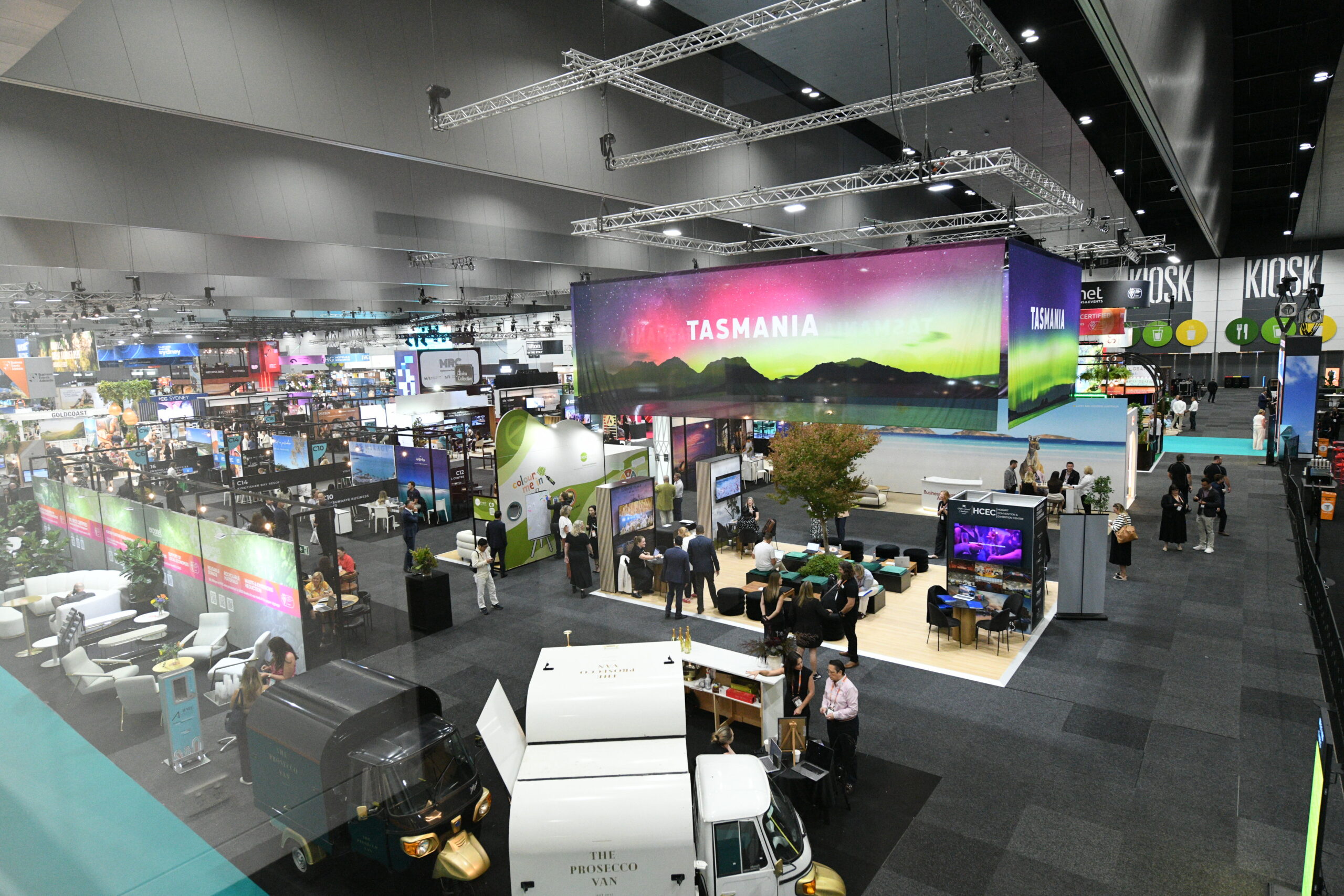
A walk around the show floor reinforced that approach. From Japan to Fiji and across APAC, destinations, hotels, experience providers and suppliers connected with rigorously qualified buyers who fuel the region’s MICE economy, each meeting intentionally curated for meaningful outcomes, not wasted time.
“We have thousands of people in here,” Pearce said. “But it wouldn’t make it a good show unless there are thousands of the right people.”
Curated, Not Casual
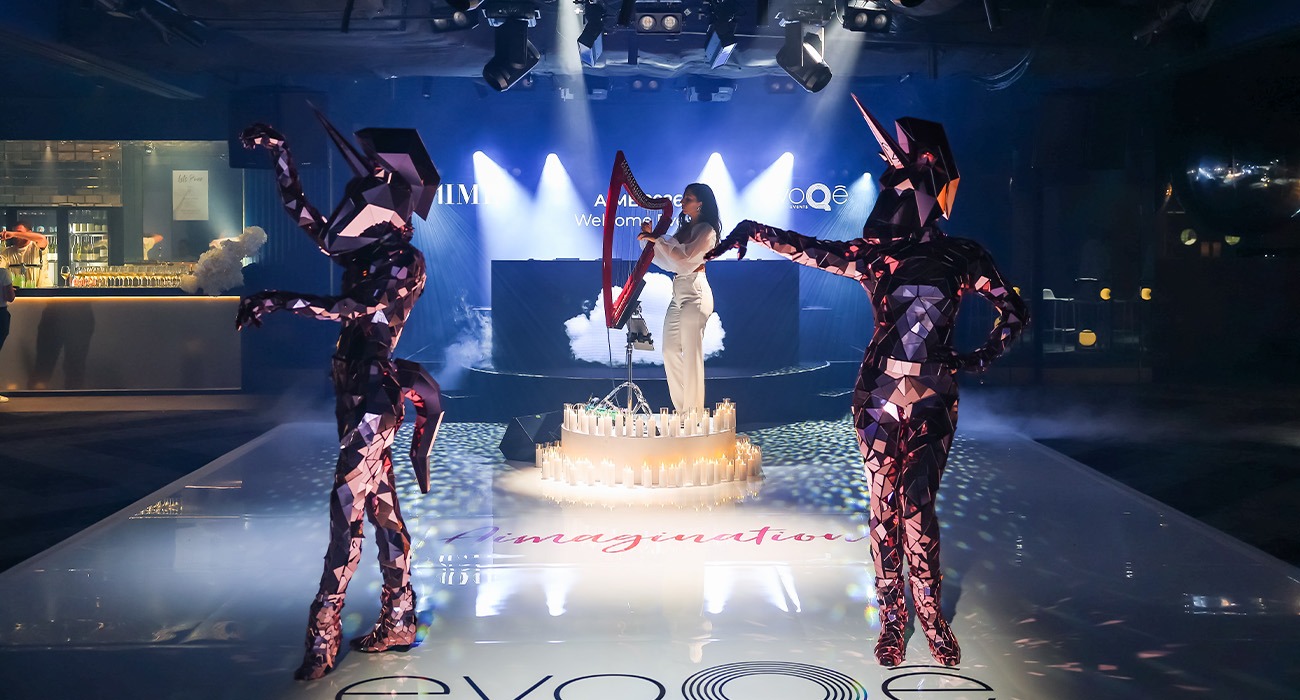
AIME has long leaned into pre-scheduled appointments and data-backed matchmaking. In 2026, that strategy only deepened, supported by enhanced show floor zoning, expanded networking areas and an enlarged Ideas Academy.
Unlike events that rely heavily on serendipity, AIME’s structure is intentionally curated. That does not eliminate organic moments—it strengthens them. “It always comes back to finding the right people,” Pearce said. “This is an easy business. We put good buyers and good sellers together. The work that goes on in between is where it’s made. That’s what’s been the success of AIME.”
Technology, particularly AI, is sharpening that precision. “AI is giving us the opportunity to go deeper,” he explained. Buyers now arrive armed with information. “If somebody tells me how many seats their ballroom takes, I can find that out on the internet in 30 seconds. Talk to me about your capability, your approach, what you do, how you do it.”
Read More: AI: Resistance Is Futile
That depth is reshaping expectations on both sides of the table. It is no longer enough to exchange specs. Buyers want substance. Exhibitors need clarity of purpose.
Leadership Beyond the Show Floor
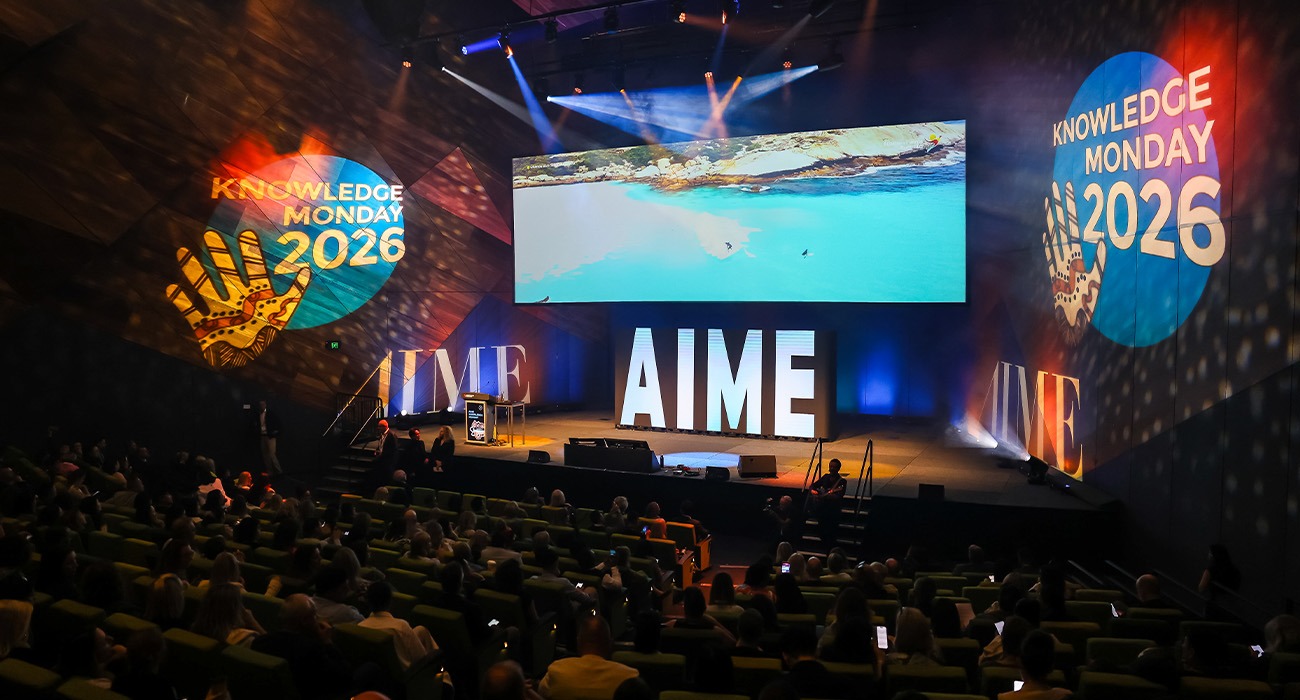
AIME’s opening day also spotlighted industry leadership through Knowledge Monday, the event’s professional development program. More than 1,500 attendees gathered under the theme “Expertise Matters!” for keynotes from Dan Haesler, Milo Wilkinson and Kristina Karlsson, followed by 20 breakout sessions across five content streams.
Curated in collaboration with El Kwang and BEAMexperience, and guided by an industry advisory committee, the program reinforced AIME’s positioning as both a marketplace and a learning platform.
The show’s leadership focus also extends to sustainability. “AIME signed up to the Net Zero Carbon Events initiative several years ago, with a milestone target of reducing emissions we can directly control by 50% by 2030,” Pearce said. “I’m pleased to share that we are well on the way to achieving that target.”
The result is an event growing in scale while tightening its operational and environmental discipline.
A City That Lives the Event
If Pearce spoke to the mechanics of connection, Julia Swanson, CEO of Melbourne Convention Bureau, spoke to the destination that makes those connections thrive.
Melbourne’s reputation as Australia’s cultural capital is not just branding. It is infrastructure. “There’s a huge amount happening in the cultural sector,” Swanson said, pointing to the $1.7 billion transformation of the Melbourne Arts Precinct. The redevelopment will unify traditional art, contemporary art, theatre, music and First Nations culture into a cohesive precinct expected to open in 2028.
Read More: Notes from the Road: Melbourne
For planners, that translates into real programming flexibility. “You can book out the National Gallery,” Swanson said. “It has the largest stained-glass ceiling in the Southern Hemisphere. It’s absolutely spectacular.”
Delegates do not need to board a bus to access it. “You don’t need transport because everything is walkable,” she said. “You can get a tram like a local. Walk through the city like a local.”
That authenticity is increasingly important. “[Visitors] want to feel welcome, safe, respected—but also have that authentic experience,” Swanson said. That includes integrating First Nations culture into meetings, from Welcome to Country ceremonies to partnerships with Indigenous suppliers and artists. “It’s about weaving that depth of culture into the meeting,” she said. “A real sense of place.”
Thinking Ahead (and Strategically)
For U.S. planners considering Melbourne, Swanson offered both encouragement and practical advice. “We work in longer cycles,” she said. “We’re talking to decision-makers out to 2032 for global conventions. So come and talk to us early.”
Early conversations unlock advantages: scheduling around major citywide events, exploring financial models and understanding Australia’s 10% goods and services tax. “If you structure it correctly, you can claim that back,” she said. “That’s significant.”
Melbourne’s convention bureau model also extends beyond marketing. “We can sometimes provide funding. We can help you register the event. We can support easier visa pathways,” Swanson said. “Convention bureaus here have a broader remit.”
Beyond logistics, however, she is seeing a deeper shift. “The questions we’re getting now are very different,” Swanson said. “Associations want to know what your destination stands for. What values do you uphold? What sectors do you want to advance and why?”
That alignment helped secure Women Deliver 2026, a major global gathering focused on gender equality set for April. “There was a strong values alignment,” Swanson said. “They saw Melbourne as a place where they could host an inclusive event and shine a spotlight on the Pacific region.”
Where AIME Stands Now
Building on more than $400 million in business generated following AIME 2025, this year’s event further cemented its role as the primary meeting place for the international business events community in Asia Pacific.
Taken together, Pearce and Swanson outlined a future that feels both grounded and ambitious. Success is not attendance alone. It is outcomes. It is alignment. It is depth.
“We’re quality first, led by quantity,” Pearce said. And in Melbourne, that quality is not confined to the show floor. It is built into the city itself.