Preview Las Vegas’ third year took place at Wynn. Several people were on stage, including Applied Analytics’ Jeremy Aguero, who provided an economic outlook for Las Vegas; Mary Beth Sewald, president and CEO of Vegas Chamber, Sandra Douglass Morgan, president of the Las Vegas Raiders, and Nicki Fargas, president of the Las Vegas Aces, who talked about their teams’ successes and impact on the Las Vegas community; and MGM International President and CEO Bill Hornbuckle and Boyd Gaming President and CEO Keith Smith began their discussion with Las Vegas Convention and Visitors Authority President and CEO Steve Hill, who discussed the state of the hospitality industry in Las Vegas.
Those negative headlines about Las Vegas aren’t exactly wrong, but they don’t paint the whole picture. This was evidenced at the third-annual Preview Las Vegas at Wynn.
Several discussions, from Applied Analytics’ Jeremy Aguero’s economic outlook for Las Vegas to a talk with two of the city’s leading sports executives, laid out a map of Las Vegas that is far different from the stories being told.
Las Vegas’ Economic Outlook
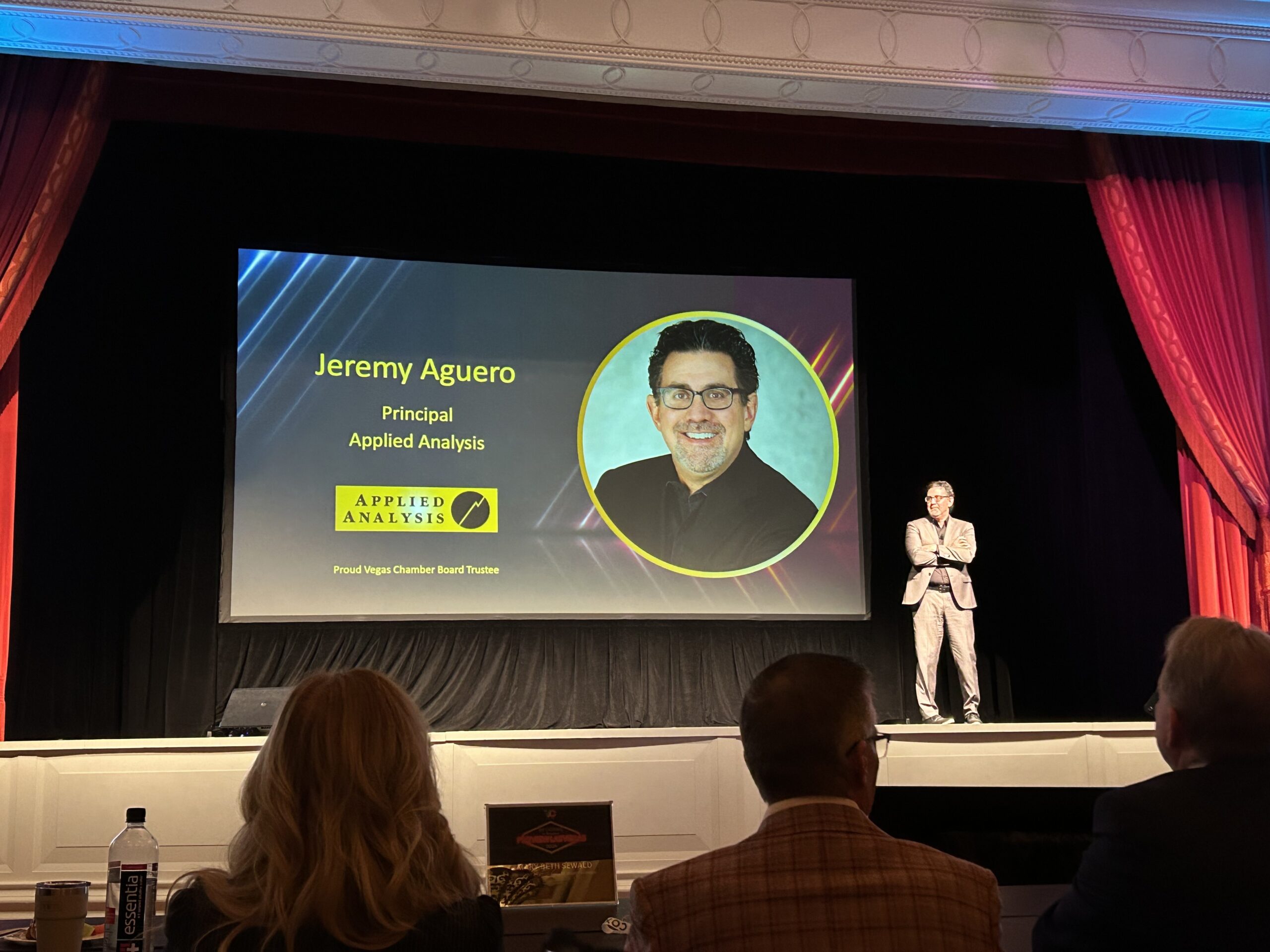
Jeremy Aguero, principal analyst at Applied Analytics, presented a nuanced view of Las Vegas’ economic situation, emphasizing the negative reports from various news outlets. “What is the noise we’re all hearing?” Aguero asked. “Population growth is slowing. We’re not going to have growth anymore. Millennials and Gen Z don’t want to have kids anymore. This is going to be the end of our economy. Apparently, we’re all just going to have dogs and no kids, right? I don’t think this is going to happen.”
Aguero noted that the birth rate has been declining since the 1960s, and that in 2030-31 we will see U.S. deaths outpacing births. “But that is not what drives growth in the United States,” he stated. “That is immigration, the net migration into the United States; the United States’ growth rate can be dictated based on how we let people into our country.”
Consumer confidence is another metric at its lowest level since 1979. Today, it’s at 52.9, lower than the Soviet invasion of Afghanistan, the stock market crash of the late 1980s, September 11 and Covid. Consumer sentiment is roughly on par with Russia’s invasion of Ukraine. Aguero said this doesn’t match the economic reality. “Our nation’s economy is up over 16% a period of growth by almost every measure…. Do we have challenges? Of course, we do, but the idea that our economy is somehow collapsing and the consumers aren’t moving forward just isn’t true.”
What gets lost in the noise, Aguero said, is that incomes have been outstripping inflation for the last three years. Consumers are doing better, not worse, than they were before; this is completely lost in the noise. Interest rates have come down, and although mortgage interest rates have been sticky, they are also slowly finding their way down, freeing up the market,” he said.
AI’s Continued Prevalence
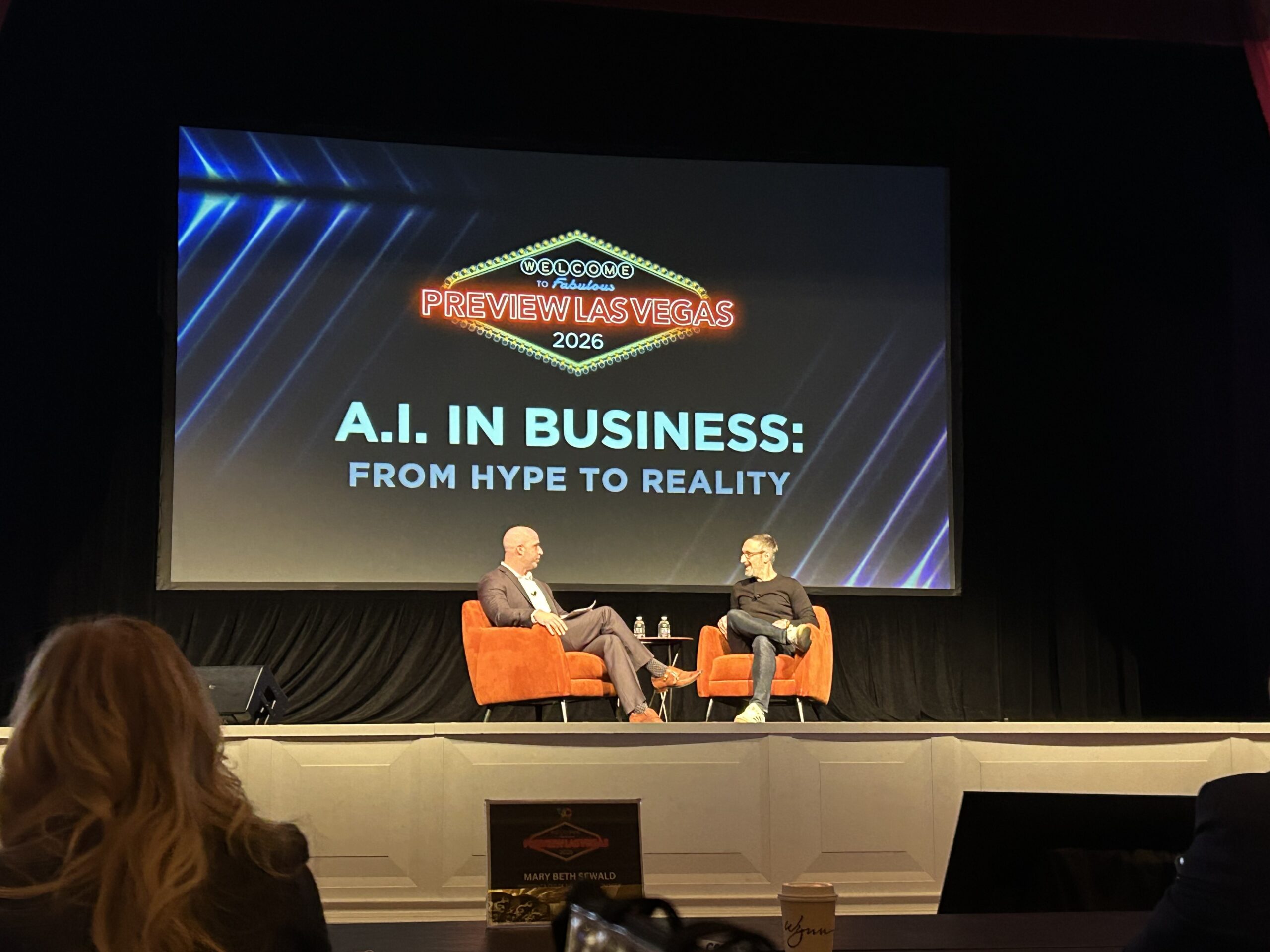
“It’s definitely not a magic bullet for anything,” said Adam Shlachter, client president for WPP Media, about the advent and increasing implementation of AI. “I don’t think anyone should feel that it is. It’s something that could add speed, agility, and perspective to many different ways of working. But it’s certainly not a replacement. It’s not something we should think of as an opportunity to outsource our thinking or outsource our work or outsource our productivity. It’s something we should use more to unlock intelligence and unlock new opportunities.”
With any new technology, many (including myself) approach it with varying levels of skepticism. It’s safe to say, though, that the technology isn’t going anywhere and will likely only become more prominent and integrated into our lives over time. With that in mind, Shlachter said the time to experiment is now. “It’s never been easier than right now,” he said. “There are myriad AI applications that just a couple of years ago were not commercially available or not available to consumers that were very much research- and lab-driven, and they are available for free.”
Shlachter emphasized that while many may feel they are behind in understanding how to use AI, many, even large Fortune 500 companies, are still surprisingly early in their AI adoption. “The biggest thing I would say is it’s early for everyone. You’re not late if you’re struggling right now,” he said. “Some of our biggest clients as well, some of our smallest clients, are tackling that for different internal processes, different R&D efforts, product development, go-to-market strategies, competitive analyses, social listening, you name it.”
The State of Sports in Vegas
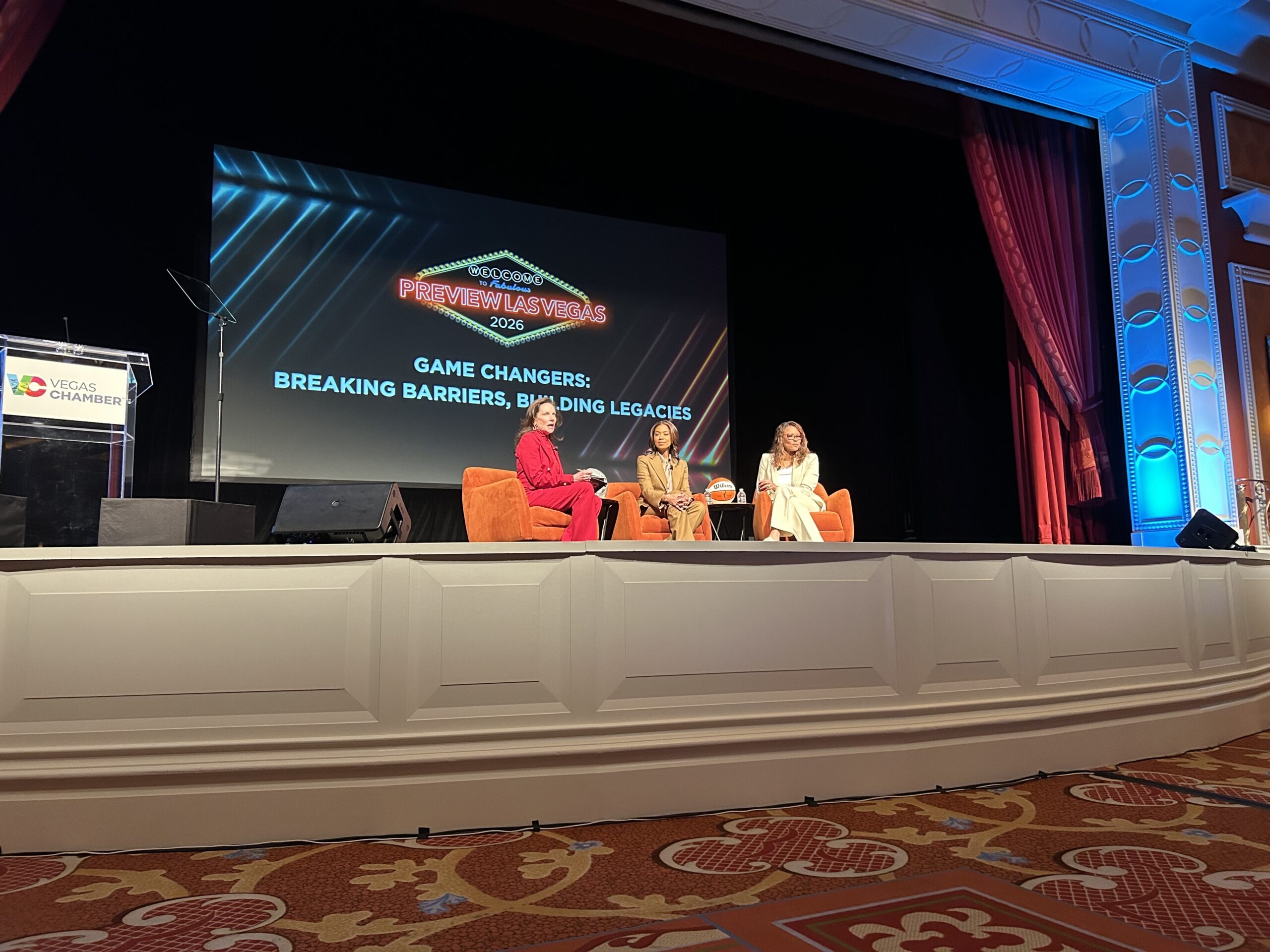
Mary Beth Sewald, president and CEO of Vegas Chamber, sat down with Sandra Douglass Morgan, president of the Las Vegas Raiders, and Nicki Fargas, president of the Las Vegas Aces, for a discussion of the teams’ successes and their impact on the Las Vegas community.
“What we do off the field is just as equally important as we need to continue to grow this fan base here in Las Vegas, locally and all over the world, as well,” Morgan said. “But you know, my heart is here in Las Vegas and always will be. So that’s where we want to start first.”
Read More: Community Takes Center Stage at PodFest
Morgan went on to talk about growing football camps around the city. Flag football, for instance, will be in the Olympics in 2028. This spring, Nevada State University will become the first college in Nevada to have a women’s flag football team, supported by the Raiders.
The city is well-positioned to have a fan engagement strategy that goes beyond game day. Morgan highlighted the unique position the city is in, “If a fan comes and maybe their team didn’t win, they’re going to find out that Bruno Mars is going to be here on April 10 and 11 and say, ‘I had such a good time there, I’m going to go back.’ Hopefully, they have so much fun that they’re going to come back and say, Let’s see what the Raiders are really doing here in Las Vegas.”
Perspective from MGM and Boyd Gaming
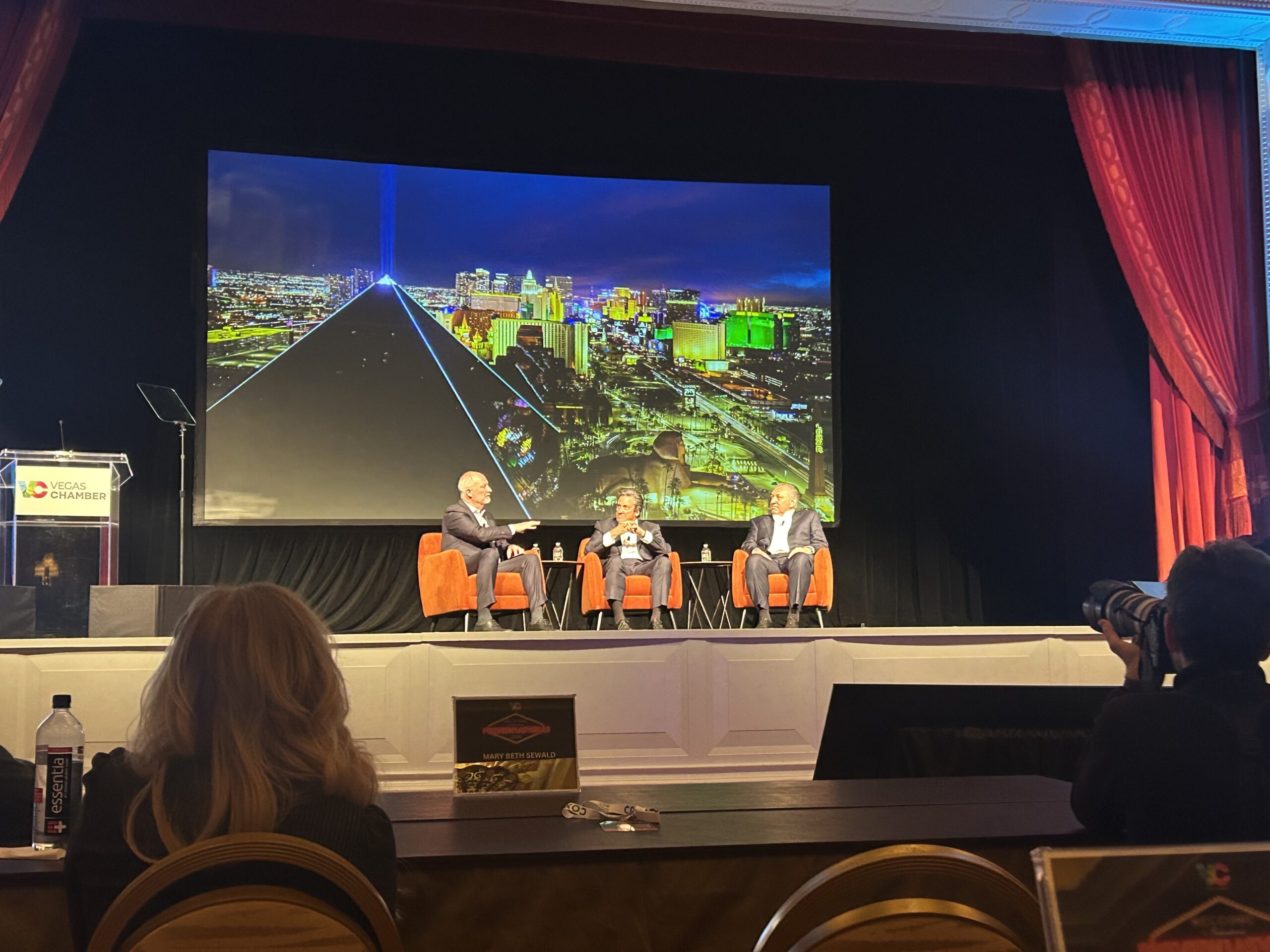
MGM International President and CEO Bill Hornbuckle and Boyd Gaming President and CEO Keith Smith began their discussion with Las Vegas Convention and Visitors Authority President and CEO Steve Hill by discussing their starts in the industry. They both went on to highlight the development they see today, from Hornbuckle’s presidency of Golden Nugget in Laughlin, Nevada, to Smith’s early days in the 90s with Boyd Gaming.
After highlighting the major points of their careers, they began to discuss the realities of the city and hospitality.
“There’s no question that visitation in Las Vegas is down. Visitation through the airport is down. It’s nothing we haven’t seen before,” Smith said. “I think we sometimes tend to make more out of it than it is. Is it concerning? Well, sure, when business softens a little bit, it’s concerning. But this has happened to us before. It isn’t the end of the world. Business will come back.”
Read More: Headlines vs. Reality: What Las Vegas Meetings Look Like Now
He said that, although he wouldn’t know when the downturn will end, he’s confident in the city’s long-term future. “Las Vegas will continue to grow,” he said. “We’ll continue to prosper in the long term. We just need to continue to focus on what we do best, which is provide great customer service.”
Hornbuckle followed up with a number that not many are talking about: Las Vegas occupancy rates. “The reality is, occupancy is only down 3%,” he said. “Yes, visitation is down in segments. In the next 14 or 15 months, we have more conventions on the books, both in our company and in Las Vegas, than in this city’s history.”
Discussing Las Vegas’ reputation as the Entertainment Capital of the World. “It used to be ‘what happens in Vegas stays in Vegas.’ How about ‘you can only do it in Las Vegas’,” he said. “Value doesn’t need to mean cheap. We’ve evolved to a point where value isn’t about what’s cheap, it’s about experiencing what you pay for.”
He provided an example from a golf perspective. “We’ve tried to slow down retail golf at Shadow Creek [golf course]. It’s one of the few public golf courses people can play like Pebble Beach; it’s a complete experience. In the last two years, I’ve gone from $500 to $750 to $1,000 to $1,250 a round.
“It’s the most expensive round of golf in America by $500 over Pebble Beach. Every tee time we put up for public sale that was more than $500 has sold out. Is it expensive? It’s outrageously expensive. People want the experience. They come to Las Vegas to go to Lady Gaga, to go to world-class restaurants. They can’t get them in most places, and they certainly can’t get the energy and excitement we have here.