When you get them up high, the sky really is the limit
“The mountains are calling, and I must go,” John Muir, the renowned naturalist, proclaimed. He knew the power of the peaks. As have, for millennia, traditional cultures across the globe. We in humankind have long lifted our gaze skyward to mountains as the places of deities, sacred spaces for revelation and transformation and as a font of life-sustaining blessings like water.
Ancient Greeks revered Mount Olympus as home of their gods, and clamored up Mount Parnassus to seek wisdom from the Oracle of Delphi. Jesus delivered his Sermon on the Mount high above the Sea of Galilee, and Moses is said to have received the Ten Commandments on Mount Sinai. In Hinduism and Buddhism, mythical Mount Meru is the center of all creation. Mount Kailash in the Himalayas is believed by Hindus to be where Lord Shiva and Parvati live. The Maoris of New Zealand worship mountains as former gods and warriors. In the Americas, the Navajo people view six mountains as sacred boundaries of their land, anchored by lightning and rainbows.
Mountains have always loomed as sources for heightened imagination and deeper understanding. So, take your groups high to be inspired, renewed and to ideate at the elevated levels made possible by the rarified air and spirit-cleansing awe of a mountain meeting.
A Heavenly Creativity Hub
It sounds counterintuitive. But one of the singular properties of a mountain meeting is the power of thinking big by feeling small. It’s like staring at seemingly limitless galaxies on a clear, dark night—which is, incidentally, never better than atop a mountain, which is why they situate observatories there. The grandeur of mountains, like the stars, puts even our biggest problems into perspective. This “diminutive effect,” as it’s been called, can calm negative weather within our own psyches, reducing stress and fostering the calm conducive to creative insights, according to psychologists.
Read More: Mountain Resorts: Altitude Attitude
One researcher who knows the power of mountains to stimulate our creative muse is Melanie Rudd, an associate professor at University of Houston. She grew up in the shadow of snow-capped Mount Rainier in Washington State, awed by its majesty.
“If we experience awe in a mountain setting for the first time, we have a hard time fully grasping this different thing, and this is especially true for people who didn’t grow up around mountains,” she told Psychology Today. “A lot is happening in our brains—a lot of cognitive effort and emotion, a lot of different activation—when humans open themselves up to learning in this pure way. There’s something special about awe that does this. There’s a lot of research into different emotions serving different evolutionary functions—what purpose would this emotion serve? Why do we feel this way? And a lot of research on awe has indicated that it changes the way we think. And that is valuable from a survival perspective—that is what awe’s true function is—not just to make you feel good, but to change your brain.”
Awe, it’s been learned, opens neural pathways to “experiential creativity.” This positive feeling makes us feel safe enough to think differently, encouraging the upwelling of new ideas and solutions.
5 Mountain Meccas
The Broadmoor, Colorado Springs, Colorado
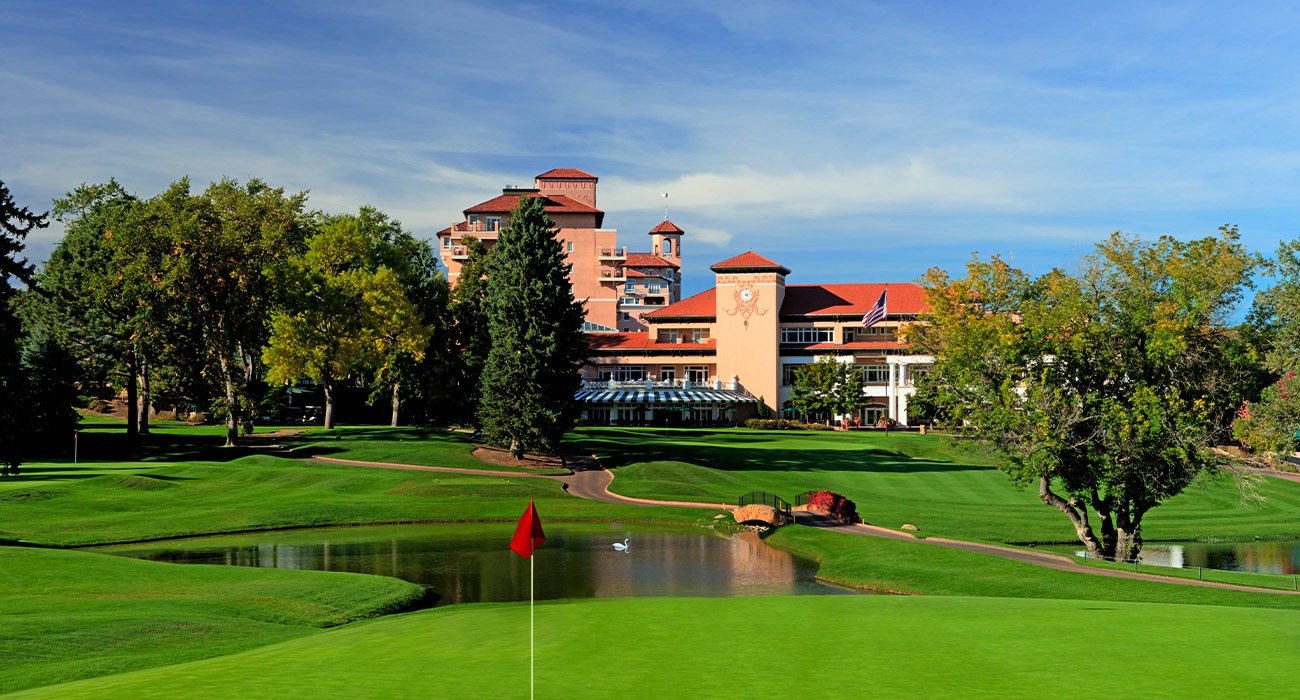
Elevation: 6,230 ft. above sea level, with the property rising to 9,100 ft.
On the edge of Cheyenne Mountain, part of the majestic Rockies, these 5,000 lush acres include The Convention Center at The Broadmoor, with over 200,000 sq. ft. of flexible space. In all, the Forbes Five Star resort has over 315,000 sq. ft. of gathering space, plus 784 guest rooms and two legendary golf courses. In summer, attendees can bond over mountain biking, rock climbing, fly fishing and ziplining over canyons.
Snow King Resort, Jackson Hole, Wyoming

Elevation: 6,237 ft. at the resort’s base and 7,808 feet at the property summit.
Recently renovated Grand View Lodge, with its expansive Grand Teton Ballroom and numerous outdoor event spaces with mountain backdrops, is the latest upgrade to 20,000 sq. ft. of indoor and outdoor meeting space at Snow King. Historic Jackson Hole and its alluring cultural and shopping opportunities are within walking distance. Grand Teton and Yellowstone national parks are nearby, as is an array of outdoor adventures such as rafting, horseback riding and wildlife viewing.
Stowe Mountain Resort, Stowe, Vermont

Elevation: 1,559 ft, with a summit elevation of 4,395 ft.
On the slopes of Mount Mansfield, the state’s highest peak, Stowe has been a premier New England destination since 1937. Groups of up to 350 can meet in the Great Room, with its massive stone fireplace and slope-side patio. Gondolas whisk visitors to stunning mountaintop views and, in summer, hiking trails. Minutes away is Trapp Family Lodge, still owned by the von Trapp family of Sound of Music fame, and noted for its Austrian vibe, farm restaurant and brewery.
The Hythe, Vail, Colorado
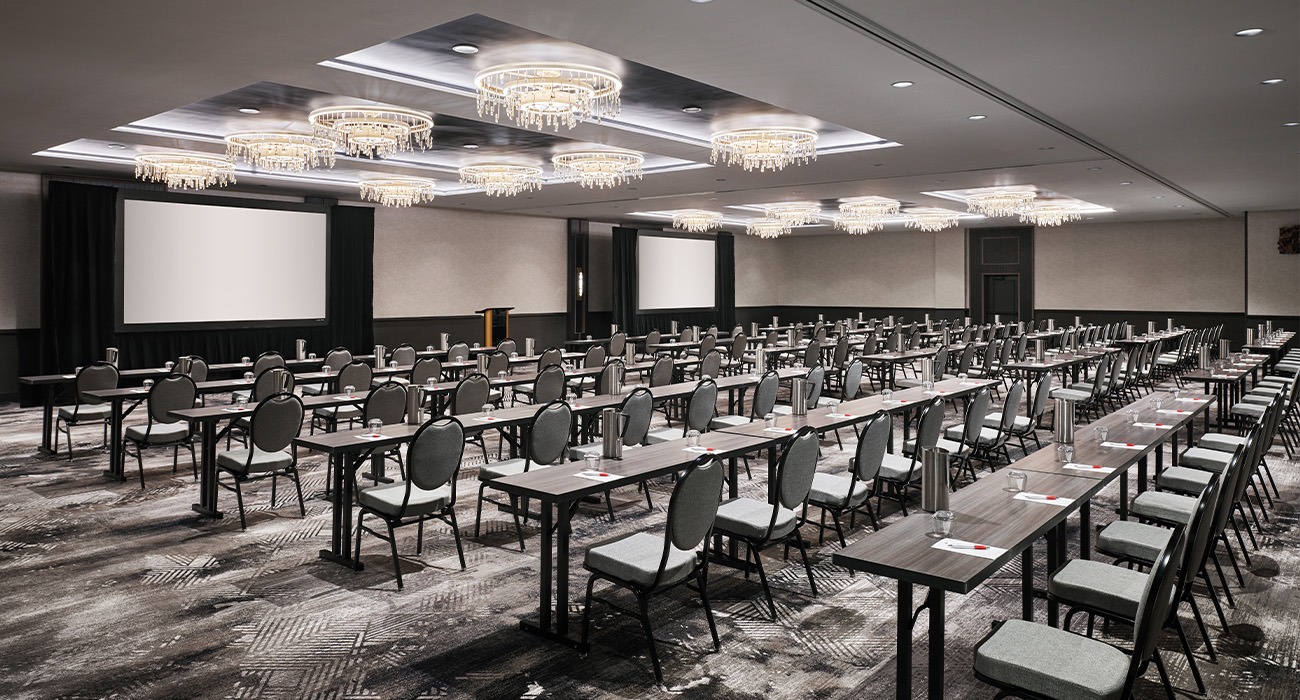
Elevation: 8,120 ft., peak elevation of Vail Mountain itself is 11,570 ft.
Opened in late 2021 to join the Luxury Collection brand after a $40 million renovation of the former Vail Marriott Mountain Resort, its 29,000 sq. ft. of indoor and outdoor meeting space offers more than 20 venues in alpine-modern style. Think cutting-edge A/V tech paired with chandeliers and sophisticated color palettes. Elegant accommodations are fragrant with sweet spruce and fir. A complementary gear-lending library outfits attendees for hiking and other explorations.
Everline Tahoe Resort & Spa, Lake Tahoe, Olympic Valley, California
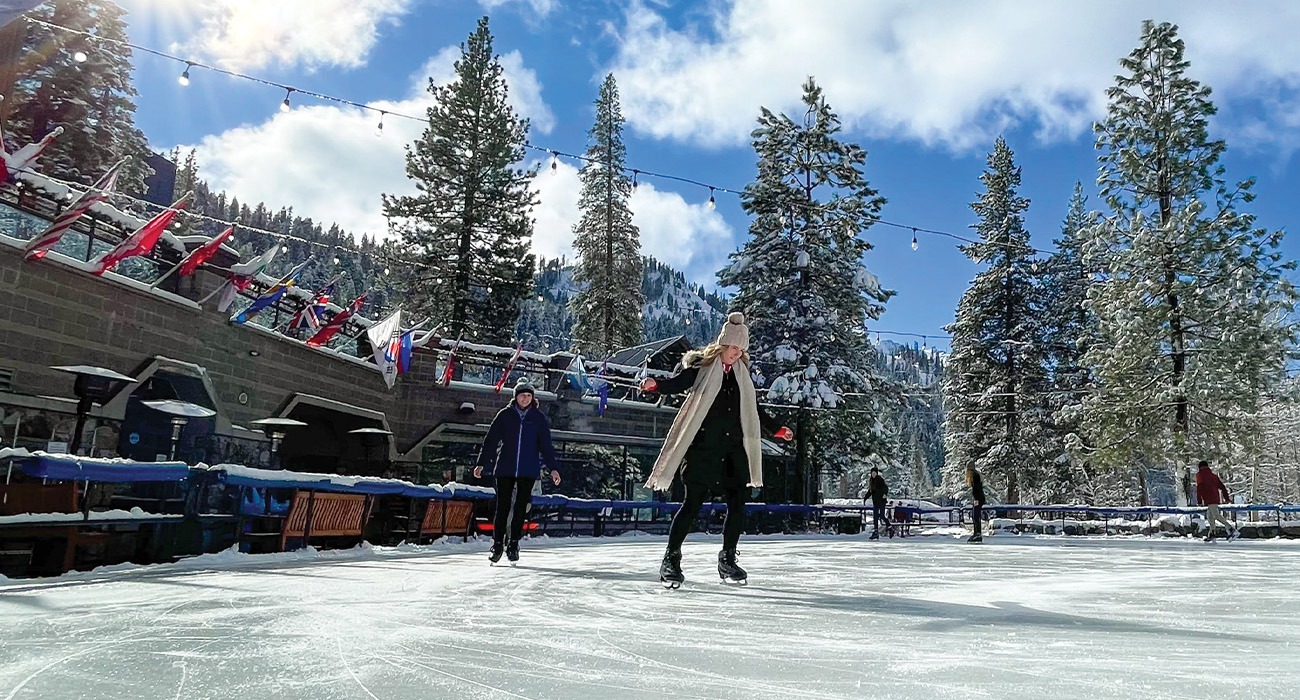
Elevation: 6,200 ft.
Eighteen meeting rooms are recently renovated, for a total of 47,750 sq. ft. of indoor and outdoor meeting space. This Hyatt property with ski-in, ski-out access to Palisades Tahoe resort has 405 luxury guest rooms and a “mountain meets modern” ambiance with inspiring views of the Sierra Nevada mountains, Ponderosa pines and verdant meadows. The menu of seasonal fun ranges from championship golf and scenic hiking and biking to ice skating and heated swimming pools.
Nature-Based Therapy
Let’s face it: Modern life depletes us. So busy. So demanding. So stressful. And for this, our culture has invented a variety of means meant to recharge. Many involve the very things that do so much to drain us—our screens and devices.
But as we all know, intuitively and from wellness gurus, time spent in a serene natural setting—up close and personal, say, with a glorious mountain—is perhaps the best app of all.
David Strayer is professor of cognitive neurosciences at the University of Utah, where he manages the Applied Cognition Lab. He studies the attention network of the brain and how time in nature restores its function. In a podcast with Dr. Phil Steig, widely regarded as one of the top neurosurgeons in the world and neurosurgeon-in-chief at NYP/Weill Cornell Medical Center, Strayer talked about what are called “nature-based therapies.”
Read More: New and Renovated: Where Nature Inspires Innovation
The average American, Strayer says, spends about 10 hours a day in front of a screen, whether it’s a TV or computer, cell phone or the screens in your car. “And if you look at our evolutionary history, it’s just a radical shift. And so, we’ve put all this technology in front of us, and it does bombard us with alerts and phones ringing and doorbells ringing and every electrical appliance in your house beeping or buzzing. So, we have created a world of distractions and interruptions.”
Nature can be the big ahhhhh. Strayer’s studies have shown as much as a 50% boost in creativity scores after spending uninterrupted time on mountain trails, in forest walks, on lakes and rivers, anywhere outdoors that lets the “problem-solving, planning, deliberative prefrontal cortex rest for a little while.”
The key, of course, is getting out of the ballroom and on to the bountiful seasonal activities the mountain affords—so that, upon returning to their sessions, attendees can unleash renewed energy and imagination to their tasks at hand. For best results, consider strongly advising that electronics be left at the resort during these activities. As Strayer looked for changes in brain activity, he didn’t see the benefits if his subjects had been on their phones while in nature. “But if they put the phone away for a little bit,” he told Dr. Stieg, “we see really striking differences.” In one experiment, those using their phones could only remember half of what had been seen by those who had not—a phenomenon known as the “inattentional blindness” of multitasking.
Multitasking, Strayer says, places heavy demands on the brain “When you use your cell phone to talk, text, shoot photos or whatever else you can do with your cell phone, you’re tapping the prefrontal cortex and causing reductions in cognitive resources.”
Yet what if the demands of your meeting or inclement weather limit actual time spent outdoors while at a mountain resort? Well, it turns out, just being able to admire that alpine setting while inside also yields benefits. Years ago, Swedish professor Roger Ulrich found that surgical patients recover more quickly if they have a window in their hospital room looking out onto even a single tree. Strayer also affirms that gazing outside at nature has restorative benefits for anyone, and a breathtaking mountain setting only amplifies the effect.
Good things happen up high. Healing. Rejuvenation. Creativity. If he could conjure up John Muir and tell him what he’s learned about the magic of mountains, Strayer thinks the old naturalist and mountaineer would say, “Well, of course. It’s obvious these effects are happening.”
Teaming at High Altitudes
Mountain meetings are made for group activities that stimulate a sense of wonder, creativity and promote teamwork. Just beyond the meeting rooms awaits an unforgettable natural setting—a scenic trail for hiking or biking in warmer months, for instance, and snowshoeing in winter—that requires problem-solving and new neural connections (neuroplasticity) to support creative and cooperative thinking. Guided nature walks encourage mental clarity, reduce stress and foster personal connection on a deeper level. A yoga or meditation session at an inspiring overlook can encourage participants to tap into the unbounded scale and serenity of the landscape.
Free-form “awe time” lets attendees sit mindfully and reflect on the presence of the mountain; journaling their thoughts and impressions can deepen the experience, as will a voluntary group sharing afterward. Guided stargazing on a clear night can be paired with sharing local folklore or myths about the mountains and constellations, tapping into the historical mysticism of the location.
Here are a few more activities culled from team-building experts. Encourage participants to disconnect from technology during these activities.
“Found Art” Challenge: Divide into small groups and task each team with collecting natural materials (leaves, stones, twigs, pinecones, etc.) to create a piece of “found art” or a sculpture. This encourages creative thinking, problem-solving and collaboration to achieve a common aesthetic goal.
Read More: The List: Warm Up and Team Build
Mountain Photography Challenge: Creative prompts (for example, “capture contrast,” “perspective shift,” “mountain texture”) guide teams as they work together snapping photos around the resort area to build the most compelling portfolio. This fosters creative thinking and a fresh perspective on the surroundings.
“Build-a-Shelter” Survival Simulation: In teams, challenge participants to use natural materials (and some supplied basics like a tarp or rope) to build a functional, weather-resistant survival shelter. This highly interactive activity requires planning, task-sharing, ingenuity and builds trust and problem-solving skills.
Collaborative Storytelling: Start a story as a group around an outdoor firepit or campfire, with each person adding a sentence or two before passing it on. This fosters communication, imagination and a sense of shared ownership over a creative narrative.
Themed Scavenger Hunt: Design a scavenger hunt that requires teams to solve clues related to the local mountain environment and legends to find the next checkpoint or item. This blends physical activity with intellectual challenge and encourages teamwork and exploration.
This article appears in the January 2026 issue. You can subscribe to the magazine here.