visit-raleigh-weathering-the-stormAs a business travel writer, I get to experience a lot of pretty cool things, but I must say that being hosted by #VisitRaleigh North Carolina this week during the Wide Open Bluegrass Festival is notable (pun intended). What makes this trip even more interesting is that due to Hurricane Joaquin, event organizers have been forced to scramble to move all the outdoor events inside the Raleigh Convention Center. I’m guessing there aren’t a lot of cities that could quickly come up with a solution to accommodate thousands of bluegrass musicians and fans who had planned to do their things at the city’s downtown outdoor Red Hat Amphitheater and surrounding streets.

Stay tuned to see how #VisitRaleigh weathers the storm while hosting its biggest downtown event of the year.


Last Updated Oct. 2, 2015 – 2:58 PM


great-wolf-lodge

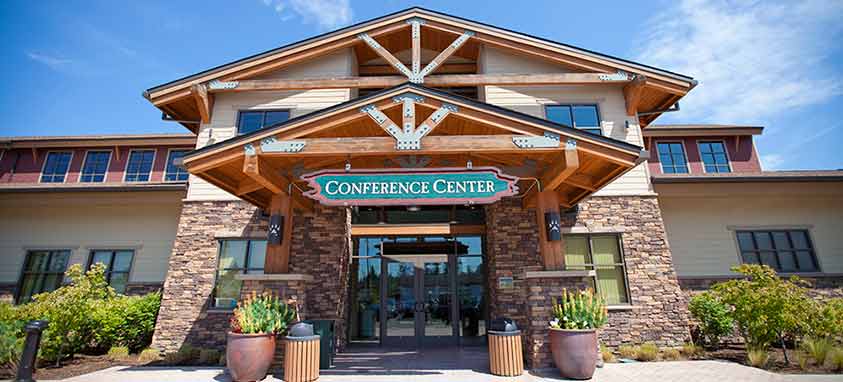
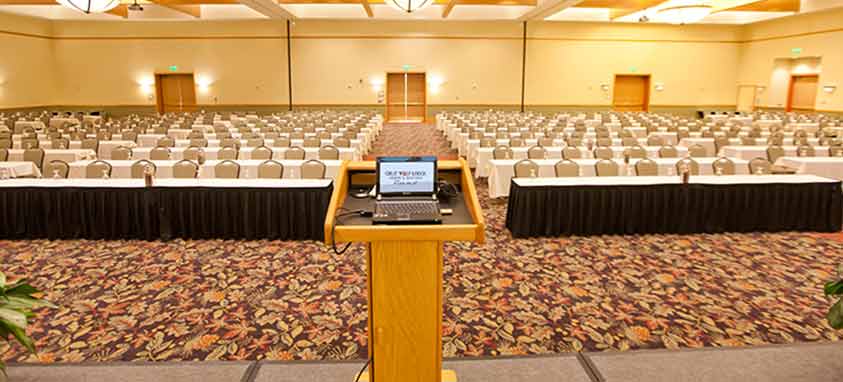
At Great Wolf Lodge, they begin by building the most responsive teams in the industry at our 13 convenient locations across North America.  Add to that, configurable meeting space, fully integrated audiovisual and separate conference center entrances with satellite check-in.   The result – your meeting will be Great.

Many locations are conveniently located near major metro areas, or in some cases, established tourism destinations. They offer flexible meeting space, exceptional cuisine and first-class accommodations for your attendees. Most importantly, they collaborate with you on every detail to orchestrate your ideal event.

great-wolf-lodge-conference-roomFrom a simple continental breakfast to a formal dinner, their chefs and banquet staff take immense pride in providing you and your attendees a creative and exceptional dining experience.  They partner with you to tailor the perfect menu solution, including accommodating any unique dietary needs, all while adhering to your budget guidelines.
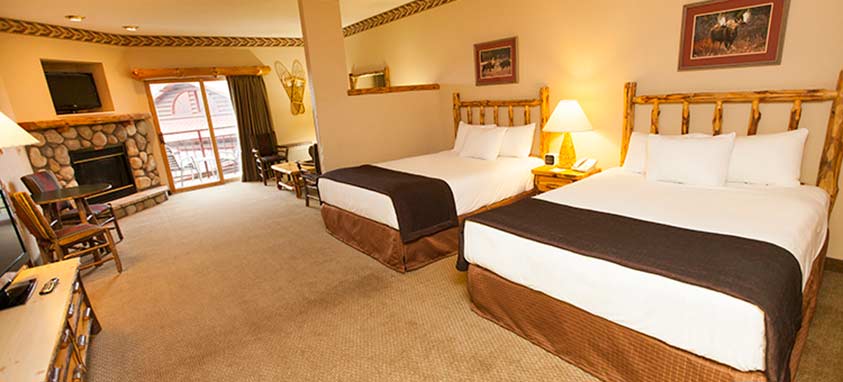
At the end of a day of productive meetings, take comfort knowing your attendees are retiring to an oversized, spacious guest suite. Guest suites feature a semi-private sitting area with a sofa, offering a great place to unwind or get caught up on work. Each suite is also outfitted with an in-room refrigerator, microwave and granite countertops throughout. On-premise, discover the various dining and entertainment options, including restaurants and bars, a day spa, fitness center and retail options.

great-wolf-guestrooomAt Great Wolf Lodge, they believe their people are their competitive advantage. From the initial planning to the closing remarks, feel confident knowing you are supported by an entire team of meeting professionals fully-vested in your success.
Start the conversation by contacting group sales at 608.662.4700 ext. 4723 or via email at [email protected].

Greatwolf.com/meetings

Where is the “soul of Phoenix”? For Chef Silvana Salcido Esparza, it’s the neighborhood that gave rise to her celebrated restaurant, Barrio Café, and the outdoor museum of street art that surrounds it.

Sponsored by Visit Phoenix

Best Western Hotels & Resorts

Best Western’s familiar blue and yellow signage is planning to ditch its dated crown. This week, the company announced a modern refresh to its logo and name, in addition to a complete overhaul of more than 1,200 properties.

The hotel group, which turns 70-years-old next year, has not updated its signage since 1993. Under its new name, Best Western Hotels & Resorts, the brand is investing $2 billion to update all of its North American hotels by the end of 2016. Best Western Hotels & Resorts is also unveiling a new midscale brand called Glo.

“For more than two decades, Best Western has had a familiar, recognizable and visible logo,” said David Kong, president and chief executive officer of Best Western Hotels & Resorts. “But with our investments in this 69-year old brand during the last ten years, we need to make consumers aware of the exciting improvements.”

A contemporary design will also be reflected in its three-tier portfolio of Best Western, Best Western Plus and Best Western Premier properties. Last year, Best Western Hotels & Resorts added lifestyle brand Vib, an urban boutique concept geared towards the Millennial traveler.

According to USA Today, the first Glow hotel will open late 2016 in Chicago, with 12 more properties in various phases. The newest of

Best Western Hotels & Resort’s seven brands, will also offer a hip boutique-style experience, but at a mid-scale price point. Average nightly rates will go for about $90. Each building will have a four-story, 70-room capacity. Designed with LED lights in its logo and lobby, guest rooms will also include stylish, contemporary elements.

“Developers are expressing interest in a boutique brand for secondary markets with a high density population,” said Kong. “With the demand to build a hotel product that is fresh, chic and contemporary, we see tremendous opportunity for Glo to change the development landscape in the midscale segment.”

All websites under Best Western Hotels & Resorts will debut redesigned interfaces on a brand new platform early next spring. Last week, the company launched a mobile-responsive website and booking application. The app offers hotel comparisons, improved searches, filters based on rates and amenities, a map-based feature for nearby attractions and a points-redeeming function.

real-id-tsaThe United States Congress passed the REAL ID Act in 2005. Though that was 10 years ago, the regulations set forth in the legislation are just now starting to pop up in the collective consciousness of travelers.
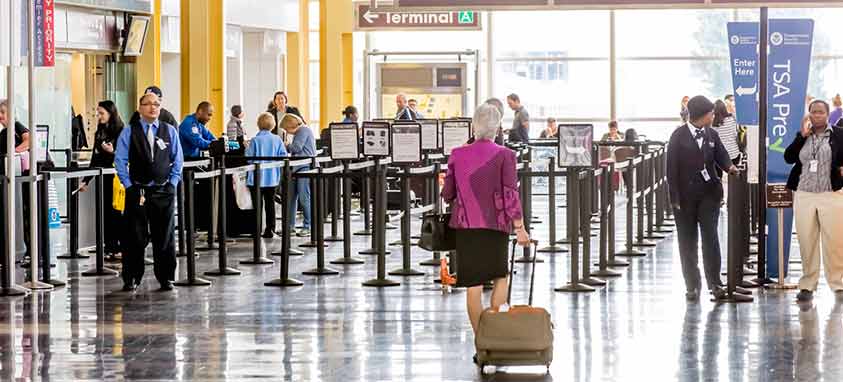
According to the Department of Homeland Security (DHS), the REAL ID Act was put forth in order to “improve the reliability and accuracy of state-issued identification documents, which should inhibit terrorists’ ability to evade detection by using fraudulent identification.”

The regulations affect the production of state-issued driver’s licenses and ID cards, and prohibit federal agencies from accepting IDs from states with non-compliant standards.

As of right now, 46 states have either complied with REAL ID standards or have extensions in place that allow agencies to accept their IDs. New York, Minnesota, Louisiana and New Hampshire are the odd states out.

REAL ID applies only to restricted and semi-restricted areas of federal facilities, such as DHS headquarters and nuclear power plants, through the rest of the year, but the next phase of enforcement is coming: boarding aircraft.

There’s no set date for this to go into effect, but the “no sooner than 2016” line from DHS has travelers from the four non-compliant states concerned that their driver’s licenses and ID cards won’t be accepted at TSA checkpoints after the calendar flips.

Passports are still fine, but what of the 63 percent of Americans who don’t have one? The TSA has an official list of acceptable IDs, but there are more, unconventional forms of ID you can use (which are also handy if your wallet or luggage is lost or stolen while traveling. Some of the alternate documents are pretty standard:

-Credit card (with photo)
-Student ID
-Library card
-Office security badge
-Checkbook

Others are either things people wouldn’t normally have on them ever, let alone at the airport, or things that might make you scratch your head. Many of these may not work on their own, you may need to present two to pass through security.

-Business card with photo
-Photo of your state-issued ID on your smartphone
-Magazine with address label
-Costco membership card
-Diplomas

Bottom line, if you can reasonably prove who you are, you’ll be able to get through airport security—so you might want to store your BA from Harvard in your carry-on bag. Just in case.

tsa-gets-rich-on-travelers-loose-change
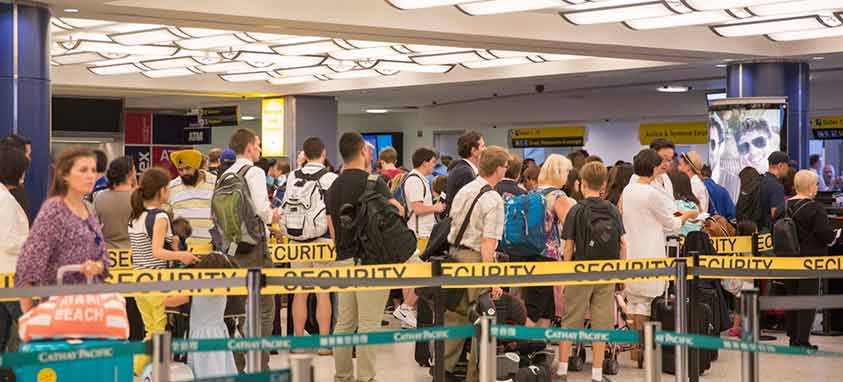
You’re at the airport. You’re furiously emptying your pockets before going through the security checkpoint so you can get to the gate (or bar) and not have to worry about anything until your flight starts boarding. You’re tossing your wallet, sunglasses, keys and the change from your pre-airport Starbucks stop into the bin with your shoes. A couple coins fall to the ground instead of in the bin.

No big deal, right? Not for individual travelers, but over the course of the year, that can amount to a huge chunk of change. Literally. How much can we really be talking about, here? How many people even carry change around with them? A lot, apparently. In the fiscal year 2014, travelers dropped $675,000 worth of coins in U.S. airports during the mad scramble of the security line. That’s not a typo. And the Transportation Security Administration gets to keep it.

How does that much change get left behind? According to the TSA, more than 653 million people went through security checkpoints in 2014. All it takes is every 10th person dropping a penny to approach that amount. So someone who drops a quarter is covering for nearly 250 people who manage to scoop all of their change out of the TSA tray. Someone who’s in a hurry and leaves the entire contents of their pocket piggy bank behind can end up donating to the TSA on behalf of 1,000 passengers.

So where is all this money dropping happening? As you might expect, it’s at some of the country’s busiest airports. New York’s JFK International Airport scrounged together an even $42,550 from dropped change. LAX’s TSA crew picked up $41,506.64 worth of coins off the floor. San Francisco got $34,889.63, Miami came in at $32,590.63, and Dallas/Fort Worth rounded out the top five with $29,684.03.

#NetflixOnboard
Caught up in the latest season of “Orange is the New Black” or “House of Cards” but have to jump on a plane to go to a convention or trade show? If you’re flying on Virgin America, you can get right back to your addiction at 35,000 feet.

Wi-Fi on airplanes is becoming the norm, but the connections haven’t been fast enough to reliably stream quality video until Virgin America recently partnered with ViaSat earlier this summer to provide fast, reliable Wi-Fi while in the air on select planes.

To help spread the word and position the airline as the top high-altitude internet provider, Virgin America just announced a new partnership with Netflix to provide the ViaSat connection—which can reach download speeds as fast as 140 gigabits-per-second—free of charge for subscribers of the online video-streaming service/TV studio through March 2, 2016, a service they’re branding #NetflixOnboard. (Internet fees will apply starting March 3).

“As Wi-Fi becomes more ubiquitous, it’s going to be increasingly possible for members to enjoy Netflix wherever they want,” said Bill Holmes, Netflix’s global head of business development. “We’re delighted to partner with Virgin America to extend the joy of Netflix to our members at 35,000 feet.”

“Netflix and Virgin America are both known for their focus on innovation and for shaking up their respective industries—so we’re thrilled to team up to bring the best in technology and entertainment to the skies. These latest-generation investments in our Wi-Fi and entertainment platforms allow us to provide the largest breadth of streamed content ever available at 35,000 feet—along with entire seasons of some Netflix favorites via the Red platform,” added Abby Lunardini, Virgin America’s vice president of brand marketing and communications.

To commemorate the partnership, Virgin America rolled out a #NetflixOnboard branded airplane, complete with “House of Cards” logo on the side. As an added bonus, Emmy-nominated actor Michael Kelly, who plays Douglas Stamper in the D.C.-based political drama, joined the inaugural #NetflixOnboard flight—which, fittingly, went from San Francisco to Washington, D.C.—in character and handed out whiskey whistleblower cocktails to other passengers.

Netflix also partnered with Marriott Hotels earlier this year to help ensure travelers are never without their favorite movies and TV shows.

At this year’s Dreamforce conference, renderings for a new Golden State Warriors stadium were released in an animated video at the tech event being held this week. Images of the proposed 18,500-seat facility were shown by Rick Welts, president and CEO of the Golden State Warriors.

The two-minute video clip moves through aerial shots of an expansive 12-acre glass-paneled complex at the water’s edge in San Francisco’s Mission Bay neighborhood. The proposed location is south of AT&T Park. Plans to break ground are slated for early 2016, so the arena can be open for the 2018-19 NBA season.

The complex, a privately-funded $1 billion project, will have 360 degree views, outdoor pavilions, dining areas, a theater component and modern designs. Not only will it house basketball games, but there will be retail space, an office tower and a waterfront park. It will also be a venue for special events and concerts during the off-season.

According to SFGate.com, San Francisco Mayor Ed Lee and other city politicians have given their support for the new facility. But neighboring residents and businesses are voicing opposition. University of California, San Francisco Medical Center (UCSF) next door had wanted to use the land for a possible hospital complex expansion. It was reported that the new Golden State Warriors Stadium will attract more than 200 events a year, leading to gridlock traffic around the medical center. Mission Bay Alliance, a local group has been outspoken about resulting traffic dangerously impacting hospital patients in need of urgent care.

Comcast SportsNet reported that UCSF would back the construction, provided there is secure access to a newly built medical center building across from the new Golden State Warriors Stadium. UCSF also asks for a contingency plan to be made in the event that traffic obstructs access to the medical center and affects patient safety.

Generational Differences Among Business Travelers' Booking Habits

Global Business Travel Association (GBTA) found a number of generational differences among business travelers’ booking habits, according to a new study conducted with Carlson Wagonlit Travel. More than 500 business travelers were queried on pricing, needs, booking processes, amenities and more. Baby boomers and millennials proved to be split on the issue, however, their responses varied on the outcome of booking, rather than the process itself.

Millennials claimed to book their own trips less often than older travelers. But when they did, the younger generation communicated more often with hotel representatives and travel counselors before booking. Although Millennials are assumed to be more tech-savvy, study authors associate this facet with inexperience traveling for business.

“In identifying the booking habits of business travelers, the study revealed several ways companies can improve their travel policies,” said Joseph Bates, GBTA Foundation vice president of research. “By meeting traveler expectations with corporate booking tools, travel buyers can encourage travelers to stay within the system and not seek out alternative methods. Travel buyers also have an opportunity to influence what travel apps are downloaded and used bringing consistency to the use of travel apps within their travel programs.”

The price of hotels and the ability to meet travelers’ needs ranked highest in the survey, suggesting that booking methods should display more options which yield the greatest savings. Travelers also preferred a fast and easy booking process, aided with mobile apps to book on-the-go.

However, only 39 percent have booked business trips with a smartphone, compared to 58 percent that use laptops and 43 percent still using desktop computers. Just 25 percent have used a tablet to book accommodations. And, less than half of travelers surveyed have even downloaded a travel app. But Millennial and Gen-X travelers are more likely than Baby Boomers to use hotel, travel reservation, car rental, hotel check-in and general travel apps.

The study ranked the following booking factors in order of importance:

-61 percent wanted to find the right hotel that met their needs.
-54 percent were conscious of the price.
-53 percent wanted an easy booking process.
-44 percent wanted to spend a minimal amount of time booking hotels.
-41 percent liked to receive free amenities during the booking process.
-23 percent preferred to book on mobile devices.
-20 percent liked to chat with an agent.

The way business travel is booked also depends on the size of an organization. Employees from larger companies were more likely to use an online booking tool than those from smaller organizations who may lack access to alternative platforms for choosing hotel accommodations. Those that used alternative channels said they are not always required to share travel information with their company.

According to the survey, most travelers used two of three methods:

-54 percent used direct channels to book stays.
-41 percent employed a third-party website.
-5 percent used an event registration website.

craft-beerOctober is filled with Oktoberfest celebrations around the world, featuring beer-drinking and plenty of festivities. These celebrations have helped to establish October as a time for merry-making, and led to the creation of other beer-drinking events throughout the month.

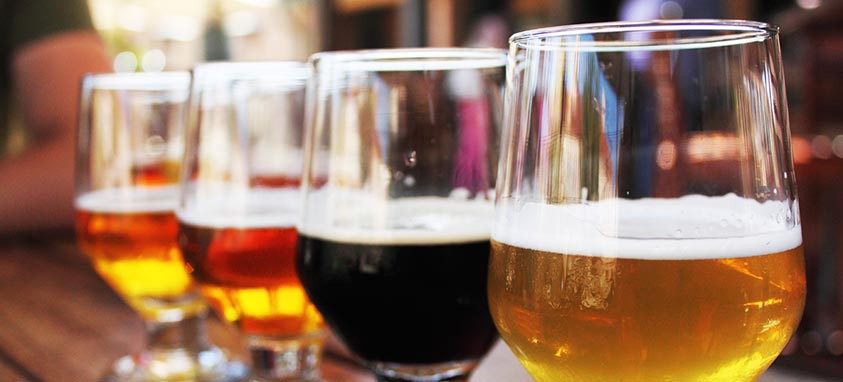
Craft beer, in particular, have been trending during the past few years, and airlines have –taken note. In the spirit of the upcoming celebrations, cheapflights.com focused on several airlines around the globe that offer top in-flight beer. Here’s a rundown of some of the beers listed at the website.

Delta: It added several new craft beers in December 2014. Samuel Adams is available on all U.S. flights, but some of the other new options are available only on some flights.

Beers are available from these companies: Ballast Point, Brooklyn Brewery, Lagunitas Brewing Company, Samuel Adams, Stone Brewing Co. and Sweetwater 420.

Frontier Airlines: Based in Colorado, this airline has been featuring craft brew for more than 10 years.

Beer: Created with water from the mountain springs of Colorado, Dale’s Pale Ale from Oskar Blues Brewery is brewed with hefty amounts of European malts and four kinds of American hops.

Hawaiian Airlines: Just about all the features on its planes are authentically Hawaiian, including a specialty beer.

Beer: Maui Brewing Company’s Biking Blonde Lager is a light, 100 percent malt beer that makes you feel as if you’re on a Maui beach.

Lufthansa Airlines: One of the oldest airlines in the world, this German-based company offers a plethora of Oktoberfest beer options.

Beer: Several premium beers from Warsteiner Brewery, which has roots extending back to 1753, are available.

Southwest Airlines: It’s one of the first airlines to offer specialty beers.

Beer: Named in honor of the co-founder’s bike trip through Europe, New Belgium’s Flat Tire has a perfectly balanced flavor. Leinenkugel’s Seasonal is a super premium beer and an Oktoberfest special. Dos Equis Especial is a refreshing, crisp, golden, lager-style beer imported from Mexico.

United Airlines: It began offering specialty beers in 2010. The beers are complimentary on some long flights.

Beer: Goose Island IPA, with a fruity aroma set off by a dry malt middle and long hop finish.