marriott-expanding-in-caribbeanMarriott International is expanding its holdings in the Caribbean and Latin America. Between 2015 and 2018 the company plans to significantly increase its presence in the region, adding 11 new hotels in Brazil alone.

Caribbean and Latin American Market

Marriott currently operates 93 hotels in the Caribbean and Latin America, with more than 60 in the pipeline. This includes 11 new properties in six Brazilian cities, 7 of which are already under construction. Marriott is investing approximately $100 million in the Brazilian market, launching 4 new brands there: Courtyard by Marriott, Residence Inn by Marriott, Fairfield Inn by Marriott and AC by Marriott.

Although Brazil’s economy faces challenges, “it is still in the top 8 largest economies in the world, and has excellent long term prospects,” said Tim Sheldon, president of Marriott’s Caribbean and Latin American region, in a press release. “The lack of reliable domestic hotel product and services represents a large opportunity for our moderate-tier brands, which we have adapted to the tastes of the Brazilian travelers—providing them both value and options.”

Marriott has already opened 8 hotels in the Caribbean and Latin America in 2015, with 9 more expected by year’s end. The company is on track to unveil its 100th hotel in the region this November—the JW Marriott Puerto Los Cabos in Mexico.

Current Portfolio

The company’s current portfolio in the Caribbean and Latin America includes many prominent properties, including Marriott Port-Au-Prince in Haiti, Guyana Marriott Hotel, the re-launch of Renaissance Jaragua Santo Domingo in the Dominican Republic, Sortis Hotel, Spa & Casino Autograph Collection hotel in Panama, Courtyard by Marriott Santiago in Chile, Courtyard by Marriott Lima Miraflores in Peru, Courtyard by Marriott Bogota Airport in Colombia, AC by Marriott Guadalajara in Mexico and the Fairfield Inn Queretaro in Mexico.

“In 2015 our company’s theme in the region has been ‘crossing new borders’ as we open hotels in exiting developing markets like Haiti and Guyana,” said Sheldon in the release. “The large middle class throughout the region is eager to travel to new places and do business on the road. This, when combined with the strong performance and preference of our brands in the gateway markets, provides tremendous opportunity for Marriott’s world class brands and service.”

Laurent de Kousemaeker, chief development officer of the Caribbean and Latin America for Marriott, adds that there is “a strong opportunity for quality brand experiences in the sector and savvy investors with a long-term perspective are taking advantage of the reduced price of assets, land and construction to acquire, develop and brand hotels.”
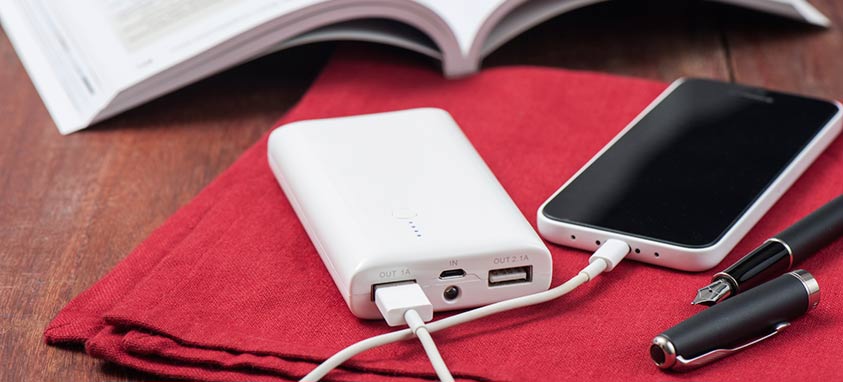
battery-lifeThere’s nothing like whipping out your phone to get directions or check your email, only to discover that the battery on your mobile device is dangerously low. Here are nine tips for saving battery power on mobile devices. The following suggestions work on both Apple and Android platforms.

Disable Wi-Fi and Bluetooth. Wi-Fi constantly searches for signals, draining the battery in the process. By switching off the Wi-Fi you will not only save battery life, but will also speed up the connection to the network you are on.

Don’t auto-update apps. Change your settings so your device is not automatically updating your all apps in the background, using up valuable juice. Manually select what you want to update.

Turn off auto-brightness. Although it may seem obvious, the dimmer the screen, the less battery power is used.

Take advantage of Do Not Disturb/Sleep Mode. Set your device to this setting at night. Not only will it save battery life, it will eliminate those annoying text clink notifications that can disturb your sleep.

Disable location features. Tracking location sucks major battery life because you may have granted many of your apps permission to access your location. When the battery grows weak, turn off this feature unless absolutely necessary.

Don’t be pushy. The constant pings of push notifications are not only annoying, they also drain battery life. Be choosy when accepting push notifications.

Be judicious about animated special effects. While they may look cool, they are a major juice suck. If battery life is a concern, load them sparingly.

Be an autolock jock. The faster you set the phone screen to autolock, the longer your battery will last.

Fly high with airplane mode. Use it all the time, not just when flying. The setting will halt on automatic battery drainers such as Wi-Fi, Bluetooth and app refresh, and the device will recharge much faster when put in airplane mode.

virgin-america-voted-favorite-us-airlineEvery regular traveler has a favorite airline, right? The one that most often offers the best airfares, has the best in-flight entertainment options or just consistently runs on time.
According to a survey performed by airfarewatchdog.com, an air-travel web site started by consumer activist George Hobica, the preferred domestic carrier for travelers from the United States in 2015 is Virgin America.

Among 3,200 respondents, 22 percent called the American branch of Sir Richard Branson’s airline their top choice. The brand’s cool factor and heart played into the results, with truly high-speed Wi-Fi in-flight, fun in-flight safety videos and Branson donating half the profits from wine sold on flight to charity all reasons why respondents chose the carrier as their favorite. (The survey was performed before Virgin America’s announcement of free Wi-Fi for in-flight Netflix streaming, so it might be an even higher percentage now.)

Smaller and low-cost airlines took the next several spot, with Alaska Airlines and Jet Blue each taking 14 percent of the votes. Southwest and Hawaiian airlines rounded out the top five, with each being favored by 11 percent of the respondents.

Low-cost carriers receive frequent praise from consumers for their perks and service, including free checked bags, organized boarding procedures, lack of fees for changing flight and reward programs that are easy to understand and use. (Southwest actually came out well ahead of the competition in Airfarewatchdog’s earlier survey regarding the industry’s best loyalty programs.)

The “big 3” U.S. carriers did not fare so well. Delta was tops among them, but came in only in eighth place, with 5 percent. United and American airlines were ninth and 10th, with each getting preferential nods from just 2 percent of respondents.

Oft-maligned Spirit airlines fared slightly better than United and American, with 3 percent of respondents claiming them as their favorite.

workplace-inequalityWorkplace inequality still exists, as working women still lag behind men in pay and promotional opportunities according to Gallup’s Work and Education survey conducted Aug. 5-9, 2015. Surprisingly little has changed since Gallup conducted a similar poll two years ago.

Lydia Saad breaks down the data on gallup.com. Twelve percent of employed women queried in 2015 believe they have been passed over for a promotion or other workplace opportunity because of their gender; which is not much of an improvement from 2013 when 15% of females polled agreed with that statement. In contrast, just 5% of employed men in 2015 believe their gender impacts their advancement opportunities, compared with 8% two years ago.

A growing number of working women (17% in 2015) believe they are being denied raises because of their gender, compared to 13% who agreed with this statement in 2013. Among working men, just 4% think their gender has impacted their ability to command a raise, which is the same as two years ago. This is particularly disturbing because nearly equal percentages of men and women, 59% and 56% respectively, say that advancing in their career is extremely or very important to them.

The 2015 poll finds working women lag behind working men in satisfaction with the amount of money they earn: 20% of women are completely satisfied, versus 44% of men. In addition, men feel more secure about their jobs. In the 2015 poll, 61% of men said they are completely satisfied with their job security, versus 52% of women who agreed with that statement.

Bottom Line

Gallup’s 2015 study indicates that working women still perceive gender discrimination in the workplace. As Saad writes, “Despite numerous policy and cultural efforts in recent decades to break corporate glass ceilings, integrate women in traditionally male-dominated fields and shine a spotlight on pay equity and advancement, a considerable minority of working women report feeling they were discriminated against at some point in their employment history.”

She adds that “gender perspectives about fairness in advancement and pay could have very real significance when it comes to men’s and women’s life satisfaction, self-esteem, political orientation and broader worldview— implications that employers and policymakers can’t ignore.”

For complete details about the Gallup survey methodology, click here.

anaheim-majestic-peopleThere’s a time and place for flow charts, power points and productivity. There’s also a time and place for fun. As luck has it, this is the place and now is the time.
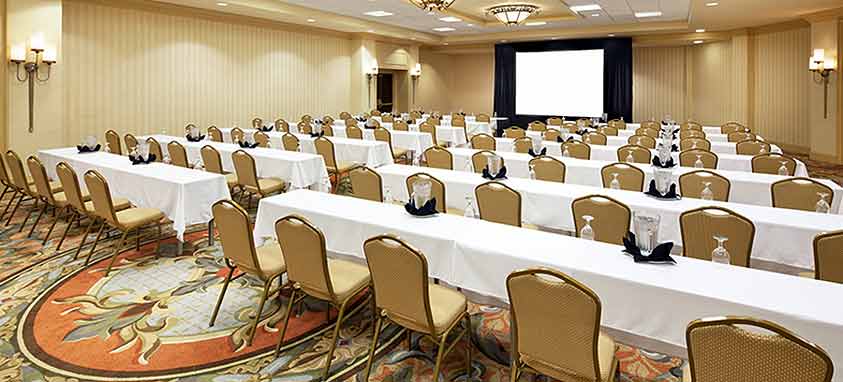
Anaheim Majestic Garden Hotel is currently rewarding meeting planners for booking meetings! Book before December 31, 2015 and hold your meeting before June 30, 2016 and you will earn Majestic Meeting Rewards in the form of a Visa Gift Card for up to $1000! You are Royalty in the meeting planner world. Now it’s time to reap the rewards! Visit our exclusive Group1000 webpage for more information.

While groups, corporations and conferences consider Anaheim a place worthy of getting down to business, there’s one glaring reality you can’t ignore: this is Anaheim. And when you say Anaheim, you almost always think Disneyland® Resort.

Now, planners have a new and entertaining arrow in their quiver when it comes to Anaheim gatherings. Located only ½ mile from the happiest place on Earth, the Anaheim Majestic Garden Hotel let’s you get down to all things business one minute and, in five minutes flat via their free Dream Machine shuttle bus, find yourself either at the Anaheim Convention Center or, better yet, in the midst of Downtown Disney’s famed restaurants and entertainment, not to mention Disneyland® Park itself.

Meeting Rooms

Kensington-Ballroom-NorthThe 20,000-square-feet of space at “Anaheim Majestic” can be divvied up to handle groups ranging from 10 to 600 people banquet-style (up to 1,000 theater). Fifteen smaller rooms ranging in size from 504 sq. ft. to 8,280 sq. ft, allow groups multiple options, state-of-the-art audio-visual and beautiful natural lighting.
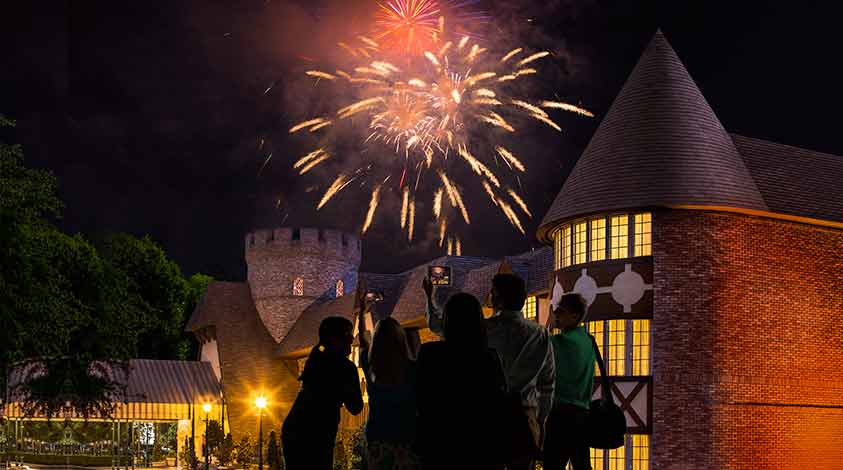
Breakout rooms are located adjacent to the ballroom and out of the way of hotel foot traffic, giving you easy access to a multitude of space. Or, if you are looking to for a change of perspective, take your event outside and enjoy the peaceful Majestic Gardens.


Catering & Dining

The dedicated and experienced banquet team provides top-notch service that is recognized again and again by past groups. Personal, flexible, and attentive, your servers and hotel staff will give you more than enough reasons to come back.

Catering services provide standard menus or custom menus to accommodate themes or budget. You will find nothing less than exceptional cuisine and flawless service from the hotel’s banquet and catering staff.

When guests are on their own, they can enjoy exquisite cuisine from a quick bite in the California Deli to a more relaxed experience in the indoor/outdoor Garden.

Rooms

489 incredibly spacious lodging options (averaging 500 sq. ft.) offer guests  comfortable, smoke-free rooms including the newly renovated Castle Rooms & Suites. Rooms are well appointed with amenities like complimentary high-speed WiFi, mini refrigerators, hair dryers, coffee makers, and bottled water.

Activities

anaheim-majestic-fireworksIn the perfect blend of business with pleasure, meeting guests that bring their families have found the epicenter of family entertainment and enjoyment at Anaheim Majestic Garden Hotel. Whether it’s a visit to Disneyland® Resort, an excursion to the beach or an exciting Anaheim Ducks game, your family is sure to have a thrilling vacation experience.
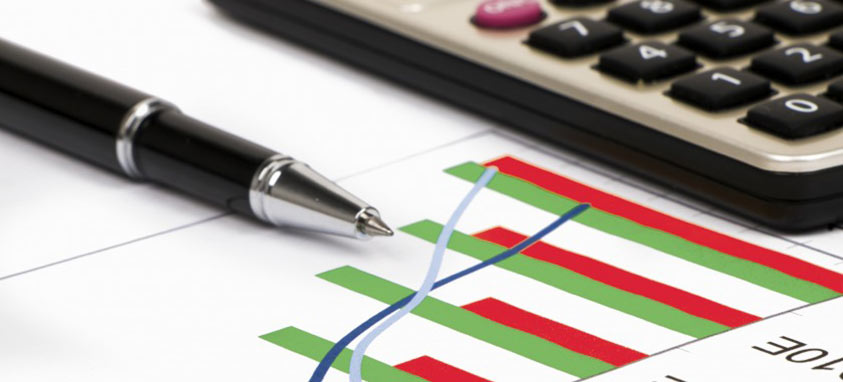
Free daily Dream Machine Shuttle service takes you to and from Disneyland® Resort every 1/2 hour. And, to save you even more time, we have also been selected as a Disneyland Good Neighbor® Hotel, an authorized Disney ticket seller.

Visit the website for more information on this spectacular hotel and let their friendly, flexible and professional staff guide you through a truly majestic experience, assuring a smooth event from beginning to end.

TSA

Most air travelers don’t ever get a close-up look at how screeners from the Transportation Security Administration (TSA) prevent banned items from making their way onto airplanes. And when some do, it often causes a delay in security lines, which can overshadow the safety concerns in the minds of passengers.

Screeners catch prohibited items on a daily basis, though, and the TSA blog reports on some of them every week.

During the week of October 2, TSA employees discovered 53 firearms, mostly hand guns, in carry-on bags at airports across the country. Of those, 48 were loaded—and 17 of them had a round in the chamber.

William P Hobby Airport (HOU) in Houston had the most firearm confiscations with five, followed by four at Florida’s Fort Lauderdale–Hollywood International Airport (FLL).

Kinda makes you think twice about getting annoyed when you’re pulled aside for a manual pat down. After all, it’s their job to be on guard for anything that looks suspicious, and better safe than sorry, right?

The strangest items found were an inert grenade and a multi-tool that someone tried to conceal in a hollowed-out shaving cream can.

Other prohibited items confiscated included a knife hidden in a cane, an assortment of small throwing knives and a shuriken (a small, multi-bladed weapon akin to a throwing star). This may sound like the stuff of spy novels and urban legends, but apparently some people actually get in in their heads to try and sneak these things aboard.

There were also 14 stun guns discovered and confiscated, two at Dallas Love Field (DAL), and the rest mostly at other airports in the Western and Midwestern United States. Baltimore–Washington International Airport (BWI) was the only East Coast airport with such a confiscation.

One would hope that passengers’ reasons for packing these items are for protecting themselves and other passengers from any type of terrorist activity while in the air, but it’s good to know that TSA screeners are protecting us against the dangers that would-be vigilantes pose, as well as against those who would intentionally cause harm.

For meetings and event professionals going to IMEX America, IMEX Group has set up an online application for travelers to enroll in TSA Pre-Check for their travels to Las Vegas for the show.

meeting-predictions-2016

As 2015 enters its final quarter, pundits are already making predictions about what the meetings industry should expect in 2016. “We anticipate tighter hotel cancellation policies, growing food and beverage costs and companies trying to harness their combined spend as they look for ways to cut costs and improve program efficiency and control,” says David Moran, executive vice president of CWT Meetings & Events, the meetings & events division of Carlson Wagonlit Travel business portfolio.

For the fourth year in a row, Carson Wagonlit Travel took a look at future meeting trends.The company recently released the results in a report entitled 2016 Meetings and Events Forecast. Writing for associationsnow.com, Samantha Whitehorne illuminates meeting predictions for 2016, based upon Carson Wagonlit Travel’s research.

10 Meeting Predictions for 2016

Steady growth. The meeting and events industry is expected to grow in the coming year.

It will be a sellers’ market in North America. Hotel demand in North America will exceed supply, giving sellers the upper hand. Prices are predicted to rise 4.3 percent in the region. Globally, hotel prices are expected to increase 2.5 percent in 2016.

South America in the spotlight. Brazil will take center stage next summer when the 2016 Olympics and Paralympic Games will be played in Rio de Janeiro. Pockets of high demand may result in a shortage of hotels and meeting space.

It will be a buyers’ market in Europe. Europe’s weakened economy, combined with a 10 percent decrease in hotel rooms under contract compared to June 2014, will give buyers greater negotiating power. Regardless, supply in Europe may be tight.

Unpredictability in Asia Pacific. A shaky economy and health-related scares in Asia Pacific could cause challenges, but hotel growth is projected for China and India.

Stable airfares. Airline prices in the United States are expected to increase a mere 0.5 percent in 2016, while Canadian airfares are expected to drop by 5 percent. This may translate into more attendees and exhibitors being able to fly to your meetings.

Plan ahead. Planning ahead will be critical, as hotels in high-demand markets may not hold space when responding to availability requests. Date flexibility may become increasingly important.

Keep decision makers in the loop. Compromises may be required, especially in high-demand markets or during peak seasons. Make sure key internal decision makers are appraised.

Keep your eye on F&B. Food and beverage will continue to drive per-attendee costs in 2016. When budgeting, look carefully at F&B. The healthy and more ecological alternatives today’s attendees desire can actually save you money if, for example, you switch from bottled to tap water.

Negotiate with care. Attrition and cancellation terms are expected to become stricter. Careful negotiations will become even more important to meeting planners.


sanfrancisco-airbnb

Airbnb is making large strides into the business travel market. On Monday, the online home-sharing company revealed its newest booklet of local experiences, produced in partnership with the San Francisco Travel Association. Compiled with suggestions from Airbnb hosts, the Local List introduces neighborhood hotspots and unique activities to visitors, bringing more of the authentic experiences they crave in an effort to give “business travelers that little bit of home feeling while they’re on the road, ” said an Airbnb spokesperson.

San Francisco Travel Association is the first destination management organization to work with Airbnb and the partnership is “aimed at ensuring that visitor needs and industry standards within the ‘traditional’ and ‘sharing’economies are more closely aligned.”

Since announcing their partnership in July, the Local List is one of many more collaborations, says Jon Ballesteros, senior vice president of public policy for San Francisco Travel Association.

The move is a smart one, since Airbnb rolled out its business travel program earlier this year. For large conventions and events, alternative accommodations are becoming crucial in cities such as San Francisco. Ballesteros said Airbnb helps meet demands for guest accommodation in the Bay Area hub, which has a cap on the number of allowable hotel rooms.

The Local List

At Airbnb’s San Francisco headquarters in the Mission District, members of Airbnb and San Francisco Travel Association listened to the way travel and tourism is evolving. Chief Marketing Office Jonathan Mildenhall told the audience that standard tourist attractions are beginning to lose their appeal for a growing number of travelers, especially Millennials. He said, “Millennials don’t want to ‘see’ when they travel, they want to ‘do’ when they travel.”

Tourism is one of San Francisco’s biggest economies, with approximately 18 million visitors coming to the city each year. Local businesses also greatly benefit from bookings made through Airbnb—the company estimates that 90 percent of hosts have made about 67,000 recommendations to their guests to visit local San Francisco favorites. According to an Airbnb spokesperson, “This collaboration will give every traveler coming to San Francisco the opportunity to live like a local and experience each of the city’s diverse neighborhoods. This includes neighborhood tourism tool kits for local merchants to connect visitors from across the globe to neighborhoods, and working with meeting and event planners to achieve peak attendance during conventions and big events.”

In the industrial modern space, neighborhood vendors proffered samples of main dishes and desserts. Rogue Nick’s Crispy Tacos skewered kabobs and meatballs for the event. The Mexican restaurant and bar offers private event space with audio/visual capability for up to 400. Old Skool Café plated a delicious melon gazpacho and peanut butter stew. The youth-run supper club is decked out in a 1920s vibe, and offers space for buyouts and special events. San Francisco’s at-risk youth run the fine-dining establishment, receiving valuable job training skills. The restaurants are two of more than 100 neighborhood-specific shops, stores and attractions mentioned in the booklet.

Worst Commutes in the United States

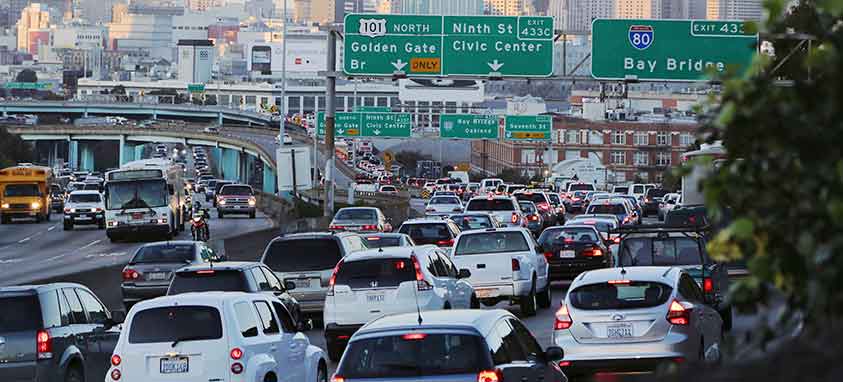
Commuters may grumble about how much time they spend sitting in traffic, but which cities actually have the worst commutes in the United States? The Texas A&M Transportation Institute and INRIX crunched data from 471 urban areas in the United States to create the 2015 Urban Mobility Scorecard. Using precise methodology to create their detailed analysis, they studied nearly 900 million speed data points on 1.3 million miles of roads located throughout the U.S.

Worst Commutes in the United States

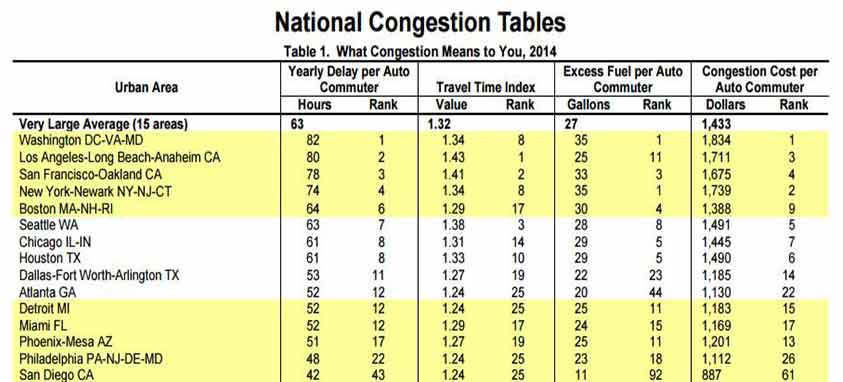
According to the report, the most congested place is Greater Washington D.C. In 2014, on top of their usual drive time, commuters in that region spent an additional 82 hours in bumper-to-bumper traffic. This cost D.C. area commuters an additional 35 gallons of fuel in 2014.

Researchers found the second most traffic-congested region in the U.S. is Greater Los Angeles, followed closely by the San Francisco Bay Area. Greater New York City came in fourth place, with the average commuter spending 74 extra hours sitting in traffic in 2014. The rest of the Top Ten, in descending order, are Greater Boston, Seattle, Chicago, Houston, Greater Dallas and Atlanta.

The Indio-Cathedral City, California area, located near Palm Springs, ranked lowest in the cities studied. There, the average commuter spent six extra hours in traffic in 2014, costing them just two additional gallons of gas.

Overall, researchers determined that the average auto commuter in the United States spent 42 extra hours stuck in traffic in 2014, up from 18 hours in 1982. In doing so, they wasted an average of 19 extra gallons of fuel in 2014, up from 4 gallons in 1982.

Collectively in 2014, drivers spent 6.9 billion extra hours idling in traffic—more than the time it would take to drive to Pluto and back if there was a road to take drivers there. From an ecological standpoint, commuters wasted an extra 3.1 billion gallons of fuel sitting in traffic last year. Financially, study authors calculated the congestion cost at $160 billion in 2014, compared to $114 billion in 2000 and $42 billion in 1982.

Worst Commutes in the United States

Why is Road Congestion Growing?

Extreme road congestion impacted 1 out of every 4 trips in 2014. Study authors blame the improved economy. During the recession of 2007 to 2010 an estimated 9 million individuals lost their jobs and essentially stopped commuting, thereby lessening road congestion. Today, the U.S. economy has regained nearly all of the lost jobs… and then some. Statistics indicate that from 2013 to 2014, more than 500,000 new jobs have been added. More workers equal more drivers on the roads, especially during peak commute hours.

The problem is compounded by the fact that the recession stalled many planned construction projects. Even if they are now greenlighted due to the economic recovery, it may be years before commuters reap results because major transit projects such as highway expansions or the development of light rail systems traditionally take a decade or two to design and fund.

Until then, study authors predict that road congestion will grow progressively worse. In 2020 they estimate that the average commuter will waste 47 additional hours and 21 extra gallons of gas. Collectively, delay will grow to 8.3 billion hours, and wasted fuel will increase to 3.8 billion gallons. They predict that the national congestion cost will grow to $192 billion in 2020.

Moving Forward

Study authors point out that immediate solutions, as well as long-term plans, are required to successfully address the problem, adding that each region must craft its own actionable mix of programs and projects.

In the short term, they recommend that employers explore ways to conduct business to avoid having workers on the road during traditional rush hours. This may translate into more flexible office hours, or providing employees with what they need to work at home for an hour or two during peak commuting times. They can also provide incentives for employees to walk, bike, take public transit or carpool to work.

They add that thanks to smartphones and specialized apps, today’s commuters have real-time traffic information available to them that can accurately predict anticipated travel times, exact locations of roadwork or crashes and transit ridership and arrival information. Such resources permit commuters to make informed decisions about departure times, the best route to take or whether it is more efficient to telecommute on a particularly bad traffic day.

AtlantisParadise-bahamasSmart Meeting Bahamas will be held as scheduled at Atlantis Paradise Island, Bahamas in Nassau Oct. 4–6. Hurricane Joaquin began passing over the Bahamas Thursday, but is moving north and will not affect the event. By Sunday, the opening day of the meeting, Nassau is expecting mostly sunny skies with only a 20 percent chance of rain. The meeting will go on as scheduled, and participants will return home with a wealth of memorable experiences and new ideas!

This special gathering is Smart Meetings’ annual incentive meeting and will give participants an opportunity to discover new properties and secure venues for 2016 and beyond. It will offer power-networking opportunities, including in-person appointments with hotel and destinations representatives, as well as cocktail parties, dinners and after-parties.

Smart Meeting Bahamas also will feature engaging team-building activities, and tours and excursions where participants will be able to experience venues and adventures to include in future meetings.

Top industry speakers will provide attendees with advice, tips and tools to implement in their work. Participants attending the talks will earn CEU credits.

Smart Meetings is looking forward to hosting participants at this noteworthy event.