LEED Silver Certification Awarded to Javits Center

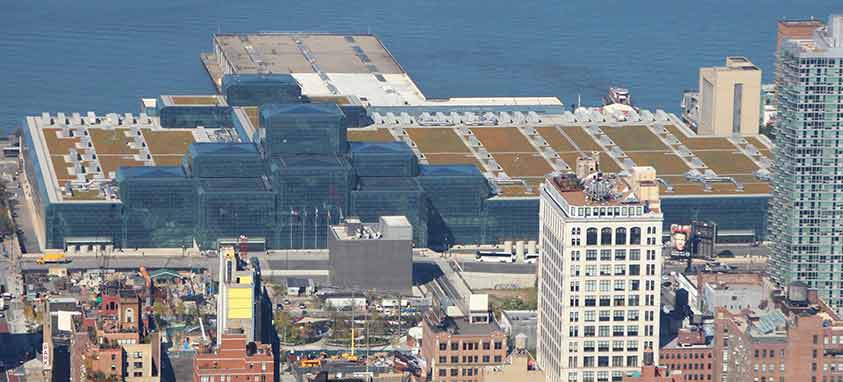
After several extensive upgrades, Javits Center was recently awarded LEED Silver Certification. The New York convention center underwent a five-year $463 million renovation that transformed the facility into a model for convention center sustainability.

“The Javits Center has become a model of sustainability for buildings throughout the region,” said Alan Steel, president and CEO of New York Convention Center Operating Corporation. “Our mission has always been to support New York’s economy, but with our recent improvements, we are now supporting our community in a new way.”

Improved green features completed last year have reduced energy consumption by 26 percent. Savings in energy cost are due to its signature eco-friendly features, including a 7-acre green roof atop the building—the second largest of its kind, housing area wildlife such as bats, birds and bees.

To reduce bird collisions into its glass facade, Javits Center also installed a stainless steel paneled curtain wall to reduce reflectivity from 35 percent to 8 percent. A ceramic pattern has reduced the amount of solar absorption to the building while creating a visual obstruction for the birds.  More than 6,000 panels were installed and have already lowered bird collisions by 90 percent. As a result, the convention center has received recognition from National Audubon Society, New York City Audubon and U.S. Environmental Protection Agency.

New sustainable strategies for LEED Silver Certification awarded to Javits Center include:

Green roof moderates temperature inside the building, and can absorb 72 percent of rainfall that drops on top of the building.

More than 100 energy-efficient HVAC units installed

Potable water reduced by 32 percent due to new and upgraded fixtures, saving 2.9 million gallons of water each year.

77 percent of construction waste, equal to 7,567 tons, was diverted from landfill.

Efficient building upgrades include energy-efficient lighting, controlled ventilation via CO2 sensors, improved glass ratings and better-insulated walls and roof.

Javits Center has 840,000 sq. ft. of flexible exhibition space, 102 meeting rooms,  four banquet halls and strong Wi-Fi capabilities.

Quebec City is an event planners dream destination. It not only boasts a long-standing European heritage and history to captivate attendees from the moment they arrive but also has a highly dynamic atmosphere and modern vibe throughout the year, thanks to the city’s unique and popular events, such as the Festival d’été de Quebec, which plays host to such big-name acts as The Rolling Stones, Paul McCartney and Billy Joel, and the renowned Quebec Winter Carnival, which has been celebrating winter in all of its glory for the past 60 years.

Quebec City also provides an eclectic mix of culture, sports and agritourism. The city is home to many different museums and galleries—each with its own take on art. Adventure buffs and outdoor enthusiasts are sure to find their dream escape, thanks to a wide range of nearby parks and resorts that offer everything from skiing and dogsledding to white water rafting and hiking. Finally, if attendees are budding epicureans, Québec City is brimming with local farms and producers that will go out of their way to have you discover the fruits of their labour and terroir products.

For business meetings and conventions, Quebec City definitely has its star power; event planners worldwide attest to how the city can impressively increase attendance when holding an event in the city.

Here are the top 10 reasons why you should get down to business in Quebec City.

Vacation after the Holidays

Think you’re the only one who feels they could use a vacation after the holidays? It turns out that more than half of Americans admit to wanting a break after spending time with friends and family this season. According to a survey from Priceline.com, 56 percent of approximately 1,000 adults polled last month confessed to being a holiday scrooge.

-42 percent of millennials shop for themselves at the end of the year, while 33 percent of Generation X also gift items to themselves.

-29 percent wished that they had the option to leave a family member at home during a holiday trip. The number climbed for those under the age of 25—48 percent admitted to wanting the same.

-35 percent of millennials outed a friend or family member for re-gifting an item. It’s likely to be from a member of Generation X, because 27 percent of them confessed to regifting.

-43 percent stated that they would be likely to fake their holiday cheer at least once during the season.

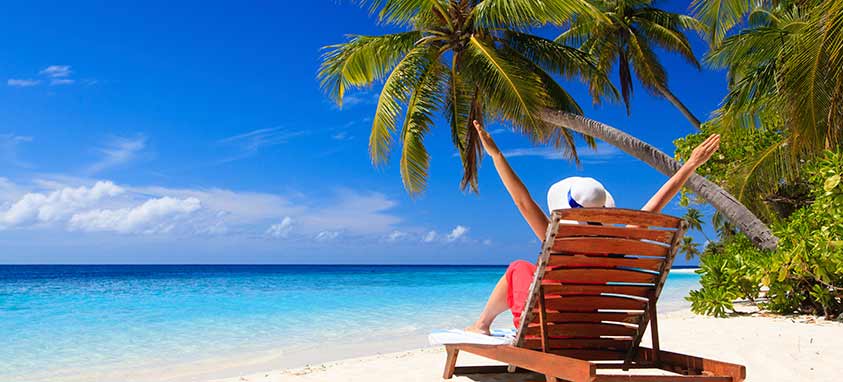
-43 percent of all age groups surveyed would like to go on a tropical vacation getaway after spending time with friends and family.

Based on the survey’s results, Priceline.com is offering “Express Deals Unwrapped,” a special holiday offering for travelers that book vacations on their mobile devices from now until January 3. Android and iOS users can save up to 60 percent on hotel and airline packages.

Priceline.com is not the only place vacation-goers can take advantage of holiday promotions. The Bahamas Ministry of Tourism is holding its “Dear Santa” contest, a seasonal giveaway for one person to receive a free 3-night stay at The Sandpiper Inn in Schooner Bay on the Abaco Islands. Until December 15, participants can submit a letter on behalf of someone deserving of a vacation via Facebook, Twitter or Instagram.

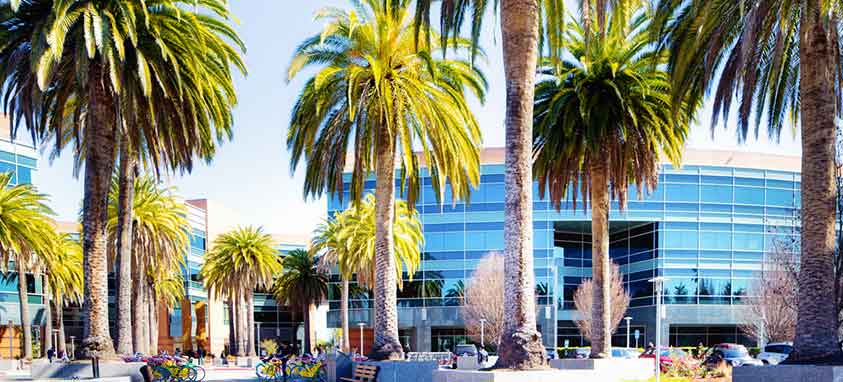
So, you’ve decided to host a meeting. You’ve told everyone; you’ve written it in ink. It’s happening. But where? Well, you know what they say: location, location, location. Silicon Valley is dodging the shadows of popular contenders, such as Los Angeles and San Diego, and making a name for itself as a top player in the meetings industry. This hard-hitting up-and-comer is full of hustle and bustle, but the blue-skied, tech-centric scene is more than just good looks and fantastic lodging options: It also has a list of activities as long as its coastline.

Silicon Valley plays host to a parade of big names, including Google, Apple, Facebook and Netflix, just to name a few. If that doesn’t impress you, maybe this will: The county recently received a $1.7 billion investment in urban development. (Yes, billion. With a B.) The wealthy community’s economy, which is centered around high-tech engineering and computer sciences, is home to hundreds of global tech companies and startups. In addition to being populated by leaders of technology and innovation, Silicon Valley is safe and eco-friendly. Talk about innovation with integrity.

But that’s not all Silicon Valley has to offer. All of you weekday warriors out there can take a break from the daily grind and choose from a cast of awesome activities. Some of the local favorites include:

The Tech Museum: Check out killer exhibits on energy, genetics and design—and even build your own robot! Nothing gets the creative juices flowing quite like the Tech Museum. Your guests will feel inspired and be excited to hit the ground running. Innovation, ignite! thetech.org

The Mountain Winery: Rock some team building activities such as grape stomping and wine tasting. There’s nothing like catching a little (work-appropriate) buzz under the beautiful Silicon Valley sky. Rounding up your troops and taking them to a winery lends itself to relaxation and refreshment. Your attendees can get some much-needed R&R after a hard day’s work. Give your group a chance to take it all in and reflect on a job well done. And, let’s be honest, isn’t everyone a little more engaging after a glass or two of their fave vino? mountainwinery.com

Winchester Mystery Mansion: Take a tour of the world-famous mystery maze. But stay close or you could get lost in the miles of twisted hallways and secret passageways! Taking your group to the Winchester Mystery Mansion means two things: serious navigational skills and serious fun. What better way to excite your guests, let loose with your team and test your GPS skills than to tour the twists and turns of this historical house?winchestermyseryhouse.com

Take a tour of Google HQ: You’re bound to go gaga for Google’s beautiful campus. And if you’re lucky, you might even catch a glimpse of a self-driving car! Touring the infamous and uber-innovative Google campus is a phenomenal way to educate and inspire your group. Just being in the presence of such innovation and seeing the ins and outs of a revered tech company will get your group thinking about opportunities and advancements of their own. google.com
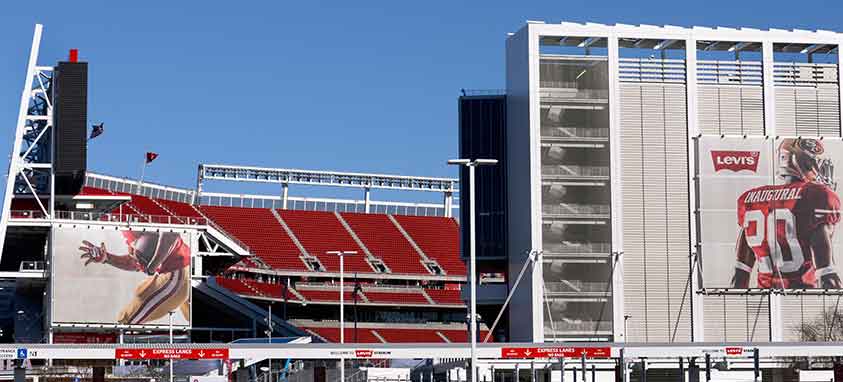
Levi’s Stadium: Schedule your meeting for January and come join us at the home of the San Francisco 49ers. There will be tons of CMPs there, endless opportunities to network, and, c’mon, you’ll be touring the host venue of Super Bowl 50. Not to mention we’ll be one of the last groups in the stadium before the players take the field. Hello, bragging rights. For more info about the Super Bowl 50 Experience tour, go to Smart Meeting Northern California and picture yourself where the big boys play.


Want to Experience The Silicon Valley?
Learn more about our Northern California event


deepak-chopra

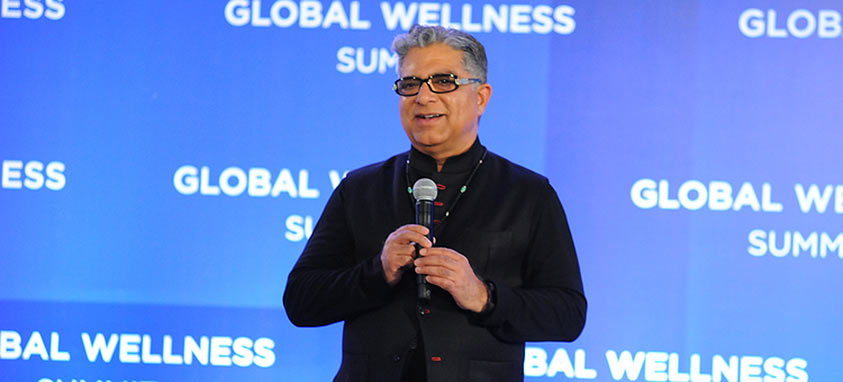
The Global Wellness Summit that took place Nov. 13-15 in Mexico City drew more than 470 delegates from 40 counties to discuss strategies to build a well world. Compared to the Kyoto, Japan, gathering to combat climate change, the summit drew leaders from a variety of entities including medical centers such as Mayo and Cleveland clinics, Harvard and Duke universities and workplace wellness spokespeople such as Johnson & Johnson and Zappos.

“The Mexico City Summit was a watershed moment, because passionate leaders from economics, medicine, government, technology, spa/wellness, travel, education and the arts came together to debate how to bring preventative health into our chronic disease and healthcare cost burdened world much like when the world first came together in Kyoto to declare solidarity against climate change,” says Susie Ellis, CEO and chairman for the Global World Summit.

The event was held at St. Regis Mexico City. Among the participants was Deepak Chopra.

Here are 10 shifts in wellness trends that could help improve health and well-being:

1. Cracking the Genome to Cracking the Epigenome

We’ve had years of promises that “cracking” the human genome would eradicate all kinds of diseases, but experts like Dr. Deepak Chopra explained that the future is decoding the epigenome, that DNA which is ceaselessly modified by lifestyle choices and environment. Research is underway pinpointing the 20 or so genetic markers (out of 2,400) that are actually modifiable by healthy living. Epigenetic breakthroughs are coming.

2. Optional to Mandatory Wellness

Global economist Thierry Malleret did the math on the skyrocketing cost of chronic diseases ($47 trillion worldwide over the next 20 years, or 30 percent of GDP), and a world aging like never before (800 million people now over 60), and concluded that wellness can no longer be optional. More governments will take legislative action to require or reward healthier behavior. This isn’t a “maybe”, it’s near certainty: wellness tax incentives, and insurance companies rewarding healthy behavior (as tracked by wearable/implantable devices) will arrive by 2020. Initiatives that reward and support people will be most successful, and ultimately even appreciated, because they work.

3. In Your Face to Imperceptible Wellness

Wellness has historically been something you “do.” The future is more wellness baked seamlessly into the fabric of our lives: dawn-simulating lighting waking you up gently (goodbye shrieking alarm clock); bed sensors monitoring your sleep, making instant ventilation/comfort changes; and responsive materials (using haptic technologies), including fabrics that cuddle us or clothes that deliver the perfect massage. The prediction? Even futuristic “living” buildings that monitor residents’ oxygen, stress and hunger levels to adapt homes in real-time even ”growing” you a new room!

4. Workplace Wellness “Programs” to Total Cultures of Wellness at Work

New Global Wellness Institute research forecasts that workplace wellness approaches will change radically: the current “program” mentality will die a natural death because they’re not working. The future is meaningful, real “cultures” of health at work, tackling everything from physical, to emotional, to financial wellness: fair pay, healthy workspaces, inclusion of families and virtual workers, and tackling fast disappearing work/life balance, like mandating vacations and that workers unplug from always-on, wired work. Companies will replace “ROI” obsessions with measuring total “return-on-value” (ROV), with mounting evidence that happy, healthy workers not only reduce healthcare costs, but also drive recruitment, retention and much higher profits.

5. Medicine vs. Wellness to Truly Integrative Healthcare

Integrative medicine has been talked about for decades, but is finally happening. Medical leaders from the Mayo and Cleveland Clinics, Harvard and Duke agreed that now we’re at the real “inflection point.” Every leading medical center either has, or is planning, a wellness/integrative center. And if doctors have always been reimbursed for treating disease, a future where they get remunerated for preventing it looks possible (as in countries like China, Norway, and Singapore). Medicine will incorporate more wellness, but the reverse will also be true. One example: the Mayo Clinic Healthy Living Program coming to the Mandarin Oriental, Bodrum, Turkey in Jan. 2016.

6. Medical Technology Breakthroughs: Ingestible Health Trackers to Stem Cells

Medical technology breakthroughs presented were mind blowing. Ingestible, health-tracking nanochips that monitor 50 biological functions 24/7 will make clunky wearables seem prehistoric, and usher in a new era of precision, preventative and personalized medicine. And new directions in stem cell harvesting/freezing (no more storing cells from a baby’s umbilical cord, but rather the non-invasive extraction of stem cells from teeth) have the ability to make any cell “young” again: whether bone, insulin, pancreatic, heart, liver, brain, eye, collagen or elastin, cells. Which may be the path to curing diseases like ALS, Parkinson’s and Alzheimer’s.

7. Wellness Homes: Big Growth and Big Premiums for Owners/Investors

More homes, communities and even cities are being master-planned from the ground up for human health. New examples: Mayo Clinic’s ambitious 20-year project to turn its base of Rochester, MN into a “City of Health” and Delos Living’s project to transform part of Tampa City, FL into a 40-acre healthy city. Wellness living is certainly good for people, and according to a panel of real estate developers, it’s also good for the bottom line. Preliminary numbers indicate very healthy investment returns: between a 5-35 percent premium on wellness-branded, single-family homes; a 7-10 percent premium for wellness rentals; and a 15-30 percent average daily rate premium for wellness-branded hotels.

8. Superfood and Diet Trend Hysteria to Sane Eating

Given the recent, hysterical obsessions with the next superfood or diet trend, experts are suggesting that we may be experiencing a collective, global eating disorder. Nutritionists noted that what we eat has changed more in the last 40 years than in the previous 40,000. Superfoods are on a collision course with sustainability: our manic importation of chia seeds, quinoa, goji berries, etc. is disturbing global ecosystems. The future? Clean, sustainably sourced (from our own backyard), personally intuitive foods and a welcome return to eating as pleasure. (Yes, you can skip the kale.)

9. Wellness Travel Booming: Emerging Markets to New “Pairings” for Wellness

Omer Isvan (president, Servotel Corp) summarized: “Wellness will only become a bigger player in the destination resort space, while resorts without wellness and ‘purpose’ will decline.” In general, experts agreed that the heart of wellness tourism is the “transformational experience”: less about the destination, and more about how the experience alters a person’s mind, body and soul. Jean-Claude Baumgarten (former president, World Travel & Tourism Council) noted that because “wellness” can sometimes remain a hazy concept for travelers, that we’ll increasingly see it paired with every travel category imaginable: wellness and…“adventure,” “culinary and wine,” “cruise,” “cultural,” “safari”…you name it.

10. Wellness for the Wealthy Few to the Democratization of Wellness

A powerful thread running through the Summit was the need to bring wellness to more members of society: the young and old, wealthy and poor, the healthy and ill. As Agapi Stassinopoulus stated in her wrap-up keynote: “It’s time to take wellness to the masses.”

Conscious Capitalism: For companies and individuals, success will increasingly be measured not by net worth but by “net good.” Going forward, the winning brands will be charitable, collaborative and creative.

In Sickness and In Health: Forty percent of people will get some type of cancer in their lifetime, and the spa and wellness industries will finally start embracing and retraining for them – eliminating the fear of, and myths about, treating those with the “Big C.”

Meditation and Mindfulness Go Mainstream: Nothing has been talked about more in recent years than mindfulness, but people will finally start practicing it because it’s about to become far more accessible and unintimidating. Even Weight Watchers International revealed that it’s expanding its focus from weight loss to total wellness, hinting that their nearly one million weekly meeting-goers will be introduced to meditation.

To Build a Well World, Focus on Children: Boutique fitness studios are rolling out myriad classes for children. Spas/wellness retreats are now increasingly creating serious wellness programming for kids: from healthy cooking classes, to yoga, to meditation. In India, meditation and yoga are now taught to millions of school children daily.

Read full report click here.
aria-resort&casino-debuts-new-event-spaceAria Resort & Casino in Las Vegas will open two new event spaces this month and complete renovations of its convention center.

Meeting professionals and attendees are going to love The Event Space at Crystals, with 13,000 sq. ft. of flexible, multilevel space that can accommodate 980 guests. The lavish event area, located adjacent to Aria at The Shops of Crystals, overlooks the popular water features, Lumia and Focus Water Wall, creating an unforgettable backdrop for receptions.

“Since opening in December 2009, Aria has been a top choice for convention and corporate business, and this refresh with special new touches allows us to further improve our attendees’ experience,” says Tony Yousfi, vice president of sales for Aria. “The value of face-to-face meetings is evident by the growth and demand and we remain committed to providing the best of the best.”

Aria’s impressive roster of eateries will now include Herringbone, which will feature the resort’s first indoor-outdoor dining experience. With indoor seating for 111 and outdoor seating for 66, Herringbone will offer California-inspired cuisine by chef Brian Malarkey. Carbone, which serves Classic Italian-American cuisine, opened in October. Among the private dining areas is the Red Room, which features a Murano Glass Crystal Chandelier and can accommodate up to 105.

The AAA Five Diamond and LEED Gold certified resort also boasts 300,000 sq. ft. of convention center space. Among the latest additions are new media walls, high-tech furniture, charging stations and registration areas. The four media walls are customizable and are expected to be used for sponsorship displays, conference signage, meeting updates and news programming.

New tech tables and charging capabilities throughout the space will allow attendees to stay connected.  The new furniture arrangement in the prefunction area  increases the seating capacity to accommodate more than 200 people and is designed to enhance collaborations and engagement.

Group check-in and check-out experiences have been improved, with new mobile check-in so attendees can bypass the hotel lobby and head straight to their rooms or next meetings.

united-airlinesUnited Airlines reportedly plans to introduce no-frills fares in 2016, according to FlightGlobal, and American Airlines is exploring the possibility of following suit.

Low-cost carriers such as Spirit and Frontier Airlines are known for offering the economy airfares—which basically include only a seat. Delta Airlines introduced a basic economy fare in 2012 to compete against ultra-low-cost carriers. It does not provide advance seat assignments, free checked bags or corporate recognition benefits, and passengers purchasing this “E” fare class board the plane last, limiting access to overhead bins.

In October 2014, the airline introduced changes that eliminated almost everything but the seat, seat belt and snacks. The low-budget tickets do not permit complimentary and paid upgrades, the ability to purchase priority boarding, and same-day confirmed and standby flights.

Currently, even the most basic economy fares on United and American allow for complimentary upgrades and free checked bags for elite passengers. Taking away those perks could be a risky move for United, which has experienced a rough operational year, and American, which has been the target of public outcry due to possible higher fares resulting from its merger with US Airways.

The routes on which the basic economy fares would be implemented have not been determined, but most likely United and American, like Delta, would offer the fares only on routes that compare with the low-cost carriers. This could initially benefit many domestic passengers wanting simply an airline seat, but raises concerns about the fate of low-cost carriers in Denver, Detroit, Fort Lauderdale and other LCC strongholds.

Spirit offers just 28 inches of seat pitch—the distance from any point on a seat to the exact same point on the seat in front or behind it. It’s the least amount of space of U.S. domestic carriers. Delta, United and American can’t realistically reconfigure aircraft to match this, but the reduction in services could give them a competitive edge.

Air New Zealand

Out of 450 airlines, one carrier has emerged the top choice for travelers in 2016. AirlineRatings.com selected Air New Zealand as an industry leader among several categories ranging from customer service to sustainability initiatives. The airline also took top rankings for best economy class and best premium economy class.

This is the third consecutive year that Air New Zealand has won awards for its inflight service and aircraft capabilities. It scored winning points for inflight innovations, record-breaking financial performance, operational safety, environmental stewardship and staff support.

Air New Zealand is an airline of first choice, and given the airline’s location and country’s size, its performance is stunning,” said Geoffrey Thomas, editor-in-chief of AirlineRatings.com.

The safety and product rating website promotes excellence in the airline industry using a seven-star rating system. The following airlines were also awarded for inflight service and overall performance.

Top 10 Airlines for 2016:

1. Air New Zealand
2. Quantas
3. Etihad Airways
4. Cathay Pacific
5. Singapore Airlines
6. Emirates
7. Eva Air
8. Virgin Atlantic/Virgin Australia
9. All Nippon Airways
10. Lufthansa

Best Cabin Crew:

1. Virgin Australia
2. Virgin Atlantic

Excellence in Long-Haul Travel:

1. Delta Airlines
2. Lufthansa
3. Etihad Airways
4. Cathay Pacific

Value and Safety among Low-Cost Carriers:

1. Virgin America
2. Norwegian Air
3. Kulula Airlines
4. Scoot

Best Domestic Airline Service – Quantas

Best Catering – Quantas

Best Lounges – Quantas

Best First Class – Etihad Airways

Best Business Class – Singapore Airlines

Best Inflight Entertainment – Singapore Airlines

Best New World Carrier – Virgin Australia

visa-waiver-programOn Dec. 1, U.S. Senators Dianne Feinstein (D-Calif.) and Jeff Flake (R-Ariz.) introduced the Visa Waiver Program Security Enhancement Act. This legislation is designed to strengthen the security of the Visa Waiver Program (VWP) and help prevent terrorists from entering the United States.

The bill is cosponsored by U.S. Sens. Ron Johnson (R-Wis.), Martin Heinrich (D-N.M.), Dan Coats (R-Ind.), Heidi Heitkamp (D-N.D.), Kelly Ayotte (R-N.H.), Michael Bennet (D-Colo.), Angus King (I-Maine), Mark Warner (D-Va.), Tammy Baldwin (D-Wis.), Jon Tester (D-Mont.) and Amy Klobuchar (D-Minn.).

Provisions of the bipartisan bill would require those who have travelled to Syria or Iraq in the past five years to acquire a traditional tourist visa (which costs $160, as opposed to the VWP fee, which is currently $14), undergo a personal interview with a U.S. consular official, and submit biometric information in the form of fingerprints and a photograph. All VWP travelers would be required to submit biometric information and use electronic passports, which are more difficult to tamper with. The bill would also mandate increased intelligence-sharing between VWP countries and the United States.

Concerns About the Proposed Bill

The Washington, DC-based U.S. Travel Association, a national, nonprofit representing the travel industry, strongly supports the Visa Waiver Program, but has some concerns about the pending legislation.

“The U.S. travel community strongly supports sensible security enhancements to the Visa Waiver Program. What we cannot support are steps that ultimately dismantle the program and set back America’s economy and our efforts to protect the homeland,” it said in a statement.

The organization is particularly concerned with the biometrics provision of the Feinstein-Flake bill. It questions where biometrics collection will be conducted, and how it will be funded. “The bill could theoretically necessitate the costly installation of systems at hundreds of overseas airports. What kind of burden would this impose upon our partners in the VWP—by definition, America’s strongest security allies?” the organization asks.

The U.S. Travel Association also worries that an increased fee for foreigners to visit America could have a negative economic impact. The organization estimates that in 2014, more than 20.3 million travelers arrived through the VWP, generating $190 billion in economic output and supporting nearly one million jobs.

“If the Feinstein-Flake bill imposes redundant, costly, inefficient protocols, it could ultimately do more harm than good,” it warns.

U.S. Travel Association President and CEO Roger Dow is quick to emphasize the importance of the Visa Waiver Program. “Travel cannot thrive without security, and even the most successful programs should be continually evaluated and updated to reflect the ever-evolving security landscape,” he says. “We have long been on-record supporting the VWP bill, and we anticipate that other measures will arise in both the House and the Senate that we can support.”

Yet U.S. Travel Association Executive Vice President for Public Affairs Jonathan Grella expresses caution about a complete overhaul of the program. “VWP is a rare, exemplary government program that delivers both security and economic benefits. It makes the world safer through secure travel partnerships between allied countries, with rigorous additional standards for passport security, intelligence sharing and inspection of each other’s screening protocols. We urge Congress to thoroughly review the security and facilitation aspects of the program, as well as the effectiveness of new requirements, before rushing to legislate,” he said in a statement.

The Current Visa Waiver Program

The Visa Waiver Program was designed to facilitate international travel and trade, while protecting the homeland. It does this through individualized pre-screening of travelers, enhanced international partnerships with law enforcement and intelligence services, and more secure passports for participating countries.

The program permits citizens from designated countries to travel to the United States for business or leisure trips for up to 90 days without first obtaining a “tourist” (B-1/B-2) visa from a U.S. Embassy or Consulate.

There are 38 countries currently participating in the program. VWP countries share information about known or suspected terrorists, maintain high standards for transportation security, border control and document integrity, and track  all lost and stolen passports.

claremont-berkeleyOne of the San Francisco Bay Area’s most famous and adored properties is joining a hotel group that specializes in historic landmarks. Claremont Club & Spa, A Fairmont Hotel located in Berkeley is now sisters properties along with The Plaza in New York, Fairmont Banff Springs in Canada, and The Savoy in London.

Fairmont Hotels & Resorts has long been a pioneer when it comes to operating many of the world’s most beautiful landmarks, full of rich history and cultural significance,” says Kevin Frid, president for the Americas division of FRHI Hotels & Resorts. “For a century, Claremont Club & Spa has been welcoming guests as one of Northern California’s most revered hotels, so it has been an honor for Fairmont to take on this heritage hotel’s restoration and reintroduction as a Fairmont property. Growth continues to be one of our top priorities, so we are extremely excited to be adding an asset as attractive as the Claremont to the Fairmont family.”

The 100-year-old Claremont joins Fairmont following a multimillion-dollar renovation that included opening up the lobby for expansive views of San Francisco Bay.

The resort’s 276 guest rooms were updated and a luxurious presidential suite was added. The Claremont boasts 20,000 sq. ft. of event space, including the a ballroom that can accommodate up to 450 guests. The resort is very popular with locals because of its spa, tennis club and fitness center. Nestled at the base of the Claremont Canyon Regional Preserve, this iconic property is benefiting from needed improvements and is a perfect fit for Fairmont’s portfolio.

“The grand dame of the San Francisco Bay, this fabled hotel recollects another era and gently pulls it into the present day,” says Kirk Nix of KNA Design, the Los Angeles design firm that oversaw renovation of the lobby, lobby lounge and bar, and new restaurant. “A spectacular update initiated by Fairmont Hotels & Resorts as part of the new ownership has revived this iconic property and it has gracefully landed here in the twenty-first century. She’s smart, she’s elegant and her legacy will continue to stand for decades to come.”

To learn about Fairmont properties in Alberta, Canada, read our story earlier this year about The Fairmont Banff Springs and The Fairmont Chateau Lake Louise.