San Francisco International Airport

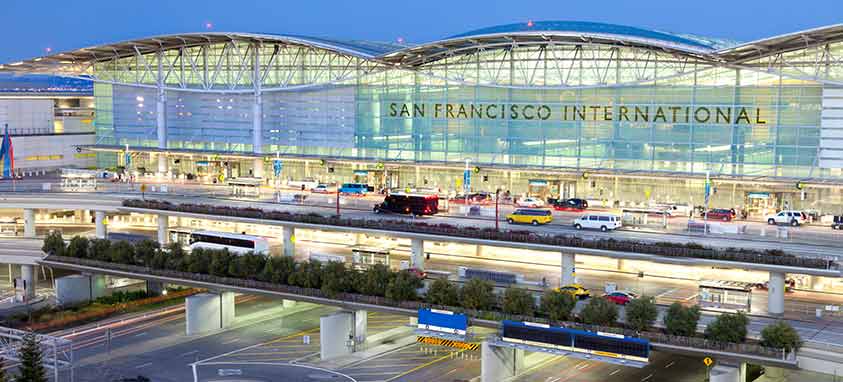
San Francisco International Airport (SFO) is on track to receive a brand new on-airport hotel. This week, Grand Hyatt was granted approval to construct a four-star luxury hotel that is expected to open by mid-2019.

The $230 million project will be owned and constructed by SFO and is slated to break ground on the 4.7-acre site next spring. The building will be designed according to environmentally sustainable specifications that are compliant with LEED Gold Certification.

“The Grand Hyatt is recognized around the world for exceptional guest service, and with this approval we move one step closer in our vision to create the most innovative, luxurious and environmentally sustainable on-airport hotel in the world,” said Airport Director John L. Martin.

The property will have 350 guest rooms and 17,500 sq. ft. of meeting space. It will also offer full-service and casual restaurants, wine and sushi bars, a rooftop cocktail lounge, health club, pool and spa.

It will be situated next to an airport entrance with access to terminal buildings and parking garages via the AirTrain light rail system. The airport hotel will be the first for SFO since 1998, when a Hilton hotel was demolished for additional freeway onramps.

The Grand Hyatt was chosen out of 11 other hotel brands, including Fairmont Hotels & Resorts. The upscale hotel chain was eliminated due to already owning a four-star hotel within 10 miles of the airport. Although Hyatt’s nearest hotel is three miles from SFO, it holds three-stars.

Airport hotels are becoming increasingly more popular as attractive destinations. New properties inside terminals are boasting resort-style amenities, such as The Hyatt Hotel at Orlando International Airport (MCO) which has an expansive indoor pool. Dallas/Fort Worth International Airport (DFW) offers two upscale airport hotels, and Denver International Airport (DEN) recently opened a $600 million Westin hotel.
Dual-Branded Marriott-Starwood Hotel

On the heels of this year’s biggest news in the hospitality industry, Marriott and Starwood have already broken ground on a combined hotel development in downtown Denver. Earlier this month, the two upscale hotel chains merged under one of the largest acquisitions in hotel history.

“This is an opportunity to create value by combining the distribution and strengths of Marriott and Starwood, enhancing our competitiveness in a quickly evolving marketplace,” said Arne Sorenson, president and CEO of Marriott International, in a statement regarding the merger. “This greater scale should offer a wider choice of brands to consumers, improve economics to owners and franchisees, increase unit growth and enhance long-term value.”

The new 18-story dual-branded property will include an AC Hotel by Marriott alongside a Le Meridien Hotel from Starwood Hotels & Resorts. It is scheduled to open in summer 2017, just a year after the deal between the two brands will officially close.

The combination of our two companies brings together the best in innovation, culture and execution.  Our guests and customers will benefit from so many more options across 30 hotel brands, while our hotel owners and franchisees will derive value from our combined global platforms,” said Adam Aron, interim CEO of Starwood Hotels & Resorts.

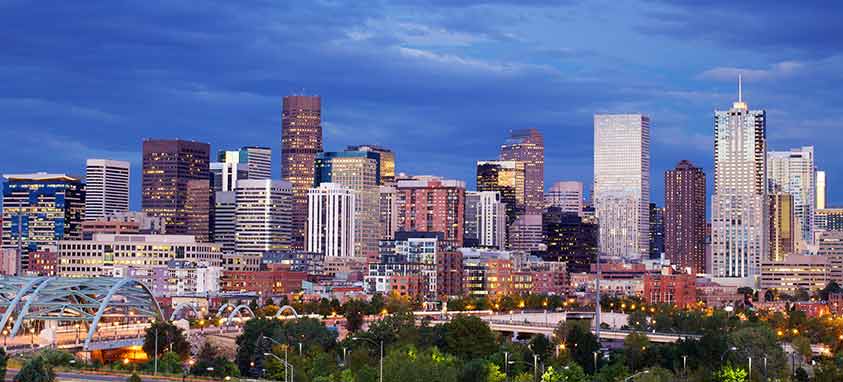
Located a block from Colorado Convention Center, the 495-room dual-branded hotel will be located in the center of the business district and close to the state capital. It will include the first AC Hotel to open in Denver. Each hotel will have its own entry points, lobbies and food and beverage outlets. Both properties will be managed by White Lodging Services Corporation.

Le Meridien will offer 272 guest rooms, a full-service restaurant, a 24-hour fitness center and a business center. There will be more than 8,000 sq. ft. of meeting space, including a 5,000-square-foot ballroom. Similar to other Le Meridien properties, the hotel will have social gathering places, art collections and a global coffee initiative.

Airplane Cabin Noise

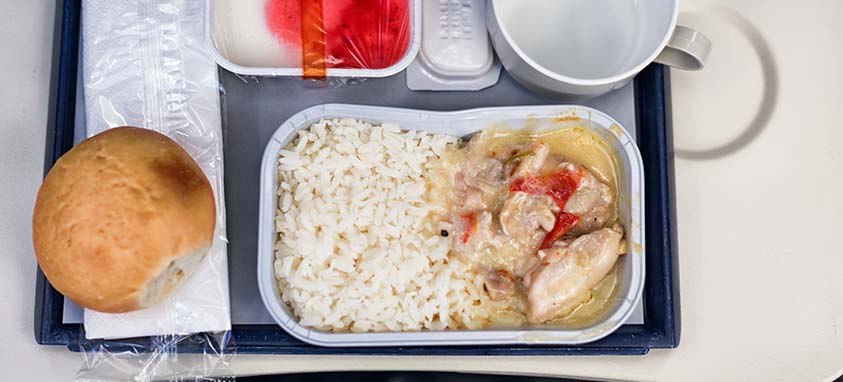
Airplane food has a bad reputation. Since the beginning of in-flight service, passengers have complained of meals being dry and flavorless, among other unsavory qualities. While some speculate that less-than-satisfactory food could be due to altitude or cabin pressure, new research suggests another culprit: airplane noise. The American Psychological Association conducted a study on the interplay of audio sensory perception as it relates to eating, and found that when there’s loud noise in the background, good taste plummets.

During a simulation of airplane cabin noise, which measures at more than 85 decibels, research participants dined on foods that span salty, sour, sweet and bitter taste profiles. The control group ate in a comparatively quiet environment. While most of the meals were rated equally, two flavors stood out as being influenced by the high level of surrounding noise: sweet and umami.

In the simulated cabin din, sweet tastes were harder to detect and rated lower, while bitter umami flavors were enhanced under the same conditions. In another 2011 study on food quality and preference, similar results were found among the two taste profiles. Perception of sweetness was impaired under loud noises, and lower-pitched tones positively affected bitter and umami flavors.

Another food study conducted in 2010 by German airline Lufthansa and in-flight catering company LSG Sky Chefs found proof of the appeal in bitter-savory tastes from airline passengers. Tomato juice, which falls in the umami category, is often in high demand on aircrafts.

Food perception involves most other senses, including olfactory, visual and tactile stimulation, and the combination is from where flavor is derived. Sounds produced while consuming foods, such as noises from a crunchy bite, are also known to affect flavor perception. A 1991 study from the Journal of Food Science confirmed that when higher pitched crunching sounds linked to crispiness were muffled, food was judged as less crispy.

Other research indicates that even plate color and shape can influence taste perception. In a 2014 study by the Crossmodal Research Laboratory, deserts placed on a white plate were rated sweeter than deserts served on a black plate. Round plates were also had a similar effect on sweetness, while square plates did not appear have any effect.

tips-to-avoid-lost-luggageDecember and January are notoriously the worst months for delayed and lost luggage on planes in the United States, but by taking additional precautions, travelers can minimize the problem.

During those two winter months, snowstorms and other bad weather result in more delays and suitcases missing connections, and many infrequent travelers fly and check in multiple bags.

Travelers can help avoid lost and delayed luggage by printing out a copy of their itinerary and putting it inside bags, as well as by arriving at the airport early enough to assure they will get bags on the plane.

Delta and American Airlines allow passengers to track their own luggage. Delta was the first U.S. airline to do so, first on its website in 2011 and on its mobile app the following year. Bags are scanned when they’re dropped off, loaded onto a plane, put on a connecting flight and then placed on a carousel at baggage claim. In August, American Airlines began providing baggage tracking information on its website, and it will eventually be included in its mobile app.

During the first nine months of this year, 3.3 bags for every 1,000 passengers didn’t make it to their destination on time, according to the U.S. Bureau of Transportation. This contrasts with 7.2 bags per 1,000 passengers in 2007, the peak in U.S. air travel. Globally, baggage mishandling has fallen 61 percent since 2007, saving the industry $18 billion.

Some airlines provide compensation when bags arrive late. If bags aren’t on the carousel within 20 minutes of a plane’s arrival at the gate, Alaska Airlines provides a $25 voucher for a future flight or 2,500 frequent flier miles. This year, Delta began offering 2,500 bonus miles to members of its frequent-flier program for bags arriving more than 20 minutes late.

luxurious-cancunNestled on a beautiful stretch of beach, the award-winning Grand Fiesta American Coral Beach Cancun has been named one of Mexico’s best resorts by Travel + Leisure and Conde Nast Traveler magazines.
All 602 suites offer spacious comfort and breathtaking ocean views. It is renowned for its world-class, 40,000-square-foot Gem Spa, which features innovative treatments inspired by gemstone therapy and a 10-step hydrotherapy ritual that includes an ice room.

Dining options include the Five Diamond Le Basilic featuring French Mediterranean cuisne, the oceanfront fresh seafood restaurant Isla Contoy, and the authentic La Joya, where local Mexican flavor is infused with traditional Mariachi singers.

For planners, the hotel’s 85,000 sq. ft. of meeting space includes 20 breakout rooms and the lavish 15,351-square-foot Grand Coral Ballroom. The resort’s meetings and special events team can accommodate groups up to 1,800. Offsite activites abound. Nearby local attractions include Isla Mujeres, the Mayan Museum, Chichen Itza, Tulum, Xcaret, Xel-Ha and  Cozumel.

Follow Smart Meetings’ Senior Content Producer Susan Jacobs as she reports live from the destination this week.


Last Updated Nov. 19, 2015 – 2:49 PM


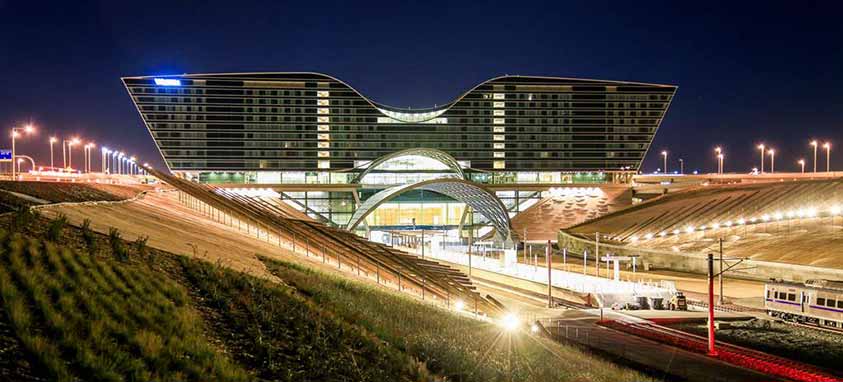
denver-airportThere’s a brand new place to meet in Denver and it’s really close to the airport. Actually, The Westin Denver International Airport, which opens to the public Friday, Nov. 20, is a key component of a $600 million hotel and transit center at the airport.

Reinforcing a growing trend of developing luxury hotels with meeting space at major airports, The Westin offers 519 guest rooms, including 35 suites. There is a state-of-the-art conference center that has 37,000 sq. ft. of event space divided among two ballrooms and 15 breakout rooms and board rooms. The 10,000 sq. ft. of prefunction space will impress attendees with its two-story, floor-to-ceiling glass curtain wall that is approximately 200 feet wide.

The new transit project at the Denver airport will add another key feature in the spring  when the RTD East Rail opens, providing access to and from downtown. It will be about a 35-minute ride.

Of course, there’s really no reason to leave The Westin or the Denver airport. A new open-air plaza is opening next to the hotel. Expected to host concerts and farmers markets, the plaza connects the hotel, airport and train station.

The plaza is expected to be a key event venue, with space for up to 3,200. Indoors, The Westin’s meeting room foyer can hold 1,000 for receptions. Two ballrooms are expected to be very popular event space, with capacities of 850 and 700 for receptions and 600 and 450 for banquets.

The interest in luxury hotels at major airports is at an all-time high. New hotels are expected to open at JFK International Airport in New York, Hartsfield-Jackson Atlanta International and Minneapolis-St. Paul International Airport before 2020.

Denver airport is the fifth-busiest airport in the United States with 53 million passengers traveling through the airport each year. The Westin now ranks as one of the closest hotels to an airlines terminal at any airport in the United States.

state-marijuana-laws-mapWith legal cannabis expected to account for an economic impact of $10 billion in the United States this year, it was only a matter of time before industry leaders came together for an all-encompassing marijuana meeting to discuss the changing landscape as prohibition is overturned.
Bringing together technology specialists, venture capitalists and media, the New West Summit will take place Nov. 20-21 at Parc 55 San Francisco, A Hilton Hotel. Co-founded by Jim McAlpine and Dean Arbit, the event will feature a 15-panel conference and 30 exhibitors. Topics that will be addressed during the conference include the 2016 legalization forecasts, funding trends, mobile apps, technologies disrupting cultivation, extraction and vaporization, and intellectual property trends.

parc-55-hotelParc 55

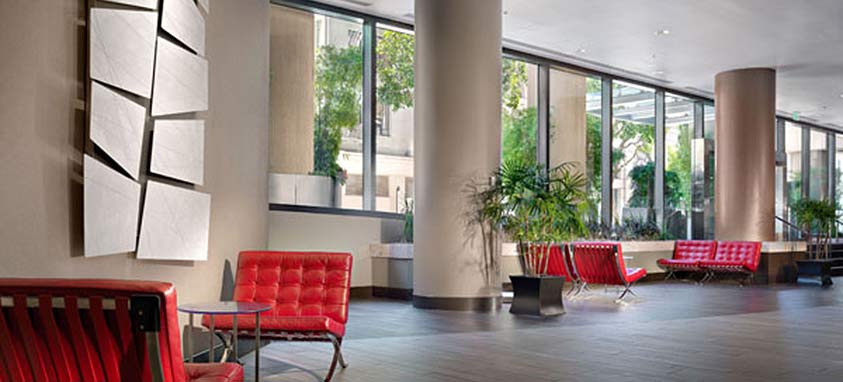
The fact that New West Summit is taking place in one of San Francisco’s iconic downtown properties is a testament to where the marijuana industry is headed. Parc 55 features 1,024 guest rooms and 54 suites, with more than 30,000 sq. ft. meeting and event space. The summit will use the main foyer, exhibit hall, ballroom and breakout rooms.

And now for what you really want to know:

Medical cannabis, which is legal in California, may be on display, however, there will be no smoking or consumption at the event. The professional B2B conference will be like any other business event, so smoking or using marijuana during the event in the main event areas is prohibited.

Just like most major events for any industry, there will be well-known industry speakers. McAlpine is the creator of The 420 Games. Arbit is the founder of West Coast Outdoor Media, a successful outdoor media company; he became president of Smell the Truth—an independent, pro-cannabis blog on SFGate.com, one of the top news websites on the Internet with 16 million unique visitors each month.

Gaynell Rogers, a two-time cancer survivor, serves as the global media and strategic management consultant for visionary medical cannabis leader Steve DeAngelo, considered the father of the modern legal cannabis industry who is also expected to speak. Rogers developed The Discovery Channel’s Weed Wars television series and is responsible for placing multiple-issue cover stories in The New York Times and Fortune Magazine, and dozens of pieces in The Los Angeles Times, San Francisco Chronicle, Huffington Post, Washington Post and Morgan Spurlock’s documentary series, Inside Man on CNN.

Thirty-five states have medical marijuana laws, four states (Washington, Oregon, Colorado and Alaska) and Washington D.C. have recreational cannabis laws, and at least six more states are likely to make recreational cannabis legal next year.

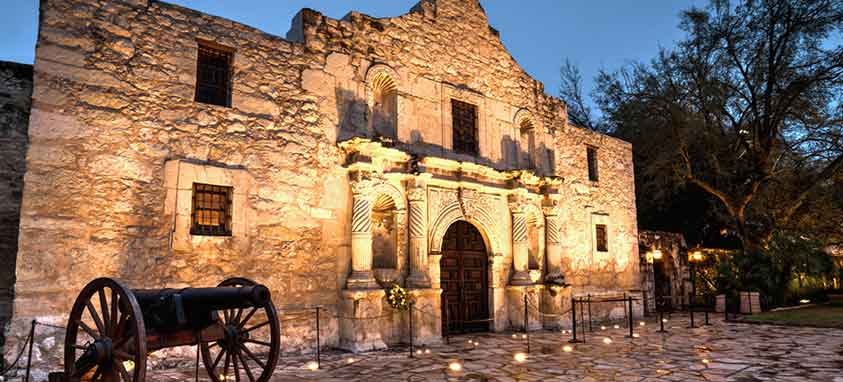
the-alamoIn order for people to “Remember the Alamo,” the historical structure located in San Antonio, Texas, requires emergency repair. Erosion from sun and rain is causing the attraction to crumble. The more than 250-year-old Alamo is the city’s No. 1 tourist draw—2.5 million people visit the protected shrine each year. In July it was designated a World Heritage Site by UNESCO, an organization that identifies, protects and preserves cultural and national heritage sites around the world.

Emergency Repair Required

The Texas state legislature has approved $5 million in immediate funding to shore up the Alamo. This is part of a comprehensive $31.5 million master makeover plan for the area. Reports that an additional $17 million in future promised municipal funds may raise the total cost of the project to nearly $50 million, as the state is buying three historical buildings located across the street in hopes that someday they may be transformed into a museum and expanded plaza. Musical icon Phil Collins, a reported fan of frontier history, has apparently donated more than 200 Alamo-related items, and he wants to see a museum built to house his collection, as well as other artifacts.

This is not the first time restoration has been attempted on the 18th century structure, but experts point out that in order to preserve authenticity repairs must be painstakingly accurate, using materials that replicate the originals. Associated Press notes that the façade of the Alamo church was repaired in the 1930s using a mortar that eventually turned a pinkish hue, failing to match the original’s natural grayish white color.

For years historians have advocated for restoration and preservation of the Alamo, but efforts have been stymied in battles over details. For more than a century, the Daughters of the Republic of Texas managed the historic building, saving it from demolition in 1905. This past March, the state of Texas assumed responsibility for the Alamo.

Its notoriety, and perhaps its ability to raise funds, was elevated when UNESCO recognized it as a World Heritage Site this summer. It is the only officially-recognized World Heritage Site in Texas, and just the 23rd in the United States.

History of the Alamo

According to thealamo.org, what is today known as the Alamo began as San Antonio de Valero, one of five Spanish missions established by the Franciscans. Constructed in 1718, it played an important role in the settlement of San Antonio, Texas and the Southwest.  It was originally built to provide indigenous people such as the Payaya, Sama, Pachaque and other Coahuiltecan Indian tribes with protection from more hostile tribes.

The site, however, is best known as the location of the Battle of the Alamo, which took place March 6, 1836. In that infamous battle, Mexican forces took on and massacred around 180 Texas defenders. “Remember the Alamo” became a battle cry for a subsequent fight— the Battle of San Jacinto—on April 21, 1836. In that fight, the Texans defeated the Mexican army, thus securing independence.

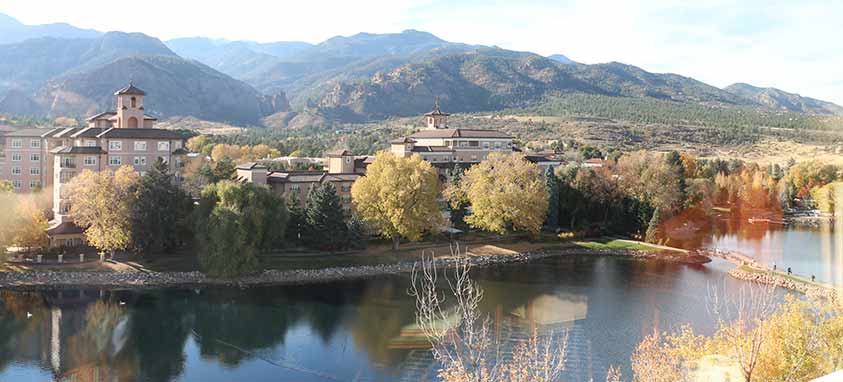
smart-meeting-colorado-springsSmart Meeting Colorado Springs kicked off on Sunday, Nov. 8 at the unforgettable Broadmoor and has meeting planners and suppliers buzzing with excitement. Both sides are enjoying scheduled one-on-one appointments with targeted matches and are building valuable and profitable relationships.

Smart Meetings TV spoke with a representative from Hard Rock Lake Tahoe who confirms that she is a frequent attendee of Smart Events and says she takes advantage of these lucrative opportunities because they’re much more convenient than traditional sales calls. She also notes the benefit of having one-on-one appointments with planners with whom she can build lasting relationships. And she says they’re having a ton of fun, to boot!

Smart Meeting Colorado Springs will conclude on Nov. 10 and will continue to match meeting planners with targeted suppliers. Smart Meetings TV will remain on the floor and catch all the exciting moments this popular event brings.

View some of the highlights from our Smart Meeting Colorado Springs here.


Want to Experience the same thrill at one of our next events?
Learn more about our Smart Meeting Events