hotel-development-in-2016A hotel development boom is sweeping the nation, with 865 new hotels scheduled to open in 2016. A total of 103,230 new guest rooms are expected to materialize across the country this year. Hotel research firm STR has compiled a list of the Top 10 cities for development in 2016. Where in the United States do you suppose the most rooms are under construction?

If you guessed New York City, you are correct. According to STR, the Big Apple is slated to gain 13,583 new guest rooms in 2016—the most of any city in the United States. Houston comes in at No. 2, with 6,169 guest rooms under construction, with Dallas close behind with 4,361. Rounding out the Top 10, in descending order, are L.A./Long Beach, Calif., Greater Washington, DC, Las Vegas, Greater Miami, Chicago, Orlando and Boston.

While Detroit did not make the Top 10 list, the comeback city has an impressive 954 guest rooms scheduled to open in 2016, with 4,200 rooms in the pipeline.

Improved Economy Drives Demand

Experts suggest that the spike in hotel development is due primarily to an improving economy and a  strong demand. Jan Freitag, senior vice president of lodging insights for STR, reports 21 percent more rooms are under construction compared to a year ago. As Freitag told USA Today, “the industry continues to break records on the demand side and on the revenue side . .. Developers are playing catch up, and we’re seeing a lot of attention on the U.S. lodging industry.’’

Freitag is not surprised that there is so much activity in New York, telling USA Today, “If brands want to establish themselves … (they) need to have a foothold in New York City.’’ The Big Apple is an important market with perennially high demand. According to Freitag, through November, 2015 hotel occupancy in New York was 84.8%, the highest occupancy rate in the country’s top 25 markets. “Developers are saying ‘yes, take an opportunity to go and take some of that demand,’ ’’ Freitag says.

Marriott International Particularly Active

Marriott International is expected to particularly active in 2016. Under its umbrella of 19 brands, it is preparing to open more than 360 hotels in North America this year. That’s “a record number of openings,’’ Eric Jacobs, Marriott International’s chief development officer, North America, Select Service and Extended Stay Brands, told USA Today. New properties will range from a Courtyard in Santa Monica to five AC properties in Greater Boston.

Hyatt is preparing to open new Hyatt Place, Hyatt House and Hyatt Regency hotels in Houston, Chicago, Denver, Emeryville, Calif., and Asheville, North Carolina, and an new Andaz in Scottsdale, Arizona.

Hilton Worldwide, which operates 12 different brands, will unveil more than 30,000 guest rooms in 270 hotels in the U.S. in 2016, most of them new construction. Bill Fortier, Hilton Worldwide’s senior vice president, development, for the Americas, told USA Today, “Existing hotels have become expensive. Money is going towards new development today.’’

Most of the Hilton projects will materialize in Miami and New York, however Fortier points out that other cities not previously on Hilton’s radar will also see development, especially on the West Coast.  The company is focusing on limited service hotels that offer breakfast bars rather than full-service restaurants. In addition to being more costly, full-service properties can take up to five years to build, delaying ROI. According to Fortier, with limited service properties “you have a  little more certainty when the hotel will open, and when you can start getting the return on your investments.’’

los-angeles-sets-tourism-recordTourism Industry Grows for Fifth Consecutive Year

Los Angeles Mayor Eric Garcetti and Los Angeles Tourism & Convention Board (L.A. Tourism) President & CEO Ernest Wooden Jr. today announced Los Angeles welcomed a record 45.5 million visitors in 2015, an increase of 2.8% over 2014 levels, breaking visitation records for the fifth consecutive year.

New tourism records were set for both domestic and international visitation surpassing mid-year forecasts. Total domestic visitation reached 38.8 million, a 2.8% increase over 2014, and 6.7 million international visitors made Los Angeles their ultimate destination, a 3.3% increase over the previous year.

“Los Angeles is a place where the world comes together for cultural experiences and celebrated attractions that cannot be found anywhere else,” said Mayor Garcetti. “Our city keeps setting records in the tourism sector because we are investing billions at our airport, in mass transit, and other assets that are making L.A. more exciting and accessible than ever. The sky’s the limit.”

China was the most dynamic market driving international visitation with a year-over-year growth of 13.6%, officially becoming L.A.’s number two international market, behind Mexico, with 779,000 visitors. South Korea also grew by double digits, an increase of 11% totaling more than 282,000 visitors.

“We want to recognize and congratulate our hospitality community for their passion and dedication which has allowed us to celebrate our fifth consecutive year of record-breaking visitation. It’s these individuals and businesses that make Los Angeles such a dynamic destination that 45.5 million people traveled to experience it in 2015,” said Ernest Wooden Jr., president & CEO of the Los Angeles Tourism & Convention Board. “These figures help propel us to our goal of welcoming 50 million visitors by 2020.”

Tourism is among the largest and healthiest contributors to the Los Angeles economy, supporting more than 464,000 jobs in the Leisure & Hospitality sector. A record 28.5 million hotel room nights were sold countywide with ADR reaching a new high of $158.35, a 7.4% increase over 2014. In the calendar year 2015, it is estimated that hotel visitors generated at least $223 million in transient-occupancy tax collections for the City of Los Angeles.


About Los Angeles Tourism & Convention Board

Los Angeles Tourism & Convention Board is a private, non-profit business association whose primary mission is to market and promote Los Angeles as the premier site for leisure travel, meetings and conventions as the City’s official tourism marketing organization. For more information, visit the official visitor information website of Los Angeles at discoverLosAngeles.com, join the more than one million people who follow L.A. Tourism’s Facebook page at facebook.com/LosAngelesFan, or follow @discoverLA on Twitter, Instagram and Pinterest.

Any frequent traveler knows a good trip starts with a good flight. You know how much time you need to get to the airport in order to make your flight; you remembered to pack your airplane pillow, your ear plugs, and your favorite snack. You have enough seasons of your go-to TV show loaded up on your tablet to last you the flight and then some.

But what about the details you can’t control? Flights get delayed, rides get bumpy—and the worst fear of all—your in-flight neighbor could be a nightmare.

London City Airport conducted a survey in November to reveal the worst habits of airline passengers, and while many that made the top rankings were somewhat predictable, some of the results might surprise you. Here are the top ten worst habits of air travelers:

1. The Over-Recliner

Anyone who values their knees and doesn’t score the exit row understands the pain of sitting behind an over-recliner. It’s so much of a hindrance that there’s actually a product to prevent passengers from reclining—appropriately named the knee defender (which has caused its own squabbles).

This common offense came in at number one, with 63 percent of survey takers agreeing it is the worst habit.

2. The Armrest Hog

In a typical three-seat row of an airplane, you’ve got four arm rests and three passengers. In an environment with little-to-no wiggle room, every inch of real estate counts. And if you’re petite and stuck in the middle, prepare to go to battle for your space.

Anyone who’s sat in the aisle seat will agree: the aisle arm rest doesn’t count. If your elbow isn’t flush with the edge of the chair, prepare to lose it when the food service cart comes. With the aisle rest out of the running, that leaves one per passenger. Left-side passengers use the one to their left, and right side passengers use the right.

55 percent of surveyors answered that hogging the arm rest is the worst habit.

3. The Rude Passenger

53 percent of people answered that being rude to cabin crew was the worst habit, which—assuming that means they’ve encountered it before—seems absurd. Flight crew is your only hope at eating and drinking during your flight. There’s no better analogy for biting the hand that feeds you.

4. The Over-Packer

Is there anything worse than being forced to squish—or even worse—check your bag because someone else on the flight managed to sneak their behemoth luggage onto the plane? No, no there is not, according to 49 percent of those who took the survey.

5. The Chatty Cathy

Having a noisy passenger onboard is probably the most common annoyance on flights. The level of annoyance depends on a lot of things; namely how close they are to you, if they’re keeping fussy babies awake who may otherwise have fallen asleep by now, and the absolute worst—if these gabbers are on your red eye.

Loud talkers were ranked number five with 43 percent.

6. The Impatient Passenger

Rushing off the plane to be the first in the passport queue, according to 40 percent of those polled, is the most frustrating. How much time do you really save by trampling down your fellow travelers? The best part is seeing these frenzied offenders waiting right alongside the last-off-the-plane crew at baggage claim.

7. The Repeating Retriever

Needing to get up to stretch your legs on a long flight is one thing, but come on. You knew you were getting on a plane. You have a backseat pouch for your books. You have a lap for the sweater you might want later but aren’t quite ready for yet. You have under-the-chair space for whatever else you might need. What is in your overhead bag that must be taken out and put away three times?!

34 percent of your fellow passengers urge you to stop. Please.

8. The Lounger

If this has ever actually happened and a flight attendant didn’t stop it, I don’t ever want to step foot on this airline. Passengers who put their feet into the gaps between seats to stretch out, thereby kicking the passengers in front of them in the shoulder, was ranked number eight as the worst habit. Of course, if this became a normal habit, it would skyrocket to number one.

9. The Sailor

This really should go for all public places: keep the chatter clean, whether there are children in plain sight or not. Cursing takes the number nine spot at 24 percent.

10. The Barricader

The last (and therefore, least annoying, at 19 percent) is the window hog. When your plane is going over an iconic landmark and you can’t help but notice the poor middle seat passenger craning their neck to catch a glimpse, lean back and share the picturesque view. It’s the least you can do, especially after you’ve stolen their armrest, kept them up with your bellowing curse-laced chitchat, and verbally assaulted the staff.

Did your biggest flight pet peeve make the list? If not, tell us what makes your top ten!

Downtown Phoenix

Between various downtown attractions and the rugged landscape of the Sonoran desert, the best of Phoenix was on display before the 2016 College Football Championship, one of many citywides to choose the city for its ability to host mega events with ease.

For yesterday’s game, downtown Phoenix was transformed into Championship Fan Campus for Clemson Tigers and Alabama Crimson Tide fans. The five block area included an indoor fan festival and outdoor concert stage for three-day music series Playoff Playlist Live! Performers include The Band Perry, Walk the Moon, Ciara, David Nail, Andy Grammar and Moon Taxi.

Downtown Phoenix

Playoff Fan Central took over Phoenix Convention Center with interactive games, exhibits, surprise guest appearances and pep rallies. More than 300,000 visitors participated in the fan experiences and championship game which kicked off yesterday at University of Phoenix Stadium in Glendale.

Stay

During a media FAM tour, our group witnessed Phoenix’s ability to accommodate events of all sizes and also experienced world-class museums, burgeoning yet vibrant culinary and art scenes, one-of-a-kind hotels and more. Hidden amid towering Saguaro cacti and ancient boulder formations, The Boulders Resort & Spa was our first stop. The resort offers 160 guest casitas and villas, six restaurants, two championship golf courses, eight tennis courts and a top-rated full-service spa.

The Boulders recently wrapped up renovations to its sprawling Southwestern property. For groups seeking distinctive conference space, Tohono Conference Center has 12,000 sq. ft. of space with asymmetrical walls carved from stone and expansive windows overlooking the desert. Outdoors, there is even more meeting space in el Pedregal, an 80,000 sq. ft. courtyard with an amphitheater. Promise rock is ideal for receptions and diners with a panoramic view of the desert valley.

Downtown Phoenix

On the other side of the property spectrum, is The Camby, a brand new uber-trendy and ultra-hip hotel designed for an adventurous, playful traveler. Our group stayed at the 277-room hotel, which took over the former Ritz-Carlton and turned it into a luxury lifestyle property with avant-garde artwork and three innovative food and drink concepts.

The Camby incorporates the five C’s of Arizona—cattle, copper, citrus, climate and cotton—into all of its spaces, including 20,000 sq. ft. of meeting space, plus a 1,200-square-foot intimate back office room with casual seating, pool table and shuffle board for a spontaneous dash of fun. Phoenix locals and city officials celebrated its official “untying of the bowtie,” which is a signature emblem of the hotel. During the ceremony, Chief Inspiration Officer Greg Miller emphasized that the hotel aims to be “exactly like nothing else.”

Kimpton’s Hotel Palomar Phoenix was our last stop, as fan-centric events for the College Football Championship game began to heat up downtown. Located right in the middle of the action, Hotel Palomar is at the center of shopping, entertainment and dining at CityScape. The boutique hotel has 242 modern guest rooms and suites and 10,000 sq. ft. of event space across 10 meeting rooms. Plus, there is a rooftop pool and additional event space suited for glitzy receptions and breathtaking sunset views.

Downtown Phoenix

Eat

The locally-sourced food trend has taken Phoenix by storm. Farm-to-table food is everywhere, along with vegan and gluten free options at Flower Child The health-conscious chain began in Arizona, and has since cropped up in Texas and California. Flower Child works directly with ranchers and farmers to ensure all proteins are raised naturally and organic produce adheres to quality standards.

Phoenix Public Market Café is the local food hub of Roosevelt Row, a formerly blighted neighborhood that has transformed into a collaborative place for arts and local businesses. Bold murals, mixed-use spaces, warehouse galleries, co-ops, record stores and bookstores line the Artists’ district, which connects downtown to other historic neighborhoods. Roosevelt Row was named one of the top 10 leading arts districts in the nation by USA Today. Plus, it’s filled with funky, edgy venue spaces for meetings outside the box.

Downtown Phoenix

Foodies visiting Phoenix should not miss Barrio Urbano, the original brainchild of Chef and four time James Beard Award nominee Silvana Salcido Esparza. Traditional tortas, burritos, ensaladas and more are carefully re-created with an urban spin, while maintaining the authenticity of the dish. Try her esquites asados, a sharable grilled corn dish inspired by Mexico’s street food. It’s served shucked and topped with spicy aioli, butter, queso cotija, hot sauce and fresh lime. Be sure to wash it down with one of their famous margaritas made with the highest quality tequilas, mescal and freshly squeezed juices.

Downtown Phoenix

Back downtown, our group received a mixology demonstration at Bitter & Twisted. Situated in the historic Luhrs Building, the cocktail parlor harkens back to Prohibition-era days with its broad list of iconic drinks, as well as new twists on old favorites. Owner and Master Mixologist Ross Simon opened the establishment in hopes of elevating the local bar scene with exquisitely crafted drinks. Simon demonstrated his take on a Long Island Ice Tea served in a coke can, plus a classic martini, negroni and a passion fruit delicacy for the cocktail-leery. Bitter & Twisted can host up to 150 for events and block parties.

Mixologists are a well-established fixture at prominent Phoenix restaurants. At The Gladly, Richie Moe is resident bartender and mixologist. He has compiled one of the largest collections of whiskeys and scotches in the area and also serves cocktails on tap. Cocktail aficionados should try The First Word, which includes Hophead vodka, Green Chartruse, Lusardo, lime and egg white. Our table was offered a dessert and drink platter of s’mores and other chocolate sweets combined with a delicate tobacco aroma and samplings of smooth whiskeys.

Downtown Phoenix

Experience

At University of Arizona Medical Center, critical bioresearch and education initiatives are located in the heart of downtown. Its college of medicine offers cutting-edge facilities in an experiential format. The Center for Simulation and Innovation is a state-of-the-art simulation facility dedicated to education, research and clinical care. Students practice on robotic mannequins, standardized patients and synthetic cadavers, so they are well-prepared to perform a range of surgical procedures. Phoenix Biomedical campus is also a boon for medical meetings in partnership with Phoenix Convention Center. The health facility holds 300 events per year in its auditorium and lecture halls. Next door, a new building with meeting space is currently under construction and is slated for completion in 2017.

Downtown Phoenix

More meeting space is available at Musical Instrument Museum, a world-class performance facility and global instrument curator that makes music around the world accessible to all. Exhibits from every region in the world include traditional instruments on display, as well as audio and video recordings for visitors to experience. There are approximately 5,000 instruments from a collection of 15,000 on display. Musical Instrument Museum can host between 200-1,000 in its various halls, courtyards and theater, and is also available for buyouts.

Downtown Phoenix

The Heard Museum was one of two quintessential Southwestern experiences on our itinerary. Since it was founded by Dwight and Maie Heard in 1929, the Native American cultural museum has been recognized for the quality of its artifacts and collections, educational programing and festivals. Stories of Native American people are told through intricate basket weaving, oral traditions, doll-making, artwork and other artistic expressions from various tribal communities in the region. Private events can be held at the Arizona landmark.

Downtown Phoenix

Desert Botanical Garden offers the greatest collection of arid land plants and succulents from deserts around the world in a beautiful outdoor setting. Art installations and old Saguaro cacti stand side-by-side for visitors to amble by. Bruce Munro’s Sonoran Light is currently on display and features eight large-scale light installations using colorful fiber optics and water towers. Desert Botanical Garden also offers cooking classes, educational programming, hands-on workshops, demonstrations and event space.

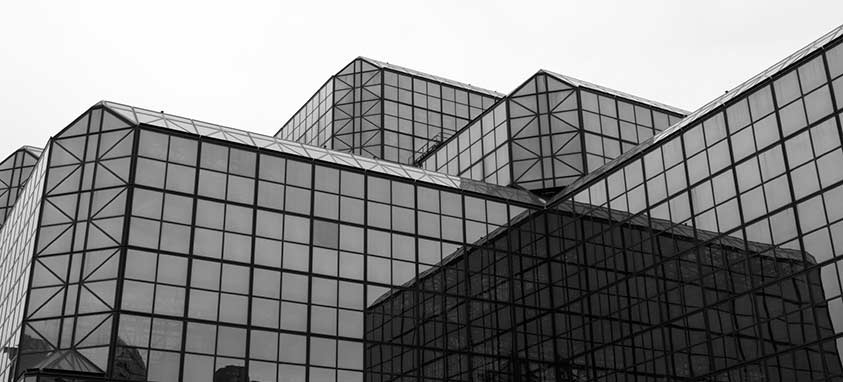
Jakob-K.-Javitz-Convention-CenterPlans have been unveiled for a $1 billion expansion of New York City’s Jakob K. Javits Convention Center that would increase its size from 2.1 million sq. ft. to 3.3 million sq. ft.

The proposal, announced by New York Gov. Andrew M. Cuomo on Jan. 7, would provide Javits with more than 1 million sq. ft. of meeting and event space, including a 60,000-square-foot ballroom, the largest in the Northeast. It would be paid for by the Javits Center within existing resources. Construction is expected to begin in late 2016.

Some 500,000 sq. ft. of the space would be contiguous, on one level. The 500,000-square-foot distinction is an industry benchmark that would allow the convention center to pursue additional meetings, events and attractions, and enhance its competitiveness.

Javits Center is located on Manhattan’s West Side between West 34th and West 40th streets. It’s the busiest convention center in the United States, hosting trade shows, conventions and special events that spur economic activity and job creation. In 2014, the facility had a $1.8 million economic impact, hosting 177 events that attracted more than 2 million visitors, resulting in an estimated 478,000 nightly hotel room reservations. Cuomo’s proposal is designed to build on the successes achieved in 2014 and 2015.

As a part of the expansion project, the Javits Center will seek LEED Platinum certification. The proposal includes installing a 34,000 square-foot solar energy array, the largest of its kind on a public building in New York State. The center has achieved LEED Silver certification from the U.S. Green Building Council.

Almost from the day that the convention center opened in 1986, exhibitors and hotel operators have complained that it is too small, too difficult to navigate and perpetually damp from a leaky roof. Several New York governors have announced plans for a major expansion, only to see them founder.

los-cabos-mexicoWith a plethora of luxury hotels, the Cancun area in eastern Mexico has always been a popular destination for leisure travel and meetings. But planners seeking a different destination, especially for incentive travel, might want also to examine the western side of Mexico, particularly Los Cabos, located at the tip of Mexico’s Baja California Peninsula. Upscale luxury hotels on the strip of land between Cabo San Lucas and San Jose del Cabo (known as Los Cabos) are multiplying.

According to statistics reported by Jessica Montevago on travelmarketreport.com, the region has experienced a 14.7 percent increase in tourism in 2015 from 2014, welcoming more than 1.5 million tourists. Predictions are even more optimistic for 2016, with several upscale luxury properties expected to open. This includes a Park Hyatt, Hard Rock, Le Blanc Resort, VieVage Los Cabos and Mar Adentro by Encanto. Within the next two years, Los Cabos Tourism Board anticipates that nearly 4,000 new hotel rooms will be built.

Luxury Hotel Development is Welcome

In 2014, Los Cabos was hard hit by Hurricane Odile, which pummeled homes, hotels and businesses on the peninsula. Many of the damaged resorts resurfaced in 2015, including Hyatt Ziva—the brand’s first all-inclusive property in the region—which suffered destruction to 95 percent of its 591 suites. Hyatt Ziva reopened in Sept. with a new coffee shop, 24-hour deli and upgrades to its onsite restaurant.

Post hurricane, the infrastructure of the whole area has improved. Roads have been paved and Los Cabos International Airport (SJD) has been expanded. The relatively new and green Los Cabos Convention Center, situated 10 minutes from the airport and five minutes from more than 10 hotels , offers 72,000 sq. ft. of meeting and function space.

Beautiful destination

Although it lacks the calm turquoise waters that make Cancun so appealing, ruggedly picturesque Los Cabos is a beautiful destination that melds the desert and the sea. Easy to get to, especially from the West Coast, it has a lot to offer. After meetings, leisure activities include whale-watching, golf, touring historic sites in 200-year-old San Jose del Cabo and experiencing the lively nightlife, shopping and dining of Cabo San Lucas.

palm-springs-film-festival-helen-mirrenPhoto Courtesy of Rand Larson

A buzz was in the air from the moment I arrived on Jan. 1 for the Palm Springs International Film Festival, and it reached a frenzy the following night for the Black Tie Awards Gala.

The Southern California festival, held Jan. 1–11, is world renowned for the gala, featuring A-list celebrities presenting and receiving awards—but it’s hard to imagine a more stellar bunch than the one at this year’s event.

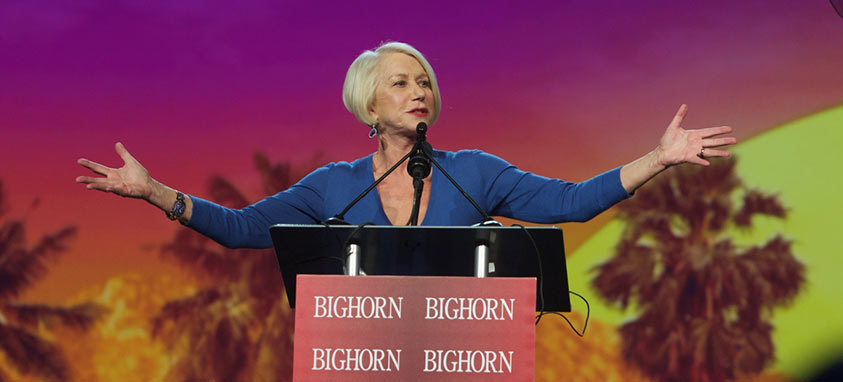
Michael Keaton, Kate Winslet, Michael Fassbender, Helen Mirren, Johnny Depp, Cate Blanchett, Ridley Scott, Matt Damon and rapidly rising star Saoirse Ronan all took the stage at Palm Springs Convention Center, to the delight of the 2,100 attendees.

Awards were presented to honor top cinematic achievements in 2015. The recipients were:

Chairman’s Award: Damon
Desert Palm Achievement Award, Actor : Depp
Desert Palm Achievement Award, Actress: Blanchett
International Star Award, Actor: Fassbender
International Star Award, Actress: Ronan
Rising Star Award: Alicia Vikander
Sonny Bono Visionary Award: Tom McCarthy
Spotlight Award: Rooney Mara

palm-springs-film-festival-cate-blanchettPhoto Courtesy of Rand Larson

Just before the program ended, my group—a diverse lot consisting mainly of meetings and hospitality professionals—was rushed out of the building and into limousines to attend the gala after-party at the luxurious Parker Palm Springs. We had been told that celebrities typically show up only for a few minutes, at the beginning of the party.

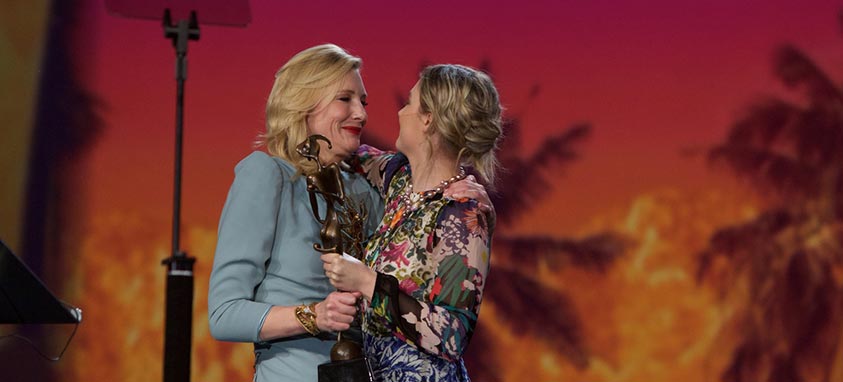
Shortly after we arrived, I spotted Blanchett, who was surrounded by a virtually impenetrable wall of people. Despite the claustrophobic situation, she seemed as light as a feather as she beamed her famous smile and chatted with attendees.

The following day, film screenings continued. The Palm Springs film festival is one of the largest and most well-respected film festivals in North America, and features a culturally diverse program of some 200 films from more than 60 countries. Nearly 137,000 people from throughout the world attend the Palm Springs festival each year.

traveler confidence

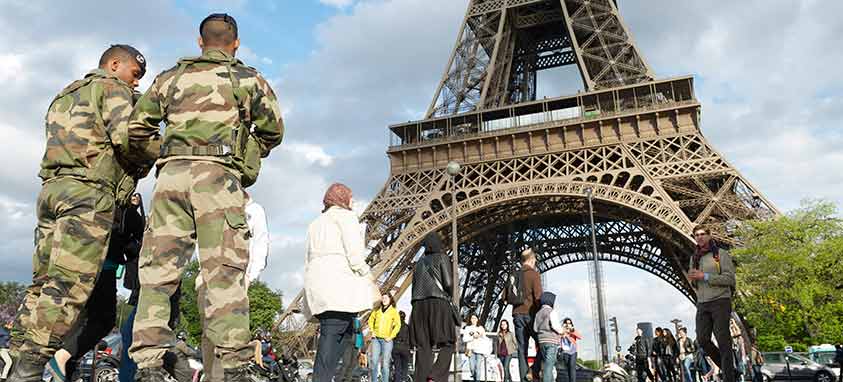
This week, armed protesters took hold of a federal building in Oregon. The hostile situation has been identified as domestic terrorism, and continues a spate of violence that carries on from 2015. Last September, the Paris attacks involved a series of coordinated shootings that occurred in and around the city and made headlines around the world. While some believed that visits to the region would not be impacted, many more worried that business and leisure travel to France would dwindle.

In light of these world events which invariably affect travel, Travel Leaders Group has sought to determine the actual impacts to travel bookings in a survey conducted on traveler confidence domestically and abroad. Although the threat of terrorism knows no bounds, it found that most travelers are not prevented from visiting various countries.

“Today’s news headlines and 24/7 media coverage provide so much information that often leads consumers to question whether or not they should travel,” Ninan Chacko, CEO of Travel Leaders Group, said in a statement. “Thus the findings on the ‘confidence gap’ are gratifying, demonstrating that consumers ultimately employ rational thinking – along with counsel from their travel agent – when making key travel decisions.”

Data on traveler confidence was gathered from 1,087 responses made by travel agents based in the U.S., with at least half of their portfolios consisting of leisure travelers. Respondents were asked questions regarding canceled and delayed trips due to concerns of terrorism. A confidence gap between traveler confidence and the actual impact on bookings found Canada to be the most favorable destination—there was only a 3.5 percent difference between reported cancellations and delays and travel concerns. Approximately 96.1 percent of clients were slightly concerned about travel to Canada. The North American country ranked a little better than the United States, which received a 5.3 percent confidence gap.

Other global regions with favorable confidence gaps included:

-New Zealand—8.7 percent
-Australia—8.8 percent
-South Pacific—9.2 percent
-Northern Europe—21.7 percent

Regions with the least favorable confidence gaps were:

-The Middle East—61.8 percent
-Asia (excluding India and Southeast Asia)—55.6 percent
-Russia—47.4 percent
-Africa—45.1 percent

The top global regions where travel agents reported no cancellations or delays included:

-Canada—99.6 percent
-New Zealand—99 percent
-Australia—98.8 percent
-United States—98.5 percent
-South Pacific—97.5 percent
-Northern Europe—95.9 percent
-South America—94.5 percent
-Central America—94.1 percent
-Southern Europe—93.9 percent
-Western Europe—91.5 percent
-Asia (excluding India and Southeast Asia—91.1 percent
-Southeast Asia—91 percent
-India—91 percent

No cancellations or delays No concerns / only a little concerned Confidence Gap
Canada 99.6% 96.1% 3.5%
United States 98.5% 93.2% 5.3%
Mexico 87.3% 50.5% 36.8%
Central America 94.1% 55.3% 38.8%
South America 94.5% 56.3% 38.2%
No cancellations or delays No concerns / only a little concerned Confidence Gap
Western Europe 91.5% 69.8% 21.7%
Eastern Europe 87.8% 55.0% 32.7%
Northern Europe 95.9% 74.2% 21.7%
Southern Europe 93.9% 69.7% 24.2%
Russia 84.1% 36.7% 47.4%
No cancellations or delays No concerns / only a little concerned Confidence Gap
Africa 81.7% 36.6% 45.1%
Asia 91.1% 35. 0% 55.6%
Australia 98.8% 90.0% 8.8%
India 91.0% 56.5% 34.5%
Middle East 74.0% 12.2% 61.8%
New Zealand 99.0% 90.3% 8.7%
South Pacific(not Australia/NZ) 97.5% 88.3% 9.2%
Southeast Asia 91.0% 61.9% 29.1%

Despite several ISIS threats and terror attacks that occurred in Europe last year, the region ranked in the top bracket of confidence gap percentages. Travel agents were also asked to examine their overall bookings to Europe and determine whether leisure and business travel had decreased. About half of travel agents surveyed stated that bookings to Europe in 2015 were higher than the year before, while 37.8 percent said bookings were on par with 2014. Only 12.7 percent said that trips to Europe had dropped.

college-football-phoenixJust days before the 2016 College Football Playoff National Championship takes place, Smart Meetings is off to Phoenix for a behind-the-scenes look at how the city gets ready before thousands of Alabama and Clemson take over.

Keep a look out for various scenic stops and exciting downtown attractions along the way. Highlights include: Musical Instrument Museum, Desert Botanical Garden and Roosevelt Row.

Join the conversation on Twitter @smartmtgsmeena.


Last Updated Jan. 5, 2016 – 4:35 PM


business-travel-predictions-for-2016“Out with the old, in with the new,” is a popular saying at the beginning of every year, but travel industry predictions show much of the new that is expected in 2016 consists of the further development of what was established in 2015. Parag Vohra, general manager of hotels for Sojern, provided six predictions for the coming year.

The big will continue to get bigger: Hotel companies are expected to actively buy and sell in 2016 to consolidate on size and distribution. This will continue the trend that gained momentum in 2015, when Marriott International, Inc., purchased Starwood Hotels & Resorts, and AccorHotels Group bought FRHI Holdings, Ltd., which consists of the Fairmont, Raffles and Swissotel brands. It’s anticipated that online travel agencies (OTAs) also will continue to merge, with Skyscanner, Hipmunk and HotelTonight unlikely to remain independent. During 2015, Expedia acquired Orbitz and HomeAway, TripAdvisor bought Viator and Sabre acquired Trust International.

Booking lead times will shrink, but the purchasing process will lengthen: In 2015, last-minute hotel bookings increased by 13 percent in the United States and 11 percent in Europe, while last-minute flight bookings also increased. And during the past year, American travelers spent increasingly more time purchasing hotel rooms. Americans now spend 25 percent more time choosing their hotel than they do when searching to book a flight. These trends are expected to continue or even accelerate in 2016.

Get ready for more hotel price wars: An abundance of rooms in New York City has triggered a price war among hotels there, and it’s likely to be seen soon in other key East Coast destinations. This is great for consumers, but not for the hotels’ revenue. In cities such as San Francisco, however, hotels continue to thrive. San Francisco saw a 7.5 percent rise in room rates in 2015, compared with 1.5 percent in New York City and a 5.2 percent average throughout the country.

Responsive design sites will emerge in hotels: Rather than creating their own mobile apps, hotels will offer responsive design sites that can dynamically adapt to all screens. This will enable hotel marketers to focus on driving demand to their single site rather than spending money on app downloads and updates. It’s particularly cost-effective for independent and boutique properties.

Expedia New York Hotel?: Online travel agencies will continue to flourish: Rather than concentrate on hotel rooms, OTAs will increasingly look to establish add-on services through property management systems, revenue management, restaurant bookings, tours, activities and more. Some might even establish their own hotel brands.

Airbnb will continue its monstrous growth: In 2015, Airbnb emerged as a growing threat for hotels worldwide in the leisure segment, even though its share of the overall room supply in Europe, Japan and other key markets is still relatively low. Airbnb has raised $1.5 billion in new funding and has a reported valuation of around $25 billion. The company is trying to attract more of the business traveler segment, but the impact isn’t likely to be seen in 2016.