Four Seasons Resort Hualalai

When choosing a hotel, the volume of available properties and online accommodations reviews can make it hard to focus.  Luckily, U.S. News & World Report’s list of 2017 Best Hotels has arrived to make the decision easier—at least for those looking to book the best luxury hotels on the market. The worldwide rankings and consumer advice expert evaluated luxury hotels across the United States to identify standouts in this elite category. Factors that figured in the scoring included hotel industry awards and expert and guest reviews.

Hotels ranked in the top 10 percent earned a Gold Badge. These properties command high rates—approximately 60 percent higher than competitors’ prices, according to research by U.S. News & World Report. In return, they offer premium amenities such as infinity pools, complimentary fitness classes and free kids clubs.

The three U.S. cities occupying podium position with the most Gold Badge hotels are also in-demand meetings and conventions destinations: New York City (23), Las Vegas (11) and Los Angeles (10).

The list of 50 Best Hotels in the United States features more geographic variety, highlighting hotels from Georgia, Utah, Hawaii and other luxurious locales. Notable listings include:

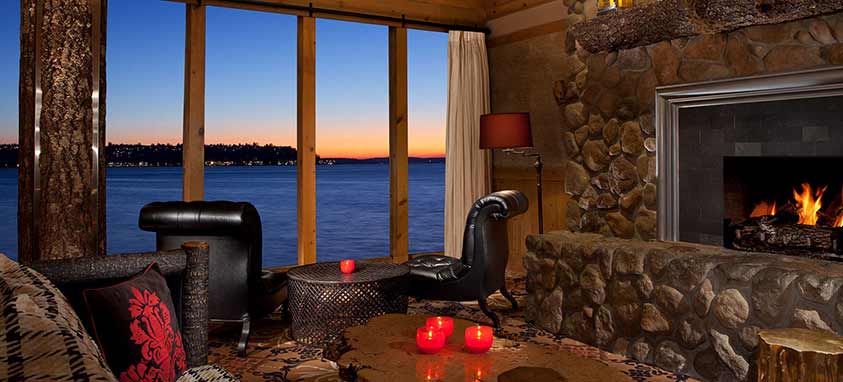
Ranked second, the Four Seasons Resort Hualalai, on Hawaii’s Big Island, fuses oceanfront luxury with the essence of Hawaiian culture, design and tradition. The Official PGA Tour Resort offers nearly 24,000 square feet of meeting space, plus a Jack Nicklaus-designed golf course.

The Lodge at Sea Island, a 40-room boutique hotel on Georgia’s barrier islands, ranks fifth. Set on the former site of an antebellum plantation, the Forbes Five Star property provides Southern charm and hospitality as well as a full complement of amenities and activities.

Montage Deer Valley in Park City, Utah, ranked eighth, offers a majestic destination for a mountain escape. With more than 55,000 square feet of meeting space, ski in/ski out access, a large spa complex and an on-site bowling alley, there’s plenty to explore.

Aria Sky Suites, a AAA Five Diamond hotel towering above the Las Vegas Strip, places 35th. The opulent property boasts incredible views, personal concierge services, poolside pampering and suites of up to 2,060 sq. ft.

Here are the Top 20 Best U.S. Hotels of 2017, according to U.S. News & World Report.

  1. The Langham – Chicago
  2. Four Seasons Resort Hualalai – Hualalai, Hawaii
  3. The Jefferson – Washington, D.C.
  4. Montage Kapalua Bay – Lahaina, Hawaii
  5. The Lodge at Sea Island – Sea Island, Georgia
  6. Acqualina Resort & Spa on the Beach – Sunny Isles Beach, Florida
  7. The Hay-Adams – Washington, D.C.
  8. Montage Deer Valley – Park City, Utah
  9. Rancho Valencia Resort & Spa – Rancho Santa Fe, California
  10. Primland – Meadows of Dan, Virginia
  11. The Peninsula Beverly Hills – Beverly Hills, California
  12. Mandarin Oriental – Las Vegas
  13. Four Seasons Resort Lanai – Lanai City, Hawaii
  14. The Peninsula – Chicago
  15. The Greenwich Hotel – New York City
  16. Four Seasons Resort Maui at Wailea – Wailea, Hawaii
  17. Wentworth Mansion – Charleston, South Carolina
  18. Four Seasons Hotel Chicago – Chicago
  19. The Lowell New York – New York City
  20. Waldorf Astoria Chicago – Chicago

This year’s Super Bowl was one of the most thrilling events in recent years—both on and off the field. On the field, there’s no doubt that the New England Patriots’ comeback will go down in history. Off the field, a fabulous glitter- and drone-powered halftime show and controversial commercials had social media buzzing. Take a few ideas from the Super Bowl, and you will have attendees buzzing about your event as well.

Choose a great destination and venue

After a very successful Super Bowl, Houston received praise from both NFL Commissioner Roger Goodell and Patriots head coach Bill Belichick. Not only did the city host a week of citywide festivities for an estimated 140,000 visitors and a sporting event for 72,220 attendees, it also made major changes in anticipation of the big day. With outdoor dining and entertainment space Avenida Houston, major convention center renovations and hotel openings, Houston did its best to prepare to handle the influx of travelers.

Planner’s takeaway:

Of course, we can’t all have a host city that undergoes billion-dollar renovations and construction projects to coincide with the date of our event. Instead, planners should make sure that they carefully and thoroughly research any city on their shortlist.

Sometimes it’s hard to fit a site visit into your schedule, but our site selection experts at Smart Meetings 360 always emphasize that site visits should not be skipped. Marketing materials and CVB websites can never show the whole picture—you need to see it for yourself.

It’s also beneficial to meet CVB and hotel representatives to see how you get along with them, as well as evaluate how willing they are to work with you and accommodate your group’s needs.

Select entertainment wisely

Lady Gaga, one of the world’s biggest pop stars, was selected to perform at the Super Bowl halftime show. In the weeks leading up to the Super Bowl, media and fans began speculating about whether Lady Gaga, who openly supported Democratic presidential nominee Hillary Clinton, would include a political message in her performance. In a press conference prior to the game, she fueled even more chatter by stating that she wanted her performance to promote inclusion and equality.

In the end, it was much ado about nothing, as Lady Gaga kept things fairly neutral. She impressed millions with a light show that made use of coordinated drones, outlandish outfits and amazing costume and makeup changes. Though some continue to speculate, most were impressed and entertained by the halftime show.

Planner’s takeaway:

When selecting entertainment and keynote speakers for your next event, do what Lady Gaga did: make the audience a priority. If your goal is to entertain more than 100 million Americans from all walks of life, choose an entertainer that will work for the widest range of tastes. If your medical meeting features an elite group of doctors and healthcare professionals, pick a speaker who is familiar with the industry and can address their specific pain points.

It’s not over until it’s over

The Atlanta Falcons almost had the game in the bag. During the third quarter, ESPN reported that the Falcons had a 98.9 percent chance of winning the game. With the odds heavily in their favor, they may have gotten complacent and overconfident—and they paid the price for it.

Planner’s takeaway:

It’s natural to want to pat yourself on the back for a job well done. But don’t celebrate too early, because an event is not really over when attendees go home. Even if you just completed a fabulously successful event, there is still a lot that a corporate meeting planner can do after an event ends. Review attendee evaluation forms. Check quantifiable ROI benchmarks for attendee engagement, such as event app usage, time spent at the event, etc. Analyze mistakes and successes to plan a better event next time.

The key is to not rest on your laurels. Attendees’ preferences, meetings industry trends and company expectations are always changing, so you’ll need to change with them to achieve success.

Spirit Airlines is putting the squeeze on your personal item.

The discount carrier, which charges extra for basics ranging from a seat selection to a bottle of water, will tighten the dimensions of the item you’re allowed to carry on board for free.

Beginning Apr. 4, the pioneer of the Bare Fare is downsizing the dimensions of your personal item to 18-by-14-by-6 inches. Until then, you can live large and enjoy the roominess of an item measuring 16-by-14-by-12 inches.

Remember, that’s height-by-length-by-width. No moving those inches around. In terms of cubic inches, here’s how the new rule compares with the old rule for volume:

  • New personal item: 1,512 cubic inches.
  • Old personal item: 2,688 cubic inches.

Bulkier personal items will incur the cost of a carry-on bag.

Spirit sticks with strategy

Spirit doesn’t apologize for running a lean travel machine. That’s the whole idea. The airline describes its Bare Fare this way:

“Our fares are unbundled: no “free” bag, no “free” drink. From the start, it’s just your a** plus gas…and a personal item.”

Spirit continues to add flights and routes. The Florida-based airline operates more than 400 daily flights to more than 59 destinations in the United States, Latin America and the Caribbean.

To keep your travel costs low, it’s always best to book early—and remember to measure that personal item before heading to the airport.

United, American rethink personal items

Spirit isn’t the only airline creating a bit of turbulence for travelers.

United Airlines is introducing its Basic Economy fare to compete with discount carriers. Travelers who buy this fare—the lowest United offers—will be banned from using overhead-compartment space. They can bring a personal item on board, but it has to go under the seat. But watch those dimensions: 9-by-10-by-17 inches. That’s 1,530 cubic inches, 18 more than Spirit allows.

American Airlines is also introducing a basic-economy fare. Like United, American has made use of the overhead compartment forbidden. American ticket holders can bring a more spacious personal item. That’s 18-by-14-by-8 inches for a total of 2,016 cubic inches—best in class, but still fewer than Spirit’s pre-shrunk personal item.

United and American travelers with a budget ticket should be forewarned: Should a personal item exceed the prescribed dimensions, they will have to check the item at the gate for the usual $25 checked-bag fee, plus another $25 for handling.

Presumably, shipping is still free.

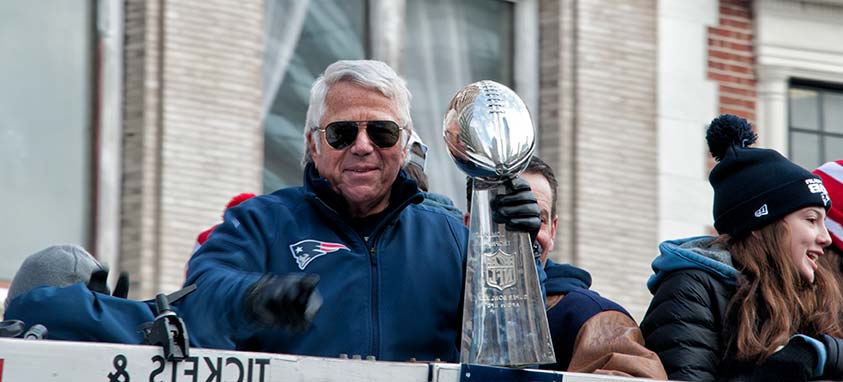
When the New England Patriots take on the Atlanta Falcons on Sunday, Feb. 5, the Super Bowl will again take its place as America’s biggest sporting event. The big game will be held at NRG Stadium in Houston, Texas. This will be the third time a Super Bowl game has been hosted in Houston, which has recently completed a $1.5 billion transformation of its downtown convention district.

Just how big is this event?

NRG Stadium seats more than 72,000, but ticket prices for Super Bowl LI may reach record highs. Due to high demand and low inventory, tickets being resold on sites such as Stubhub are going for tens of thousands of dollars.

Last year, 111.9 million Americans watched Super Bowl 50. This is down from 2015, when a record-breaking 114.4 million tuned in for Super Bowl 49.

San Francisco made an estimated $2 million from hosting Super Bowl 50.

A 30-second commercial during this year’s game costs a cool $5.02 million.

According to NerdWallet’s calculations, 1.3 billion chicken wings and more than 14,500 tons of chips were consumed on Super Bowl Sunday in 2016.

Regional specialties galore

As with any event, one of the most important factors is food and beverage. A great event menu should showcase the destination’s regional flavor; consider the audience’s preferences; be easy to produce under volume and time constraints; and offer varied options to please most, if not all attendees. F&b is even more important for an event of this size.

The Super Bowl is such an impressive cultural event that it essentially takes over the country for one weekend, spawning countless tailgate gatherings and watch-parties. Long after the game is over, its commercials and halftime show are the talk of every town. Some would argue that the Super Bowl is about the commercials more than the game, but Aramark might argue that it is actually about the food.

To serve more than 72,000 hungry football fans, Aramark, NRG Stadium’s food and beverage partner, has debuted a special Super Bowl menu that reflects the local cuisines of the two teams involved.

“We’ve been working closely with the NFL and our partners to deliver a one-of-a-kind dining experience that complements the action on the field with a variety of unique and innovative hospitality offerings,” said Carl Mittleman, president of Aramark’s Sports and Entertainment division.

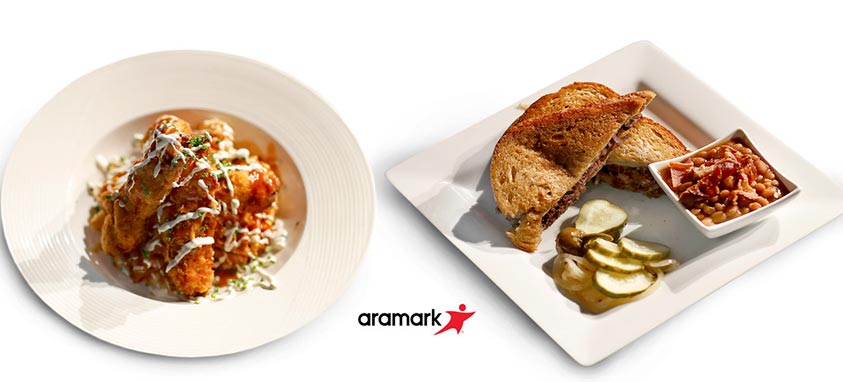
To pay tribute to the New England Patriots and Atlanta Falcons, Aramark Senior Executive Chef Mark Cornish created two signature dishes inspired by each team’s hometown. The Beantown Griller, named after Boston’s most famous nickname, is a slow-cooked tri-tip pot roast with caramelized onions, cheddar cheese from Cabot, a cooperative of 1,000 farm families in New York and New England. Bacon-infused baked beans are also served on the side. On the southern side, the ATL Fried Chicken Stak consists of waffle fries topped with buttermilk fried chicken, peach marmalade barbecue sauce, sour cream and green onions.

Houston cuisine on offer

Of course, NRG Stadium will also offer a number of Houston-centric culinary choices. Famed local chefs such as Ronnie Killen, who has long been considered the city’s top barbecue pit master; Chris Shepherd, a James Beard Award-winning chef; and Grady Spears, a nationally renowned Texas chef.

“Houston is one of the country’s most diverse cities and the Super Bowl provides the perfect backdrop to showcase the wide array of cuisine and talent contributing to its culinary renaissance,” said Aramark’s Chef Cornish. “While the game may be the main event, the Aramark team has been working tirelessly to create a world-class menu that brings the best of our city to life for visiting fans from across the country.”

At the concession stands, fans can feast on Houston classics such as Ronnie Killen’s BBQ Burnt End Sandwich and Brisket Sandwich, Grady Spears’s Steak Sandwich, Fuddruckers’ All American Pigskin Burger and more.

On the club level, ticket-holders can try Chris Shepherd’s signature 44 Farms Jalapeno Cheese Dog with jalapeno bacon jam and Chef Cornish’s Texas Surf & Turf, a cold-smoked tenderloin sandwich served with gouda mac and cheese infused with lobster and house-braised short rib grilled cheese with house made Pimento cheese on Texas toast and a side of house fried pickles.

Those lucky enough to score a suite can select from a menu package that includes Jackson and Company’s chicken empanadas with creamy avocado sauce; jalapeno bacon-wrapped chicken with raspberry chipotle sauce; smoked meatballs and Pimento cheese grits; maple-crusted beef tenderloin; and drunken pear and goat cheese salad.
9 Time-Saving Travel Apps

eat healthy on business trips

Planners know well how difficult adhering to a healthy diet can be on the road. Business trips often involve a demanding schedule in an unfamiliar environment, bringing people out of their normal routines. But instead of completely abandoning healthy eating habits, new practices can be formed. Here are some innovative tricks for eating healthy on the road.

Make Your Hotel Room a Kitchen

A hotel room might not be the best kitchen environment, but a little creativity goes a long way. Check out the amenities in your room. Is there a mini-fridge? Does the room have a microwave? What about a coffee machine that could be used to make hard-boiled eggs and oatmeal?

If you check a bag, you can even bring along a useful appliance. A miniature food processor can make smoothies, while a small crockpot will make fresh meals for one. Check out the amenities in your room. Is there a mini-fridge? Will it be big enough to hold your groceries? Does the room have a microwave? These questions will help determine what you’ll buy.

TSA-approved bottles allow you to bring ingredients for great meal pairings. Spice food up by filling these bottles with condiments, lemon juice, olive oil and other add-ons.

Seek Out Grocery Stores

The amenities available, as well as the size of your mini-fridge, will determine what kinds of groceries you can buy. If the fridge is minuscule or nonexistent, you might even consider buying a portable styrofoam cooler for a few dollars. If you have access to a microwave, it’s possible to cook frozen shrimp and frozen vegetables or make popcorn, scrambled eggs, microwavable turkey bacon and soup (low-sodium).

Grocery stores often have salad and hot food bars that are very convenient,  but remember to be selective and choose items such as plain lean meats, fresh and grilled veggies, fruits and brown rice. Also get some high-protein, low-calorie snacks such as kettle corn, mixed vegetables, Greek yogurt, turkey cold cuts, nuts and fruits.

Always Have Packaged, Ready-to-Eat Snacks on Hand

Your days will be busy with work-related activities, and healthy foods are not always the most portable.

Here are some truly delicious yet healthy packaged snacks:

  • Mini Babybel Light Cheese Wheels
  • Skinny Pop Popcorn
  • Clif Bars
  • Quest Protein Chips
  • Calbee Snapea Crisps
  • Justin’s Classic Almond Butter Squeeze Pack
  • The Chia Co. Chia Pod
  • gimMe Organic Roasted Seaweed
  • Dole’s Wildly Nutritious Mixed Berries
  • Epic Chicken Sriracha Bar

Above all, Try New Things and Enjoy

If you’re traveling to an area known for having the world’s best ribs, don’t stay holed up with carrots in your room. It’s important to explore the world and treat yourself when it’s worth it. The one-and-done rule works well—splurge on one special food per day. Regardless of what happens, cut yourself some slack every once in a while and enjoy the trip!

The Edgewater

This year, The Edgewater, a Noble House Hotel, is celebrating 55 years as the only hotel in Seattle to offer unobstructed views of Puget Sound and Olympic Mountain Range. Over the years, the property has won numerous awards for its standout location, views and service. The iconic Pacific Northwest hotel has also hosted a number of legendary musical artists, including the Beatles.

Instead of throwing the usual anniversary party, the hotel is offering unprecedented travel experiences that groups may appreciate.

The Edge has created a new package called Life Begins at 55. For $5.5 million, corporate meeting planners and any other interested parties can purchase 30 days of exclusive access to the property’s 223 guest rooms and award-winning Six Seven Restaurant & Lounge. Another package, the Own The Edge package, lets travelers on a budget—or planners with shorter events in mind—buy out the property for three days at $550,000. Buyout packages must be booked by Mar. 31, 2018.

Aside from full access to the property, these ultra-luxurious packages include an impressive suite of services, including use of the full hotel staff and opportunities to live like world-famous musicians such as the Beatles, KISS and the Rolling Stones, all of whom have stayed at the hotel in the past.

“This will be the first time we have offered anything like this for The Edgewater,” said Pat Colee, chairman and founder of Noble House Hotels & Resorts. “We will be providing many special offers and hosting several events throughout 2017 to honor the property’s 55th anniversary, and the buyout is certainly the most extraordinary.”

Aside from these unique packages, the hotel plans to roll out other packages and programming to fit the anniversary theme. Guests staying at the Edgewater or dining at its restaurant will be able to enjoy these perks throughout the year.

new-hotel-amenities

Forget the mini bar.  The travel experts at The GO Group LLC, researched hotels to find the hottest, quirkiest and most fun new hotel and resort amenities.  We’ve added a few of our favorites at the end as well.

Sleep better: With hotels in Seattle, San Diego, San Francisco, Portland and Chicago, Pineapple Hospitality group offers its guests The Naked Experience™. Inspired by traditional European hotel bedding, each Pineapple Bed comes with two individually folded duvets to allow each sleeper so you never have to fight over the covers.  Extra goodies include fluffy robes and slippers that you’re allowed to take home.

Drink better: Goodbye soda and hello champagne.  The Mandarin Oriental Las Vegas recently installed a Moet vending machine. Guests can purchase a $20 voucher from the front desk at check in. If you’re not into the bubbly you might like Eau Palm Beach Resort & Spa’s newest offering, “Straight from the Tap” IRD Growler Fills. Guests can choose from eight different local craft brewers and have draft beer poured directly in their rooms. The growlers are 32 oz. and insulated so they don’t need refrigeration.

Look better: The Hotel Crescent Court in Uptown Dallas launched a “Dressing-Room to Guest-Room” in partnership with its luxury retailer, Stanley Korshak. Guests are offered in-room selections of couture clothing,  shoes and accessories, where they can try-on and purchase the upscale apparel.  Unwanted items can be sent back and an on-call tailor is available. The Kimpton Mason & Rook Hotel, Washington D.C. has partnered with luxury brand Shinola to offer a Watch Butler service for guests, who may select and borrow at no cost a handmade Shinola watch during their stay. At the Kimpton Gray Chicago, guests can spiff up their look by purchasing a Tie and/or Pocket Square from the front desk or their guestroom minibar.

Stay healthy: At The Westin Peachtree Plaza in Atlanta, guests can rent brand new New Balance workout gear, from the shoes and socks to the sports bra, so they can pack just a little bit lighter. The hotel also has 10 running concierges who lead guided runs through Atlanta every Tuesday and Thursday at 6:30AM or who can give you route suggestions if you’d rather go out on your own.

Pamper your pet: Hotel deLuxe in Portland, Oregon is all about treating your best friend right with 100% human grade pet food, an eco-friendly pet bed and a complimentary list of pampered pet resources. Don’t forget the pet psychic that’s on hand to read your dog’s mind.

Marriott International has gone to the lab—the pop-up lab—to test new hotel innovations.

On Jan. 23, the Maryland-based hotel giant launched its first Pop-Up Innovation Lab in downtown Los Angeles, providing a new twist on crowdsourcing. Think of it as an interactive model hotel.

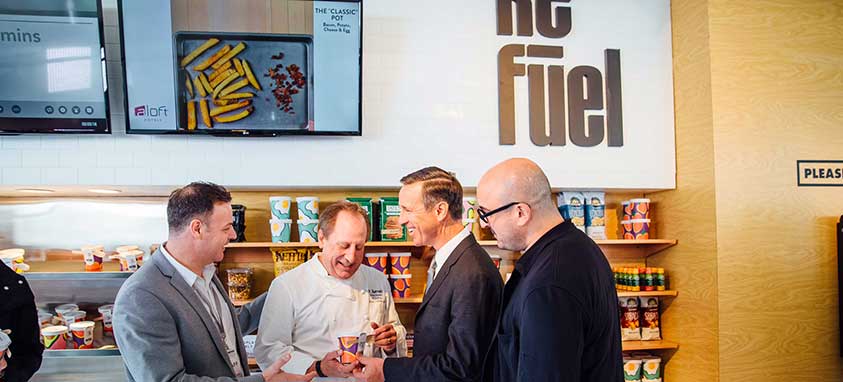
The lab opened its doors to industry pros, hotel guests and the general public to weigh in on the company’s latest concepts. Visitors can “see, touch and taste” innovations soon to arrive at the company’s trendy Aloft and Element brands.

The lab offers travelers a chance to influence the design of their favorite hotels. Aloft and Element “are always evolving as guests, lifestyles and technology changes,” says Eric Jacobs, chief development officer ¬- North America, Marriott Select Brands, Marriott International. “We’re also eager to collect and use feedback from the ownership community.”

So what’s cooking in the lab? Here are three of our favorite concepts:

1. Communal living spaces
Element is trying out a new guest room design that’s communal, but not too communal. The design groups four guest rooms around a shared space in the middle, allowing guests to get together in a kitchen, dining room and lounge. Business travelers can collaborate. Families can bond. Everyone can retreat to privacy.

2. Customizable “pots”
These customizable meals will give Aloft a healthy boost to its food and beverage program. Ingredients such as spinach, avocado and quinoa will be in ample supply. Travelers can follow their dietary hearts when they order customized pots in colorful to-go containers. They can be ordered and paid for at a digital kiosk. In an informative and personal touch, each meal will be labeled with a time stamp and the chef’s emoji.

3. Portable wine carts
Wine lovers will get to unwind the high-tech way at Element Hotels. Guests will be able to belly up to wine carts, insert their room key and dispense their favorite red or white. And they won’t even have to tip.

tapestry collection

Hilton Worldwide launched its Tapestry Collection brand last week, but meeting planners will have to stay tuned to find out about meeting potential at the properties.

The Tapestry Collection is designed to appeal to travelers seeking an “independent hotel experience.”

It’s the 14th brand for the fast-growing McClean, Virginia-based hotel company. A handful of hotels in the Tapestry brand will open their doors this summer. So far, seven properties in six cities have signed letters of intent. Hotels will open in these cities:

-Syracuse, New York
– Chicago
– Nashville, Tennessee
– Warren, New Jersey
– Hampton, Virginia
-Indianapolis (two hotels)

As these are intended to be original, upscale properties, guests may need to keep their meetings small. Since the hotels will vary by size and design, Hilton is still working out the features that each property will offer for groups

“Not all hotels will necessarily have dedicated business centers or dedicated meeting spaces,” a Hilton spokesman wrote in an email. “Certain properties, depending on hotel’s location and market, will have business centers, while others will have a dedicated space that offers computer and printing options.”

Hilton has more than 40 deals in the works. Property details, including hotel names, will be released as negotiations conclude.

“Hilton can’t confirm any specific deals as it awaits finalized agreements with the owners that have signed letters of intent,” the spokesman wrote.

One thing’s for sure: The hotels aim to combine a travel experience with the strength of the Hilton brand.

Tapestry Collection by Hilton will enable us to provide the best of both worlds to travelers who are looking for an independent hotel experience but also want the consistency and reassurance they expect from Hilton,” Hilton CEO Christopher Nassetta stated in a press release.

Hilton has launched five brands in the last decade. Its Tru brand, which debuted a year ago, caters to millennials.

Farm-to-table and local sourcing can be both sustainable and delicious

This summer, Director of Food & Beverage Chris Clark, Executive Sous Chef Nick Gummerson and I embarked on a food journey to Colorado’s gem—the Western Slope, a frugal area where unique growing conditions of cool mountain air at night and warm air during the day help to ripen and sweeten fruit at just the right rate. Our trip took place during the popular Peach Festival in Palisade, Colorado. Our mission was to find new producers of locally made foods who are as passionate about taste, quality and food safety as we are.

We toured 10 local farms and processing facilities for goats, alpacas, peaches, plums, preserves and sauces and more. “After visiting and observing their practices we feel comfortable both using and promoting their products. Our state is the source of some excellent foods that we have curated, and we feel is it our responsibility to introduce these treasures to our guests,” Chris Clark said. “We truly enjoy partnering with smaller producers and sharing the experience of their growth and success.”

For example, Colorado Mountain Jams, a family-owned operation, provides private label preserves for our hotel’s restaurants and catering events. Owner Brian Olson, a schoolteacher in New York for 25 years, grows plums and apricots. When walking into his orchid your feet sink into soil that is very well-tended, with not a weed to be found. Every product Brian uses is of the highest quality. We tasted his products alongside the most expensive and well-known brands and found his jams to be superior.

During this trip, we met several people as passionate as we are about connecting people to the actual source of their food. The first stop on our quest was a visit to Jumpin’ Good Goat Farms in Buena Vista, Colorado, where the owner, Dawn Jump, let us participate in herding and milking the goats. We tasted every cheese she produces and now many are featured in our cheese and charcuterie menu in 16MIX.

This stop in our journey taught us volumes about goat farming, a new favorite activity of Chef Nick’s.

Another a-ha moment occurred when we witnessed the frustration of Harry Talbott, owner of Talbott’s Mountain Gold Peach Farm. We watched the workers cull imperfect fruit from their production line. When asked about this practice, Harry said, “We don’t grow fruit; we grow bouquets.” He further explained that imperfect fruit must be used for other purposes, since American consumers will only buy unblemished fruit. He inspired us to work deals to give those imperfect peaches a home, turning the defective but exceptionally sweet and juicy fruit into smoothies, cocktails, purees, compotes and jams for our hotel guests to enjoy. We are now looking at every produce item with the same lens, embracing the UBU—ugly but useful—movement.

This experience reassures me that Sheraton Denver Downtown Hotel is on the right path by exposing our guests to local products and connecting them to the state that I am proud to call home. Supporting our community is another accomplishment we take pride in. Using responsibly produced, sustainable products is not a food trend for my team, but rather our culture.


Scott Skomal has served as Executive Chef at Sheraton hotels for more than 15 years and has been with Sheraton Denver Downtown Hotel since 2011. Colorado’s largest and most flexible meeting hotel, located in the heart of downtown Denver, Sheraton offers 133,000-square-feet of distinct meeting spaces for conferences up to 3,000 people, with 1,231 guest rooms and 82 suites.