BCD Meetings and Events Guide helps make events more sustainable 

BCD Meetings & Events released a sustainability guide for meetings and events earlier this year, offering planners global sustainability trends and best practices.

Smart Meetings interviewed Ben Hoeksma, senior director, global program lead, to better understand what the guide provides to planners.

Ben Hoeksma Senior Director, Global Programme Lead | BCD Meetings & Events

Smart Meetings How has your BCD M&E Sustainability Guide evolved over the years?

Ben Hoeksma It’s getting more sophisticated regarding what people want to ask their suppliers.

SM Your guide addresses a wide variety of topics in meetings like DEI. How and why are they connected?

Read more: Focus on Sustainability: Marriott Bonvoy Events Embrace Innovative Practices in Meetings and Events

BH [The] expectation of attendees has massively changed. People talk about the different generations of attendees, Generations X, Y, and Z, who are now attending events.

There are certain minimum things that they would expect or not expect to see at an event. Neurodiversity, for example, that conversation has developed more and more over the recent years. There is more acceptance of different people’s needs when attending an event and how to accommodate them; the changes are very simple changes that can happen.

There is no direct link to a meeting being greener. It’s more about the awareness of wanting our events to have more power for good.

Whether it’s asking on a delegate invitation pathway, “How are you traveling to an event?” You can start capturing the emissions data.

Also, “Are there any specific needs you have for this event that we need to take into consideration?” Or, however, you can ask that question to allow people that openness to say, “I suffer from ADHD.” We can do something and allow the organizers to respond. The actual individual initiatives are still very different. But as a whole, it is part of those broad conversations about how to improve these events.

Read more: Sustainability Tools for Easier Green Planning

SM While digging into your research, how do you figure out what works, what doesn’t and how people should look at events through this lens?

BH Because of the size of our business, almost 2,000 people worldwide work with all those different customers. You’ll see all the other people fed into this across various regions. So it’s not just one expert sitting and saying, “I know what’s good.”

We are as engaged as possible across the industry. We host our client focus groups. We will bring a small group of clients with sustainability at the heart of their goals.

We also ask them what their priorities are at the moment. “How can we help you more? What does this look like? What else can we do for you?” That helps shape our minds as to what the priorities are at the time and how things are evolving.

SM When you look at issues like the cost of gas or food waste, how do those factor into this? How are you crafting solutions to these challenges?

BH [You have to ask] what the expectations are and what’s achievable.

I first started looking at this for one specific client in 2018 or 2019. We wanted to start comparing hotels that the client was using.

We created a set of criteria questions we wanted to ask the hotels, and we were going to give them a ranking score.

We began engaging with the suppliers to ask, “What is achievable? What is fair to ask of you?” After we’ve done the venue scorecard, we’ve got an A to Z list of how you can make your event greener, which starts with the event concept and goes all the way through to the debrief again.

We went out to hotel suppliers and DMCs and said, “Look, what’s your feedback? Are these initiatives achievable? Should we ask suppliers to conform to this, or are there things that get in the way that we need to adapt?”

We don’t have all the answers, and I don’t know anyone who does have all the answers because their solutions are ever-changing, right? And as much as people are talking about sustainability and making their events greener, the point of an event is to create an experience like whatever that experience might be.

You must always weigh what is more important because you can strip your meeting back as much as you want. You can look at the emissions; you talk about the gas prices there. You can look at emissions from people driving versus flying versus getting public transport and decide, this is going to be better if we just do this as a virtual meeting, but if you don’t achieve what you want to from that meeting by having it virtually, then you might as well have not bothered doing it. So you always have to weigh up those conflicting interests, right?

Read more: Your Complete Guide to Sustainability

SM How close are we getting to a completely green meeting world?

BH It’s so difficult to define that. So that’s the problem. Is a green meeting one with zero waste? Is it one that leaves a positive impact on the community in which it left? We’re further along than we were. The industry is self-regulating itself. We are bringing in initiatives, and we are bringing [those] without being told that we have to because there’s this kind of race, if you like to see, especially from the supplier side, everyone’s acutely aware that at some point down the line, and depending on the region, depending on the country you’re in, some are already doing it.

I was at an industry event last year, and they asked the same question. As the speaker said, “Where are we now compared to where we worked 12 months ago?” And everyone’s like, “Well, we’re a little further ahead, but we still need to push the boundaries.”

Our clients are saying, “This is what we want from you. We need this without the government saying you have to do this.” Look at France, for example. France has very big targets around emissions and bringing that in, so clients have to react to that. But you’ve got customers who’ll be in France, but then they will be doing something different in Germany, the UK or Italy because, generally, people are bringing in the same practices.

Read more: Sustainability as a Practice

SM Tell us more about your scorecard. How does that work?

BH We have a list. We’re up to about 40 questions. These are all legit questions that you can ask hotels.

You pick five to ten key things for your business. What is most important to you? Is it single-use plastic? Does the hotel have a green accreditation? Is it food?

Whatever it might be, you choose those criteria. And every single time we send out an RFP, we will ask all the hotels those questions, and you’ll get, say, four hotels to respond.

Out of those responses, you can say that one is a seven out of 10. That’s a six out of 10, that’s a 10 out of 10. It helps to shape people’s minds, depending on their priorities.

The majority are selecting the greener options and the hotels they see. Now, other things come into play, such as cost, availability and all the other fun things that come with it, but at least it’s visible. At least it’s one of the kinds of markers they can use.

Read more: Earth Day is a Call to Action

SM Is there anything else you’d like to share with our readers?

BH There’s a tremendous amount of willingness for people to do things, but they’re also looking for direction. But in the same way, they’re also getting on with it and just doing something anyway.

Just introduce something. Start doing something that impacts today, which can become the norm.

If people are aware of why things are happening, they’re more likely to buy into it. You find resistance when things are changed because many people don’t like change. It’s not a change that they understand, and they’re not necessarily supportive of it because it’s not the same experience they’re used to.
 

How to Give the Gift of Wellness When We Need it Most

What’s your current holiday vibe? Like many of us this time of year, it might feel something like this:

“I can’t handle one more thing today!!! Oh, I forgot, I have a holiday potluck tonight—and all I have are stale crackers in my pantry.”

And, your Busy Meeting Professional Brain is tempting you with, “Let me show up at this party dressed to the nines with the best, handmade exotic dip…and further avoid my to-do list.”

Procrastination and perfection are evil twin cousins who show up for an extended stay during the holidays. Am I right?

Our Busy Brains can quickly amp up to a full-on feeling of frazzled this time of year. End-of-year reporting, 2023 goals/planning, extra to-do list items and events for the holiday season all stress our minds already at capacity.

Between schedules, shorter hours spent in daylight, and, let’s admit it—comfort carbs—we are setting our brains up for challenged sleep.

5 Reasons Skimping on Sleep with Ruin Your Holidays

Each time I give a keynote lecture or run our brainSHIFT workplace wellness program, I field a similar set of questions. Without fail, I am asked about:

  1. Weight gain and why a particular diet isn’t helping.
  2. Are my hormones to blame?
  3. How to improve focus and stay productive throughout the day.
  4. Lack of daytime energy despite sleeping 8 hours or consuming caffeine.
  5. The link between stress, sleep deprivation and chronic disease.

Read MoreHealthy You: Biohacks for Planners

While these topics may appear unrelated to some, I see a distinct pattern in them—each of these concerns is intimately linked to sleep.

The hustle culture of so many workplaces applauds employees who function on less than five hours of sleep. This mindset of powering through your day while sleep-deprived is setting your mind and body up for failure.

Getting adequate sleep is not just about having enough steam to get through the day. Sleep affects your overall health and well-being. Without it, our bodies deteriorate over time, resulting in a host of short and long-term issues.

And some of them are more serious than you may think. Here are five major ways that sleep disorders and insomnia can contribute to poor health.

  1. Lack of sleep promotes weight gain.
  2. Poor sleep contributes to hormone imbalance in men and women.
  3. Sleep disturbances impede our ability to focus—making us feel like we have ADD or ADHD.
  4. Disrupted sleep contributes to a lack of energy.
  5. Increased risk of chronic diseases such as diabetes, breast cancer, heart disease and dementia.

Sleep is the new status symbol of successful professionals.

Seriously Rested

In writing this article, I aim to encourage you to take the state of your sleep seriously. I invite you to prioritize your brain health before your business goals or holiday to-do lists. And I am aware that this may increase your stress and anxiety levels as you now consider the wide-reaching impacts of your poor sleep.

Start with these microhabits, one at a time as we teach in our brainSHIFT Workplace Wellness programs:

  1. Embrace boredom and do nothing. Yes, nothing, including watching Hallmark Channel movies or addressing holiday cards.
  2. Schedule 30 minutes of calming activity each night prior to bedtime, without using digital devices.
  3. Start a mindfulness-based practice at bedtime. Listen to a sleep story or a guided meditation.

You can read about this protocol in more detail in an article here.

Let me take a moment to reassure you that improving your sleep is possible. Achieving sleep can feel impossible, especially if your brain is scrambled from a lack of sleep, but a practical approach to improving your sleep can result in improved overall health, energy levels, and a sense of fulfillment in your life.

To learn more, start by taking a free Busy Brain Test to assess the state of your brain today. Along with your test results, you’ll receive resources to help you immediately take charge of your health and make positive changes in your life.

Dr. Romie Mushtaq, MD, is a board-certified physician, award-winning wellness speaker, and the founder of “brainSHIFT at Work.” She brings together over 20 years of authority in neurology, integrative medicine, and mindfulness to not just deliver programs, but create cultural change.

She is on a mission to transform mental health and wellness in the workplace and currently works with Fortune 500 companies, professional athletes, & global associations. She is also chief wellness officer for Evolution Hospitality, where she scaled a mindfulness and wellness program to over 7,000 employees. Her expertise is featured in the national media such as NPR, NBC, TED talks, and Forbes.  Find the cure for your busy brain at drromie.com or @drromie on social media.

Get involved with local events like Refract Seattle to create unforgettable experiences for your attendees

Since its inception, what is now the largest glass arts festival in North America draws visitors to Seattle from all over the world, and the somewhat niche community of glass artists, appreciators and collectors take over the city for an October weekend each year. Refract Seattle 2024 was the largest yet, in the festival’s sixth year—and it’s a shining example of an opportunity for business meetings and events, from citywides to VIP groups, to get connected with the locale of their chosen destination in an unforgettable way.

History of Refract Seattle

The greater Seattle area is home to over 700 glass artists and 100 glass studios. The Pacific Northwest has long been hailed as the United States’ regional hub of glass art—and not a lot of people know it. Six years ago, the founders of Refract sought to change that.

Co-founded by representatives from Visit Seattle and Chihuly Garden and Glass, an exhibition located at Seattle Center right by the Space Needle showcasing glass art and other artwork from renowned artist Dale Chihuly, Refract takes the form of numerous events across the greater Seattle area, including open artist studio tours, live demonstrations, artist meet and greets, exhibitions, celebrations and more.

Headshot of Taryn Coles, Chihuly Garden and Glass
Taryn Coles, Chihuly Garden and Glass

Taryn Coles, assistant director at Chihuly Garden and Glass and co-lead of Refract 2024, says, “It was really about uplifting our community of artists and making sure that people have the opportunity to see the great work they do. This is one of those things that makes Seattle an epicenter of glass art. It isn’t just the artists, but also this ecosystem that can support artmaking from the very beginning to the master level of art creation.”

Kris La Fata, director of destination services and events at Visit Seattle, says, “[Refract] gives our team the opportunity to showcase their creativity and the passion that we have for art here in Seattle.

“We just want people to know who we are. Our art scene, specifically glass, since we do have so much of it here, really gives people a view of Seattle that is so unforgettable and completely authentic to who we are as a community.”

Read More: Public Art is Unifying, Function and Important

How You Can Work Refract into Your Seattle Meetings

Headshot of Kris LaFata, Visit Seattle
Kris La Fata, Visit Seattle

One of the great conundrums of planners in recent years: how do you get attendees engaged in new and exciting ways? The answer: provide an opportunity to witness something they might never have the opportunity to experience again.

“Refract is a great example of a way to get attendees and people here for business together for an offsite experience that they may not find anywhere else,” says La Fata.

If you’re a planner interested in working some Refract events into your attendees’ experience, get in touch with the Refract team early. Their team will work with you to curate the best possible experience for your attendees and point you in the direction of hotels and venues they have partnerships with.

Coles says, “Just being able to look at our schedule of events can really help point people towards the activities that would be really beneficial and fun for their group.”

Bringing Refract to Your Attendees

With any destination, planners may not be aware of community events that coincide with the time of their events; this is where working with the local DMO can make the ultimate difference.

Visit Seattle makes it easy with their micro-site, created any time a citywide convention comes to Seattle. This site provides attendees with all the information they need for the convention, as well as direct links to all of the events taking place in Seattle during the time they’ll be in town. Visit Seattle can also curate it to your attendee demographic. For example, La Fata explains, “If our demographic is scientists aged 45 to 60, and they’re really into fine dining and wine tasting, then we can tailor that micro-site to make sure we’re featuring partners that fit the interests of that attendee demographic.”

With the rise of bleisure, an event like Refract is a motivating force for attendees to come in a few days early or leave a few days late. All the planner needs to do is to let them know about it. Tell your attendees, “Hey, by the way, there’s this amazing glass arts festival going on when we’ll be in Seattle,” and point them in the right direction. From there, you can let them discover and sign up for any activations they find themselves interested in.

Read More: You Should Go Here: 3 Travel Trends to Woo Attendees

Bringing Your Attendees to Refract Seattle

Another, more involved option, is to directly plan offsites. From venues to tours to bookable activities, you can weave Refract into your event.

Venues

The Glasshouse at Chihuly Garden and Glass
The Glasshouse, Chihuly Garden and Glass

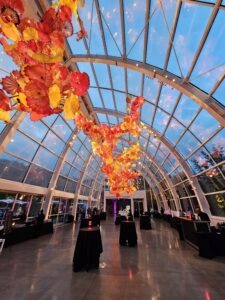
Chihuly Garden and Glass is one of Seattle’s most popular spaces to host an event, and for good reason. From walking through the museum and taking in the exhibits, to exploring the outdoor exhibits in the garden among views of the Space Needle, to gathering in the glass house, with an expansive ceiling installation of colorful glass-blown flowers, it’s a venue that speaks for itself.

La Fata says, “I’ve been there so many times, but still, every time I walk into that glass house and understand what glass can do, it’s just so beautiful, and it’s a different kind of art that people don’t often think of.”

The Boathouse, Dale Chihuly’s private working studio and Hotshop, is another venue that leaves attendees far beyond impressed.

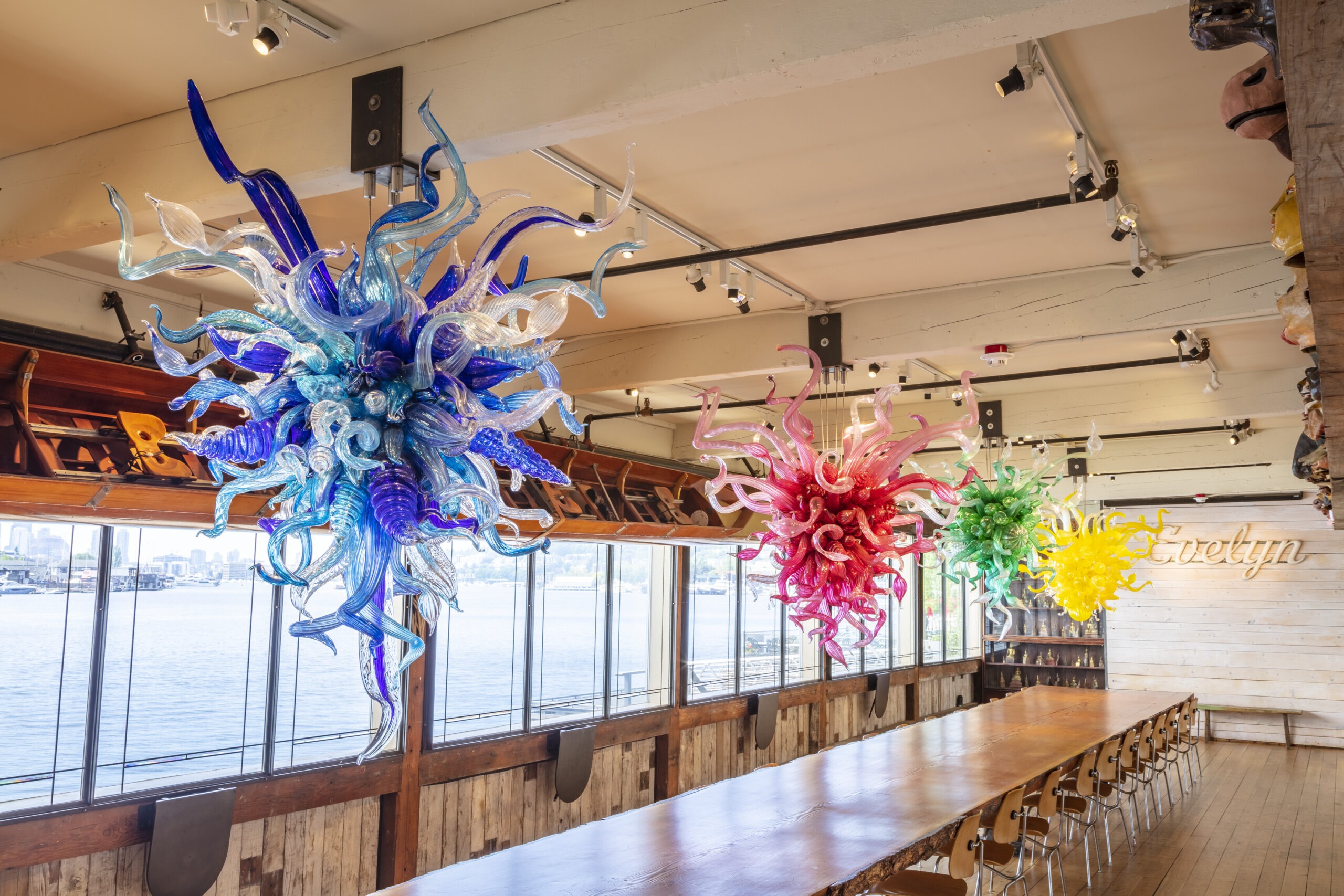
Evelyn Room at The Boathouse for Refract Seattle Story; Dale Chihuly, Chandeliers, The Evelyn Room, The Boathouse, Seattle, 2019 © Chihuly Studio. All rights reserved.
Dale Chihuly, Chandeliers, The Evelyn Room, The Boathouse, Seattle, 2019 © Chihuly Studio. All rights reserved.

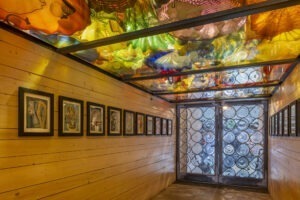
Tours of The Boathouse are one of the most sought-after Refract events, and upon stepping inside the unassuming building, it becomes clear why. From seeing artists at work in The Hotshop to stepping into The Evelyn Room—where colorful glass Chandeliers are mounted above an 85-foot long Douglas fir table that looks out over North Lake Union—after walking through the corridor under a Persian Ceiling, where over 700 pieces of glass seem to float, illuminated by light—every space within The Boathouse transports visitors to a world unto itself.

Persian Ceiling at the Boathouse for Refract Seattle story; Dale Chihuly, Persian Ceiling and Rondel Doors, 1999, The Boathouse, Seattle, 2022 © Chihuly Studio. All rights reserved
Dale Chihuly, Persian Ceiling and Rondel Doors, 1999, The Boathouse, Seattle, 2022 © Chihuly Studio. All rights reserved

Though the studio is usually not open to the public except on the Refract tours, it can also be booked for private events. The Boathouse can accommodate 150 guests for a reception, and 70 for a dinner, and makes an excellent venue for an incentive dinner or corporate group. Planners can even add on glassblowing demonstrations and a tour. Planners who are interested in booking The Boathouse for an event can get in touch on their contact page and fill out a Reservation Request Form.

Read More: How to Wow Your VIPS

Activities

Refract 2024 was the first to offer a shuttle tour for a few lucky visitors to visit open artist studios. Though open studios have always been a trademark of Refract, the shuttle tour makes it more accessible than ever. Your attendees will have the opportunity to meet the artists themselves and learn about each of their unique individual practices, and even purchase artworks, if they so choose.

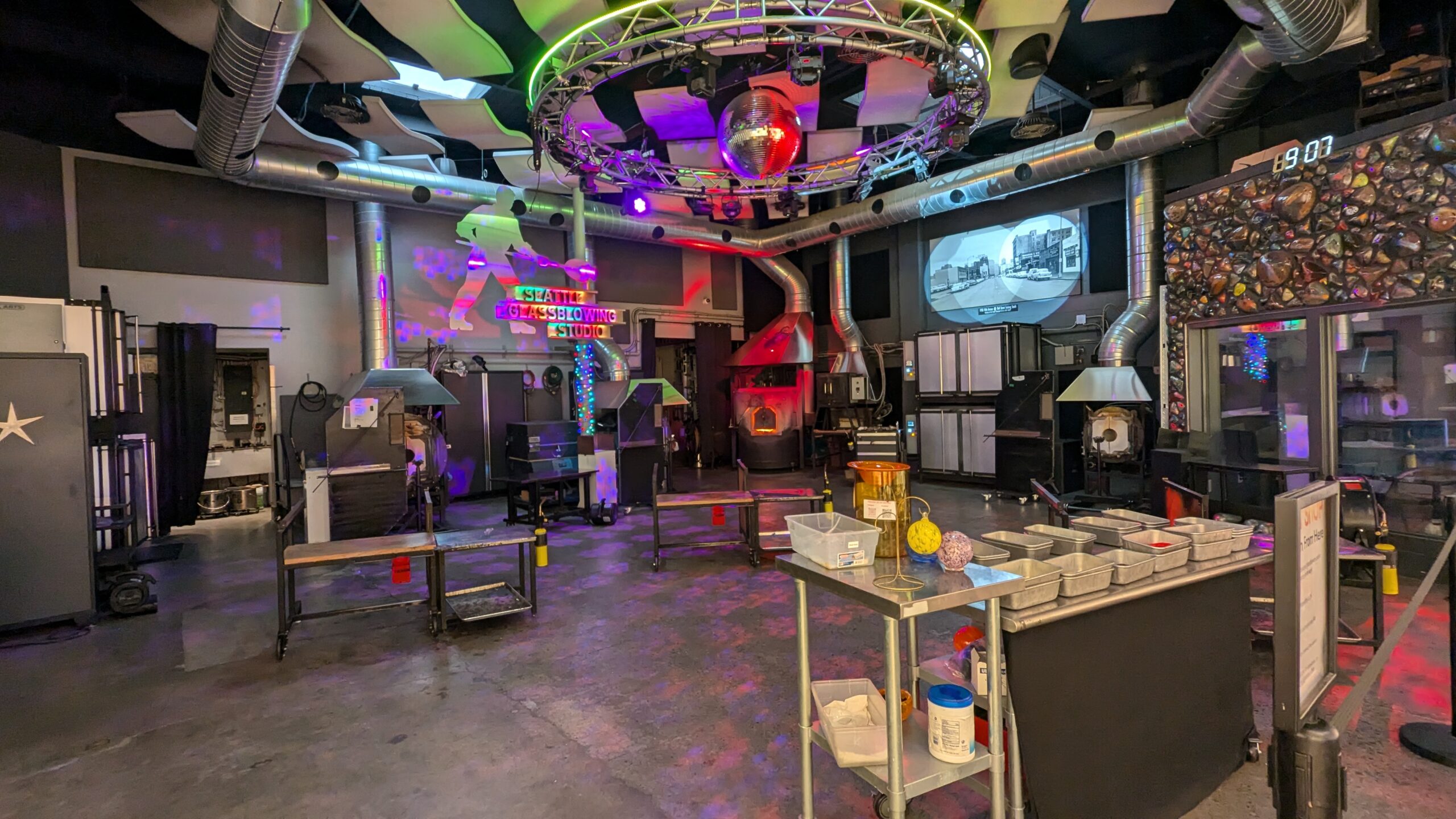
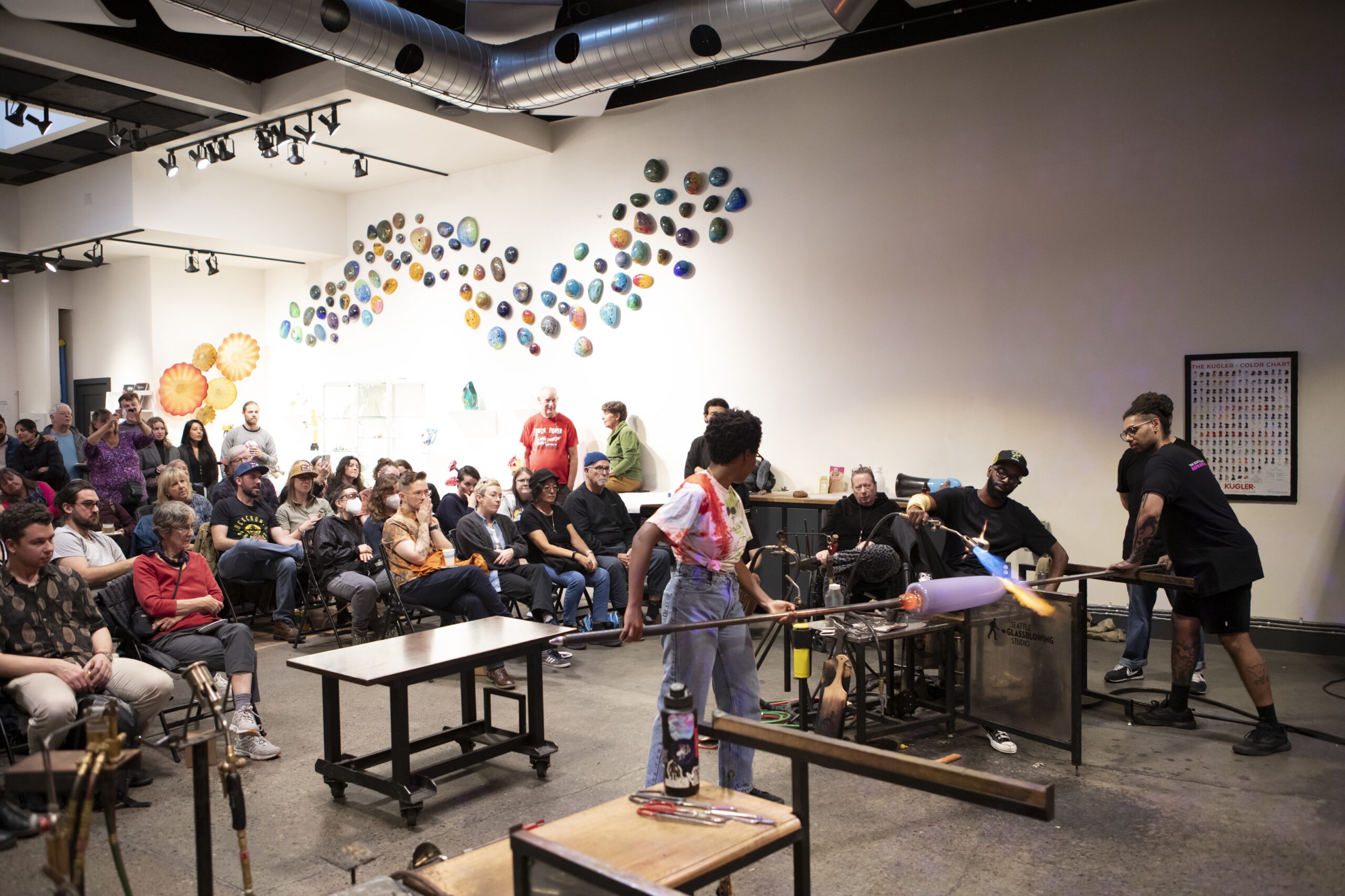
For an unforgettable hands-on activity, whether you attend during Refract or any other time throughout the year, visit the Seattle Glassblowing Studio. Groups of five to 35 can book from a selection of customized packages and create their own glass art piece with the guidance of an experienced instructor. Participants can choose the item they’ll make from a number of options, including bowls, ornaments, paperweights and—if you happen to be attending during Refract in October—pumpkins.

Seattle Glassblowing Studio

“Glassblowing is such a team sport,” Coles says. “In a lot of ways, it takes so much communication and collaboration, so it’s a great analogy to the type of teamwork that people are doing in their businesses. Doing a hands-on activity, or just observing the way that these glassblowing teams work, and then taking that back into the discussions you’re having at your meetings can be a very enriching experience.”

Whether attendees try out glassblowing for themselves or observe a glassblowing team in live demonstrations during Refract, held at Seattle Glassblowing Studio, Pratt Fine Arts Center, Museum of Glass and other numerous locations, it becomes easy to understand how the team effort of glassblowing applies to the team work they’re doing in their own businesses.

Read More: Incentive Travel: Interactive Connection is the Name of the Game

Local Community Impact

Coles shares, “Seattle is known as a really innovative place. Much of our cultural economy plays into that, and our creative community is really a huge undergirding of that innovation. You can just look at glass art here in Seattle, and the various forms that it takes, and the mastery that you see when you come out for Refract, to really understand the innovation and expertise that is possible when a whole community is able to get around one thing.”

Refract is a platform for community building and a source of pride for not only the glassblowing community, but the entire city. When locals see so many individuals coming to Seattle and getting involved in Refract, it inspires a sense of pride in their home.

Read More: Notes from the Road: Seattle

Coles says that the intention behind founding Refract was to champion and expands the glass art community for both artists and appreciators. “We have a lot of established collectors and glass enthusiasts who come out for Refract, but we’re also getting a lot of the glass-curious who are coming out, who don’t know a lot about the medium. And for the artists who are participating, they have the opportunity to really share the thing that they love, and that they’re really passionate about, with the people who may very well become the next generation of collectors and enthusiasts.”

Impact on Visitors

La Fata emphasizes how incredibly important it is for business travelers to be involved in the community.  Meetings are no more simply about splitting time between hotels, meeting venues and hotel restaurants. Business travelers want to walk around the city, they want to dine locally, they want to bring home a souvenir—and this helps infuse tourism dollars into the community too, which only makes it a better place to visit.

Read More: Exclusive Guest Column: How to Transform Events with Local Culture

“It all ties back to how Refract takes place all over Seattle,” says La Fata. Perhaps you have an offsite at Chihuly Garden and Glass. There, your attendees become aware of the immense impact of glass art in Seattle. And later, when you have an attendee walking from their hotel to the convention center, they pass a glass display—and it means so much more to them when they know its relevance to the community. “It all comes down to Seattle being this community that is intricately tied together. We care about the arts, and we’re doing really unique and different things up here,” she says.

More and more, planners look for ways to incorporate the local community in their meetings through activations like community service projects and cultural experiences. “Something like Refract is a really cool way to do that,” La Fata says. “And a lot of the Refract events are free, but just showing up and being able to see who we are and how we can bring that all together is really impactful for travelers.

Glassblowing demonstration at Seattle Glassblowing Studio during Refract Seattle 2024
Live glassblowing demonstration at Seattle Glassblowing Studio, Refract Seattle 2024; photo by Megan Swann

“As a human, as somebody who lives and works and plays in Seattle, I want people to be here and be excited about it,” she explains. “And I think that opening your mind and experiencing new art—you might not seek out glass art, but if you’re walking by a glass art piece, and you can appreciate something about it, I think there’s really something special about that, and for that person, that will always lead them back to Seattle.”

Read More: Want Excitement? Get out of the Office

Getting your attendees involved in any community event, whether it’s Refract or another one of the many cultural events that take place in Seattle—or a cultural event in any destination—is what brings meetings to that next level of memorable. We know that business travelers want to incorporate bleisure more than they ever have before, and much of that is about providing immersive experiences that allow attendees to really gain an insider’s look into the destination.

Events like Refract, and the ample ways planners can incorporate it into their meeting, not only meets that desire, but leaves your attendees feeling truly heard and valued, and goes above and beyond to amplify positive community impact.

Next year’s Refract, in 2025, will take place October 16-19—if you just so conveniently happen to be booking your Seattle meeting around that timeframe.

With Kate Zaliznock traveling to NOLA for a closer look at how the city is preparing for Super Bowl LIX, I rounded up some of the reactions to the U.S. election and how voters will impact hospitality and travel in the coming years. Election years are always a damper on events as companies manage uncertainty around regulations, taxes and business climate. Whatever happens, the more you know, the better you can prepare.

Hospitality Industry Reaches Out to President-Elect Trump

The morning after the polls closed on a fierce presidential election, U.S. Travel Association President and CEO Geoff Freeman issued a statement congratulating President-Elect Donald Trump.

“We…look forward to working with the incoming administration to make the United States the world’s top travel destination and improve the travel experience for millions of Americans who take to the roads, rails and sky every day,” he said.

“As we embark on a mega-decade of sports—including the World Cup and Summer and Winter Olympics – a tremendous opportunity is ahead to maximize the competitive strength of the United States as a travel destination. We stand ready to work with the new administration to realize America’s full potential.”

Read More: US Travel: All Meetings Are Not Equal

Similarly, American Hotel & Lodging Association (AHLA) Interim President and CEO Kevin Carey called the election “a historic victory.”

“AHLA looks forward to working with the Trump-Vance administration and lawmakers of both parties at every level of government to keep the hotel industry–and the many thousands of small businesses and employees that power it–moving forward,” he said.

Then Carey offered some background. “The hotel industry is an economic powerhouse for the U.S. economy. AHLA’s overall advocacy goals are to advance public policies that support and enable the industry’s long-term growth potential and protect hoteliers’ bottom lines.

“Through educating elected officials on the industry’s economic contribution and job-creating power, we seek an environment in which hotel professionals can focus on running and growing their businesses rather than confronting onerous laws and harmful policies. That means supporting business-friendly tax rates and policies to expand the workforce, fighting regulatory overreach, protecting the hotel franchise model from government interference, and ensuring a level playing field for hotels and short-term rentals.”

He then added, “AHLA is committed to working with elected officials and policy makers in both parties in pursuit of these crucial priorities.”

The focus on tax policy echoed a message ASAE President and CEO Michelle Mason, FASAE, CAE, sent to both candidates in October reminding the campaigns of the importance of trade associations in the greater economy. “According to research conducted for ASAE by Oxford Economics earlier this year, associations account for over 1 million jobs, generating more than $71 billion in wages, and hold more than 272,000 events every year that attract nearly 52 million participants and generate $42 billion in spending. Associations also pay almost $28 billion in federal, state and local taxes each year, and events generate an additional $7.5 billion in taxes.”

The letter also addressed the uncertainty surrounding future tax policies, given that sweeping tax breaks established in the 2017 Tax Cuts and Jobs Act are set to expire in 2025. ASAE sounded the alarm that the tax-exempt sector could be targeted by lawmakers to help offset the cost of tax legislation and warned that changes to the tax treatment of association revenue streams would severely impact associations’ missions and the public benefits derived from their activities.

“Thousands of associations go above and beyond their everyday missions, positively impacting society. Impeding their work with burdensome new taxes would have a cascading negative effect on them and the millions of members who rely on them,” said Mason.

No word on responses, yet.

International Travel Reaching 2019 Milestone

2024 international tourism arrivals are expected to surpass 2019 highs of 1.5 billion, according to a new WTM Global Travel Report conducted with Tourism Economics.

And it just gets busier from there. By 2030, overnight tourism arrivals (international visitors staying at least one night) are projected to grow by over 30% to 2 billion.

Read More: ARVO Conference in Seattle Opened Eyes to Lingering International Travel Challenges

The report concluded that consumers are prioritizing travel since it is making up a greater share of spending in major economies than it did in the decade before the pandemic. Overall, travel spending reached 8.8% of consumer spending compared to 8.2% between 2010 and 2019.

They are also staying in hotels longer, a reflection of the blended or “bleisure” travel trend that has been advancing in the last three years.

In Support of Irish Pubs

Photograph of the interior of Carroll's Irish Pub in Worms, Germany
Photograph of the interior of Carroll’s Irish Pub in Worms, Germany, photo: Marc Braner/Shutterstock.com

For those who might, for whatever reason, be researching leaving the United States for a pint, we saw this note from our friend Rohit Bhargava at Non-Obvious Company about an article in The Drum outlining a creative effort to save Irish pubs.

Evidently, these establishments are facing a financial crisis due to higher costs, taxes and inflation. The result is that more than a quarter of these gathering institutions (on average 150 each year) have closed. The beverage brand Heineken turned some historic pubs into virtual museums with the aid of QR codes, virtual history lessons and augmented reality storytelling to qualify for Irish Heritage council protections such as tax support. Read about it here.

Did you catch last week’s Smart Travel? Check it out here.

A conference can be a full-contact sport. To get the most out of the time invested, the trainer/event designer needs to be thoughtful about how the agenda is structured to deliver content and experiences on offer. Getting the schedule right is both an art and a science. Smart Meetings is conducting a study in partnership with Zenus.AI and Olympian Meeting to learn the secrets from the Smart Meetings community and experts in and out of the industry.

Your responses to the following nine questions could help empower meeting professionals everywhere to take human behavior into consideration when designing attendee-friendly events. You can share your insights anonymously or agree to be quoted and possibly be included in the resulting report and story. The deadline to submit is Nov. 22nd, 2024!

Take the Survey Now!

How leaders can find and support employees

The demand is real. Meeting planners are needed more than ever. However, it isn’t always easy to find and retain qualified staff.

The American Hotel & Lodging Association (ALHA) reported that an estimated 67% of hotels are experiencing staffing issues and shortages, and 68% of planners are new to the meetings industry since COVID.

The National Council of Nonprofits also noted that 74% of nonprofits have job vacancies.

To better understand what this means for the industry and how associations can empower their next generation of future leaders, Smart Meetings spoke with Maisha Hogue, who serves as the first line of communication between American Society of Interior Designers HQ (ASID) and its Professional Chapters Network, and Mariel Solomon, M.S., CC-SLP, a speech-language pathologist and association professional, to explore how associations can appeal to a younger and more diverse group of potential employees.

Click here to watch the full webinar discussion. 

Defining Diversity and Recruitment

For planners looking to diversify their teams, Solomon suggests defining the type of diversity sought.

“Diversity can mean a lot of things. Is it race? Ethnicity? Age?” says Solomon. “In terms of recruitment, I think starting young—in high school and college—and really showing that those professions exist can make a difference.”

Planners may also want to consider disability as a factor.

“I would say adding disability into that search for who you think belongs in your workplace is also important,” says Hogue. “It’s also a great marker for our members who join organizations to see a face that looks like [them].”

Sometimes the best candidate may be an unexpected choice.

“I think that taking a chance on someone who might bring fresh perspectives is very important,” Hogue continues. “Going to colleges and high schools and talking about what it means to work in an association is one of the strategic goals of the American Society of Association Executives (ASAE). I think that’s something we should definitely look into.”

Having a firm grasp of your organizational culture and shared values is also an important aspect of recruitment.

“If your organization doesn’t match their purpose, it might not appeal to them,” Solomon says.

Read more: Gen Z Meeting Professionals Navigate Industry Challenges and Hope for Future

Feeling Seen and Supported

Organizations should consider programs that appeal to their employees. Hogue shared an experience from her former employer, the National Quality Forum, where staff expressed a desire for an investment in DEI. Shortly after, a DEI committee was formed.

“We really encouraged everyone to show up as their authentic selves,” says Hogue, “and that means sharing about their lives and removing that barrier that at work, you are just this one person providing a service.”

Read more: Financial and Insurance Meetings: Illuminating Leadership

Managing the Younger Generation

For Boomer and Gen X leaders, there is often a trial-and-error process in looking for ways to engage a younger generation of workers. However, being self-aware enough to ask “how” is the perfect place to start.

“I’m truly grateful my manager asks herself that question every day,” says Hogue. “Not only how do I show up as an exceptional director, but how do I show up as an exceptional manager to this person.”

Hogue continues, “That’s really what I think young professionals are looking for, to have connection, to be able to just see you as a person with hobbies and interests.”

In the past, the expectation for workers was to leave their personal lives at the door and focus solely on the job.

But ignoring the personal side isn’t always the solution, Solomon notes. “It’s not helpful because the more you ignore it, the more stress, anxiety and burnout can come with that,” she says. “By accepting the whole person and showing you need to get the job done—but in a way that feels supportive—employees are more likely to feel safe.”

Read More: IMEX America 2024: Carina Bauer on Leadership and Impact

Lauren Shoaf Pace

headshot of Lauren Shoaf Pace
Lauren Shoaf Pace, Destinations International

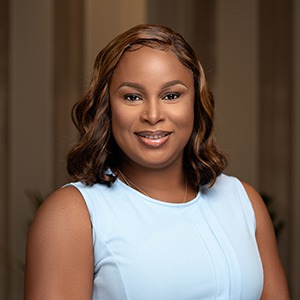
Pace is appointed vice president of marketing at Destinations International (DI). With nearly 20 years in the travel and tourism industry, Pace has held positions at numerous destination organizations at both the state and local levels and spent over a decade with Visit Florida. In her role with DI, Pace will be responsible for the strategic development and implementation of all of the association’s marketing initiatives. She will oversee the planning, coordination and execution of marketing strategies, advise and facilitate engagement opportunities for partners and members and promote DI products, tools and resources.

Megan Knapp

Headshot of Megan Knapp for Smart Moves
Megan Knapp, Newsweek

Knapp takes on the role of senior vice president of events at Newsweek. She brings over two decades of experience managing high-profile conferences across various industries, spending the last decade of her career as president of events at Digiday, where she oversaw a team responsible for producing some of the media industry’s most influential gatherings. She will now drive the vision and execution of Newsweek’s event offerings and create immersive, impactful experiences for audiences worldwide, in both physical and virtual formats.

Amanda Santiago

Headshot of Amanda Santiago
Amanda Santiago, Pendry Washington DC – The Wharf

Pendry Washington DC – The Wharf welcomes Santiago as director of sales and marketing. She will implement innovative strategies to garner business from meetings, events and leisure clientele while driving growth and awareness of the hotel. She brings over a decade of experience in group sales and hospitality, most recently serving as director of sales and marketing at the Sagamore Pendry Baltimore.

Sabrina Stubbs

Smart Moves headshot of Sabrina Stubbs
Sabrina Stubbs, Margaritaville Beach Resort Nassau

Stubbs takes on the role of group sales manager Margaritaville Beach Resort Nassau. She will oversee contracting for group room blocks and events and work on new client acquisition in local and international markets. She has worked in the hospitality industry since high school, and throughout her career has served with sales teams at Atlantis Paradise Island, Baha Mar, Hilton and more.

Adriel Terbeche

headshot of Adriel Terbeche
Adriel Terbeche, Visit Anaheim

Terbeche joins Visit Anaheim as vice president of tourism and international sales. She brings over 25 years of sales and leadership at established tourism organizations and has taken on various property, regional and global sales in the leisure, international MICE and airline sectors. While working with Marriott International, she led regional sales and account management teams focused on driving sales to Marriott’s Southwest regional properties, including Anaheim.

Michael Solis

Smart Moves headshot of Michael Solis
Michael Solis, Renaissance Chicago North Shore Hotel

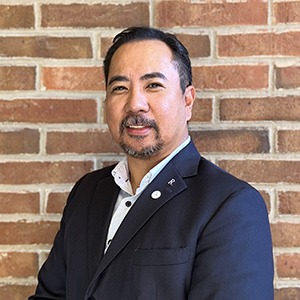
Renaissance Chicago North Shore Hotel welcomes Solis as director of sales and events. He brings over 20 years of hospitality sales expertise, and most recently served as director of sales and marketing at the Hyatt Rosemont. In an earlier role, he served as area director of group sales for The Royal Sonesta Hotels of Chicago, in which he oversaw sales efforts for three downtown properties.

Courtney Fairbanks and Marisol Morales-Cabrera

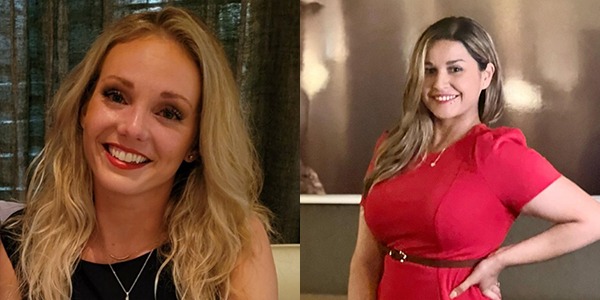
Headshots of Courtney Fairbanks (left) and Marisol Morales-Cabrera (right)
Courtney Fairbanks (left) and Marisol Morales-Cabrera (right), Fairmont Dallas

Fairmont Dallas welcomes new staff members to key event positions.

Fairbanks is appointed as catering sales manager. She will oversee, manage and coordinate catering sales in addition to building and maintaining relationships with new and existing customers. Fairbanks has spend over a decade gaining experience at properties including The Joule Hotel and Marriott Dallas Las Colinas, and throughout her career has successfully implemented client retention strategies and secured high-volume deals with Fortune 500 companies that resulted in impressive revenue growth. She is known for fostering a growth-oriented team environment.

Morales-Cabrera is promoted to the role of banquet manager. She began her hospitality career with at Fairmont Dallas as a bartender. Due to her exceptional support of her team and dedication to collaboration, she was quickly promoted within the food and beverage department. She most recently held the position of banquet captain at Fairmont Dallas.

Siiri Lobe

Smart Moves headshot of Siiri Lobe
Siiri Lobe, Sheraton Denver Downtown

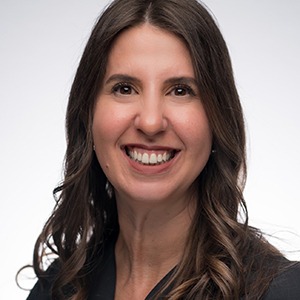
Lobe takes on the role of director of sales and marketing at Sheraton Denver Downtown. She brings over 20 years of experience in hospitality and group sales. At Sheraton Denver Downtown, she will oversee group sales and marketing, drawing from her earlier experience in roles such as director of group sales for the San Antonio Marriott Rivercenter & Riverwalk, where she saw record-breaking numbers while leading the property through the pandemic and a $100 million renovation.

Katie Tiegreen

Headshot of Katie Tiegreen
Katie Tiegreen, Origin Hotel Kansas City, a Wyndham Hotel

Origin Hotel Kansas City, a Wyndham Hotel, appoints Tiegreen as director of sales. She brings over a decade of experience in the Midwest hospitality industry, and has held roles in sales and catering with Prism Hotels & Resorts, Heart of America Group and Martens Companies. Deeply committed to fostering connection and community to her role, she will work to elevate the hotel’s presence and foster ties with the Kansas City Community.

Joseph Zuziak

Smart Moves headshot of Joseph Zuziak
Joseph Zuziak, Hyatt Regency Irvine

Zuziak is Hyatt Recency Irvine’s new director of sales and marketing. In his most recent role as director of group sales at Park Hyatt Aviara, he led his team to successfully capture incentive business following a $50-million resort-wide renovation. He brings over a decade of experience, and has held numerous impressive positions, such as director of sales for the Marriott Southwest Group Sales Office. In his new role, he will work to drive hotel performance and commercial strategy, boost revenue and strengthen customer loyalty for Hyatt Regency Irvine.

Read More: Smart Moves at Impact XM, Visit Seattle and More

Being named to the Eventex Awards 100 Index means a lot

When the text from my dear friend Kate Patay pinged congratulating me on being named one of the 100 Most Influential People in the Meetings Industry by Eventex, I was touring a convention center in one of my new favorite cities, Providence, Rhode Island. It took me back for a minute. Although I have won before, I am much more comfortable handing out the awards. Just as my happy place is asking questions and taking the pictures, my role is supporting, cheering and telling the stories.

I loved seeing all the Smart Women in Meetings Award winners on that list, including Kate, Stephanie Harris, Annette Gregg, Carina Bauer, Tahira Endean, Casandra Matej, Julie Coker, Liz Lathan, Nicole Osibodu, Carrie Davenport, Thuy Diep, Valerie Bihet, Wendy Porter, Anh Nguyen, Mahoganey Jones, Dahlia El Gazzar, Rachel Stephan, Tess Vismale and Liz Caruso. I also spied our event tech correspondent Brandt Krueger, Smart Speaker Nick Borelli and numerous Meeting Professionals of the Year and Catalyst Award winners. Our editorial advisory board members Mark Cooper, Don Welsh and Mike Dominguez were also there. Congratulations to all on being voted on by your peers for this honor.

Read More: Meet the 2024 Smart Women in Meetings Award Winners

On Behalf Of…

Digital JT Long Eventex Award As my travels continued, I started to see the posts from my fellow winners. I could tell that many felt the same way. This is a community filled with planners, doers and achievers rather than promoters. I saw very few who took the Snoop Dogg route and thanked themselves for believing in themselves when no one else did, although many had every right in the world to do so.
My friend and tireless advocate for training around mental health, Janice Cardinale, graciously wrote, “I accept this award on behalf of those people who have sincerely supported my efforts to bring change.”

The fabulous Devon Montgomery Pasha wrote in her post, “I’m humbled to stand with you in our shared mission to elevate this industry we all love.” And she gave a shout-out to Keeyan Pasha for holding down the fort at home so she can pursue her passion. Very classy. Like others, she took the opportunity to thank the industry coaches and cheerleaders for their leadership guidance and constant support.

The exhibit influencer Al Mercuro shared that he decided a few years ago to give his time and experience to make a difference. “I am glad others feel I did,” he concluded.

They pivoted and used the chance to pay the honor forward.

I, too, believe that I am accepting on behalf of the community that inspires me to get up every day and share the resources that will help them innovate, elevate and connect.

I am also catching 6 a.m. flights and constantly asking you for other smart people I can interview because I am dedicated to carrying on the legacy of our founder Marin Bright, who was named an Eventex top influencer, herself, in past years. We still miss her every day, but she started something bigger than one person and the entire team here has taken on her mission of nurturing and celebrating this community.

Read More: A Celebration of the Life and Legacy of Marin Bright

That commitment to celebrating excellence as a way to inspire more outstanding efforts is at the core of what we believe and makes the recognition even more of a mandate to continue doing the work to support the cause.

Deeper Meaning

When I was nominated, I cheekily observed that a person can be an influence for good or bad and I would leave the interpretation up to the voters. The truth is that we are all influencers regardless of our title, awards won or brand of lipstick.

I also joke that I am part of the most influential demographic of all—mothers and grandmothers. Middle-aged women, not tech venture capitalists, are the driving force behind all advances in civilization. Our kids are so driven to make their own way that they have to keep inventing new platforms to share their pictures and updates. You are welcome.

The bottom line is that we influence those around us every day. The trick is to do so with intention and caring.

That is a long way of saying, thank you to Eventex for recognizing events industry professionals around the world. Thank you to the Smart Meetings Community for voting for me and for inspiring me every day.

Hologram technology can increase engagement and attract hard-to-get speakers

Meetings may be a mostly in-person experience but—as we learned during Covid, with the use of Zoom, Teams and other online video platforms—the use of communications technology has its place in the world of meetings and events.

A more sophisticated form of communications technology to shift the way we meet and interact at events are holograms, walking a fine line between in-person and video communication. Take a look at a handful of hologram use cases.

Holograms as Speaker Catcher

“The No. 1 thing it’s used for is to ‘get the ungettables,’ says Krista Cameron, vice president of industry relations for Encore Global’s Canadian market. “If there’s a CEO in Dubai that you want to bring in, if there’s a celebrity, if there’s a thought leader that you normally would never be able to get because of their schedules, costs or time, you can actually have them appear in the hologram. And the cool thing is, when it’s on stage it’s 3D, so it looks very life-like.”

Along with its life-like stage presence, another important element of the hologram technology is its two-way communication. On the speaker’s side of the communication—whether they’re in a different country, room, etc.—they’re equipped with the lighting, a camera, white backdrop and monitors so they can see the audience and interact with them in real-time. “[It] freaks people out, but it’s really super cool,” Cameron says.

Read More: What to Expect When Booking A-List Event Speakers

Cameron says the Encore team has worked with speaker bureaus and certain keynotes who initially would say they don’t have the time. With the hologram technology, this all changes. “They have to give two hours instead of two days to fly in, so it’s sustainable,” she says. “There’s cost savings, and you can get that ungettable.” Cameron referenced a large corporate event whose celebrity spokesperson used Encore’s hologram tech to beam in from the backstage of the show they were hosting while they had the free time.

Another way Cameron sees it used is for Q&As, solving the problem of attendees asking a keynote a question and not being seen or heard by the audience, as well as saving the time spent by event staff running around to get the mic to the right attendee. But as Cameron says, this is corrected for using holograms, getting the attendee onstage to be seen and heard right in front of the audience. “An attendee could step into the beam stage and they’re on stage, and so the entire audience can see them and hear the question.”

Holograms as Multilinguist

Hologram technology is also crossing language barriers. At UFC’s Sphere event in September, Noche UFC, the UFC’s highest grossing fight and commemoration of Mexican Independence Day, Proto Hologram presented the first holograms of MMA fighters and UFC CEO Dana White, who’s hologram could be heard speaking Spanish, a language the real White doesn’t know.

Proto has used its hologram technology to bridge the gap between other languages as well. Proto CEO David Nussbaum gave a keynote and demonstrated Proto’s translation technology by creating a hologram version of comedian and actor Howie Mandel speak to doctors from Hyderabad, India, in their native language, Telugu.

Read More: Language Interpretation Is the Next Wave in Virtual Meetings

Holograms as Concierge

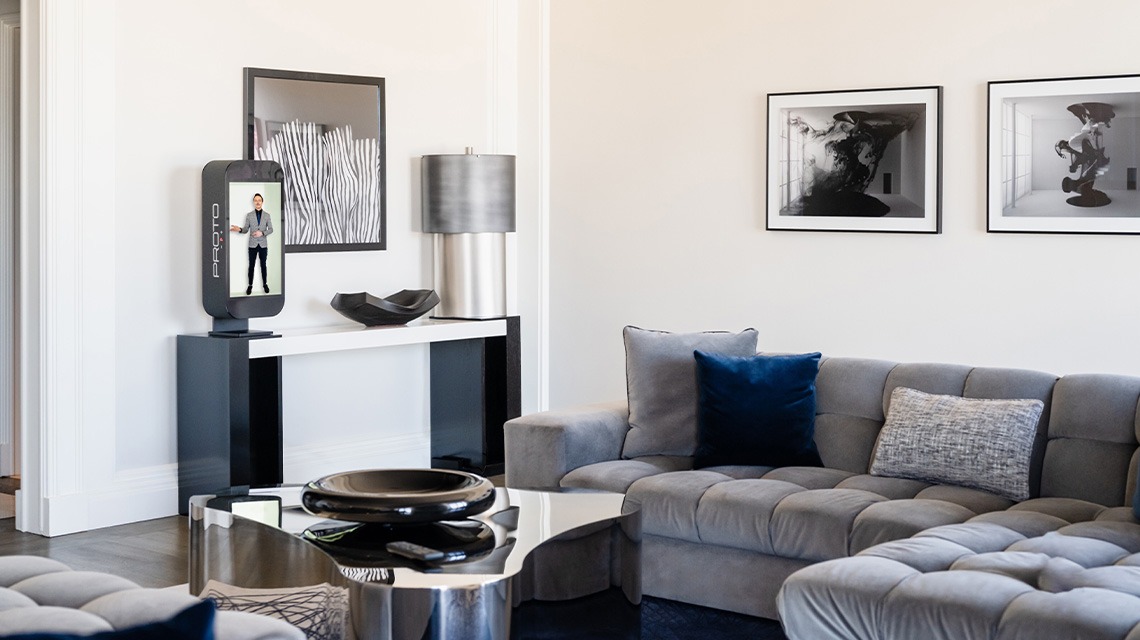
Proto Hologram device in Beverly Wilshire suite

Earlier this year, holographic communications platform Proto Hologram introduced its portable M Device to Beverly Wilshire, A Four Seasons Hotel’s presidential and penthouse suites in California. Four Seasons founder Isadore Sharp beamed in from Palm Springs to Beverly Hills for a meeting with the company’s executives.

“Beverly Wilshire converted a guest room into a studio for its guest experience team member to beam in the guest’s suite. The M makes the digital experience ‘real’ and redefines the way we work with efficient and engaging solutions, allowing the guest experience team to show and see emotion behind every interaction,” says Reed Kandalaft, Beverly Wilshire regional vice president and general manager.

Given its touch screen functionality, Encore has also used their hologram technology as an interactive concierge. “Some of our hotel partners have started to use it in their lobby so that someone can pre-load information,” Cameron says. “You can make it AI to search the web…. You pre-load it with information on the destination, information about the conference, the theme, sponsors, whatever you want. And people can go up and engage with concierge, and you can do the touch screen, or you can speak to them.”

Holograms as Engagement Tool

Although beaming in hard-to-pin-down speakers is its primary use case, holograms can be used as a way to further engage attendees.

Read More: It’s All About Engagement!

At Fanatics Fest at New York City’s Jacob Javits Convention Center, Proto Hologram had several activations throughout the event. NFL legend Chad “Ocho Cinco” Johnson beamed in for an NFL Trivia activation, where he could see, hear and react in real time. The Chicago Bears beamed in their recent draft pick, NFL rookie Caleb Williams, to meet media and fans immediately after the decision was made. The NBA Wizards and NHL Ducks had similar post-draft meets.

Proto’s M and life-size Epic models can also be used to promote products at events such as sales kickoffs in a more interactive and engaging format with their touch screens and QR codes that comes with data metrics and analytics.

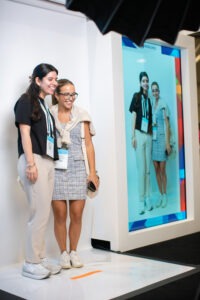
two women posing for hologram imageEncore Global has been working with hologram technology for the last two years, resulting from the company’s R&D into new ways to communicate with and engage audiences. “Probably the biggest challenge we hear from planners and organizations is how to engage their audience, how to get the attendees to show up, says Krista Cameron, vice president of industry relations for Encore’s Canadian market. “And when they show up, how do we get them involved? How do they learn? How do we get them to come back? So we’re always looking for those ways.”
Outside of its use for speakers, Cameron says people also love them because of the filter gram. “It’s next-level entertainment,” she says. “We’ve had it positioned in a lobby foyer or part of a reception, and up to two people can step into it, and not only do they see themselves in a different location, but you add filters.”

Encore’s holograms has filters that can turn attendees into younger versions of themselves, older versions of themselves or animals. “Guest line up for it. They love it,” Cameron says. “So we use it in a lot of our trade shows, because you definitely get the appeal of people want to come and be part of it and take the picture and show their kids.”


Meet the union of historic charm and innovative futures

From iconic buildings transformed into hotels with immense character to new builds ready to deliver the best of the best, these new and renovated hotels are ready to offer up an unforgettable venue for the meeting of a lifetime.

New York Night

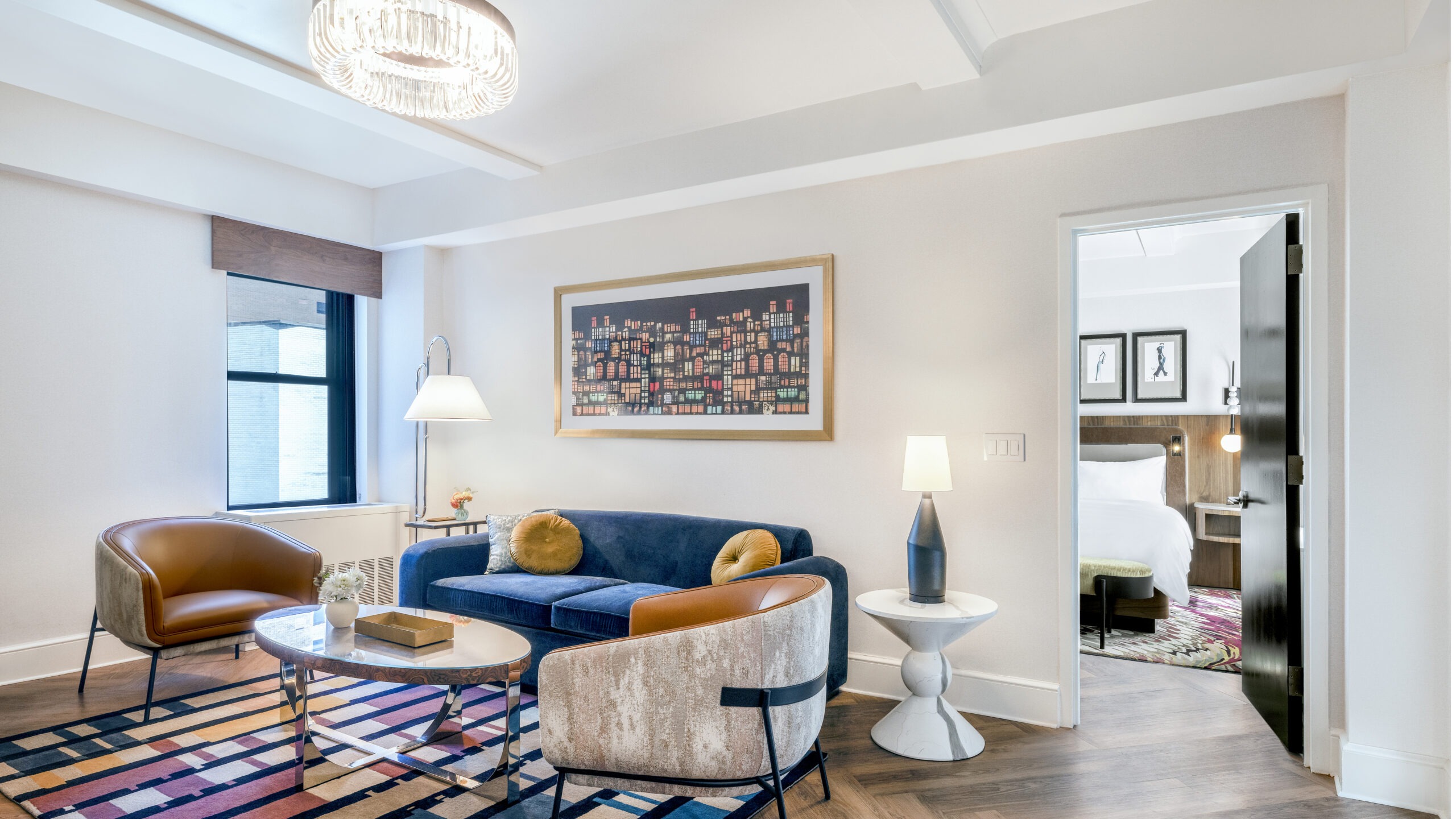
The Benjamin Royal Sonesta one bedroom suite for new and renovated
One bedroom suite, The Benjamin Royal Sonesta

One of New York City’s iconic luxury boutique hotels, The Benjamin Royal Sonesta Hotel New York, presents the first phase of a full scale transformation, spearheaded by integrated design firm DLR Group. This phase updated the hotel with new public spaces and renovated guest rooms as well as the introduction of the brand new Beverly Suite.

The hotel opened in 1927 as The Beverly Hotel and established a reputation right away with its 26-story, neo-Romanesque edifice. It has been immortalized in work by acclaimed artists such as Georgia O’Keeffe’s “New York Night” which depicts the hotel and its iconic rosette at the top of the building. In 2017, New York City designated the hotel as an official landmark.

The new design takes cues from the building’s history, drawing inspiration from the story of two main characters, “Benjamin” and “Beverly.” Masculine architectural elements such as bold lines and modern details like warm wood and rich leather are balanced with feminine elements like gilded curves, intricate patterns and a soft color palette. The mascot, Oscar, The King of New York, is reflected throughout the architecture. From the guest rooms to public spaces, warm walnut wood tones, herringbone floors and light-colored wall coverings create a classic, timeless feel. Featured artwork reflects Manhattan culture, from fashion-inspired pieces above headboards to an urban collection of windows in the living rooms of the suites.

Business meetings have 5,831 sq. ft. of meeting and event space to take advantage of. The Work Suite is a novel, multi-zone space that integrates traditional and coworking elements with hotel amenities, offering business travelers a sophisticated yet relaxed atmosphere for diverse working and collaboration styles. Future phases of the renovation will introduce new signature food and beverage concepts and additional amenities.

Palm Beach Sunshine

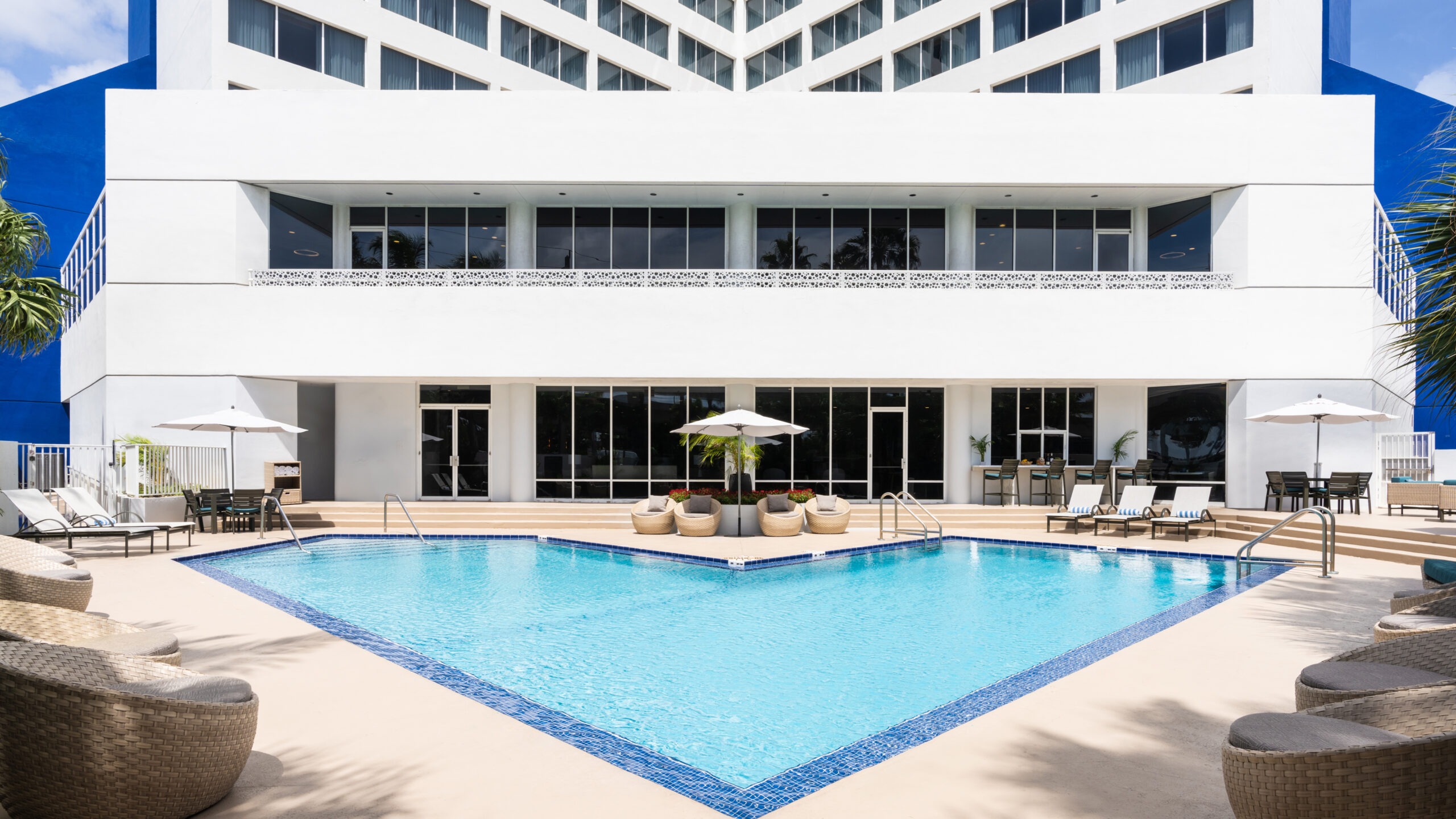
Delta Hotels by Marriott West Palm Beach pool for new and renovated
Pool, Delta Hotels by Marriott West Palm Beach

South Florida welcomes its first Delta Hotels property with the grand opening of Delta Hotels by Marriott West Palm Beach. It brings 199 guest rooms and over 8,289 sq. ft. of versatile event space, made up of 10 rooms, to the charming coastal area. The new property stands moments away from downtown CityPlace, the Norton Museum of Art, Palm Beach Island and The Ballpark of the Palm Beaches, where the Washington Nationals and Houston Astros host Spring Training. Optimizing ease for business travelers, the hotel provides a complimentary airport shuttle service for all guests, as well.

Thoughtfully designed guest rooms deliver the key essentials every guest needs for a comfortable, seamless experience. Onsite amenities build on this ease, with ample work and lounge spaces, complimentary Wi-Fi and bottled water in addition to conveniently located hydration stations. At the Delta Pantry, Marriott Bonvoy Platinum, Titanium and Ambassador Elite members can grab continental breakfast items, premium beverages and snacks 24/7.

In addition to a brilliant outdoor pool, a premium fitness center and a grab-and-go café, the hotel also offers a signature restaurant and bar at The Dive Bar.

Read More: Elevate Meetings Between-The-Sessions in The Palm Beaches

Dreaming in DC

Meeting space at Arlo Washington DC for New and Renovated
Meeting Room Lounge, Arlo Washington DC

Independent lifestyle hotel brand Arlo Hotels opens its first hotel in Washington, D.C., with Arlo Washington DC. The new 445-room hotel incorporates the district’s oldest surviving apartment building, the 1888 Harrison Apartments, in addition to a 12-story tower. The 1888 Harrison Apartments was added to the National Register of Historic Places in 1994 and exemplifies the Romanesque Revival Style. The new hotel is right by numerous attractions, including the National Mall, museums, the convention center and top dining, shopping and entertainment venues. Multidisciplinary design studio Meyer Davis, which also contributed to the designs of Arlo Midtown and Arlo Wynwood, oversaw the interior design. It aims to highlight the building’s original historic features while embracing the Arlo brand’s organic style with features like light-tone woods, a custom grid light feature and a sleek oak reception desk.

Guest rooms and suites stand throughout both the original and the new building. Also featuring exposed brick, as well as dark walnut wood floors with small pops of green and red on the headboards and custom light features, they create a sophisticated feel. Black-and-white penny tiles in the bathrooms nod to the original tiles in the Harrison apartments.

Other hotel features include an interior courtyard and an expansive fitness center. Guests can enjoy the rooftop—which includes a bar and lounge alongside a resort-style pool—and Arrels, the signature destination restaurant, by Chef Pepe Moncayo. The Bodega by Arrels on the ground floor will serve premium espresso and coffee drinks as well as grab-and-go breakfast and lunch items.

Meeting and event space totals 4,287 sq. ft., including five private meeting rooms. The hotel expects to achieve LEED certification within six months of completion, with over 25% reduction in energy cost and its inclusion of a 6,000-square-foot green roof, which includes a 12,000-gallon cistern to capture rainwater that will be treated and reused on-site.

Read More: New and Renovated: Luxury in Every Form