Bowling lanes serve as a great venue for a company holiday party or a night out on the town during a conference. At IMEX 2017 in Las Vegas, SITE Nite North America was held at Brooklyn Bowl on The Linq’s promenade. Many facilities have the capability to project your event’s or brand’s logo or messaging on screens at the end of each lane. Get your head out of the gutter, spare no expense and roll a strike of a party. Here’s just a small sampling of the many fun bowling alleys in the nation.

Brooklyn Bowl, Las Vegas and Brooklyn
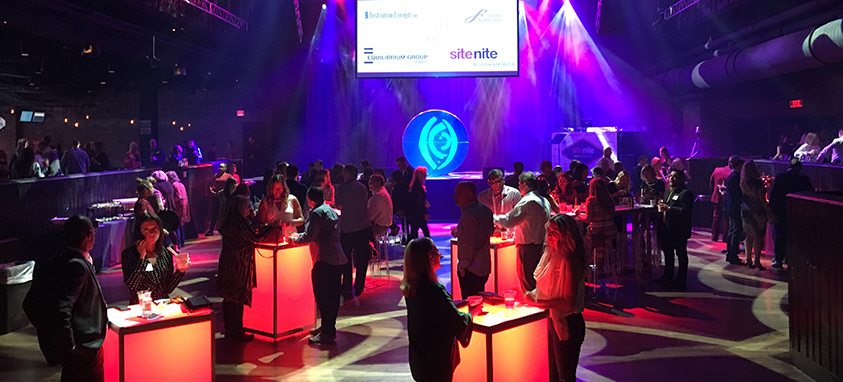
bowling

Brooklyn Bowl has two locations that both offer a concert stage and catering in addition to knocking down pins. The original location in Brooklyn has 16 lanes and can host private events of up to 600 attendees. The Las Vegas venue offers space for parties of 3,000 and 32 lanes for bowling. They’ve even got your feet covered with baskets of complimentary socks available at each lane.

The Spare Room, Hollywood, CA
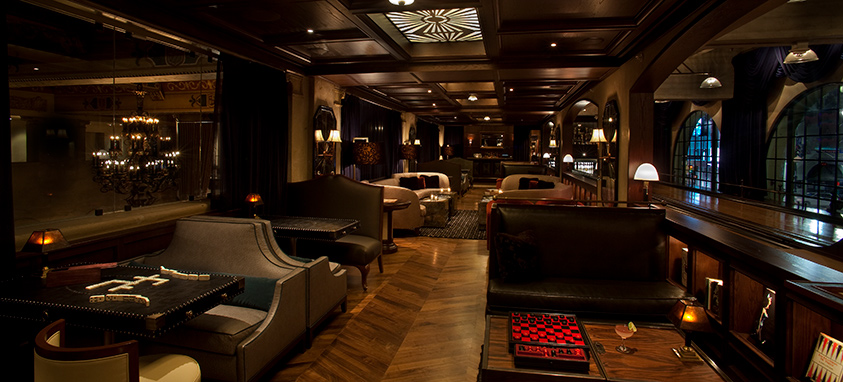
Photo credit: Hollywood Roosevelt

The historic Hollywood Roosevelt has 25,000 sq. ft. of flexible meeting space, but The Spare Room within the hotel is an intimate gaming parlor with a speakeasy feel. The 2,780-square-foot cocktail lounge features two vintage bowling lanes and can accommodate 180 guests for a reception.


Highland Park Bowl, Los Angeles
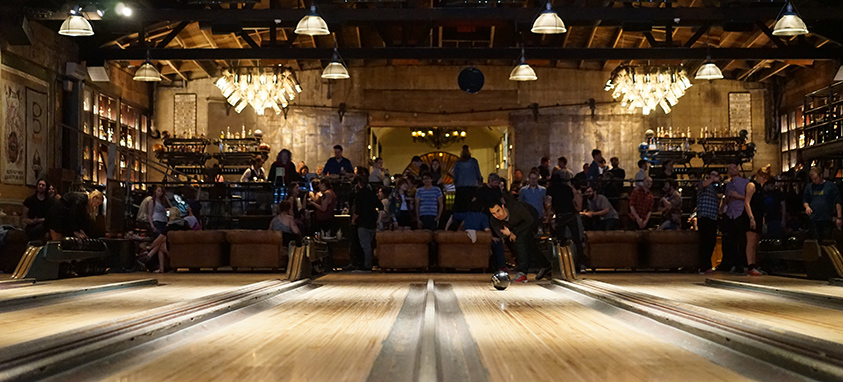
Photo credit: Danielle Bernabe

Established in 1927, Los Angeles’ oldest bowling alley—Highland Park Bowl—was restored and reopened in 2016. The eight-lane establishment has beautiful wooden finishes and will transport your guests back to the Prohibition-era; it’s available to rent for private events of up to 400 guests for a full buy-out. The building also originally housed doctors’ offices and a pharmacy. During Prohibition, doctors could write prescriptions for whisky, so patients would fill the prescription and booze and bowl—all under one roof.

Plank, Oakland, CA

A post shared by plank (@plankoakland) on

Located in Oakland’s waterfront Jack London Square, Plank boasts more than 50,000 sq. ft. of indoor and outdoor event space. There are 18 bowling lanes, a bocce ball court, 50 handcrafted local beers, 40 televisions and interactive video games. Plank can host meetings and team-building events of up to 1,000 attendees. Their Boardroom is a designated adult-only VIP section with private bowling lanes, billiards and a bar.

Uncle Buck’s Fish Bowl & Grille, 12 Locations in U.S. & Canada

Featured as the Smart Space in the September issue of Smart Meetings, Uncle Buck’s Fish Bowl and Grille takes you bowling under the sea. Marine life hangs from the ceiling, which is painted blue to make you feel like you’re beneath the ocean’s surface. Bowling balls are returned to the rack through the mouths of sea creatures such as sharks and octopi.

Lucky Strike, 20 Locations in U.S.

With locations in Arizona, California, Colorado, Hawaii, Illinois, Maryland, Massachusetts, Michigan, New Jersey, New York, Ohio, Pennsylvania, Texas, Washington and Washington, D.C., there’s a good chance there’s a Lucky Strike close to your meeting. Private lanes or the entire facility can be rented out for parties of up to 1,200 guests. They have a bar, catering and mood lighting. The Hollywood location has become a celebrity hotspot with pins signed by some of the biggest stars.

 

On the heels of Deaf Awareness Month in September comes news that Spanish hotel chain Room Mate Hotels is offering real-time sign-language interpretation services for deaf and hard of hearing guests, according to Frommers.

The hotel is working hand-in-hand with Comunicados en Lengua de Signos to provide guests who require this service with a tablet. This enables an interpreter to help the hotel’s staff and the visitor effectively communicate with one another via live video conferencing. Room Mate intends to roll out this accommodation across all its hotels in Spain by year’s end, and to expand to the brand’s international properties in 2018, including New York, Miami and Mexico City.

Watch the video below to see how it works:

Room Mate is not the only brand in the hospitality realm to encourage communication between the hearing and deaf communities. Just last month, Uber launched a campaign to teach passengers basic signs so they can say “hello,” “thank you” and fingerspell their names to the thousands of ASL-using drivers employed by the ride-sharing company in more than 200 American cities and around the world. By tapping on a special card in the Uber feed, riders can learn to talk with their hands by way of a GIF.

Back in 2015, a video went viral of a Starbucks barista taking a customer’s drive-thru order using sign language on a screen with two-way camera. “I’ve had a passion for sign language since I first saw a teacher use it when I was in preschool, and I’ve studied ASL ever since,” barista Katie Wyble said in a press release.” “It warms my heart so much to be able to communicate with those in the deaf community.”

BRIDGE COMMUNICATION GAP DEAF AND HEARING

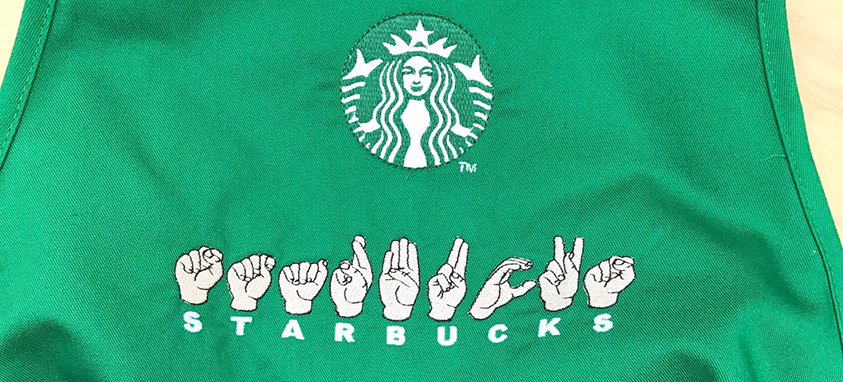
Photo credit: Starbucks

This August, Starbucks once again made headlines with the announcement that more than 50 deaf employees would be outfitted in green aprons with the fingerspelling of Starbucks embroidered on the front to make customers aware they communicate using ASL. Baristas at a Malaysian Starbucks store in Kuala Lumpur have been wearing similar aprons since 2016.

“People are curious and tend to look at me with more of a friendly face when they enter my store and see me in the apron,” deaf barista Katie Giles, whose brainchild this is, says. “I’ve even learned that some of my customers know a bit of sign language, which they had not used because they didn’t know I was deaf. My relationship with customers has totally changed.”

10 Answers to Your Random Airplane Questions

A number of things pass through your mind during a flight, especially if you’re traveling for work—such as when to eat, what to wear and how you can fit everything into two days. Surely, your mind also drifts to the random, and that’s when these plane questions arise. We’ll answer the questions you’ve probably mused a million times but never resolved. Plus, you never know when this arbitrary knowledge could come in handy!

1. Do you actually need to switch on airplane mode? It’s tricky, but most likely, no. There has never been an incident where this interference caused a crash. However, it has been said to interfere with the radio frequencies, potentially harming communication between the pilot and air traffic control. Many speculate that this was regulated by the Federal Aviation Administration (FAA), since there are too many variables regarding mobile frequencies. So, they cannot be 100 percent either way.

2. Is the plane safe from lightning? Yes, absolutely. Planes are built with a protective metal that’s engineered to prevent electric build up while protecting from power surges.

3. Why do airplane wings have a green and red light? The lights are to signal planes crossing in their path. The red light is always on the left side, while the green light is always on the right. This way, the crew is able to determine the direction the plane is traveling.

4. Why do planes have ash trays? Even though smoking has been prohibited for a long time, the FAA actually made ash trays a requirement. Apparently, some passengers still ignore the various announcements (and common sense). When this happens, the air crew needs a completely safe place to put the suckers out.

5. Can the emergency doors be opened in flight? No, actually. Planes are designed so that the door remains shut throughout the flight rather than depending on lock systems. In the air, too much pressure pushes on the door for it to actually open in-flight—phew!

6. Why does airplane food have such a bad reputation? This can actually be explained with some science. In the air, up to one-third of your taste buds are numbed due to cabin pressure. So no more blaming the airline or picky eaters!

7. Can the window break? If it does, will it suck everyone out? No, and no. There are two glasses. The structural one is protected by the Plexiglas that passengers can touch. This glass is extremely strong.

8. What happens to the lavatory toilet contents? Contrary to what you might think, it’s not dropped over the ocean! Instead, the contents are stored in a holding tank that sits in the plane. On the ground, the tank is transported for proper disposal.

9. Why are airplane windows round? Airplanes don’t have square-shaped windows because they are weaker in the corners and therefore stress concentrates there. Frequent pressurization and depressurization of these windows, would eventually cause corners to deform, crack and even break, whereas rounded windows have an even amount of stress throughout the window. If you’re also wondering about those small holes, one in each of the three panes is placed to help relieve and even-out the pressure.

10. Why are the lights dim during landing? This is actually a safety precaution. Dimming the lights gives passengers and crew the opportunity to adjust their eyes, just in case anything should go wrong and an evacuation is needed.

A quartet of new and newly refreshed hotels in tried-and-true meetings metropolises…

Marriot Marquis Chicago

A fresh breeze in the Windy City. The largest hotel to open this year in Chicago—and largest Marriott to open in North America in 2017—MarriottMarquis Chicago adds 1,205 guest rooms and more than 90,000 sq. ft. of meeting space to the entertainment and convention district of McCormick Square. The property connects to McCormick Place, and is adjacent to new, 10,000-seat Wintrust Arena

InterContinental Washington D.C.-The Wharf

The only luxury hotel along the new, mile-long waterfront neighborhood in the nation’s capital, InterContinental WashingtonD.C.-The Wharf is a contemporary, sustainably designed property on historic Washington Channel. It offers 278 stylish guest rooms and more than 17,000 sq. ft. of technologically advanced meeting and event space, including a 5,000-square-foot ballroom facing the Potomac.

Ames Boston Hotel

A $6 million renovation endowed this 1893 landmark with 1,700 sq. ft. of new private event space that exudes distinguished elan. Ames Boston Hotel’s redesign encompasses the lobby, library, Ames and Oliver & Oakes rooms. The property, part of the Curio Collection by Hilton and the Gemstone Collection by Benchmark, offers sustainable cuisine inspired by the restaurant’s on-site hydroponic garden.

Hotel 48LEX

AAA Four Diamond Hotel 48Lex in Midtown Manhattan has updated its four meeting rooms to accommodate groups from ten to 75 with an emphasis on privacy, efficiency and versatility. The property features 116 pied-a-terre-style bedrooms with kitchenettes and floor-to-ceiling views of Lexington Avenue.


Do you have an announcement about a new executive-level job appointment? Email us the good news at [email protected].

Fire Toll on Tourism and Northern California Economy

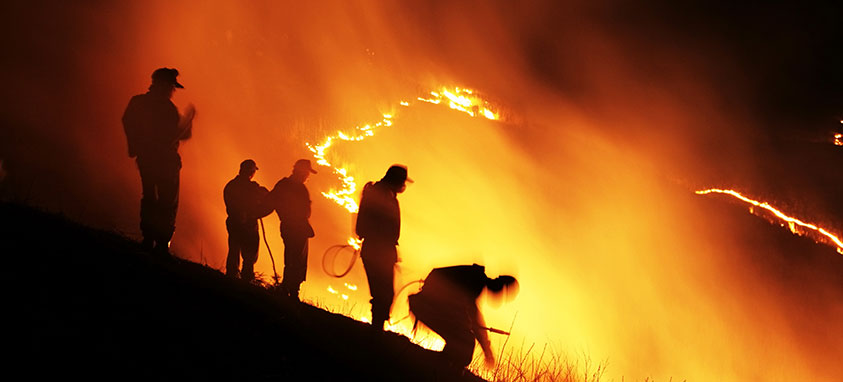
Weary firefighters today battled to keep wildfires from whipping into populated (though partially evacuated) towns in Northern California’s Wine Country counties of Sonoma and Napa. Helicopters dropped water, and bulldozers continued to cut containment trenches, which now stretch around one-quarter of the two biggest fires, with a strategy of shielding cities like Napa, Calistoga and Santa Rosa.

A red-flag warning for high winds is in effect for this afternoon, an eventuality which could undo what little progress has been made to halt the horrible spread of devastation. A 30 percent chance of rain by next mid-week is being heralded as a potential savior.

The Tubbs Fire — which has burned 34,770 acres across both counties, killing 17 people — menaced about two miles outside of the now-empty vacation town of Calistoga.

Statewide, seventeen fires continue burning, turning 222,000 acres–330 square miles–to ash by Friday. Fifteen of these are in Northern California. The death toll stood at 31, and is certain to climb higher. That makes this week the deadliest for wildfires in modern state history. In burned-out areas that are accessible, search teams are now scouring charred remains with cadaver dogs, looking for bodies. Fire has destroyed an estimated 3,500 homes, businesses and commercial structures.

Overall air quality in the Bay Area was reported to be worst in the nation, and as bad as Beijing’s.

For the third straight day, passengers at San Francisco International Airport suffered delays and cancellations due to smoke from the fires, officials said. As of late morning Friday, 94 flights had been canceled, bringing the three-day total of cancellations to nearly 280, according to airport spokesman Doug Yakel.

Many of the 20,000 evacuees who fled as flames neared are still uncertain of their home’s fate, and are staying with relatives, friends or in civic centers, and other meetings and events venues throughout the Bay Area. Hotels—mostly in San Francisco—are offering special rates and accommodations for people displaced by the wildfires. Sonoma Valley Visitors Bureau has partnered with San Francisco Travel and the Hotel Council of San Francisco to free up rooms for fire victims, according to a press release.

Animal shelters and stables have offered temporary boarding for displaced pets, including horses.

The economic impact on the wine-producing region will be enormous, in tourism, wine production and lost jobs. Tourism is a multibillion-dollar industry north of San Francisco. Statewide, wineries drew 23.6 million visits and $7.2 billion in tourist expenditures, according to the Wine Institute, which ranks California as fourth-largest wine producer in the world.

So far, one hotel has been destroyed and at least a dozen wineries have been destroyed or significantly damaged. But there is fear that even where wineries emerge unscathed, the heavy smoke could infiltrate unharvested grapes and open fermentation vats and impart smoke taint, making the grapes unusable in fine wine.

Karissa Kruse, president of the Sonoma County Winegrowers, told The New York Times the repercussions of the fire on wine stored in barrels and tanks is unclear. Wineries that lost vineyards will have to nurse the soil back to health for three to five years before harvesting a viable crop of grapes, she said.

Tens of millions of dollars of marijuana, grown legally and not, will also likely be lost, consumed by flames or ruined by fires nearby. California is America’s leading domestic producer of cannabis — growing an estimated 13 million pounds per year.

“Especially when it’s ripe—I  can tell you from personal experience, wildfire definitely will make your cannabis have a smoky flavor to it, just like wine,” Kristin Nevedal, executive director of the International Cannabis Farmers Association, based in the Humboldt County town of Garberville, told The San Francisco Chronicle.

Santa Rosa has emerged as the epicenter of the modern legal pot economy in California. Because the state’s cannabis industry is seeking local and state licensing under legalization Proposition 64, many companies had invested heavily in leasing and equipping warehouse space in Santa Rosa to fulfill licensing requirements. Now, with many of those warehouses gone, these investments are lost.

“Folks are out their entire life savings over the last few years to get to this point,” Hezekiah Allen, executive director of the California Growers Association, said in the Chronicle interview. “There’s no crop insurance, there’s no FEMA aid coming to our growers. It’s a pretty extreme situation out here.”

Hotels are bending over backwards, as it were, to promote unique fitness and wellness offerings to guests, including meetings attendees. But Kimpton Hotel Palomar Phoenix may have raced ahead of the pack, at least for the moment.

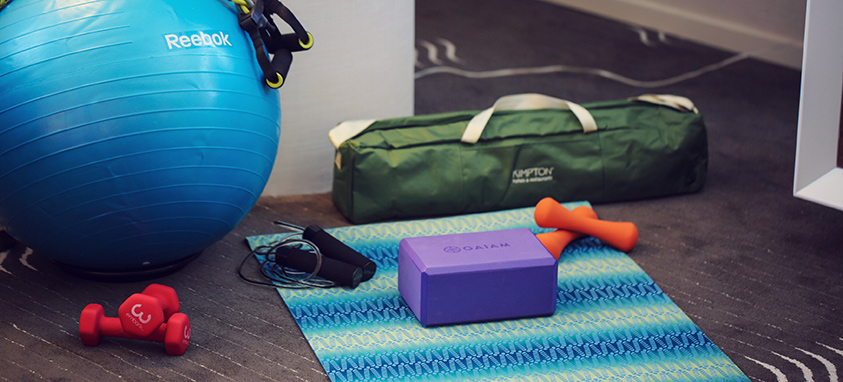
Among its new suite of fitness-focused teambuilding and breakout sessions for 10 to 35 attendees is Ironman training with General Manager Niels Vuijsters, whose Instagram motto is “the wind cannot defeat a tree with strong roots.” Groups can hit the nearby South Mountain trails with Vuijsters for a mid-morning breakout while he trains for the Ironman Arizona in November. The trail runs range in distance from one to four miles, depending on the skill level of the group.

“This works best with smaller groups,” Vuijsters told Smart Meetings, who says the fitness emphasis is proving attractive to “certain groups.” A Google meeting will be convened at his hotel soon, and “they indicated interest in a fitness focus,” he says. Next month’s Ironman will be Vuijsters’s first. He successfully completed a half Ironman in July on a visit to Sweden. He also leads a weekly “GM run”—a 5k through downtown Phoenix—that is open to both staff and guests.

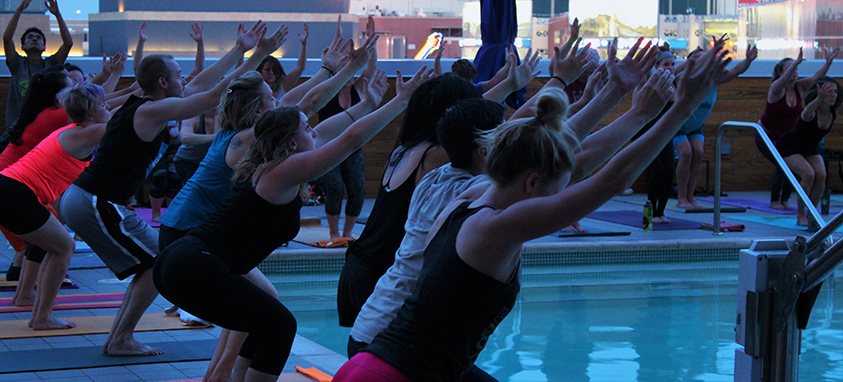
Other fitness-related options at the hotel include 15-minute HIIT (High Intensity Interval Training) workouts, tastings of locally sourced kombucha and core-power yoga. The hotel also has standing meeting-room tables for rent, to help improve group focus.

phoenix train ironman

For a unique pick-me-up, Hotel Palomar’s Blue Hound Kitchen & Cocktails will prepare customized healthy menus that adapt to any dietary restriction and use seasonal veggies and other local ingredients.

The hotel features 10 event venues of more than 11,000 sq. ft. of pre-function and indoor meeting space.

wine meeting

What can be a more perfect pairing for a team-building meeting than coastal scenery with a sparkling glass of vino? Luckily, California’s Coast is well-stocked with some of the best wine-tasting in the world, and some of the most interesting places to do it. Here are eight places that can host your group for sipping and speaking.

Gilroy/Santa Cruz

Rosewood CordeValle Resort

South of San Jose, the prestigious Rosewood CordeValle Resort in San Martin is a 260-acre golf course (site of the U.S. Women’s Open in 2016) and tennis club. It is also an 85-acre winery, with access to 25 more wineries in Santa Clara Valley Wine Trail. In addition, it offers 4,400 sq. ft. of indoor meeting space and almost 4,000 sq. ft. of outdoor space with spectacular views of the Santa Cruz Mountains.

Chardonnay II

Take your meeting out to sea with a team-building sea charter. Your group will get private instructions on how to work together to sail a 70-foot-long world class yacht off the coast of Santa Cruz. The three-hour program for up to 35 people includes a cheese platter, fresh baguettes, seasonal fruit and, of course, chilled chardonnay.

Monterey/Carmel

Cima Collina Wines

This award-winning vintner offers two choices for wine-themed events. White Oak Cottage in Carmel Valley blends a historic farmhouse dining feel for up to 80 people, with outdoor dining under a canopy of oak trees and a nearby fire pit for marshmallow magic. For larger groups, Cima Collina Winery and Barrel Room in Marina offers the backdrop of a working winery, and all the oak barrels and concrete flooring that entails for small-lot barrel tasting and urban wine experiences for as many as 300 people.

Folktale Winery

Whisk your attendees to this 15-acre, organically farmed vineyard and garden along the Carmel River for a refined experience. Whether it is a cocktail party in the wine cellar surrounded by stainless steel tanks and oak wine barrels for 60 people, an evening reception under twinkling lights by the fire pit in the garden and courtyard for 650, or diner for 300 in the Rose Vineyard (tented or un-tented), events held in this dreamy location were designed for happy endings.

Paso Robles

San Antonio Winery

With tasting rooms in Los Angeles, Ontario and Paso Robles, there is a glass of award-winning liquid accessible at all times. The Paso Robles Tasting Room can host groups as large as 100 and offers full catering. Heritage room can serve up to 50 people for a fireside reception. Patio Alfresco, overlooking the creek, seats up to 125. Tours to learn about the history of winemaking are available from a family that has been in the business since 1917.

Eberle Winery

Choose from dinner in the Wild Boar Room (eberle is German for “small boar”) in the Eberle Winery Caves, with capacity for 80, or a reception on the Vineyard Deck, with sunsets over the Coastal Mountain Range. All are award-winning breaks from the predictable conference space.

Santa Barbara County

Carr Winery

The same mild climate that makes Santa Ynez Valley perfect for growing grapes is also beneficial for budding connections between team members formed at events held in Carr Winery’s warehouse. This 2,300-square-foot, climate-controlled space offers an open floor with a U-shaped bar surrounded by wines that are being aged before they are crated in wood boxes and shipped all over the world. Pair meetings with winemaker dinners, live music and educational tastings for a change of pace.

Santa Ynez Inn

This newly remodeled AAA Four Diamond boutique hotel is the ticket for free wine-tasting at 21 local vintners, with 70 more in the area, along with orchards, lavender farms and horse ranches. Schedule more pairings in the 1,500-square-foot Coach House or on the outdoor lawn. To add even more bubbly to the stay, schedule champagne-infused Signature Massages at the spa, which includes a flute of sparkling wine, organic champagne body butter and champagne-infused aromatherapy.

Read more about California’s central coast in the October issue of Smart Meetings.

southwest hawaii route

“We anticipate fares will drop.”

With those five words, the gauntlet was dropped this week by Andrew Watterson, executive vice president of Southwest Airlines. Now the third-busiest carrier in the United States, Southwest plans to enter the Hawaii market next year—and set off what industry insider refer to as “the Southwest effect” by forcing competitors to lower their fares to compete.

According to Watterson, Southwest believes it can charge less than what other carriers currently do. A Delta round-trip from San Francisco to Honolulu in early December rings in at $1,154. A Chicago round-trip is $1,722.

Six airlines now offer service to the islands—Alaska, American, Delta, Hawaiian, Virgin America (now part of Alaska) and United.

Southwest flies to more than 100 destinations in the United States and nine other countries, with more than 4,000 departures a day during peak travel times.

The FAA must approve the new route, as it did when Southwest expanded its range into the Caribbean and Mexico. Upon approval, Watterson said, the airline will fly from California to Honolulu, Kauai and Hawaii Island.

The Hawaii run will feature Southwest’s new line of Boeing 737 MAX 8 aircrafts, which have increased range and fuel efficiency, and seat 175 passengers.

Southwest held a dual press announcement from a company gathering in Southern California and on Waikiki Beach. The latter was attended by Hawaii Governor David Ige and Southwest President Tom Nealon, who said, “The unmatched combination of our people and low fares with nothing to hide will be a game-changer in the U.S. to Hawaii market.”

Southwest Chairman and CEO Gary Kelly said that the new route will be “about as far Southwest as you can go in the U.S.,” and then added, “We’re ready and excited to address a request we’ve heard for years.”

4 Helpful Tips for Americans Traveling to Turkey

Americans flying to Turkey could face difficulties now that the United States and Turkey have temporarily stopped issuing visas to each other’s citizens.

Many questions have arisen, and answers have been provided:

  1. U.S. residents can’t come to Turkey if they don’t have a visa and need to apply for it in person, because currently, it isn’t possible to apply for one in person. Those who already have Turkish visas can visit the country, though.
  2. Turkey also grants e-Visas, allowing travelers to obtain visas by applying online through gov.tr, but U.S. citizens are not eligible for them. Citizens of countries such as Norway, Australia and India are eligible to apply for e-Visas to visit Turkey and can do so if they live in the United States.
  3. American living abroad might be able to visit Turkey, but it isn’t guaranteed. They need to apply for a visa, and can do so by visiting their local Turkish embassy or consulate.
  4. Americans who have booked a trip to Turkey but can’t apply for the visa need to take the trip may be able to get a refund.

The suspension of visas resulted from Turkey’s arrest of a Turkish employee, Metin Topuz, working at the American Consulate in Istanbul, on charges of espionage, trying to overthrow the government and acting against the Constitution. Turkey accused Topuz of having links to Fetullah Gullen, whom authorities say was behind a failed coup last year, and is now living in self-imposed exile in Pennsylvania.

On Sunday, the U.S. Embassy said it would suspend the processing of all nonimmigrant visas—which are used by business travelers, tourists, diplomats and students—as it re-examines Turkey’s commitment to the safety of its staff. American ambassador John R. Bass said that the United States decision was made “with great sadness” and President Recep Tayyip Erdogan of Turkey called it “regrettable.”

After the action was taken, the lira dropped more than 4 percent against the dollar on Asian markets.

Turkey later announced that it would take similar measures, including the suspension of electronic visas and visas purchased at the border, which is how most tourists and other short-term visitors enter the country. The measures apparently have not yet been enforced at the border.

The actions are occurring during a time of deteriorating relations between the two countries due to a several issues, including American support for Kurdish fighters in Syria and Turkey’s tilt toward Russia in the war in Syria. Turkey’s recent decision to welcome the leaders of Iran and Venezuela has also increased tension with the United States.

Another employee, working at the American consulate in Adana, Turkey, was arrested in March and faces similar charges to those made against Topuz. His case hasn’t been tried yet. Both men apparently were charged partly because of ties they developed with former security officials, which raised questions about the safety of all local employees of American diplomatic missions in Turkey.