adventure park

Nothing brings people together quite like the great outdoors. Days spent in stuffy ballrooms can be tedious when the sun’s warmth beckons. This summer, consider taking your group on a new team-building adventure. A break in the great outdoors can actually boost creative thinking.  Amusement and water parks offer a wide range of activities and spaces to host a memorable summer event that might feel a little bit like a vacation if it weren’t so effective at doing the hard work of getting associates to work together.

1. Hilton Anatole Dallas JadeWaters Pool, Dallas

Take a break from the office air conditioning and sweltering Dallas summer heat at Hilton Anatole’s outdoor water and activity park. The 3-acre resort-style pool area at JadeWaters features private cabanas, a lazy river, a swim-up bar and an outdoor restaurant. Hilton Anatole’s 600,000 sq. ft. of state-of-the-art meeting space, 45-acre campus and 1,606 guest rooms are water-adjacent.

2. Mt. Hood Adventure Park at Skibowl, Government Park, Oregon

This powerhouse in the wilderness offers serene views overlooking the Cascade Mountains. Activities, such as horseback riding, bungee jumping, paddle boarding and white-water rafting, are nothing short of exciting. The resort just introduced Amaze’n Maze, where attendees can find four checkpoints that spell maze before pointing the way out. Your meeting is easily customizable, whether you have 50 people or 5,000. The resort’s lodges will accommodate them all.

3. Busch Gardens, Tampa, Florida

A thrilling change of pace can happen in this amusement park. Build comradery with your team by strapping them into the Wild Surge drop tower or arrange a scavenger hunt that aligns with your meeting goals. You can rent out sections or buy out the whole park for a private experience. Need a break? Busch Gardens also hosts company picnics with an unlimited buffet. When it’s time to work, you can hold a meeting in one of six venues that fit 50 to 4,000 people.

4. Knott’s Berry Farm, Buena Park, California

You don’t have to go across the world to complete the Amazing Race. In the Golden State, Knott’s Berry Farm is offering “The Appmazing Race” as a team building activity. The mobile journey is complete with destinations, roadblocks and bonus challenges to keep your team consistently engaged. Knott’s Berry Farm Resort Hotel combines luxurious accommodations for both business and leisure. The 320-room room full service hotel features resort caliber amenities, 16 SNOOPY-themed rooms and 20,000 square feet of meeting space.

5. Cedar Point, Sandusky, Ohio

Party like it’s 1999 at Cedar Point’s exclusive beach parties. Or, challenge your team’s knowledge in specially-designed game and trivia shows tailored to your industry. You can do it all at this Lake Erie attraction billed as the roller coaster capital of the world. The park’s meeting space accommodates 50-500 people.

6. Walt Disney World Resort, Lake Buena Vista, Florida

Let the magic of your meeting happen with a little Disney dust. The resort boasts over 700,000 sq. ft. of ballroom and meeting space across six locations. The “Imagineers” at Disney can design themed events with the same originality as the parks. The experience is sure to bring out the playfulness among your team. Childlike joy continues in Toy Story Land, which opens June 30. Embark on the safari ride, Epcot sea adventure or Star Wars guided tour if your group is up for extra excitement.
hurricane season

Hold onto your planner hat. Today, June 1, is the official start of the 2018 hurricane season, and National Oceanic and Atmospheric Administration’s Climate Prediction Center is forecasting a 75 percent chance that we will suffer a near- or above-normal season.

Starting with Alberto, 10 to 16 named storms are predicted. As many as nine could become full-fledged hurricanes; one to four are expected to be monsters.

If you have a gathering scheduled in the hurricane zone between now and November 30 (the official end of the season—how does Mother Nature know that?), here’s a refresher on what to keep uppermost in mind, and how to prepare.

Event Insurance

The state of Florida offers free hurricane event insurance to planners from August through November. Visit Florida’s Cover Your Event insurance insures more than 100 meetings each year, with an economic impact of more than $30 million per year. Claims are paid due to losses on named hurricanes only, and coverage pays for the additional cost of rescheduling the event, including higher room rates, reprinting programs, signage and banners.

Travel insurance

Should you recommend that attendees purchase travel insurance if flying in hurricane season? In a word, depends. In such weather emergencies, airlines typically waive rebooking fees and work overtime to rebook. Likewise, hotels have established hurricane response plans that include everything from becoming an emergency shelter to evacuating guests to safety (in the case of islands such as the U.S.  Virgin Islands). On the other hand, travel insurance can reimburse the costs of flying home early, extra nights and meals at your hotel and—more importantly—medical transportation and medical services if you are injured, and regular health insurance won’t cover them.

Note that coverage applies only if it is purchased before a storm is named. “Travel insurance is designed to offer protection against sudden and unforeseen situations and events,” says Allianz Global, a major specialty insurance provider. “When a hurricane (or any storm) becomes a named storm, it also becomes a ‘foreseeable event’ with known potential to affect your travel. If you buy travel insurance after a storm is named, your plan won’t provide coverage for storm-related claims.”

Other Contingencies

Last season’s hellish hurricanes forced meeting professionals to act fast in Texas, Florida and the Caribbean when they hit. Lessons learned can be applied to what’s ahead this year. Here are helpful hints to handle the unpredictability of Mother Nature and minimize impacts on the events you work so hard to plan.

The Phoenician

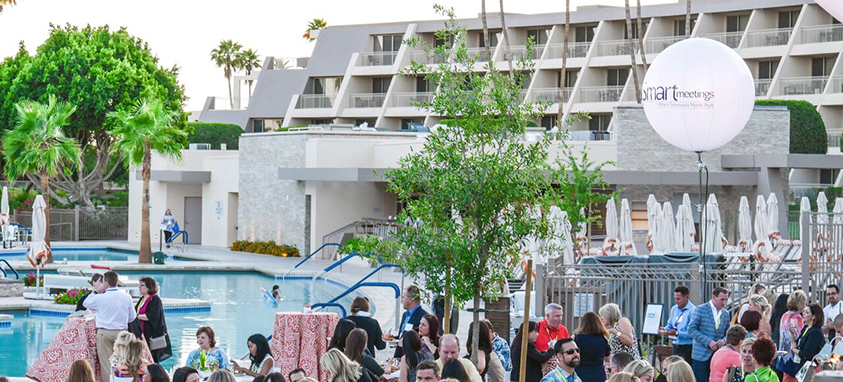
Business getting done is always front and center at a Smart Meeting, and that was certainly true at the just-concluded Smart Meeting West National. It was held May 23-25 at The Phoenician, a Luxury Collection Resort, in Scottsdale, Arizona.

The resort, which was eager to show off a top-to-bottom transformation, hosted Smart Meetings and an elite group of meeting planners and suppliers from across North America.

Over the course of three action-packed days, new relationships were forged and friendships begun. In between team-building activities, creative cuisine and lively socializing, attendees were treated to exceptional keynote speakers. Here are some intriguing takeaways.

1. Stress Is a Laughing Matter

Judy Carter, self-described Goddess of Comedy and author of The Comedy Bible and The Message of You, quoted Carol Burnett, who defined comedy as “tragedy plus time.” Carter shared her own “messes,” which included an alcoholic father, a sister with cerebral palsy and a mother who refused to deal with reality. Her response, which she urged planners to emulate, was to learn to use humor to diffuse life’s stresses. In particular, she says, friends and foes alike will be disarmed if you are able to make fun of yourself.

2. Business Relationships Really Do Matter

Mike Dominguez, senior vice president and chief sales officer of MGM Resorts International, effortlessly traced the upward trend line of the hospitality industry. In the top 25 U.S. markets over the past seven years, he said, “We are so far north of the previous highs.” The biggest challenge for everyone—hoteliers and planners—is the speed of change, according to Dominguez, who cited Salesforce CEO Marc Benioff’s comment, “Speed is the new currency of business.”

At the same time, Dominguez stands firm in his support of MGM’s decision to resist lowering third-party planner commissions, as other major suppliers have done recently. “Relationships still matter,” he said in an exclusive interview. “In my world, my partners have always stood behind us. And so, we at MGM are working with our partners to make things work for both of us.”

3. Building Speedy Rapport with a Prospective Business Partner Is a Learned Skill

Steve Steinhart is recognized as one of America’s leading sales consultants, and his team has assisted more than 5,000 hotels, convention and visitors bureaus, hotel management companies and others be more successful by mastering the art of building personal relationships. Personality types, in his view, can be grouped into four categories: relator, socializer, thinker-analyzer and director-driver. By learning to pick up on clues that every prospect unconsciously reveals, anyone can gain trust quickly.

Airbus flying taxi

In a move that eventually could provide a big boost to travel at meeting destinations, commercial aircraft manufacturer Airbus SE is creating a division that will oversee the creation of flying taxis, on-demand helicopters and other futuristic transportation options.

The new division, Urban Air Mobility, suggests that the European company is planning to be competitive with companies such as Uber Technologies Inc. and startup Kitty Hawk, backed by Google founder Larry Page, which have been developing airborne taxis.

Along with other futuristic means of urban transportation, airborne taxis are viewed by many as an exciting option that could significantly expedite travel within cities.

An Integrative Unit

Airbus flying taxi

Urban Airborne Mobility will integrate several Airbus projects into one unit. Airbus has already carried out a successful trial in Sao Paulo of Voom, its helicopter ride-hailing service, which aims to ease congestion while making helicopter travel more accessible and affordable. Airbus teams from Silicon Valley to Europe and Asia are working to create entirely new vehicles for Voom.

The company’s CityAirbus is an electric vertical take-off and landing (VTOL) vehicle for up to four passengers, and the goal of another component, Vahana, is to create a similar mode of transport for individual travelers and cargo transport.

Eduardo Dominguez Puerta will serve as head of the new division. He is one of the founders and a past president of Airbus’ innovation center in California’s Silicon Valley.

“After a two-year exploratory phase, we now need to gear up, build partnerships with various stakeholders, including air safety agencies, and define and conduct pilot projects,” said Tom Enders, CEO of Airbus. “While we continue our vehicle projects, the new unit will be platform-agnostic and open for cooperation with other vehicle manufacturers. Eduardo, with his broad experience, is the right person to lead us into the new phase.”

Based in Munich, the UAM unit will be operating near the company’s Corporate Technology Office and Unmanned Aerial Systems in Ottobrunn, as well as the company’s helicopter plant in Donauworth.

Importance of Futuristic Options

Airbus flying taxi

On its website, Airbus emphasizes the importance of new means of urban transportation: “Increased urbanization is pushing our cities’ transport systems to the limits, costing valuable time and money. Airbus believes the solution lies in the sky. From flying vehicles to helicopters on demand, its portfolio of ground-breaking projects is helping to make urban air mobility a reality.

“Instead of looking at ground level, it is focusing its attention on a part of the city that remains congestion-free: the sky.”

The website states that by 2030, more than 60 percent of the world’s population will be living in cities, which will stretch struggling ground transportation networks even further.

3 reasons to stray from the keynote

Putting the ideal corporate conference together involves a dizzying number of stakeholders to please and objectives to achieve—not to mention a budget to stick to. Thinking of new, interesting agendas can feel more challenging than planning the entire event.

For the past few decades, keynotes have been the go-to for corporate conferences, and there are two important reasons for this. First, in the eyes of event planners, a keynote speaker is a relatively low-risk option because you know what you are going to get. Secondly, they can be informative and perhaps pique the interest of attendees, especially if they are famous or well known in the industry.

However, the keynote may not be as universally effective as it once was. In a busy world, events can feel like another thing to do. Event attendees’ expectations and learning styles have evolved. This has led to event planners employing alternative options, such as experiential learning sessions, competitions, breakout sessions or team-building activities.

Here are three reasons why it may be time to consider something other than a keynote at your next corporate conference:

It’s More Interactive and Engaging  

By nature, keynotes are often more passive than other options, which creates the possibility for attendees to get bored or restless. By creating an experience for attendees that utilizes activities and games to make things more interactive, attendees get the chance to escape from their everyday stresses and do something they usually would not get the chance to do.

Alternatives to keynotes can be designed to impact all sorts of topics, including teamwork, communication and workplace culture. Keep in mind, this will all depend on the goals or objectives of your event and your audience. Whether the elements you choose to include give attendees the chance to move around, interact, network or engage with others, they all build a shared experience among attendees, something that will stick with them when they return to work.

It’s More Likely to Be Relevant and Applicable

Keynote speakers inherently rely on personal stories to deliver their message, whether those stories are light-hearted, entertaining or inspirational. You have very little control over the content. For example, while an Olympic athlete may appeal to attendees, do their lessons on leadership actually apply to the leadership challenges your attendees are facing at work?

Alternative activities or sessions may be more relevant, as they often allow you the freedom and flexibility to control what you deliver based on your event’s objectives and even the characteristics of your audience. Let’s say you decide to forgo that Olympic keynote, and you replace it with breakout sessions led by your company’s leaders. This step beyond the keynote could better optimize the investment in time and resources.

It’s Something New or Unexpected

It’s never too late to try something new or unexpected. By doing something that may at first seem outside your company’s comfort zone, may encourage attendees to reconsider their feelings and go along with what you have planned. Consider it an opportunity to increase pre-event excitement and curiosity by promoting (or even hinting at) what you have in store for attendees when they arrive.

There is no one way to plan a perfect corporate conference, but there are strategies that can make both attendees and stakeholders happy. In fact, don’t rule out keynotes entirely. There are cases when they can be exactly what the event needs. Instead, the next time you find yourself planning an event agenda, take a few moments to weigh your options and choose based on what’s in the best interest of attendees, stakeholders and the entire event.

Sue Wigston is the chief operating officer of Eagle’s Flight. Her extensive senior leadership experience and facilitation skills have established her as a trusted partner and organizational development expert. She has a proven track record of successfully leading culture transformation in Fortune 500 companies and has established herself as an authority on training and development.

Inclusivity in the workplace

When PCMA CEO Sherrif Karamat announced on May 22 that more than 50 senior executives had signed his Ascent CEO Promise to create inclusive workplaces, he had his sights set on scaling even higher heights. “The industry can be a model for the larger world,” he said when discussing the reaction after a week of lobbying leaders globally to make the pledge. “When you consider how many women are in the sector and only 10 percent are in leadership roles, it is an opportunity to show the power of a transformed, more diverse workplace,” he says.

“This started as a discussion about gender equality, focused on women in leadership roles and equal pay,” Karamat explains. He wanted the panel for She Means Business he was moderating at IMEX Frankfurt to be much more than empty words. “It is 2018, and we are beyond talk. We need to do something about this,” he says.

By “this” Karamat means much more than gender inequality. In his view, it is high time that everyone feels welcome to contribute; that includes people of all sexual orientations, minorities and people with abilities (as opposed to disabilities).

“The evidence shows that it just makes good economic business sense to include lots of different perspectives,” he says. A representative from software-maker SAP testified during that IMEX panel that hiring people on the autism spectrum has improved the company’s products. Studies show Fortune 500 companies with female leaders have 41 percent better return on equity compared to companies without female leaders. “It is a moral and business imperative—it checks both boxes,” he says.

The CEOs who signed the pledge committed to making their workplaces more open and trusting, providing education on barriers to inclusivity and sharing what they know—and what needs improvement. Smart Meetings asked a handful of them what specific actions they planned to take to turn their companies into models for a larger world.

Johanne Belanger, president and CEO, Tourism Toronto

“It’s not about just saying a company has a trusting setting, it must authentically be a trusting setting. One of the proudest moments I’ve had as a CEO was when Tourism Toronto was named as one of the top 50 Best Places to Work in Canada this year. A successful work culture needs to be a trusting work culture—but it takes constant work. One of our core values at Tourism Toronto is ‘Let’s Talk’ and that includes being respectful and actively listening. It’s about sharing information, giving credit and acknowledging that mistakes are okay, but we have to learn from them. We celebrate our wins and learn from our mistakes. We’re in this together.

“Empowering people is a passion of mine and has been throughout my career. I was the female CEO in a very male-dominated industry. I know what it’s like to swim upstream. I know what it’s like to feel silenced and to feel like you’re not empowered. Finding your voice is challenging and we have to take on that challenge head-on. We have to ask for opportunities, call out injustice, take a stand and be our authentic selves.”

Cheryl Kilday, president and CEO, Visit Spokane

“We recently completed harassment training with our management team and entire staff. We will continue to demonstrate that we are listening and respond appropriately in a timely fashion. Being heard is the first step.

“I’ve always been a bit of a gatekeeper in that I want to invite people in. Professionally, we work with a wide audience and want to recruit a workforce that can be genuine. Diversity, like travel, leads to understanding and peace.”

Tammy Blount, CEO, See Monterey

“We actually work with the human resources consultancy company FiredUp! Culture to measure exactly this and more. We want to ensure we have our finger on the pulse of our team and that our environment is one of mutual respect—and a safe place to tell the truth. We’ve been working with them for several years now, and it has been a powerful tool for our organization.

“It is critical that all leaders pay attention to the culture within and outside of our organizations—we have an opportunity to influence entire communities and sectors to ensure fair opportunity is available to everyone.”

Mark Cooper, CEO, IACC

“PCMA is right to identify this as a challenge the industry is facing and an opportunity for the hospitality industry to be recognized as a shining light in overcoming bias and creating inclusive workplaces. With the education PCMA is putting on at its conference in June and the webinars planned, I will be working with our staff and volunteer groups in the Americas, Europe and Australia to highlight these learning opportunities and to participate.

“I am fortunate because I get to work with people from all backgrounds, and I have built many lasting relationships. When I start to understand the effects of unconscious bias, I think of it along the lines of “how lucky I am I that this has not been something that has stopped me from working in other countries and cultures—and how would I feel if it had?”

IACC is a global family, which embraces all minorities. At our conferences and events, it is important that we do not do things which alienate—unintentionally or intentionally.”

In Conclusion, the Measure of Success

Karamat says there isn’t one solution. “We need to try lots of different things, and we need to measure real performance indicators to evaluate what worked and what didn’t.”

Success for Karamat will mean not having this conversation 10 years from now. “We will live in a better, just society,” he says. “The world is a big place, and it will take a while. It is a process, but I am hoping the conversation will have changed by then.”

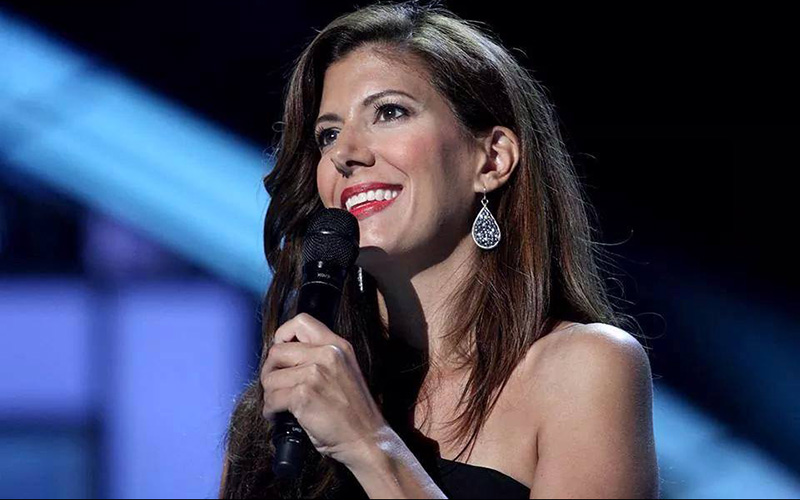
With WEC18 around the corner, perhaps it’s time we get acquainted. For those thousands of event professionals attending MPI’s World Education Conference (WEC18) June 2–5 at Indiana Convention Center, you know how to spend your free time in Indy. Now take a sneak peek at the keynote speakers and industry stars leading your conference sessions and pep rallies. Spoiler alert: a former Disney executive, world traveler and beauty-pageant-star-turned-comedian await you.

How Less Can be More for Meeting Schedules

A jam-packed schedule can be counter productive

In today’s busy world, meeting planners have a unique opportunity to develop programs and experiences that will not only encourage connections and growth, but also provide attendees with some well-deserved rest and relaxation.

For ultimate relaxation, check out these four extreme spas.

I have worked with groups that plan every second of every day jam-packed with programming and have noticed that this only seems to create a burned-out vibe among attendees. Some of the most successful and memorable events I’ve seen have had relaxed schedules where attendees have plenty of down time to enjoy the destination, while truly allowing them to absorb the information they learned.

Frequent Breaks Encourage Interactions

When people are away from their everyday routines, they want the flexibility to do what matters most to help them connect. For some, that may mean the freedom to enjoy unique activities and for others a relaxed schedule allows them to interact with key colleagues and customers. It is important for meeting planners to keep in mind that although they may plan networking or team building activities to help attendees bond, sometimes the most important connections are formed organically and made outside of the boardrooms and ballrooms.

As we all know, a lot of important ground is covered during a conference—from company updates to information and training sessions—and this can sometimes lead to information overload. Allowing downtime and freedom to enjoy the destination doesn’t take away from the learning experience. It only makes attendees more enthusiastic to return to the program and focus on the information presented.

It’s also important to remember that attendees have busy lives outside of the meeting. I always recommend that planners allow enough time for phone calls, email checks, and even wardrobe changes between events. Again, a little free time between sessions and events will also allow attendees to gather their thoughts and truly absorb what they have learned so far.

Take Advantage of Your Destination

Meeting planners spend a lot of time selecting the perfect venue for their function, so it would be a shame to not give attendees ample amount of time to experience the destination. One way to provide some down time and flexibility is to arrange a free afternoon with a variety of fun, optional activities. For example, we have a plethora of activities for groups ranging from rafting the Colorado River to horseback riding. We’ve seen groups take a free afternoon where attendees can take part in golf, archery, trapshooting or zip-lining. This gives attendees the freedom to enjoy some time outside while personalizing their experience, and also encouraging team building and networking.

Consider Attendee Feedback

There really is no perfect work/play balance during a meeting. I recommend that planners start with a free afternoon and frequent breaks throughout the duration of the meeting. Feedback is very important. Ask your attendees if they feel they’ve had enough or too much downtime. This will provide valuable information when arranging the next meeting or conference.

Erin Cook is the Director of Sales and Marketing at Hyatt Regency Lost Pines Resort & Spa. She has nearly 10 years of experience working in the hospitality and meeting industries.

Wyndham Stay Well roomIn a major move reflecting the meetings industry’s ever-increasing interest in health and wellness, the Wyndham Hotels and Resorts brand announced on Thursday that it will be offering Stay Well rooms in all of its U.S. hotels by 2019.

Stay Well Rooms were created and developed by Delos, which since 2007 has focused on designing homes, offices, schools and other indoor environments that nurture and promote health and well-being. Dr. Deepak Chopra, founder of The Chopra Foundation and a Delos advisory board member, emphasized the importance of Wyndham’s new venture in a press release.

Travel is stressful on the mind and body, making the hotel room—the space we spend most time in during our travels—a critical environment for our well-being,” he said. “By making wellness a priority in the makeup of every Wyndham hotel, the Stay Well experience is fundamentally changing the way we travel—for the better.”

The program will be implemented at the Wyndham Hotel and Resorts brand’s 114 properties, but not at the 19 other Wyndham Hotel Group brands. Initially, each hotel will have five to 10 Stay Well rooms, depending on the layout.

“But if there is a lot of interest, we could expand the number of rooms,” said Gabriella Chiera, senior manager of public relations for Wyndham Hotel Group, adding that preliminary feedback suggests that the rooms will be very popular.

Wyndham’s Stay Well program was piloted at six properties, including Wyndham Hamilton Park Hotel & Conference Center in Florham Park, New Jersey, located near Wyndham Worldwide’s headquarters. Wyndham properties will offer these features:

  • Air purification, which circulates filtered air in guest rooms to reduce pollen, odors, allergens, toxins and other pollutants from the air.
  • Aromatherapy, an optional feature that uses a mood-enhancing scent to improve ambience and mood while promoting relaxation.
  • Circadian lighting, which creates a personalized room-light environment that emulates the color of natural outdoor light to enhance sleep quality, energy levels and productivity.
  • Dawn simulator, an alarm clock that simulates a sunrise, allowing for a more natural waking process by using gradually increasing light.
  • Stay Well mattress, a foam mattress derived from organic cotton, pure hevea milk and essential oils.
  • Guided Meditation by Deepak Chopra, including a welcome message that lends wisdom and insight to the features of the Stay Well experience.

Wyndham Stay Well room

Delos’ Stay Well program resulted from a collaboration with doctors, scientists, architects, designers and thought leaders to identify, develop and integrate wellness features. The company first partnered with MGM Grand Hotel & Casino in Las Vegas in 2012 to transform 42 hotel rooms into Stay Well Rooms, which contain features designed to enhance the quality of air, light and water and to promote better sleep, comfort, mental acuity, nutrition and overall health. MGM Grand now offers more than 300 Stay Well rooms and added Stay Well Meetings spaces, based on the same principles. MGM also offers the Stay Well program at Mirage Las Vegas and the new Park MGM Las Vegas.

The Wyndham brand is researching Stay Well Meetings spaces, and might also implement them in its hotels, Chiera said.

Wyndham’s Stay Well program is part of a complete redesign of the brand’s interior, including guest rooms, by renowned designer Jeffrey Beers International (JBI).

“At JBI, we always think first about the guest experience: how people feel when they enter a space,” said founder and CEO Jeffrey Beers, in the press release. “We’ve designed with this in mind—how the room balances between clean, modern lines and soft curves. This balance creates a feeling of tranquility and invites you to breathe a sigh of relief when you close the door behind you.”