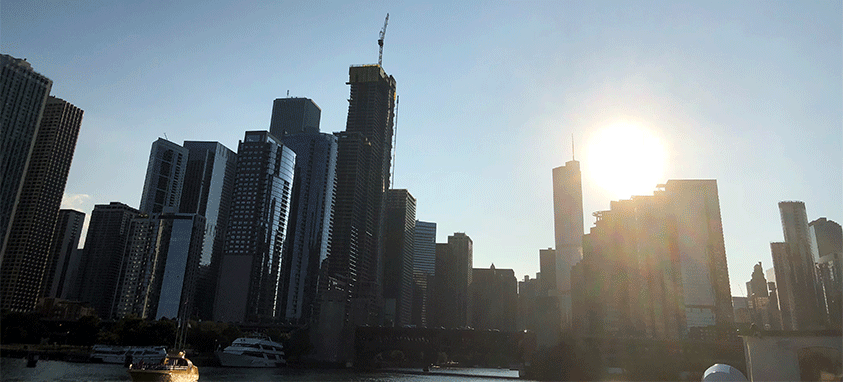
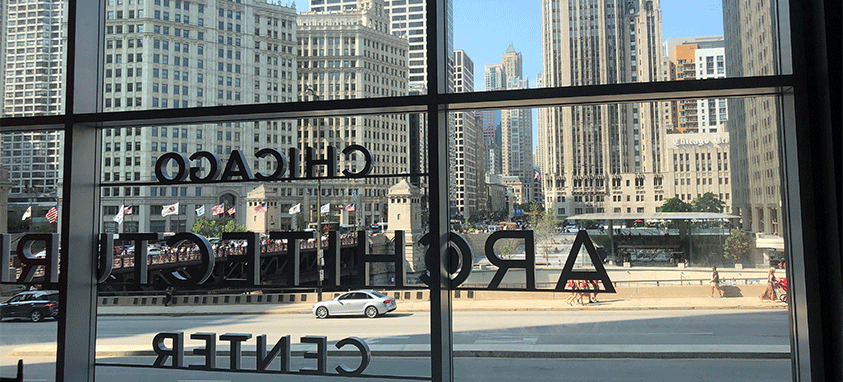
Prospects for a memorable meeting in Chicago are looking up as the birthplace of the skyscraper now has even more ways to engage attendees—including a brand-new Chicago Architecture Center (CAC), opening August 31, to celebrate the Windy City’s role in developing soaring skylines.
With 8,000 sq. ft. of interactive displays celebrating the heights of architectural transformation, plus lecture and hands-on work space steps from the Chicago River with views of the structures celebrated inside, a meeting in the non-profit’s new location is sure to inspire. After all, four of the 10 tallest buildings in the United States are in Chicago. What started as a bold statement of resiliency in the wake of the Chicago Fire with the completion of The Home Insurance Building in 1885 is lividly on display during daily Chicago Architecture Foundation River Cruises. Groups can buy out one or more of the vessels for catered journeys through the past and present of the city.
Competitive Team Building
Another newcomer to the group space is Flight Club. This high-tech, high-end spin on the popular pub game makes darts approachable for groups with automatic scoring, craft cocktails and finger food to die for. For fans of table tennis with a glow-in-the-dark spin, the same owners offer digital courts paired with bottomless mimosas in a fun atmosphere at Flight Club’s downstairs neighbor, AceBounce Ping Pong Bar and Restaurant.
Welcome the View
For an opening night party that give attendees a better perspective on all the city has to offer, a number of properties rise to the occasion.
Usher guests passed the velvet ropes of those queuing for access to LondonHouse Chicago’s terrace with views down Chicago River by buying out part or all of the tri-level favorite for cityscape selfies. A couple of blocks down Wabash Avenue, Virgin Hotel’s Cerise Rooftop Bar caps 26 floors of attitude with a DJ-soaked vibe perfect for a closing reception.
At an elevation of 27 floors, ROOF on theWit puts your event under an open-air greenhouse that will wow all comers. Across the street at Renaissance Chicago Downtown Hotel, the third-floor terrace boasts a cozy modern porch feel with table-size cabanas lining the Raised An Urban Rooftop Bar space.
Chicago is a diverse, multi-layered city. You can see the complexity in its neighborhoods, its mix of blue, white and open-collar businesses—and its pizza. One way to experience all of these nuances is to take a walking tour of pizza joints designed by professional foodie Steve Dolinsky, author of the soon-to-be released Pizza City, USA: 101 Reasons Why Chicago Is America’s Greatest Pizza Town.
On the three-hour West Loop Pizza Walk alone, participants try four completely different styles of pizza while getting a closer look at a neighborhood quickly transforming from industrial brick to celebrity-chef-driven residential and tech haven. At the same time, they could learn something about themselves and their fellow walkers as they sample, amble and compare notes about the best way to consume the meal: knife and fork or three-finger fold?
Before you go, you might want to brush up on some of the most common Chicago pizza styles. Spoiler alert: Chicago is a thin-crust town according to Dolinsky. The most popular crust orientation is tavern-style, thin, square-cut as opposed to round, deep-dish. For more surprises, descriptions and destinations, see below.
Deep Dish
Legend has it that deep-dish, stuffed pizza was invented at Chicago’s Pizzeria Uno in the 1950s. Today, it is baked in a metal cake pan with a crust often including corn meal and/or butter. At the 52 Lou Malnati’s Pizzeria locations in town, layers of tomato sauce, mozzarella cheese and sausage cover the pie for the perfect Optimal Bite Ratio (OBR), as Dolinsky describes it.
Tavern-Style
Another pie with old Chicago roots is a crispy, cracker-thin pizza said to have originated on the south-side when pubs started serving squares of it to workers to keep them drinking. At Pat’s Pizzeria & Ristorante, which is run by generations of men named Nick, you can create your own version of this classic.
Neapolitan
When you are hankering for a traditional Neapolitan pie, the magic is in the details. The crust recipe handed down over a hundred years is a precise mix of flour, yeast, salt and water exposed to burning temperatures to form a spotted ring of bread delivery for the finest toppings. Neapolitan-certified Forno Rosso Pizzeria Napoletana delivers with signature disks baked for 90 seconds in a domed, wood-burning oven imported from Italy. Specially-trained chefs sear the delicacy at heats of up to 900 degrees. And while the classic margherita, which proudly flies the colors of its Italian heritage (red tomato sauce, white mozzarella and green basil), is always a favorite, feel free to get creative with tartufo (a white pizza with a black truffle paste base) or carbonara with fried egg and pancetta.
Roman
With Roman-style pizza, where olive oil, yeast and even sugar are added to the dough to give it a crunch, almost anything goes. In fact, at Bonci, which employs the pizza al taglio (pizza for cutting or pizza by the slice) method, the colorful, half-baked rectangles are displayed behind glass, resembling a gelato case with their bright colors and creative flavors. Guests can choose from meatball, zucchini-lemon-ricotta, squid or a dozen other varieties and then bakers cut off as much as they want with scissors and crisp it in the wall of ovens before serving it hot and fresh minutes later.
Sicilian
Pizza built on a thicker, rectangular crust in the Old World came to be known in the United States for its island roots in Sicily. At Nonna’s Pizza and Sandwiches, which is tucked behind the upscale Formento’s restaurant, the focaccia-like crust is made in a coal-burning oven and topped with a slightly spicy sauce perfect for topping with pepperoni or artichoke and black olives—and served by the slice.
Since the Supreme Court legalized sports betting at the national level this year, gaming properties have made millions and are positioned to capitalize on the coming football season while diversifying their appeal for large groups of visitors. The May decision to overturn 1992’s Professional and Amateur Sports Protection Act could put a dent in the $150 billion off-the-book betting industry while opening the door for fans at all levels to be more involved in their favorite sports.
“This is a dry constitutional issue about states’ rights, but it will likely change how we have viewed sports for the past 100 years,” Gabriel Feldman, director of the sports law program at Tulane Law School, told TheNew York Times. “It’s called the gambilization of sports. Fans will become much more focused on gambling than following a team. It will make every second of every game of every week interesting to fans as it will give everyone something to root for.”
Kicking Off Gaming Season
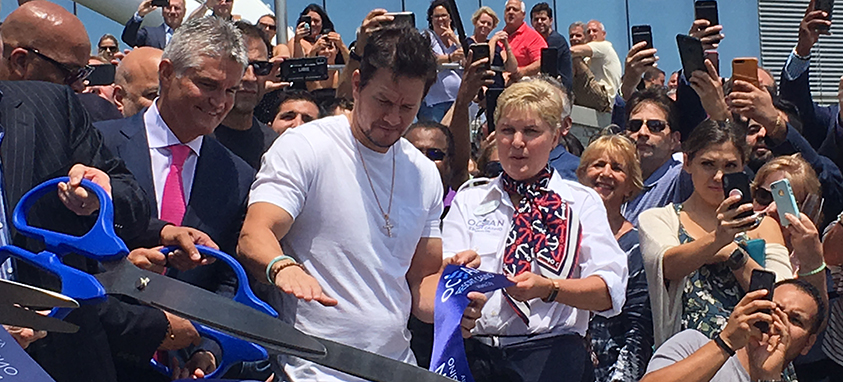
Since restrictions are now set by individual states, some properties and fans are more excited than others. Immediately after cutting the ribbon to mark the opening of Ocean Resort Casino on June 28 in Atlantic City, actor Mark Wahlberg went inside to place the first sports bet. According to The Press of Atlantic City, the first sports bet placed at Golden Nugget and Resorts Casino Hotel was on the New York Giants to take home their fifth Super Bowl title with 40-to-1 odds. Although the team represents the Empire State, they actually play in the Garden State in East Rutherford, New Jersey.
The State of New Jersey’s Division of Gaming Enforcement calculated that since sports betting started there June 14, sports wagering revenue has totaled $7.3 million. This new source of income can support renovations and expansions, which will directly impact the capacity to hold meetings and impress attendees.
Casinos in Atlantic City and Mississippi, are jumping on the bandwagon ahead of the National Football League’s regular season kick-off on September 6. Last week, Resorts Casino Hotel and Golden Nugget became the fifth and sixth Atlantic City Casinos to offer sports gaming. Resorts partnered with DraftKings to become the first to offer online sports betting in the state.
“The opening of our new sports book will set a precedent for sports betting in Atlantic City, offering an elevated gaming experience for our loyal guests,” says Mark Giannantonio, president and CEO of Resorts Casino Hotel.
Actor Mark Wahlberg marks the opening on Ocean Resort Casino on June 28 in Atlantic City.
Betting on a New Demographic
The addition of a new gaming experience could also diversify the appeal of many properties. “The sports betting customer is not your typical core gaming customer that Atlantic City has been used to,” Kevin Ortzman, president of Caesars’ three Atlantic City properties, told Associated Press. “Offering this as another wagering opportunity opens up a whole new chance to integrate this with our food and beverage, gaming and entertainment offerings.”
Caesars Entertainment introduced a sports book at Bally’s, Wild Wild West on July 30 and Harrah’s Atlantic City on August 1. Their mobile betting app is also now available in Jersey. The company opened sports betting at Horseshow Tunica this week in Mississippi, and expect Harrah’s Gulf Coast to follow suit sometime this month.
“The recent Supreme Court ruling allows us to expand our sports betting digital and mobile offerings into new markets,” says Mark Frissora, president at CEO of Caesars Entertainment. “We recognize that our customers expect exciting new experiences.”
A Winding Road to the Betting Window
At a June press conference during the grand opening of Hard Rock Hotel & Casino Atlantic City, Jim Allen, chairman and CEO of Hard Rock International, told media that the brand had some hurdles to overcome before being greenlit for sports gaming. Seminole Tribe of Florida owns the entertainment company and Hard Rock’s name appears on the stadium where the Miami Dolphins and Miami Hurricanes play, causing them to seek special clearance from the National Football League to offer sports betting. However, on August 17, Hard Rock AC entered an online sports gaming partnership with Kindred Group.
“Through smart, efficient regulation, this new market will protect consumers, preserve the integrity of the games we love, empower law enforcement to fight illegal gambling, and generate new revenue for states, sporting bodies, broadcasters and many others,” American Gaming Association (AGA) president and CEO Geoff Freeman said in a statement following the Supreme Court decision.
MGM Resorts International is also making news on the sports gaming front. On July 31, they announced a groundbreaking partnership with the National Basketball League (NBA) to become the official gaming partner of the NBA and WNBA. This is a first for both entities. Last year, MGM purchased Las Vegas’ first professional basketball team, the WNBA’s Las Vegas Aces, who now play home games at Mandalay Bay Events Center. MGM has also been the title partner of NBA’s Summer League for the last two years.
“As the landscape for sports betting in the U.S. continues to evolve at a rapid pace, MGM Resorts is a proven gaming leader for us to work with on this groundbreaking partnership,” says NBA commissioner Adam Silver. “Our collaboration will result in the best possible gaming and entertainment experience for consumers through the use of accurate, real-time NBA and WNBA data, and our collective efforts to maintain and enhance the integrity of our games.”
This new legislation has paved a fresh path for spectators to get invested in the game from the sidelines. Authorities encourage participants to gamble responsibly, and remind them that the National Problem Gambling Helpline Network is available via call or text 24/7 at 1-800-522-4700.
Stress is something we all experience at some point. It comes with having a job that demands attention and requires focusing on the tiniest of details. It’s easy to get lost in your own head and view the big picture as an enormous picture. Some people brag about their stress—they talk about what they have to accomplish, how little sleep they’re getting and so on.
But the side effects of stress can cause plenty of health problems, both physical and mental. Sleepless nights can lead to fatigue and burnout, as well as mood changes. Headaches, muscle tension and pain come along with racing thoughts. Smaller problems feel impossible to work through. “Being stuck in [a] stress-success cycle does not only keep us unhappy, but is dangerous to our health,” explains Dr. Romie Mushtaq—a Smart Meeting speaker alum—in her article, “Pause: Stop the Stress-Success Cycle.”
So, it goes without saying that finding ways to relax is crucial. “When we pause, we shift our brains to a place of calm and feel back in control of a situation again,” says Dr. Romie in the article. With a busy work schedule, however, it can feel difficult to find time to de-stress. But you don’t need to meditate for an hour to reset your brain. In fact, there are multiple ways to calm yourself in 20 minutes or less. We’ve compiled a list of six ways to refresh.
Take a cat nap. Experts estimate that a 10 to 20-minute nap is the perfect length for an energy boost. If you work from home, find a quiet space to curl up and snooze.
Power-stride around. For those who can’t take a nap, a quick walk around the building can clear your mind. Next time a colleague needs a minute of your time, suggest a walk-and-talk.
Eat a real lunch away from your desk. It’s tempting to sit in front of your desk and answer emails as you munch on a protein bar, but breaks are important. Pack healthy foods and find a spot away from the work hub.
Meditate. Put on soothing music or sounds, close your eyes and think relaxing thoughts. When work creeps into your mind, push it out and focus on your breathing.
Stretch. Roll your head, twist your wrists and crack your back. You can do all of these from the confines of your chair, but standing allows you to work the kinks out of your legs as well, giving a full body stretch.
Massage yourself. Stress leads to muscle tension and soreness. There are plenty of guides online with instructions on how to best massage your aching out.
Jacksonville Convention Center
Proposals have been approved and dreams have been shattered on the convention center circuit. Some cities have celebrated ground breakings, topping outs and ribbon cuttings. Others are going to have to wait a bit longer for the shovel to turn the soil as expansion projects are put on the backburner. Let’s take a look at some of the major convention center news in the United States, Europe and Down Under.
In March, the Standing Committee on Economic Development and Tourism pumped the brakes on a new convention center that was proposed to be built in Australia’s capital city. Australia Forum was first pitched in 2015. It was to consist of multiple exhibition halls, a 24,000-square-foot ballroom, 18 meeting rooms and Centre for Dialogue, which would accommodate meetings in the round.
Committee chair Jeremy Hanson deemed the project too costly “in its proposed form” and encouraged the government to hold on to this land for potential future development. He acknowledged that the city’s existing National Convention Centre is not large enough to sufficiently host many major events. It was built in 1989 and offers just over 88,200 sq. ft. of meeting space.
Melbourne
Melbourne Convention and Exhibition Centre’s (MCEC) $205 million expansion opened its doors on July 8. After adding 215,278 sq. ft., the convention center grew by 25 percent. It now measures 753,473 sq. ft., making it the largest in Australia. The new space includes the 96,875-square-foot Goldfields Theatre that has 1,000 retractable seats. New exhibition halls, meeting rooms, an outdoor terrace, banquet space and cafe and bar were also added. The expansion is expected to attract 74,000 additional international visitors annually. It’s part of a larger project to develop the area that also includes the construction of 347-room Novotel Melbourne South Wharf.
California
Los Angeles
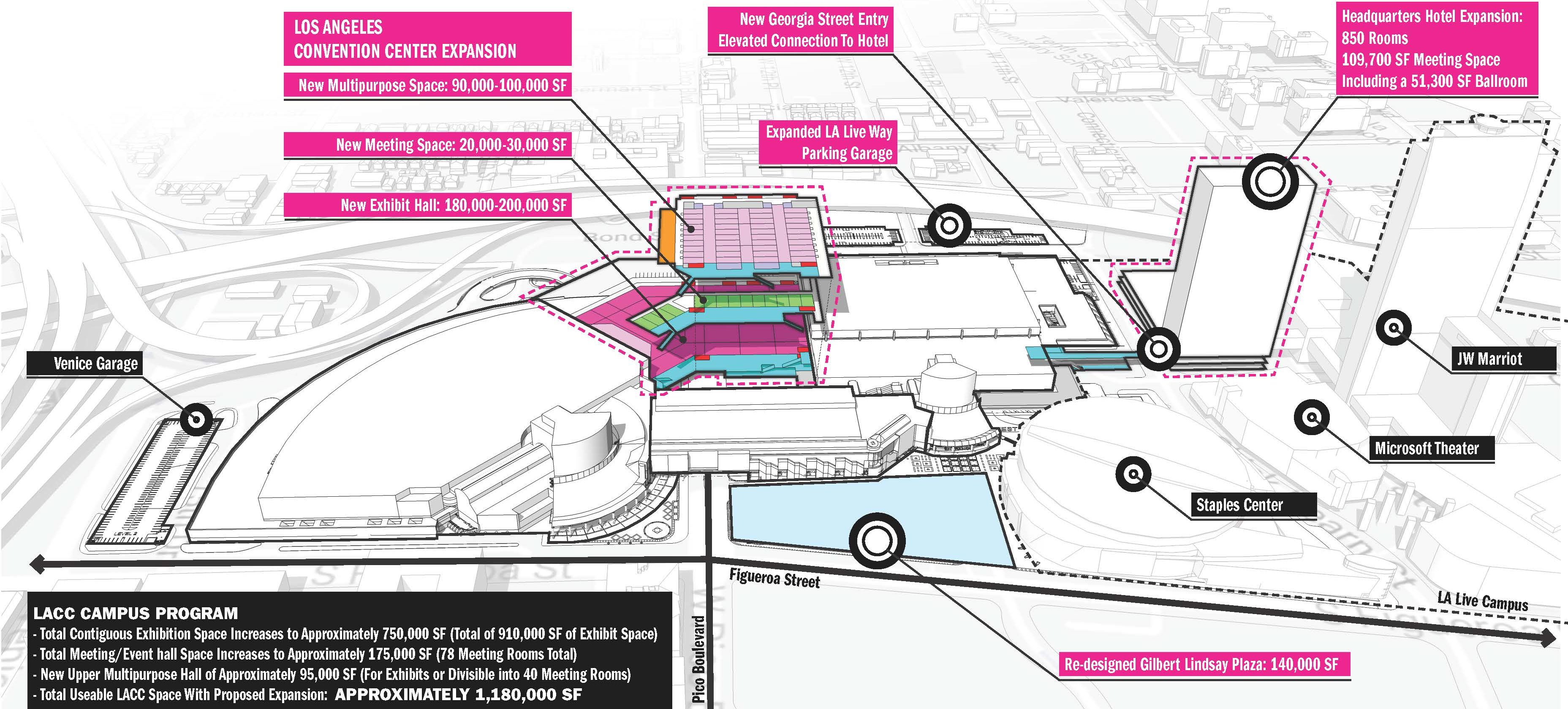
Anschutz Entertainment Group (AEG) proposed a $1.2 billion expansion of Los Angeles Convention Center and JW Marriott Los Angeles L.A. Live in May, according to Los Angeles Times. The proposal consists of spending $500 million to add 350,000 sq. ft., bringing it to more than 1.2 million sq. ft. of space. The 140,000 square-foot Gilbert Lindsay Plaza would be transformed into a beautifully landscaped garden for outdoor exhibitions and receptions. It’s currently utilized for bus and car drop-offs. LA Convention Center was last expanded in 1997 and is currently 867,000 sq. ft.
An additional $700 million would go towards constructing a new 40-story hotel tower with 850 rooms at JW Marriott. A 51,000-square-foot ballroom, which AEG claims would be the largest in the city, is part of the hotel’s floorplan. The hotel would be connected to the existing hotel and West Hall of the convention center by pedestrian bridges. If approved, Mayor Eric Garcetti would like the projects to be complete by 2022. Remember, Los Angeles is hosting the Summer Olympic Games in 2028.
Sacramento
In June, The Sacramento Bee shared renderings of an initiative to spend between $220 and $240 million on a proposed expansion of Sacramento Convention Center. Plans include demolishing the western half of the convention center that was built in 1974. It’d be replaced by a new 40,000 square-foot ballroom and additional exhibition space. The 1996 eastern side would get renovated and outfitted with new meeting rooms and a lobby. Community Center Theater and Memorial Auditorium would also undergo renovations, bringing the estimated total of all three projects to $340 million. Convention Center construction is expected to begin in December or January. It could close next summer, reopen by late 2020 and be completed in March 2021.
San Diego
This month, news broke that funding to expand San Diego Convention Center will not be on November’s ballot. Convention Center CEO Clifford Rippetoe took the defeat in stride, saying in a statement, “Today’s outcome is not a ‘No,’ it’s just ‘Not Now.’” The waterfront property is best-known as the host of San Diego Comic-Con International each July. A $216 million expansion was completed in September 2001, almost doubling its size to 2.6 million sq. ft.
San Francisco
Moscone Center
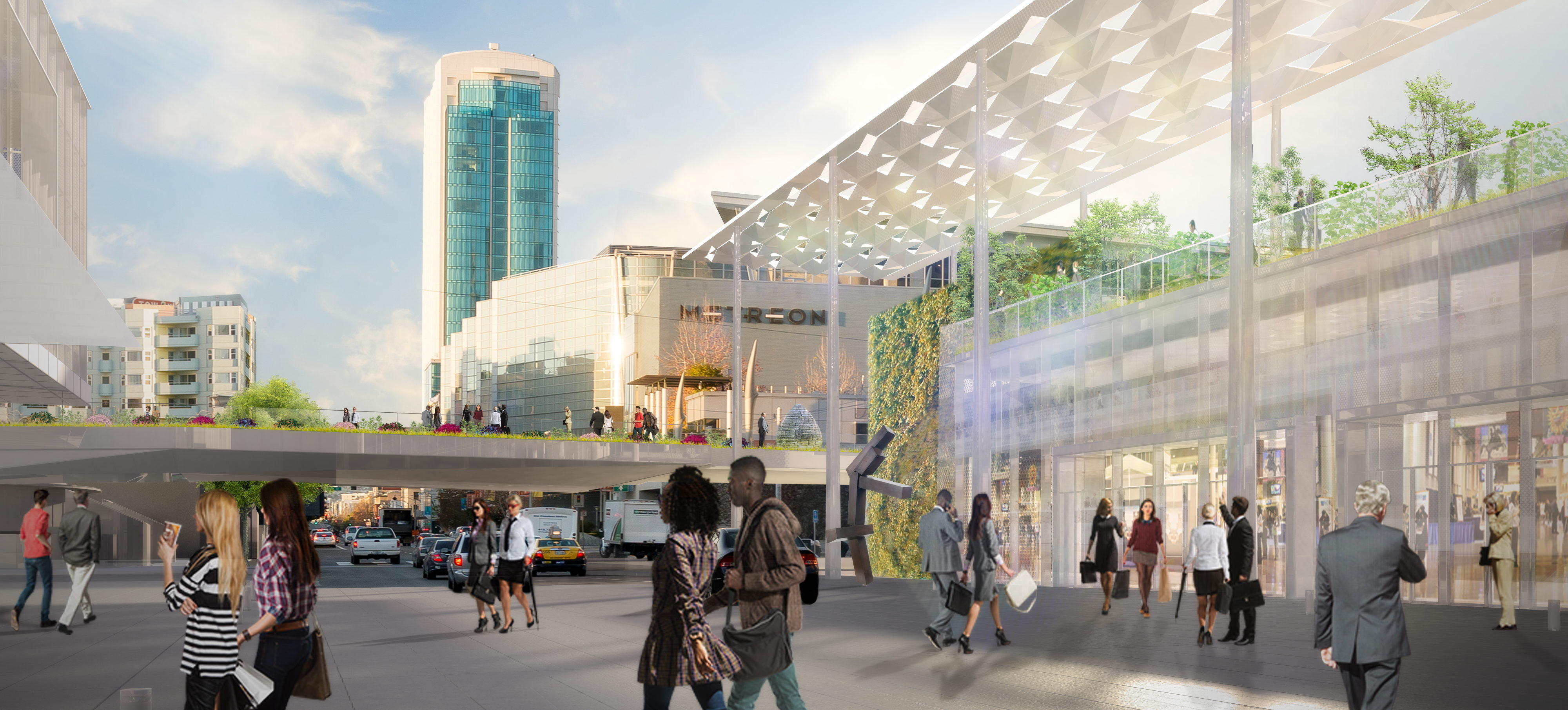
The $551 million Moscone Center expansion is nearing completion. The facility celebrated its milestone topping out on March 12 when the last beam was raised. It is on budget and on schedule for a January 3, 2019 ribbon cutting. The project includes expanding the convention space by 21 percent, adding more than 305,000 sq. ft. of function space. There’ll be more than 80 meeting rooms, a 50,000 square-foot ballroom, more than 500,000 sq. ft. of exhibition space and outdoor terraces. Moscone Center plans to achieve LEED Platinum certification and become the most environmentally sustainable convention center in North America. It’ll have an on-site water treatment center and the largest solar panel system in San Francisco.
Florida
Jacksonville
Jacksonville Convention Center
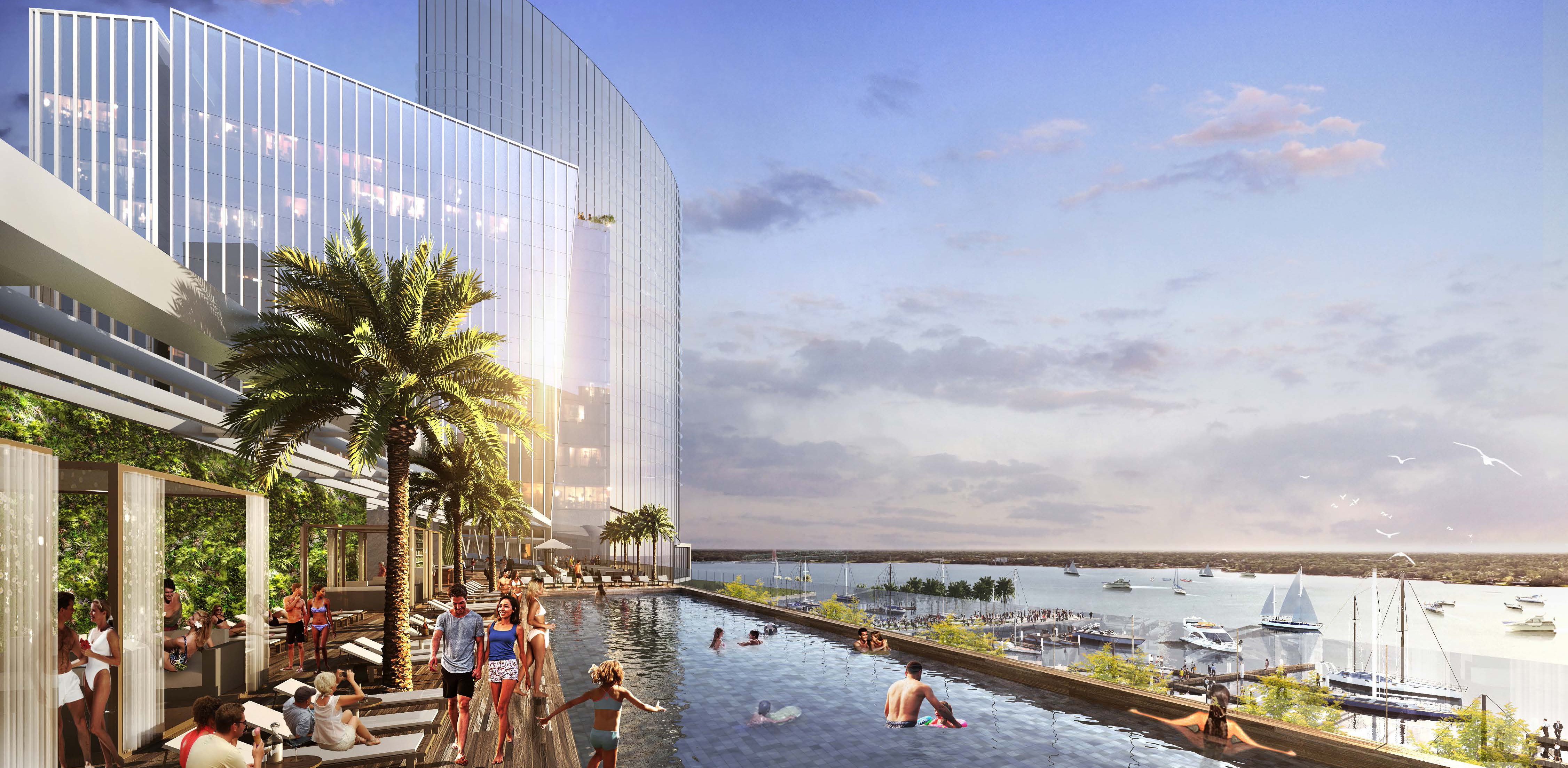
NFL’s Jacksonville Jaguars owner Shad Khan and his company Iguana Investments submitted a proposal to Jacksonville Downtown Investment Authority (DIA) this month to build a 490,000 square-foot convention center and hotel at the 70-acre Shipyards. The convention center would give attendees views of St. Johns River and Riverwalk. It would feature a 200,000-square-foot exhibit hall, 40,000-square-foot ballroom and 45 breakout rooms. The adjoining 350-guestroom hotel would offer additional function space and a rooftop pool. According to Jacksonville Daily Record, other developers have also submitted proposals to build a convention center in other parts of the city, at the site of the former Duval County Courthouse and City Hall Annex.
Miami
Miami Beach Convention Center
The finishing touches are being put on the $620 million Miami Beach Convention Center renovation and expansion that has been ongoing since late 2015. Built in 1957, the facility has grown exponentially from its original 108,000 sq. ft. The expansion will bring it to 1.4 million sq. ft. New features include a 60,000 square-foot ballroom, additional meeting rooms, 20,000 square-foot glass rooftop ballroom to let in the Florida sunshine and advanced technology. A 5.8-acre parking lot will be transformed into a lush park dedicated to veterans. Carl Fisher Clubhouse, the oldest public building in Miami Beach, will also be restored. In accordance with Miami Beach’s Art in Public Places, the convention center will display $7-million worth of art. The building is expected to be complete in September, with the park following next June.
Germany
Congress Center Hamburg
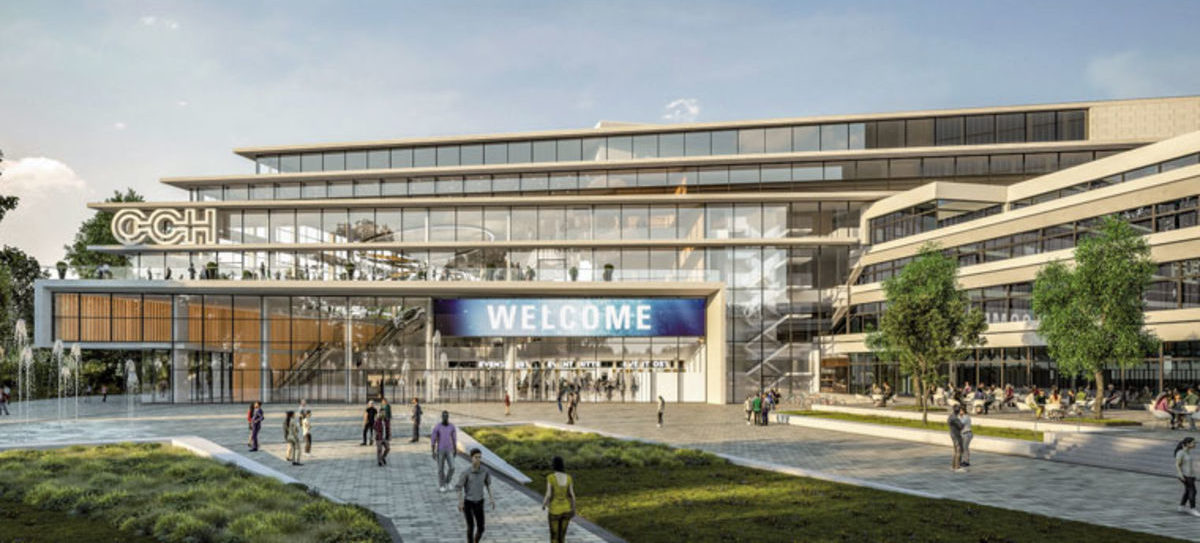
Congress Center Hamburg (CCH) has been undergoing extensive renovations since last year. When it re-opens in 2020, it’ll have more than 258,000 sq. ft. of function space, 12,000 seats and about 50 meeting rooms.
Indiana
The pause button has been pressed on the planned $72 million expansion of Monroe Convention Center in Bloomington, Indiana, according to Indiana Public Media News. The project has been delayed this month due to a dispute between the county and city. The project includes a proposed addition of more than 70,000 sq. ft. of convention space and a hotel. Monroe Convention Center currently houses 24,000 sq. ft. of event space and a permanent art collection.
Kentucky
Lexington
Lexington Convention Center
Expansion of Lexington Convention Center has been a long time coming. The $241 million project was first proposed in 2011, designed in 2014, approved in December 2016 and finally broke ground July 19. It is expected to cut the ribbon in November, 2021. In the meantime, conferences can continue to take place in Rupp Arena and most of the existing convention center. The expansion will include 100,800 sq. ft. of exhibition halls, a 25,185 square-foot ballroom, 30,270 sq. ft. of meeting space and 110,234 sq. ft. of pre-function space.
Louisville
Kentucky International Convention Center
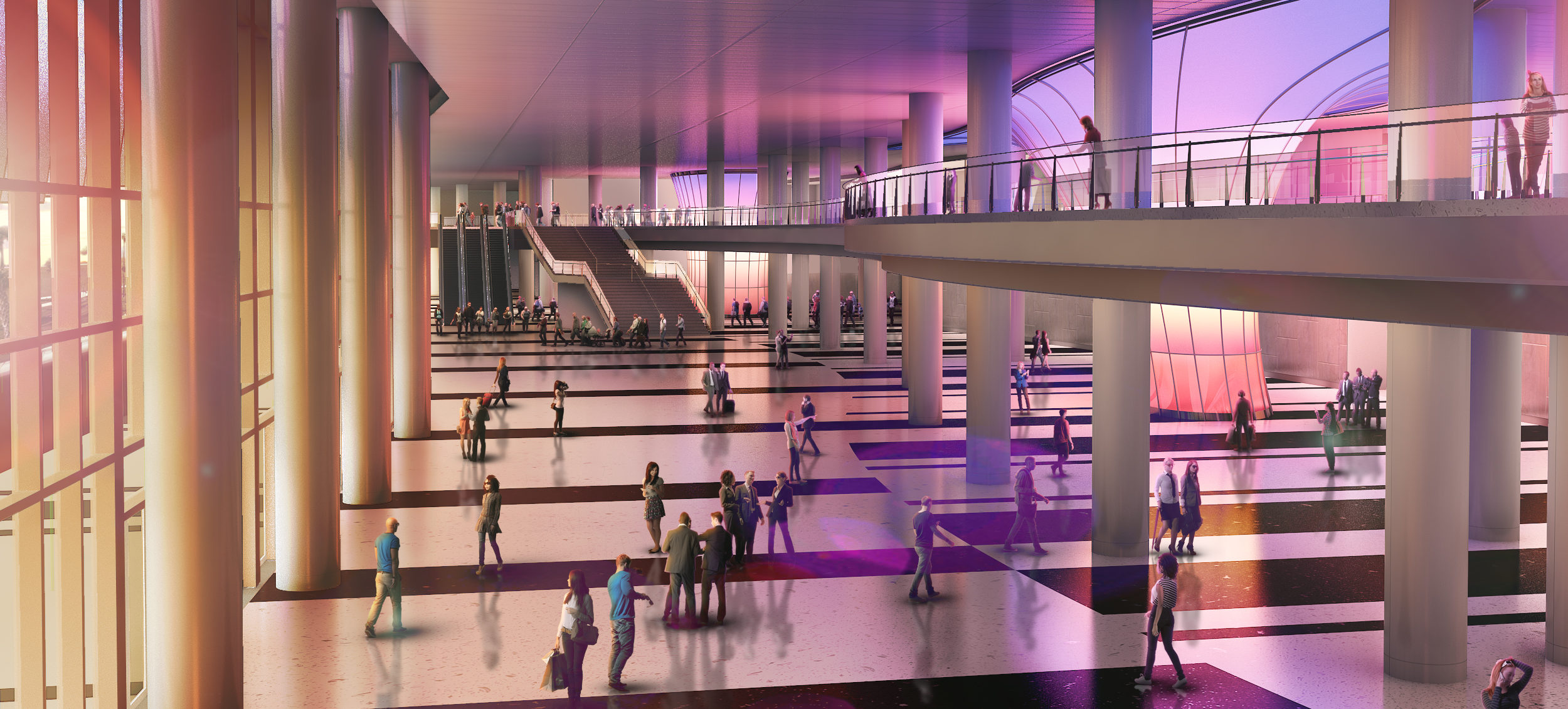
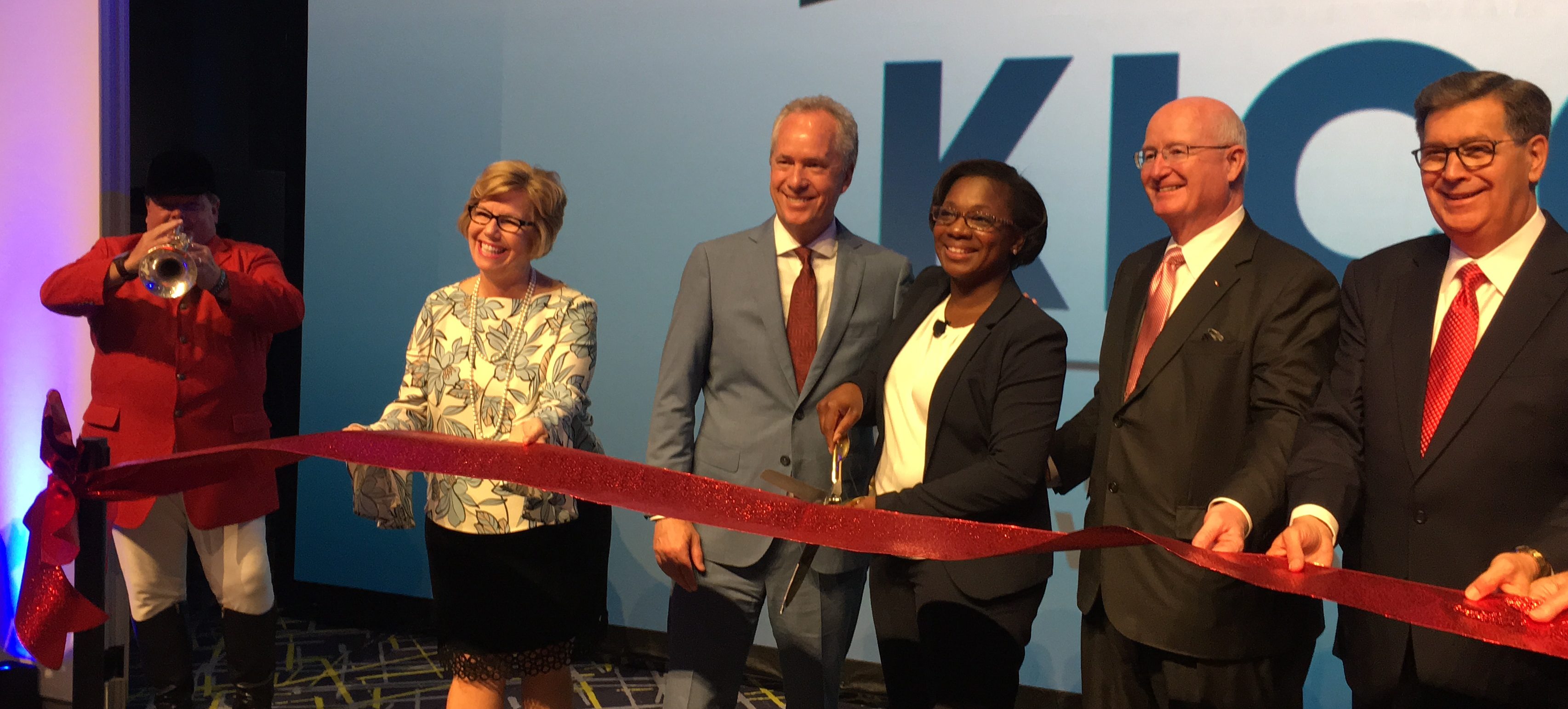
Kentucky International Convention Center (KICC) re-opened this month following a two-year construction period that forced it to temporarily cease operations. The new $207 million, three-story facility houses 200,125 sq. ft. of event space, including a 40,000 square-foot pillarless ballroom, exhibit hall, 52 meeting rooms and a 175-seat tiered theater.
Nevada
Las Vegas
Las Vegas Convention Center
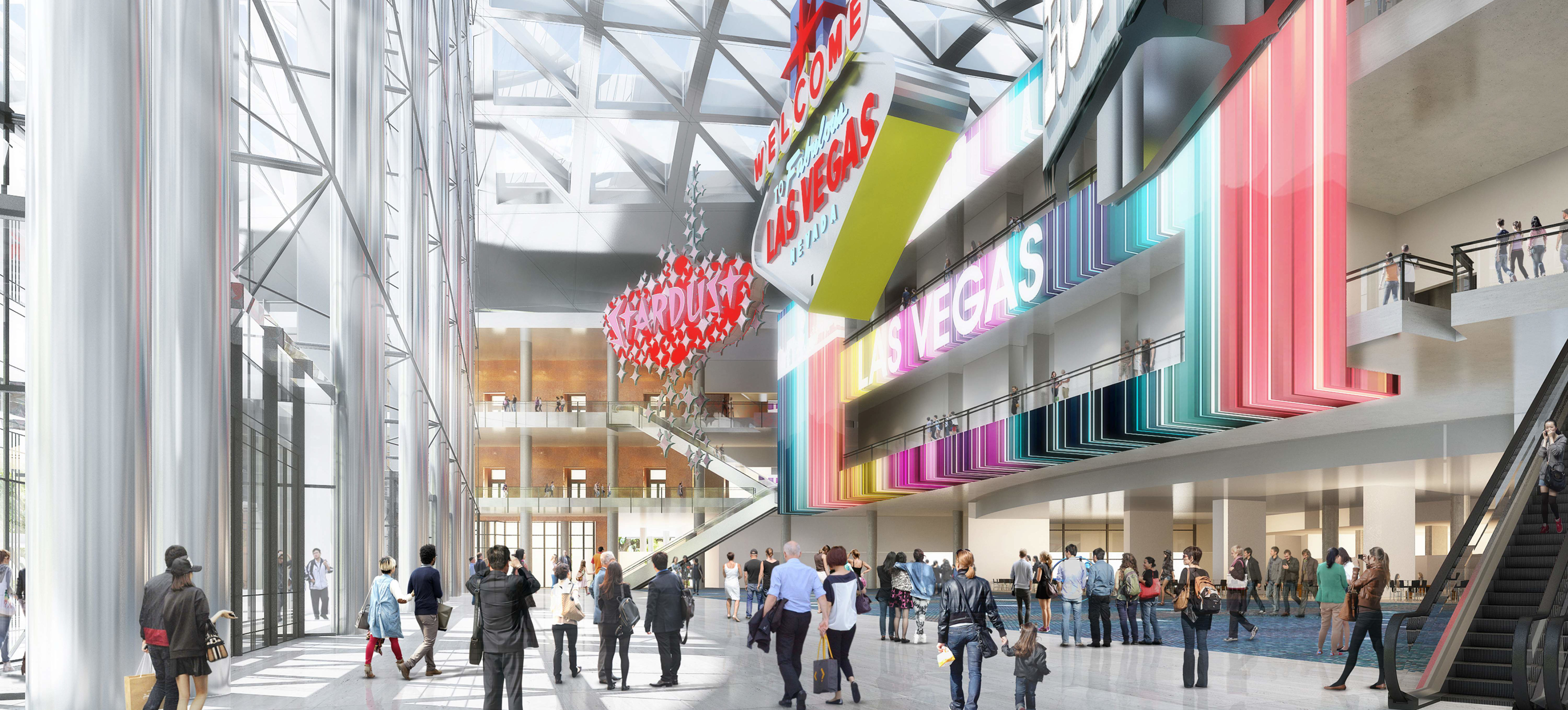
With nearly 150,000 hotel rooms and more than 11 million sq. ft. of meeting and exhibition space, Las Vegas hosts approximately 22,000 meetings, conventions and trade shows annually. These high numbers continue to increase demand for even more space, which is why multiple properties are investing in growth.
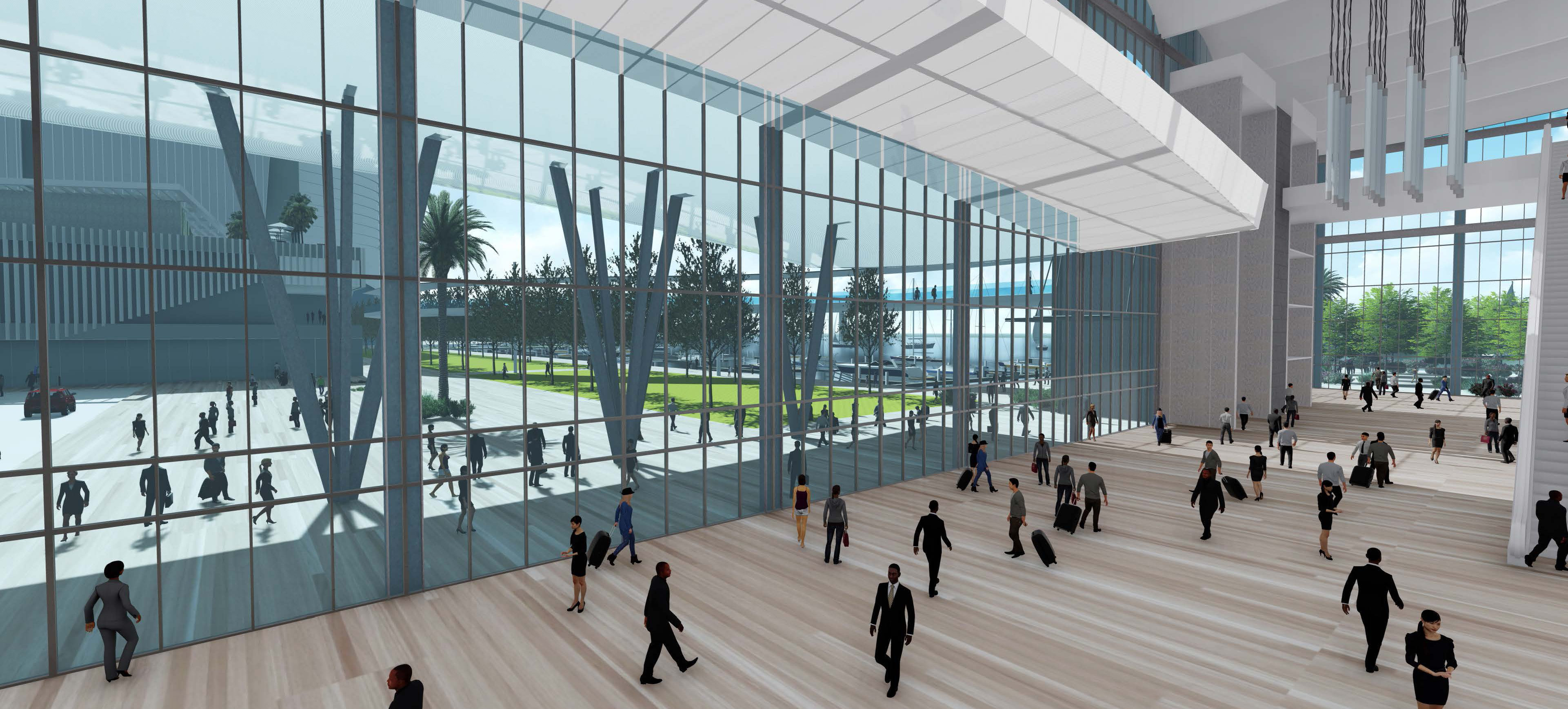
Las Vegas Convention and Visitors Authority (LVCCD) is investing $860 million into expanding Las Vegas Convention Center, adding 1.4 million sq. ft. Expected to be open in time for Consumer Electronics Show (CES) in 2021, at least 600,000 sq. ft. of the expansion will be useable space. The existing 3.2 million-square-foot structure will also undergo a complete renovation in phases that won’t interrupt business in the interim. That’ll be done in 2023.
Caesars Forum
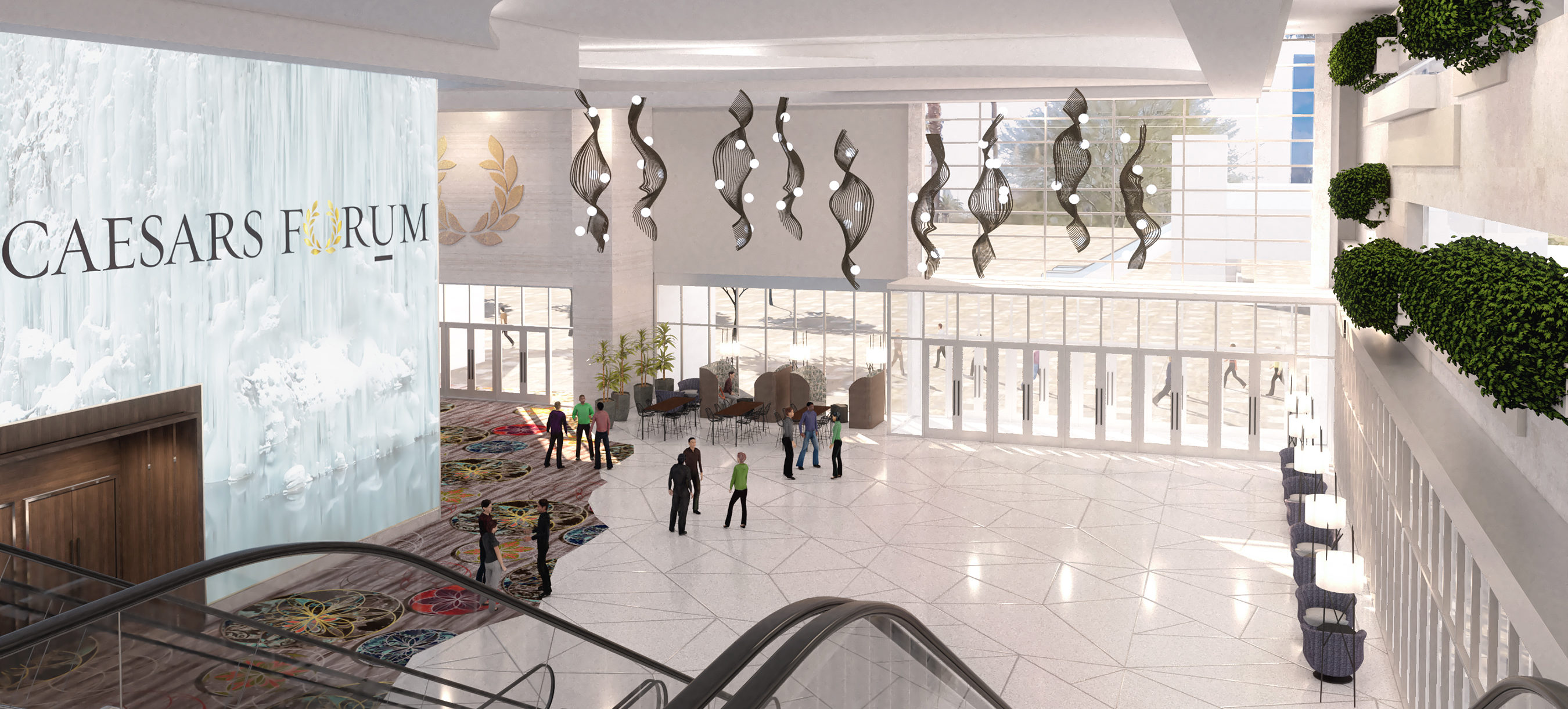
Last month, Caesars Entertainment broke ground on Caesars Forum, a brand-new 550,000 square-foot conference center in the shadows of The LINQ Promenade. The $375 million project will have a total of 300,000 sq. ft. of meeting space. Blueprints include the two largest pillarless ballrooms in the world (each measuring 110,000 sq. ft.), 100,000 square-foot outdoor plaza, two 40,000 square-foot ballrooms, six boardrooms and more than 100 breakout rooms. Bridges will connect Caesars Forum to Harrah’s Las Vegas, The LINQ Hotel and Casino, LINQ Promenade and Flamingo Las Vegas. The building is expected to receive LEED Silver rating and is on par to open in 2020. At the time of the groundbreaking, the conference center had already booked more than $70 million in business, including its first client, American School Counselor Association, who is scheduled to meet there in July 2021.
Reno-Tahoe
Reno-Sparks Convention and Visitors Authority is in the beginning stages of exploring a potential expansion of Reno-Sparks Convention Center by conducting studies, according to Reno Gazette Journal. It was last renovated about 17 years ago for $100 million, bringing it to its current size of 381,000 sq. ft. The facility needs more ballroom and flex space to remain competitive in retaining and gaining business.
“Reno loses an average of 31 events due to hotel size or because of the venue each year,” says Charlies Johnson, president of Johnson Consulting, the Chicago-based firm involved in investigating the issue. “[The equates to] 263 event days and over 90,000 room nights.” They believe having at least 600,000 sq. ft. of meeting space would keep them in the game. Estimates to accomplish this range in price from $164 million to $273 million, which would likely be raised through taxes.
New York
Jacob K. Javits Convention Center
The Jacob K. Javits Convention Center in Manhattan broke ground in March 2017 on a $1.5 billion expansion project to add 1 million sq. ft. by 2021, including a 500,000-square-foot exhibition hall, rooftop terrace, meeting rooms and a 55,000-square-foot ballroom, which will be the largest in the Northeast. As host of nearly 40,000 events annually, the “Marketplace for the World” is the busiest convention center in the United States. Operated by the New York Convention Center Operation Corporation (NYCCOC), it currently offers 102 meeting rooms and 760,000 sq. ft. of exhibition space.
New Zealand
Te Pae Convention Centre
Meeting professionals can now take a virtual tour of the upcoming Te Pae convention center in Christchurch. The name has several meanings in the country’s native Maori tongue, including “gathering place.” Construction is 20-percent complete and the facility is accepting bookings for events beginning late 2020. It will be able to accommodate up to 2,000 attendees. The structure will feature a 1,400-seat auditorium, 200-booth exhibition hall, banquet hall and 24 meeting rooms with riverfront views. Federation of Asian and Oceanian Biochemists and Molecular Biologists (FAOBMB) conference and Scientific Committee on Antarctic Research (SCAR) International Biology Symposium have already committed to holding their events here in 2021.
North Carolina
According to multiple reports, TD Convention Center in Greenville will be getting a new name soon. This is after TD Bank’s naming rights expired on January 31. Be on the lookout for its new identity, but it’ll keep its Southern charm. Planners can find 60,000 sq. ft. of meeting space and 280,000 sq. ft. of exhibit space here.
Washington
Washington State Convention Center
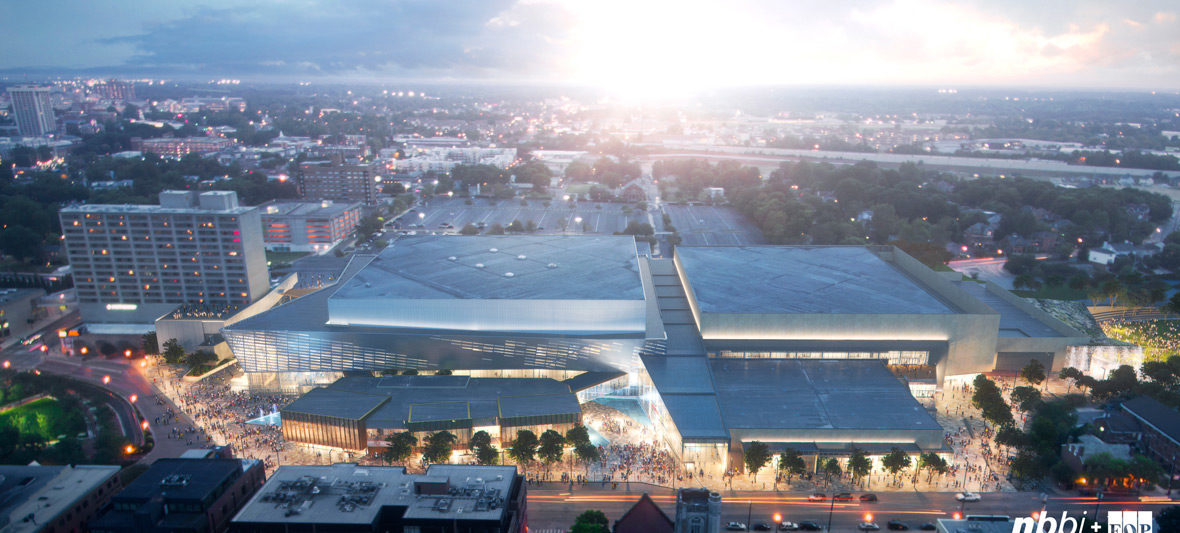
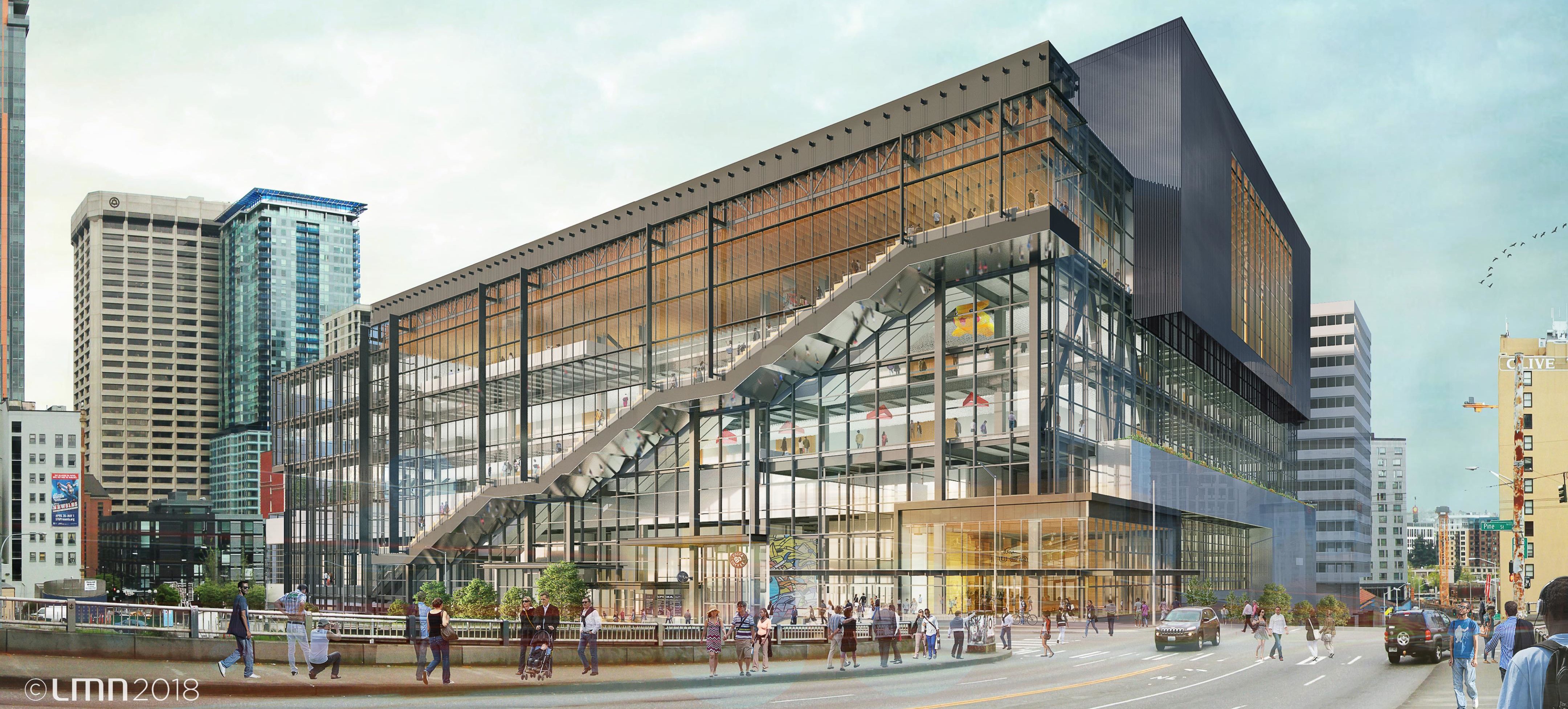
Washington State Convention Center (WSCC) in Seattle broke ground this week on its new Summit building. The $1.7 billion expansion will add more than 250,000 sq. ft. of exhibition space. The existing building has been re-named Arch. When Summit opens in 2022, it’s expected to attract more than 400,000 additional convention attendees annually, generating more than $19 million in tax revenue.
“The WSCC’s Summit building is one of the largest capital projects in downtown Seattle’s history and creates new opportunities to generate more economic impact for the region,” Washington State Convention Center President & CEO Jeff Blosser says. “This additional facility is a game changer for our ability to give meeting planners additional dates and space with the opportunity to book their events in Seattle.”
When you’ve got a couple hundred people confined to a plane or an airport terminal, someone is bound to irk others. You don’t want to be that irritating person who gets dirty stares and becomes the subject of whispers. Online travel agency Agoda recently released findings from a study that surveyed passengers about the most annoying travel habits. It may serve as a cheat sheet for what not to do on your next business or personal trip.
In conjunction with independent research firm YouGov, Agoda collected data from 10,384 respondents from the United States, United Kingdom, Australia, Singapore, Malaysia, Philippines, Indonesia, Vietnam, Thailand and China. Globally, the top five pet peeves are:
noisy travelers (57 percent)
mobile device addicts (47 percent)
cultural insensitivity (46 percent)
large tour groups (36 percent)
selfie-takers (21 percent).
Results varied based on country of origin, but let’s dissect what most annoys Americans.
Screen Time
In comparison to other countries surveyed, Americans spend less time on mobile devices when traveling solo versus traveling with family or friends. This is good news for Americans, since mobile device usage and taking selfies both rank in the top five annoyances worldwide. Forty-eight percent of Americans ranked mobile device usage as an issue, one percentage point higher than the global average.
This serves as a reminder to be present while traveling. Doing so not only enhances the travel experience, but also keeps you safer by being more aware of surroundings. In defense of business travelers, it is difficult to avoid logging on when away from the office. Keeping occupied on smartphones, tablets and laptops also helps pass time during long waits, delays and in the air. Some business travelers also find this undistracted time more focused and productive than being in the office.
Posting on social media has also become a standard part of meeting planner and meeting attendee’s repertoire, to create awareness and buzz about the conference, trade show or FAM trip. Just as with most things, selfies are okay in moderation.
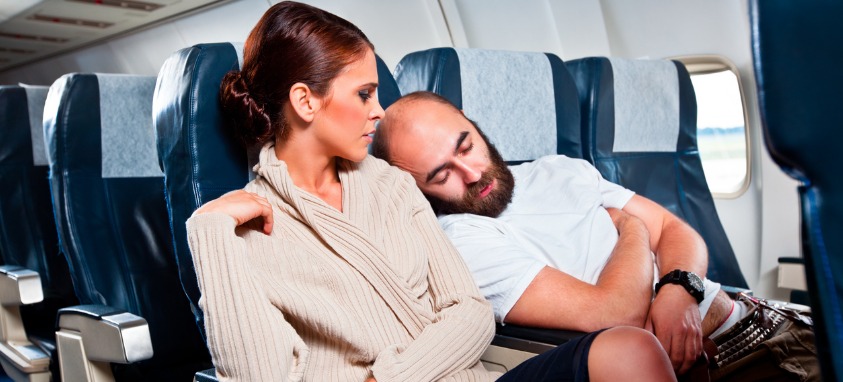
Shhhhh!!! Can I get some quiet, please? Many passengers want to sneak in some zzzz’s, listen to music, watch a movie, comprehend what they’re reading or simply want silence to meditate. According to the report, 53 percent of Americans surveyed cited noisy passengers as annoying. Men were found to be more tolerant than women of excessive noise levels.
Although the study doesn’t share what noises most irritate people, you know the usual suspects—whining and crying babies and children, blasting headphones, elevated conversations, barking dogs, meowing cats, loud chewing and snoring. Observe the golden rule, and do whatever you can to be as silent as possible. If noise is something that bothers you, reach for your earplugs or a noise cancelling headset.
Get Cultured
Meetings take planners and businesspeople to unfamiliar cities, states and countries where the cultural norms may be very different from what is accepted at home. Forty-one percent of the American passengers surveyed stated that cultural nuances are annoying.
Many of these faux paus are likely unintentional and easily avoidable. Planners should supply meeting attendees with a tip sheet of what is culturally acceptable in the destination. This can include how to say “please” and “thank you” in the native language, proper attire, tipping norms and respectful greetings. For instance, some cultures endorse or frown upon kissing, hand holding, handshaking, curtseying or bowing.
Getting On My Nerves
Agoda’s list of five annoying habits is far from comprehensive of all the ways people behave badly at 30,000 feet. Here are Seven “Annoying” Dwarfs of Travel:
Smelly: Airplane seats are close quarters and getting smaller by the day. Fellow passengers will very much appreciate a seatmate who is clean and has fresh breath.
Germy: It’s a passenger’s worst nightmare to be seated next to someone coughing, sneezing, nose-picking or nail-clipping. Keep your germs to yourself and remember to cover your nose or mouth if you do need to cough or sneeze. Always travel with hand sanitizer and anti-bacterial wipes.
Sloppy: If you drop something, do the right thing and pick it up. If you spill something or create a crumby mess, attempt to clean up for yourself. Ask the flight attendant for help, if necessary, rather than ignore your mess.
Slo Pokey: Be as efficient as possible when going through security, boarding and deplaning. Don’t be the sloth everyone behind you is waiting for. That means no blocking the aisle while digging through your purse or backpack to find your earbuds.
Getter-Upper: Some medical conditions do require passengers to stretch their legs to get blood flowing or go to the restroom multiple times mid-flight. If this is you, please avoid the window seat.
Noisy or Nosey: As stated above, noisy passengers are amongst the most annoying. Keep conversations hushed and headset volume at a level only you can hear. Nosey-body passengers can also be annoying. Curiosity gets the best of us sometimes, but avoid being intrusive when eavesdropping or reading over someone’s shoulder.
Space Hogger: Space is limited on planes. Don’t take more than your fair share. Be mindful of the shared armrest with the person beside you and keep in mind that, if you recline, you’re cutting into the already-minimal legroom of the person seated behind you.
Large venues and events tend to generate an unnecessarily large amount of waste in a short period of time. This is not only expensive but also harmful to the environment. Reducing the amount of waste generated at your events can improve your profits by making use of possible tax deductions that you can get for donating items. You can reduce the amount of waste that you generate by reducing, reusing and recycling the waste generated as much as possible.
Do you know the single most effective tool in waste management at events is planning ahead? Planning ahead of time is important in making waste reduction efforts successful and taking steps to limit the waste in the first place will go a long way in reducing your costs, litter and the negative effects of waste on our natural world.
Here are some reduce, reuse, recycle practices you can implement to maximize recycling.
Reduce
You can conserve your energy and resources with these tips:
Use napkins instead of disposable plates for “finger foods”
Try and avoid single servings as much as possible and serve condiments in bulk
Ask the vendors to use reusable containers rather than disposable items
Post big, easy to read signs rather than distributing hundreds of program flyers
Use washable napkins, towels and rags for cleaning rather than disposable towels and napkins
Ask for electronic versions of printed items
Send letters and memos electronically
Reduce or avoid unnecessary packaging altogether by purchasing in bulk or precisely what is required
Reuse
Here are some tips to prolong the usefulness of your products without expending any extra money or energy:
Repurpose and reuse packaging materials and plastic film
Donate floral arrangements and decorations to group homes, shelters, hospitals and schools after your event
Donate items such as containers, cardboard tubes and leftover decorative materials to be reused in school art projects
Use the blank side of your printed documents
Recycle
Here are some tips to reincorporate materials into the manufacturing process, instead of taking them to landfill:
Buy products made of recycled materials and “Close the Loop”
Get in touch with a compostable food service for your food waste reduction
Set up a composting collection program for any food and organic waste generated
Recycle food and beverage containers as much as possible
Flatten your cardboard boxes and recycle them to reduce the amount of dumpster space
Getting started—a simple plan to create a zero-waste event.
Plan ahead
Plan your event out well in advance so that you have time to incorporate environmental considerations. Minimize waste from the very beginning. Try to identify any behaviors that generate waste and develop alternatives to reduce them. Review venue and event services contracts to check whether there are any opportunities for waste reduction.
Food service
Purchase your food in bulk and reduce the amount of single-use items and pre-packaged foods such as cookies, mustard and sugar. Try to use reusable items such as cutlery, which can save money in the long run.
Also, ask event staff for their personal suggestions on waste reduction.
Staff and volunteer education
Educate both your volunteers and staff about the importance of recycling and proper recycling procedures. Make sure everyone knows which materials can be recycled.
Recycling signage and containers
Clearly mark all containers in an easy to read language that informs visitors of recycling procedures. Color-coded recycling bins next to trash cans can also improve recycling percentages.
Outreach
Share waste reduction, prevention and recycling achievements with the public by issuing press releases. You can also post your recycling successes on your event website and make recycling public announcements over a sound system at the event.
May your next event be your most sustainable yet.
Erich Lawson is passionate about the environment and an advocate of effective recycling. He writes on a wide array of topics to inform readers on how modern recycling equipment can be used by industries to reduce monthly wastage bills and increase recycling revenue. You can learn more about environment saving techniques by visiting his blog.
Good news, bad news, breaking news—it’s all here in this week’s air travel update. Here are the “need to know” items: airline employee steals plane, TSA tests new security tech, Virgin Atlantic and Delta cozy up over drinks, and SFO’s busiest day.
Quote of the Week
“It obviously happens very, very rarely. It’s a rogue employee. I think passengers should feel safe.”–aeronautical university dean regarding the Horizon Air theft.
Airline Employee Steals Plane
Are we safe? A Horizon Air ground service agent with no pilot’s license stole, and then fatally crashed, an otherwise unoccupied 76-seat commercial plane at Seattle-Tacoma International Airport (SEA) Friday night, and the question on everyone’s mind is not why or how, but—where do we go from here? One of the most challenging components to control in air travel security is the possibility of an insider threat from employees with aircraft access. The Port of Seattle has increased police patrols at the airport since Friday and is reviewing ways to restrict unauthorized use of airport equipment.
“We expect to have a national level conversation,” said Commission President Courtney Gregoire. “We expect the federal government may have some ideas about regulation. Here at Sea-Tac, we can lead, and that’s why we’re not waiting, and starting those conversations today.”
TSA Tests New Security Tech
Now that’s what we call a hot line. Transportation Security Administration is piloting its new state-of-the-art checkpoint scanners at airports nationwide, allowing passengers who find themselves in select screening lines to leave liquids and electronics in the bag. You’ll still have to take off your shoes. And you won’t have pre-check. But you will have faster screening. The new and improved scanners use the same CT technology found in the medical field to create 3D images of luggage contents that can be viewed, rotated and enhanced—greatly improving the detection of explosives.
Phoenix Sky Harbor International, Boston Logan, JFK and Washington Dulles International are currently the only airports operating the new technology, but TSA plans to have 40 scanners across the country by the end of 2018.
P.S., Remember that proposal to eliminate security screenings at smaller airports? Not happening, says TSA.
Virgin Atlantic and Delta Cozy Up
Spotted: Virgin Atlantic and Delta Air Lines putting their relationship on display in London—over drinks. Since signing off on an expanded trans-Atlantic partnership earlier this summer, the two airlines have been publicizing the joint venture, most recently with the aptly named Joint Venture pop-up pub at London’s The Old Crown Public House, featuring 230 craft beers from the 230 U.S. destinations now accessible to U.K. passengers. It’s actually pretty cool.
Decorative beer bottles come up in a wave behind the bar—each with the three-letter code of an airport served by the partnership—and American-themed trivia nights send home some lucky drinkers with free trans-Atlantic flights. Plus, the pub is giving away £50 ($64) vouchers toward any Delta or Virgin flights. And there are New York City and Miami theme nights. In other words, a marketing job well done. It’s available until Aug. 19.
San Francisco International Airport Gets Busy
Who drew the short straw? Air passenger rights company AirHelp tracks the busiest days for airports across the nation, and Aug. 17 is SFO’s turn. The bad news is with more than 8.9 million people flying in and out of San Francisco International Airport (SFO) during summer season, the airport’s busiest day is more likely to cause disruptions, delays and cancellations. The good news is if your travel is affected, AirHelp will let you know whether you’re eligible for compensation and how to file a claim. Plus, you can sync your email account to the site’s online travel map for a personalized visual of your travels and a reason to humblebrag to your Facebook friends about having spent an accumulative 690 minutes waiting in airport security lines.
Most people think of summertime as a season to relax, but for event professionals, the summer months are full of nonstop events: conferences, corporate retreats and incentive trips take center stage.
There are still a few weeks left of the season, so how can caterers and event managers make sure to keep on top of things while maintaining their well-being and putting time aside for some relaxation of their own?
1. Get organized.
This is a pretty standard tip, but it’s worth mentioning. If you’re not organized, you’re spending your time playing catch up. Start with your goals. What do you want or need to accomplish for the month, the quarter and the year? Having goals in mind will give you more focus and help you decide what to concentrate on during the workday. Spend more time on the tasks that will allow you and your events team to achieve the goals that will move you forward and increase your success.
Next, review your calendar. Your meetings and events are already logged, but make sure you schedule time in your day to check off your ongoing daily responsibilities that need to get done (answering emails or phone calls, checking reports, etc.) and all of the to do list items that lead up to the meetings, events, projects, and goals that need your attention.
Delegation also plays an important role in getting organized. It’s hard to ask for help, but sometimes it’s necessary in order to get everything done. Think about what’s on your plate and what you are OK with letting go of. Which of your team members have the skills, experience, or knowledge to step up and take on tasks in order to give you more time to handle the rest of your workload?
2. Automate as much as possible.
One of the benefits of the number of web-based tools and smartphone apps we use on the job and on the go is that many of them have features that allow them to do the work for you or provide shortcuts that save you time.
Take advantage of the settings on your communications tools. If you use event management software to plan your events, an email client such as Gmail or Microsoft Outlook, or email marketing software to reach a large number of recipients, check to see if you can set up automations such as email templates or email signatures for the types of messages you send over and over again to prospects and clients. You can also use out-of-office notifications through event management software or email clients to automatically let clients know if you’re focused on a big event during a particular
day or time frame, and when you will be available to respond.
If you’re on the go and want to know what’s being sent to your inbox, turn on email notifications in your smartphone, and make sure to turn on daily digests in your event management software to be sent via email.
You can also automate your to do list. Set meetings for your tasks in your calendar and turn on reminders for those meetings. Or you can use time management tools on the web or your smartphone that organize your list and send you notifications. Your event management software may also have features that can assign tasks to yourself and your team, set a priority level, and automatically send reminders as you get closer to deadlines.
3. Make yourself a priority.
Burnout and exhaustion make it more difficult to do your job, so do your best to take care of yourself during the summer event season.
Schedule breaks throughout your day, even if it’s for 5 or 10 minutes to grab a snack, take a walk or just rest. And block them off in your calendar so you can avoid interruptions. Stepping away for a few minutes gives you a chance to remove yourself from the stress, recharge and think clearly about what needs to get done.
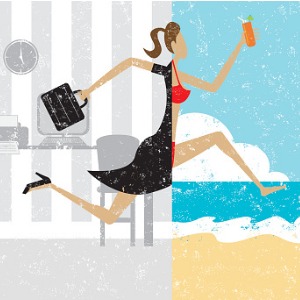
Helping others celebrate the summer can be more stressful if you don’t have a vacation of your own to look forward to. Put something in your calendar—it doesn’t have to be a fancy getaway. A long weekend or staycation can be just as helpful to recharge your batteries.
Survive the Summer to Prepare for the Next Busy Season
If you start implementing these tips now, you’ll be in a better position to create a better work-life balance during the summer season. Creating these habits now is also a great way for you to get ready for the next busy time of year on the calendar: the holiday season.
Azure Collier is the Content Marketing manager for Tripleseat, where she manages the blog, social media, and email content for the company.
From the trivial to the hypothetical, here’s what’s being talked about in the world of air travel. Southwest bans peanuts; TSA considers eliminating screenings; and Delta expands trans-Atlantic, North American partnerships.
Southwest Bans Peanuts
Better refresh that low fare calendar. Southwest deals are the only peanuts you’re going to get (to pay for) from now on. The airline has discontinued the snack on all flights starting August 1 in effort to protect those with allergies. According to the Food Allergen Labeling and Consumer Protection Act, peanuts are one of the eight most allergenic foods, and carry potentially lethal consequences for affected passengers.
“[The] ultimate goal is to create an environment where all customers—including those with peanut-related allergies—feel safe and welcome on every Southwest flight,” the carrier said in its statement. “We hope that our free pretzels, served along with our legendary Southwest Hospitality, will please customers who might be nostalgic or sad to see peanuts go.”
TSA Considers Security-Free Airports
Come again? The Transportation Security Administration is considering discontinuing security screenings at some 150 airports across the country, reports CNN. If the proposal is accepted, some small and medium-sized airports serving planes with less than or exactly 60 seats will no longer screen passengers or luggage before boarding. The estimated 10,000 passengers affected daily will be screened at major airports if connecting. Proponents say it could save $115 million annually to bolster security at major airports. Opponents say, are you crazy?
Delta Spreads Trans-Atlantic Wings
Three’s company; four’s a crowd. Delta is chasing a coveted spot in the trans-Atlantic air travel market by forming an expanded joint venture with Virgin Atlantic and Air France-KLM. Alitalia, which is a part of Delta’s current trans-Atlantic partnership, isn’t invited. Arrivederci. (And good luck with the Italian bankruptcy procedure.) The airlines in the future partnership account for 25 percent of the U.S.-U.K. market, and plan to compete with low, low-cost airlines such as Iceland’s WOW Air. Stay tuned for competitive fares, increased flight routes and shared mileage and lounge access, they say. Meanwhile, in North America, Delta and Canada’s WestJet have expanded their trans-border partnership, sharing 68 Delta routes to 32 Canadian cities and 193 WestJet routes to 83 U.S. cities.
 For an opening night party that give attendees a better perspective on all the city has to offer, a number of properties rise to the occasion.




 This is a pretty standard tip, but it’s worth mentioning. If you’re not organized, you’re spending your time playing catch up. Start with your goals. What do you want or need to accomplish for the month, the quarter and the year?