When was the last time you read about an airline opting for greater comfort? That’s exactly what Delta Airlines has done.
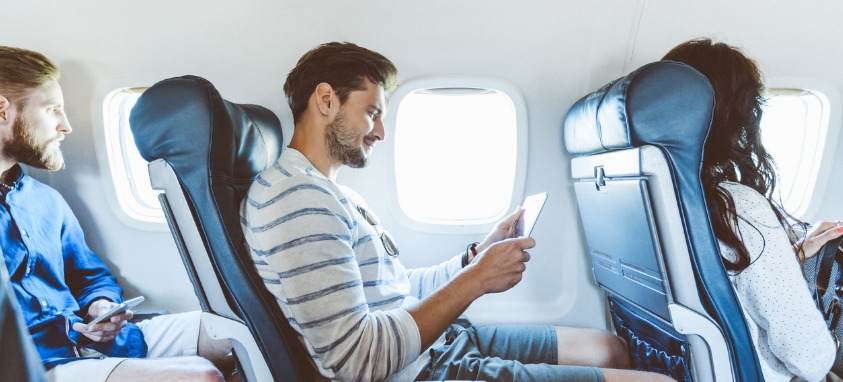
Delta will be the first U.S. airline to begin flying the Airbus A220-100, a new airplane that is described as very high-tech and quieter in the cabin. And it’s 100 seats are wider. Its two-by-three configuration means there will be fewer of the hated middle seats, too.
As reported by Skift, Joe Esposito, Delta’s senior vice president for network planning, said the airline will use the new aircraft to replace regional jets on routes such as New York to Dallas/Fort Worth and New York to Houston.
Why is Delta doing this? For one, the A220s are predicted to be cheaper to fly on a per-seat basis than other similarly sized jets. For another, the routes they will fly are those with its most lucrative passengers on board.
They are also routes where competitors such as United Airlines and American Airlines may not be using planes that are as passenger-friendly.
“You will see us put those in competitive areas,” Esposito said. “We are going to start with our biggest markets.” In other words, in those markets where Delta is vying with its competitors for the same full-fare corporate customers.
Delta is using other strategies to gain and keep passengers. One is to fly more direct flights on medium-range hauls, rather than routing through the airline’s hubs. Example: Last month the airline announced it would add three daily flights next April from Raleigh, South Carolina, to Chicago O’Hare.
“It’s really for the Raleigh customer,” Esposito said. “We have such a big, loyal following there that the next thing they want is Chicago, which we don’t serve. It’s [a] process of going through and understanding where the consumers want to go. We have great data on that.”
Delta has also been adding flights to Europe from nonhub cities, with transatlantic runs from Pittsburgh, Indianapolis, Raleigh, Orlando and Boston. As Skift pointed out, American has just one similar flight from a nonhub—from Raleigh to London—while United has none.
The Breakers Palm Beach
One day after Smart Meeting East National wrapped up at The Breakers Palm Beach in Florida, David Burke, the resort’s executive vice president and chief sales and marketing officer died unexpectedly.
David Burke
After working at the property for 27 years, the 61-year-old, who died on Aug. 29, was as much a staple of the property as its signature oceanfront view. Clients and employees came to respect his trustworthy handshake.
“The Breakers’ team is shocked and deeply saddened by the sudden loss of David Burke, who was beloved by all who knew him,” the resort said in a statement. “We wish to extend our appreciation to our friends and colleagues worldwide, who have reached out with their condolences. We are grateful for their love and support during this difficult time. Dave’s contribution to The Breakers and the industry was immeasurable—we will all miss him. Our thoughts and prayers are with his wife, Amy, his two sons and his entire family.”
Born in 1956, the Bethlehem, Pennsylvania, native began his career in hospitality at Boca Raton Resort & Club, a Waldorf Astoria Resort after earning his Bachelor of Science degree in hospitality management from Florida International University. He went on to a 10-year tenure at Hyatt Hotels and Resorts at properties in Maui Island in Hawaii, San Francisco, Lake Tahoe and the Caribbean before joining The Breakers in 1991, where he served on the hotel’s Executive Group of upper management.
“I drive over that bridge every morning [and look] forward to another great day in paradise…It’s an honor and, again, it shows off when guests have a great time. Once you stay, you’ll understand.” –David Burke
“Dave’s put his heart and soul into his work the last 27 years and had a tremendous impact on our organization,” said Paul Leone, CEO of The Breakers Palm Beach, in a statement. “He held one of the top four positions in our company and was one of my closest confidants. He was a superstar, and an intense competitor who never once missed a sales goal or marketing budget in all those years.
“Dave was also a legend in our industry, and everyone who knew him respected and loved him, and especially loved his endless stream of one-liners. He was always a joy to be around and I feel blessed to have had him as a friend and colleague…Dave loved his work, loved his friends and was a wonderfully devoted husband and father. The Breakers team—our owners, directors, management and staff—is devastated by this loss. It is truly heartbreaking because he was so loved and in the prime of his life.”
Smart Meetings TV host Mike Lyons conducted Burke’s final interview on Aug. 27. Burke spoke candidly about the company culture at The Breakers and how it has retained highly trained, loyal employees for decades.
“We hear about the beautiful ceilings and the impeccable grounds, and the 140-acres of Palm Beach. It speaks for itself,” Burke said. “We have 2,200 employees for a 540-room hotel, a four to one [ratio]…It’s hard to get hired here. You’ll go through seven to eight interviews to become a waitress. Once you’re here, you’re part of the family. You might end up in rooms, you mind end up wherever you want to be and, again, we’re all about serving the community. We’ve been here 125 years.”
Community involvement was near and dear to Burke’s heart. At the time of his passing, he was vice chairman of Palm Beach County Tourist Development Council. Previously, he served as chairman of Palm Beach County Convention and Visitor’s Bureau.
“The first day on the job here, you’re out doing four hours of community service with one of our senior executives or a couple of our execs, but in your orientation class, first thing is you do a half-day of community service,” he said. “It’s all about being ingratiating yourself into the community and doing what’s right. It’s so much fun working for a company that can do the right thing all the time.”
In his spare time, Burke enjoyed golfing. He is survived by his wife and two sons, who reside in West Palm Beach.
Boulder, Colorado and Denver may be the “New West.” But there’s still a lot of the Old West, there, too, and a lot of places where you can pick up some real Western duds, pardner. Here are some particularly good ones.
Boulder
Red Wing Shoes
Specializes in western boots, custom-crafted
2707 Arapahoe Ave.
Tough Luck Cowboy
Boots for men and women, Western jewelry, hand-tooled leather goods, custom hats
2050 Broadway St.
Colorado Springs
Boot Barn
Its name says it all.
5720 N. Academy Blvd.
Cavender’s Western Wear
Western clothing, boots
5770 South Carefree Circle
Denver
High Country Western Wear
In the Denver suburb of Arvada, a great selection
4900 Allison St.
Rockmount Ranch Wear Mfg. Co.
One of the granddaddies of all Western-wear stores; a Denver institution
The WorkLife Room, which debuted in early 2017, features a flexible environment that encourages guests to work, relax and recharge. It includes the following key components.
Angled bed, which opens more space for the room’s distinct zones
Sofa nook, a multipurpose space for working, meeting with colleagues, reading and watching TV
Desk area, an uncluttered workspace
Welcome station, which provides a space for keys, bags and coats
Bathroom, featuring modern and bright design to help guests feel reinvigorated
The room also provides fast, free Wi-Fi and enough charging stations—consisting of USB and power outlets—to power up to 14 devices. Guests are never more than an arm’s length away from a charging station and don’t have to move furniture to reach outlets.
“Patent approval of the Crowne Plaza brand’s WorkLife Room is a major distinction—one that speaks to the concept’s ground-breaking design, and one that demonstrates how the Crowne Plaza brand is redefining what a hotel room can be,” said Meredith Latham, regional vice president of Crowne Plaza Hotels & Resorts.
InterContinental Hotel Group developed the room as part of the Crowne Plaza Accelerate program, a $200 million, multiyear investment to transform the brand in the Americas region. The patent approval marks a major milestone in the brand’s quest to promote innovative design for the modern business traveler.
The Crowne Plaza Accelerate Program includes high-impact and distinctive innovations that feature modern amenities and sophisticated design. Other components of the program include new, modern design throughout hotel properties; adaptive spaces, known as Plaza Workspace; and an exclusive designer staff uniform collection, Momentum by Timo Weiland.
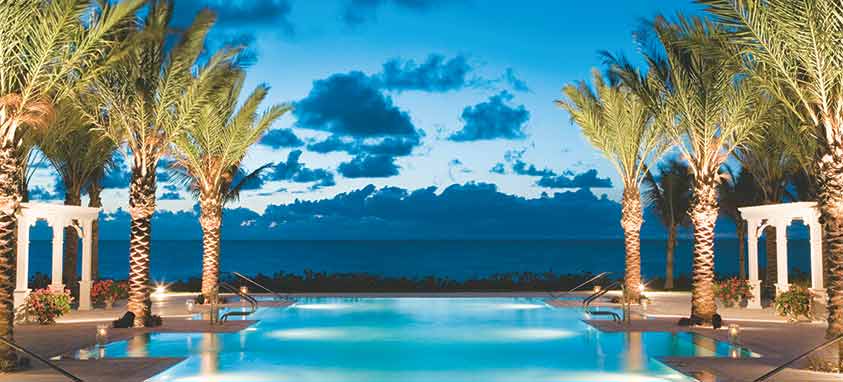
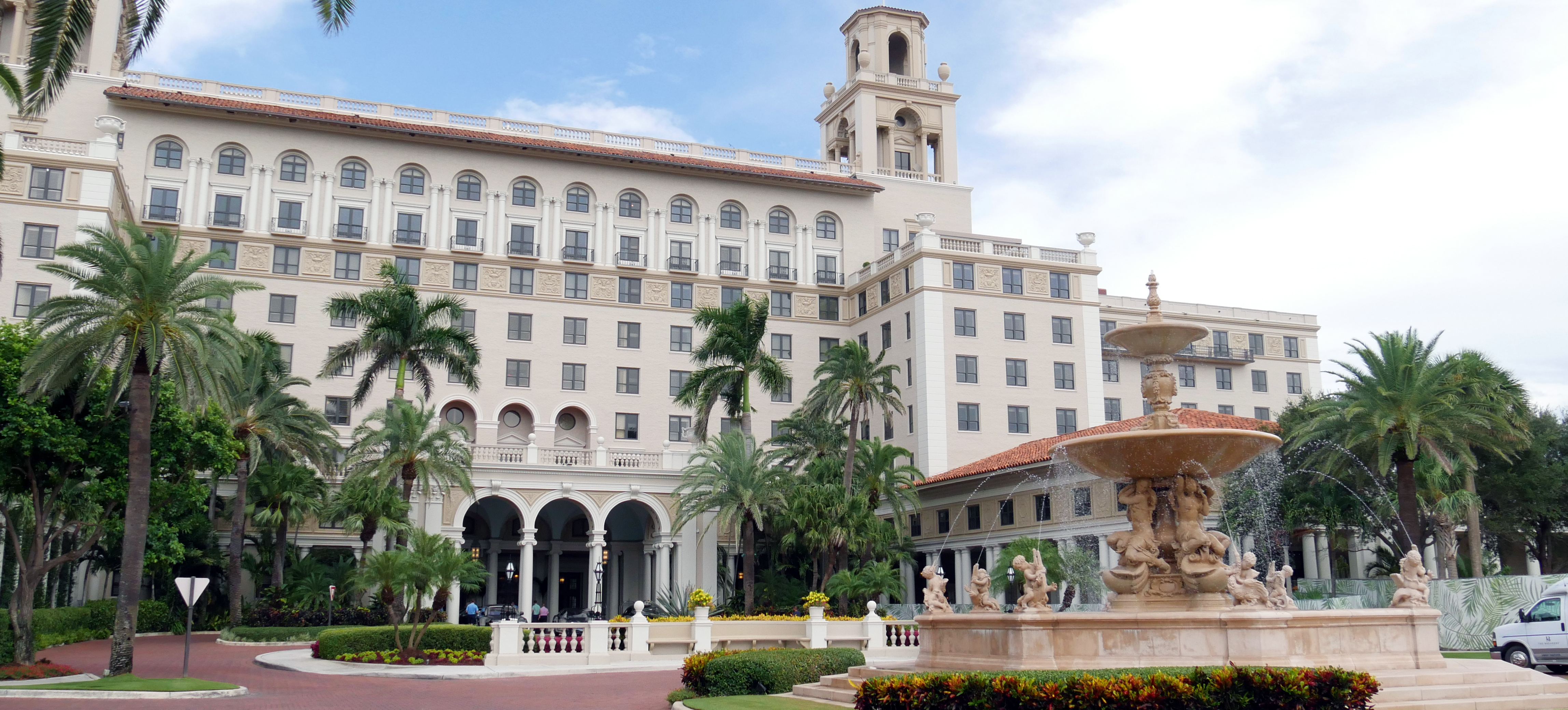
Along Billionaires Row, some of the world’s richest own colossal mansions in Palm Beach, Florida. At Smart Meeting East National, we met where the creme de la creme vacation at the majestic The Breakers resort Aug. 26–28. The historic oceanfront property burned down twice before the current structure was built to last in 1926.
“This is better than church. This is awesome,” said Marin Bright, Smart Meetings founder and CEO, in her opening remarks.
Smart Meeting CEO Marin Bright
With an aura of wealth in the salty sea-air, it was only natural for big business to be done and waves of RFPs to crash into shore during the signature one-on-one appointments involving more than 140 planners and suppliers. Since the inception of these national and regional events in 2009, “I’m proud to say that over $500 million worth of business has been booked as a result of Smart Meetings,” Bright said.
Do Ask, Do Tell
Daren Martin
One of the topics speaker Daren Martin touched on in his keynote was the difference between ask-assertive and tell-assertive people. He said different personality types go about requesting something from someone—some choose to phrase it like a question with a soft tone of voice, while others take a more authoritative approach by making a firm statement.
Attendees from each group chimed in about how they view members of the opposite group. Ask-assertive people generally viewed their tell-assertive counterparts as bossy and tell-assertive people grew impatient with ask-assertive people as they wait for them to get to the point in a round-about way.
Martin has authored four books, A Company of Owners: Maximizing Employee Engagement, Whiteboard: Business Models that Inspire Action, The Sink: Radical Transformation with One Small Change and Beached Whale: Learning to Swim in the New Ocean.
Small Talk Makes a Big Difference
Debra Fine
Networking and social functions thrust people into the sometimes-uncomfortable scenario of faking small talk with new acquaintances or catching up with associates you’ve previously met. Debra Fine, author of The Fine Art of Small Talk, equipped participants with new tools they can apply immediately at one-on-one appointments. She taught about appropriate opening lines to break the ice and how to properly phrase questions that won’t be offensive, pry too much or force people to discuss a topic they would rather avoid.
For instance, if you know an individual has a child who is a high school senior, asking where they intend to go to college may be a sore topic. What if that student doesn’t intend to go to college against the parent’s wishes? Instead, ask for an update on the child. This leaves the situation open-ended for the mom or dad to share what they would like to share. Fine also wrote The Fine Art of The Big Talk and Beyond Texting: The Fine Art of Face-to-Face Communication for Teenagers.
‘Thoughts from a New Member,’ a poem by Debra Fine
I see you at the meetings, But you never say hello.
You’re busy all the time you’re there
With those you really know. I sit among the members,
Yet I’m a lonely gal. The new ones feel as strange as I,
The old ones pass us by. Darn it, you folks urged us to join
And talked of fellowship, You could just cross the room, you know,
But you never make the trip. Can’t you just nod your head and smile
Or stop and shake a hand, Then go sit among your friends?
Now that I’d understand. I’ll be at your next meeting,
And hope that you will spend the time to introduce yourself,
I joined to be your friend.\
Valley Girl Vocab
Mike Lyons
So, like, have you ever like, you know, counted how many times you like, say the word “like” and other unnecessary words in a sentence? Take a moment and tally up your score in any given conversation. You’ll likely be embarrassed to admit your number. During his keynote address on Tuesday morning, Smart Meetings TV host Mike Lyons raised awareness about this common habit of using filler words and how to edit yourself.
LikeSo app is a personal speech coach that records you speaking and measures your use of filler words. It makes you concentrate and focus on avoiding these key words, which sometimes forces you to pause silently mid-sentence while you wrack your brain for an alternative word.
Intelligent speech is a large part of planning and conducting meetings, so try not to sound like Elle Woods from Legally Blonde or Cher Horowitz from Clueless the next time you lead a presentation in a boardroom or on stage. Some people have a “swear jar” to penalize themselves if they curse, so consider making yourself a “filler-word jar” as an added incentive to quit this habit.
On the first day of the conference, Lyons also treated attendees to a special rendition of the song “The Best Is Yet to Come,” customizing the lyrics to fit Smart Meetings’ mission. The final day wrapped with another Frank Sinatra tribute performance, this time to a tweaked version of “That’s Life.”
Balancing Act
The Passing Zone
Metaphorically speaking, meeting planning requires juggling and, at times, feels like a three-ring circus. America’s Got Talent finalists The Passing Zone take juggling to the extreme by tossing and catching machetes, a stun gun and other sharp and dangerous objects, sometimes while balancing on shoulders and wobbling on a rola bola.
While keeping the audience captivated with their humor and death-defying tricks, the talented duo of Jon Wee and Owen Morse taught the crowd about innovation, collaboration and execution, three things meeting planners are tasked with every day. Everyone, especially two brave souls—Andrew Neaubauer, director of sales and marketing for Hilton Marco Island Beach Resort and Spa, and Josh Pelczar, national sales manager at Big Sky Resort—who were picked from the audience to participate in the show, could also take away a valuable lesson in trust.
We Built This Bike with Nuts and Bolts
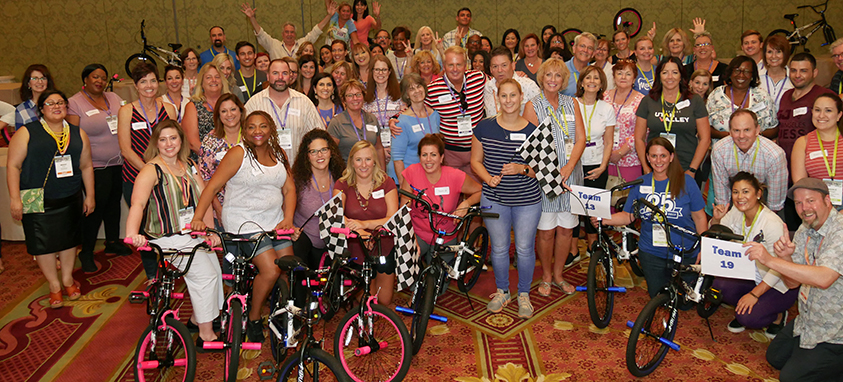
Urban Youth Impact is an organization that helps inner-city youth realize there is hope for a brighter future by helping them develop literacy, career and life skills. As a CSR team-building activity, East National attendees divided up into teams to compete in obstacle courses and a trivia contest—it was like elementary school field day for adults.
After completing each task, teams received a tool needed to build a bicycle. The bicycles will go to the organization’s Christmas Store, where low-income parents can “shop” for complimentary gifts for their kids.
Fun, Food and Friendship
Timothee Lovelock
The Breakers did a superb job of throwing memorable evening receptions on Sunday and Monday night. The first one, held in Circle Ballroom, featured an abundance of food options, including tender filet mignon, sushi, fresh-baked chocolate chip cookies, and spiked and candy-licious milkshakes. Guests enjoyed the music of Timothee Lovelock, a multitasking electric violinist and deejay. The violin was illuminated by LED lights and sparklers.
The second dinner reception, coined a “Flamingle,” was set to be outside, but with rain showers in the forecast, the hotel made the call early in the day to move festivities indoors. Aside from more tasty food, this party featured lawn games such as corn hole and the limbo, cigar rolling, a live painting of a Lilly Pulitzer-influenced artist, Don Julio tasting and a calypso band. One of the highlights was a robotic photobooth from Fotoboyz Events that followed guests around to snap the perfect well-lit photo, GIF or Boomerang to share on social media.
Food and beverage costs are increasingly taking a bigger slice of the meeting budget. Patrick Berwald, vice president of food and beverage for Benchmark Global Hospitality, offered some, ahem, food for thought about F&B for small meetings.
What are some of the reasons for the increase in F&B cost?
Cost of product and changes in commodity pricing have impacted food pricing. Concessions, meaning discounting to secure the business, are often seen in contractual percentages off F&B retail pricing or hosted events, but retail pricing has to fluctuate in order for the operators to meet their food/beverage cost targets [margin].
Planners are being tasked to reduce this meeting element. How can small meetings address this?
Small meeting planners must reach out to the property for a customized approach so that meeting goals can still be achieved while managing costs.
Patrick Berwald
Is it helpful to hold a small meeting in a larger venue that may have more resources?
In fact, quite the opposite is true, as smaller venues often have resources that are leveraged through cross-utilization efforts. Resources to support larger venues would be primarily driven by significant business.
Does the trend of “experiential” meetings—with an emphasis on local food or local food traditions—add to the F&B cost?
Yes. Often, local vendors have higher costs and are not able to leverage economies of scale. As such, costs are passed on to the customer.
If meeting spaces for small groups are now more flexible or nontraditional, does that translate to less expensive, more casual dining options or more expense?
Restaurants and hotel public spaces are now the go-to alternative to traditional meeting space. They offer user-friendly options to entertain and don’t come with the exponential fees associated with banquet functions.
What are the challenges from the provider’s side of the coin?
[Nontraditional spaces] are a benefit for the operator, as they are able to maximize on all spaces—oftentimes being able to host private events in public spaces while still generating revenue though transient channels.
Interview by Carolyn Koenig. Read more about small meetings in her story, “Size Does Matter: Small Meetings’ Impact on Planners, Destinations and Hotels Belies Their Size,” in the September issue of Smart Meetings.
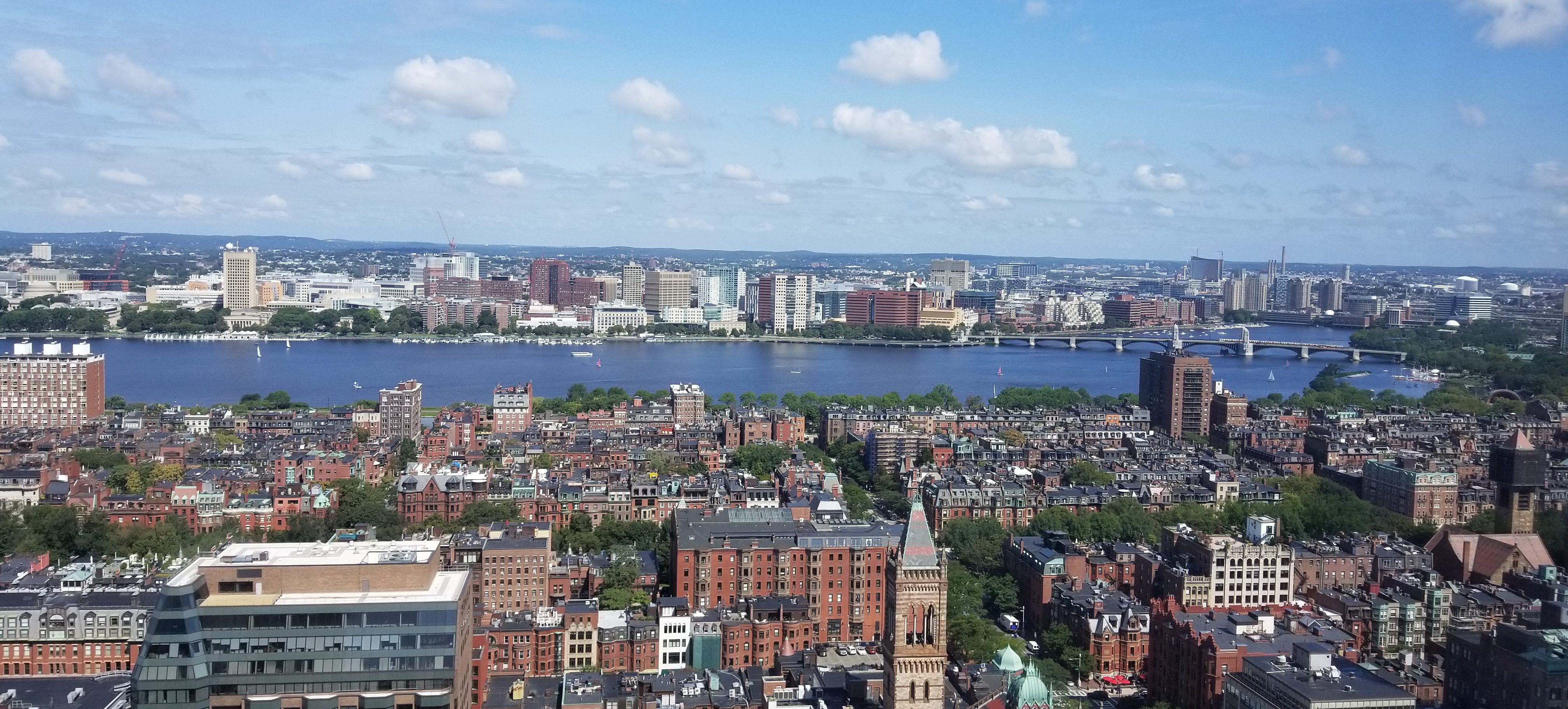
When Marriott acquired Starwood in September 2016, it added 11 new brands—including Sheraton and Westin—that contained some of the leading hotels in the world. The purchase strengthened Marriott’s presence in many locations, and has been a total game-changer in some places, such as Boston.
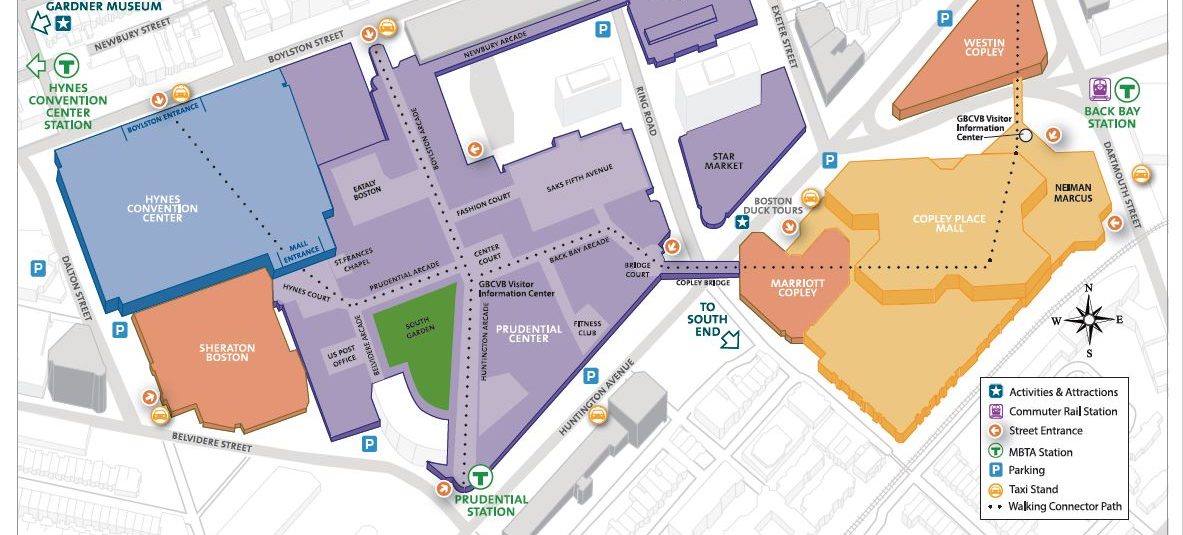
Marriott had a host of hotels in Boston even before the merger, but the acquisition of Starwood took its portfolio there to a new level, particularly since the addition of The Westin Copley Place, Boston and Sheraton Boston Hotel resulted in unification of the 3-2-1 Connect hotels in the heart of Boston’s Back Bay neighborhood. The 3-2-1 Connect is an interconnected network of three Marriott hotels (the two mentioned and Boston Marriott Copley Place), two shopping malls (Copley Place Shopping Galleries and Prudential Center) and one convention center (Hynes Convention Center). All of them can be accessed without stepping outside.
Together, the hotels offer 3,166 guest rooms, 194,000 sq. ft. of meeting space and 23,280 sq. ft. of exhibit space. The shopping malls contain 23 restaurants, 152 shops, 110 inline stores and 42 carts and kiosks. The convention center provides 176,840 sq. ft. of meeting space, a 24,544-square-foot ballroom and 38 meeting rooms. The numbers, as impressive as they are, don’t tell the whole story, though. The hotels are among Boston’s elite, with ongoing renovations; the shopping centers are upscale and evolving; and the convention center offers a compact, collegial environment and advanced technology.
Marriott 3-2-1 Connect, Boston
Marriott and Starwood collaborated well as participants in 3-2-1 Connect before the companies merged, but now, under one company, the situation is more fluid—and easier for planners to arrange meetings and events.
“With Marriott’s acquisition of Starwood Hotels, doing business with 3-2-1 Connect has never been easier,” says Erin Gilroy, director of sales and marketing for Boston Marriott Copley Place and Sheraton Boston Hotel. “Our robust team of 3-2-1 Connect advocates offers customers a single point of contact for the three properties, two malls and the Hynes Convention Center. Another significant benefit our 3-2-1 Connect customers are experiencing is that we can now present one inclusive hotel contract for the Westin, Marriott and Sheraton branded properties.
“The streamlined process saves our customers time and allows for the consistency of contractual terms across all three hotels.”
Some of 3-2-1 Connect’s main advantages for planners are that a single event resume is integrated for the whole meeting, one pre-conference meeting is coordinated with all planners, and a site evaluation is organized and led by a single individual. Also, OnPeak housing services are available and state-of-the art technology is available in all facilities.
Attendees enjoy the Wi-Fi offered in all hotel lobbies, intrahotel access among the three hotels and the use of the health club at any of the properties.
The Westin Copley Place, Boston
“Also, the hotels are currently working on a plan that will allow guests to dine at all three hotels and charge back to their room,” Gilroy says. “This will be a fantastic benefit not only for our 3-2-1 Connect, but for all of our guests.”
Among the recent hotel developments, The Westin Copley Place unveiled a renovation of all guest rooms and suites in June. The rooms offer sweeping river and city views. New touches include photo collages, cobblestone patterns and floral artwork inspired by Boston Public Garden.
“Each room evokes the spirited personality of the city and serves as a place where guests can discover the beauty of Boston,” says Erin Sunderland, director of marketing and communications, as well as the run concierge. “The design was inspired by the history, arts and culture of Boston and Copley Square, and the rooms and suites are infused with unique touches reminiscent of the neighborhood while providing a restful residential retreat.”
The Event: The UK Summit
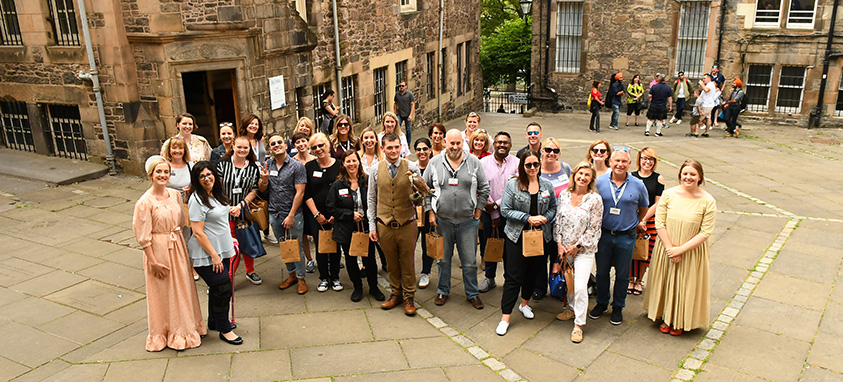
Festivities kicked off yesterday for the fourth annual The Event: The UK Summit, hosted by VisitScotland Business Events and London Convention Bureau at London & Partners. It’s a twofer deal, of sorts, for meeting professionals in attendance.
North American incentive and corporate buyers jetted across the pond for a three-day educational conference in Edinburgh, held at The Principal George Street and The Principal Charlotte Square, beginning July 25. While there, guests enjoyed dinner on Royal Yacht Britannia. On the second leg of the trip, attendees can choose their own adventure. Each person will elect to spend the remainder of their stay exploring London or Scotland. The event wraps up on July 30.
“This program, now in its fourth year, is becoming even more critical in highlighting our offerings amongst North American incentive and corporate buyers,” says Richard Knight, VisitScotland’s business events director of marketing for the Americas. “The best way to display the appeal of our product is to invite them to visit the destination.”
Guests who remain in Scotland will conduct site inspections of Fairmont St. Andrews and Gleneagles Hotel. Those who choose London are also in for a fun and informative time, curated by 2BUK and The Principal London.
“The Event: The UK Summit is an ideal opportunity to showcase the very best of London’s MICE offerings, as well as give guests the opportunity to sample some of the city’s best cultural attractions, hotels and restaurants,” says Chris FJ Lynn, chief representative of North America for London & Partners. “We look forward to welcoming buyers and planners from North America to the U.K. capital, and it’s a great chance to convene leading figures from the MICE industry to share knowledge and insights on wider trends for the business-tourism sector.”
Scotland and London are two of Europe’s leading destinations for association conferences and incentive trips. Scotland added more than 90,000 seats to direct flights from North America in the last 18 months and London hosted more than 50,000 attendees at London Tech Week 2018. Additionally, the Elizabeth railway line will open later this year to offer more accessibility from Heathrow Airport to various parts of the city.
Words can be a conversation-starter or a conversation-killer. They have the power to build someone up or break someone down. And in the event planning world, words are of extreme importance. You must present ideas on a regular basis, take phone call after phone call, respond to emails throughout the day—words, no matter how you present them, are the key to business. Sure, PowerPoints of pie charts may not “say” much while expressing information. Ultimately, however, you’ll have to turn that graph into—you guessed it—words.
So, it matters what words you’re using. It can be easy to under-prepare—say, not practicing a speech before the presentation, or using filler words (we’re all guilty of the occasional “like”)—and, true, sometimes the best points are off-the-cuff remarks. In general, it’s important to choose your words carefully. Here, we’ve compiled a list of six words you might want to avoid at your next meeting—and options for replacing them with more productive ones.
Should. “Should” feels less like a guiding word and more like a pushy best friend. Instead, use a phrase such as “If I were in your position…” or “Have you considered…” to express a helpful suggestion. It removes judgement and allows for more objective responses.
But. When it comes to presenting an alternative point of view, you might want to steal a trick from improv comedians and build on other ideas by saying “yes, and…” Or, acknowledge the point and pivot with, “I see what you’re saying; let’s expand on that.” People will feel heard and less alienated.
Never. Never say never—truly. This immediately puts people on the defensive, causing a team to either shut-down or turn on each other. Rather, say “at this moment, we will not be…” That way, there’s no ominous word lingering in the air and no hurt feelings.
Sorry. Unless you are responsible for something, omit sorry from your vocabulary. You undermine yourself each time you say, “I’m sorry, I have an idea.” Your idea is worthy of being heard, so say it without the apology.
Literally. Let’s be honest: you most likely know you’re using it the wrong way. Banish this word from your vocabulary unless what you are describing is exactly what happened, and even then, why would you need to clarify that?
Really. It’s not a filler like “like”; however, it’s close. There is almost always a word that is synonymous to your “really + adjective.” It doesn’t have to be a complex word to omit “really.” You aren’t really excited—you’re thrilled. You’re not really annoyed—you’re irked.
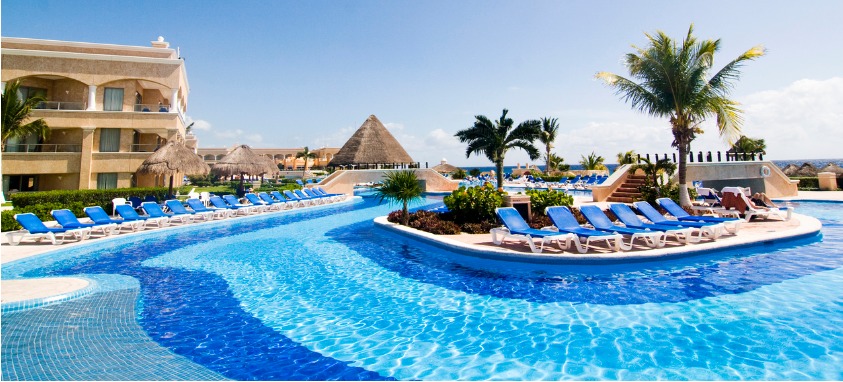
The only bodies on the beaches of Cancun, Mexico, are bronzing in the sun. That’s the reassuring message from security experts and tourism officials in the wake of news that eight dead bodies were discovered within the confines of the international resort destination last week.
The grisly episode—which occurred in a downtown neighborhood that is miles from the main tourist magnet, Zona Hotelera—prompted the U.S. State Department to issue a travel advisory for Mexico.
Dario Flota, director general of the tourism board of Quintana Roo, the state that includes Cancun, Playa del Carmen, Tulum, Riviera Maya, Costa Maya and Cozumel, told The Washington Post there have been no incidents of significance near the 14-mile-long strip of sand, edged with high-rise hotels, restaurants and clubs.
Flota also enumerated numerous security measures in place, including beach patrols by federal police and Navy personnel, monitoring of access highways by the Army and surveillance cameras on major highways and ferry piers that serve Isla Mujeres and Cozumel.
“Cancun is easy to control,” Flota said. “It is well-protected.”
Mexican authorities are also quick to point out that the U.S. State Department issued an advisory, not a travel warning. Currently, there are no travel warnings regarding any international tourist destinations in Mexico.