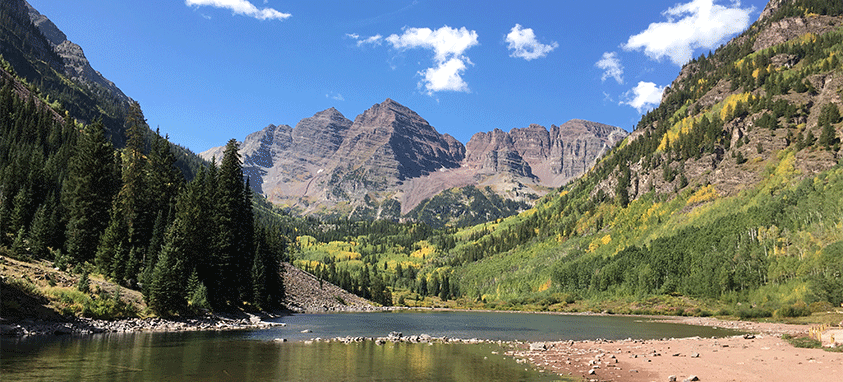
“Colorado is America’s highest state,” a tour guide told Smart Meetings on a recent FAM trip to Aspen. Interpret that as you see fit.

Located at an elevation of 7,908 ft. above sea level, visitors may encounter adverse symptoms associated with change in altitude. Guests could feel dehydration, shortness of breath, dizziness, throat and lip dryness, or experience nosebleeds. This is all very common, even among local residents, and not usually cause for alarm.

As a welcome amenity, gift attendees with a swag bag that includes an Altitude Kit or build your own.

Contents include the following:

  • Resqwater—Drink it chilled to help with muscle recovery.
  • Oxygen—Have a spray can of oxygen to inhale while performing strenuous activities.
  • Sunscreen—At high altitudes, you’re closer to the sun, so your skin burns easier.
  • Lip Balm and Breath Mints—They keep lips and throat moist in this dry climate.
  • Ear Plugs—Aspen is very quiet, but these are included just in case visitors need to hush unfamiliar noises for a good night’s sleep.
  • Acli-Mate—This energy supplement aids in electrolyte loss and dehydration.

Without you even realizing it, the Aspen air can dry out the inner lining of your nose, causing it to bleed spontaneously. Encourage attendees to carry tissues, napkins or a towel in case this happens. A saline nasal spray, available at local drugstores, can assist in coating the lining of the nostrils with therapeutic moisture.

Additionally, most, if not all, Aspen guest rooms come equipped with a humidifier. Check your closet. If you need help setting it up, hotel staff are more than happy to assist.

Especially on day 1, when adjusting to the new environment, out-of-towners may experience extreme thirst. It is important to keep hydrated at all times, especially with beverages that include electrolytes. Avoid drinks such as coffee and alcohol that are known to dehydrate you. The effects of alcohol are amplified at this high altitude, so be a cautious consumer. Drinkers may feel tipsy after having fewer drinks than when at sea level.

Refer attendees who are struggling to an oxygen lounge, such as the one at Remede Spa inside The St. Regis Aspen Resort. Planners can also arrange for an oxygen bar to be set up at their event.

If you provide attendees with these remedies, everyone will enjoy that Rocky Mountain high.

Before you can perform meeting magic, you first have to find your next gig. That requires a killer resume. When you have a lot to brag about, it can be easy to overlook important skills that you bring to an organization and emphasize irrelevant information. Let’s take your CV one section at a time to make sure your event cred is obvious even at a glance.

See A Higher Meetings Education for more on the role of certifications and future-proofing your career.

Utilize That Summary

First, answer the question: who are you? Include your official title. Then pick your best trait in the workplace. Are you the one constantly finding and fixing typos in proposals? Do you pull together last-minute events like a champ? Once you’ve decided, find the most appropriate adjective and add it.

Finally, think about where you want to go with your career. If you want to be the one traveling all over, write that. If you prefer to do administrative work, make that clear. The only way you’ll get what you want is by spelling it out. This way, prospective employers will have an idea of how you would work in the position you’re applying for.

Highlight Your Skills

If you have managed event app development, include that as a skill. If you’re a pro at video editing, let potential future employers know that, too. Adding skills that give you an edge is crucial. Even those that may not seem relevant to event planning may end up playing a role and show that you are able to wear more than one hat. An employee capable of doing more than a singular task can ultimately become invaluable.

Show and Tell

Arguably the most important section of a resume is the experience. This is where you can flaunt what you are capable of doing. But this section isn’t solely for sharing responsibilities.

Instead, use this space to, yes, show what you’ve done in each role. But also add accomplishments and achievements. Think back to the wins in your career and include them. Even if you don’t have years of experience behind you, proof of accomplishments can be a major boost to your worth. Employers want to hire somebody who will get the job done right—highlighting your achievements is an easy way to demonstrate that you have what it takes.

Adding Education

The education section can be the most concise aspect of your resume. While having a degree isn’t always necessary, degrees can be a selling point, especially if you don’t have much experience. Even if it’s not specifically in the hospitality industry, degrees demonstrate the ability to work at something continuously. You don’t have to include a GPA, but mention any accolades in short bullet points. If you’re a certified professional, such as a CMP, include that in this section.

ASAE in 2018

Thousands of downtown Chicago hotel workers went on strike Sept. 7 after contracts expired at 26 downtown convention and boutique hotels. Unite Here Local 1, the union for housekeepers, servers, cooks and doormen, had warned of a possible walkout when the previous contracts expired on August 31. At some properties, popular restaurants were forced to cease operations, as well.

More: Hospitality Strike Votes Could Increase with Arrival of High-Tech Hotels, Minimum Wage Increases

The union represents more than 15,000 hospitality workers across the Chicago area, and more than 6,000 workers are covered by the expired contracts.

A union spokesperson cited lack of year-round health benefits for full-time workers as a major sticking points in contract negotiations. Protection against sexual harassment and other assaults was another issue on the table. In a separate development, Marriott International announced it is ramping up deployment of alert devices for housekeepers and other on-property employees, enabling them to discretely summon help if they feel harassed or spot a guest in distress.

Properties affected by the strike include Hyatt Regency Chicago, JW Marriott Chicago, Sheraton Grand Chicago and Hilton Chicago Michigan Avenue. A complete list can be accessed at chicagohotelstrike.org. Around-the-clock picket lines will begin at the targeted properties, the union announced.

Paul Ades, senior vice president for labor relations at Palmer House Hilton, told Chicago Tribune that the strike will have “minimal impact” on operations. A statement by Marriott International, which operates six affected hotels, said, “The parties are not at an impasse on any issue.” Each hotel company negotiates separately with the union.

The move comes less than four months after culinary and bartenders’ unions for casinos in Las Vegas narrowly averted a similar walkout. You can read more about trends playing a role in contract negotiations here.

“Turn this industry on its ear and make it better. But most of all, remember it is still the hospitality industry…never lose the essence of being hospitable.” –Jason Fulvi


After 16 years at Visit Pittsburgh, most recently as executive vice president, Jason Fulvi will join Visit Kansas City on Sept. 12 as its new president and CEO.

When he jumped ship from the hotel side of the business for the DMO world, he says it opened his eyes to the magnitude of the tourism industry and the impact DMOs have on their communities and the world economy, and he “became a student of the industry.” His boss encouraged him to get involved with Destinations International (DI). Initially, meetings felt like therapy sessions to him, but eventually formal committees were formed to improve the sales process.

More: The U.S. is lagging in tourism. A new group vows to change that.

After two consecutive terms as the chair of DI’s sales and marketing committee and a previous chair of DI’s meetings industry networking committee, Fulvi was appointed in July to serve as chairman of the DI Foundation Board of Trustees for the 2018–2019 term.

“This position is providing me access to the thought leaders of our industry like never before,” he says. “The [foundation] is the think tank and research and development department of our industry. We have turned the corner from being reactionary to proactive in looking at what is the next challenge or threat to our DMO community. As a result of the hard work from those that preceded me, we have developed tools like the EIC (Economic Impact Calculator), Destination Next, Weaponization of Travel Study and so much more.”

In the next year, there is a lot Fulvi would like to accomplish, and he’s confident that with the help of his committee members, he’ll be able to achieve those goals. “Now we are peering through the telescope to see what is the next thing that we can head off at the pass,” he says. “If at the end of my term I can look back and say that our industry leaders and partners now have a clear vision of what the foundation can achieve if they are fully engaged, I’ll call that a win.”

Leadership Philosophy

  1. Get the big ideas right.
  2. Communicate the vision.
  3. Gather feedback.
  4. Identify lessons.
  5. Hire the right people.
  6. Get out of their way!

Crowning Achievement

Fulvi is proud of all he’s managed to accomplish during his long tenure at Visit Pittsburgh. He says working with the National Society of Black Engineers (NSBE) for four conventions in Pittsburgh has had a profound impact on him.

“This relationship has taught me that our business has to be more than just filling hotel rooms and restaurants,” he says. “We must find ways to help our business community and, more importantly, the youth of our communities,” he explains. “This past March, through our collaboration with NSBE, Visit Pittsburgh was able to fund over 240 scholarships for local African-American high school students to prepare them to enter collegiate engineering programs at local universities.

Thank You Notes

Fulvi has a lot of responsibilities on his plate, transitioning into his new role and settling in at Visit KC as well as his expanded presence with DI. “This is one of the best, well-thought-out convention packages in the industry, and the city and local hospitality leadership should be proud of what they have accomplished,” Fulvi says. “The icing on the cake is the city’s continued momentum, including developments such as the Loews KC Convention Center Hotel and the new single terminal at Kansas City International Airport [MCI].”

The discipline, work ethic, humility and respect his father, a World War II Marine, instilled in him as a young boy served him well throughout college, his hotel career and beyond. There’s also a special lady in his life he can’t live without. “I have a secret weapon that helps me remain grounded, humble and balanced….her name is Tina and she is my best friend and the love of my life,” he says of his wife. “Balance is the key and the old adage about the three-legged stool still holds true: If you shorten one leg, the whole thing tips over.”

airline industry still lacks diversity

Everyone loves to complain about air travel today. Cramped cabins. Added fees for everything. But what if there was no pilot to fly the plane? That’s the scenario the U.S. airline industry is facing—and, according to news reports, it will only worsen in the coming years.

The crisis has already landed at the regional airline level, according to Peter Gall, a former American Airlines pilot and now a professor at West Virginia University. Some regional carriers are already offering signing bonuses and higher pay to avoid schedule cutbacks that could significantly impact air travel—and the competitiveness of group offerings—in so-called second-tier cities.

Gall described the situation to CNN as “a perfect storm that could wreak havoc on the U.S. airline industry over the next decade.”

Over the past 30 years in the United States, the number of pilots has decreased by 30 percent, according to the Federal Aviation Administration. Many of these retirees were ex-Vietnam War pilots who reached mandatory retirement age, which is currently 65.

The Future of Flight

A 2016 Boeing study found that 42 percent of pilots currently flying for the major airlines in the United States will reach the age of 65 in the next 10 years.

Though pilot supply is dwindling, demand is lifting ever upward. The International Air Transport Association predicts it will double by the late 2030s. As a result, nearly 800,000 pilots will be needed—twice the number in the current workforce.

Why aren’t there more young pilots? After the terrorist attacks of Sept. 11, 2001, and during the 2008 financial crisis, the aviation industry suffered and airlines merged. As The Wall Street Journal recently noted, cockpit-crew jobs thinned and salaries shrank.

Gall says the overarching problem is that “the career of the airline pilot has lost its luster.”

More aspiring pilots today must pay for their own flight training, which can cost in the six figures. Previously, almost all pilots were trained in the military, but the increasing use of unmanned aerial vehicles is being blamed for reducing the need for military pilots.

“It became a lot harder to become a pilot,” Seth Kaplan, managing partner at Airline Weekly, told Marketplace. “You need a whole lot more hours of practice time, basically, so that’s more expensive.”

Both airlines and airplane makers are working to address the issue. American Airlines, for instance, announced in April that it had formed American Airlines Cadet Academy to train new pilots, with schools in Phoenix; Pompano Beach, Florida; and Millington, Tennessee. Airplane manufacturers such as Airbus are incorporating technology in new aircraft designs that it says can safely reduce the number of personnel in the cockpit.

Brand USA IMAX international tourism

Brand USA says 172,000 international visitors will travel to the United States because of the DMO’s latest effort to boost sagging overseas tourism in the country. Research found that National Parks Adventure, Brand USA’s first IMAX and giant-screen film, will spark $700 million in incremental spend from fiscal year 2017 through fiscal year 2019.

The study analyzed six key markets—Canada, Mexico, Germany, China, Brazil and United Kingdom—which found a marketing ROI of 56:1 based on the film’s production and marketing expense of $12.5 million.

“The feedback from international viewers of National Parks Adventure has been overwhelmingly positive, and we are proud that this film continues to effectively showcase the United States and inspire travelers to visit the U.S.A.,” said Christopher L. Thompson, president and CEO of Brand USA.

The film was voted Best Film of the Year by the Giant Screen Cinema Association and became the highest grossing documentary film of 2016. The film’s release was the industry’s fastest giant-screen rollout in five years, with 119 exhibitions in 16 countries within the first 12 months. In addition, Brand USA collaborated with some two dozen U.S. embassies and consulates around the world to showcase the film in countries as diverse as Croatia, Equitorial Guinea, El Salvador, Indonesia and Romania.

The film’s success laid the groundwork for America’s Musical Journey, which explores the collision of cultures that gave birth to American art forms such as jazz, blues, country, rock ’n’ roll, hip-hop and more. This new film premiered in February in Washington, D.C., and has opened to warm receptions in key markets internationally.

meeting room of the future
Photo Credit: IACC

Meeting planners in Latin America are increasingly driven to meet their attendees’ expectation for tailored experiences and engagement. That’s among the key findings of the first Latin American edition of IACC’s “Meeting Room of the Future” survey, which was done in concert with IBTM Americas.

Ninety-two percent of the nearly 500 respondents to the survey said “experience creation” was big and getting bigger—compared to 80 percent of respondents to a global survey taken last year.

“Five years ago, the objectives were simple,” stated one respondent. “Today I work to ensure that each event has something new to offer. Achieving customer satisfaction has been a challenge.”

There were other noteworthy differences between the global and regional findings, including:

Health and wellness: Latin American respondents said their companies were more focused on health and well-being.

F&B: Respondents felt strongly that having continuous refreshments versus set times was increasingly popular. “The traditional plated meal is going away,” said one respondent.

Meeting room types: Respondents favored flat-floored rooms offering flexible layouts, or rooms set in a homelike, lounge style. Auditoriums and rooms with no natural light were not favored.

Technology: Responses were mixes. “Meetings today need to be dynamic. Attendees no longer come simply to listen. They want interactive activities, networking opportunities and venues that are technologically advanced,” said another respondent. Yet overall responses yielded only 44 percent saying that audience polling and Q&A technologies were effective (versus 91 percent globally).

David Hidalgo Ayala, show director for IBTM Americas, commented, “Despite the ever-increasing use of technology in events, personal relationships and face-to-face meetings still take priority…It’s clear that event planners must stay on the cutting edge of industry innovation if they are to create more flexible, interactive, personal and collaborative events. Many changes are coming in terms of food, amenities, facilities and, of course, technology, but it’s essential that we don’t lose sight of the fact that, especially in our industry, human relationships are at the center of everything.”

Check out these new and renovated properties around the globe, from the shores of Thailand’s Emerald Bay to a Forbes Four Star property in Vancouver, B.C.