In a recent strategic planning worksheet, “A Planner for Cultivating Better Events,” brand experience company Freeman lays out the strategy behind creating a brand experience that makes attendees feel valued, while also providing value.

Seize the Opportunity
The worksheet points out that two abilities are very important for any planner to possess: storytelling and tech knowledge. In storytelling, see that there is a clear message that attendees can resonate with. As a result of having a message that resonates, attendees will discover that they are valued and will be able to connect to your brand on a personal level.

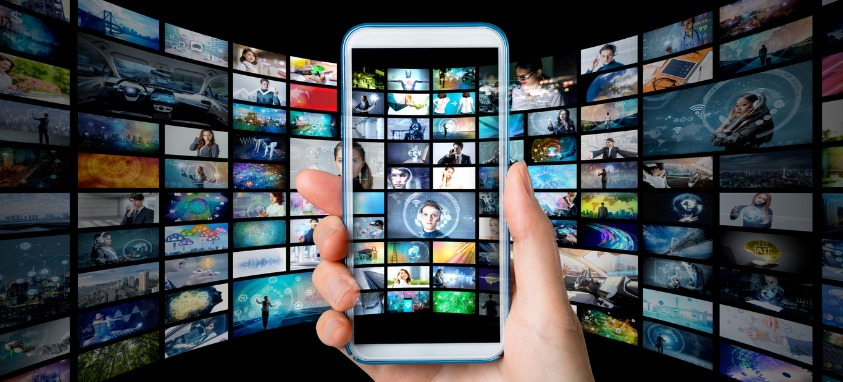
The prevalence of technology in events can’t be ignored, and it’s best that planners use it to their advantage; leveraging openly available tech will increase your reach and boost your attendee’s ROI. Technologies, such as live web streaming and second-screen tech, are allowing planners to both extend a greater reach (even to attendees who can’t physically attend), as well as create an experience in which attendees aren’t just attending, but truly engaging. With the use of a mobile phone, using polls, Q&A and gamification, second-screen technology creates a dynamic that lets attendees include themselves in the conversation.

Max Your Budget

In the hustle and bustle, it’s easy to lose track of where all the money is going. There are probably one or two things on which you could cut back spending, or get rid of altogether; in that new-found surplus of money, you can search for new, cost-efficient models on which to base your spending. Here are three ways you can max your budget and make sure you’re getting the most bang for your buck.

  • Recreate a budget. It’s good to find out exactly how much you’re spending and where it’s going.
  • Find your key performance indicators. After laying out your business objectives, find your key performance indicators, discoverable with social media and reviews. Develop a strategy that can demonstrate the trends, both across events and over the year.
  • Line budget with KPIs and business objectives. Using the information you’ve gathered to analyze your events, make your next move based on these questions:
    • Do your most expensive line items help you achieve your goals?
    • Are there cost-efficient alternatives that could offer the same results?
    • Are there things you do simply out of tradition?

MoreThe Thoroughly Modern Event Budgeting Checklist

Become Your Audience

Knowing your attendees is crucial to pulling off a successful event. When you’re knowledgeable about your attendees needs and desires, it creates a relationship that will almost guarantee yearly attendance. Having a consistently high turnout of attendees will prompt exhibitors to keep high attendance, as well—the two feed into one another. Exhibitors will continue to attend your events if they have always had a large turnout.

For an event planner, the planning never really ends. After a successful event is over, it doesn’t mean the period of engagement ends, too. Staying engaged with your attendees is a surefire way to keep valuable connections intact. Event planning should be viewed as a year-round effort rather than as a seasonal project. Here are several ways planners can do this.

With social media, continue to highlight the event after it’s over.

  • Use post-event surveys and polls to learn how to make the next event better.
  • Condense and summarize event content for attendees. This creates easy sharing.
  • Promote content over time. Show the event to those who missed it and remind those who did of their experience.
  • Promote what’s coming next. Give attendees something to look forward to.

More5 Ways to Keep the Post-Event Conversation Going

Planning with a year-round mind-set will leave them anxiously awaiting the next one. Holding the attention of attendees is no easy feat, but strategic planning will ensure it isn’t more difficult than it needs to be.

As an event professional, there is always something to learn. Leveraging new restaurants, cities and up-and-coming technology can lead to record numbers of happy, engaged attendees. From inspirational panel discussions to delicious food picks at your favorite destination, we’ve compiled a list of five video series you will want to stream today.

Related: Smart Meetings’ Top 5 Videos of 2018

Conference Highlights

PCMA’s annual Convening Leaders brought thought leaders together in Pittsburgh to brainstorm new ways to disrupt and deliver. For those who didn’t make it to the steel city, PCMA is rebroadcasting highlights on January 30.  To make it even more fun, a Rebroadcast Challenge will award engagement badges to those who network online during live sessions, download resources and attend virtual happy hours.


MPItv covers topics such as security, eventbots and wellness in addition to footage from events, such as IMEX and MPI World Education Conference. Sit back and press play.

Destination Dreaming

https://www.youtube.com/watch?v=emmws3abb9U

Marriott Convention & Resort Network’s :60 Smarter jumpstarts brainstorming precons with images of some of the most creative concepts and execution of meetings set to a soundtrack that will get your toes tapping. Still hungry for some strategic video sustenance? Meetings. Made Here., Marriott CRN’s take on an aspirational travel show, gives planners the opportunity to view properties through the eyes of the host. A must-see for CRN Mastermind members and masterminds in general.

https://www.youtube.com/watch?v=x62tSEDxK54&frags=pl%2Cwn

Got time for a New York minute? NYC & Company: Guide to NYC has short but sweet films (think under 40 seconds) about the area, from Brooklyn to Manhattan to Queens. Quick summaries and gorgeous footage give you an inside look on the area and its diversity.

Visit Anaheim launched a mouthwatering seven-episode video series on the destination’s storied culinary scene. Experience the melting pot through cultural spots, the luxury of fine-dining and the comfort of hotel room-service. The collaboration with FOODBEAST will have your mouth watering.

What are your favorite video binge links? Tag us with a link at #MeetSmart

Related: Best Practices for Showcasing Destinations Through Video

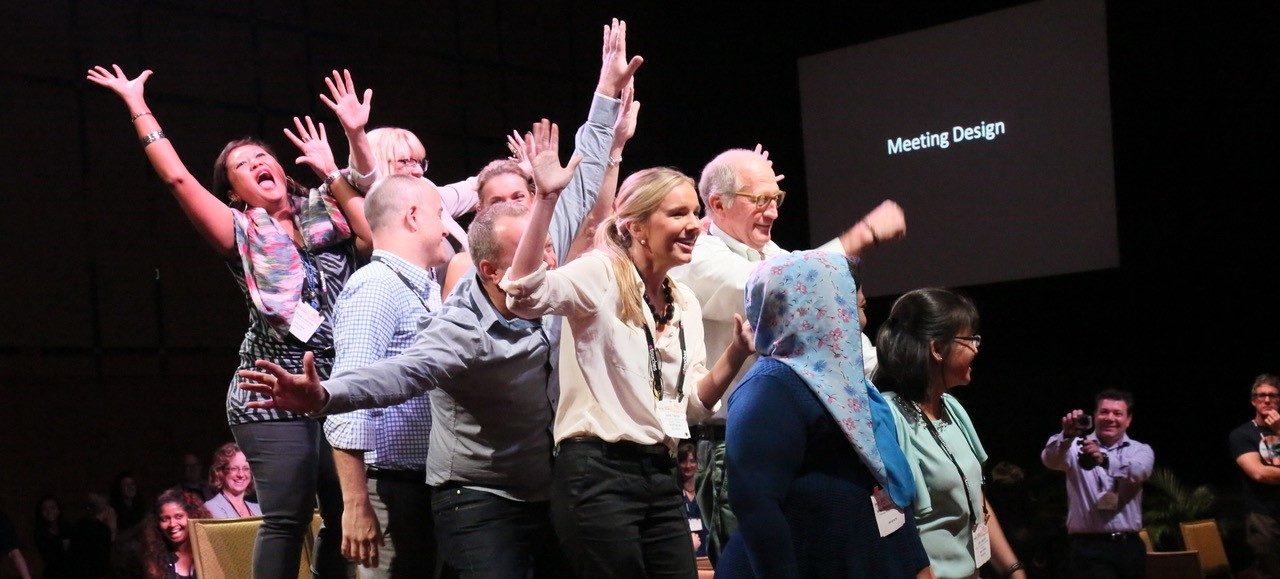
meeting design

One person isn’t responsible for coming up with the look of a house, ordering the wood, laying the foundation and selling the home. That wouldn’t be practical. Experts in each of those areas play a role and then pass the job off to the next person.

For the last 25 years, a former drama teacher from The Netherlands has been advocating for taking a similar approach to event planning. Just as an architect designs a house after asking the owners a series of questions about how they will use it and then leaves it to the contractor to take care of the important, but separate logistics of actually building it, Eric de Groot, managing partner of Mind Meeting, suggests that meeting designers craft experiences after asking attendees probing questions and leave it to others to manage the execution.

“Real meetings are all about content,” he says. “You can skip just about any other part of a meeting—a venue, a meal, even a speaker and still be productive, but if there isn’t relevant content, then it isn’t a meeting.”

In fact, de Groot feels so strongly about the importance of making content chosen by attendees the center of the event, he wrote the book, Into the Heart of Meeting Design, Basic Principles of Meeting Design with Mike van der Vijver in 2013. “The power of meetings depends on the human dynamics they are capable of unleashing. To accomplish that effectively requires a new paradigm for the way in which meeting programs are conceived and executed,” he writes in the book.

RelatedDesign Inspo Brings Record Attendance to HD Expo 18

De Groot points to a government meeting he recently produced for a group that was struggling with management of information and communication technology. He started by asking the 150 people in the room what specific behavioral change they wanted to see after the meeting was over and really listening to the problems they were presenting. Then he designed the agenda backward from that point. “A good architect starts by knowing the needs of everyone involved,” he says.

This approach is not culture-specific. De Groot operates all over the world and has found that while each country has its own unique approach to getting business done, the need to learn through stories is universal. That is why peer-to-peer advice sessions are popular. They play off human nature.

Legs of a Meeting Design Foundation

Smart Meetings asked this meeting architect his top tips for creating meetings of minds that result in meaningful changes in how people act over time.

  1. Talk to your participants. Ask them what their wishes, dreams and expectations are. Ask about behavioral results they would like to see, not what they want to do at the meeting. Push for measurable, accountable outcomes with people assigned to specific tasks.
  2. Make it experiential, rather than passive, and build in breaks so people can process the information and network on their own terms.
  3. Make sure goals are clear and there is follow-up.

PEOPLE OF COLOR ACCESSIBLE INCLUSIVE

Editor’s Note: Smart Meetings invited a group that come together at MPI’s Thought Leadership Summit on Diversity to tackle the issue of how planners could be part of the solution for creating a more inclusive world. How are you making strides toward a diverse world that makes everyone feel welcome?

Antwone Stigall’s thought for the day: “Diversity is the one true thing we all have in common. Celebrate it everyday!”

–Author Unknown


Zoe Moore’s thought for the day: “Measurable steps towards inclusion are more than working to diversify the event design; we need inclusion and diversity of our association membership bodies and leadership.”



Jessica Pettitt’s thought for the day: “’Every system is exquisitely designed to produce the results it gets.’ –Frances Kendall. The meetings Industry is no different.”


The Problem with True Race Inclusion and Why It Matters

The reputation and viability of the meetings industry pivots on our collective ability to make resources and opportunity equally available to people of color. Measurable steps towards inclusion must be more than diversifying event design; we need inclusion and diversity of our association membership bodies and leadership. People of color, including but not limited to Asian, Black, Latinx and Indigenous folks, are marginalized in the meeting profession as standards and opportunities are controlled by the privileged and dominant holding identities like white, cisgender, heterosexual, Christian, etc. Diversity initiatives that recruit and retain white women, perhaps gay white men and stop at “reasonable accommodations” aren’t enough to open doors for people of color in the profession. In an attempt to instill fundamental, rather than superficial change, we recommend efforts toward supplier diversity, accessible professional development, and of course, leadership buy-in.

MoreThe All-Inclusive Meetings Revolution

Three Steps Toward Deeper Diversity, Equity and Inclusion

1. Supplier Diversity

Real accessibility and inclusion for people of color needs to be much broader than having different looking faces on stage or sprinkled in marketing materials to be successful. For example, professionals in our industry can take action by advocating for educators, vendors, venues, CVB and DMC rosters, and the like, to specifically include minority-owned businesses. Reformulating practices that discourage or prohibit small companies from having access to or being included on preferred vendor lists is one place to start. Intentionally noticing our behaviors creates new markets and opportunities for those that have been “red lined” out of professional opportunities. By promoting the growth of all aspects of the supplier line, deep and transformational change is fostered—change that goes beyond mere window dressing.

2. Accessible Professional Development

Access to quality professional development is a key step towards creating an inclusive and diverse industry, both for the purpose of event design and fostering underrepresented professionals and businesses. We haven’t made cross-promoting professional development opportunities and showcasing people of color in all aspects of our industry a reality, yet. Underrepresented professionals deserve access to the same resources and opportunities so their businesses can blossom, and the industry can thrive. Attention to professional development can begin by addressing the staggering homogeneity of our industry. For instance, more efforts towards education of industry designations are needed. Additionally, targeted advertising and intentional invitations, coupled with efforts to keep participation costs more accessible, are sorely needed. Regardless of business size, tenure or scope, minority-led business owners need to be consciously included in all forms of industry education and development. Indeed, failing to do so may lead not just to the demise of the meetings industry’s reputation, but its vibrancy, legitimacy and relevance.

3. Leadership Buy-In

Lastly, to combat the challenges and systemic issues of Diversity, Equity and Inclusion (DEI) in the meetings and events Industry, it is essential that organizational leadership step up to the responsibility of inclusion. Noticing barriers to success for minority-owned businesses and industry talent is the first real step. Acknowledging the lack of racial diversity in leadership and membership encourages people to investigate the roots of bias, prejudice and/or discrimination (i.e. systems of higher education, financial inheritance and wealth, etc.,) while also taking action through a collective responsibility to make the meetings profession better. Unfortunately, many top-level executives believe the solution is to hire a few people of color, tokenize a diverse quality of a supplier, or over-emphasize a single diversity-focused initiative or program. These steps have proven insufficient. We recommend that our organizational leaders ask themselves the following questions:

  • How many of those people of color serve as front line contributors and faces of your organization?
  • How many of them have voices that matter in your decision-making process?
  • Do marginalized team members feel welcomed, recognized, promoted, etc.?
  • Is your leadership team ready to learn the truth of how professionals of color experience your organization and/or leadership?

In working toward foundational change, top line executives need to do the work of addressing their unconscious bias, possibly masked racism and false narratives that limit DEI efforts. For inclusion to go beyond a promotional photoshoot, DEI efforts must be infused in all aspects of an organization–weekly meetings, board retreats, publications and events. This requires transformational leadership.

Conclusion

The health and longevity of our industry relies on our ability to intentionally include our marginalized colleagues. We all have the responsibility to make these changes by noticing who is not included in leadership and membership, intentionally inviting and fostering new members of color, and opening supplier opportunities. Together, these shifts can alter the meetings industry, and do much more. The meetings industry has the potential to shift the world.

milestone caesars forum

Rome wasn’t built in a day, but Caesars Forum in Las Vegas is making exciting progress. The casino-hospitality giant Caesars Entertainment announced a construction milestone today for the $375 million, 550,000-square-foot conference facility opening in 2020—the setting of the first steel truss, which takes the Forum past the groundbreaking stage, above ground and into the public eye.

These are the building blocks to the soon-to-be two largest column-free ballrooms in the world. A truss so big at more than 300 ft. wide and 200 tons, that it had to be cut into pieces and reassembled onsite by crane. A conference center so large, it’s equivalent to 27 tennis courts and can easily fit an 18-wheeler. In other words—a meeting planner’s dream.

MoreCaesars Forum Breaks Ground in Las Vegas

“This is an exciting step towards the development of Caesars Forum which will redefine the offering for meetings and events in Las Vegas,” said Michael Massari, Chief Sales Officer at Caesars Entertainment, in a press release.

In honor of #TransformationTuesday, let’s take a peek at the property’s progress—past, present and future. Swipe through to learn more and to get as excited about the meeting industry’s shiny, new hangout as we are.

RelatedCaesars Palace Gets ‘Vanderpumped’

event marketing

Creative event marketing is the easiest way to increase the number of people who eventually attend your meeting—directly contributing to the bottom line. Email best practices such as segmenting lists, tracking key metrics and using an email verifier tool to reach as much of your audience as possible is a great way to reach maximum return on investment. That is why sometimes it pays to return to the basics.

These tried and true methods will make planning more effective—and rewarding.

Understand Media Types

Marketing content can be divided into three types: earned media, owned media and paid media.

  • Earned media refers to content others publish or share about you.
  • Owned media is simply any content you generate yourself. This can include your blog, website, email campaigns and more.
  • Paid media refers to marketing content you purchase, such as online ads.

Leveraging all types of media helps you cast a wide net for attendees.

More7 Ways to Increase Your Open Rate with Intriguing Subject Lines

For instance, if you’re promoting a local event, merely emailing followers in the area (segment email lists by factors like location to boost open rates) limits your ability to reach people who don’t subscribe to your email list. However, submitting a press release to local publications may add another degree of promotion. Buy a few online ads to cover all your bases and you’ll be more likely to attract a large number of guests.

Optimize Your Website

Potential attendees interested in learning more about your brand will likely turn to your website first. Ensure you make the right initial impression by including useful information, optimizing the visual design and keeping user trends in mind. For instance, mobile browsing is now more popular than computer browsing. Your mobile site should be easily scannable on a small mobile device screen.

Loyal customers may visit your website often, follow you on social media and subscribe to your email list. However, existing customers aren’t the only people who may be interested in your event.

You can leverage their support to reach out to more potential guests. This is a form of using your online presence to generate more earned media. For example, if you publish a blog post or send an email with engaging content, your followers might share it with their friends and family on social media.

MoreA Killer Event Should Have a Killer Website

You’ll be more likely to achieve these results if the content you share is genuinely valuable. Perhaps your goal is to promote an event in which industry professionals will share key tips for success in a particular field. A promotional blog post or email for the event might include several related tips. Sharing practical information people can actually use boosts your content’s shareability and highlights the benefits guests could get from attending your event.

Update SEO Regularly

Event planners often promote events that may not be entirely unique. For example, marketing an arts festival in a region where arts festivals are common makes it difficult to stand out. Making sure your website and content appear early in results when someone searches “arts festival [your region here]” is key to getting noticed.


That’s why it’s important to consistently research and implement SEO best practices. They tend to change as Google adjusts its search algorithm. With a proper SEO strategy, you’re more likely to show up in relevant online searches.

A strong SEO strategy incorporates relevant keywords potential customers might use to search for an event similar to the one you’re hosting. It also involves incorporating images and naturally cultivating a reputation as an authority on events such as yours. The more often outside sources link to your site/content, the stronger your SEO. That said, because SEO best practices change from year to year, it’s important to review new developments constantly.

Successfully marketing an event doesn’t have to be difficult. You simply have to understand how to develop an effective strategy. Apply these points, and you will.

Rae Steinbach is a graduate of Tufts University with a combined International Relations and Chinese degree. After spending time living and working abroad in China, she returned to NYC to pursue her career within content writing. She specializes in crafting marketing content that includes tips for using tools and techniques like email verification, growth hacking and marketing automation.

An agreement was reached Friday to temporarily reopen the federal government, which will help to alleviate the increasing problems caused by staffing issues at airports across the country.

Democratic Sen. Chuck Schumer of New York was in direct discussions with the White House Friday over finalizing the language in a deal that will enable Congress to quickly pass spending bills that President Donald Trump will sign to restore normal operations at a series of federal agencies that have been shuttered for five weeks and begin payments to 800,000 federal workers who have been furloughed or forced to work without receiving paychecks. Issues over backpay will still need to be resolved.

The deal, which was announced shortly after 2 p.m. EST, includes the current level of fencing and wall repair money ($1.3 billion for the year). Lawmakers will have three weeks to reach an agreement that addresses Trump’s request for funding a wall along the U.S.-Mexico border.

Shutdown Casualties

The impact of the partial government shutdown reached new levels Friday as flights at New York and Philadelphia airports were delayed due to insufficient air traffic control staffing, affecting travel plans for planners and other working professionals.

Federal Aviation Administration (FAA) issued a statement indicating that a slight increase in employees calling in sick at LaGuardia Airport (LGA) and Newark International Airport (EWR) and Philadelphia International Airport (PHL). Flights into the three airports were delayed by an average of 41 minutes Friday morning, according to the FAA. Flights departing from Philadelphia and Newark were delayed between one hour and one hour and 15 minutes, and LaGuardia departures were delayed between 15 and 30 minutes.

The delays were caused by safety issues: Unions representing air traffic controllers, pilots and flight attendants issued an urgent warning that the government shutdown, which has lasted nearly five weeks, is causing serious concerns for the United States’ air travel system. Besides staffing shortages due to federal employees being furloughed and calling in sick, those who are working are experiencing stress.

“You cannot continue to operate a system this complex for this long without the support structure of the people that are furloughed,”  Trish Gilbert, executive vice president of the National Air Traffic Controllers Association told CNN. “We are already short-staffed. Now, you have added the stress to air traffic controllers and their personal circumstances, and they’re not sleeping at night. We are concerned that they are not fit for duty.”

Two competing measures to end the partial shutdown fell short in the Senate on Thursday. A bill backed by Trump to end the shutdown by funding the wall and a separate bill supported by Democrats to reopen shuttered agencies without such funding didn’t get the votes required to advance.

mpu changes name aimp

The founder of Meeting Planners Unite (MPU) marked the one-year anniversary of the announcement by Marriott International that it would be cutting commissions on meeting business by announcing the lobbying group for independent planners will officially be known as Alliance of Independent Meeting Professionals (AIMP).

“AIMP was formed to celebrate those hotel partners (both chain and independent), and their ownership teams, that have continued commissions at 10 percent (or more),” David Bruce said in a press release. Hilton Hotels & Resorts, InterContinental Hotels Group and Hyatt Corporation all followed Marriott’s lead last year by reducing commissions from 10 percent to 7 percent. Some, including Loews Hotels and Fashion Island Hotel Newport Beach, have increased commissions. AIMP will also highlight those convention bureaus and other suppliers that have developed strategies that incentivize independent planners to sell their city to their clients.

By collecting sales information from 1,500 current members, Bruce hopes to increase the value independent planners bring to suppliers and the market. To give members some of the same benefits of being part of the large sourcing firms such as HelmsBriscoe and ConferenceDirect, he has used the size of his group to negotiate discounted prices for health care, office products, shipping services, and registration and site sourcing services.

AIMP even plans to fund a charity to help independent planners who have emergencies that affect their livelihood.

biz time zones win

As professional event planners, we understand the value of time; but what happens when your work requires you to collaborate with someone on the other side of the country, or even the globe? A few simple best practices can help make this an easy transition for many event professionals.

Make A Note, Then Note It Again

Everyone gets comfortable operating in their particular time zone. But sending an email to schedule a conference call, wherein you note that it will take place at 9:00 a.m. Pacific, 12:00 p.m. Eastern, and 4:00 p.m. GMT, takes the onus of converting off of your colleagues and partners. In addition to making that note in your emails, including the same note in your calendar request can help streamline the scheduling process, especially if different parties are using different calendar systems (Outlook, iCal, Google, etc.). Offering this conversion at the outset provides your colleagues with peace of mind and implies that you are a conscientious partner who is accustomed to operating in this manner.

We’re Not All Early Birds or Night Owls

Do you know what time it is? You might be in New York or Washington, D.C., preparing to make some calls at 12:00 p.m. before heading off to lunch. At that point, the local time in Amsterdam in 6:00 p.m., in Dubai it’s 9:00 p.m., and in Bangkok it’s midnight! Always practice due diligence when reaching across time zones. Working hours can vary from country to country; employees in Great Britain and U.A.E. work some of the longest hours per week outside the U.S., so while it may be easier to reach contacts there beyond “standard” working hours, it’s not always the most courteous step, especially with new relationships.

Remember Your Manners

If you make a request at 2:00 p.m. local time from Los Angeles or San Diego to a Midwest or East Coast vendor, and you’re asking for a same day answer, your vendor is receiving that request at 4:00 p.m. or 5:00 p.m. At the very least, acknowledge that it’s late in the day for this contact, and express your appreciation for their timely attention and support. By recognizing the disparity between your send time and their time received, and by being flexible regarding turnaround for answers, you’ll build stronger partnerships where your contacts are more willing to put in the extra time when it is absolutely necessary.

Have a Fallback for Your Fallback

How many times have you been on a conference call and had issues with the connection? It’s always in your best interest to set up fail-safes in case of issues with apps or Wi-Fi. In the case of international calling, both Skype and WhatsApp are viable solutions for a conference call beyond the usual dial-in lines. Planning out a fallback option and sending that information to all of the participants with your meeting request means that you’ll have a plan in place in case of emergencies, but also impresses upon your colleagues and your client that you’re adept enough to troubleshoot before an issue even arises.

Lynda Baum is the executive vice president of CSI International, an industry leader in international travel solutions.

Successful transfer of knowledge and satisfying the individual needs of attendees are the most effective ways for planners to keep them engaged, according to a recent study.

This was among the findings in the second phase of German Convention Bureau’s  research project, Future Meeting Space. The results of the survey informed meeting professionals what makes events successful and how to please their attendees. GCB created an online survey, running from September 2017 to June 2018, based on the question “What kind of attendee am I?” and pulled the results from the data collected from participants that attend conferences.

“The so-called knowledge index turned out to be one of the most important indices in our study, since the need to acquire new knowledge is one of the highest criteria for attending an event,” says GCB Managing Director Matthias Schultze. The index measures how knowledge increases by examining how attendees understand the topic and if their interest in that topic has increased.

Related: How Not to Be That Person Who Wastes Attendee Time

6 Attendee Archetypes

The project helped GCB identify the six top attendee archetypes, which can help planners gain an advantage in executing a successful event. Schultze clarifies that knowledge expansion depends on individual characteristics and how participants learn and process information.

The six archetypes skew towards young, quiet, attentive and determined attendees.

  1. Tech-savvy, young and quiet
  2. Tech-savvy, male and experienced
  3. Communicative, focused on the job and goal-oriented
  4. Quiet, established and inspired
  5. Quiet, female and observing
  6. Young, female and eager to learn

Knowledge Transfer Depends on the Attendee

Event planners that learn the needs of the six archetypes and create events around those needs will increase engagement at events. The No. 1 goal for events is to give new information to attendees, have them leave satisfied and use the information after the events.

“Of course, there is the connection between the transfer of knowledge and the satisfaction of the participants. Anyone who learns new information will be satisfied with the event,” Schultze says.

Although it is important to focus on the popular characteristics of the archetypes, it is also essential to include those that don’t fit into the identified categories. GCB recommends having support for attendees that may not be as outgoing as some of the archetypes. Attendees also like to see new and exciting formats to help improve understanding, such as visualization aids and tools that allow the attendees to interact with the presentation.

An easy way to know if the event’s information made it past the door is whether attendees use it during their next work day. Event planners can send surveys out a week after the event to see if their information was received and used. If it was not, then they can ask attendees for suggestions on making events an easy and appealing way to learn.

Related: Secret Life of Your Attendee’s Brain