Aviation Biofuel

In a necessary move toward more sustainable means of airlift, United Airlines has become the first U.S. carrier to power commercial flights with aviation biofuel. Use of the renewable fuel on regularly scheduled flights between Los Angeles and San Francisco began last week, marking a milestone in the commercial aviation industry.

“[The] historic launch of regularly scheduled service utilizing advanced biofuels represents a major next step in our ongoing commitment to operate sustainably and responsibly,” said Angela Foster-Rice, United Airlines’ managing director of environmental affairs and sustainability. “United is a leader in the advancement of alternative fuels, and along with our partners at AltAir Paramount, we are taking action every day to minimize our impact on the environment and explore new ways to improve efficiency.”

The biofuel is stored and delivered the same way as traditional fuel. AltAir Paramount will supply United Airlines with 15 million gallons of biofuel over a three-year period, where it is contained at Los Angeles International Airport. The airline has partnered with AltAir since 2009, when it became the first U.S. carrier to conduct a biofuel demonstration flight. Two years later, United was the first U.S. carrier to launch a commercial advanced biofuel flight.

“AltAir Paramount and United are working together to lead the industry in the use of sustainable and homegrown biofuel,” said Bryan Sherbacow, AltAir’s president and chief operating officer. “Today’s launch demonstrates our commitment to helping United reduce its operational impact on the environment and advance the use of alternative fuels.”

The sustainable biofuel is processed at an AltAir Paramount refinery that pumps out 35 million gallons per year. The facility converts sustainably sourced non-edible, natural oils and agricultural waste into jet fuel, and is estimated to provide a 60 percent reduction in lifecycle carbon emissions compared to traditional jet fuel.

Last year, United Airlines furthered its commitment to renewable energy sources with a $30 million investment to Fulcrum BioEnergy, Inc., a U.S.-based alternative fuels developer and pioneer in converting municipal solid waste into low-cost aviation biofuel. The investment is the single largest contribution to alternative fuels by a U.S. airline. United was also a recent recipient of the World Bio Markets award for excellence in advanced biofuels.
airplane-middle-seats

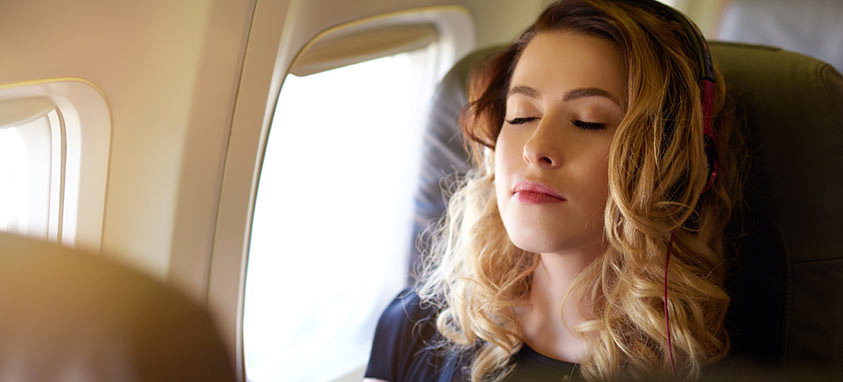
Let’s face it… no one likes getting stuck in the middle seat on a plane. There’s no window to lean against, and you are usually wedged between two strangers you must wrestle with for the coveted armrests. It’s no wonder that middle seats are always the last to be picked.

In a blog posting on hotelsmag.com, Amenity Services Vice President Sherri Scheck-Merrill writes about a new idea to make the middle seat more appealing to passengers. She learned about it at a recent airline show, where attendees were also buzzing about how a growing number of carriers are considering bringing back amenities such as complimentary meals and blankets, and offering workable Wi-Fi.

Location, Location, Location

As in real estate, location is key on airplanes. To compensate customers willing to occupy the middle seats, carriers are considering “selling” them to companies who could brand them with their logos, and/or distribute special gifts or in-air services to passengers seated in them.

No one is currently doing this, but Scheck-Merrill believes the innovative idea could resonate with sponsoring companies who would (literally) have a “captive audience,” as well as passengers who would probably be happy to receive some perks in exchange for being inconvenienced. Instead of the dreaded middle seat being perceived as a punishment, it might actually become desirable.

“I feel the middle seat concept has strong legs for hospitality,” Scheck-Merrill says, pointing out that the concept could be expanded to include hotels. In such a scenario, customers assigned to noisy floors or rooms near the elevator could become eligible for certain benefits from either the hotel or a sponsoring partner.

world-airport-awardsPhoto courtesy of Tourism Richmond

The 2016 Skytrax World Airport Awards were given out on March 16 in Cologne, Germany, and Greater Vancouver, British Columbia, came out looking pretty darn good. Vancouver International Airport (YVR) was voted as the top airport in North America, and The Fairmont Vancouver Airport was named best airport hotel in the region.

Vancouver’s airport, located in Richmond, ranked No. 14 in the world rankings, widely referred to as the Passenger’s Choice Awards. Considered the most prestigious accolades for the airport industry, results are determined by airline customers taking part in the annual survey that is based on 13.25 million questionnaires from 550 airports around the world.

The top U.S. airport was Denver International Airport (DEN), which ranked No. 28 in the survey. Denver’s airport made a dramatic rise in the awards, moving up from No. 33. Other U.S. airports cracking the top 50 were Cincinnati/Northern Kentucky International Airport (CVG) at No. 32, San Francisco International Airport (SFO) at No. 37 and Hartsfield-Jackson Atlanta International Airport (ATL) at No. 43.

The top airport hotels in the world included two North American properties. The Fairmont Vancouver Airport ranked No. 9 and Grand Hyatt DWF came in at No. 10.

Fairmont Vancouver Airport is located 90 steps from the U.S. Departures level of the airport. The hotel offers 392 soundproof guest rooms and more than 8,000 sq. ft. of event space.

To learn more about Western Canada, see the November issue of Smart Meetings.

World Airport Awards

 Current Rankings 2015 Rankings
1 Singapore Changi 1
2 Incheon Intl Airport 2
3 Munich Airport 3
4 Tokyo Intl Haneda 5
5 Hong Kong Intl Airport 4
6 Centrair Airport 7
7 Zurich Airport 6
8 London Heathrow 8
9 Kansai Intl Airport 12
10 Doha Hamad Airport 22
11 Narita Intl Airport 14
12 Frankfurt Airport 13
13 Amsterdam Schiphol 9
14 Vancouver Airport 11
15 Helsinki Airport 18
16 Beijing Capital Airport 10
17 Brisbane Airport 20
18 Copenhagen Airport 16
19 Cologne/Bonn Airport 23
20 Taiwan Taoyuan Airport 17
21 Auckland Airport 15
22 Cape Town Airport 26
23 Sydney Airport 21
24 Kuala Lumpur Airport 19
25 Melbourne Airport 25

Airport Butler

First impressions are often the most important. And for business professionals who are in town for a particular conference or event, their impression of a destination is made the moment they land. For the first time, meeting planners in the U.S. can arrange and customize the airport experience for business groups and make their attendees feel like VIPs.

Airport Butler launched earlier this month at San Francisco International Airport (SFO), making a first foray into the U.S. travel market. The unique concierge program provides assistance for every leg of the journey, from departures and arrivals to connections and everything else in between.

“We continue to elevate the airport guest experience at SFO, with amenities that allow passengers to customize their journey,” said Airport Director John L. Martin. “The Airport Butler service provides an exciting new option for travelers, offering a unique VIP experience that anyone can enjoy.”

There are a whole slew of services that can be tailored for travel groups, business professionals, seniors, families with small children, cruise and leisure travelers and unaccompanied minors. Non-English speaking passengers are able to select a concierge member who speaks their preferred language.

From the airport curb to the gate, the concierge member greets passengers, monitors the flight status, assists with luggage, takes care of the check-in process, escorts passengers through a fast track security lane, coordinates lounge reservations and can even take care of spa, dining or shopping arrangements.

Once at the gate, the butler will ensure that travelers are part of the pre-boarding group. They maintain contact with family, friends or travel agents throughout the duration of the flight and are on stand-by to provide speedy assistance in the event of a cancellation or delay.

The same level of service is offered upon arrival. Family and professional contacts are notified of flight updates, and butlers are on the ground to greet clients at the arrival gate.  They will also escort international passengers through customs and immigration, retrieve luggage and ensure transportation is secured.

For groups larger than four, an additional butler must be requested. High-profile travelers can opt for security guards, discreet entry and exit methods and a personal escort from the gate to the hotel. Other optional services, such as private meeting rooms, flowers or customized gifts and additional business services are available for an extra fee.

Airport Butler is a Canadian concierge program that began operating out of Vancouver International Airport (YVR) in 2012. At present, it is only offered at the two airports but plans to expand outside of North America are in consideration, according to Sally Leible, president and CEO of Airport Butler/ATS Inc.

“As Airport Butler sought to expand its unique service offering in the U.S., specifically San Francisco was a key airport for our future network as it is very innovative in terms of airport service offerings; a primary gateway for Asia Pacific travelers; and a city full of people seeking new experiences in travelling,” she said in a statement.

Alaska Airlines and Virgin America

An eventful week of bidding wars in the travel industry has come to an end, for now. Ending competition from JetBlue Airways Corp., Alaska Airlines and Virgin America announced their consolidation this morning amid Virgin’s accumulated debt and aircraft operating leases, valued at $4 billion. Alaska Air will acquire the airline for $2.6 billion, paying $57 per share in cash.

The merger expands Alaska Airlines’ West Coast presence for a total of 1,200 daily departures from Seattle, San Francisco, Los Angeles, Anchorage, Alaska, and Portland, Oregon. Alaska Airlines will add around 60 aircrafts from Virgin America for a combined fleet of 280 aircrafts. Virgin America’s planes boast three passenger classes, in-flight Wi-Fi, power outlets and individual touch-screen seatback entertainment.

“Our employees have worked hard to earn the deep loyalty of customers in the Pacific Northwest and Alaska, while the Virgin America team has done the same in California,” said Brad Tilden, chairman and CEO of Alaska Air Group. “With our expanded network and strong presence in California, we’ll offer customers more attractive flight options for nonstop travel. We look forward to bringing together two incredible groups of employees to build on the successes they have achieved as standalone companies to make us an even stronger competitor nationally.”

The two airlines will be based in Seattle and lead together by Tilden and David Cush, Virgin America’s president and CEO, until the acquisition receives regulatory approval by Jan. 1, 2017. While the deal is pending, both airlines’ loyalty programs, bookings and flight routes will remain separate, without any impact to members. Once complete, Alaska Airlines will integrate Virgin America’s Elevate loyalty program into its Mileage Plan.

“Our mission has always been to create an airline that people love, and we accomplished that while changing the industry for the better,” Cush said. “Joining forces with Alaska Airlines will ensure that our mission lives on, and that the stronger, combined company will continue to be a great place to work and an airline that focuses on an outstanding travel experience.”

The two airlines are among the most respected aviation brands in the United States. Alaska Airlines intends to unveil refreshed branding that will incorporate Virgin America’s award-winning customer service.  Virgin America has been rated No. 1 for the past three years in an annual study of domestic airline performance by the Airline Quality Rating report. It has also been voted “Best Domestic Airline” by Travel + Leisure’s Annual World’s Best Awards and Conde Nast Traveler’s Readers’ Choice Awards for eight consecutive years.

Alaska Airlines ranked No. 1 among the nine largest carriers in the United States by The Wall Street Journal for overall operational performance for three years in a row. The airline was rated “Highest in Customer Satisfaction Among Traditional Carriers” by J.D. Power for eight years, and ranked No. 1 for punctual performance six years in a row by FlightStats. Alaska Airlines was also been named one of the most fuel-efficient airlines by International Council on Clean Technology.

Virgin America was founded in 2007 by business mogul Richard Branson, who is founder of the Virgin Group. In a blog post on the Virgin America website, he remarked on the trend of consolidation in the airline industry. Branson started his airline with the goal of improving the passenger experience by offering superior customer service, amenities and entertainment. Because Branson is not an American citizen, the U.S. Department of Transportation stipulated that a portion of his shares would be non-voting shares, reducing his influence in a takeover.

“Our Virgin airline has much more to do, more places to go, and more friends to make along the way,” Branson wrote. “The important thing now is to ensure that once Alaska witnesses first-hand the power of the brand and the love of Virgin America customers for our product and guest experience, they too will be converts and the U.S. traveling public will continue to benefit from all that we have started.”

lost luggage

Airlines’ lost luggage rate dropped to the lowest level ever recorded last year, a whopping 10.5 percent decrease from 2015, according to a report released today.

SITA, one of the world’s leading air transport IT and communications specialists, revealed in SITA Baggage Report 2016 that worldwide, there were 6.5 mishandled bags per 1,000 passengers last year. This was less than half the rate in 2003, despite an 85 percent rise in the number of passengers. Since 2007, the number of mishandled bags has declined by 50 percent, saving an estimated $22 billion.

The improvement reflects the airline industry’s recent efforts to boost baggage handling. A resolution created by International Air Transport Association (IATA Resolution 753), to be implemented in June 2018, will track each bag throughout its journey.

“Over the next three years bag tracking will be in the spotlight as airlines ready themselves to implement IATA’s Resolution 753,” said Francesco Violante, CEO of SITA. “This increase in visibility will provide more control and drive further improvements in bag handling.

“It also means that passengers will be able track their bag, just like a parcel, which will reduce anxiety and allow them to take fast action if flights are disrupted and their bags are delayed.”

How bags are tagged for their journey is also evolving. The report showed that around 40 percent of airlines and airports now supply self-bag-tag printing at kiosks, and more than one-third are expected to do so by 2018. Nearly one-third of passengers expect to use bag-drop—either a staffed station or self-service—this year.

During the past year, there has been significant progress across the industry in developing permanent electronic tags that allow passengers to update flight information by using a mobile phone app. The electronic tags offer traveler independence and can reduce waiting times.  Home-printed bag tags—a lower-cost option being used by several airlines—offer passengers similar benefits.

Despite the improvements, Violante notes that lost luggage still cost the industry $2.3 billion last year.

“While this is a 3.75 percent reduction from 2014, it is clear that this must remain an area of focus for the industry,” he says. “Passenger experience is paramount, and improving baggage handling will deliver improvements for passengers, along with cost savings. The technology is available to support increased tracking and improved tracing, and SITA is working across the air transport community to deliver efficiencies.”

Boeing-787-9-Dreamliner

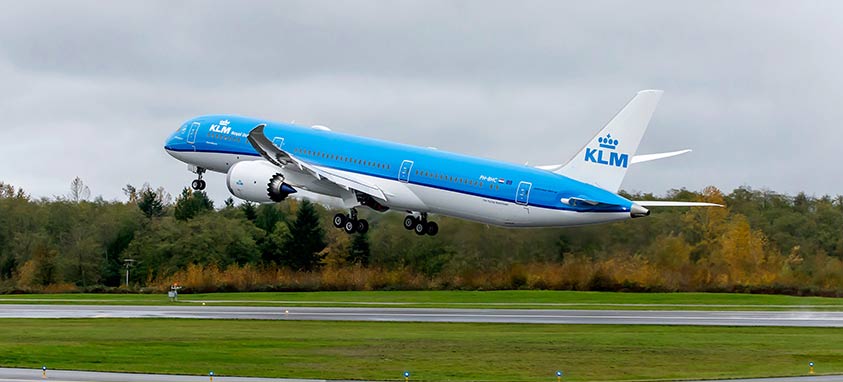
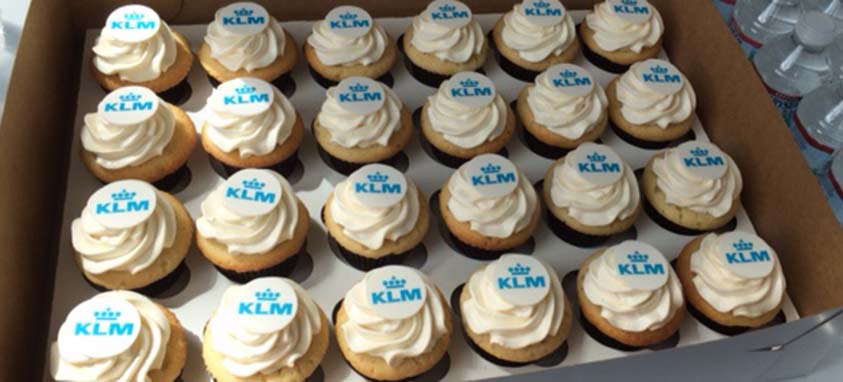
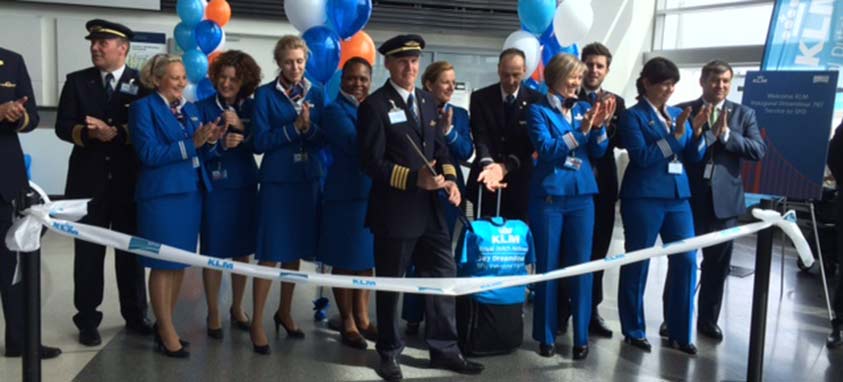
KLM Royal Dutch Airlines introduced its new fuel efficient, state-of-the-art Boeing 787-9 Dreamliner aircraft to America with a celebration at San Francisco International Airport (SFO) May 4. Approximately 200 passengers and crew enjoyed cupcakes and participated in a ribbon cutting ceremony before boarding the plane for its flight to Amsterdam Schiphol Airport (AMS).

KLM

KLM, which partners with Air France and Delta, has been flying this model plane for more than a year in Europe, Asia and South America, but the May 4 flight represents the first time the Dreamliner has touched down on an American runway. KLM will operate Dreamliner service twice weekly from SFO to AMS  throughout the summer season.

“We are excited to inaugurate KLM’s first North American Dreamliner in San Francisco to support growing West Coast demand for the company’s exceptional in-flight service.” said Air France-KLM USA General Manager Eric Caron, who flew in for the event. “The KLM Boeing 787 Dreamliner reflects the company’s ongoing commitment to using great design to optimize comfort in faster, more fuel-efficient planes.”

KLM-staff

KLM Dreamliner Environmental Features

The most profound attribute of the Boeing 787 Dreamliner is that it is up to 40 percent quieter and 20 percent more fuel efficient than other planes comparable in size. The aircraft is an important cornerstone in KLM’s sustainability goals, which include reducing the CO2 emissions of its fleet by at least 20 percent by 2020.

Fuel efficiency is achieved because the Dreamliner boasts redesigned engines, lightweight composite structure and aerodynamic efficiency. It emits up to 20 percent less in CO2 emissions, and has been manufactured using less hazardous materials to ensure the airplane can be recycled at the end of its life cycle.

Onboard Amenities

Inside, the Dreamliner features a state-of-the-art in-flight entertainment system, Wi-Fi for all passengers, and an interior cabin designed by Hella Jongerius, a renowned Dutch designer. Larger windows, a higher cabin pressure and special LED-lighting will help passengers arrive at their destinations feeling more rested and refreshed.

The World Business Class cabin is particularly luxurious. The full-flat seats are positioned to give passengers more personal space and privacy, as well as direct aisle access. State-of-the-art electronics allow them to play games, chat or watch a film on a 16-inch screen they can control using a handset. A special button allows them to tint the window to block out unwanted light.

Passengers in Economy Class can enjoy extra comfort, as the seats recline 40 percent more than previous aircraft models. All passengers have access to power sockets in order to recharge mobile devices. The in-flight entertainment system has been revamped to feature 11-inch touchscreens, more than 150 films and 200 television programs in 12 languages, interactive 3D maps and the option to communicate via Seat Chat with other passengers.

F&B on the plane has also been upgraded. Michelin three-star Dutch chef Jacob Jan Boerma has created the menus for the meals of World Business Class passengers on flights originating in Amsterdam, which are served on tableware designed by Dutch designer Marcel Wanders. Economy Class passengers have a variety of à la carte meal choices that can be ordered in advance.

To see a video of the ribbon-cutting, visit


Blake Henry

Henry is the new general manager at Kentucky International Convention Center in Louisville. He comes from a recent position in Bangor, Maine, as general manager of Cross Insurance Center. With a career spanning the country, he began at Staples Center in Los Angeles and subsequently oversaw the construction and grand opening of the PlayStation Theater in New York City.


Sean Thorndike

CSI DMC appointed Thorndike as director of business development. Sean most recently served as director of business development and director of sales and marketing for Ignite Glass Studios in Chicago. Formerly, he was vice president of sales and operations with Atlanta History Center where he oversaw luxury event venues, museum and retail operations.


Kevin Walsh

Benchmark appointed Walsh as regional director of finance, where he will oversee the financial operations of multiple Benchmark properties. Previously, he was regional director of finance for Interstate Hotels & Resorts. Prior to that, he served as director of accounting for Gateway Hospitality Group.


Sylvie Monsivais

Kimpton Goodland in Goleta, California appointed Monsivais as director of sales and marketing. She brings 17 years of experience managing group and corporate sales and facilitating the growth of on-property guest activations from her role at Harbor View Inn in nearby Santa Barbara.


Robert Morgan

Seaview, A Dolce Hotel, in Galloway, New Jersey, appointed Morgan as general manager. Morgan was formerly senior vice president of transitions and operations strategy for Davidson Hotels & Resorts in Atlanta. Prior to this, he held multiple management roles at Starwood Hotels and Resorts Worldwide, and HEI Hotels & Resorts.


Rob Hampton

Hampton is now general manager of Palm Springs Convention Center in California, where he will oversee venue operations for Palm Springs Bureau of Tourism, Welwood Murray Memorial Library and Palm Springs Visitor Center under AEG Facilities. Previously, he was senior vice president at Visit Seattle and vice president of sales at Visit Austin.


Melissa Bolster

Benchmark promoted Bolster to catering and conference services manager for World of Whirlpool in Chicago from her previous role as catering and conference services planner. Her former positions include catering guest experiences manager at Walt Disney World Resort. She also held multiple roles with White Lodging in Chicago.

Benchmark, a global hospitality company, queried their restaurateurs across 80 luxury properties at home and abroad to compile a list of dining trends for 2020. Here’s the forkful on planning fresh offerings for your next event:

CBD

You’ve probably heard of this extract, now popular in everything from hand lotion to dog treats. CBD is a non-psychoactive compound that comes from hemp, with touted anti-inflammatory benefits that include easing stress, anxiety and pain.

Consider crafting cocktails with a CBD tincture. Some research suggests CBD can help with nausea, and the supplement may increase feelings of ease for those who imbibe. After all, who couldn’t use a little liquid meditation?

Plant Power

Beyond Meat’s Beyond Burger has earned its way onto menus across well-known establishments, but it’s just the start of plant-based foods on the scene to replace traditional animal-based options. While pastured animal products are an eco-friendlier option, many are opting to explore vegan and vegetarian alternatives.

Vegan chow has come a long way from tofurkey and vegetable oil spreads. Inventive cream cheeses made from almonds or cashews are a lighter option for the breakfast buffet, while plant “milks” made from cashews and even pistachios provide endless opportunities for coffee concoctions. Even if you opt to include traditional fare, serving one of these as an alternative is a stand-out way to please those with expanding plant-palettes.

Snack Attack

Crispy, puffy or crunchy, most everyone has a guilty pleasure when it comes to snacking—guilty because many a classic chip is made of wheat, corn and additives. The future of snacking is here, driving away from bland GMO crops and into a future of bright flavors in sweet and savory options that derive their texture from cassava, beets, chickpeas and a variety of other veggies—and even sustainable, seasoned meats. Yes, chicken chips are a thing.

Jackfruit

This tropical fruit is commonly used in Southeast Asian cuisine in products from cakes to soups, but thanks to its hearty texture and subtle flavor, it has made its Western debut as a contender in plant-based main dishes.

Think of jackfruit as a textural swap for pulled pork in savory dishes—fill tacos, shred it on flatbread or stuff it into acorn squash. As the fruit matures, it softens and sweetens, making it perfect for frozen desserts.

Make It Fruitful

Unique fruits are buzzworthy in building craft drinks, as hybrid and foreign fruits offer nuanced updates to classic recipes. Spiny cactus fruits such as prickly pear and dragonfruit are especially noticed for their brilliant hues and funky decorative properties, while the sweet, mild pomelo is a good stand-in for grapefruit. Shake things up by swapping plain-jane lemons for Japanese yuzu or Filipino kalamansi.

Oat Cuisine

The plant-milk market is exploding with options, making soy about as current as channel surfing. Even so, creamy, versatile oat milk shines above the rest. Particularly loved by baristas for playing nice with coffee, it’s also turning up as a base in yogurt and frozen desserts. If you do one thing with it, make it your dairy-sub at the coffee bar. It’s bound to cause a stir.

Bubbly is Beautiful

Sparkling water and non-soda carbonated beverages are dominating the fridge aisles these days. It’s no surprise, as healthier food and drink options are a growing focus, and many people are consciously reducing their sugar intake. If you’re looking to engage diners with your drink list, it isn’t all about the alcohol.

Offer kombucha, shrubs and flavored sparkling bases on their own, or mix with seasonal fruit juices to craft vivid libations that everyone can enjoy.

Color Pop

Good presentation has always considered color, but in the age of #instaworthy bright and bold hues are a must. Get #nofilter props by incorporating singular ingredients like matcha, hibiscus, algae and butterfly pea to elevate your canvas and get your attendees excited to share their visual delights.

Hosted Buyers provides oodles of perks

The Hosted Buyers program, one of the staples of IMEX America, provides qualified meeting planners with VIP treatment before, during and after the show.

IMEX America 2018 featured 3,327 hosted buyers from 63 countries, with 65 percent having budgets ranging from $1 million to $10 million. Most of them (70 percent) were from the United States, followed by Canada (4.5 percent) Brazil (3.5 percent), Mexico (3 percent) and the United Kingdom (3 percent). Fifty-eight percent were agency planners, followed by corporate (24 percent), association (10 percent) and independent (8 percent).

Hosted buyers receive many perks, including the following.

Cost: Free flights from within the United States as well as long-haul flights for planners who are coming as part of a hosted buyer group. Planners also receive free accommodations and the knowledge that IMEX Group takes care of the logistics.
Hosted Buyers Lounge: A dedicated space—hosted by IMEX Group’s hosted buyer team—for planners to catch their breath, check emails and grab a coffee.

Opportunities to connect: Planners can connect with their peers at special events and hosted dinners, building powerful relationships while having the time of their lives.

Freedom: Hosted buyers are in charge of their schedule at the show. IMEX Group recommends eight appointments per day—and that they leave time for learning, networking and browsing.

Participating planners need to meet IMEX Group’s qualifying criteria of regularly planning or commissioning large-scale events around the world. New hosted buyers at the 2019 event include Belmond Hotels, CSI DMC, Beyond Limits (U.S. and Latin American group), Body & Soul (U.S. and Latin American group), CWT M&E and Auberge Resorts.

Ray Bloom, founder and president of IMEX Group, explained the evolution of the Hosted Buyers program.

“As the exhibitor numbers have increased, we have always been focused on ensuring that hosted buyer numbers have increased at a similar rate,” he says. “Just as important, we focus strongly on quality of buyer and ensuring that hosted buyers have significant business to place with exhibitors. As an example, as the U.S. section of the show has expanded, we’ve increased the number of buyers attending to ‘buy the U.S.’—both from North America and around the world.”

The program has changed in response to buyers’ feedback.

“This has led to us introduce more flexibility into the program in terms of commitment to appointments and enabling buyers to take advantage of the vast array of educational and networking opportunities,” Bloom says. “We’ve also adapted the appointment system, enabling buyers to submit RFPs to exhibitors in advance of the show, leading to more effective discussions on-site.”

How the Program Works

  • Some 300 of the exhibitors at IMEX America invite key clients to come to the event as hosted buyers (these exhibitors are called “intermediaries”). A planner who receives an invitation from one of them—and who wants to be a hosted buyer—then fills out an online application form.
  • Once the exhibitor that invited the planner has checked the form, IMEX Group verifies and approves it—and sends the planner a welcome email with IMEX’s website login.
  • If the application doesn’t meet the qualifying criteria, IMEX Group invites the planner to register as a buyer attendee.

Planners can also apply directly for the program, without being invited to do so by an exhibitor. All agency or corporate buyers must provide information about 1) three events they organized in the last 18 months or 2) two events they organized in the last 18 months plus one event they will be organizing in the next 12 months.

Association buyers must provide information concerning 1) three events they organized in the last three years or 2) two events they organized in the last three years plus one event they will be organizing in the next three years.